14 Easy Organization Systems for Small Apartment Closets
Optimizing small apartment closets requires a strategic combination of decluttering, vertical storage utilization, and uniform organization accessories. By implementing systems like slimline velvet hangers, tiered storage, and motion-sensor lighting, you can increase your usable closet capacity by up to 50% while maintaining a clean, accessible space for your entire wardrobe.
Assess and Declutter Your Wardrobe
If you are looking for even more inspiration, these proven space-saving ideas for tiny closets can help you optimize every square inch of your storage areas. While you are organizing your storage, you can also learn how to decorate a small apartment on a budget to create a cohesive aesthetic throughout your entire living space. While you are organizing your storage, you can also explore these budget small apartment kitchen ideas to ensure your culinary space remains just as organized and efficient as your closet.
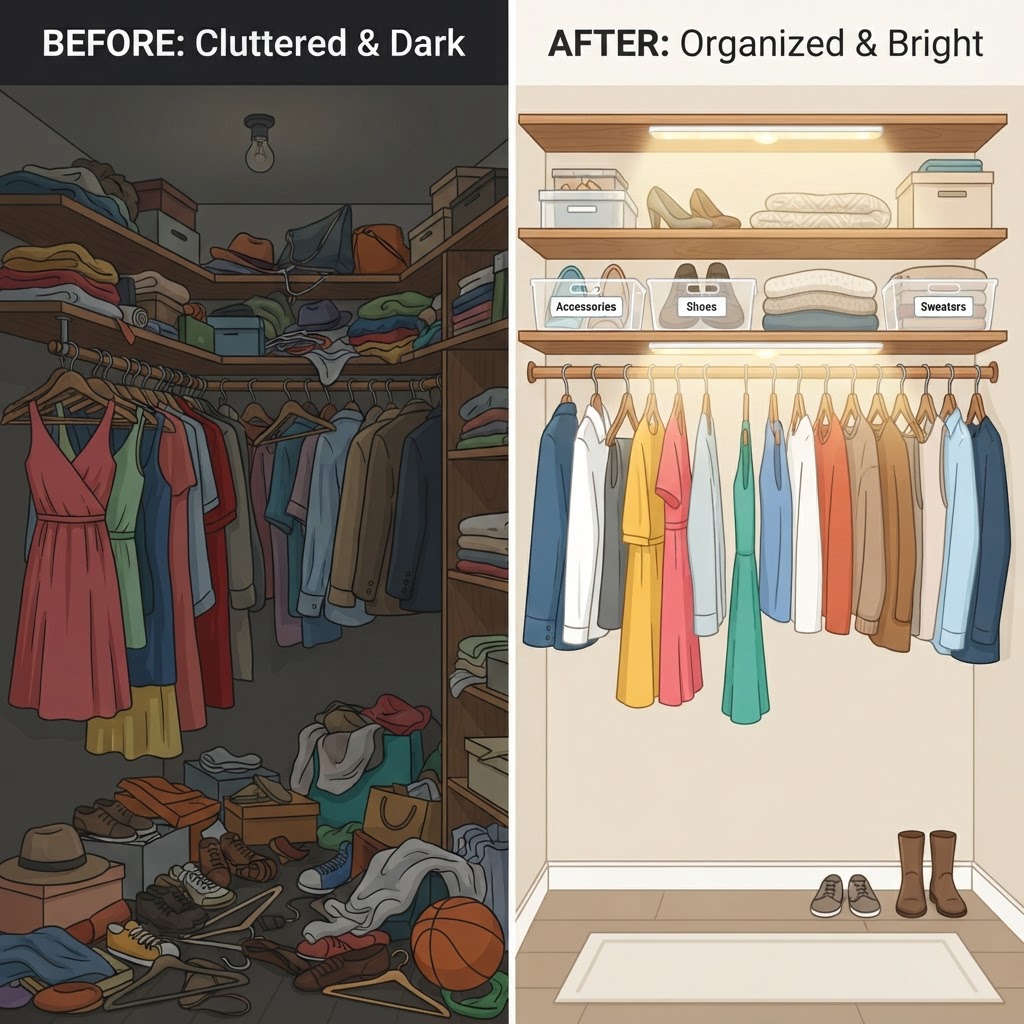
Begin your closet transformation by ruthlessly auditing your inventory to establish a functional baseline. Professional organizers recommend removing any item that hasn’t been worn within 12 months, as keeping stagnant clothing is the primary cause of small-space congestion. Implement a strict ‘one in, one out’ policy: for every new garment purchased, you must donate or recycle one old item to prevent inventory creep. Categorize items into ‘keep,’ ‘donate,’ and ‘sell’ piles to ensure only clothes that fit your current lifestyle and body type remain in your limited storage area. Creating this clean slate is a prerequisite for all other storage systems; trying to organize an overflowing closet simply masks the underlying issue of volume versus available space.
The Seasonal Rotation Strategy
Space is limited, so don’t force your entire wardrobe to coexist. Use vacuum-seal bags or labeled fabric bins to store off-season clothing under your bed or on high, hard-to-reach shelves. While you are busy refreshing your home storage, you might also want to explore these cozy tiny living room ideas to ensure your shared living spaces feel just as retreat-like and organized as your upgraded closets. By swapping out your gear every six months, you effectively double the usable capacity of your daily-use closet.
Maximize Vertical Space with Tiered Hangers
Vertical space is often the most underutilized asset in an apartment, and tiered hangers allow you to stack multiple garments in the same footprint that typically houses only one item. This is one of the most effective organization systems for small apartment closets because it provides an immediate storage boost without requiring professional installation or complex mounting hardware. Look for cascading ‘S’ hooks or multi-slot hangers that allow you to drape pants, scarves, or button-downs vertically. This creates a waterfall effect that keeps your clothing visible but compact, freeing up precious rod space for bulkier items like coats or heavy sweaters. By shifting your perspective from horizontal shelf space to vertical hanging capacity, you can effectively manage a wardrobe 2-3 times larger than the closet’s physical footprint would normally allow.
Utilize Door-Mounted Storage Solutions
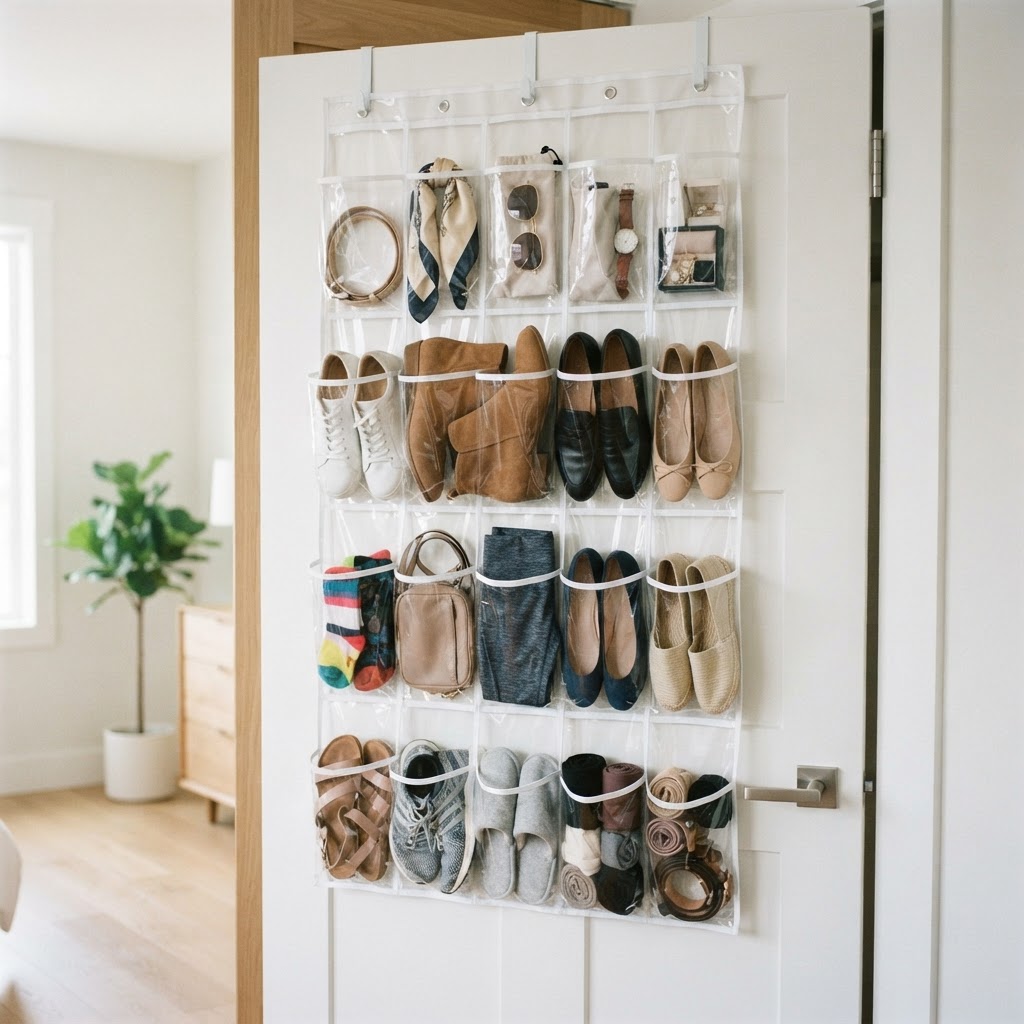
Your closet door acts as a hidden, high-value storage surface that most renters fail to leverage. Over-the-door organizers are legitimate game-changers for small apartment living, transforming a blank, functional space into a dedicated hub for shoes, accessories, or gym gear that otherwise ends up cluttering your floor. Opt for clear pocket organizers; these allow you to instantly locate smaller items without digging through drawers or bins. If you have deep closet doors, install heavy-duty command hooks or an over-the-door bar to hang robes, scarves, or hats. This clears the interior floor space, creating the illusion of a larger closet while keeping your frequently used items at eye level. For maximum efficiency, assign one pocket to one category, such as hosiery, belts, or chargers, which streamlines your daily morning routine significantly.
Implement Drawer Dividers for Small Items
Integrated drawers or modular chests inside your closet often become unorganized ‘junk zones’ without proper compartmentalization. Drawer dividers are the essential tool for maintaining permanent separation between undergarments, socks, and delicate accessories, ensuring every item has a fixed home. When items are physically separated, you reduce the time spent searching for matching pairs, directly improving your daily workflow. Consider using adjustable tension dividers that snap into place; these offer the flexibility to customize compartment sizes as your inventory fluctuates. If you prefer a budget-friendly route, repurpose small clean boxes or trays to create a custom grid system. This prevents smaller garments from shifting around whenever the drawer is opened or closed, keeping your organizational efforts intact regardless of how hectic your morning routine might be. A well-divided drawer system is the difference between a functional closet and a source of constant frustration.
Master the Art of Shelf Dividers
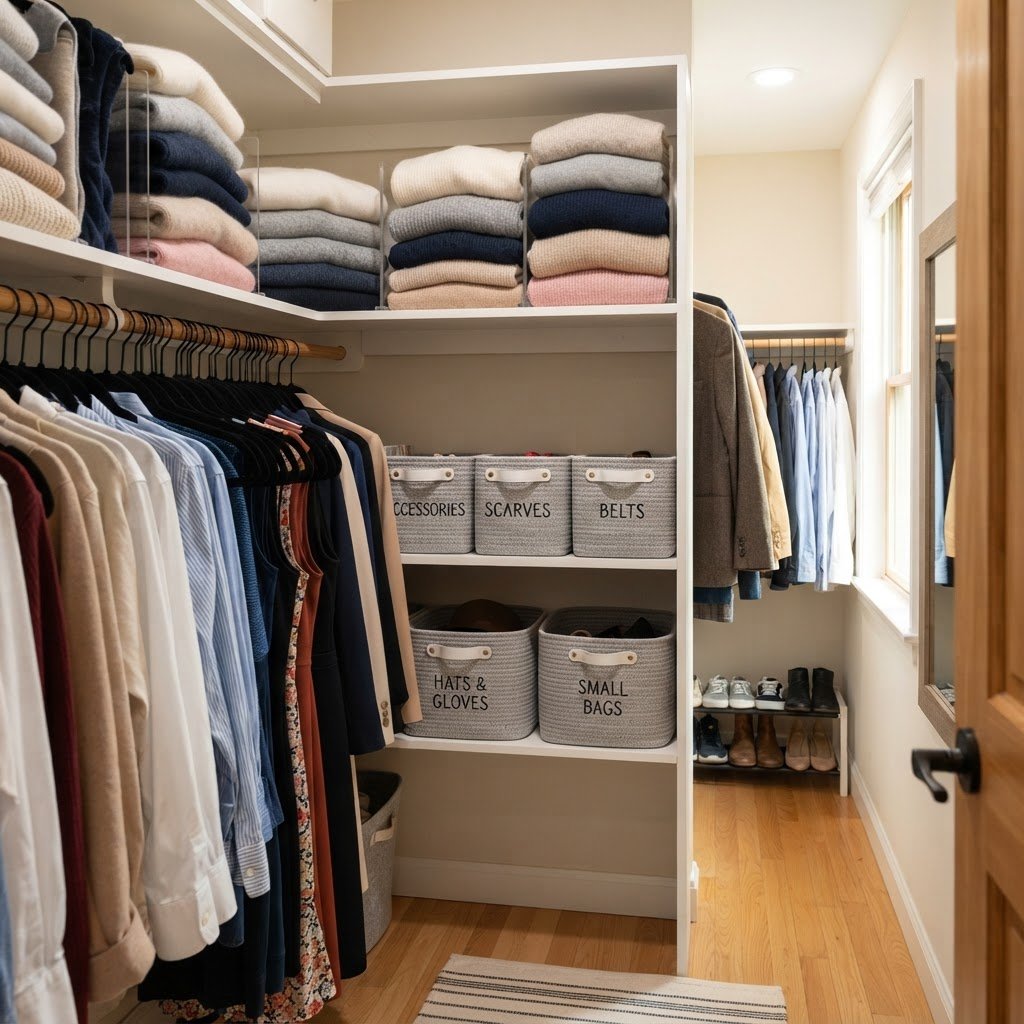
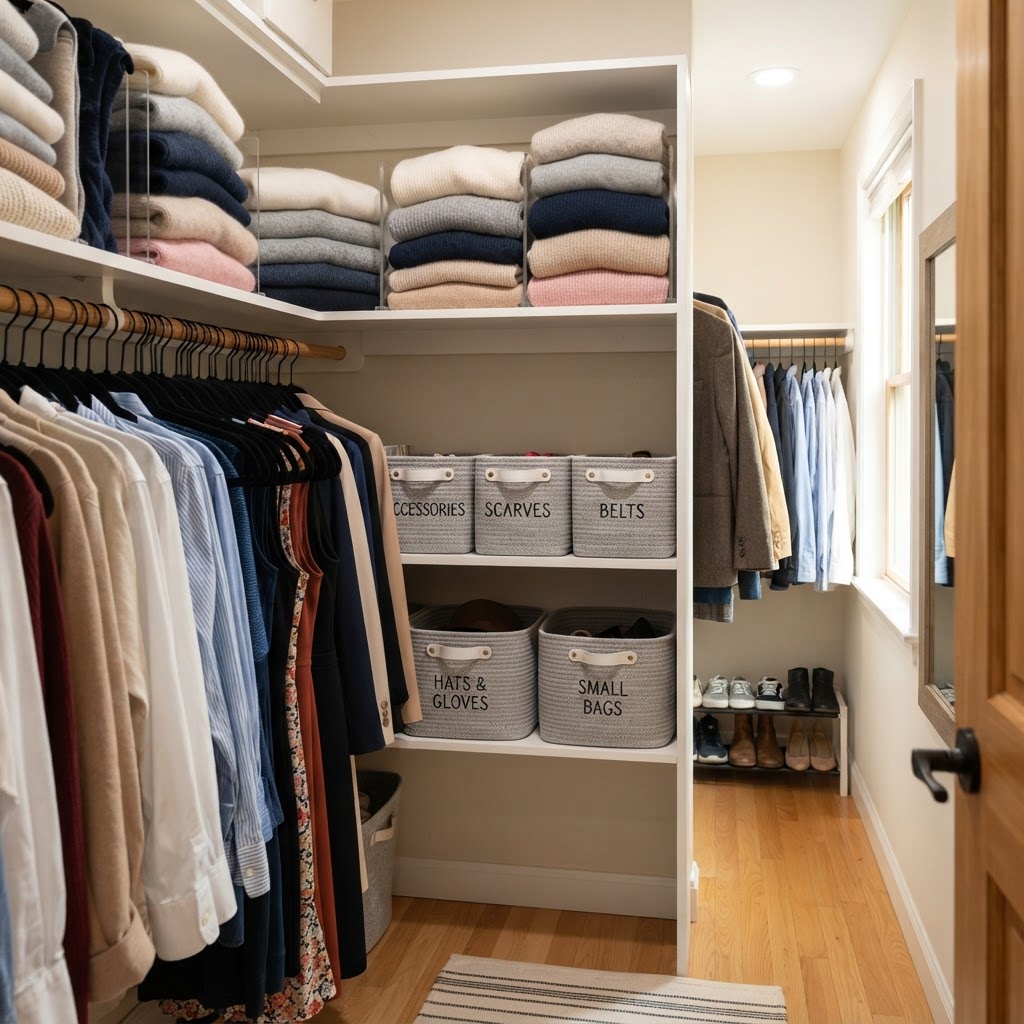
Shelves in small closets frequently turn into ‘leaning towers of sweaters’ that collapse at the slightest disturbance. Shelf dividers serve as rigid, vertical boundaries that keep your folded denim, knitwear, and t-shirts perfectly aligned, regardless of how many items are pulled from the stack. These inexpensive, clip-on accessories eliminate the messy, ‘toppled’ aesthetic that makes a closet feel chaotic. For a minimalist, modern aesthetic, choose acrylic dividers; they provide the necessary structure while remaining virtually invisible to the eye, preventing visual clutter in your small space. They are particularly effective for high-traffic storage shelves where you frequently cycle through clothing. By enforcing a strict ‘lane’ for each category of clothing, you prevent cross-contamination of stacks, ensuring your closet maintains its clean, orderly appearance throughout the entire week, even during the busiest periods of your life.
Create a Modular Floor System
Most closets feature a large, underutilized gap beneath the hanging rods that is often wasted by simply placing a singular laundry hamper in the middle. To maximize this space, transition to a modular system using stackable bins or a low-profile, wheeled utility cart. This approach utilizes every inch of vertical floor-to-rod height that standard layouts ignore. Labeling is the most critical step for a modular system; clear categories like ‘Activewear,’ ‘Swimwear,’ or ‘Bags’ remove the guesswork from your storage. A rolling cart is arguably the most clever addition, as it allows you to pull the entire unit out to access items tucked deep into the back of the closet, effectively eliminating the ‘dark corner’ problem where items go to be forgotten. This systematic approach ensures that even the lowest point in your closet serves a productive, high-utility purpose.
Use Slimline Velvet Hangers
Switching to uniform, slimline velvet hangers is the single fastest way to increase hanging capacity by up to 30%. Because traditional bulky plastic or wooden hangers consume excessive rod width, swapping them for thin velvet versions provides an immediate gain in linear space. The non-slip surface is a major functional benefit, keeping delicate silks or wide-neck shirts securely on the hanger instead of pooling on the closet floor. Beyond the physical space savings, the visual uniformity of velvet hangers creates a cohesive, high-end boutique look. Reducing visual noise is essential for small apartments; when your hangers match, the closet feels intentionally designed rather than cluttered. It is a simple, low-cost investment that pays dividends in both actual space and perceived organization every time you open your closet doors.
Incorporate Lighting for Visibility
Visibility is the primary driver of closet organization; if you cannot see your items, you will not wear them, and they will eventually become clutter. Installing battery-operated LED motion-sensor lights provides bright, clear visibility in the deepest, darkest recesses of your storage space without requiring an electrician or hard-wiring. These lights typically cost between $10 and $25 and turn on automatically, ensuring that you don’t ‘forget’ items tucked in the back corners. When your entire wardrobe is visible, you naturally rotate through your clothing, preventing the habit of relying solely on the items at the front of the rack. Furthermore, bright, white-spectrum lighting makes a small closet feel larger, more premium, and better maintained, turning a ‘storage cave’ into a well-lit dressing area.
Maximize Corners with Rotating Organizers
Corners in reach-in closets are notorious ‘dead zones’ that are nearly impossible to organize effectively with standard shelves. A rotating organizer—often called a Lazy Susan—is the perfect solution for turning these deep, dark corners into a high-utility zone for accessories, shoes, or beauty products. By allowing items to rotate toward you, you eliminate the need to reach into the shadows, making every square inch of your corner space usable. Group items by category, such as placing belts on the bottom level and perfumes or scarves on the top, to maintain a logical, fast-paced routine. This system essentially ‘brings the storage to you,’ ensuring that nothing gets lost in the back. Incorporating a rotating organizer prevents the accumulation of loose items and creates a structured flow in an area that would otherwise be wasted dead space.
FAQ
Q: What is the fastest way to organize a small closet?
Decluttering your wardrobe to remove items you haven’t worn in the last 12 months is the fastest way to organize. Once you have a smaller inventory, switching to slimline velvet hangers instantly saves up to 30% of your rod space and creates immediate visual order.
Q: How do I store bulky winter coats in a tiny apartment?
Use vacuum-seal bags to reduce the volume of winter coats by up to 70% for off-season storage. These sealed bags can be tucked under your bed, inside suitcases, or on high shelves where they don’t consume valuable daily closet space.
Q: Are tiered hangers bad for clothes?
Tiered hangers are generally safe for items like scarves, leggings, or jeans, but they can cause creasing on delicate fabrics like silk or wool. Use tiered hangers for casual wear and save standard velvet hangers for your more structured or delicate items to avoid long-term garment stress.
Q: How can I maximize floor space in a small closet?
Maximize floor space by using a modular rolling cart or stackable bins instead of a standard floor-based hamper. A rolling cart allows you to access items in the back of deep closets easily, effectively turning dead floor space into an organized, high-access storage zone.
Q: How do I keep my small closet smelling fresh?
Place cedar blocks or scented sachets made with dried lavender on your shelves or in your drawer dividers to maintain a fresh scent. Avoid hanging liquid air fresheners, as they can spill and damage clothing; natural, dry options are safer and more effective for enclosed spaces.

Leave a Reply