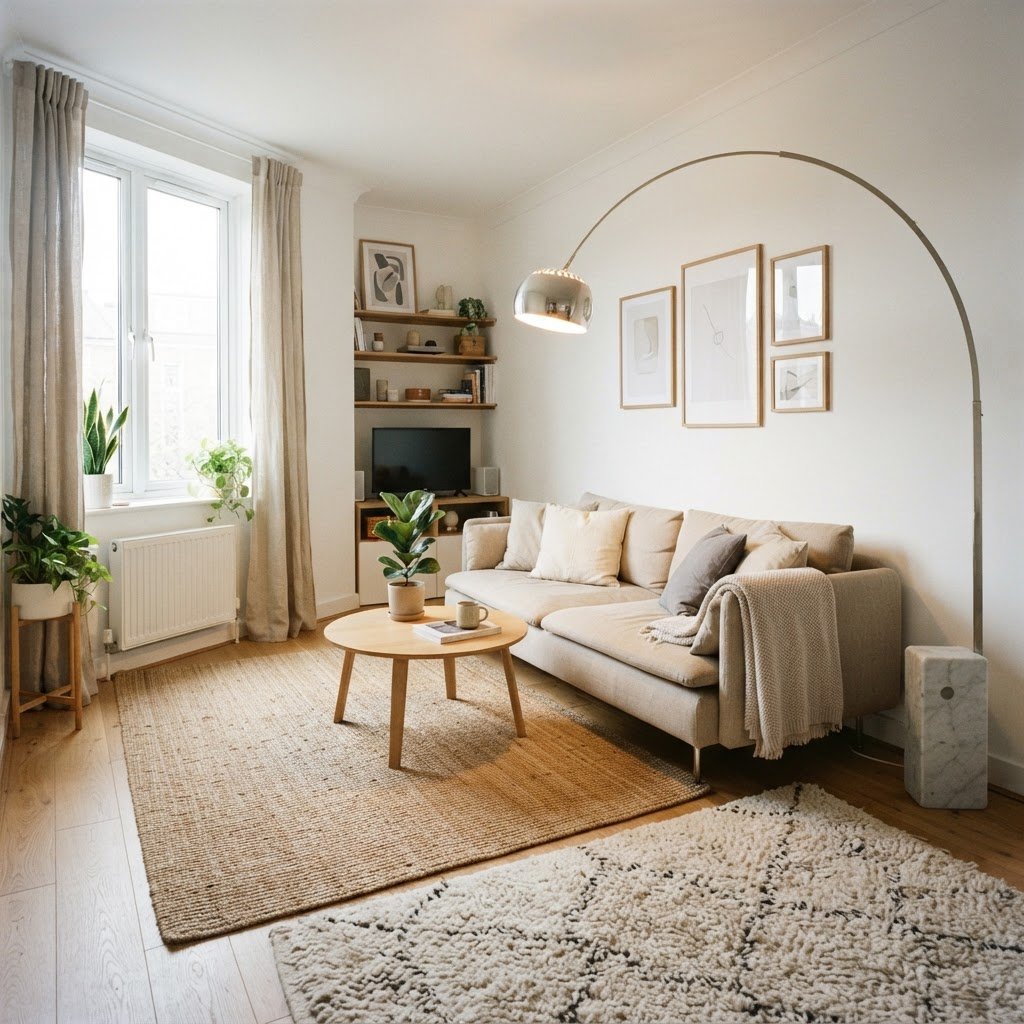
Tiny Living Room Ideas: Stylish Tips for Renters
To transform a tiny living room into a stylish, functional sanctuary, prioritize multi-functional furniture, utilize vertical wall space with renter-friendly adhesives, and employ layered lighting to create depth. By avoiding wall-clinging layouts and using area rugs to define zones, you can maximize your square footage without violating rental agreements.
Rethinking Your Layout for Maximum Flow
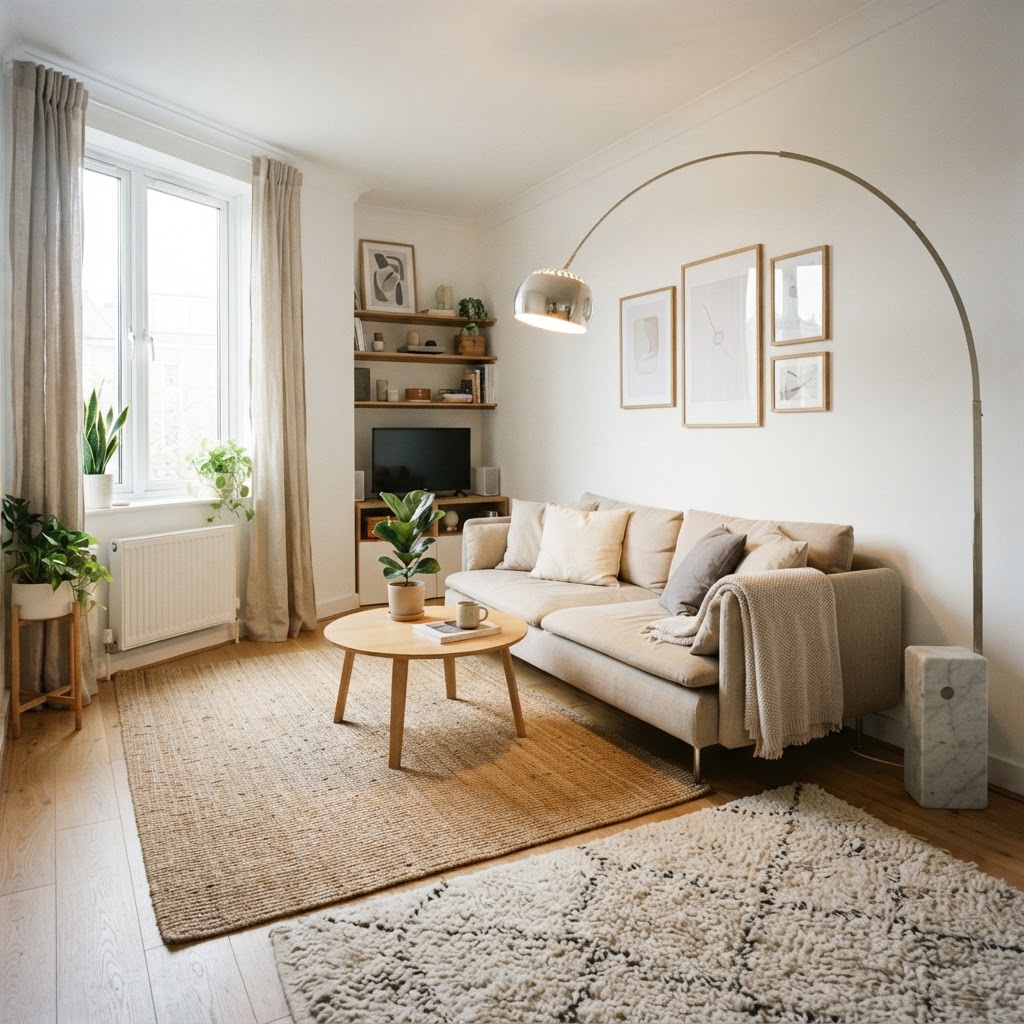
Furniture placement is the most significant factor in creating the illusion of a larger room, with the golden rule being to avoid pushing every piece against the wall. Floating furniture—pulling seating at least 4 to 6 inches away from walls—creates “breathing room” and enhances traffic flow, making the space feel more intentional and spacious. Incorporating clever living room storage ideas allows you to clear surface clutter, which is the primary cause of cramped visual perception in small apartments.
Defining zones is essential for studio or small-apartment living. Use a high-quality area rug to anchor your seating area; a common mistake is choosing a rug that is too small, which makes the room look fragmented. For optimal results, aim for a rug size that allows at least the front legs of your sofa and chairs to sit on it. This technique visually defines the room’s purpose and grounds the furniture, preventing the “floating furniture” look from feeling chaotic.
Prioritizing Multi-Functional Furniture
Every square inch counts in a tiny apartment, so invest in pieces that serve at least two purposes. A storage ottoman is the ultimate rental hack, functioning as extra seating, a footstool, or a coffee table when topped with a wooden tray. Modular furniture is another vital investment; look for sofas with detachable arms or sections that allow you to reconfigure the piece if you move to a new apartment with a different floor plan. If you are looking to stretch your funds further while furnishing your space, our guide on how to decorate a small apartment on a budget provides easy DIY tips that prioritize style without the high price tag.
Investing in Versatile Pieces
When selecting furniture, look for pieces with “visual weight” in mind. Opt for sofas or armchairs with elevated wooden or metal legs that expose the floor underneath. Seeing the floor continue beneath your furniture tricks the brain into perceiving more square footage. Additionally, consider nesting tables; they provide surface space when hosting guests but stack together to take up the footprint of a single side table when not in use.
Vertical Storage and Renter-Friendly Shelving
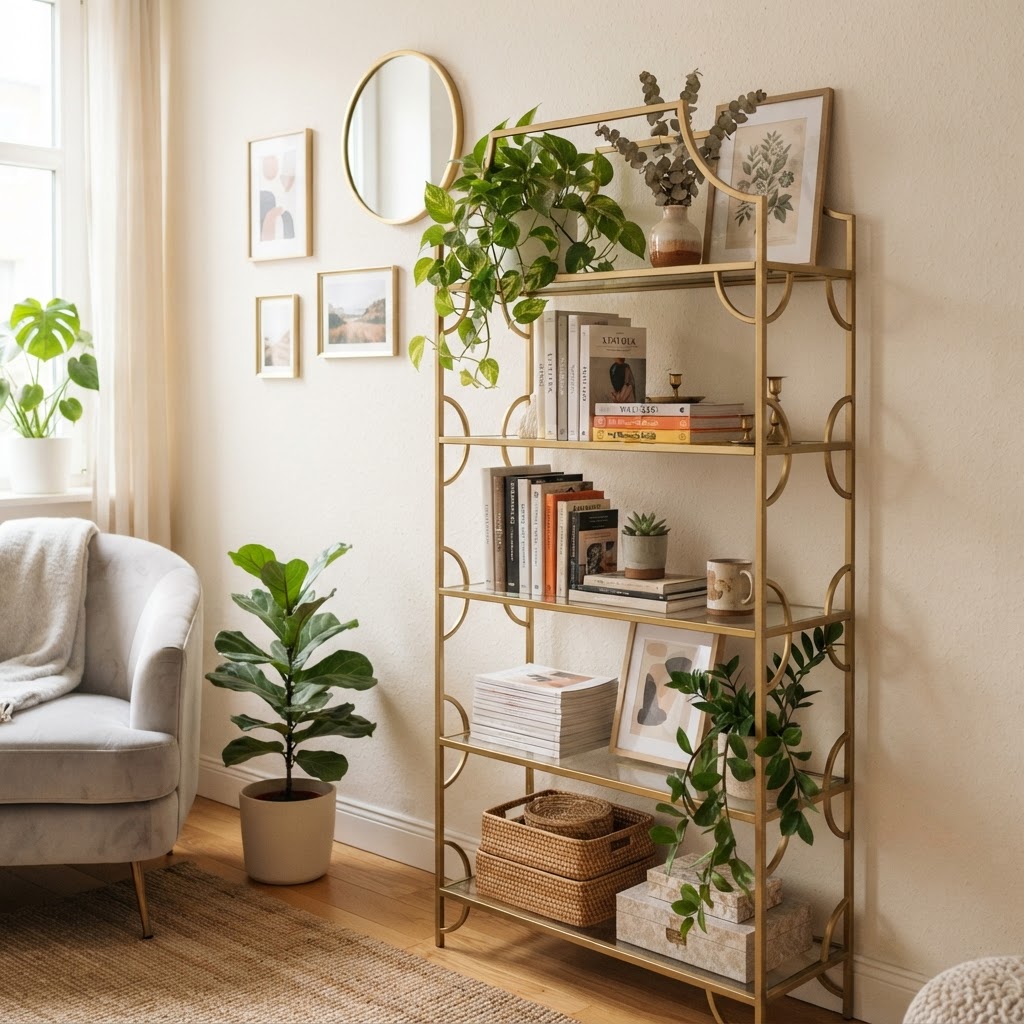
Vertical storage is the most efficient way to expand your room’s capacity without sacrificing precious floor space. Since landlords often restrict drilling into walls, utilize tension-rod shelving systems or tall, freestanding bookcases that can be anchored to wall studs using thin, minimal-impact mounting straps. These systems draw the eye upward, highlighting ceiling height and making the room feel grander than it truly is.
Adhesive-backed modular shelving units are perfect for displaying books and decor without damaging drywall. When arranging these shelves, maintain a 60/40 balance of objects to empty space to prevent the room from feeling claustrophobic. Grouping decor by color or material creates a cohesive look that masks the “clutter effect” often associated with open shelving. If you are worried about security deposits, keep a small container of spackle on hand to patch tiny nail holes, which is standard practice for most lease agreements.
Infusing Personality with Temporary Decor
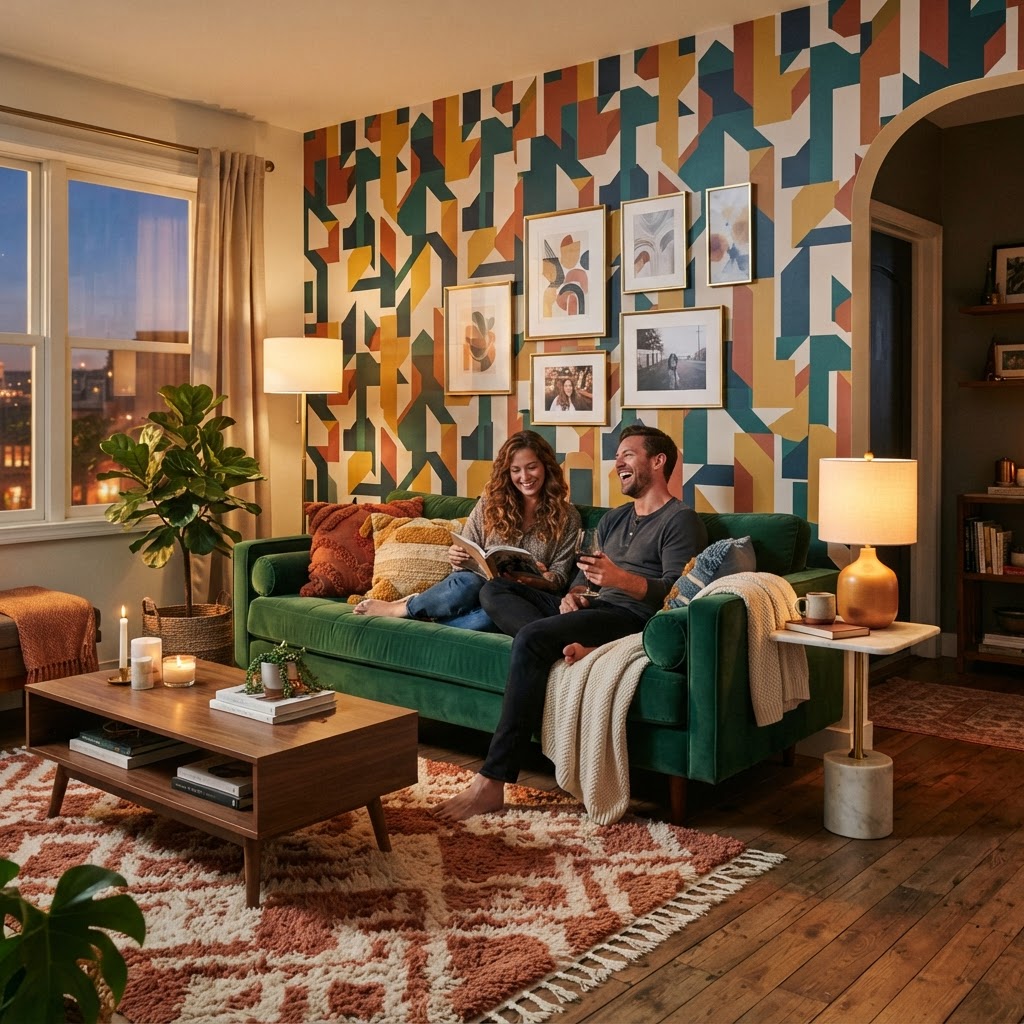
Rental apartments often feature “landlord white” walls that can feel sterile, but peel-and-stick wallpaper provides an instant, temporary design upgrade. Modern self-adhesive wallpapers have improved significantly in quality since 2020, now offering textures like grasscloth or linen that look remarkably real. These wallpapers are typically rated for 3-5 years of use and can be removed with a hair dryer and some patience, leaving no residue behind.
Texture is the secret to a sophisticated space. By layering textiles such as velvet cushions, wool throws, or linen curtains, you add warmth without needing permanent renovations. For art, skip the collection of small, disjointed frames; instead, invest in one large-scale art piece or a gallery wall anchored by a consistent frame color. This creates a focal point that draws the eye and gives the room a custom, high-end feel.
The Magic of Lighting Layers
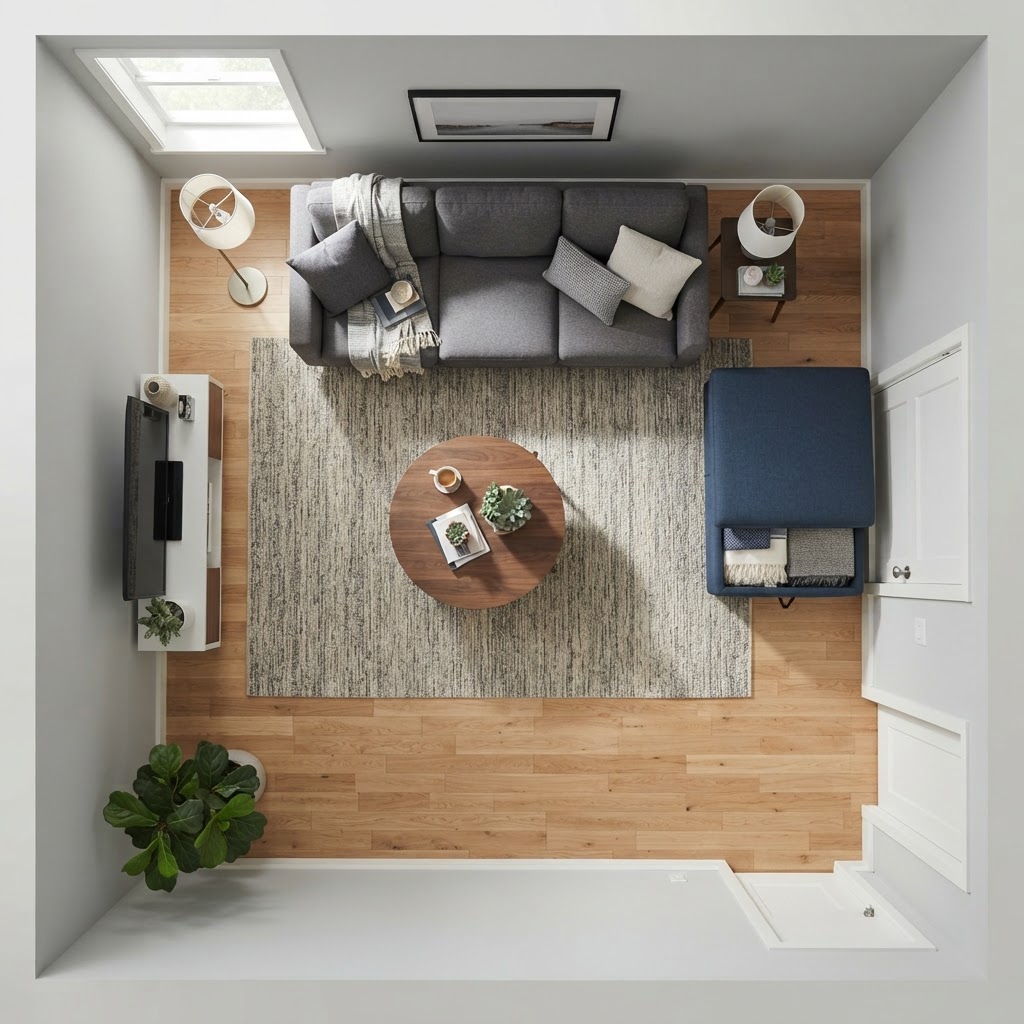
Lighting should always be layered, combining ambient, task, and accent sources to avoid the harsh, flat look of a single ceiling fixture. Start with a main floor lamp to provide ambient light, add a desk lamp for task lighting in work zones, and incorporate smart-bulb-equipped sconces or string lights to provide a warm glow. Aim for a color temperature between 2700K and 3000K, which is considered “warm white” and is essential for making a room feel inviting.
Strategic placement of lamps can even “push” the walls out visually. By placing a floor lamp in a dark corner, you eliminate the shadows that define the edges of the room, effectively blurring the boundaries of your living space. Using smart plugs allows you to control the entire lighting scheme via a smartphone or voice assistant, making it easy to create a “cozy” mood at sunset without having to walk around the room to flip individual switches.
Greenery and Natural Elements
Plants add life and organic texture, which is vital for softening the rigid lines of apartment interiors. If you have limited floor space, use ceiling-mounted hooks (which are easily patched) or window-mounted suction planters to bring greenery inside. For low-light apartments, choose hardy plants like Snake Plants (Sansevieria) or Pothos (Epipremnum aureum), which can survive on as little as 2-4 hours of indirect light per day.
Elevating plants on stands of varying heights creates visual interest and makes the room look styled rather than cluttered. Placing a tall, leafy plant in a corner serves as a soft, natural focal point that breaks up the square shape of the living room. For maximum impact, group plants in odd numbers—three or five plants together look more natural and aesthetically pleasing than a scattered arrangement of individual pots.
Curating Your Items for a Clutter-Free Life
Clutter is the primary enemy of small-space design, making it essential to adopt an intentional curation habit. Implement the “one in, one out” rule: for every new item you bring into your living room—be it a book, candle, or decor piece—another must be donated or discarded. Keeping surface areas clear, such as coffee tables and shelves, is vital to maintaining an open, serene atmosphere.
Use storage vessels that match your decor style to hide items that are purely functional, like remotes, chargers, or spare batteries. Woven baskets, fabric bins, or decorative wooden boxes serve as stylish design elements while doubling as “clutter traps.” By ensuring everything has a designated home, you eliminate the daily mess that makes small living rooms feel suffocating. Remember that negative space is a design feature; leaving a wall blank or a shelf half-empty is often what makes a space look truly professional.
Maintaining Balance and Proportion
Balance is achieved by distributing visual weight evenly throughout the room. If you have a large sofa on one side, counter it with a statement rug or a large plant on the other. Avoid buying furniture specifically sized for a small room if it means sacrificing comfort; instead, buy one or two high-quality, full-sized pieces rather than five tiny, low-quality ones that make the space look like a showroom floor.
FAQ
Q: How can I decorate a rental living room without making holes in the walls?
Use command strips, tension rods, or modular shelving units that rely on gravity rather than hardware. These solutions provide the same functionality as mounted shelves or art while keeping your walls pristine for your security deposit return.
Q: What is the best rug size for a small living room?
Aim for a rug large enough that at least the front legs of your sofa and accent chairs sit on it. A larger rug actually makes a small room feel bigger by unifying the floor space, whereas a small “floating” rug makes the room look disjointed.
Q: How do I hide clutter in a tiny living room?
Use multi-functional furniture like ottomans with storage lids or decorative baskets that tuck under consoles. By providing a “home” for every small item, you can keep your surfaces clear and maintain a clean, open aesthetic.
Q: Does floating furniture really make a room look bigger?
Yes, pulling furniture away from walls creates depth and shadow, which makes a room feel more spacious and less boxy. It also improves traffic flow, allowing you to walk behind furniture rather than being forced into a single, narrow path.
Q: What are the best plants for a low-light apartment?
Snake plants, ZZ plants, and Pothos are ideal for apartments with limited natural light. These species are highly resilient, require infrequent watering, and thrive in indoor conditions, adding life without the need for constant maintenance.

Leave a Reply