How to Make a Small Bathroom Feel Bigger With Smart Storage
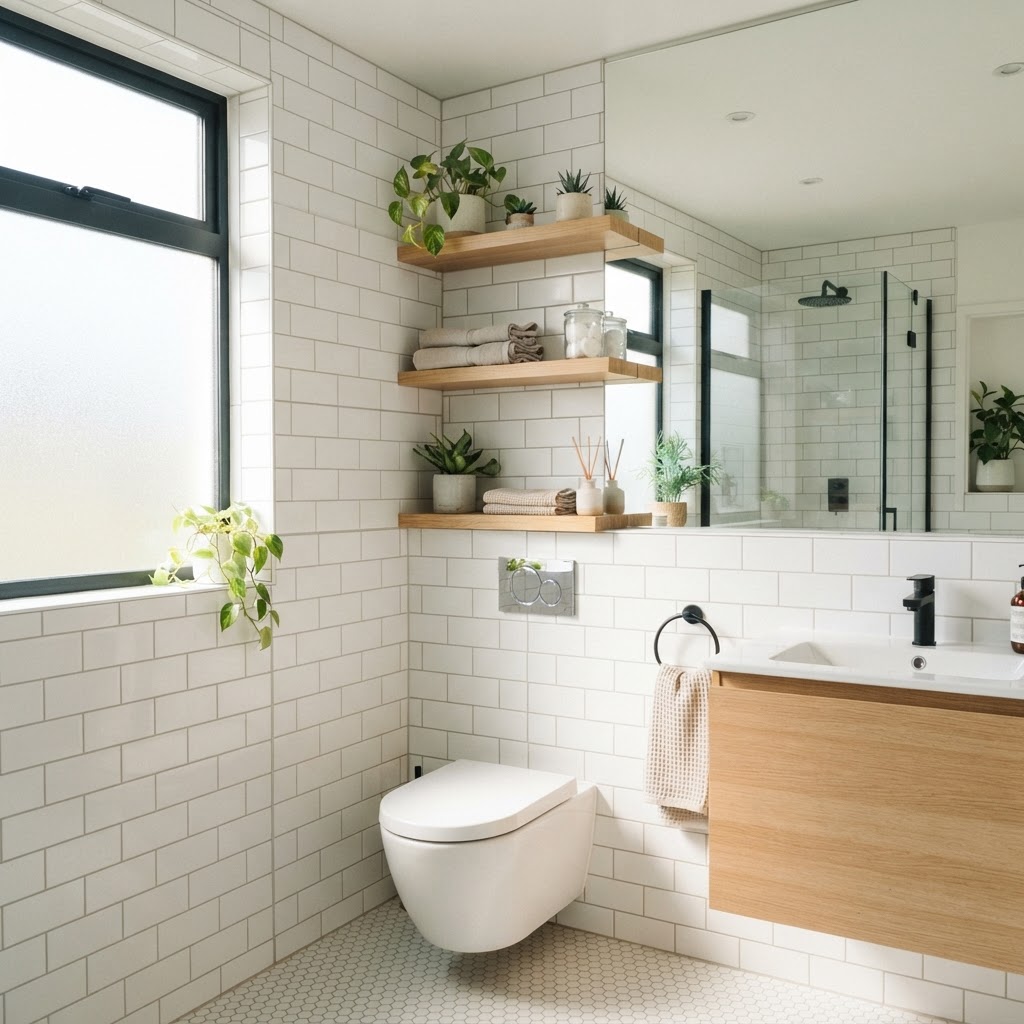
To make a small bathroom feel bigger, prioritize clearing all surfaces, utilize vertical wall space for shelving, and install large mirrors to reflect light. By replacing bulky vanities with floating units and using light, monochromatic color palettes, you eliminate visual noise and create an open, airy environment that maximizes every square inch.
The Psychology of Space and Clutter
The most effective way to expand a small bathroom is to reduce visual noise by clearing off countertops entirely. When every surface is covered with toiletries, the human eye has no “resting point,” which creates a psychological sense of claustrophobia even in a room with functional space. Research suggests that a de-cluttered space can reduce stress levels by up to 25% while simultaneously making a room appear 15% larger. To achieve this, you must treat your countertop as a premium “whitespace” zone. Start by removing any items not used in the last 30 days. For the items that remain, aim for a “one-in, one-out” policy where every new product purchase requires the disposal or storage of an older one. This minimalist approach serves as a fundamental tenet of efficient small apartment organization, ensuring that the room feels like a retreat rather than a storage closet, and it is a key strategy when you choose to decorate a small apartment on a budget to maximize your overall living space.
Simplify Your Daily Routine
Start by taking a brutal inventory of what you actually use on a daily basis. Many people keep expired products or items they haven’t touched in months. By removing these items, you instantly open up room for the essentials, which is a fundamental tenet of effective small apartment organization.
Vertical Thinking: Reaching for the Ceiling
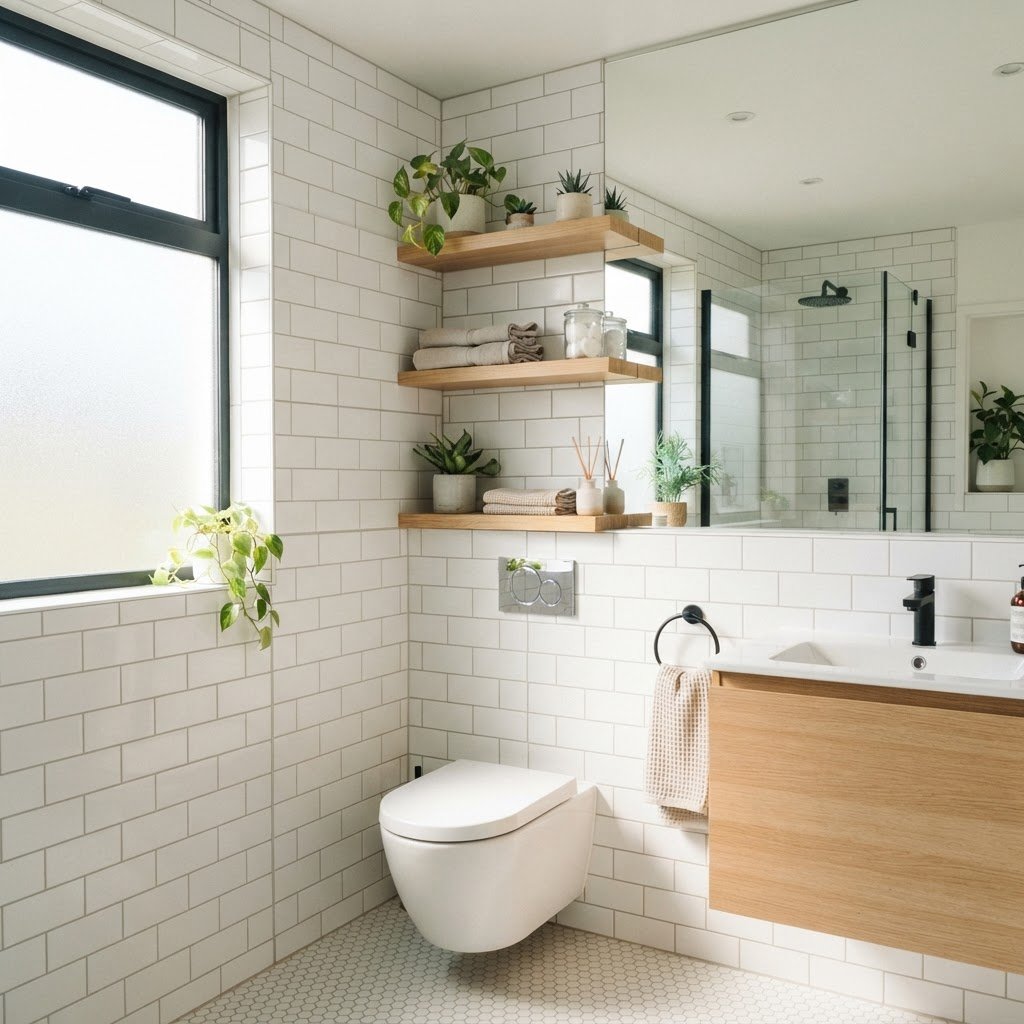
When floor space is at a premium, the most underutilized asset in your bathroom is the wall space reaching toward the ceiling. Most homeowners ignore the area above the toilet or the sink, yet this space offers an incredible opportunity for storage that does not impede your walking path. Installing floating shelves or tall, thin cabinets allows you to house everything from towels to extra toiletries without encroaching on the limited floor footprint. When selecting vertical storage, opt for materials like glass, acrylic, or white-lacquered wood. These materials provide a “transparent” or reflective quality that prevents the furniture from feeling like a wall-block, keeping the sightlines open and the room feeling expansive.
Installing Over-the-Toilet Storage
The space above your toilet is prime real estate that often goes to waste. You can opt for a sleek shelving unit that fits over the toilet tank, or mount individual wall shelves for a cleaner, more minimalist look. Choose materials like glass or white wood to maintain an airy aesthetic that doesn’t feel too bulky or imposing.
Mirror Magic and Light Reflection
Mirrors are the most powerful optical illusion tool in interior design, as they double the perceived depth of a room. By replacing a standard, small vanity mirror with a wall-to-wall or floor-to-ceiling mirror, you effectively break the physical boundary of the wall, making the bathroom feel twice as large. Furthermore, placing a mirror opposite a window or a primary light source helps to bounce natural or artificial light throughout the room, eliminating dark corners that shrink a space. For those needing additional functionality, recessed medicine cabinets offer the “magic” of a large mirror with the utility of concealed storage behind the glass. This combination allows you to hide clutter completely while maintaining a sleek, reflective surface that enhances the room’s brightness and scale.
Hidden Medicine Cabinets
If you need more storage, look for recessed medicine cabinets that hide behind a large mirror. This allows you to have a massive reflective surface while gaining concealed storage where you can tuck away daily items. It’s the perfect blend of form and function for those aiming to make a small bathroom feel bigger.
Utilizing Door Backs and Dead Zones
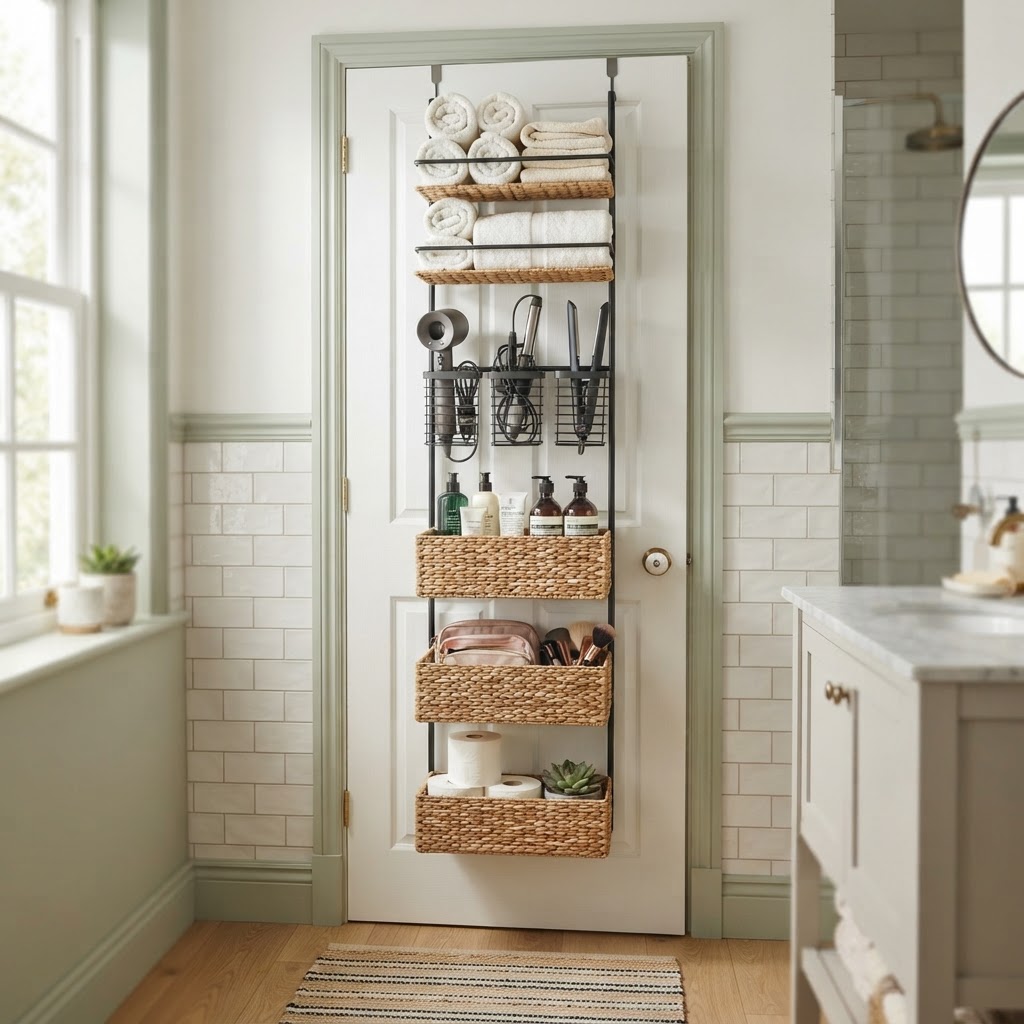
In a small apartment, the back of the bathroom door represents approximately 6 to 8 square feet of usable, “invisible” vertical storage space. Most people neglect this area, but utilizing a high-quality over-the-door organizer can store hair dryers, straighteners, spare toilet paper, and cleaning supplies—all items that would otherwise clutter your limited drawer space. The key is to select organizers that fit the scale of your door. If you have a moisture-heavy bathroom, prioritize mesh organizers over fabric or clear plastic, as the airflow prevents mildew and keeps tools dry. By reclaiming this dead zone, you can clear off your vanity surface entirely, which is the most critical step in making a small space feel larger and more organized.
The Anatomy of a Door Organizer
- Clear pockets allow you to see what is inside without digging.
- Heavy-duty hooks work perfectly for bulky items like towels or robes.
- Mesh organizers are better for items that might be damp, as they allow for airflow.
- Adjustable racks can be customized to fit the height of your specific bottles and tools.
Choosing Multi-Functional Furniture
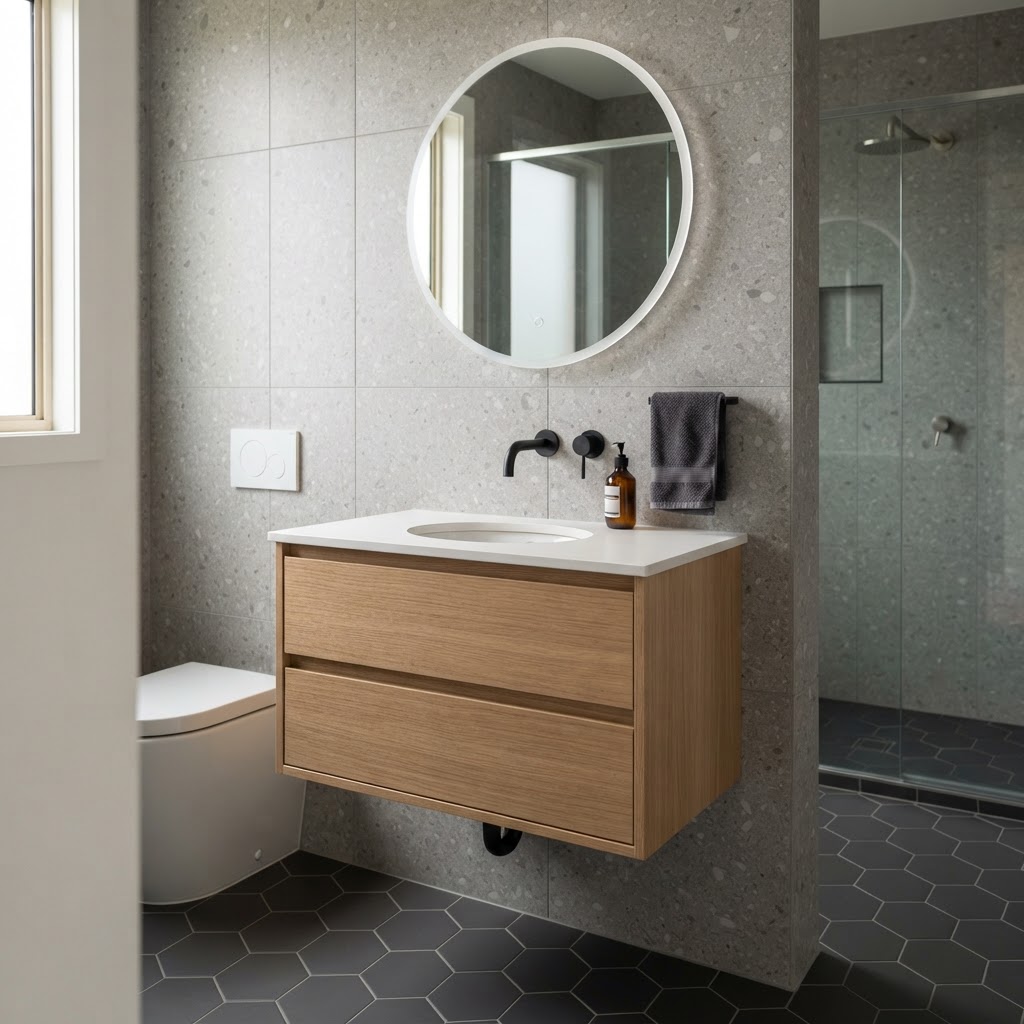
Maximizing small bathroom utility requires selecting furniture that serves at least two distinct purposes to minimize the number of objects taking up floor space. A small, teak or bamboo stool, for example, functions as a seat during a lengthy skincare routine while doubling as a pedestal for a plant or a temporary shelf for folded fresh towels. Just as these storage techniques work for your bath, you can also use clever organization hacks to maximize space in your kitchen when you explore various budget-friendly small apartment kitchen ideas to transform your culinary area. When considering your vanity, avoid pedestal sinks; although they appear “open,” they offer zero storage and force you to buy additional shelving units that clutter the floor. A floating vanity with a single, deep pull-out drawer is a superior choice. Because the unit is mounted to the wall, it keeps the floor clear, which tricks the eye into seeing more floor space and making the entire room appear significantly larger.
Why Compact Vanities Matter
Consider replacing a pedestal sink with a small vanity that features a cabinet underneath. While pedestal sinks look “open,” they provide zero storage. A floating vanity with a single deep drawer offers hidden space that maintains the visual flow of the floor, which helps the bathroom feel larger.
Color Palettes and Texture Selection
Color is the primary tool for manipulating the perception of size, as monochromatic, high-light-reflecting schemes minimize hard visual boundaries. Using white, cream, or light grey paint on both walls and ceiling tricks the brain into not perceiving where the wall ends and the ceiling begins, effectively creating an infinite-feeling space. To avoid a “sterile” aesthetic, introduce texture rather than contrasting color. Incorporating items like woven seagrass baskets, matte-finished hardware, or linen towels adds depth and tactile warmth without adding “visual weight.” Polished chrome or nickel hardware also contributes to a larger look by reflecting light throughout the room, unlike dark, matte-black fixtures which can sometimes absorb light and visually “anchor” a space, making it feel smaller and more constrained.
Incorporating Texture Without Clutter
If an all-white bathroom feels too sterile, introduce texture through towels, baskets, and hardware rather than color. A woven seagrass basket adds warmth and keeps small items neatly contained, while polished nickel or matte black hardware provides a sophisticated focal point that draws the eye upward and outward.
Organizing the “Hidden” Drawers
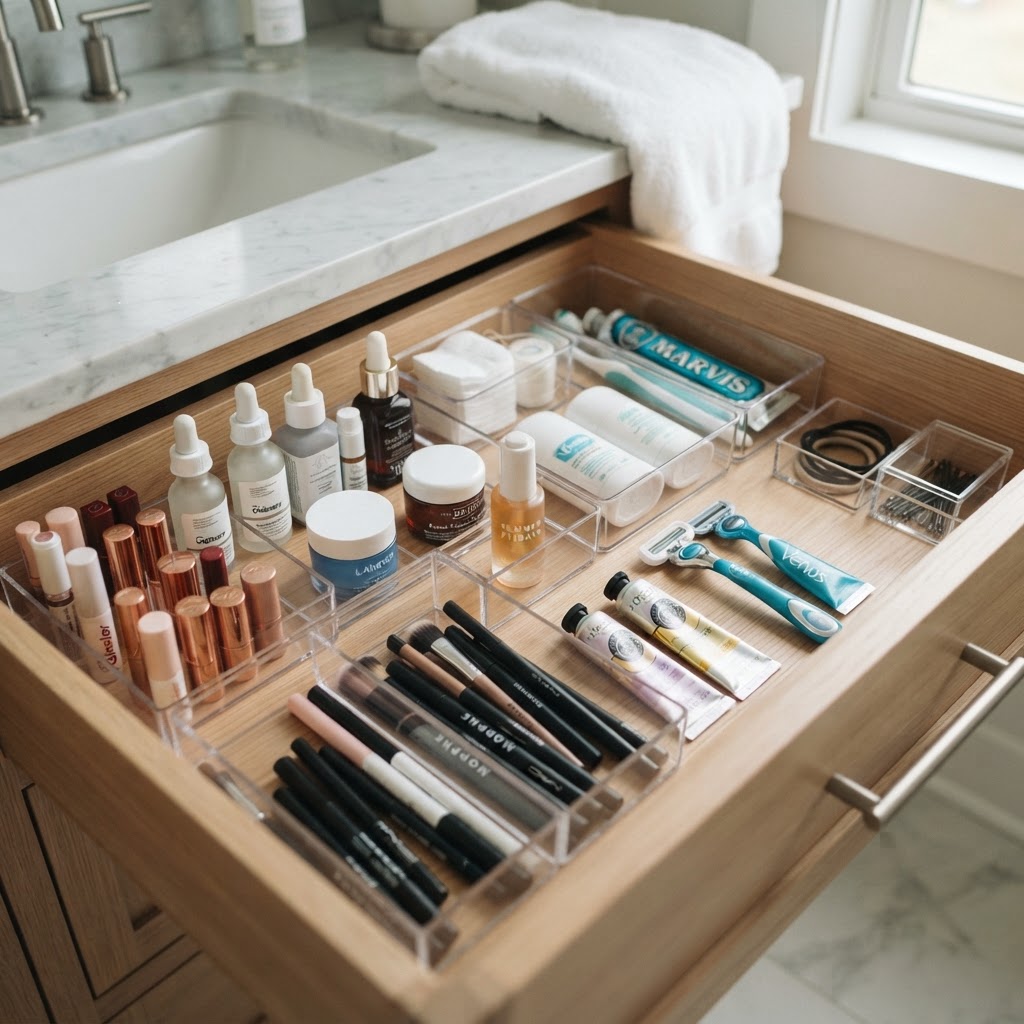
Small bathroom storage is ineffective if your internal drawers remain a chaotic jumble of tangled cords and scattered cosmetics. Utilizing clear acrylic drawer dividers allows you to assign a specific, “fixed” home to every tool, which prevents the slow accumulation of clutter that happens when things are tossed in haphazardly. For maximum efficiency, implement the “Categorization Method,” where items are grouped by frequency of use. If you are tired of loose items sliding around, consider using multi-level drawer organizers to tame your bathroom clutter and keep your essentials perfectly categorized. Vertical dividers are particularly useful for thin items like nail files, tweezers, and brushes, which otherwise take up too much drawer real estate if laid flat.
The Categorization Method
- Keep all hair styling tools together.
- Dedicate one bin for dental hygiene products.
- Group skincare items by morning and evening routines.
- Utilize vertical dividers for thin items like nail files or tweezers.
Lighting Strategies to Enhance Openness
Lighting is often the most overlooked factor in small bathroom design, yet it dictates whether the room feels like a cramped closet or a bright, expansive space. A single overhead light source creates harsh shadows and dark corners, both of which visually contract the room. To combat this, you should aim for layered lighting; install sconces on either side of the mirror to eliminate facial shadows and provide cross-illumination. Additionally, consider the color temperature of your bulbs. Cool-toned LED bulbs (around 3000K to 4000K) best mimic daylight, creating a clean, vibrant aesthetic that makes the walls seem to recede. Avoid yellow-toned, dim bulbs, as they contribute to a “gloomy” atmosphere that traps the eye within the room’s actual, small dimensions.
The Impact of Cool vs. Warm Tones
Using cool-toned LED bulbs can mimic natural daylight, which makes a room feel fresh and vibrant. Avoid yellow-toned, dim bulbs that can create a gloomy, cramped atmosphere. Even the smallest space feels larger when it is flooded with bright, crisp light.
FAQ
Q: What is the best color for a small bathroom?
A: The best color for a small bathroom is white or off-white. Using a monochromatic, light-reflecting palette eliminates hard visual boundaries and makes walls appear to recede, which creates an immediate illusion of a much larger, more open space.
Q: Are pedestal sinks better than vanities for small bathrooms?
A: No, pedestal sinks are generally worse because they offer zero storage and force you to add bulky standalone shelving units. A floating vanity is the better choice as it clears the floor area and provides hidden storage, creating both more space and a cleaner look.
Q: How can I store items in a bathroom without wall space?
A: You can store items using over-the-door organizers, which utilize the back of the bathroom door for vertical storage. Alternatively, use multi-level drawer organizers inside your existing cabinetry to maximize the internal volume of your storage space without needing to mount anything on your walls.
Q: Does lighting actually make a small bathroom look bigger?
A: Yes, bright, layered lighting is critical for expanding a space. Installing sconces on either side of the mirror and using cool-toned daylight LED bulbs (3000K-4000K) eliminates dark corners and shadows, which visually “stretches” the room’s dimensions and makes it feel fresh and airy.
Q: How do I stop my bathroom drawers from getting messy?
A: Use clear acrylic drawer dividers to assign a specific, permanent home for every item. Categorizing your products into bins by function—such as grouping hair tools together or separating morning and evening skincare—prevents clutter from re-accumulating after you have cleaned them out.

Leave a Reply