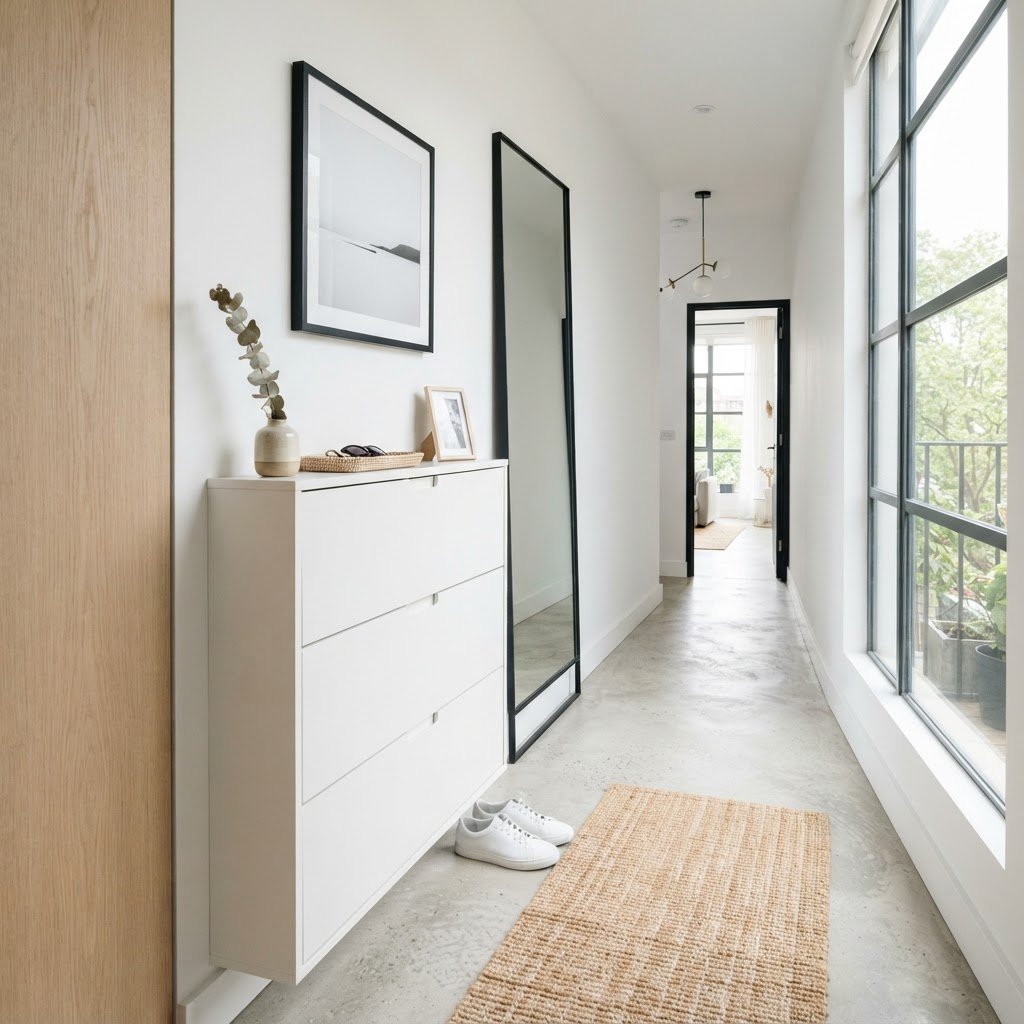
The most effective shoe storage solutions for narrow entryways include slim tip-out cabinets, vertical wall-mounted floating shelves, and multi-functional bench seating with built-in racks. These space-saving methods prioritize vertical storage and hidden compartments to eliminate floor clutter, ensuring even the smallest foyer remains organized, functional, and visually spacious.
The Psychology of an Organized Entryway
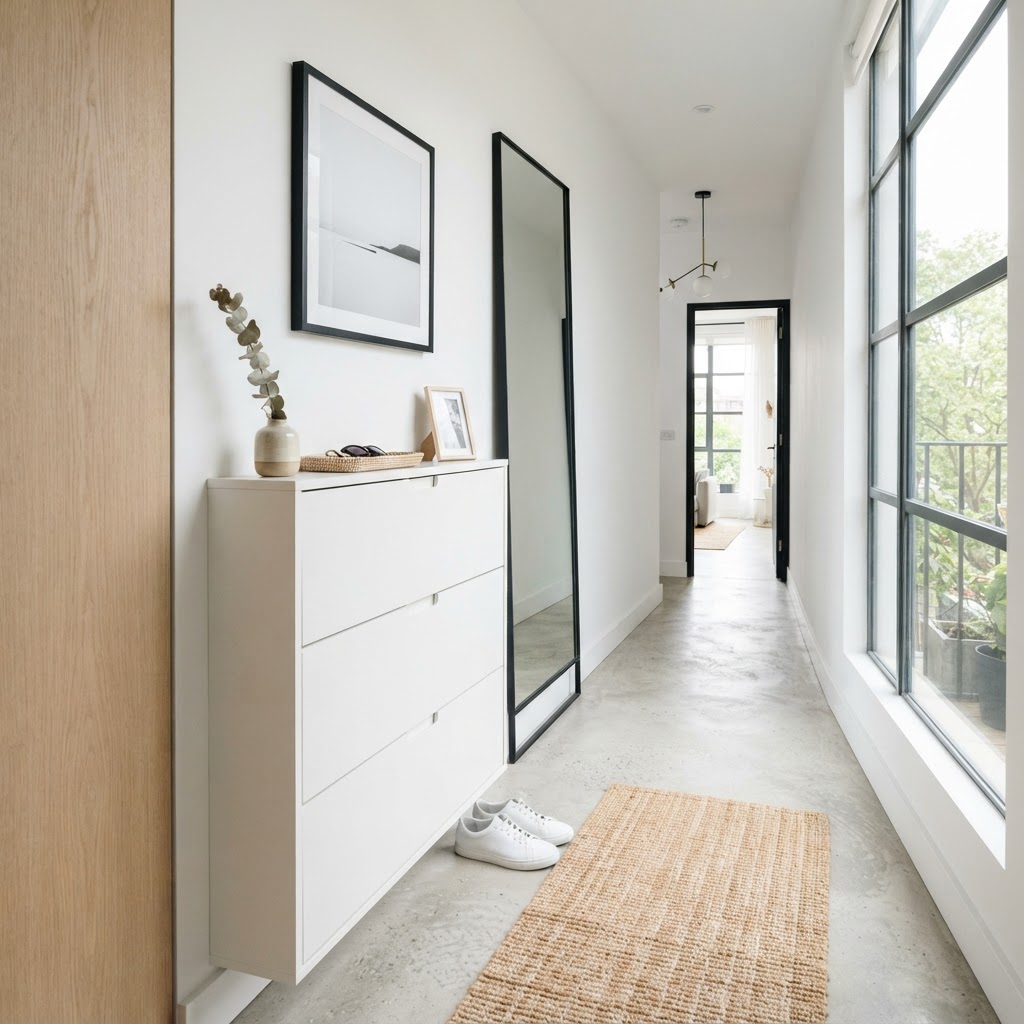
Your entryway acts as the transition zone between the hectic outside world and your personal sanctuary. While you focus on organizing your entrance, you might also be looking for cozy tiny living room ideas to ensure the rest of your apartment feels just as inviting and well-curated. While you work on decluttering your foyer, it is also important to look for ways to maximize space in your kitchen, especially if you are looking to maximize space in your kitchen on a tight budget. When this area is cluttered with shoes, it signals stress to your brain the moment you walk through the door. Adopting smart small apartment storage habits begins by clearing the floor, which instantly makes a narrow space feel larger and more inviting. Proper organization helps you manage your daily routine efficiently, ensuring you can grab your keys and shoes without delay. According to interior design ergonomics, a clear floor path of at least 30 inches is required for comfortable movement; keeping footwear off the ground is essential to meeting this standard in tight hallways. By categorizing your footwear by frequency of use—daily commuters near the door and seasonal items on higher shelves—you reduce cognitive friction, allowing for a faster “out-the-door” experience. Investing in modular systems, which often cost between $80 and $250, provides a high return on investment by maximizing usable square footage in apartments where the median price per square foot continues to climb. If you are looking to decorate a small apartment on a budget, these modular systems are a cost-effective way to elevate your space without breaking the bank.
Why Narrow Spaces Need Vertical Thinking
In a tight apartment, the floor is premium real estate. When you run out of floor space, the only way is up. Utilizing wall-mounted units, slim vertical towers, and tiered racks allows you to store multiple pairs of shoes in the same footprint previously occupied by just one pair. This shift in perspective is the foundation of successful entryway organization. Consider the following comparison to determine which vertical method suits your specific layout:
1. Slim Profile Tip-Out Cabinets
Tip-out cabinets are the gold standard for narrow hallway shoe storage because they are designed specifically to hide footwear in plain sight. These units typically feature tilted drawers that drop down to reveal your shoes, keeping them organized while maintaining a sleek, furniture-like appearance. Because they have a very shallow depth, usually under 10 inches, they are perfect for hallways where every inch matters. If you are looking for even more inspiration, check out these creative ways to store shoes in a tiny entryway to further maximize your floor space. When selecting a unit, look for durable MDF or solid wood construction with double-row hardware; a high-quality model can store between 12 and 18 pairs of shoes while remaining slim enough to sit behind a swinging door. These cabinets are engineered to prevent the “shoe pile” phenomenon, as each pair has a specific, upright location. For added functionality, look for models with a top surface drawer where you can place keys, wallets, or mail, transforming a single piece of furniture into a complete entryway command center. Always anchor these units to the wall for safety, especially in high-traffic areas where accidental bumps might occur.
2. Under-Console Shoe Racks
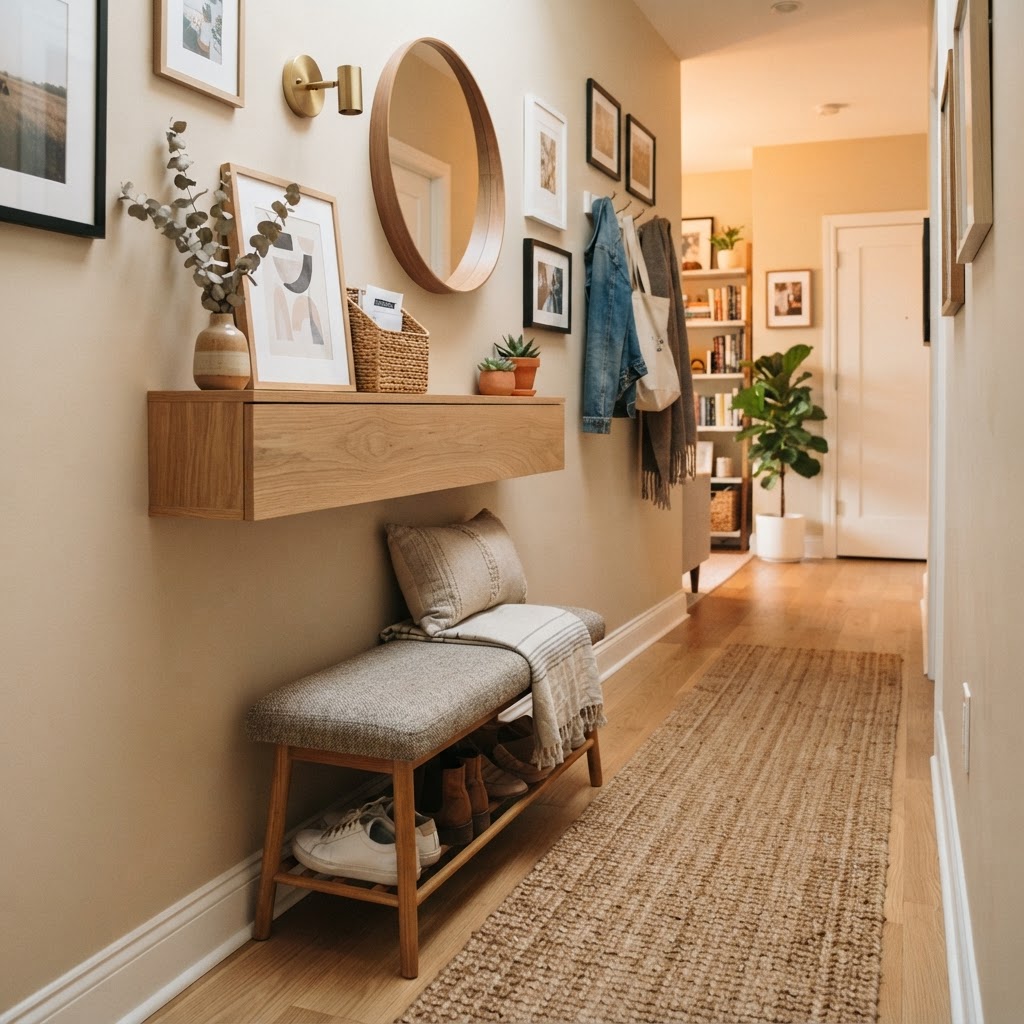
If you have a narrow console table, you are already halfway to a solution. Instead of leaving the space beneath the table empty, slide a low-profile, two-tier shoe rack directly underneath it. This creates a hidden storage zone that is easily accessible but out of the direct line of sight from the living area. Choose a rack with a neutral finish that matches your console to keep the look cohesive and minimal. By utilizing the “dead zone” beneath your furniture, you effectively reclaim floor space that would otherwise be wasted. For optimal results, measure the clearance of your console—most standard tables offer 24 to 30 inches of height, which is plenty for a stackable two-tier rack. If your console is made of metal, consider a magnetic rack, or use adhesive-backed risers to prevent the unit from sliding when you pull it out. This method is particularly effective for households with fewer than 10 pairs of shoes, as it allows you to rotate footwear without cluttering the walk path. Keeping this area ventilated is key; ensure your rack has slatted or wire shelving to allow airflow, preventing odors from trapping in the fibers of your shoes.
3. Wall-Mounted Floating Shelves
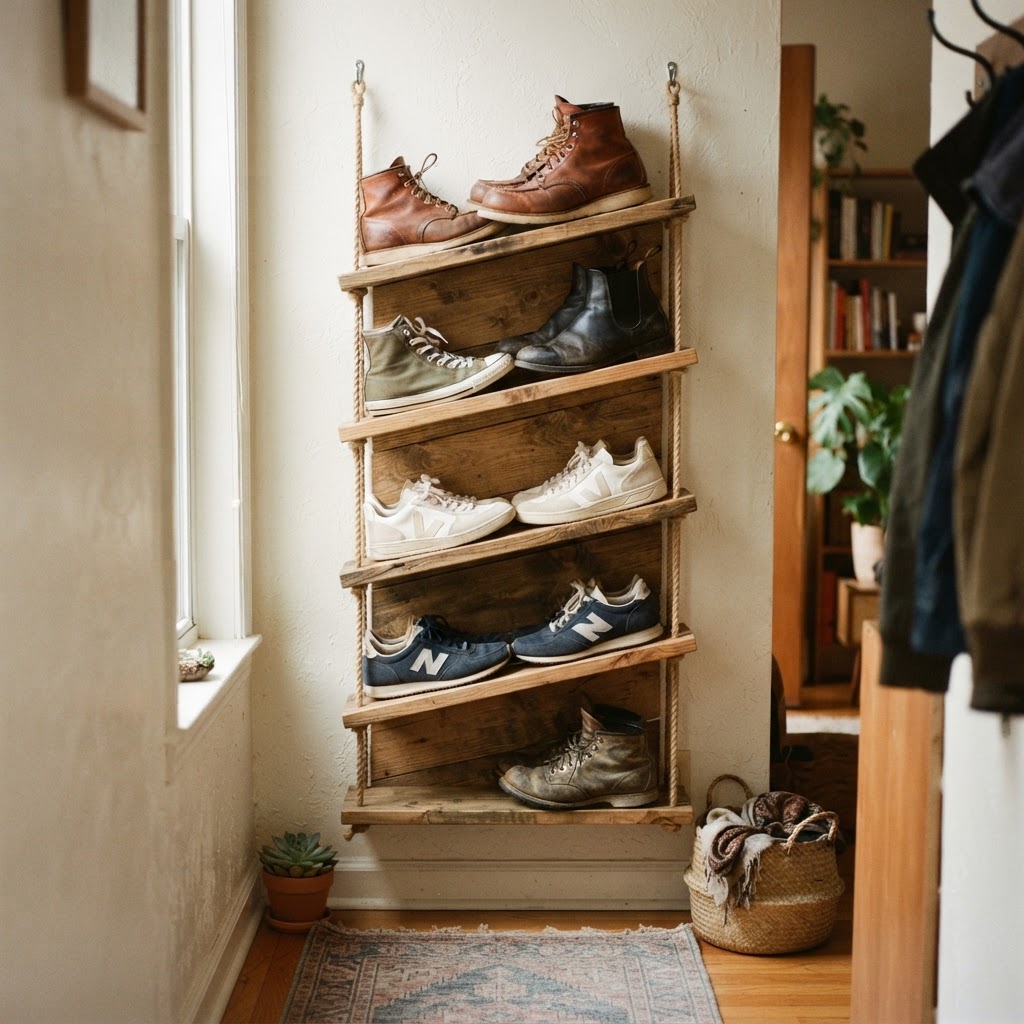
Floating shelves aren’t just for books or decor; they are incredible tools for storing shoes off the ground. Install a series of staggered floating shelves along a blank wall in your entryway to create a “shoe gallery.” This not only saves floor space but also turns your favorite footwear into a design feature. It is a fantastic way to add personality to your home while solving your storage dilemmas. When installing these shelves, use heavy-duty wall anchors or mount directly into the studs to support the weight of heavier boots. For a cohesive look, keep your shelving material consistent with your flooring or baseboards; for example, white shelves against white walls minimize visual weight, making the entryway feel larger. You can also utilize specific shoe-display shelves with angled lips that hold the heel in place, preventing slip-offs. Staggering the shelves at heights of 8, 16, and 24 inches allows for both flats and taller ankle boots to be displayed elegantly. This “gallery” approach is highly effective for limited-space dwellers who value aesthetics as much as utility, effectively proving that your storage can be a decorative highlight rather than a hidden utility item.
4. Behind-the-Door Pocket Organizers
Often, the back of the front door or a nearby closet door is an underutilized goldmine. Over-the-door pocket organizers are inexpensive, easy to install, and perfect for holding flats, sandals, and lightweight sneakers. This is one of the most effective shoe storage solutions for narrow entryways because it keeps items entirely out of the walking path while making use of space that would otherwise be wasted. Most standard over-the-door organizers feature 24 pockets, providing enough storage for up to 12 pairs of shoes in a space that was previously non-existent. When purchasing these, opt for clear PVC or breathable fabric versions to ensure visibility and hygiene. The key to maintaining a clean look is to avoid overstuffing; use pockets for items under 1 pound each to prevent the door from sagging or the organizer from pulling away from the hinges. If your entryway door is not suitable, consider a wall-mounted vertical rack that mimics this pocket layout, ensuring the same efficiency without putting stress on your door frame. This is arguably the most budget-friendly solution, with many high-quality units available for under $25, offering a significant storage boost for minimal expenditure.
5. Built-In Vertical Cubbies
For those willing to do a bit of DIY, building or installing tall, narrow cubbies is a game changer. These units rise from the floor to eye level, providing dedicated slots for every pair of shoes. By creating individual cubbies, you prevent the ‘pile-up’ effect and make it incredibly easy to keep track of your most worn footwear. The vertical orientation draws the eye upward, making the room feel taller. A standard cubby unit, measuring approximately 12 inches wide by 60 inches tall, can hold up to 10 pairs of shoes while consuming less than one square foot of floor space. To elevate the look, add a small piece of molding at the top of the unit so it appears custom-built into the architecture of your home. You can even personalize individual cubbies with labels or hooks for keys and accessories. For small apartments, modular cube organizers are a cheaper alternative that can be stacked to reach the ceiling, though they must be secured to the wall using furniture straps to ensure safety. This method creates a sense of order that makes a chaotic entryway feel like a high-end boutique, providing a dedicated “home” for every pair you own.
6. Woven Baskets with a Purpose
If you prefer a softer, more casual look, tuck a few high-quality woven baskets beneath a wall-mounted bench. While baskets are technically ‘open’ storage, they act as designated zones for specific types of shoes, such as gym sneakers or seasonal boots. When choosing baskets, look for rectangular shapes that fit flush against the wall to ensure you aren’t creating a tripping hazard. Woven seagrass or rattan baskets offer durability and a natural texture that warms up sterile, narrow hallways. To prevent the “messy pile” look, assign one basket per family member; this simple behavioral hack ensures that only one person’s shoes are in a single basket, making retrieval instantaneous. For a cleaner appearance, look for baskets with lids or use fabric liners that can be washed periodically to combat dust and odors. In a narrow hallway, keep the total basket depth to 14 inches or less to maintain the walking path. This solution is ideal for “quick-access” footwear like runners or slip-ons, which are frequently used and returned to the door within seconds, keeping your main storage units reserved for less frequently worn shoes.
7. Rotating Shoe Towers
Rotating shoe towers are brilliant for corners or tight spaces where you need to maximize capacity. These units allow you to store 15 to 20 pairs of shoes in a footprint no larger than a standard floor lamp. Because they rotate, you can quickly scan your collection without having to dig through a dark cabinet or a messy floor pile, making them a high-efficiency choice for small apartment storage. A standard 360-degree rotating tower typically measures 12 to 15 inches in diameter, making it ideal for the often-wasted space behind an open door or a corner junction. For best performance, look for units with ball-bearing swivels that rotate smoothly even when fully loaded. While these can be more expensive than static racks, the density of storage is unmatched for the floor space utilized. When positioning the tower, leave at least 2 inches of clearance on all sides to prevent the unit from scuffing your walls during rotation. They serve as a modern, sculptural element in your foyer, turning a storage necessity into a functional piece of art that keeps your footwear organized and easily accessible at a moment’s notice.
8. Expandable Under-Bench Storage
Many entryways benefit from a slim bench, but adding storage underneath makes it twice as useful. Look for benches that include built-in slatted shelves or pull-out drawers designed for footwear. This ‘dual-use’ furniture is a staple in professional interior design for small homes, providing a place to sit while putting on shoes and a place to store them afterward. An ideal bench for a narrow hallway should be no deeper than 14 inches and offer at least 10 inches of vertical clearance for shoe storage. If you cannot find a pre-made bench, consider buying a slim storage ottoman and replacing the legs with taller, sturdier ones to create space for a shoe tray underneath. This “layering” approach—a bench for sitting and a tray for storing—doubles your organization potential without increasing the furniture footprint. By providing a dedicated seat for putting on footwear, you also reduce the likelihood of shoes being kicked off in random spots throughout the room, as users are naturally incentivized to place them directly onto the designated storage surface before or after sitting.
9. Magnetic or Hook-Based Storage
While less conventional, using heavy-duty hooks to hang boots by their heels or using magnetic strips for specialized footwear can be a brilliant hack. This method is particularly useful for tall boots that lose their shape when stored in traditional racks. By getting boots off the floor, you create a sense of ‘visual breathing room’ that is essential in a small hallway. Magnetic strips can be installed at ankle-height to hold metal-eyelet shoes, or you can use “S” hooks on a wall-mounted rail to hang boots by the pull tabs. This prevents the creasing and folding that often occurs in cramped, horizontal shoe piles. For an even cleaner look, install the hooks behind a curtain or inside a narrow closet space to hide the footwear from view while keeping them perfectly shaped. This method is highly modular; you can add or remove hooks as your collection changes, making it one of the most flexible storage solutions for renters who cannot install permanent cabinetry. It is the perfect blend of utility and space management for those who own high-end boots that require special care to maintain their integrity over time.
10. The ‘One-In, One-Out’ Rule
No list of storage solutions would be complete without a maintenance strategy. Even the best shoe storage solutions for narrow entryways will fail if you have too many shoes for the space. Adopt a strict ‘one-in, one-out’ policy where every time you buy a new pair of shoes, you donate or recycle an old pair. This keeps your collection curated and your entryway functional. Research in minimalist living suggests that the average person wears only 20% of their footwear 80% of the time; auditing your collection every six months is the key to maintaining this balance. Beyond the one-in, one-out rule, consider seasonal rotation: store off-season footwear in vacuum-sealed bags under your bed, leaving only current-season shoes in the entryway. This reduces the density of your storage units, making them feel less cluttered and easier to navigate. Maintaining this discipline ensures that your chosen storage solution remains an effective tool rather than an overfilled, stressful point of friction. By treating your shoe collection as a dynamic, limited set, you preserve the calm, organized environment that a tiny apartment foyer requires to remain welcoming.
FAQ
Q: How can I store shoes in a hallway less than 3 feet wide?
Use vertical, wall-mounted solutions like floating shelves or a slim tip-out cabinet under 10 inches deep. These options keep the floor completely clear, ensuring that you maintain the required 30-inch clearance path while maximizing your storage capacity.
Q: What is the most space-efficient way to store boots?
Vertical hanging using heavy-duty hooks or specialized boot clips is the most efficient method. By hanging boots by the heel or pull tab, you preserve their shape and remove them from floor piles, which effectively saves horizontal space for other frequently used footwear.
Q: Are tip-out cabinets better than open racks for small entryways?
Yes, tip-out cabinets are superior for narrow spaces because they hide footwear completely, reducing visual clutter. While open racks provide easier access, the closed nature of a tip-out unit creates a sleeker, more intentional design aesthetic that makes a cramped space feel significantly larger.
Q: How do I manage shoe odors in small, closed storage units?
Place activated charcoal bags or cedar blocks inside your storage units to absorb moisture and neutralize odors. Because enclosed cabinets can trap air, ensure your storage furniture has back ventilation holes or store only clean, dry shoes to keep the space smelling fresh.
Q: How often should I declutter my entryway shoe storage?
Perform a “shoe audit” every six months to align with seasonal changes. Remove shoes you have not worn in the last 12 months and donate them, keeping your storage units dedicated only to the footwear you actively rotate during the current climate.

Leave a Reply