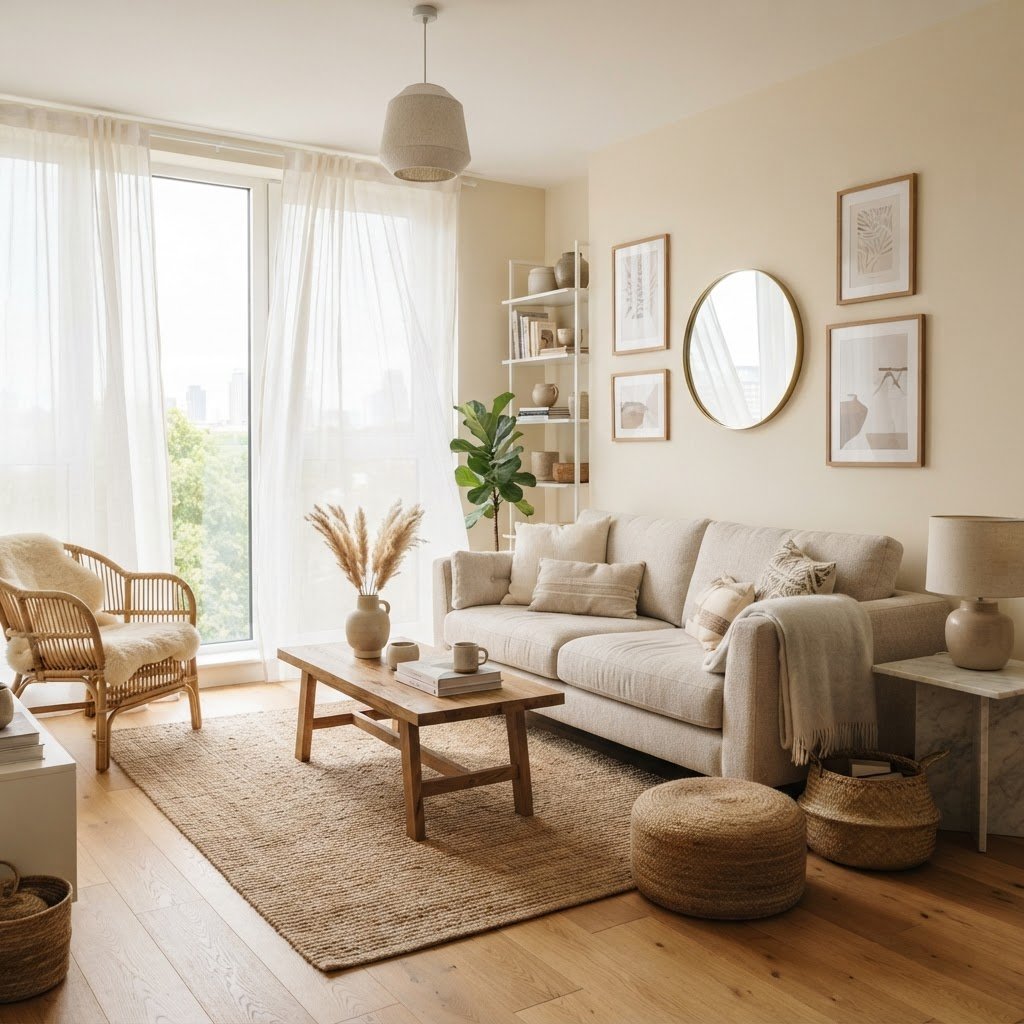
Living in a compact apartment often presents a unique challenge: how to balance comfort with the desire for an open, airy environment. Many people believe they are stuck with the footprint they have, but the secret to transforming your living space often lies on the walls. Choosing the right palette can fundamentally change how you perceive your home, turning tight quarters into a sanctuary that breathes. By understanding how light interacts with different hues, you can master the art of visual expansion.
The Science of Color and Depth
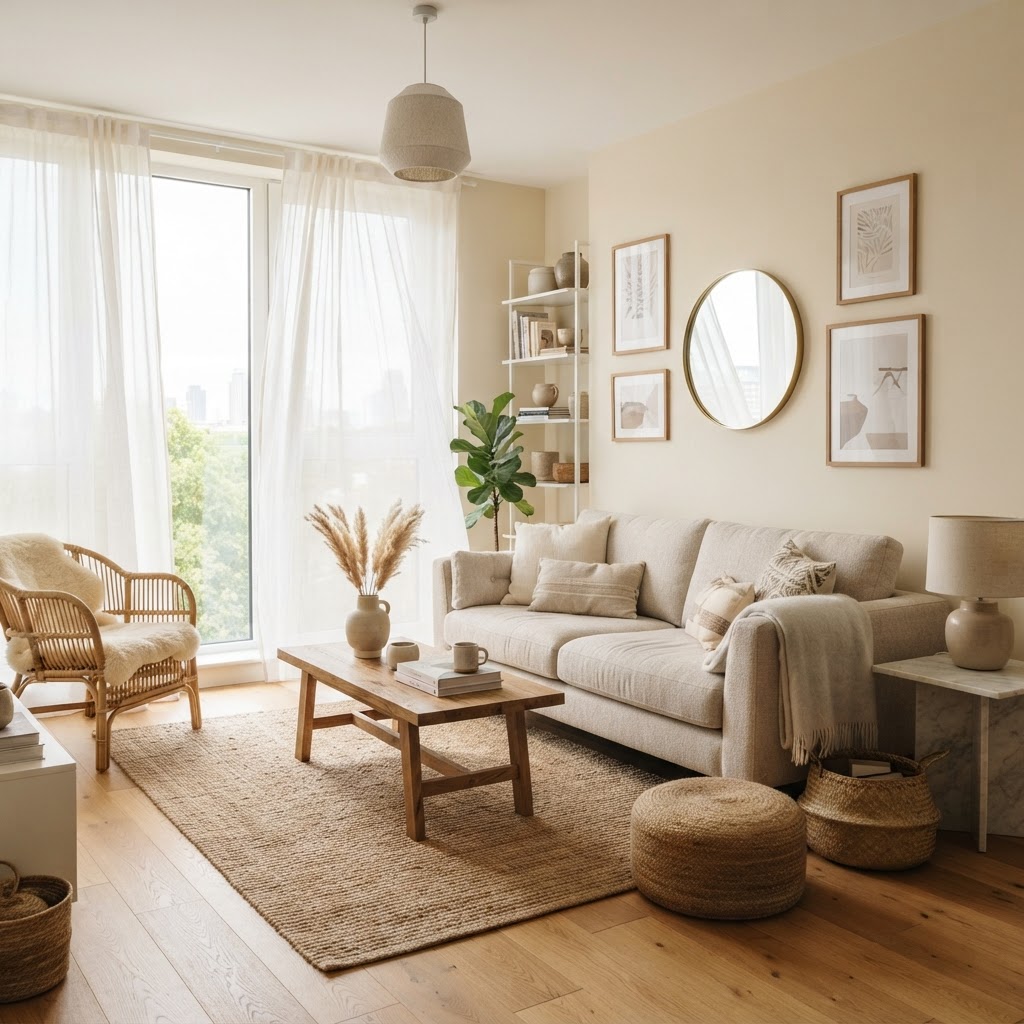
When you want to make a small room feel larger, it is essential to understand the psychological effect of color. Light colors tend to reflect more illumination, which helps the eye perceive boundaries as further away than they actually are. Darker colors, while cozy, absorb light and can make walls feel like they are closing in on you. The goal is to trick the eye into seeing more depth, effectively pushing the perimeter of the room outward. If you choose your wall color wisely, you can eliminate that feeling where you might otherwise feel cramped.
Why Light Reflectance Matters
Light reflectance value (LRV) is a measurement that designers use to determine how much light a specific shade bounces back into the room. High LRV colors are your best friends in small spaces. They interact seamlessly with natural light, creating a bright and welcoming atmosphere. When natural light hits a pale, reflective wall, it disperses across the room, reducing shadows that typically define corners and make a space feel smaller. This is particularly effective in living rooms where you want the area to feel communal and open.
What Colors Are Good for Small Apartments?
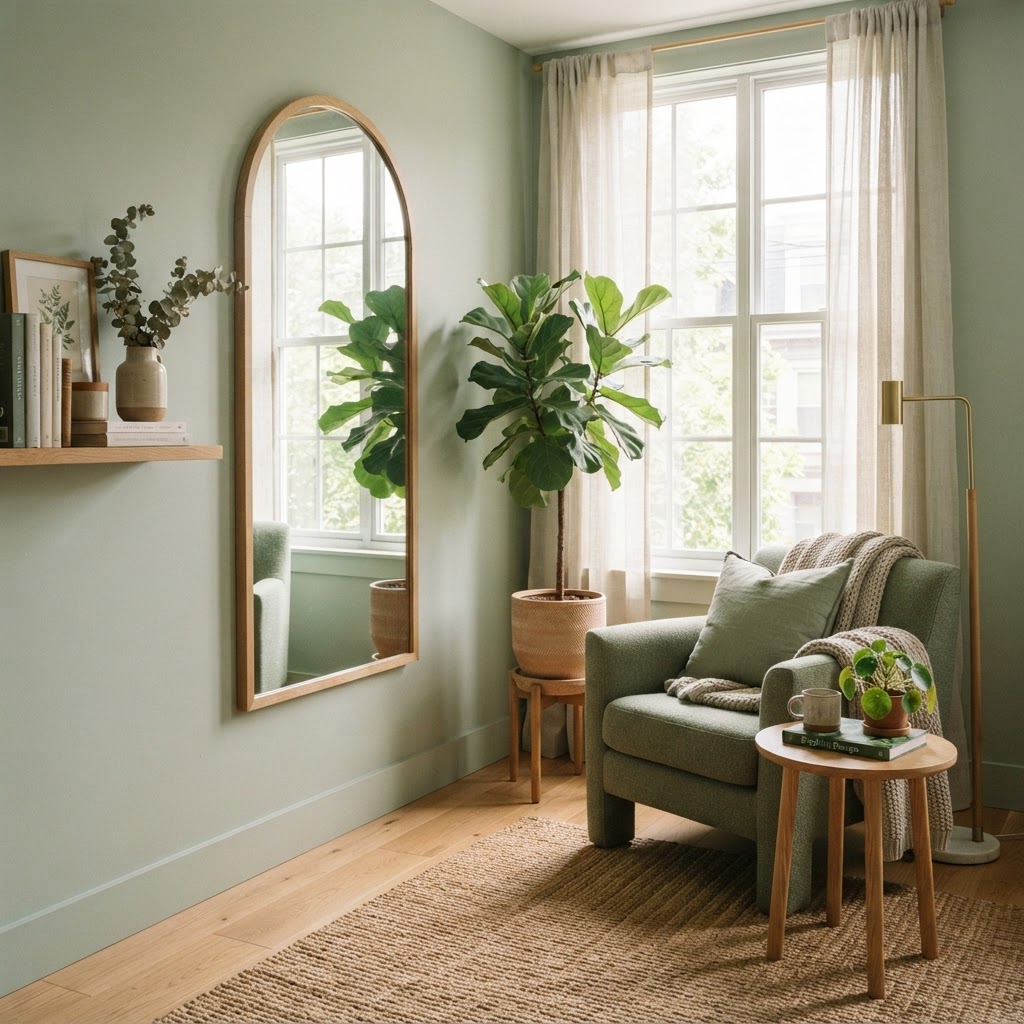
White is the gold standard for a reason, but it is not the only option. Creamy off-whites, soft grays, and pale blues are excellent for making small rooms look bigger. These shades provide a neutral backdrop that allows your furniture to stand out without competing for visual attention. A monochromatic scheme, where you paint the walls, trim, and baseboards the same color, is a pro strategy to make the room look seamless. By removing the harsh lines between surfaces, the eye travels around the room uninterrupted, which makes a small space seem much larger.
The Power of Neutrals
If you prefer something warmer than white, consider greige, sand, or soft blush. These colors bridge the gap between sterile and cozy. They bring enough pigment to offer warmth but remain light enough to maintain that airy sensation. When you paint your ceiling in the same light tone as the walls, you effectively erase the “lid” of the room, creating an illusion of higher ceilings. This simple change is one of the most effective ways to make a small room feel grander.
Choosing the Right Couch and Decor
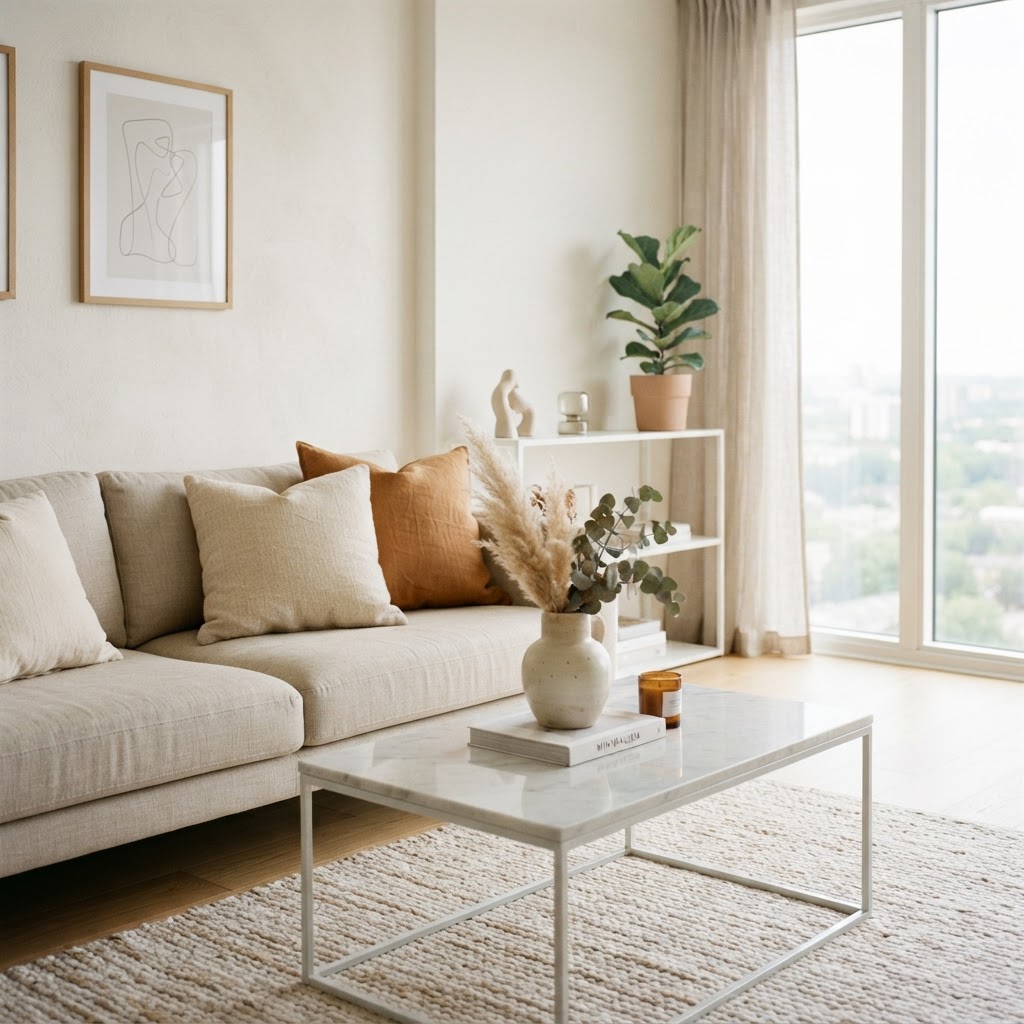
Many residents struggle with the question: what couch color makes a small living room feel larger? The secret is to match your furniture to the wall color. A massive dark navy couch in a white room will act as a visual anchor that stops the eye, effectively shrinking the room. If your walls are light, a light-toned sofa will blend into the background, allowing the floor area to feel continuous. Use colorful throw pillows or an accent wall with a textured wallpaper to add interest without sacrificing the sense of openness.
Color Trends and Future Looks
What color is replacing gray in 2026? As we move away from the cooler tones of the last decade, designers are pivoting toward warm, earthy neutrals. Think toasted almond, soft sage, and muted terracotta. These shades offer a grounded feel while still maintaining high light reflection. If you want your space feel more organic, these warmer neutrals are the perfect way to make the room feel modern yet expansive.
Strategies for Vertical Expansion
When trying to make a room look taller, your ceiling becomes a critical surface. Often, homeowners ignore the ceiling or paint it a standard flat white, but you can leverage it to your advantage. If your walls are a soft, pale color, painting the ceiling a shade or two lighter can draw the eye upward. This creates a vertical stretch that prevents the room from feeling like a box. Additionally, floor-to-ceiling curtains in a matching color can extend the wall, making the window and the wall look bigger simultaneously.
Using Gloss and Sheen
Don’t underestimate the finish of your paint. A satin or semi-gloss finish has a higher sheen than flat paint and therefore reflects more light. While flat paint hides imperfections, satin finishes are superior for small rooms because they behave like mirrors. Even a slight increase in sheen can help a room look more luminous. Use this on your trim or door frames to add subtle depth that helps the space feel more professional and intentional.
The Role of Natural Light
No matter what color you choose, natural light remains the ultimate tool. If your apartment lacks large windows, you must maximize what you do have. Avoid heavy drapes; instead, opt for sheer, light-filtering fabrics that let sunbeams permeate the interior. Position mirrors opposite windows to bounce that natural light back into the deeper parts of your apartment. This double-dip on light effectively makes the space feel twice as bright and much more expansive.
Managing Shadows
Dark corners can make a room feel smaller than it is. By painting corners and ceiling coves in light colors, you eliminate the shadows that trap the eye. Consider adding wall sconces or floor lamps to ensure that every part of the room is well-lit. When you combine high-reflectance paint with layered lighting, you ensure that no corner is left in the dark, which is vital to make a small room feel truly open.
Common Mistakes to Avoid
One common error is using too many different colors. When you introduce a high-contrast color scheme, you break the space into distinct blocks, which makes it feel segmented. Stick to a 60-30-10 rule: 60% dominant light color, 30% secondary neutral, and 10% accent. Another mistake is forgetting the floor. A light-colored rug or light wood flooring contributes to the overall light reflectance of the room, helping the space look more cohesive.
Keeping it Cohesive
Consistency is the secret to a professional-looking small apartment. If you have an open-concept living and dining area, try to carry the same color palette throughout both spaces. Even if you use a different shade in the bedroom, keeping the color temperature consistent (e.g., all warm or all cool) will make the transition between rooms feel fluid. This lack of interruption is the ultimate way to make the room feel larger than its physical dimensions.
Conclusion
Transforming your living environment is about more than just aesthetics; it is about creating a space that supports your mental well-being and lifestyle. By utilizing light-reflecting colors, choosing furniture that complements your wall color, and embracing the power of natural light, you can easily make a small room feel like a spacious retreat. Start by testing a few paint swatches on different walls to see how they change throughout the day. Remember, the best color for your home is one that reflects your personality while keeping the space feeling airy and open. Are you ready to pick your new palette? Head to your local hardware store today and grab a few samples to begin your transformation journey!

Leave a Reply