16 Tiny Home Storage Ideas to Eliminate Clutter Fast
<p>To effectively organize a tiny home, utilize vertical wall space, incorporate multi-functional furniture, and implement a strict one-in-one-out decluttering policy. By maximizing high-reach areas, using under-bed zones, and installing modular shelving, you can increase your usable storage capacity by up to 50% without compromising your living floor space.</p>
<p>Living in a compact space often feels like a constant battle against physical objects that seem to multiply overnight. Whether you are living in a true tiny home or just navigating a cramped urban apartment, finding effective tiny home storage ideas is the key to maintaining your sanity and style. When your square footage is limited, every inch must earn its keep, and traditional storage methods simply do not apply. By rethinking your approach to organization, you can transform a cluttered room into a serene, functional oasis that feels twice its actual size. Mastering the art of small apartment storage requires a mix of creative vision and disciplined habits to ensure your home remains a sanctuary rather than a repository for stuff.</p>
The Philosophy of Vertical Thinking
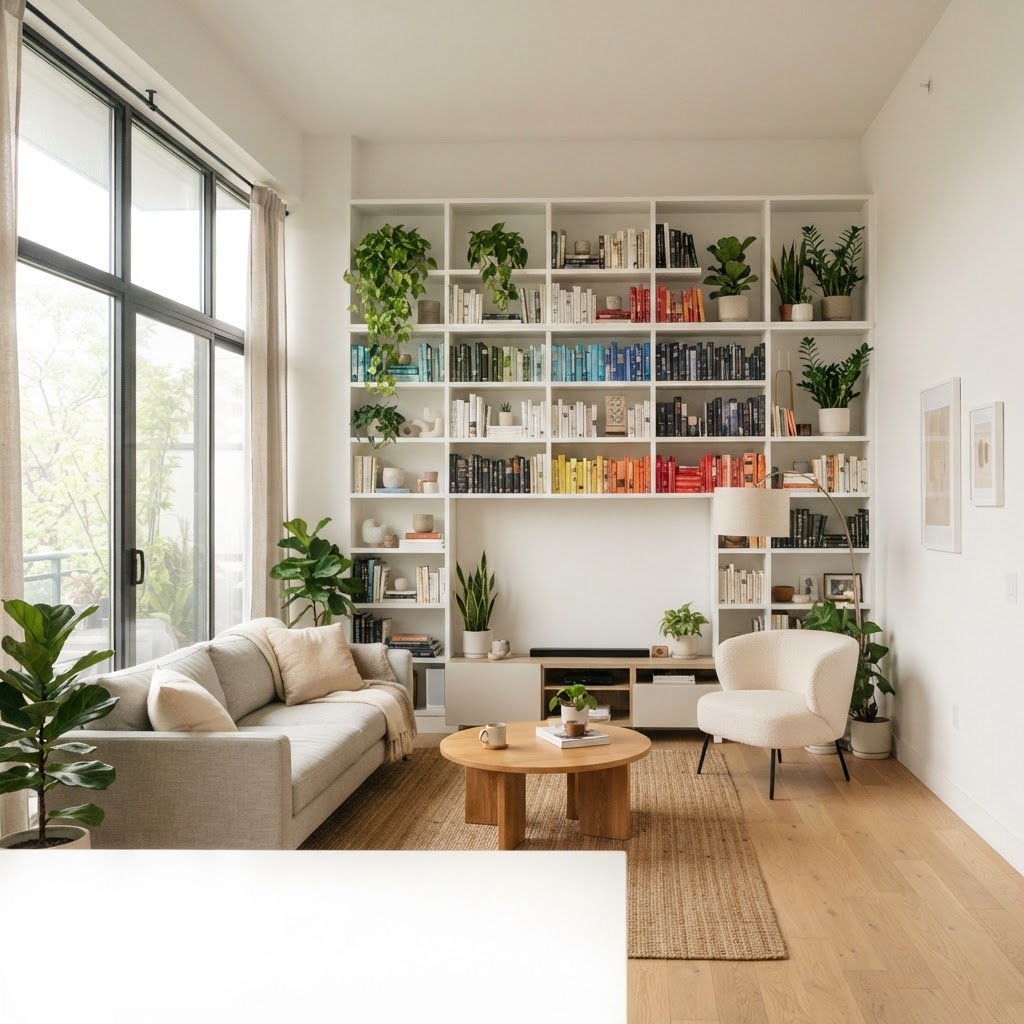
<p><img decoding=”async” alt=”Utilize floor-to-ceiling shelving to maximize vertical storage in a tiny apartment.” src=”https://media.base44.com/images/public/6a748232e4d18e0a622ab665/93391886e_generated_image.png” style=”display:block; margin:2.5em auto; max-width:100%; height:auto;” /></p>
<p>Vertical storage is the most efficient way to maximize limited square footage, as it utilizes unused wall height to triple your storage footprint. By installing floor-to-ceiling shelving, you shift the visual weight of your belongings off the floor, which creates the psychological effect of a larger, more open room. When floor space is at a premium, building upward is a non-negotiable strategy for modern tiny house dwellers.</p>
<p>To execute this effectively, identify the top 80% of your wall height that currently sits empty. Install adjustable modular shelving that reaches within six inches of your ceiling; this “dead space” is perfect for long-term storage items like seasonal gear or extra linens. You can also utilize magnetic wall strips to store stainless steel kitchen tools or office equipment, which saves approximately 10-15% of your total counter space. Additionally, placing a simple tension-mounted shelf directly above a doorway provides an ideal location for book collections or decorative bins, effectively adding three to four feet of linear storage in an area most people completely overlook. By treating your walls as functional assets rather than just structural dividers, you gain significant square footage without needing to renovate your floor plan.</p>
Leveraging Door and Wall Surfaces
<p>Your doors are essentially untapped real estate that can increase your storage capacity by up to 20% when utilized correctly. Over-the-door organizers are not just for shoes anymore; they can be used in the pantry for spices, in the bathroom for toiletries, or in the bedroom for accessories. To further boost your efficiency, implementing <a href=”https://smallapartmentdecorating.com/11-over-the-door-organizers-solve-clutter/” style=”color: #2563eb; text-decoration: underline;”>effective over-the-door storage solutions</a> can transform these often-wasted spaces into highly functional areas for your belongings. Command hooks are another game-changer, allowing you to hang coats, bags, and even baskets on the inside of closet doors or empty wall spaces. By treating every vertical surface as a potential storage point, you turn invisible clutter into organized display pieces.</p>
<p><a href=”https://www.youtube.com/watch?v=5eNeJZoaaaQ” style=”color: #2563eb; text-decoration: underline;”><img decoding=”async” alt=”Small Space Organization Ideas That Actually Work (No More Clutter)” src=”https://img.youtube.com/vi/5eNeJZoaaaQ/hqdefault.jpg” style=”display:block; margin:2.5em auto; max-width:100%; height:auto;” /></a></p>
Multi-Functional Furniture Essentials
<p><img decoding=”async” alt=”Shelf risers and tension rods are essential for kitchen cabinet organization.” src=”https://media.base44.com/images/public/6a748232e4d18e0a622ab665/f5a55a844_generated_image.png” style=”display:block; margin:2.5em auto; max-width:100%; height:auto;” /></p>
<p>Investing in furniture that serves two or more purposes is the gold standard for reducing physical bulk in a small living area. Because every piece in a tiny home takes up significant floor space, it is vital to ensure those pieces work overtime by offering internal storage, modular flexibility, or collapsible features. High-quality multi-functional furniture can hide up to 70% of your smaller loose items, creating a clean, minimalist aesthetic.</p>
<p>Consider a bed frame with built-in drawers underneath or a platform bed designed specifically for storage. If your current furniture doesn’t offer hidden space, add decorative baskets or rolling bins underneath items like consoles, desks, and beds to create instant storage zones. By opting for furniture that serves more than one purpose, you reduce the total number of items you need to keep in the room, resulting in a cleaner, more minimalist look.</p>
The Power of Under-Bed Storage
<p><img decoding=”async” alt=”Hidden storage under the bed frame keeps seasonal items out of sight.” src=”https://media.base44.com/images/public/6a748232e4d18e0a622ab665/e49d1821a_generated_image.png” style=”display:block; margin:2.5em auto; max-width:100%; height:auto;” /></p>
<p>The space underneath your bed is often the largest “dead” storage area in the entire home, offering enough square footage to house an entire seasonal wardrobe. Utilizing this area effectively requires an organized system that allows for quick access to infrequently used items, preventing the common mistake of using the space as a “junk graveyard.” Using rolling bins instead of loose bags ensures you can reclaim this space while maintaining order.</p>
<p>To maximize this zone, invest in clear, low-profile plastic bins that measure between 6 and 8 inches in height, which fit under most standard bed frames. Use these for out-of-season clothing, extra shoes, luggage, or hobby supplies that take up too much room in closets. For even better organization, use clear containers so you can quickly see what is inside without having to pull every box out. Labeling your containers is another small apartment storage tip that saves time and prevents you from accumulating duplicates of items you already have tucked away. Research shows that categorizing items by seasonal frequency (e.g., winter sweaters vs. summer swimwear) can save the average person up to 20 minutes of searching per month during seasonal transitions. Always ensure your storage containers have wheels; this simple addition allows you to slide heavy bins out in under three seconds, keeping your floor pristine while protecting your belongings from dust.</p>
<p><a href=”https://www.youtube.com/watch?v=kc5MCh_Xlp8″ style=”color: #2563eb; text-decoration: underline;”><img decoding=”async” alt=”My Tiny House Was Maxed Out – 8 Minimalist Hacks That Changed…” src=”https://img.youtube.com/vi/kc5MCh_Xlp8/hqdefault.jpg” style=”display:block; margin:2.5em auto; max-width:100%; height:auto;” /></a></p>
Maximizing Kitchen Cabinet Efficiency
<p><img decoding=”async” alt=”A dedicated entryway drop-zone keeps daily essentials organized and clutter-free.” src=”https://media.base44.com/images/public/6a748232e4d18e0a622ab665/2f351bcaf_generated_image.png” style=”display:block; margin:2.5em auto; max-width:100%; height:auto;” /></p>
<p>Kitchen storage optimization is about converting wasted vertical air space inside cabinets into tiered, usable levels. Most standard kitchen cabinets come with only one fixed shelf, which creates massive amounts of wasted space between the shelf and the items below it. By installing modular shelf risers, you can realistically double your dish storage capacity without needing to drill holes or renovate your cabinetry.</p>
<p>Start by installing wire or acrylic shelf risers to effectively double the vertical density of your plates and bowls. This simple step allows you to access items without lifting heavy, precarious stacks. Another genius hack is to install hooks under your cabinets to hang mugs, saving cabinet shelf space for larger items like mixing bowls or pots. Furthermore, use tension rods vertically inside cabinets to keep baking sheets and cutting boards standing upright. This “file system” approach is 300% more efficient than stacking items horizontally. Finally, utilize the inside of cabinet doors by mounting small adhesive racks or bins. These are perfect for measuring spoons, spice jars, or aluminum foil boxes, keeping your counter surfaces completely clear for meal preparation. When you treat the inside of your cabinet doors as storage walls, you effectively gain an extra two to four square feet of shelf space that would otherwise be empty air.</p>
Smart Closet Organization Hacks
<p>Closets are often the first casualty in small living spaces, but they can be optimized to hold 50% more clothing than standard configurations. Start by swapping out bulky wooden or plastic hangers for thin, velvet-covered ones. These thin hangers typically take up 50% less rod space than standard versions. Utilize cascading hanger connectors to stack shirts vertically, allowing you to fit up to six garments in the space of one.</p>
<p>Install a secondary closet rod about halfway down your closet to double the hanging space for short items like shirts, skirts, and folded trousers. If you lack closet space entirely, consider using an open garment rack with a bottom shelf for shoes. This turns your wardrobe into a style statement while forcing you to be intentional about the number of clothes you own and display. If you are struggling with overflow, rotate items seasonally; keep only what is needed for the current three-month block in the main closet, and move everything else to an under-bed bin or an off-site storage unit. This keeps your daily routine efficient and ensures you only interact with items you currently wear, preventing the buildup of forgotten garments.</p>
Bathroom and Entryway Optimization
<p>Bathrooms and entryways are high-traffic, small-footprint zones that require disciplined, localized storage to prevent chaotic clutter buildup. In a small bathroom, the most under-utilized space is the area directly above the toilet. Install a dedicated over-the-toilet shelving unit to store towels and toiletries, which immediately removes floor-level clutter. This simple addition can hold up to 20 lbs of supplies, keeping your counter clear.</p>
<p>In the entryway, don’t rely on just one coat hook. Install a wall-mounted console table with a drawer or a floating shelf combined with hooks below for a complete drop-zone setup. This prevents keys, mail, and bags from piling up on tables or floors. Keep your bathroom organized by using drawer dividers for small items like makeup, hair ties, and grooming tools. Studies on spatial organization suggest that using dedicated containers for small items prevents the ‘junk drawer’ effect, saving you roughly 10 minutes of searching per week. A small, rolling cart can also serve as a mobile storage unit for towels or cleaning products, allowing you to move it out of the way when the bathroom is in use. By creating a ‘home’ for every single item in these transit spaces, you ensure your morning and evening routines remain seamless.</p>
<p><a href=”https://www.youtube.com/watch?v=32TzfXbZlgQ” style=”color: #2563eb; text-decoration: underline;”><img alt=”Organize & Declutter My Tiny Home as a family of 7″ src=”https://img.youtube.com/vi/32TzfXbZlgQ/hqdefault.jpg” style=”display:block; margin:2.5em auto; max-width:100%; height:auto;” /></a></p>
The Importance of Decluttering Regularly
<p>No amount of storage solutions can compensate for having too much stuff. The most important of all tiny home storage ideas is the habit of routine decluttering. Set a schedule to assess your belongings every three months, asking yourself if each item serves a purpose or brings you joy. If it doesn’t, donate, sell, or discard it.</p>
<ul>
<li>Implement the one-in-one-out rule for all non-essential items.</li>
<li>Digitize paper files to eliminate heavy filing cabinets.</li>
<li>Store seasonal items off-site or in high, inaccessible areas.</li>
<li>Use uniform storage bins for a visually cohesive look.</li>
<li>Prioritize open floor space to create a sense of calm.</li>
</ul>
Creating Visual Harmony
<p>When you implement these storage tips, remember that visual clutter is just as stressful as physical clutter. Use cohesive colors for your storage bins and baskets to ensure they blend into your decor. When you keep your storage solutions uniform, your room will feel intentional rather than haphazardly arranged. Avoid over-stuffing shelves, as a little bit of breathing room makes your home feel more like a luxury apartment and less like a storage unit.</p>
<p>Small apartment storage is ultimately about mindfulness. Every item you bring into your home should have a designated ‘home’ of its own. When you know exactly where your keys, chargers, and documents belong, you save time, reduce stress, and enjoy the beauty of your compact living space much more. Start with one of these ideas today, and you will be amazed at how much space you can reclaim in your home.</p>
FAQ
Q: What is the most effective way to start decluttering a tiny home?
<p>The most effective method is the “Category First” approach, where you declutter one specific category, such as clothing or kitchen gadgets, throughout the entire house at once. By focusing on one category, you avoid the overwhelm of trying to reorganize an entire room at one time.</p>
Q: How can I make a tiny room feel bigger with storage?
<p>You can make a room feel bigger by keeping the floor as clear as possible and using vertical, wall-mounted storage to draw the eye upward. Choosing storage furniture in light, neutral colors that match your wall paint also helps blend the storage into the room, reducing visual noise.</p>
Q: Are there specific storage items that are essential for tiny homes?
<p>Yes, essential items include thin velvet hangers for closet space, shelf risers for kitchen cabinets, rolling under-bed bins, and modular command hooks. These low-cost, high-impact tools allow you to utilize hidden space that would otherwise remain empty and inefficient.</p>
Q: How often should I declutter my small space?
<p>You should perform a “mini-declutter” session every three months, or once per season, to ensure that new items haven’t accumulated. This scheduled frequency prevents clutter from reaching a tipping point, making each session take less than one hour to complete.</p>
Q: Does using uniform storage bins actually save space?
<p>While uniform bins do not inherently add space, they maximize the space you have by eliminating the irregular shapes and “wasted” air gaps found with mismatched containers. Using rectangular, stackable bins allows you to utilize every cubic inch of shelf or closet space efficiently.</p>

Leave a Reply