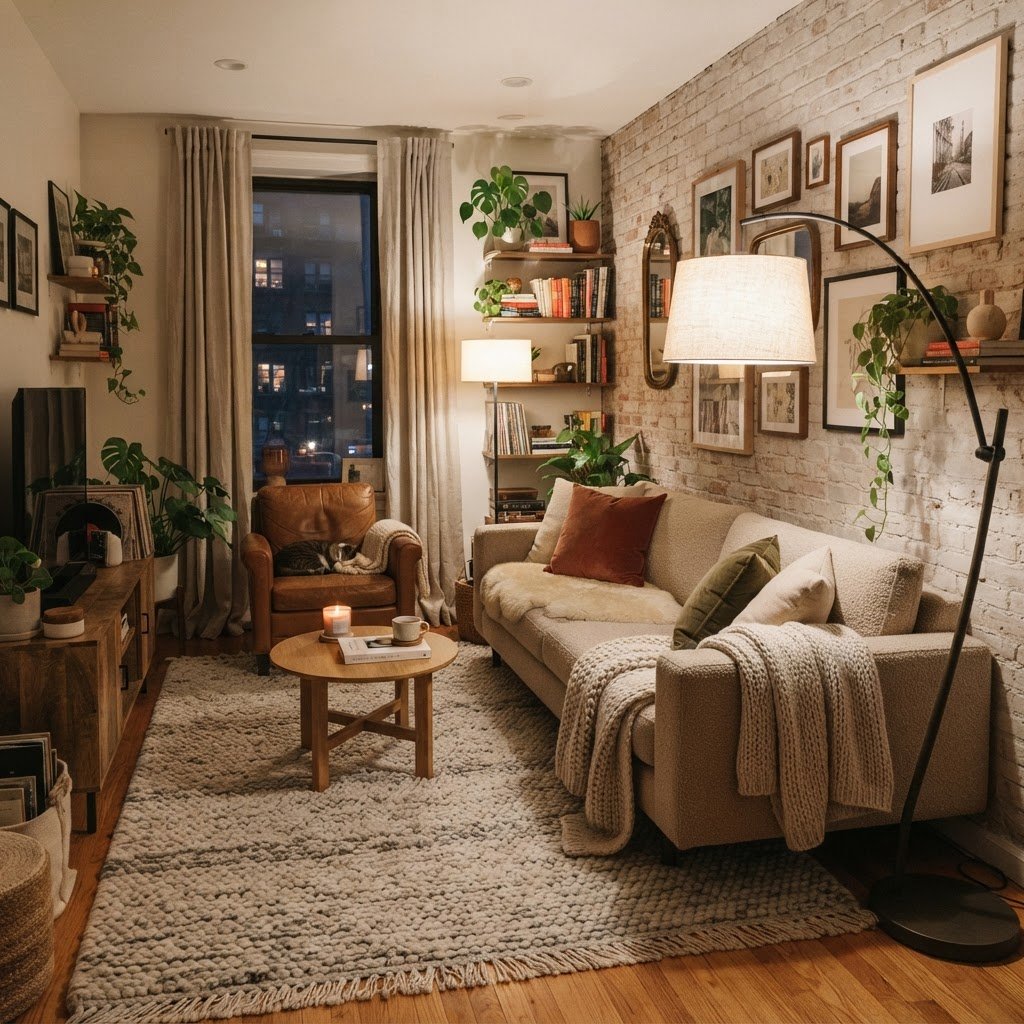
Living in a rental property often feels like a constant compromise between personality and landlord restrictions. However, you do not need a massive budget or a sledgehammer to elevate your home. By applying simple overnight renter hacks, you can easily make small spaces look expensive, sophisticated, and custom-tailored to your unique style. These changes focus on high-impact, non-permanent upgrades that shift the aesthetic from generic apartment to curated home.
Rethink Your Lighting Strategy
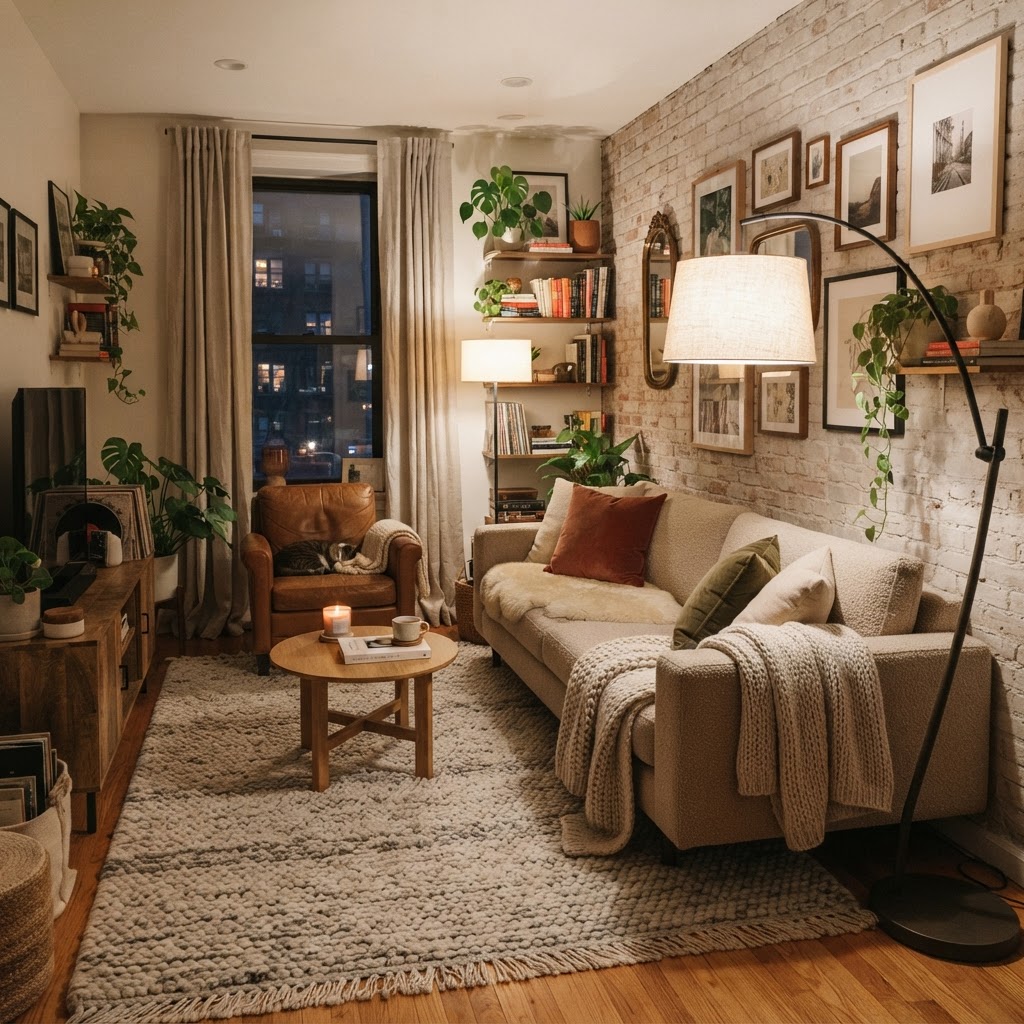
One of the fastest ways to reveal that you are in a rental is to rely exclusively on the “boob light” fixtures or harsh overhead LEDs installed by the property manager. Lighting is arguably the most important element in interior design, yet it is often the most neglected in small apartments. High-end spaces always feature layered lighting that creates ambiance, warmth, and depth.
Swapping the Hardware
If you have a landlord who allows minor changes, replacing dated light fixtures is a game-changer. Keep the original lights in a box and reinstall them before you move out. If you cannot change the fixtures, focus on adding floor lamps and table lamps with warm-toned LED bulbs. By introducing light at eye level, you eliminate shadows and make corners feel larger.
The Power of Textile Layering
Small spaces often lack architectural character, making them feel like blank, sterile boxes. The secret to making a room look expensive is to incorporate layers of texture. Start with a high-quality rug, even if the apartment has wall-to-wall carpeting. A large, well-placed area rug defines a space and adds a layer of plush comfort that feels inherently luxurious.
Curating Your Fabrics
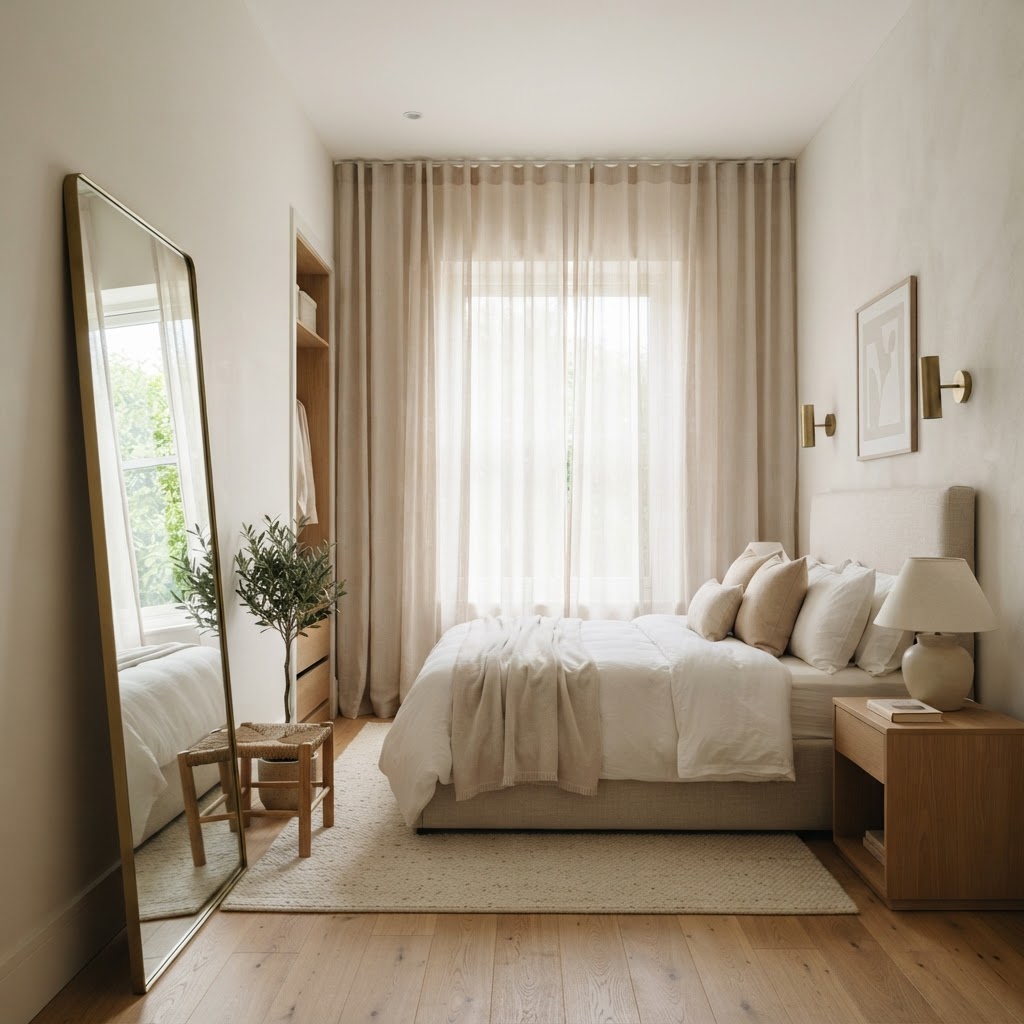
Upgrade your throw pillows and blankets. Avoid synthetic, shiny fabrics, and instead opt for heavy linen, velvet, or chunky knit wools. When these textiles are mixed, they create a tactile experience that feels bespoke. Additionally, hanging curtains from the ceiling line rather than the window frame instantly makes a small room feel taller and more expansive.
Camouflage with Clever Storage
Clutter is the enemy of a luxury aesthetic. In small apartments, visible piles of mail, cords, and everyday items make a room feel cramped and chaotic. The key to successful overnight renter hacks involves finding storage solutions that look like intentional design pieces rather than utility items.
Hidden Storage Solutions
Invest in furniture that serves double duty. Ottomans with storage lids, bed frames with built-in drawers, or console tables with bins are essential. If you cannot buy new furniture, use decorative woven baskets to corral items. Keeping surfaces clear allows the eye to rest and prevents the feeling of being closed in by “stuff.”
The Magic of Wall Treatments
Blank white walls are the signature of a rental unit, but they are also a blank canvas. While paint is often off-limits, there are numerous peel-and-stick solutions that can transform a room in an afternoon. Wallpapering a single accent wall or using removable decals can add drama, texture, and a high-end feel.
Applying Temporary Wall Art
If wallpaper feels too permanent or overwhelming, consider large-scale art. A single oversized piece of art, whether a framed print or a canvas, makes a small room look deliberate. When hanging art, ensure it is hung at eye level to draw the focus away from generic fixtures and toward something that expresses your personality.
Styling Surfaces for a High-End Look
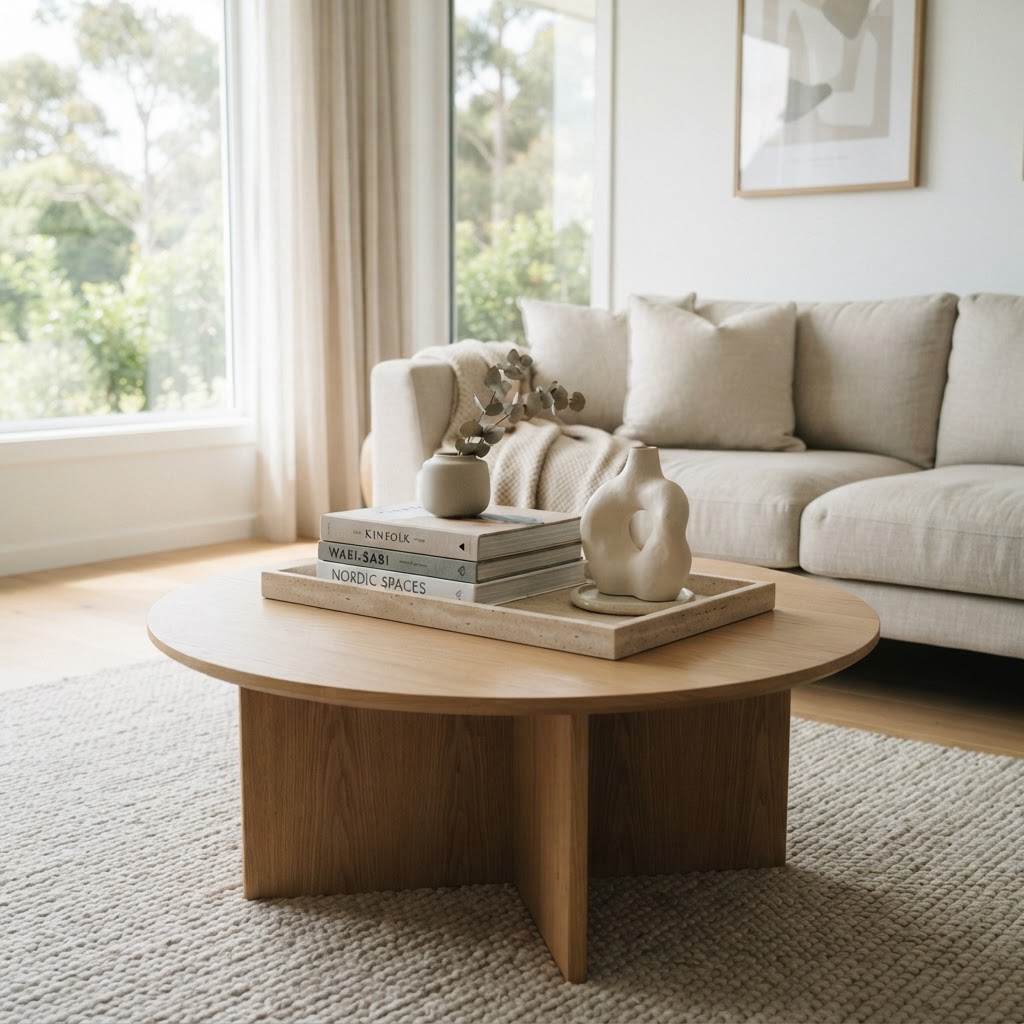
Surfaces like coffee tables, side tables, and bookshelves are the “jewelry” of a room. To make small spaces look expensive, follow the principle of the “rule of three”—grouping items in odd numbers to create visual balance. Start with a tray to anchor your items, then add a stack of books, a candle, and a small sculptural object.
The Importance of Negative Space
Do not feel the need to fill every inch of your shelving. A few carefully curated items with space to breathe look much more expensive than a shelf crammed full of knick-knacks. Use trays and bowls to keep small items organized so they appear purposeful rather than cluttered.
Creating Flow and Unity
Often, small apartments feel segmented and awkward because the furniture does not match or the color palette is disjointed. A professional designer would ensure that there is a cohesive “thread” running through the home. This could be a specific color, a type of wood finish, or even a recurring metal accent like brass or matte black.