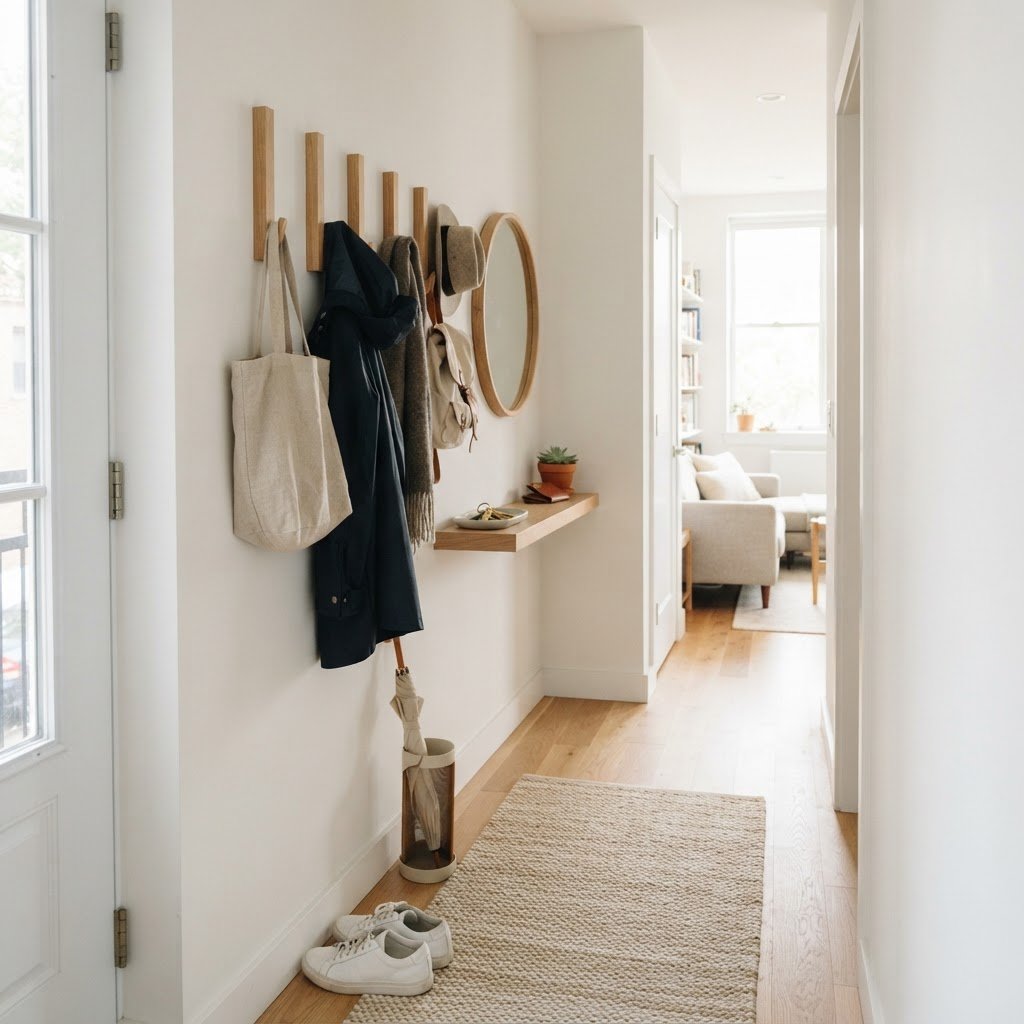
To create a functional entryway in just 3 feet of space, prioritize wall-mounted, slim-profile storage solutions that keep the floor completely clear. By utilizing vertical height, installing mirrors to reflect light, and incorporating a 4-pillar system—hooks, a key tray, a shoe organizer, and a mirror—you can maximize utility without sacrificing aesthetics.
Rethink the Layout of Your Entryway
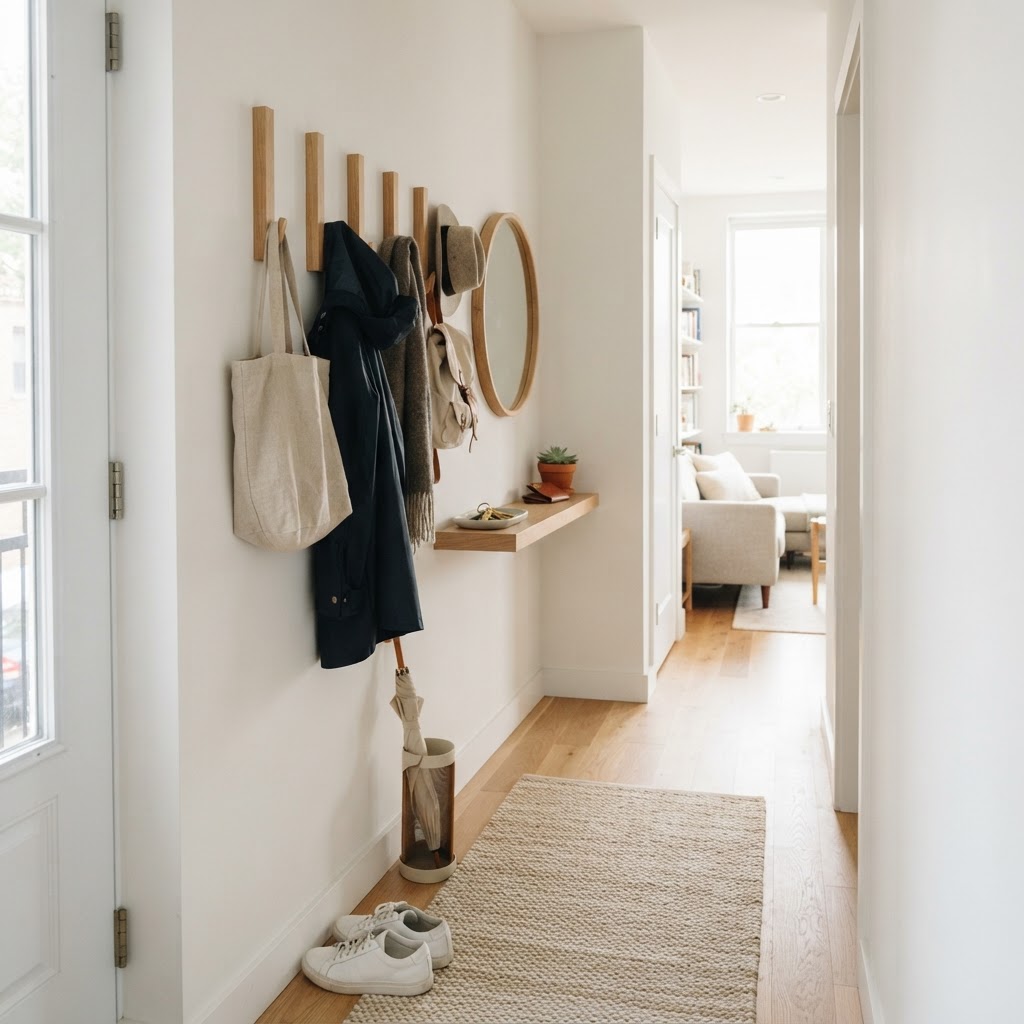
Successful design in a 3-foot wide area requires avoiding standard furniture, which often creates visual congestion and limits mobility. Instead, focus exclusively on pieces with a depth of 12 inches or less; this “slim-profile” rule is the foundation of a high-functioning landing zone. When you limit furniture depth, you ensure your circulation path remains clear, preventing the “chaotic collision” feel often associated with cramped apartments.
Consider the following comparison of common entryway furniture types for tight footprints:
Start by assessing your wall as a vertical grid rather than floor square footage. If you have 3 feet of horizontal width, install hardware at various levels: high for seasonal coats, mid-level for bags, and low-level for shoe racks. This vertical stratification allows you to store more items while maintaining a curated, minimalist aesthetic that makes the transition from outdoors to indoors feel purposeful rather than cluttered.
The Rule of Verticality
When floor space is at a premium, look up. Walls are your best friend in a narrow entryway. By installing shelves, coat racks, and organizers at varying heights, you draw the eye upward, which gives the illusion of a larger, more airy space. Use the wall behind your door if possible, as it is often a neglected “dead zone” that can handle a full rack of seasonal jackets or bags.
Choosing the Right Storage Solutions
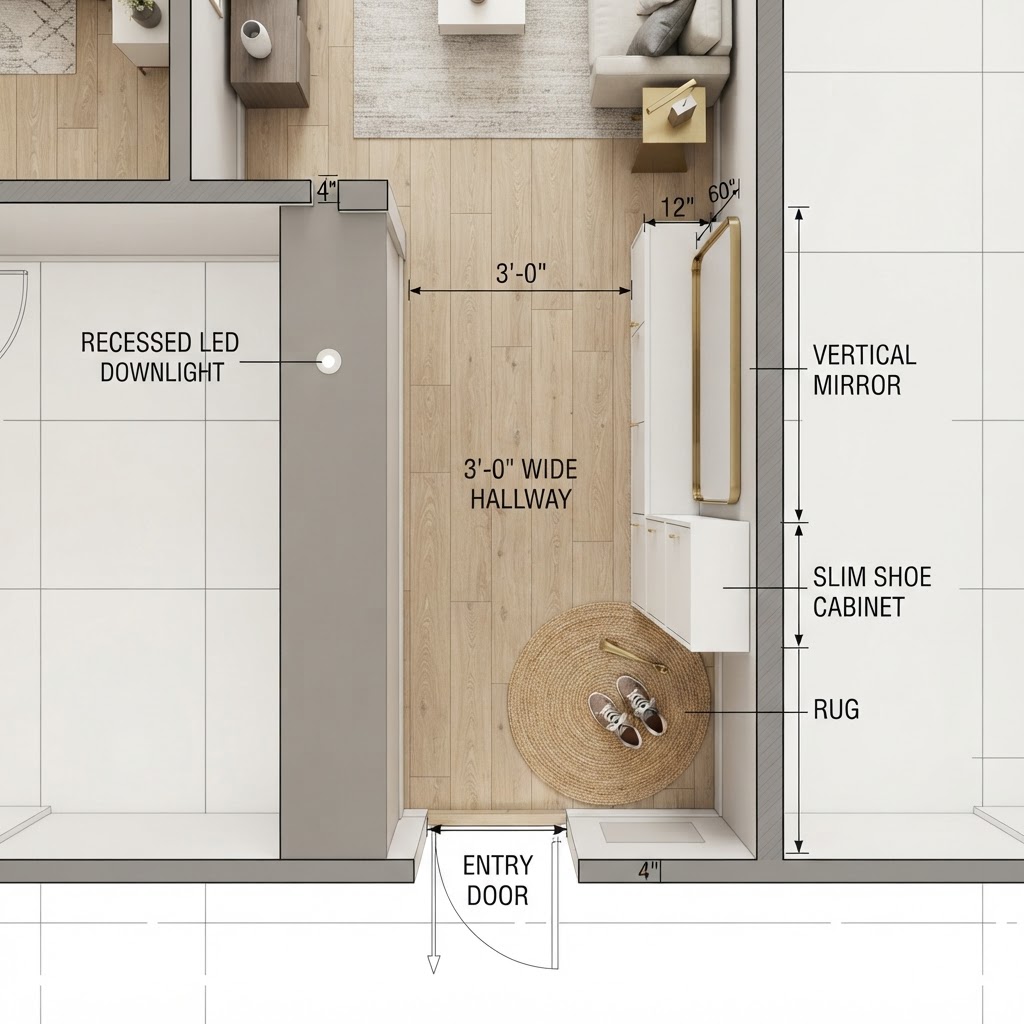
Efficiency in a 3-foot entryway is achieved through multi-functional hardware that serves at least two purposes simultaneously. Since every square inch must earn its keep, avoid single-use items like bulky umbrella stands or traditional coat racks that occupy precious floor space. Instead, utilize “drop-zone” integrations such as a mirror with an attached shelf or wall-mounted cubbies that feature integrated hooks underneath.
For footwear, a wall-mounted, pull-out shoe cabinet is the gold standard for small spaces. These units typically range from 5 to 7 inches in depth, allowing you to store 6 to 12 pairs of shoes vertically behind a sleek, closed panel. This eliminates the visual noise of mismatched sneakers and boots cluttering your floor. If you must use baskets, choose wall-mounted wire or wicker wall pockets to keep the floor surface entirely free for easy cleaning. By designating specific homes for mail, keys, and accessories, you prevent the common “catch-all” pile that develops in transition spaces. Maintaining this disciplined organization ensures the entryway remains a high-functioning asset rather than a storage liability. Always prioritize hardware that uses recessed mounting to avoid snagging coats or bags, and stick to a monochromatic palette for your storage units to help them recede into the wall color, further enhancing the feeling of spaciousness.
Maximizing Lighting and Reflection
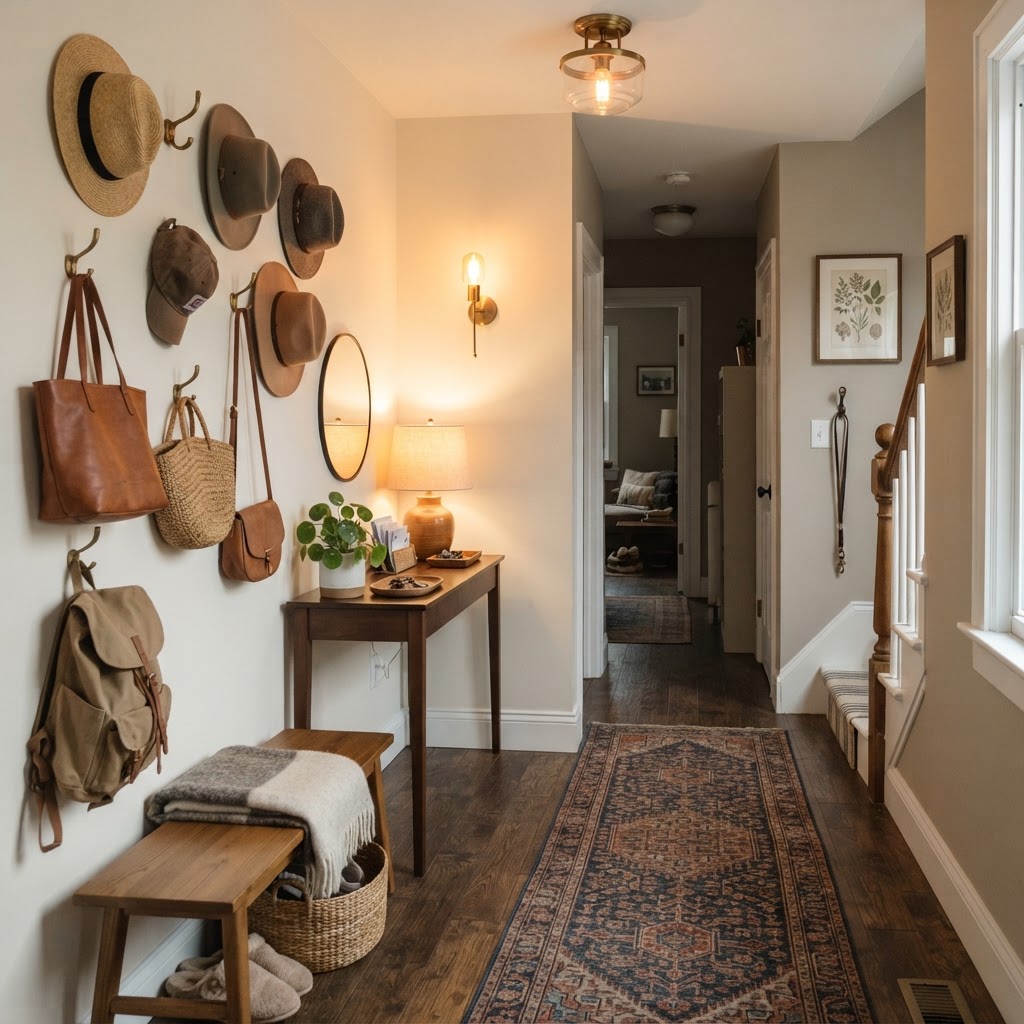
Proper lighting and strategic mirror placement can effectively double the perceived size of a 3-foot wide entryway by bouncing light across the surface area. Because floor lamps are unsuitable for narrow corridors, wall-mounted sconces or rechargeable motion-sensor LED puck lights are the optimal lighting choice. Install these lights at eye level or just below shoulder height to provide task lighting for finding keys while creating a warm, ambient glow that feels inviting.
Mirrors should be the primary focal point. A large, frameless mirror measuring at least 24 by 48 inches will provide the best visual expansion. Place the mirror directly across from a natural light source if possible; if no windows exist nearby, pair the mirror with a warm-toned sconce to replicate the effect. In narrow spaces, a “full-length” vertical orientation is superior to horizontal options, as it elongates the wall and provides a functional check-point for your appearance. Consider a mirror with a thin brass or black metal frame to add a touch of sophistication without taking up visual weight. By combining these lighting and reflection tactics, you replace a dark “dead-end” feeling with a bright, open arrival zone that feels integrated into the home rather than an afterthought.
Essential Items for Your Mini Foyer
To ensure your entryway is truly functional, you need a checklist of absolute essentials. You do not need a bench or a closet; you just need these four pillars of organization:
- Hooks for outerwear and umbrellas.
- A small tray or bowl for keys and wallets.
- A vertical shoe organizer or slim cabinet.
- A mirror for final adjustments.
By keeping only these four categories of items in your 3-foot space, you prevent the area from becoming a dumping ground for junk mail or random household items. If an object does not serve a purpose in the transition between “outdoors” and “indoors,” it does not belong in your entryway.
Keeping the Space Clutter-Free
Maintaining a functional entryway requires a daily commitment to tidiness, as the proximity of the space means even one rogue item triggers a sense of disarray. Implement a “one-in, one-out” policy for your shoe storage; for every new pair you bring into the hallway, an old pair must be moved to a closet or donated. This prevents the cumulative effect of seasonal gear overrunning your slim-profile cabinets.
Utilize a “staging basket” for outbound items, such as returns or donations, to keep them out of sight until you are ready to leave. This basket should be placed on a low shelf or mounted to the wall to keep the floor clear. Additionally, perform a weekly “entryway audit” to remove any mail, flyers, or trash that has collected on your key tray. Keeping the surface of your entryway free of non-essential items is the most critical habit for ensuring the 3-foot space remains functional rather than becoming a repository for miscellaneous household clutter.
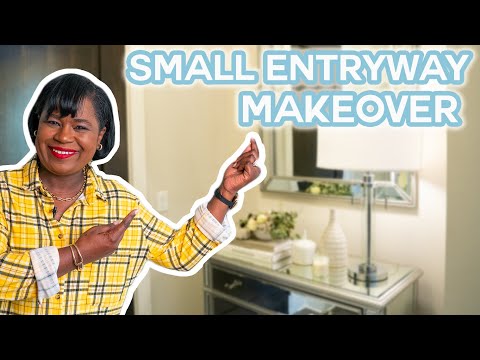
Styling Tips for a Narrow Entryway
Even in a 3-foot space, style should not be sacrificed. You can make a bold statement with a single strip of accent wallpaper, a fun coat of paint, or a unique light fixture. Because the area is small, you can get away with more dramatic choices, like deep navy walls or a patterned tile floor, without overwhelming the entire house.
If you have a bit of floor space, a narrow runner rug can act as a bridge between your entryway and the rest of your living area. Choose a rug that is durable and easy to clean, as it will be the first thing your shoes touch when you walk in the door. A runner also adds a touch of warmth that makes the entryway feel like an intentional part of the home rather than just a hallway.
Creating a Functional Transition Zone
Ultimately, your entryway is a transition zone. It is where you shift from the demands of the world to the comfort of your home. By keeping your 3-foot area focused on function, you are actually creating a mental transition as much as a physical one. When you walk in and find your keys exactly where they belong and your coat hung up neatly, you feel more in control of your environment.
Think about the habits you want to form. If you always leave your bag on the floor, install a hook that is strong enough to hold your bag at shoulder height. If you hate digging for keys, make sure your tray is at eye level right next to the door. Small adjustments to your habits will reinforce the functionality of your design choices.
FAQ
Q: What is the ideal depth for furniture in a 3-foot entryway?
Keep furniture depth to 12 inches or less to maintain a clear walking path. Items like wall-mounted consoles or pull-out shoe cabinets are best, as they provide necessary storage without encroaching on the limited floor space available in narrow hallways.
Q: How do I store shoes without a bulky rack?
Use a wall-mounted pull-out shoe cabinet with a depth of 5 to 7 inches to hide footwear vertically. This keeps floors clear, prevents tripping hazards, and keeps your shoes organized in a sleek, compact, and hidden manner.
Q: Can I use mirrors to make a small entryway feel bigger?
Yes, a large frameless mirror installed on the wall will reflect light and trick the brain into perceiving the space as larger. Position the mirror across from a natural light source to maximize the brightening effect, which instantly makes a narrow area feel more open.
Q: How many hooks do I need for a functional entryway?
Aim for at least one hook per household member, plus two extra for guests. If space is tight, use a vertical coat rack or install multiple hooks at varying heights to stack outerwear efficiently without crowding the wall horizontally.
Q: What is the best way to prevent clutter in a small foyer?
Adopt a strict “one-in, one-out” policy and use a designated tray for small items like keys and mail. By assigning a specific home for every item and clearing non-essential mail immediately, you stop the accumulation of clutter before it overwhelms your 3-foot zone.

Leave a Reply