Apartment Entryway Ideas for Homes With No Real Foyer
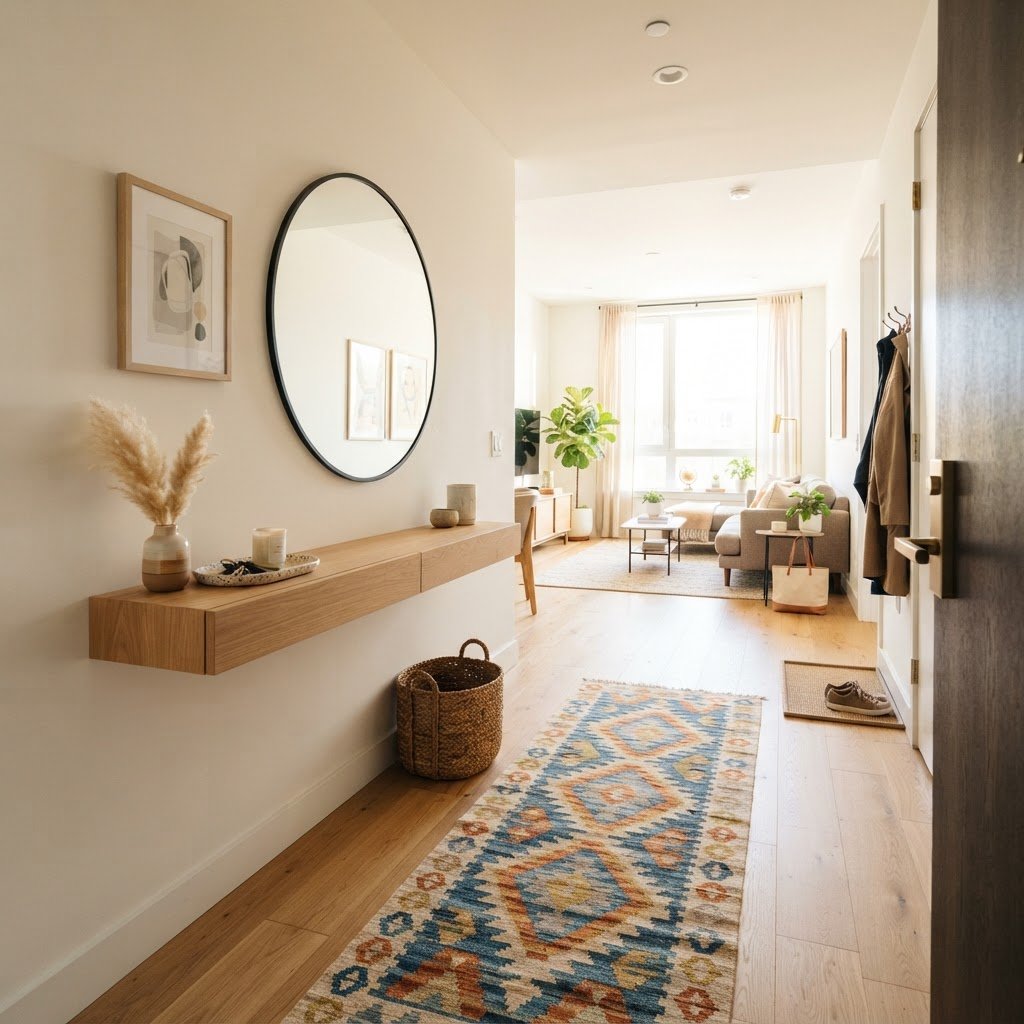
To create an entryway in an apartment with no foyer, use a rug to define the floor space, mount floating storage on walls to maximize vertical height, and place a narrow console or bench for a landing zone. These tactical additions create a physical transition between your front door and your living area.
The Psychology of the Transitional Space
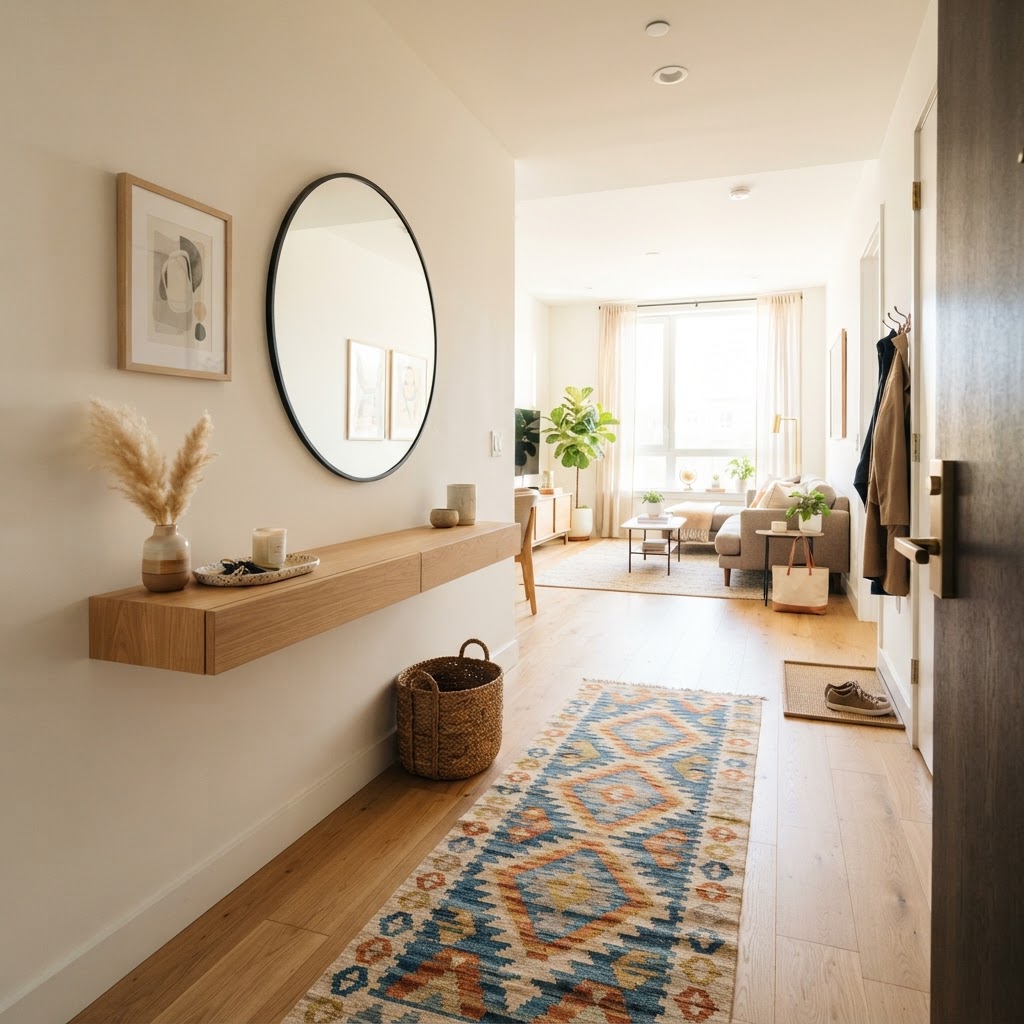
Designers often talk about the importance of a ‘landing strip’ to act as a psychological buffer between the chaotic outside world and your private sanctuary. This dedicated area allows you to shed the day’s burdens—dropping your keys, hanging your coat, and kicking off your shoes—before entering your living space. By creating a visual boundary, you prevent clutter from spilling into your dining or kitchen areas, which is vital in apartments under 700 square feet where every square inch serves multiple purposes. When your keys have a permanent home and your coat isn’t draped over a dining chair, the entire apartment feels more spacious and intentional. The goal is to maximize every vertical inch to create a high-functioning ‘micro-foyer’ that serves your daily needs without encroaching on your living room floor plan. Establishing this zone reduces daily stress by creating a repeatable habit for your incoming items, turning a transition point into a functional asset.
Establishing a Visual Boundary
One of the most effective ways to designate a foyer where one does not exist is by using floor coverings to establish a clear “landing zone.” A durable, low-pile area rug acts as a physical ‘floor mat’ that signals to guests—and yourself—that you have arrived at your destination. By choosing a rug with a bold pattern or a different texture than your living room flooring, you create a psychological and visual separation that anchors the space. If your door opens into a narrow stretch of wall, use a 2×6 foot runner to guide traffic, while a 3-foot circular rug works best in corner entries to soften sharp edges. This simple switch changes the flow of the room instantly, preventing the “living room spillover” effect. Additionally, painting the wall immediately surrounding your door a contrasting shade—such as a deep charcoal or navy—creates a ‘color-blocking’ effect that acts as a formal architectural frame, effectively carving out a distinct foyer through paint alone.
Vertical Storage Solutions
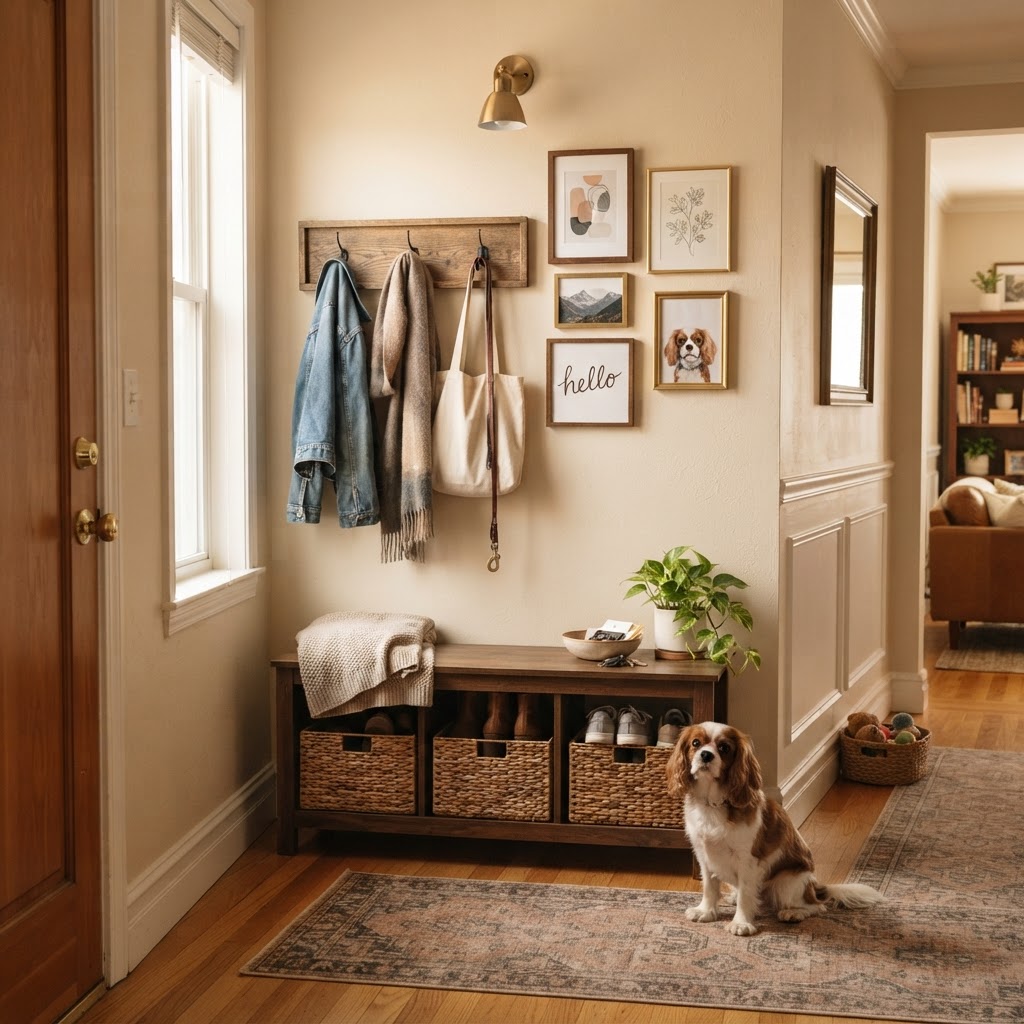
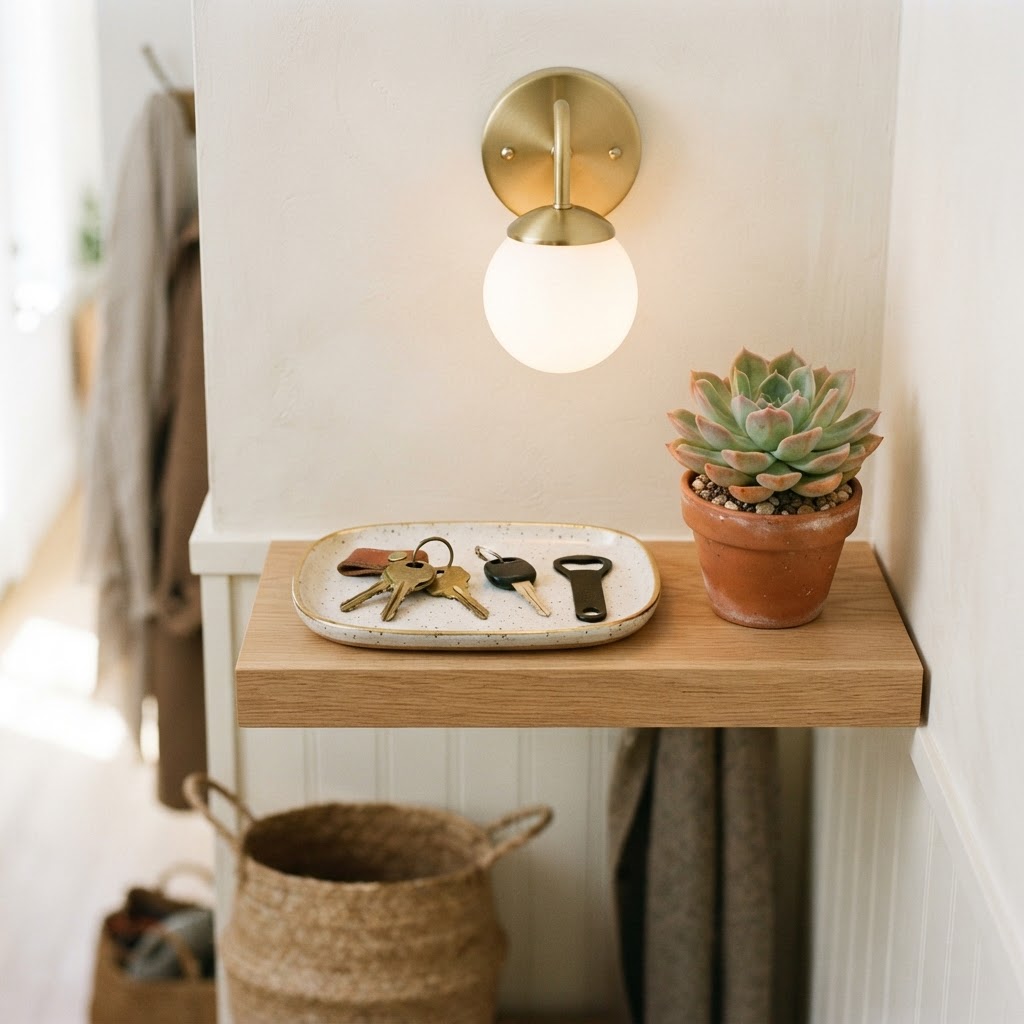
When you lack floor space, the only way to go is up, making wall-mounted storage the cornerstone of successful apartment entryway design. Instead of bulky furniture that blocks walking paths, opt for sleek hooks, floating shelves, or wall-mounted cabinets that sit at least 32 inches off the ground to keep sightlines open. Install a series of uniform wall hooks at varying heights (standard spacing is 6 inches apart) to accommodate jackets, bags, and umbrellas while adding a decorative, rhythmic element to your wall. If you prefer a cleaner look, use a wall-mounted console table with a hidden drawer. These slim pieces, often only 8 to 10 inches deep, provide a surface for keys and mail without the footprint of traditional furniture. To keep your entrance functional, use a ‘drop zone’ system: place a 5-inch wide catch-all tray for keys, a dedicated basket for mail, and a small bin for shoes to ensure that clutter doesn’t migrate to other rooms. Keeping these items contained within this vertical ‘entry zone’ is the key to maintaining a peaceful home.
Choosing Multi-Functional Furniture
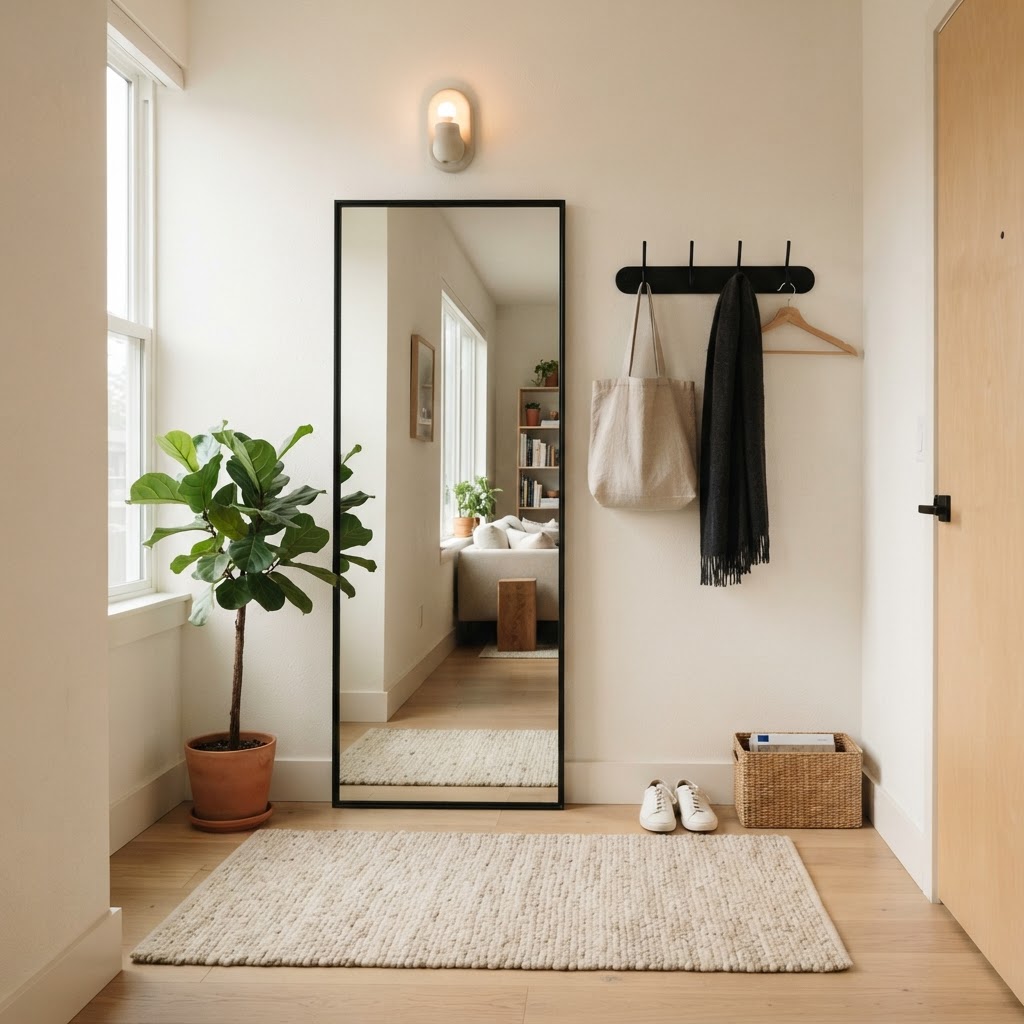
In an apartment, every piece of furniture must earn its keep by serving at least two functions, such as seating and hidden storage. If you have a sliver of wall space near your door, a narrow bench with integrated storage underneath is the gold standard for small-space living, offering a place to sit while putting on shoes and a home for out-of-season accessories. Look for benches with lidded tops or drawers, which are ideal for tucking away bulky items like scarves and gloves. If a bench is too deep for your walkway, a slim, wall-mounted drop-leaf table can serve as a makeshift desk or console, folding away entirely when you need extra floor space for entertaining. Furthermore, mirrors are non-negotiable in small entryways; a large mirror placed near the door not only allows for a final outfit check but also reflects light and depth, making the entire room feel roughly 20-30% larger. Opt for an oversized floor mirror leaning against the wall or a decorative wall-mounted piece to draw the eye upward and brighten dim corners.
Lighting the Way Home
Entryways often suffer from poor lighting in apartments without foyers, making them feel like an afterthought rather than a deliberate space. Since you likely lack a dedicated hallway ceiling fixture, you may be relying on harsh living room lights; instead, try adding a battery-operated wall sconce or a small, plug-in table lamp on your console to create a warm, inviting glow. Soft lighting with a temperature of 2700K to 3000K helps create a welcoming atmosphere the moment you step through the door. It adds a layer of sophistication that makes your small apartment feel like a curated home rather than just a place to store your belongings. For those with absolutely no outlet space, modern motion-sensor LED strips can be mounted under floating shelves to illuminate your “landing strip” the moment you walk inside. This provides both safety for night-time arrivals and an immediate sense of arrival, transforming a utilitarian drop zone into a thoughtful design statement while highlighting your art and greenery.
Common Pitfalls to Avoid
Avoid the urge to clutter your entrance with too many items; the ‘no foyer’ setup is inherently fragile, and over-decorating can quickly result in a cramped, claustrophobic appearance. Stick to a ‘less is more’ approach, keeping your surfaces clear of everything except daily essentials like keys and mail. Always test the path from the door to the living room by ensuring you have at least 30 inches of clearance for comfortable walking; if you find yourself bumping into your new console table, it is likely too deep. Prioritize circulation over extra storage space, as blocking your primary entry path can make a small home feel significantly smaller and less functional. Furthermore, avoid using oversized coat racks that tower over the space, as they can block natural light from the living area. Always double-check your furniture measurements against your entryway clearance before purchasing to ensure your new storage solutions actually enhance, rather than obstruct, the flow of your apartment.
FAQ
Q: How can I define an entryway in an open-concept apartment?
Use a low-pile runner rug and a dedicated wall hook station to create a physical and visual boundary. These two elements act as a “landing zone” that separates your entry from the living room, helping your brain acknowledge the change in space.
Q: What is the best furniture for a narrow entryway?
A narrow, wall-mounted console table or a slim bench with integrated storage is best for narrow entryways. These pieces provide surface space for keys and mail without obstructing walkways, which is essential in apartments with limited square footage.
Q: How do I keep a small entryway from looking cluttered?
Maintain a strict “one-in, one-out” policy for your entryway surfaces and use vertical storage like hooks to keep the floor clear. Only keep daily essentials like keys, wallets, and seasonal coats in the immediate entry area to prevent clutter migration.
Q: Can mirrors really make a small entryway feel bigger?
Yes, large mirrors placed near the entryway reflect light and depth, which can make the area appear 20% to 30% larger. They also serve a functional purpose by allowing for a final outfit check before you head out the door.
Q: What lighting works best in a foyer-less apartment?
Use battery-operated wall sconces or warm-toned (2700K) plug-in table lamps to create a cozy atmosphere. Motion-sensor LED strips are also excellent for small spaces, as they provide instant light when you walk in without needing permanent electrical work.

Leave a Reply