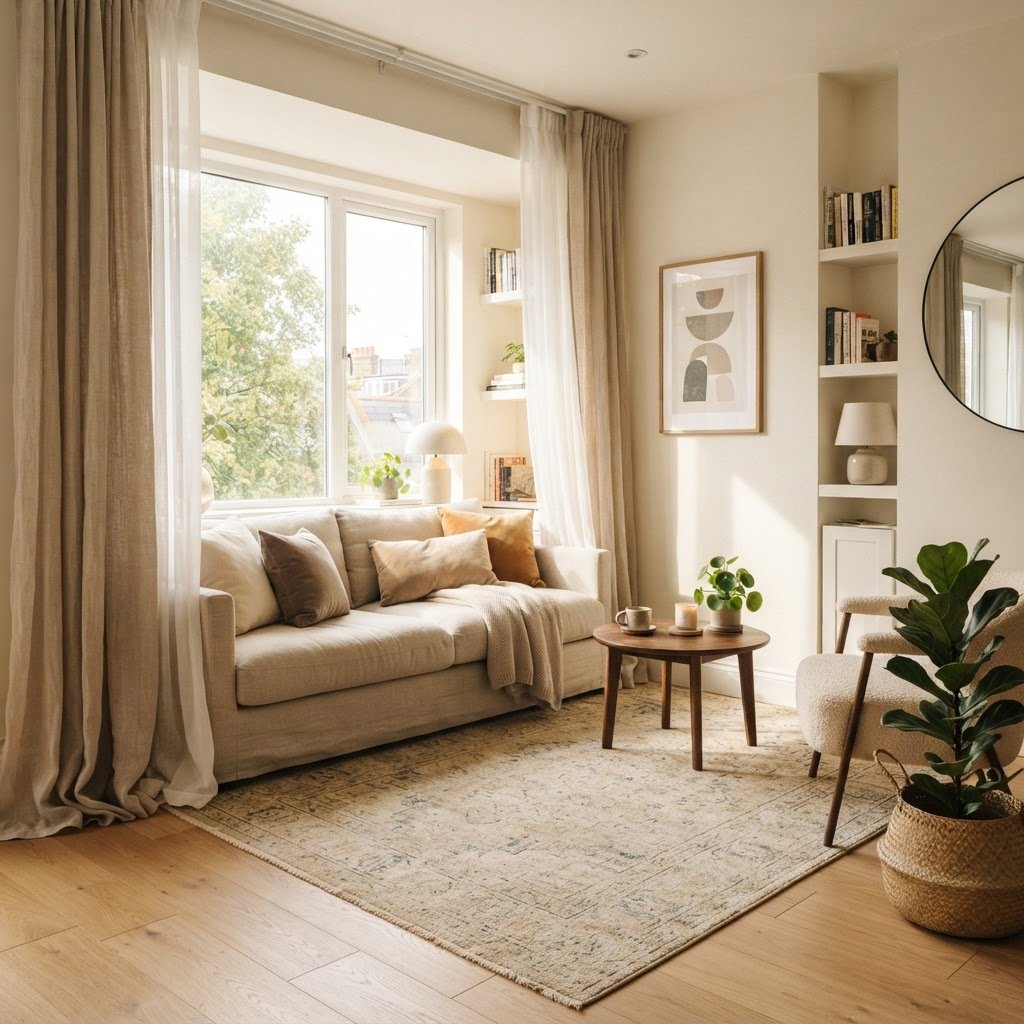
Highest-ROI no-drill upgrades for tiny apartments under $30 include swapping generic bulbs for 3000K LEDs, installing tension-rod curtains to create height, replacing cabinet hardware with modern pulls, and utilizing adhesive hooks for vertical storage. These low-cost, reversible modifications instantly modernize rental spaces, improve functionality, and ensure the full return of your security deposit.
Rethinking Your Lighting Strategy
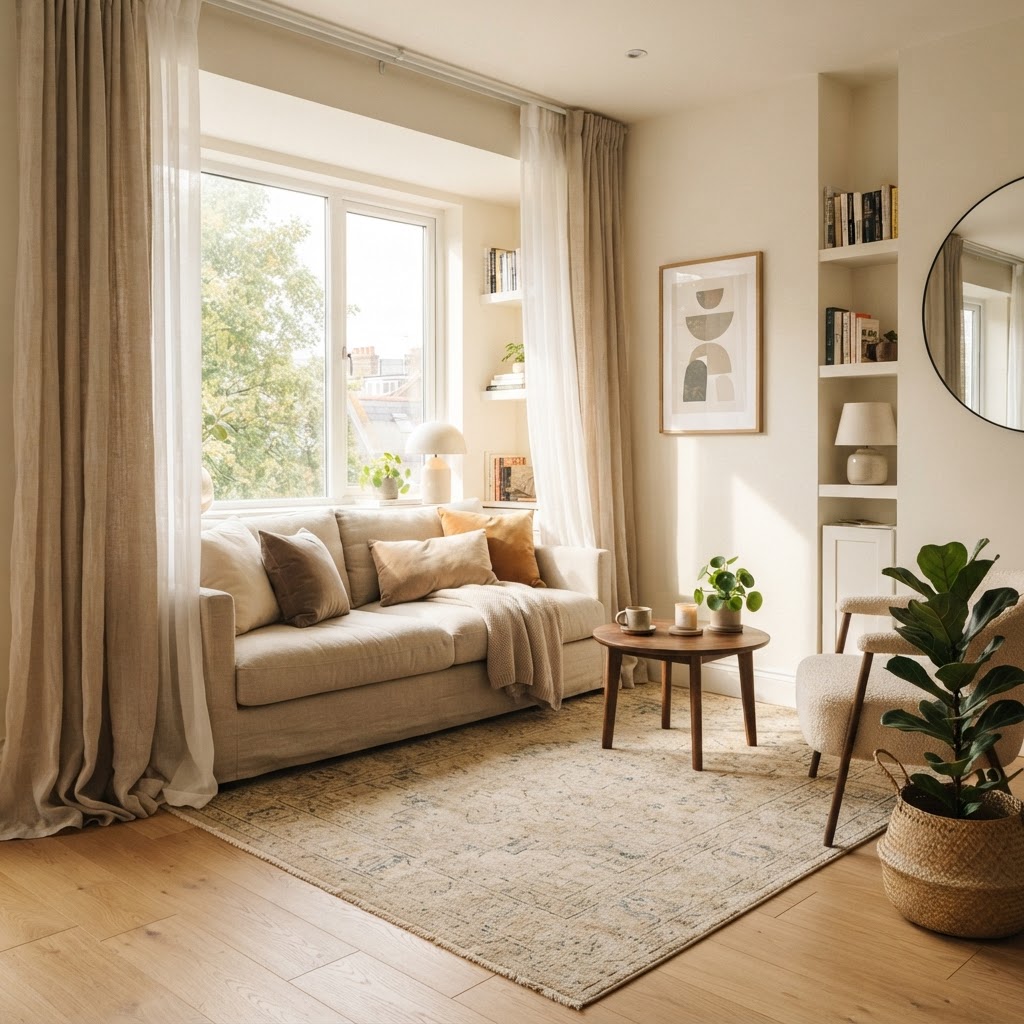
Lighting is the single most impactful factor in how large or small a room feels, yet it is frequently ignored in rental properties. Standard builder-grade fixtures often cast clinical, unflattering light that shrinks the room and highlights architectural shortcomings. By focusing on color temperature and light layering, you can fundamentally transform the atmosphere of a studio apartment for less than $20.
The Power of Warmth
Transitioning from cool-toned, 5000K daylight bulbs to warmer 2700K or 3000K bulbs makes a sterile, white-walled apartment feel like a curated sanctuary. Smart bulbs that plug into existing lamps are well under the $30 mark and allow for smartphone-controlled brightness, eliminating the need for expensive, permanent lighting fixtures. To optimize your space, aim for a ‘layered’ lighting approach:
Lighting should never be treated as an afterthought in small space living. By creating layers—floor lamps, table lamps, and under-cabinet LED strips—you draw the eye to different corners of the room, effectively expanding the perceived boundaries of the space.
Command Strips and Adhesive Storage
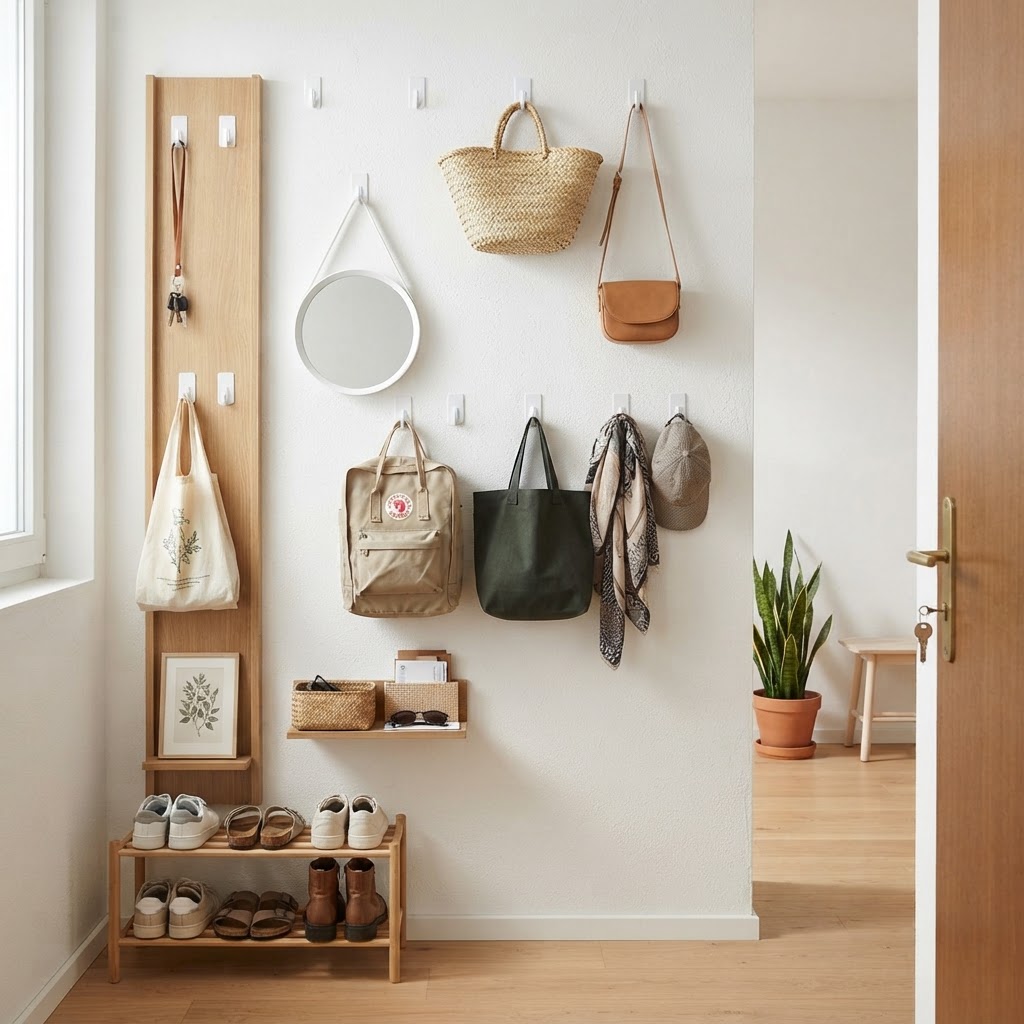
When square footage is at a premium, the most effective solution is to go vertical using non-damaging adhesive technology. Because you cannot drill shelves into the walls, heavy-duty adhesive hooks and mounting strips act as the modern renter’s best friend for clearing floor and counter space.
Maximizing Vertical Utility
Use adhesive hooks behind closet doors to store scarves, bags, or lightweight cleaning supplies. For entryway management, mount a lightweight mesh organizer on the wall to hold mail, keys, and transit passes. These items, usually priced between $5 and $15, are completely removable, ensuring you get your deposit back while gaining critical storage. To maximize success, always follow the manufacturer’s prep instructions: clean the wall surface with isopropyl alcohol before application, and wait at least one hour for the adhesive to cure before hanging items to ensure the weight capacity is fully maintained.
Upgrading Cabinetry Without Paint
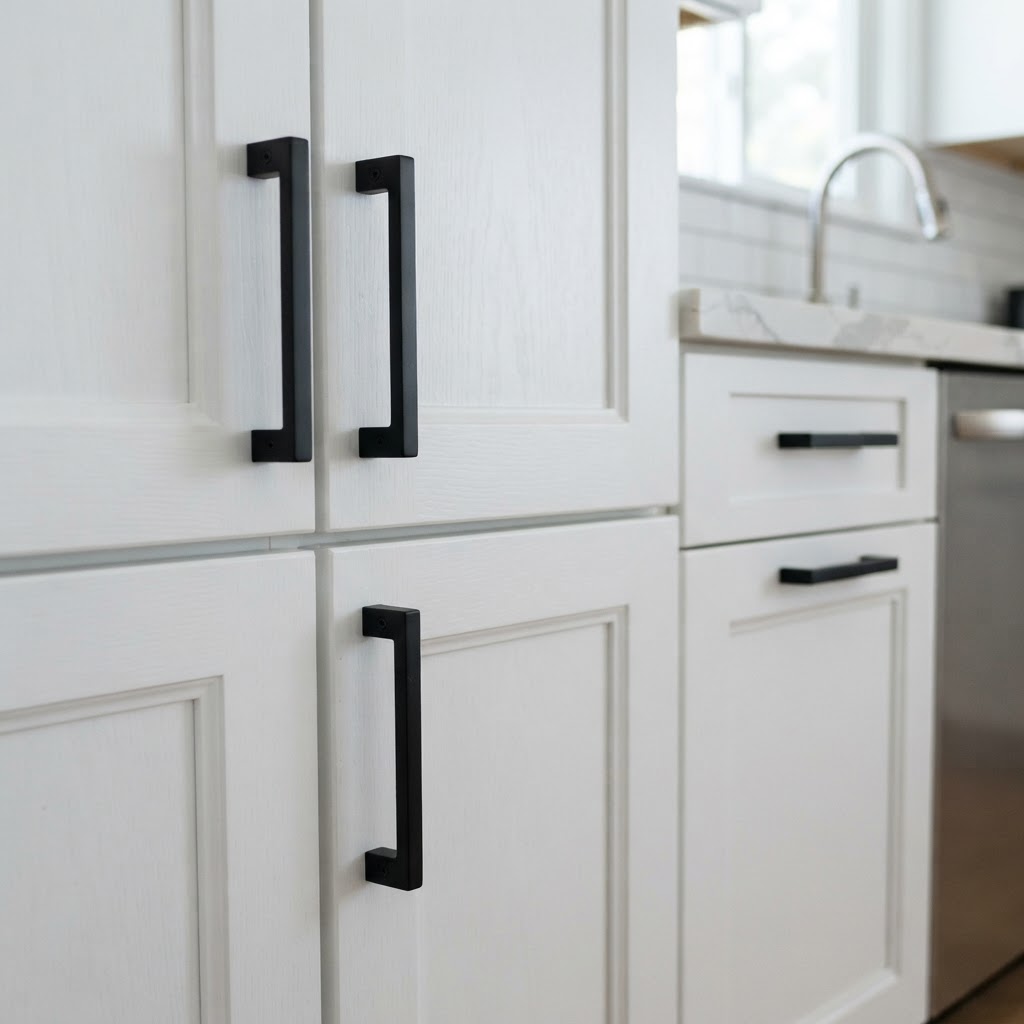
If your kitchen cabinets are stuck in the 1990s, you do not need to commit to a permanent, expensive paint job to make them look custom. One of the highest-ROI no-drill upgrades for tiny apartments is simply swapping out the original hardware for modern, brushed gold or matte black pulls. Most rental cabinets use standard screw spacing (often 3-inch or 96mm), making it incredibly easy to find modern hardware that fits existing holes.
Always keep the original hardware in a labeled baggie stored in a kitchen drawer so you can swap them back before moving out. This thirty-minute project can make a kitchen look thousands of dollars more expensive than it is. Pair these new pulls with removable, waterproof contact paper on the backsplashes for a full, temporary kitchen refresh that stays well under your $30 budget. For best results, use a screwdriver with the correct drive (Phillips or flathead) to avoid stripping the existing rental screws.
Creating Dedicated Zones with Textiles
In a tiny apartment, where the bedroom serves as the living room and home office, you must define zones to prevent the space from feeling like a cluttered storage unit. High-quality textiles are the most affordable, non-intrusive way to create visual boundaries and distinct “rooms” without using bulky physical partitions.
Place a low-cost runner rug between your dining area and your couch to act as a “floor wall” that signals where one functional space ends and the next begins. These rugs are often available for under $30 and add sound dampening to reduce noise for neighbors. Pair your rug with a set of textured velvet or linen cushion covers to add luxury to your seating area, making the space feel intentionally curated rather than haphazard. Textiles introduce softness, which is essential for counterbalancing the hard, flat surfaces common in modern rental apartments.
Removable Window Treatments
Standard plastic blinds are a hallmark of temporary rental living; they are often dusty, flimsy, and visually unattractive. You can replace them entirely with tension-rod curtains, which require zero mounting hardware and can be installed in five minutes without leaving a single mark on the window casing.
Purchase two inexpensive tension rods and hang floor-to-ceiling curtains in a light, airy fabric. This visual trick encourages the eye to move vertically, making ceilings feel higher than they actually are. By extending the curtain rod slightly wider than the window frame, you allow more natural light to enter the room, which is essential for making a tiny home feel expansive. For maximum effect, choose light-filtering or sheer fabrics to maintain privacy while maximizing the airy, open feel.
The Psychology of Surface Clutter
Small spaces look messy significantly faster than large ones, where a single pile of mail or a stray set of headphones can make an entire room feel like a disaster zone. The most effective upgrade for any small apartment is implementing a strict ‘every item has a home’ policy using budget-friendly, uniform storage bins.
When your storage is color-coordinated or matches the color palette of your room, it recedes into the background, reducing visual noise. Invest in a few woven baskets or fabric bins that fit under your bed or on top of your wardrobe. This keeps the eye line clear and allows your decor, rather than your daily belongings, to take center stage. By limiting surface items to three or fewer objects per area, you create a sense of calm and order that makes a small footprint feel far more intentional.
Plants as Architectural Elements
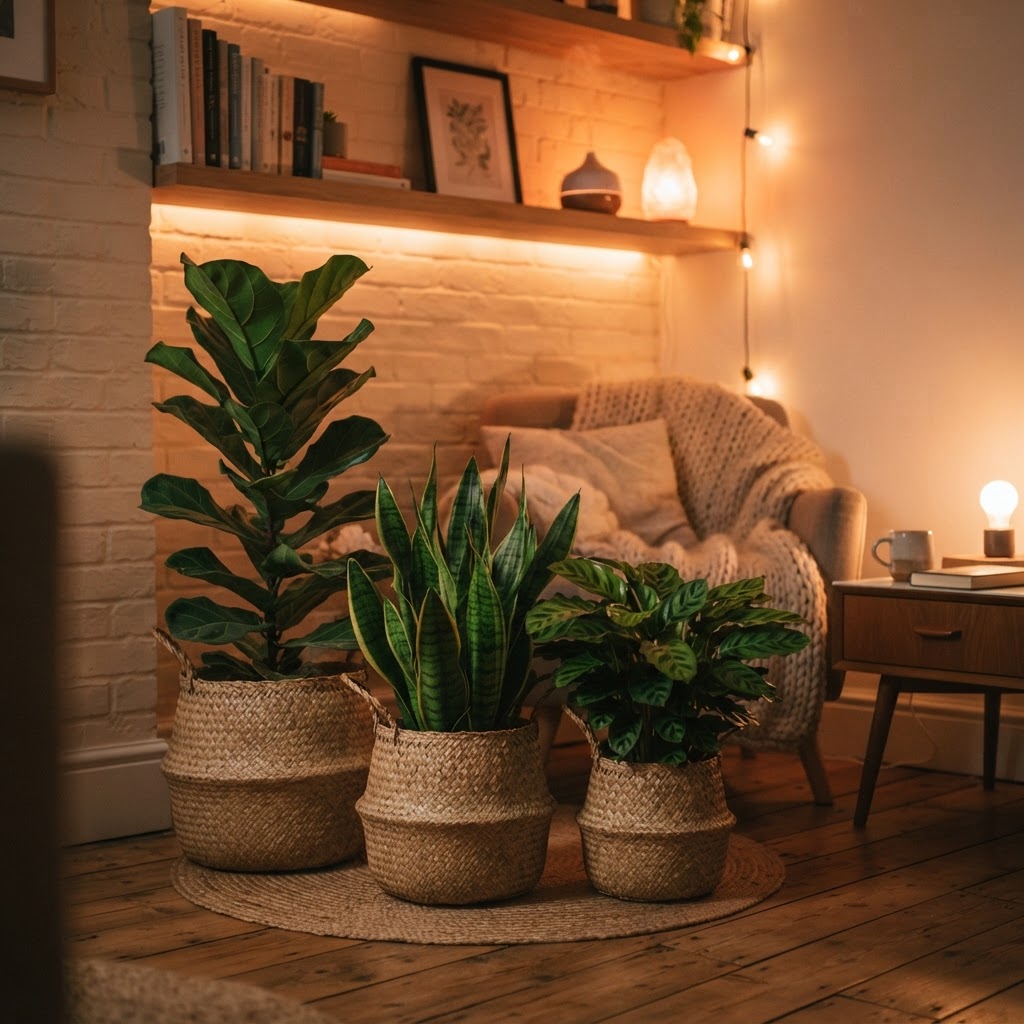
Plants are more than just home decor; they act as living sculptures that break up the monotony of flat, white apartment walls. Hanging plants from existing shower curtain rods or using inexpensive plant stands allows you to create height in corners that would otherwise remain empty.
Choose hearty varieties like Pothos, Snake Plants, or ZZ Plants, which are inexpensive ($10-$20) and thrive in varying light conditions. By grouping three plants of varying heights together, you create a professional, intentional focal point. This is a high-ROI upgrade because it improves indoor air quality while adding massive aesthetic value for minimal cost, effectively bringing life and texture into a small, potentially sterile rental unit.
FAQ
Can I install curtains without drilling holes?
Yes, you can use heavy-duty tension rods that fit securely inside the window frame. These require zero hardware and hold curtains firmly in place without damaging the wall, making them perfect for rental properties.
What are the best cheap ways to organize a small kitchen?
Use adhesive hooks to hang utensils and towels, and install an over-the-door rack for spices or cleaning supplies. Utilizing the space inside cabinet doors for organization maximizes your storage capacity without permanent installation.
How can I make a small room look bigger for under $30?
Focus on verticality: use floor-to-ceiling curtains and place mirrors or reflective surfaces to bounce light. Clear all floor clutter and use uniform storage containers to reduce visual density and create an open, airy atmosphere.
Will changing cabinet hardware affect my security deposit?
No, changing cabinet hardware is generally considered a minor, reversible modification. As long as you keep the original hardware in a labeled bag and reinstall it before you move out, your security deposit will remain safe.
What is the best light color for a cozy apartment?
Use 2700K to 3000K (warm white) LED bulbs to create a cozy, inviting atmosphere. Avoid 5000K (daylight) bulbs, as they can feel clinical and harsh, making small spaces feel cold and uninviting.

Leave a Reply