Wall-Mounted Shoe Storage Solutions for Tiny Entryways
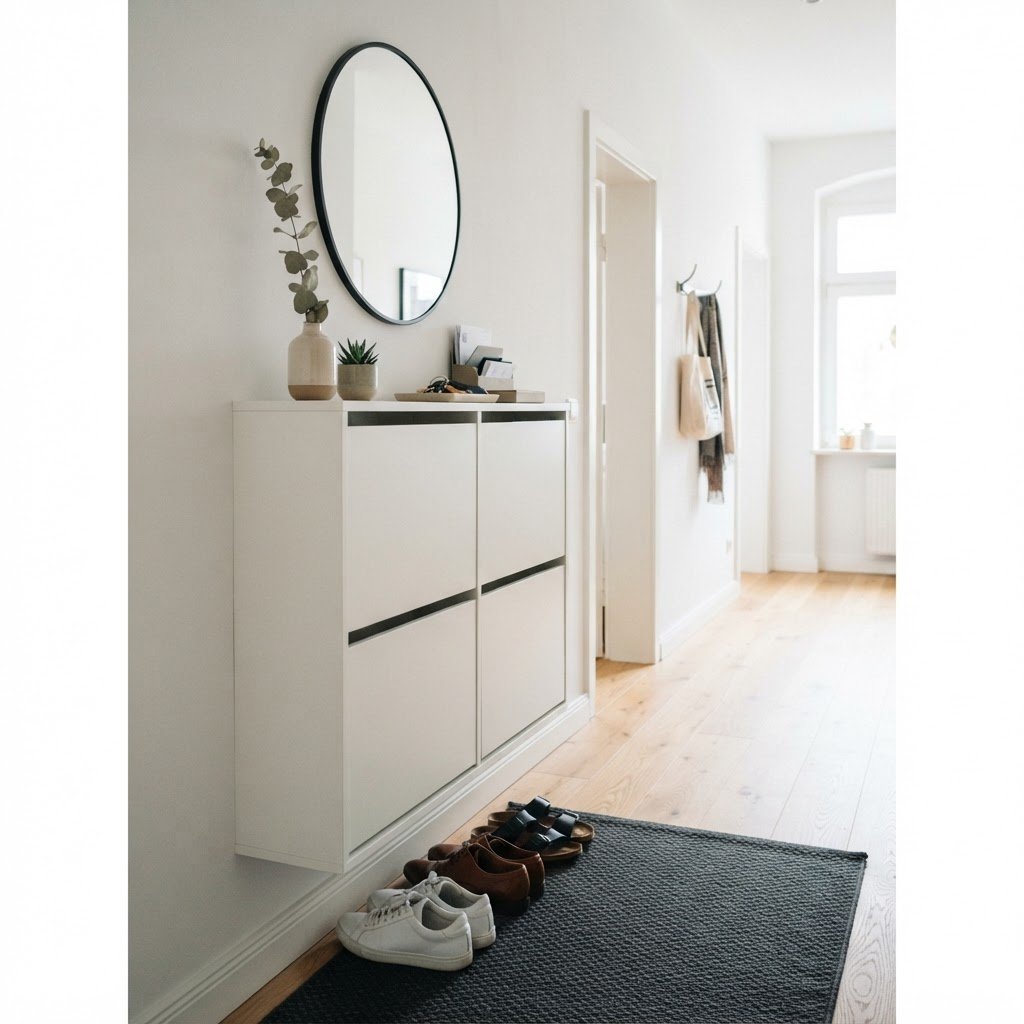
Wall-mounted shoe storage is the most effective solution for tiny entryways, utilizing vertical space to eliminate floor clutter and increase usable square footage. Shallow tip-out cabinets, floating wall ledges, and modular wall-mount racks allow you to store footwear in high-traffic zones without obstructing movement or sacrificing your home’s aesthetic.
The Psychology of an Organized Foyer
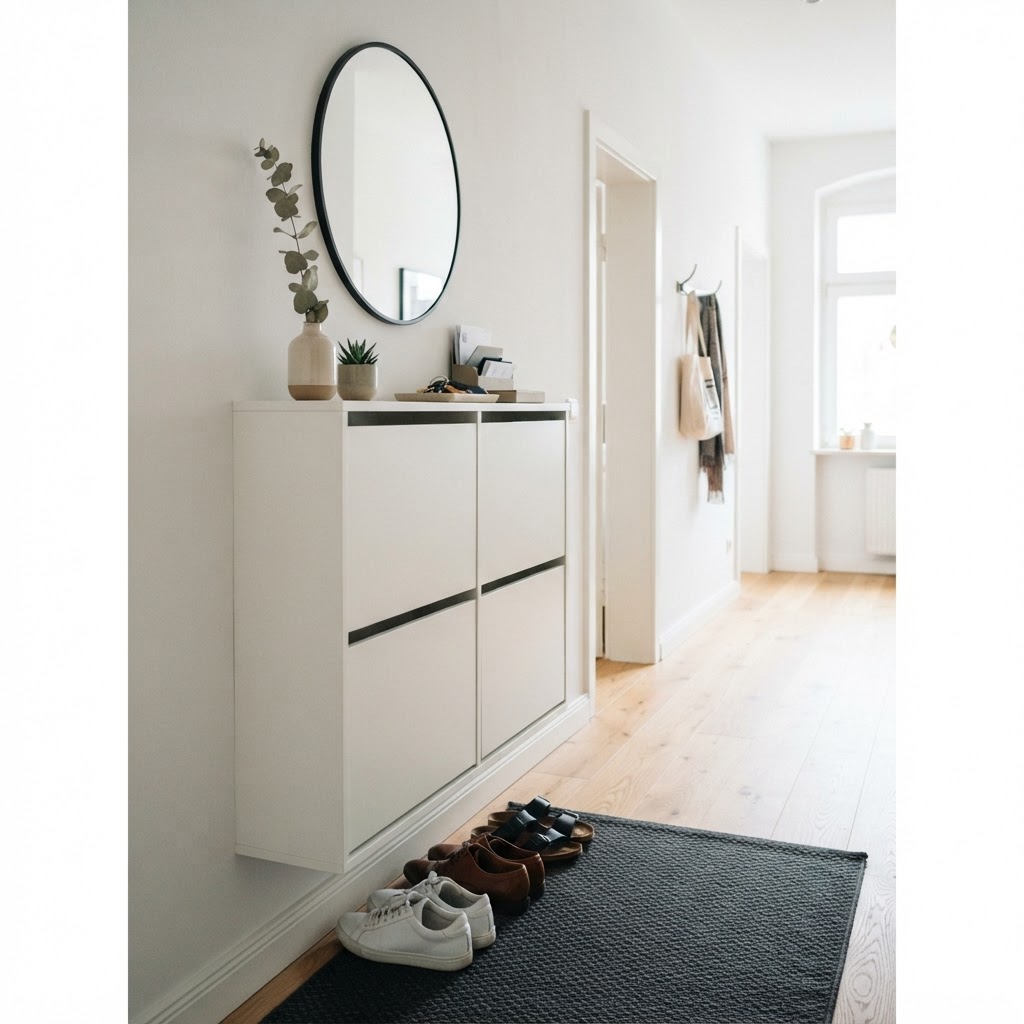
Your entryway acts as the psychological gateway to your home, where an organized space signals to your brain that it is time to transition from the stress of the outside world to the relaxation of your private sanctuary. When entryways remain cluttered with shoes, they create cognitive friction; studies suggest that visual clutter in the home increases cortisol levels and inhibits the brain’s ability to focus or relax. By shifting storage from the floor to the wall, you create a “drop zone” that serves as a mental reset point. This design choice doesn’t just improve physical flow; it significantly reduces the morning chaos of finding matching pairs. A clean entry transition, achieved through vertical organization, fosters a sense of accomplishment and order before you ever reach your living room. Implementing these systems turns an unutilized wall into a high-functioning organizational hub, effectively doubling your entryway’s usable footprint without sacrificing critical clearance space. The difference between a tripping hazard and a curated display is often just a six-inch-deep cabinet.
Why Wall Space Matters
When floor space is at a premium, looking upward is the smartest design decision you can make. Walls are often the most underutilized assets in home organization. By shifting your storage from the floor to the vertical plane, you effectively double your usable surface area without encroaching on your walking path. Choosing the right wall-mounted unit requires considering the depth of your entryway. Many modern wall-mounted cabinets have a slim profile, often protruding only six to eight inches from the wall, making them perfect for narrow hallways where every inch counts.
Types of Wall-Mounted Shoe Storage
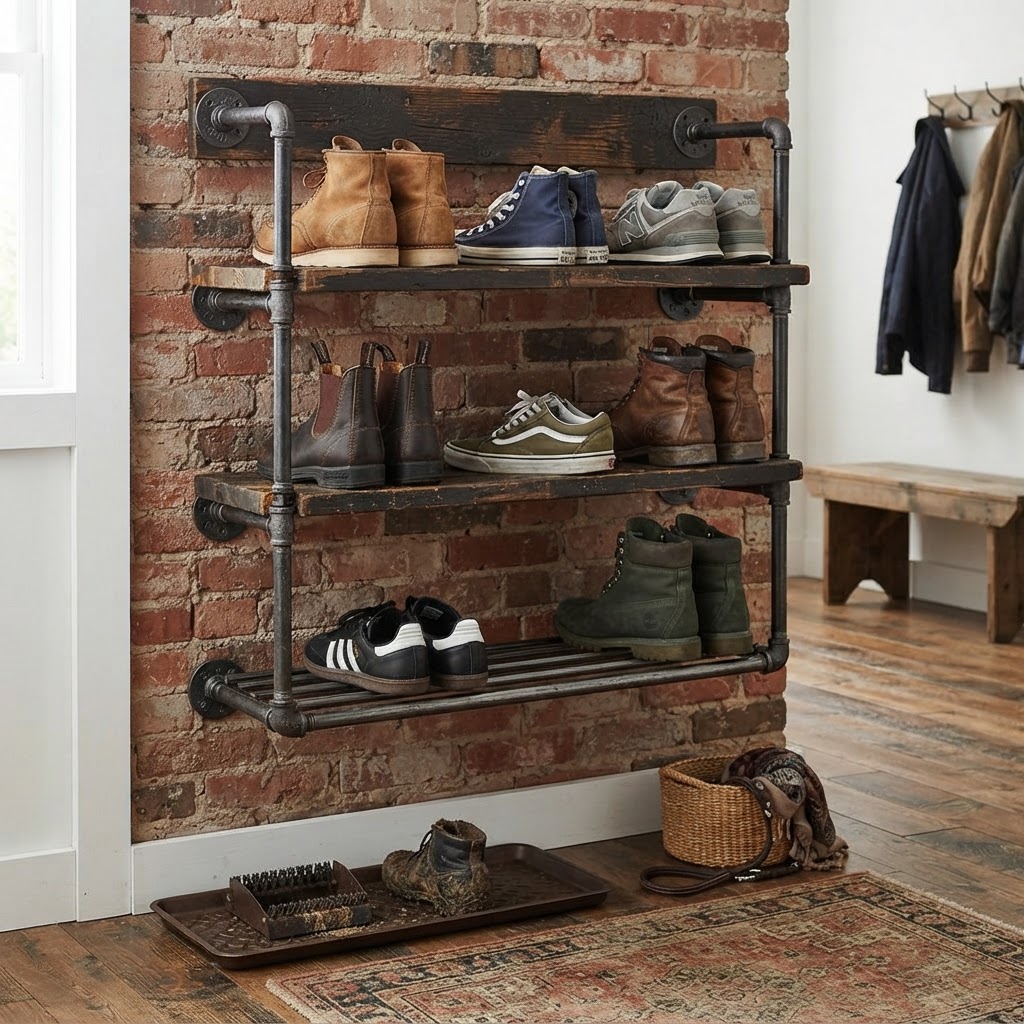
Not all storage solutions are created equal, and the best choice depends on your specific layout and the volume of footwear you own. From sleek cabinets to industrial-style racks, there is a configuration to suit every interior design style, whether you prefer minimalist modern or rustic farmhouse. Selecting the right type depends on your specific storage requirements: tip-out cabinets provide the cleanest, most minimalist look by hiding shoes behind a sleek panel, while floating shelves turn your footwear collection into a curated visual display.
Tip-Out Cabinets
Tip-out cabinets are the gold standard for small-space living. They utilize a clever hinge mechanism that allows the front panel to tilt forward, revealing shoe racks hidden neatly behind the door. Because these units are typically shallow, they fit behind doors or in tight corners where a traditional shelf would never fit. They are ideal for high-traffic entryways because they prevent visual clutter by completely concealing the shoes from view, which is essential for maintaining a calm, orderly entrance.
Floating Shelves and Ledges
For a lighter, more airy feel, consider individual floating shelves. You can stagger these shelves at varying heights to accommodate different types of shoes, such as tall boots on the bottom and flats or loafers on the top. This approach is highly customizable and allows you to adapt the storage to your specific collection. Unlike bulky units, floating ledges provide a modern, minimalist aesthetic that works exceptionally well in apartments or homes with limited hallway width.
Maximizing Efficiency with Modular Systems
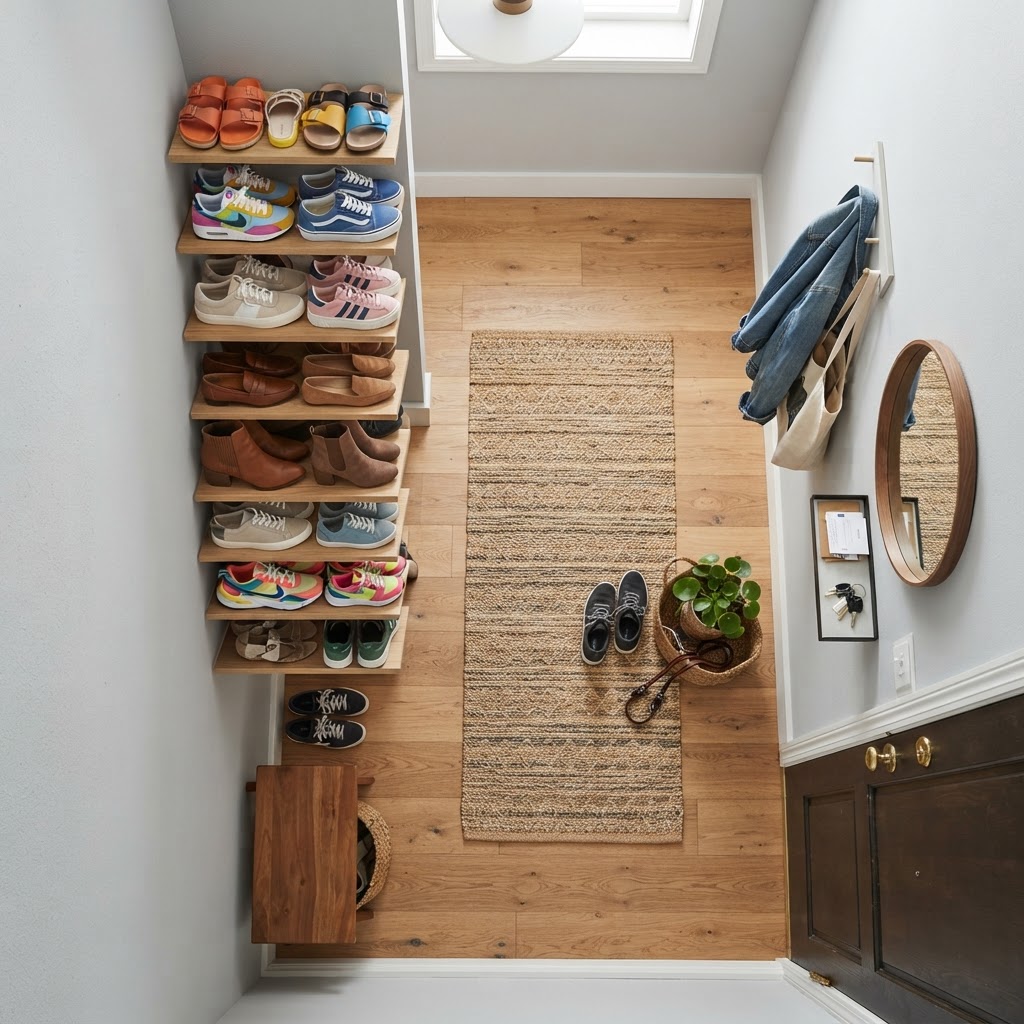
Modular systems offer the greatest degree of flexibility for homeowners who need to grow their storage over time, allowing for a custom fit that evolves with your needs. You can start with a single unit and add more as your collection expands, or arrange them in a pattern that fits the unique dimensions of your wall. Strategic planning is crucial; when designing your layout, measure your entryway twice before buying any hardware. Ensure that even with your shoes loaded into the wall-mounted storage, there is still enough clearance for you to comfortably open the front door and walk through the entryway without bumping into furniture or footwear. A good rule of thumb is to maintain at least 32 to 36 inches of clear walking path. Modular systems are particularly useful for families because they allow you to designate specific vertical “zones” or tiers for each person’s footwear, preventing the shared-space pile-up. By staggering modular units, you can also optimize for vertical height, placing rarely-worn formal shoes at the top and daily-use sneakers at comfortable waist height for quick access.
Design Aesthetics and Materials
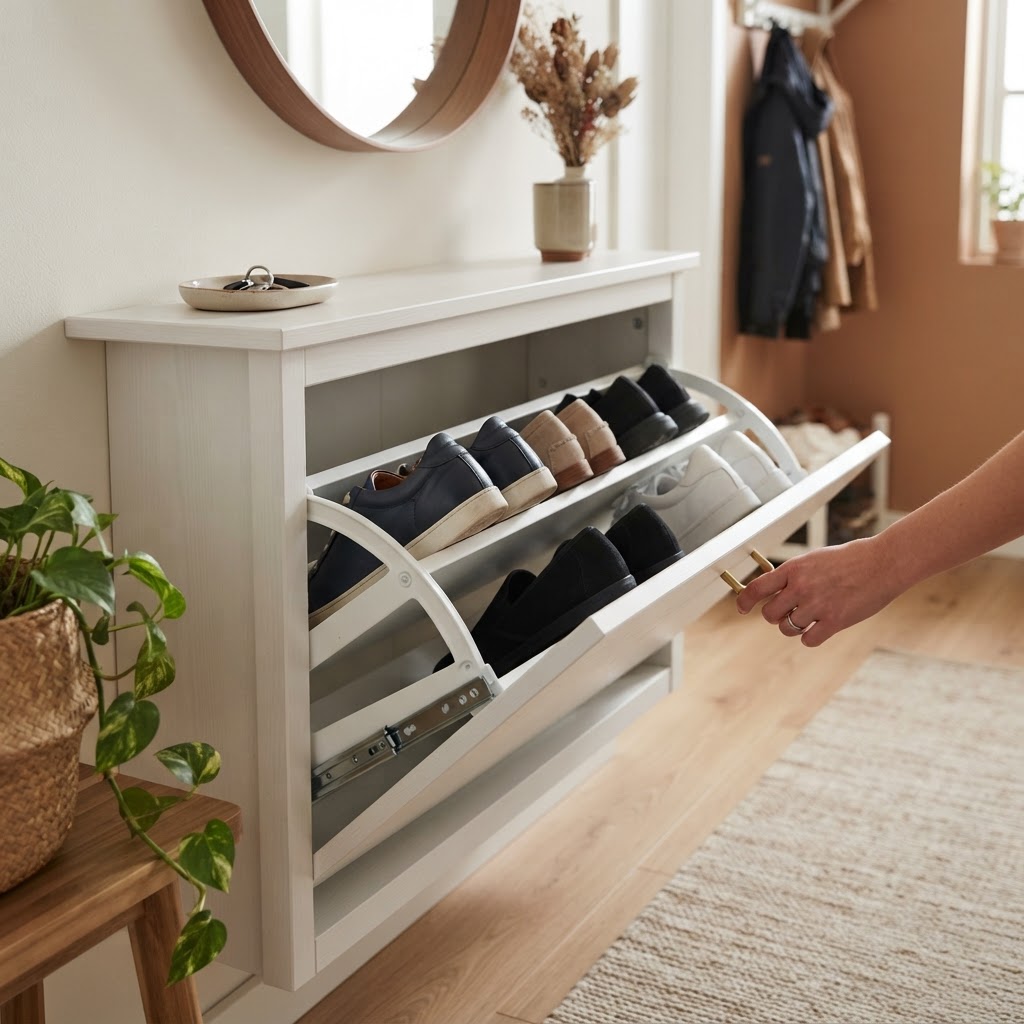
Functionality doesn’t have to come at the expense of style. Today’s market offers a vast array of finishes, ranging from high-gloss white lacquers that reflect light to make a space feel bigger, to natural wood tones that add warmth to a home. If you want your storage to disappear into the wall, paint your unit the exact color of the wall to create a seamless, integrated look. When choosing materials, prioritize durability over temporary aesthetics; since these units will be used daily, the quality of your hardware is paramount. Look for soft-close hinges, sturdy wall anchors, and high-quality mounting brackets that can support the weight of heavy winter boots. Cheap plastic parts often fail under the weight of wet or muddy gear, so prioritize metal components whenever possible. For moisture-prone areas, opt for powder-coated steel or moisture-resistant MDF with a sealed finish to prevent warping over time. A professional-grade installation usually involves ensuring the unit is leveled with a spirit level to prevent drawers from drooping or shelves from tilting, ensuring long-term reliability and a clean, luxury appearance that enhances your home’s value.
Maintaining Your Organized Entryway
Once you have installed your wall-mounted shoe storage, the real work begins: maintaining the system. Establish a “one-in, one-out” rule if your storage space is strictly limited. Encourage family members to place shoes in their designated slots immediately upon entering to prevent the “pile-up” effect that ruins an organized space. To keep your entryway smelling fresh, consider incorporating small sachets of cedar or activated charcoal inside your cabinets. This prevents the buildup of odors and ensures that your storage solution remains a pleasant feature of your home rather than a functional necessity that you avoid opening. Whether you choose a DIY approach or professional installation, safety is paramount. Always use appropriate wall anchors for your specific wall type, whether it is drywall, plaster, or brick. A wall-mounted rack that pulls away from the wall is not only a damage risk to your home but a safety hazard to your family. Follow all manufacturer instructions regarding weight limits and hardware requirements explicitly.
FAQ
Q: How much depth do I need for wall-mounted shoe cabinets?
Most slim wall-mounted shoe cabinets require between 6 and 8 inches of depth to function properly. You should always measure your entryway floor plan to ensure there is at least 32 inches of clearance remaining for a comfortable walking path after the unit is installed.
Q: Are wall-mounted shoe racks safe for drywall?
Yes, wall-mounted shoe racks are safe for drywall if you use proper toggle bolts or heavy-duty anchors rated for the unit’s weight. For the best stability, always attempt to mount the rack directly into the wall studs using high-quality lag screws.
Q: What is the best way to keep wall-mounted shoe storage smelling fresh?
Place activated charcoal bags or cedar wood sachets inside the compartments to absorb moisture and neutralize odors. Keeping shoes clean of mud before storage also prevents the buildup of debris and unpleasant smells within the closed cabinet space.
Q: How can I hide my shoes in a tiny entryway?
Tip-out cabinets are the best solution for hiding shoes because they use a tilt-out mechanism that keeps footwear vertically aligned behind a door panel. These units effectively turn your shoe storage into a sleek, furniture-like feature that blends into your wall.

Leave a Reply