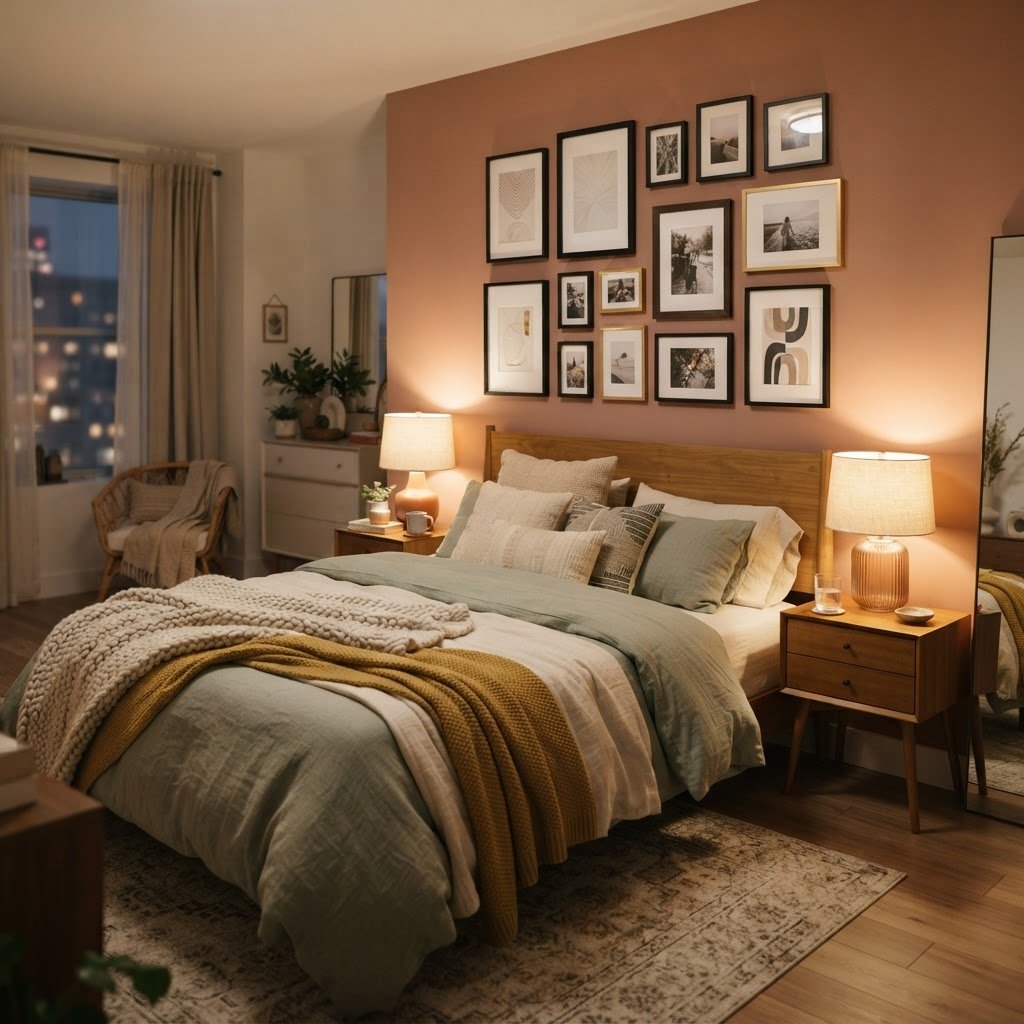
You can transform a rental bedroom into a personalized sanctuary without losing your security deposit by utilizing non-permanent, adhesive-based decor, modular furniture, and layered lighting schemes. These renter-friendly strategies allow you to add style, texture, and color to your living space while ensuring every upgrade is fully reversible and portable for your future moves.
1. Master the Art of No-Damage Wall Decor
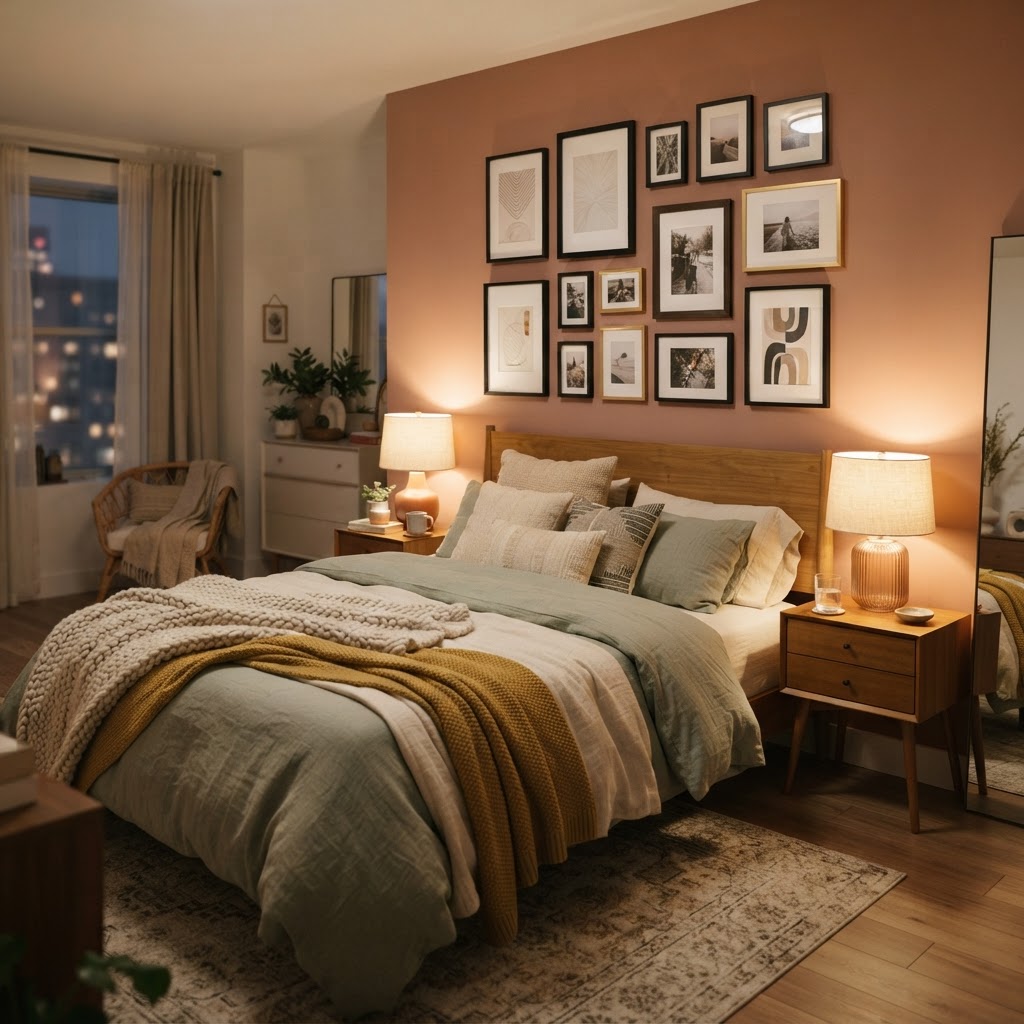
One of the biggest concerns for any renter is the prohibition of nails and screws, but the modern market for adhesive technology allows you to decorate empty, clinical walls without leaving a trace. By using professional-grade mounting solutions, you can achieve a sophisticated, gallery-like aesthetic that stays secure for years yet removes cleanly in seconds.
Using Adhesive Strips and Hooks
Adhesive mounting strips are the gold standard for apartment dwellers, with brands like Command offering solutions for everything from frames to heavy-duty hooks. To ensure success, always clean the wall surface with 70% isopropyl rubbing alcohol to remove dust or grease before application. For removal, pull the adhesive tab vertically against the wall at a 90-degree angle; this stretches the adhesive, breaking the bond without peeling off paint or damaging drywall.
Gallery Walls Without the Holes
Creating a gallery wall is an excellent way to add personality to a room without risking your deposit. Instead of hanging frames individually, mount your art on large-scale lightweight poster boards or foam core, which can be leaned against the wall on top of a dresser. Alternatively, use heavy-duty adhesive strips to mount frames directly to the wall. For a cohesive look, keep frame colors consistent—such as all black or all wood—while mixing varying sizes of artwork.
2. Upgrade Your Lighting Scheme
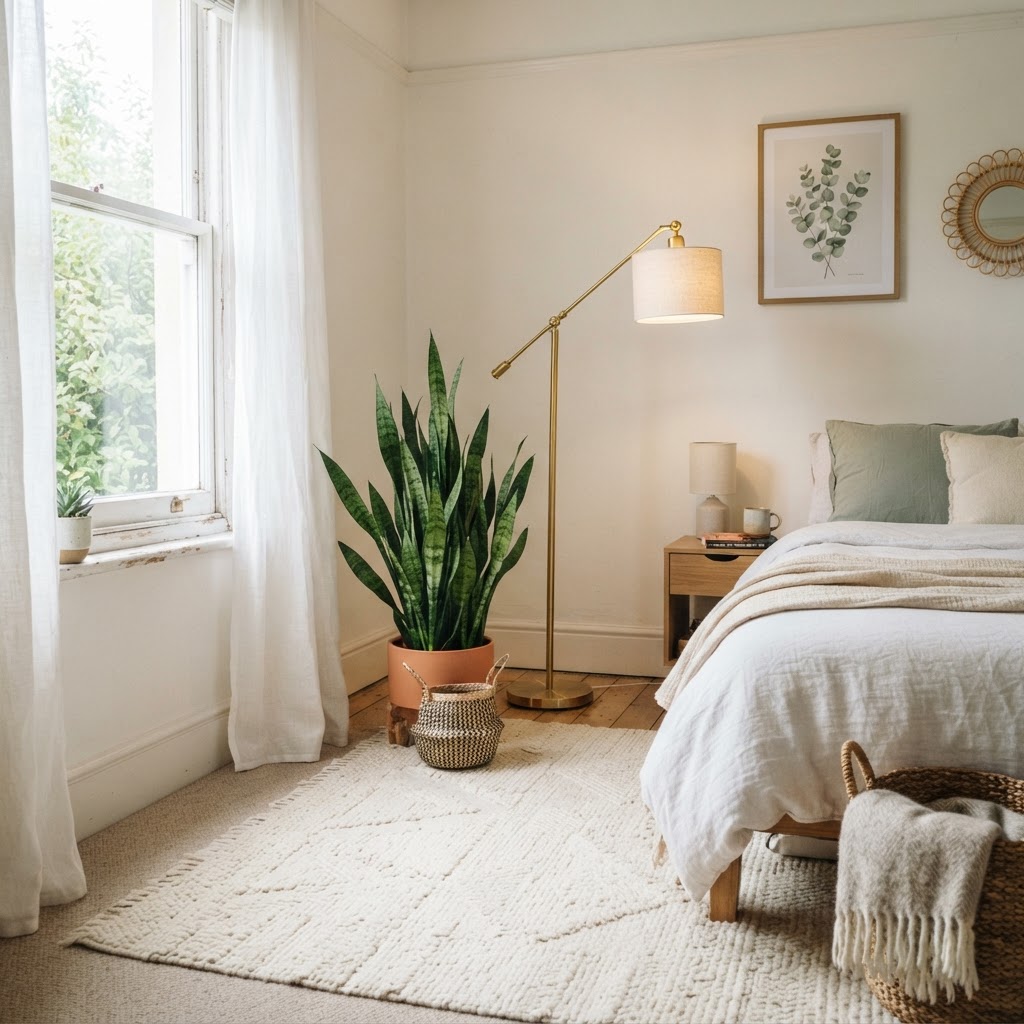
Many rentals come with outdated, overhead “boob lights” or harsh fluorescent fixtures that cast unflattering shadows, making layered lighting the most effective way to change the entire mood of a bedroom. By ignoring the primary ceiling fixture and introducing secondary, softer sources of light, you can create a high-end, cozy atmosphere that masks the basic nature of rental architecture.
Layering With Lamps
Incorporate a minimum of three light sources—such as bedside table lamps, a tall floor lamp in a dark corner, and battery-operated accent lighting—to achieve a balanced “lighting triangle” in your room. Opt for warm-toned LED bulbs in the 2700K to 3000K range to mimic the relaxing glow of incandescent bulbs. If your room lacks sufficient wall outlets, utilize rechargeable LED sconces that attach via adhesive magnets, providing a modern, custom look without any wiring.
The Magic of String Lights
String lights are not just for patios; they provide a soft, ambient glow that makes a bedroom feel larger and more inviting. Use them to create a soft outline behind a headboard or along the ceiling molding for a “floating” effect. Use clear adhesive clips every 6 to 10 inches to ensure the lights stay taut and organized. These lights are incredibly affordable, often costing less than $20, and can be removed in minutes when your lease expires.
3. Invest in Statement Textiles
If you cannot change the wall color, let your textiles do the talking because they are the easiest way to inject high-impact color, pattern, and depth into a rental bedroom. Because these items are entirely portable, they represent a long-term investment that increases your comfort in any future apartment, making them one of the most budget-efficient decor strategies for frequent movers.
Layered Bedding and Pillows
Don’t just stick to a single duvet cover; aim for a layered look that includes a duvet, a folded quilt at the foot of the bed, and a mix of at least four decorative pillows. Choose a consistent color palette—such as neutral creams with navy accents—to maintain a cohesive aesthetic. This layering technique provides a “hotel quality” look and serves as the primary focal point, drawing attention away from dated rental features like plain flooring or baseboards.
Floor Coverings to Hide Ugly Carpeting
If your rental has dated, worn-out, or stained wall-to-wall carpeting, covering it with a large, high-quality area rug is your best strategy. A rug does not just hide the flooring; it defines your sleeping area and adds sound dampening qualities that are crucial for apartment living. Choose a rug that measures at least 8×10 feet for a standard queen bed to ensure the rug extends beyond the bed edges, grounding the furniture and making the room feel significantly larger.
4. Temporary Wallpaper for Maximum Impact
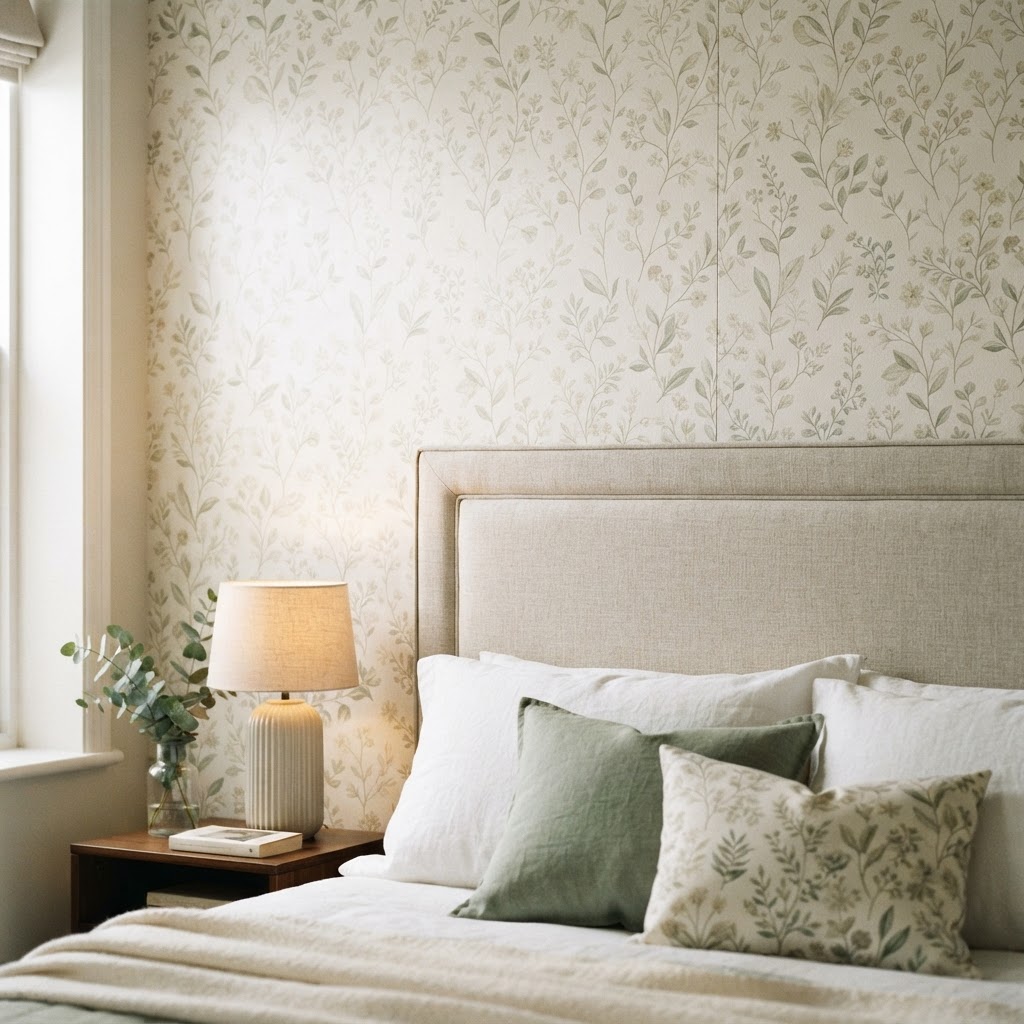
Peel-and-stick wallpaper is a total game-changer for renters because it allows you to install dramatic, professional-looking wall treatments that peel off clean when you leave. While traditional wallpaper requires messy paste and permanent adhesion, modern removable vinyl options act like oversized decals that provide a high-end, bespoke appearance for a fraction of the cost of professional painting.
Choosing the Right Pattern
For a professional result, apply the wallpaper to just one “accent wall” directly behind your bed to create a bold, grounding focal point. Before committing to a full wall, purchase a small sample swatch to test the adhesive on an inconspicuous area, such as inside a closet, to ensure it doesn’t pull the finish off your paint. When installing, use a plastic smoothing tool to push out air bubbles as you peel the backing, and ensure you purchase 10-15% extra material to account for pattern matching across strips.
5. Curtains as a Decorative Tool
Standard rental blinds are often functional but visually unappealing, yet you can easily elevate your bedroom’s architecture by installing floor-to-ceiling curtains. Even if you don’t need them for privacy, adding curtains creates a perception of height and luxury that makes a standard 8-foot ceiling feel more elevated and spacious.
Tension Rod Hacks
If you are prohibited from drilling holes for curtain rods, heavy-duty tension rods are the perfect alternative. These rods rely on internal spring pressure and rubberized ends to stay fixed within the window frame without the need for hardware. For the best result, select floor-length, heavy-weight drapes in velvet or linen. The weight of the fabric helps the curtains hang straight and adds a layer of insulation, which can save you money on heating and cooling costs during the year.
6. Curate Your Furniture for Versatility
In a rental, you rarely know what the layout of your next home will be, so focusing on modular, versatile furniture is key to a stress-free move. Avoid heavy, built-in pieces that are difficult to transport or that only fit in one specific architectural niche, as these often become damaged or discarded during the moving process.
Multi-Functional Pieces
Look for pieces that serve dual purposes, such as ottomans with internal storage or nightstands with multiple drawers to minimize visual clutter. If your apartment lacks closet space, a stylish, minimalist clothing rack can serve as a functional piece of art while keeping your favorite outfits organized. By keeping your furniture base neutral in wood or metal tones, you can easily adapt your bedroom’s color scheme or style by simply changing out the bedding or wall decor as your tastes evolve.
7. Add Life With Indoor Plants
Nothing breathes life into a space faster than greenery, as plants serve as natural air purifiers that add color and organic texture to sterile, neutral-toned rentals. They are the ultimate accessory for renters because they are fully portable, require no installation, and provide an immediate aesthetic upgrade that softens the hard lines of apartment living.
Choosing Low-Maintenance Varieties
If you aren’t a seasoned gardener, prioritize hardy, low-light plants like the Snake Plant (Sansevieria), ZZ Plant, or Pothos, which can survive for weeks with minimal water and indirect light. Place them on top of dressers, hang them from ceiling hooks, or group them together on the floor in decorative baskets to create a focal point. Not only do these plants act as natural decor, but they also contribute to better indoor air quality, which is essential for a peaceful bedroom environment.
FAQ
Q: Does peel-and-stick wallpaper damage apartment walls?
Most high-quality peel-and-stick wallpaper is designed to be removable without damaging standard latex paint. However, always test a small, hidden piece of the wallpaper on your wall for 24 hours to ensure it does not lift the paint finish when peeled off.
Q: What is the best way to hang heavy art without nails?
For heavier items, use industrial-strength adhesive strips rated for high weight capacities, often labeled for “large frames” or “heavy-duty” projects. Ensure you follow the weight limits specified by the manufacturer and clean the wall surface with rubbing alcohol before applying the adhesive to ensure a maximum bond.
Q: Can I replace a rental light fixture?
Technically, you can replace a light fixture as long as you keep the original unit and reinstall it before you move out. Always turn off the power at the circuit breaker before beginning any electrical work, and keep the original fixture and all its hardware in a safe, labeled bag.
Q: How do I hide ugly rental flooring without permanent changes?
Layering large area rugs is the most effective way to cover dated carpet or worn vinyl flooring while adding texture and warmth. Choose an area rug that covers at least 70% of the visible floor space to successfully camouflage the original flooring and define your bedroom as a cohesive space.

Leave a Reply