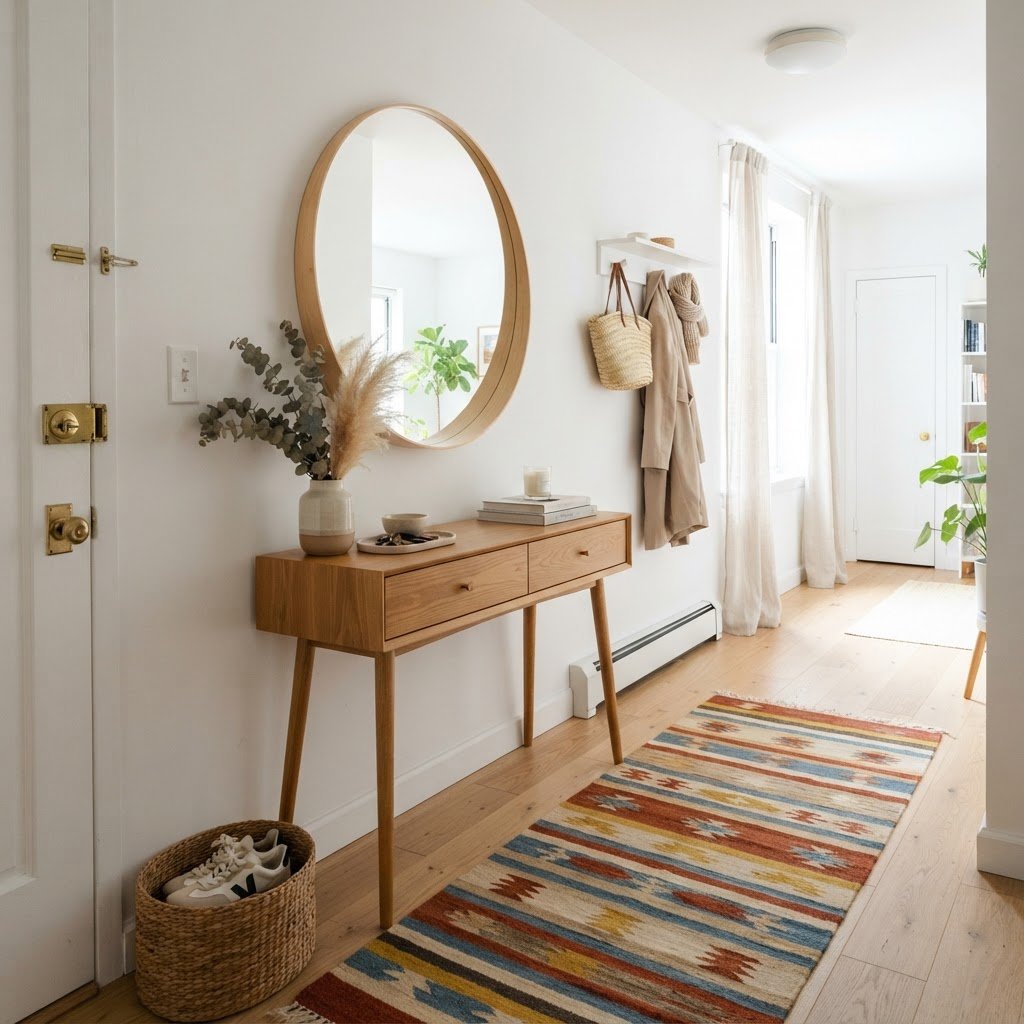
8 Things Every Small Apartment Entryway Needs (Renter Edition)
To optimize a small apartment entryway, prioritize vertical storage, slim-profile furniture, and multi-functional organization tools that require zero wall damage. By installing adhesive hooks, using lean-against mirrors, and implementing motion-activated lighting, you can transform a cramped threshold into a highly functional drop zone without violating lease terms.
1. Vertical Storage Solutions
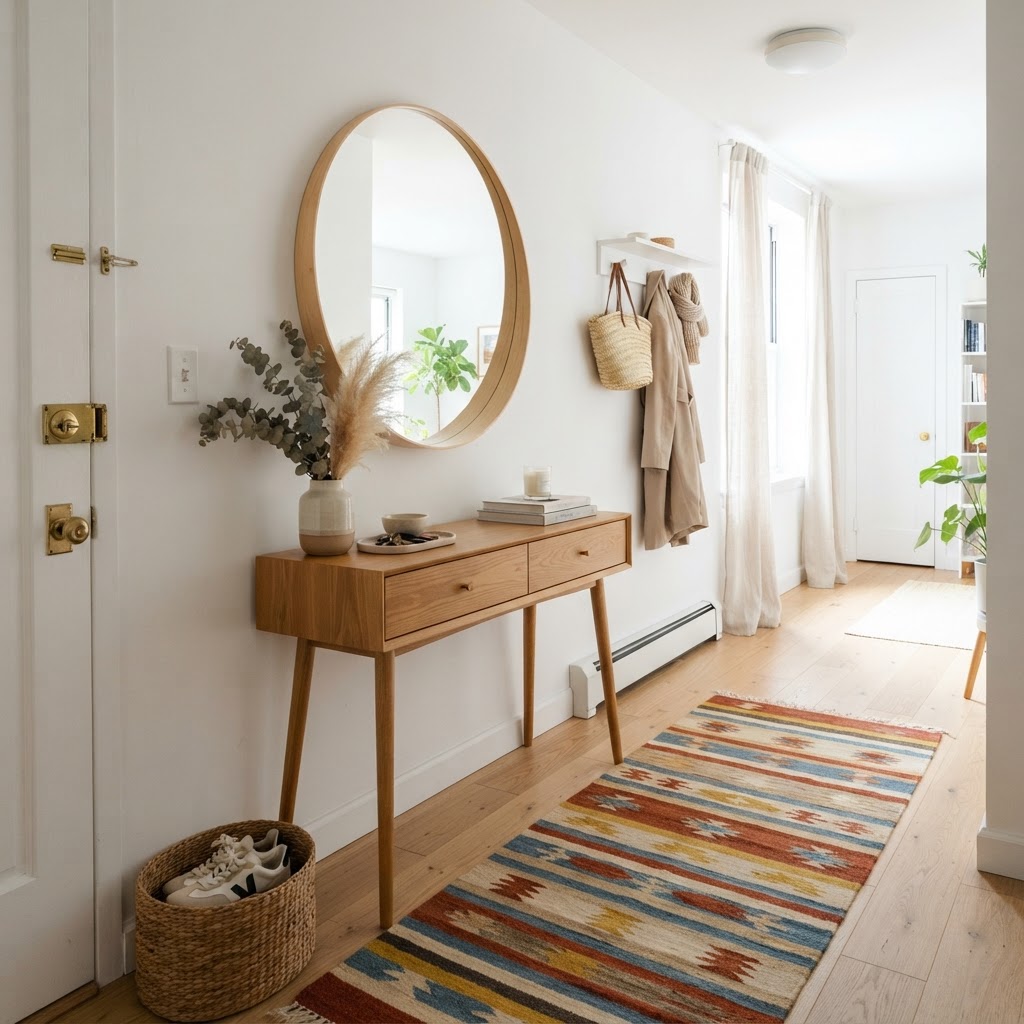
When floor space is limited, the only way to go is up, making vertical storage the secret weapon for any small apartment entryway. Utilizing the wall plane allows you to clear walking paths while maintaining essential storage for coats, bags, and umbrellas. For renters, the key is using non-permanent solutions that won’t jeopardize your security deposit.
Choosing Renter-Friendly Hardware
Look for tension-mounted shelving units or heavy-duty adhesive hooks rated for 5-10 lbs. These options provide the same utility as drilled shelves but leave zero residue or holes behind. When selecting hardware, prioritize materials like lightweight bamboo or powder-coated steel to avoid overburdening your walls. Aim to place your primary hooks at 60 inches from the floor for adult coats, while leaving space underneath for secondary storage, such as a slim bench or a collapsible umbrella stand. By maximizing every inch of wall space, you effectively create a storage system that works harder for your space without requiring a single nail.
2. The Multi-Purpose Slim Console
A slim-profile console table is the essential anchor for a small entryway, providing a dedicated landing strip for keys, mail, and daily essentials. In tight quarters, look for tables with a depth of 8 to 12 inches to ensure your walkway remains unobstructed. These slim pieces act as the “command center” for your home, effectively compartmentalizing clutter before it spreads to your living area.
Features to look for:
- Narrow width: Look for profiles under 12 inches deep to ensure accessibility.
- Open storage: Bottom shelving is vital for placing shoe baskets or storage bins.
- Material weight: Choose wood or metal with a light aesthetic to prevent visual weight.
3. Dedicated Shoe Management
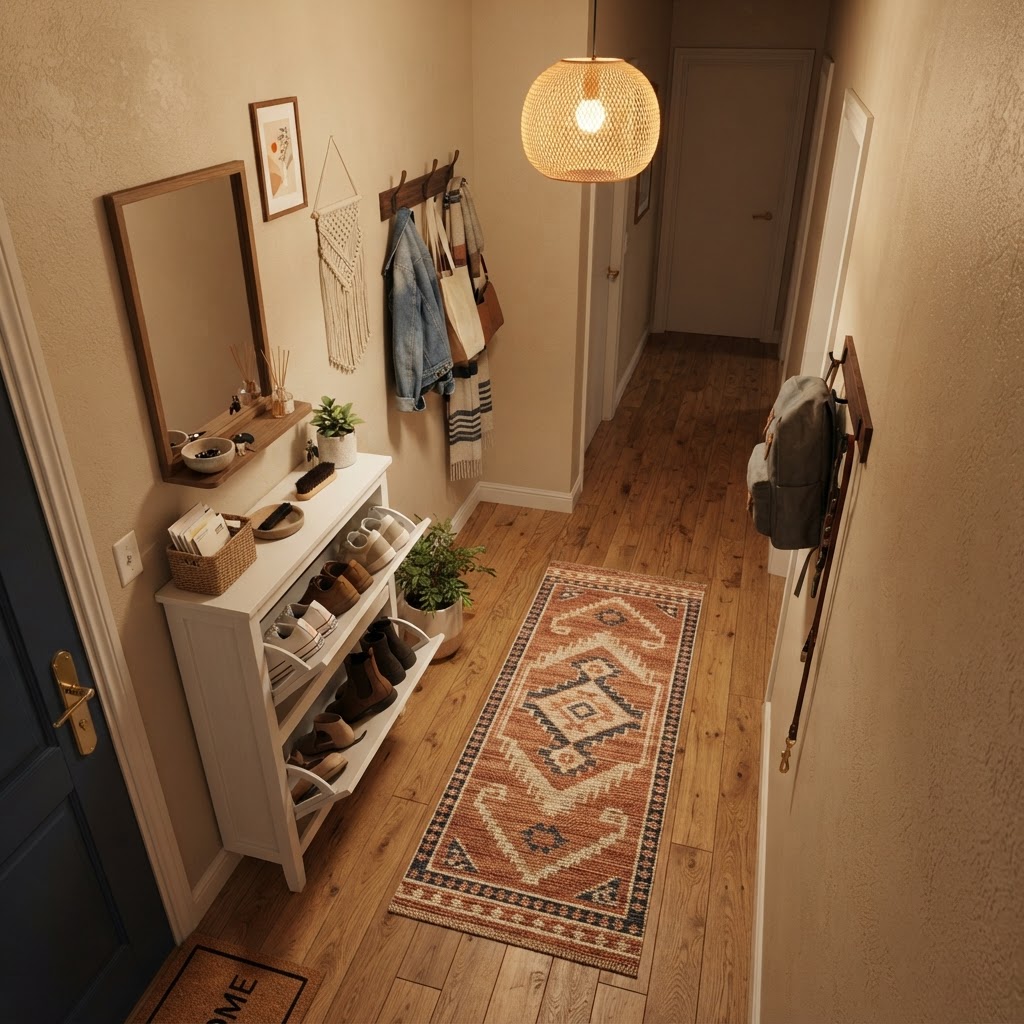
A dedicated shoe storage solution is the most effective way to eliminate entryway clutter and keep external dirt contained. If your hallway is narrow, an ultra-slim, pull-out shoe cabinet—which often measures just 6 to 9 inches in depth—can hide 6-12 pairs of shoes vertically behind a sleek facade.
If floor space is at a premium, utilize under-console storage by using a tiered, stackable metal rack. This configuration keeps footwear off the floor and prevents the “mountain of sneakers” effect that plagues small apartments. Remember to choose materials that are easy to wipe down; plastic or coated metal organizers are superior to fabric ones for high-traffic entryways where muddy boots are common. By establishing this specific boundary, you create a psychological transition from the hectic world outside to your peaceful indoor sanctuary.
4. Brightening Your Entrance with Mirrors
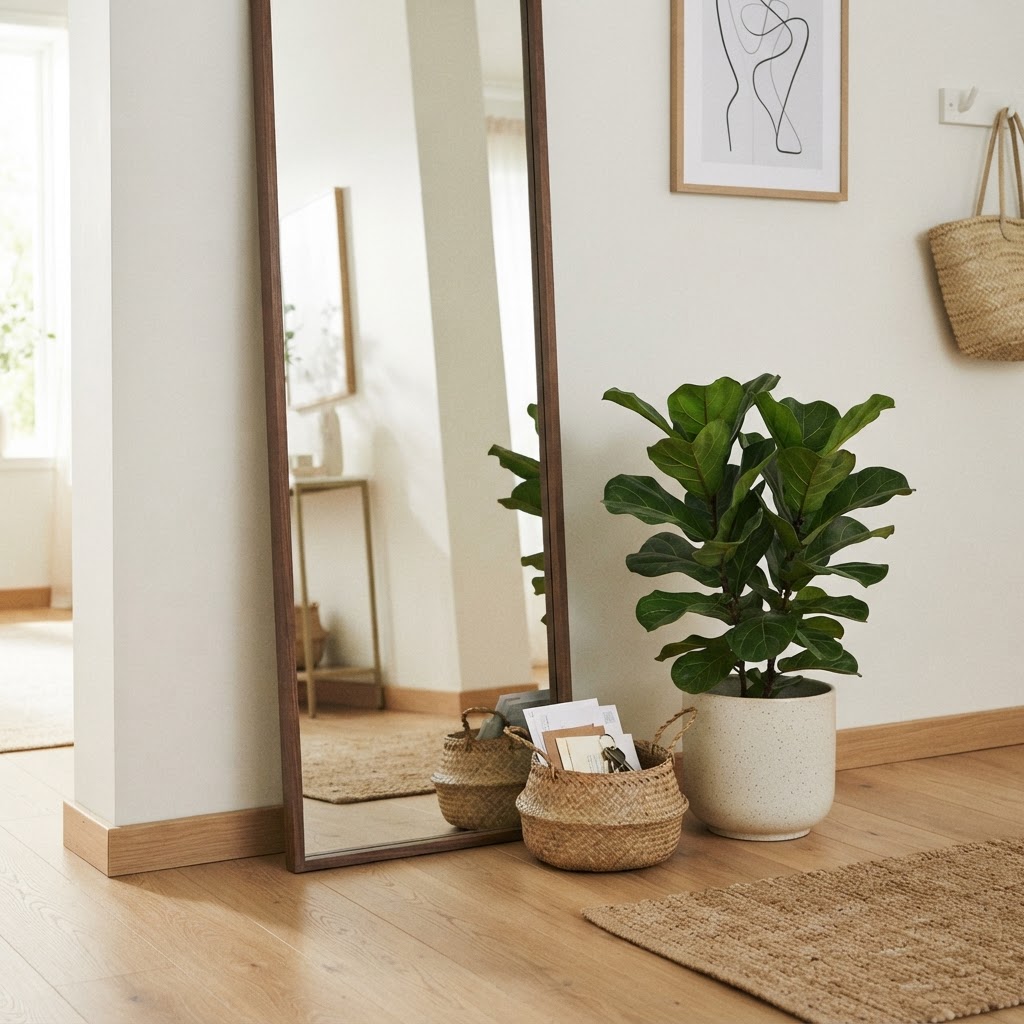
Mirrors are the most effective design tool for doubling the visual square footage of a dark or windowless entryway. Placing a large mirror near the door serves both a functional purpose—checking your outfit—and a spatial one, as it reflects light into otherwise dim corners.
If your rental agreement prohibits drilling, use a floor-length mirror with a heavy, stable base that can be leaned safely against the wall. To ensure safety, use heavy-duty museum wax or non-slip furniture pads at the base to prevent movement. For the best impact, position the mirror opposite your apartment’s primary light source, such as a living room window or a doorway, to maximize the bounce of natural light. A framed mirror not only expands the space but also serves as a high-end decorative piece that draws the eye upward, distracts from the limited floor area, and establishes a polished, intentional atmosphere.
5. Rugs for Defining the Zone
In a small apartment, a runner rug is the primary tool for creating a visual threshold between the front door and the rest of your living space. By placing a long, durable runner by the door, you define an “entry zone,” which signals to guests that they have entered a distinct area of your home.
For high-traffic areas, opt for washable, low-pile rugs made of synthetic materials or treated wool. A rug thickness of 0.25 inches is ideal to ensure it doesn’t interfere with door clearance. If your rug slips, use a low-tack, renter-friendly rug gripper that leaves no residue on hardwood or tile floors. Jute or sisal-style synthetic rugs are particularly effective because they hide dirt exceptionally well and provide a natural, clean texture that stands up to daily wear and tear. Periodically rotating your rug can ensure even wear, extending the life of the piece and keeping your entryway looking fresh between deep cleans.
6. Smart Lighting Upgrades
Rental lighting is often limited to uninspiring overhead fixtures, but you can instantly upgrade the atmosphere using plug-in or wireless lighting solutions. A small, decorative table lamp on your console provides a warm, inviting glow that makes the space feel more like a home and less like a sterile hallway.
For added convenience, integrate motion-activated, battery-operated LED light strips under shelves or along baseboards. These provide instant illumination when you enter with arms full of bags, eliminating the need to search for a wall switch. Most of these LED systems are rechargeable via USB and feature adhesive backing, making them perfect for renters who need to avoid electrical work. By layering these small, smart lighting solutions, you improve both the safety and the “mood” of your entryway, significantly modernizing an older apartment without professional installation.
7. The Power of Wall Hooks
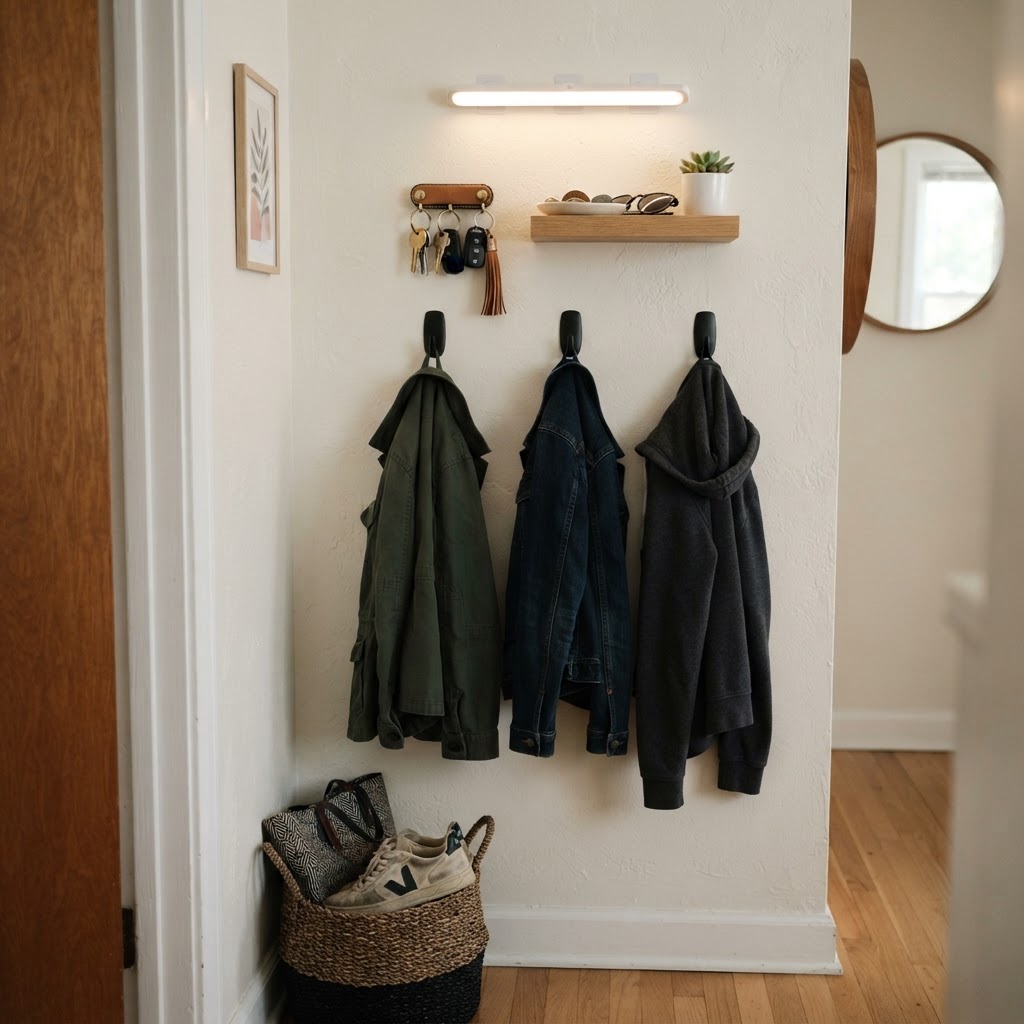
Wall hooks are the ultimate necessity for small homes lacking a traditional coat closet, providing instant storage without the bulky footprint of a standing rack. To avoid damage, use high-capacity removable adhesive hooks, which typically support up to 5 lbs per strip when applied according to the manufacturer’s weight guidelines.
Organizing with Style
Place your hooks at varying heights to create a dynamic look that accommodates everything from long coats to short dog leashes. If your wall space allows, consider installing a floating shelf roughly 4-6 inches above your hook line; this provides a handy surface for “grab-and-go” items like sunglasses, wallets, and keys. Grouping your hooks in a line or a creative cluster maintains a clean, curated appearance. By keeping items off the floor and hanging them strategically, you transform your outerwear into a functional, accessible part of your decor that saves precious square footage.
8. Personalized Decor Touches
Personalizing your entryway ensures the first thing you see when you arrive home reflects your unique personality. Even in a 10-square-foot entrance, you can incorporate small, intentional accents that elevate the design without creating clutter. For example, a single, bold piece of framed art, a small tray for your daily mail, or a low-light-thriving plant like a Snake Plant or Pothos can transform a sterile space into a welcoming environment.
Because the entryway is a small area, simplicity is key; one or two high-impact items are more effective than several small knick-knacks. Use a “one-in, one-out” rule for decorative items to keep the area functional. Adding a small, scented candle or a Reed diffuser can also engage the senses, making your entrance feel like an intentional part of your home rather than just a hallway. These small gestures turn a transitory space into a sanctuary that sets the tone for your entire living experience.
FAQ
Q: What is the best way to hang decor in a rental without damaging walls?
Use high-quality adhesive strips, tension rods, or command hooks. These products are specifically designed for renter-friendly application and removal, as they do not require nails, screws, or drilling, ensuring your security deposit remains protected.
Q: How can I make a tiny, dark entryway look bigger?
Install a large mirror opposite a light source to reflect brightness, and use light-colored, reflective decor. Additionally, keep the floor clear by using vertical storage; a visible, clutter-free floor creates an immediate illusion of more square footage.
Q: Can I use floor furniture in a 10-square-foot entryway?
Yes, but focus on slim-profile items with depths under 12 inches. A narrow console table or a pull-out shoe cabinet can fit into very tight spaces, provided they do not obstruct the primary walking path into your apartment.
Q: What should I do if I have absolutely no wall space for hooks?
If wall space is non-existent, use over-the-door hanging organizers or a slim, freestanding coat rack that features a small footprint. Alternatively, utilize the back of the front door with an over-the-door hook system to keep items out of sight.

Leave a Reply