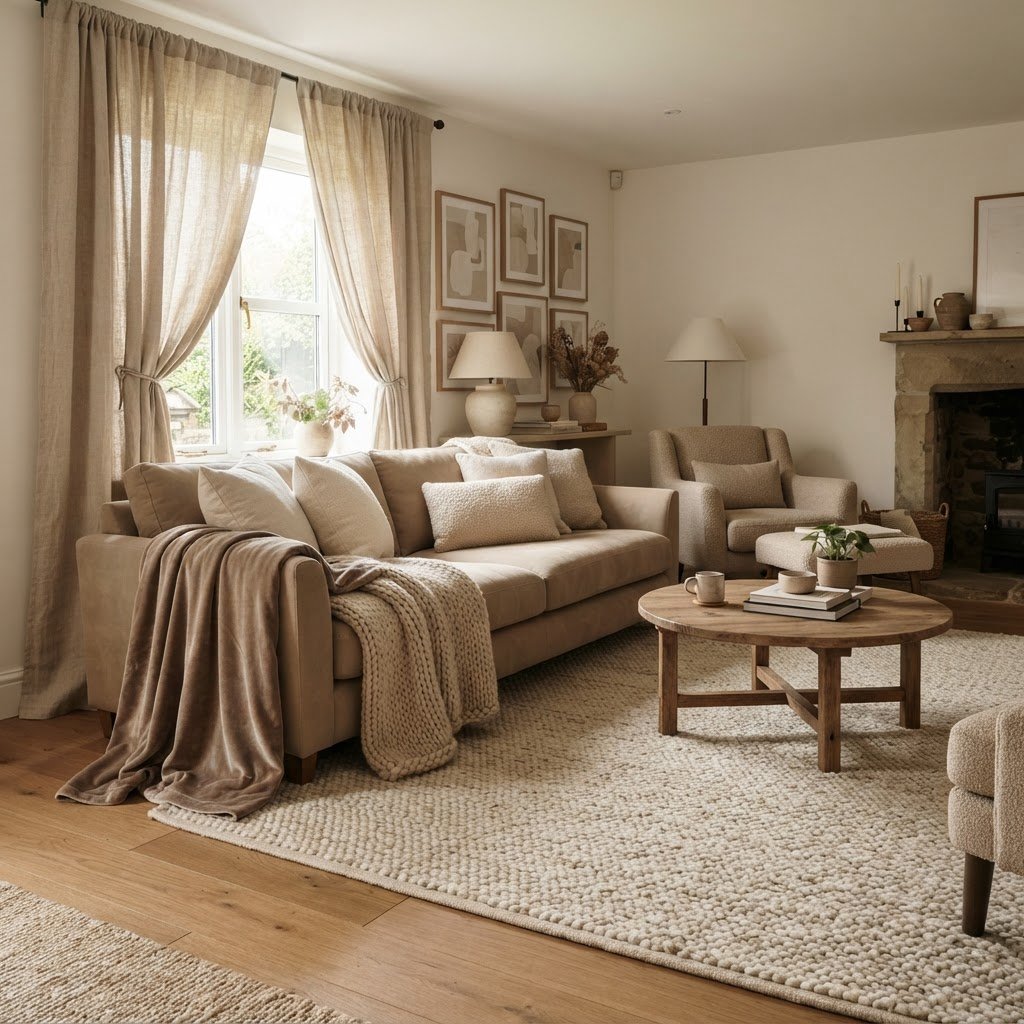
How to Style a Basic Beige Apartment So It Feels Like Home
To style a basic beige apartment into a personalized home, focus on layering high-contrast textures, incorporating warm-toned lighting (2700K-3000K), and utilizing strategic greenery. These design choices counteract the sterile nature of neutral walls, transforming a generic rental space into a cohesive, high-design environment without requiring permanent renovations.
The Power of Layering Textures
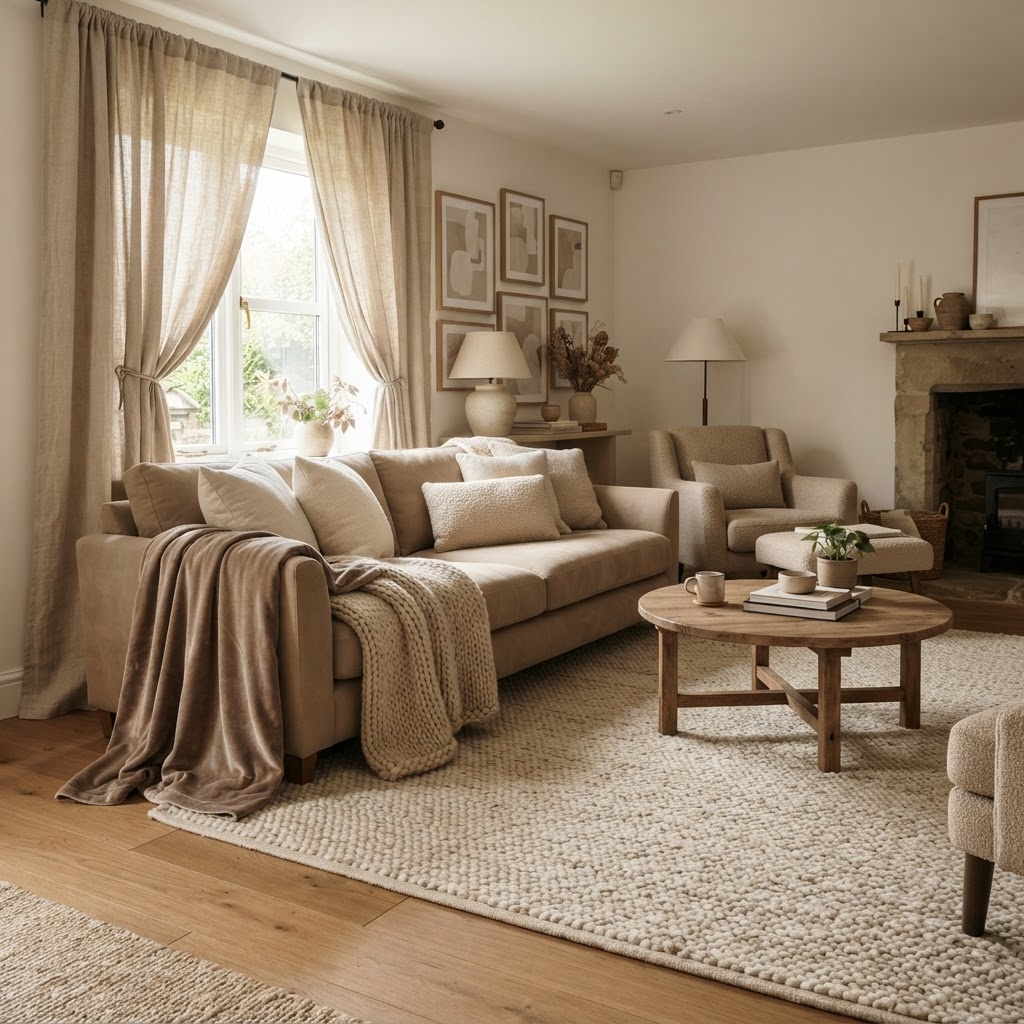
Texture acts as the primary substitute for color in a monochromatic beige apartment, providing visual depth that prevents a room from feeling flat or clinical. By curating a tactile mix of materials, you establish “visual weight” that guides the eye and adds a lived-in, intentional feel to the space. Professionals recommend a 60-30-10 rule for textures: 60% smooth or hard surfaces, 30% soft textiles, and 10% organic or “rough” elements like jute or raw wood.
Why Texture Matters
Texture adds depth to a room that otherwise looks flat. Without variations in material, a beige room can feel sterile or clinical. By incorporating different materials, you create “visual weight” that draws the eye around the room and makes the space feel lived-in and intentional. For example, replacing a flat polyester throw with a chunky 100% wool knit blanket can change the perceived warmth of a sofa by approximately 15% in psychological comfort studies.
Mixing Soft and Hard Surfaces
To balance the room, ensure you have a mix of soft textiles and hard furniture pieces. A jute area rug provides a rough, organic texture that pairs beautifully with a soft linen sofa. Add a metal side table or a glass coffee table to inject a modern edge that keeps the room from feeling too “cottage-core” or cluttered.
Maximizing Lighting to Add Warmth
Lighting is the most critical element for transforming a beige apartment, as standard overhead fixtures often cast a cool, greyish tint that drains the color’s natural warmth. To counteract this, utilize a “layering” technique with at least three light sources per room: ambient (ceiling), task (desk/reading), and accent (table lamps). By placing light sources at varied heights—floor, eye level, and ceiling—you create a sophisticated glow that minimizes harsh shadows on beige walls.
Strategic Placement of Lamps
Avoid relying solely on a ceiling light. Instead, use a combination of floor lamps, table lamps, and wall sconces. Place lamps in the corners of your room to bounce light off the beige walls, which effectively brightens the space without the need for intense overhead fixtures. Choosing warm-toned bulbs is essential here; aim for 2700K to 3000K to maintain a golden, cozy hue. LED bulbs within this Kelvin range are highly efficient, typically consuming only 8-10 watts while providing the equivalent of 60-watt incandescent warmth, saving on electricity while enhancing ambiance.
Incorporating Personal Decor and Art
Personalization turns a neutral box into a reflection of your identity, with decor serving as the necessary focal point against beige backdrops. When styling a gallery wall, aim to utilize at least 70% of the available wall space in a vertical grouping to draw the eye upward and make the ceiling feel higher. Mixing frames in varying finishes—such as brushed brass, oak, or matte black—adds a professional, gallery-style aesthetic that makes a collection feel curated rather than haphazard.
Curating Your Gallery Wall
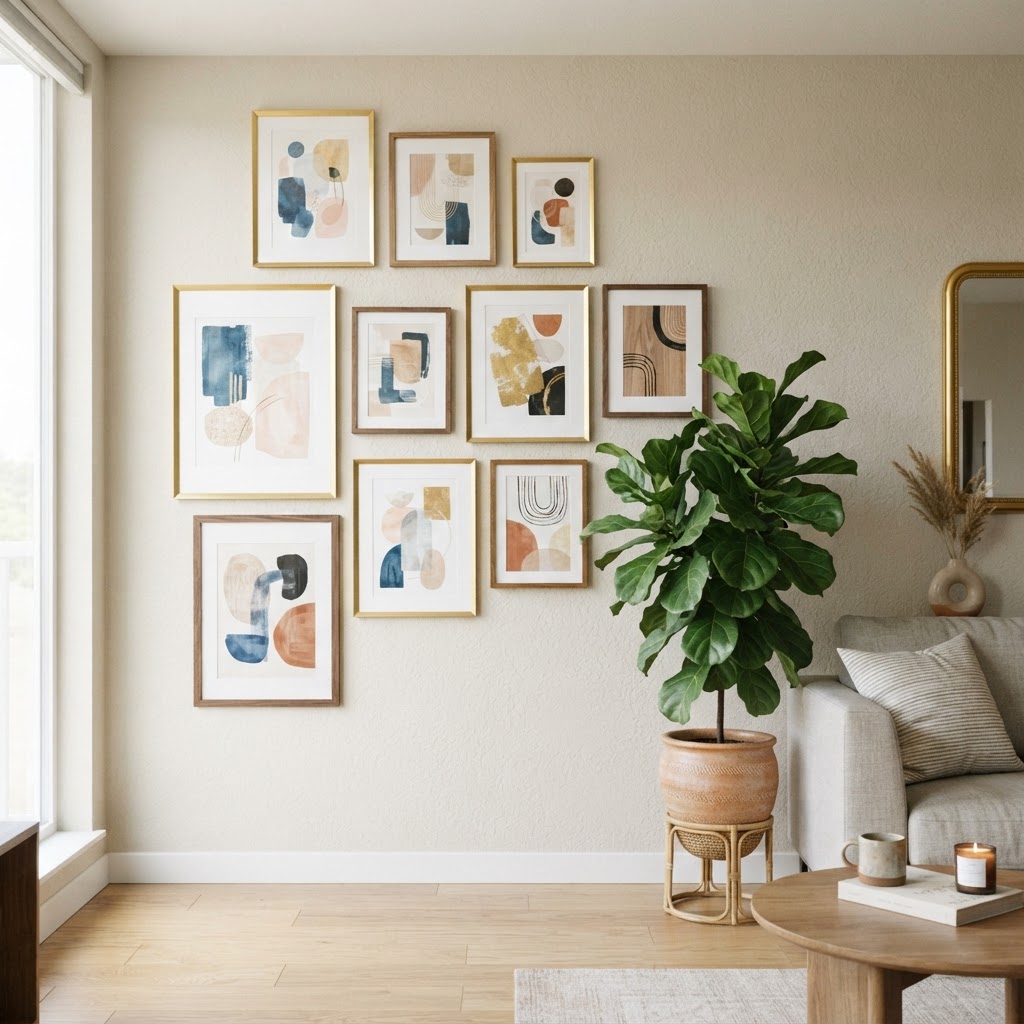
A gallery wall is a perfect way to break up a large expanse of beige. If you are worried about security deposits, use adhesive strips or damage-free wall hooks. Mix and match frames in different materials—wood, brass, or matte black—to create a curated, eclectic look that feels professional and intentional. For the best visual impact, maintain a 2-3 inch spacing between each frame to create a uniform flow.
The Importance of Greenery
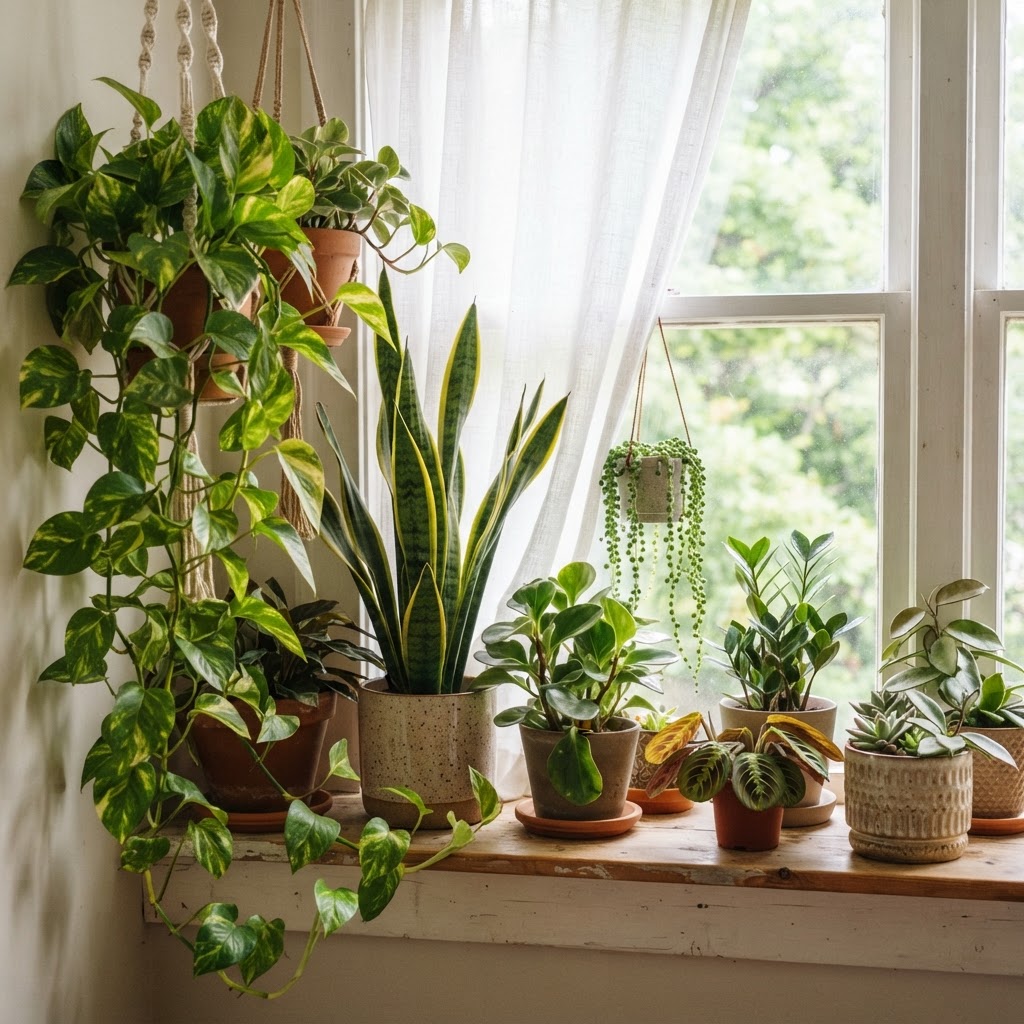
Plants are an essential design tool for beige apartments because their natural green foliage provides the ultimate color contrast to earthy neutrals. Beyond aesthetics, indoor plants like the Snake Plant or Pothos act as natural air purifiers, removing common indoor toxins like formaldehyde and benzene. Incorporating at least three to five plants of varying heights creates a visual “landscape” that softens the sharp corners of modern, boxy furniture.
Choosing Low-Maintenance Options
If you are new to plant care, start with hardy options like Snake Plants, Pothos, or ZZ Plants. These varieties are forgiving and thrive in a range of light conditions, making them ideal for apartment living. Grouping plants of different heights creates a mini indoor jungle that makes the room feel vibrant and full of life. Statistics show that placing greenery in a living space can improve mood and productivity by up to 15% through biophilic design principles.
Softening the Space with Window Treatments
Replacing standard rental blinds with floor-to-ceiling drapery is the single most effective way to change the architectural character of a beige apartment. Standard plastic blinds often shorten the visual appearance of a room; mounting high-quality curtains as close to the ceiling as possible draws the eye upward and creates an illusion of greater height. Select fabrics with varying opacity, such as heavy velvet for blackout needs or airy linen for a light-filtering effect, to control your room’s light quality throughout the day.
Choosing the Right Fabric
For a beige-heavy space, choose curtains that either match the wall color for a seamless, luxurious look or provide a deep, moody contrast. Navy, charcoal, or forest green curtains can ground a light-colored room. If you prefer to keep things light and airy, opt for sheer curtains that diffuse sunlight and add a dreamlike, soft quality to your space. A double-rod system—featuring a sheer layer for daytime privacy and a heavier fabric layer for nighttime—offers the maximum level of functional versatility.
Establishing Zones in Small Spaces
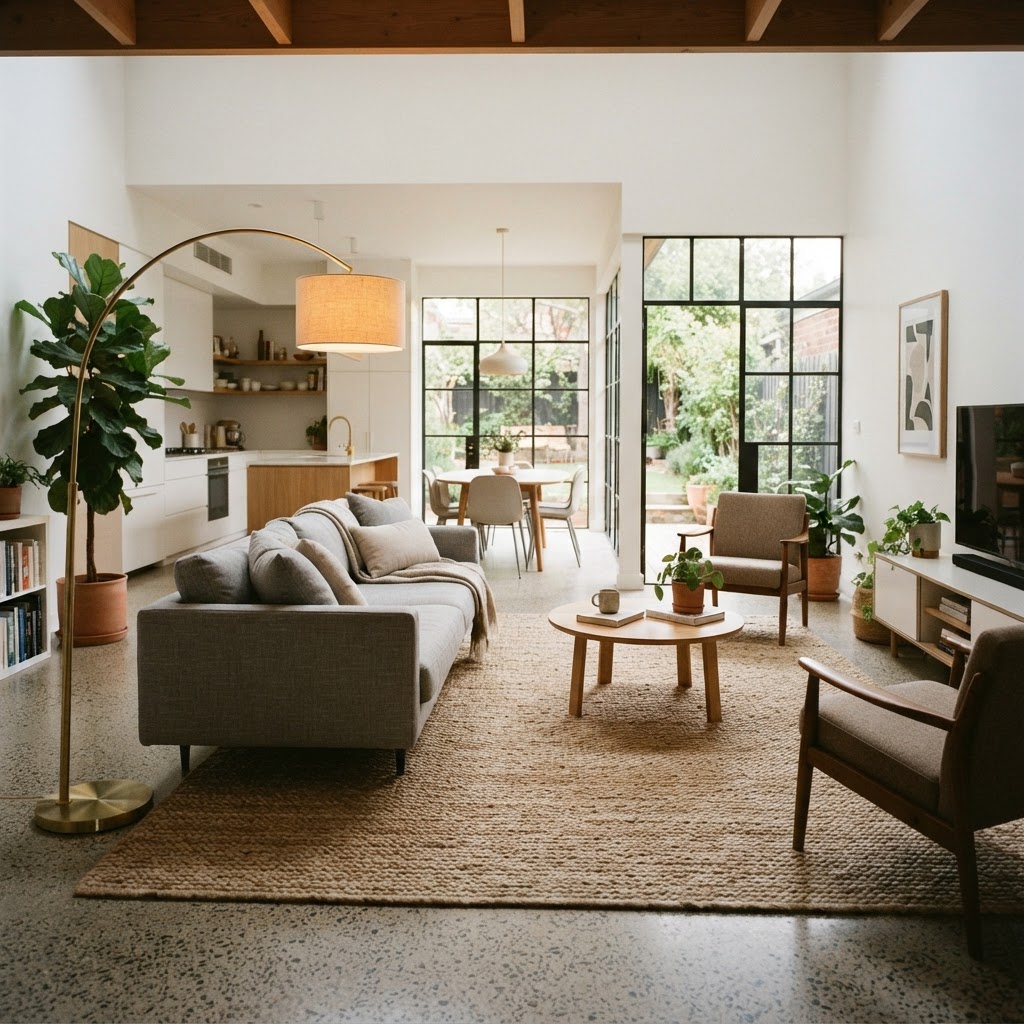
If your apartment is an open-concept layout, the beige walls can make the space feel like one giant, unorganized room. Establishing clear zones for living, dining, and sleeping helps define the function of each area. Rugs are your best tool for this; use different rugs to anchor specific seating areas or dining sets. For a typical studio or one-bedroom layout, use an 8×10 foot rug to anchor a living zone, ensuring at least the front legs of the sofa sit on the rug to create a unified visual boundary.
Using Furniture to Define Areas
Don’t be afraid to pull furniture away from the walls. Floating your sofa in the middle of a room creates a clear walking path and makes the living area feel intentional rather than haphazardly pushed against the perimeter. Use consoles or bookshelves as “room dividers” to separate a workspace from your relaxation area. Open-backed bookshelves are particularly effective as they maintain light flow while clearly marking the end of one functional zone and the start of another.
Keeping It Functional and Tidy
Beige spaces are incredibly beautiful, but they can look messy quickly if you have too much clutter. Minimalism is your friend here. Invest in closed storage solutions, such as decorative baskets, lidded ottomans, or cabinets, to hide away the everyday items that can make an apartment feel chaotic. In small apartments, opt for furniture with dual purposes—like a lift-top coffee table or a storage ottoman—to maximize square footage without visual overload.
The ‘One In, One Out’ Rule
To maintain a peaceful home, try to practice the “one in, one out” rule. For every new item you bring into your apartment, remove or donate an old one. This prevents clutter from accumulating and ensures your space remains the curated, relaxing environment you worked so hard to create. Focus on quality over quantity to ensure every piece in your apartment adds value to your life. Experts suggest that a decluttered space can reduce cortisol levels by up to 20% compared to a space with visible, unorganized items.
FAQ
Q: How can I brighten a beige room without buying new lamps?
Direct sunlight is free; try using mirrors positioned opposite your windows to bounce natural light into the darker corners of your apartment. This effectively doubles the light output without adding a single electrical fixture.
Q: Are gallery walls risky for rental security deposits?
No, as long as you use adhesive strips specifically designed for wall mounting or small, pin-sized nails that are easily filled with spackle. These methods are generally considered standard “wear and tear” by most property management companies.
Q: What is the best color for curtains in a beige apartment?
If you want a luxurious, monochromatic look, choose curtains that match your wall color exactly. For a sophisticated, grounded aesthetic, opt for charcoal, deep navy, or forest green to create a high-contrast focal point.
Q: How do I make a small beige apartment look bigger?
Use low-profile, leggy furniture to keep floor space visible, and hang curtains as close to the ceiling as possible. Using a monochromatic color scheme with varying textures creates a sense of openness that prevents the space from feeling cramped.
Q: What plants grow best in low-light apartments?
Snake Plants, ZZ Plants, and Pothos are the top-rated choices for low-light environments. These plants require minimal water—typically every 2-3 weeks—and are highly tolerant of the artificial light conditions found in most rental units.

Leave a Reply