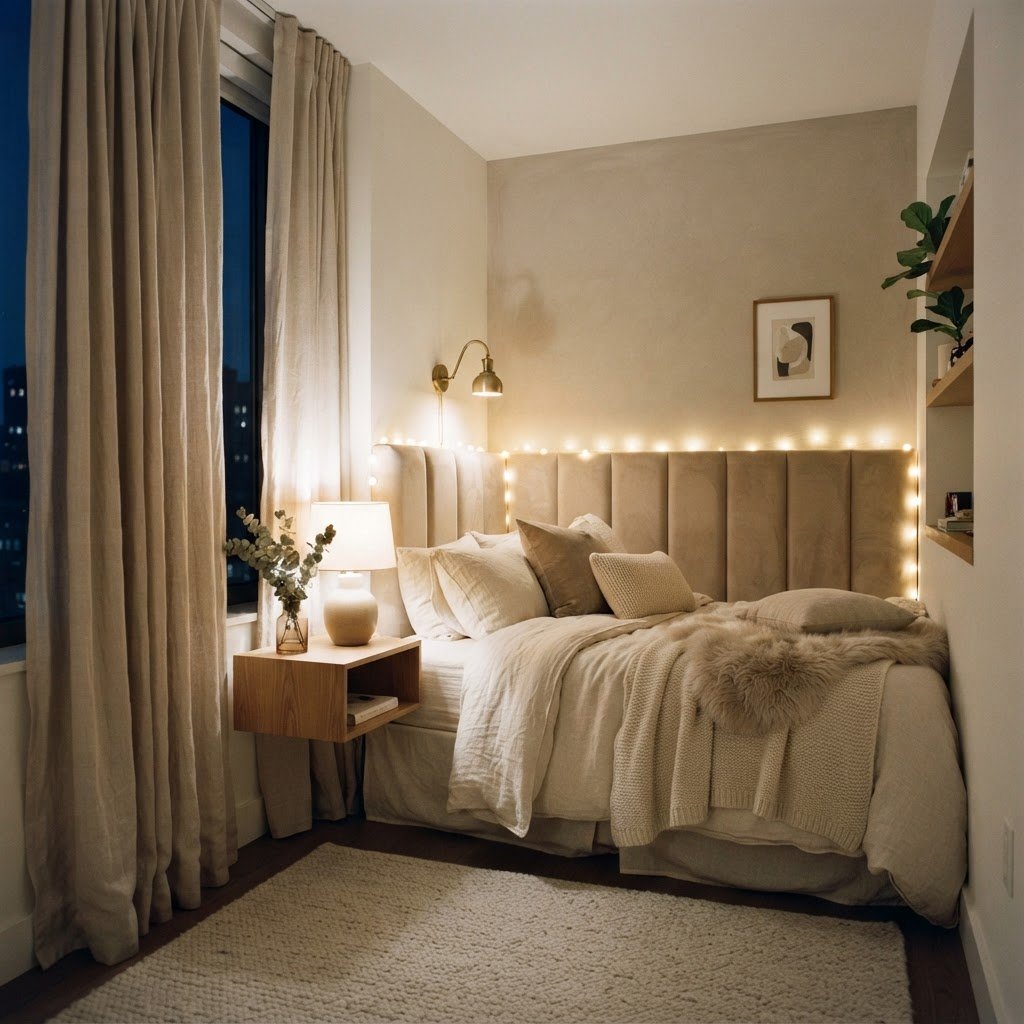
25+ Cozy Tiny Bedroom Aesthetic Ideas That Feel Luxe
A cozy tiny bedroom aesthetic achieves a luxe, hotel-inspired feel by prioritizing vertical storage, layered ambient lighting, and high-quality tactile textures over excess floor furniture. By clearing 80% of floor-level clutter and utilizing wall-mounted fixtures, you can transform even a 100-square-foot space into a serene, high-end sanctuary.
The Psychology of Small Space Design
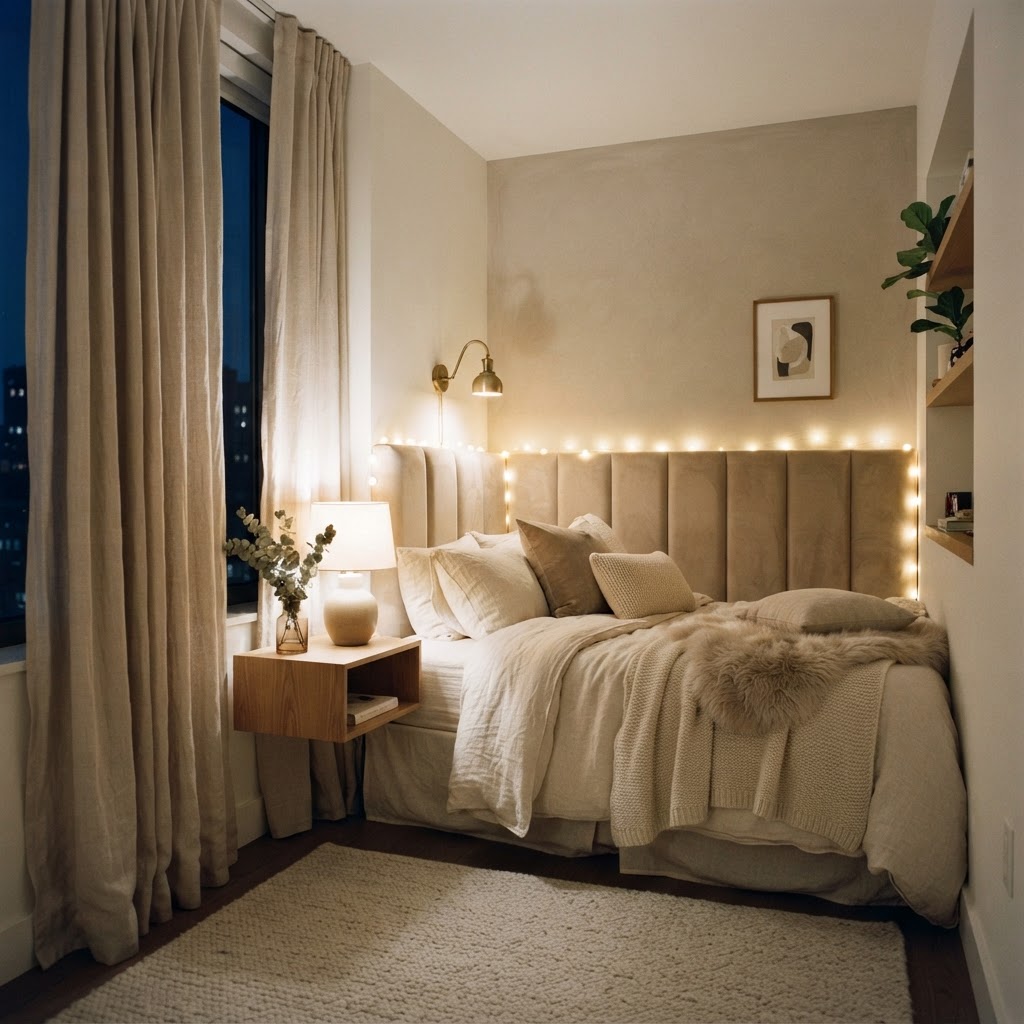
Designing a small room requires a psychological shift from viewing limits as obstacles to embracing intimacy through a “cocoon effect” design strategy. When you minimize visual noise, you trigger a sense of calm that is essential for a luxury aesthetic. Data shows that maintaining a clear floor path of at least 24 inches creates a subconscious feeling of spaciousness, even in rooms under 120 square feet. To achieve this, adopt the “one-in, one-out” rule for decor items to prevent the accumulation of visual clutter that makes a room feel cramped rather than curated. Focus on high-impact focal points, such as a single piece of statement art or a premium headboard, rather than a collection of small trinkets that draw the eye toward every corner. This disciplined approach ensures that every square inch contributes to a cohesive, high-end narrative.
Maximizing Vertical Space for Elegance
When floor space is at a premium, your walls become your most valuable real estate for both storage and aesthetic elevation. Installing floor-to-ceiling drapery panels approximately 2 to 4 inches below the ceiling line creates a vertical illusion that makes standard 8-foot ceilings appear significantly taller.
Creative Shelving Solutions
Instead of bulky dressers, consider floating shelves finished in a warm wood tone or painted to match your wall color. This keeps the floor clear and provides a spot for curated decor pieces. For a luxe touch, add a strip of LED lighting beneath these shelves to provide a warm, ambient glow that highlights your favorite books or art. Incorporating shelves at eye level creates a visual “gallery” that distracts from the room’s actual perimeter dimensions.
The Power of Wall-Mounted Nightstands
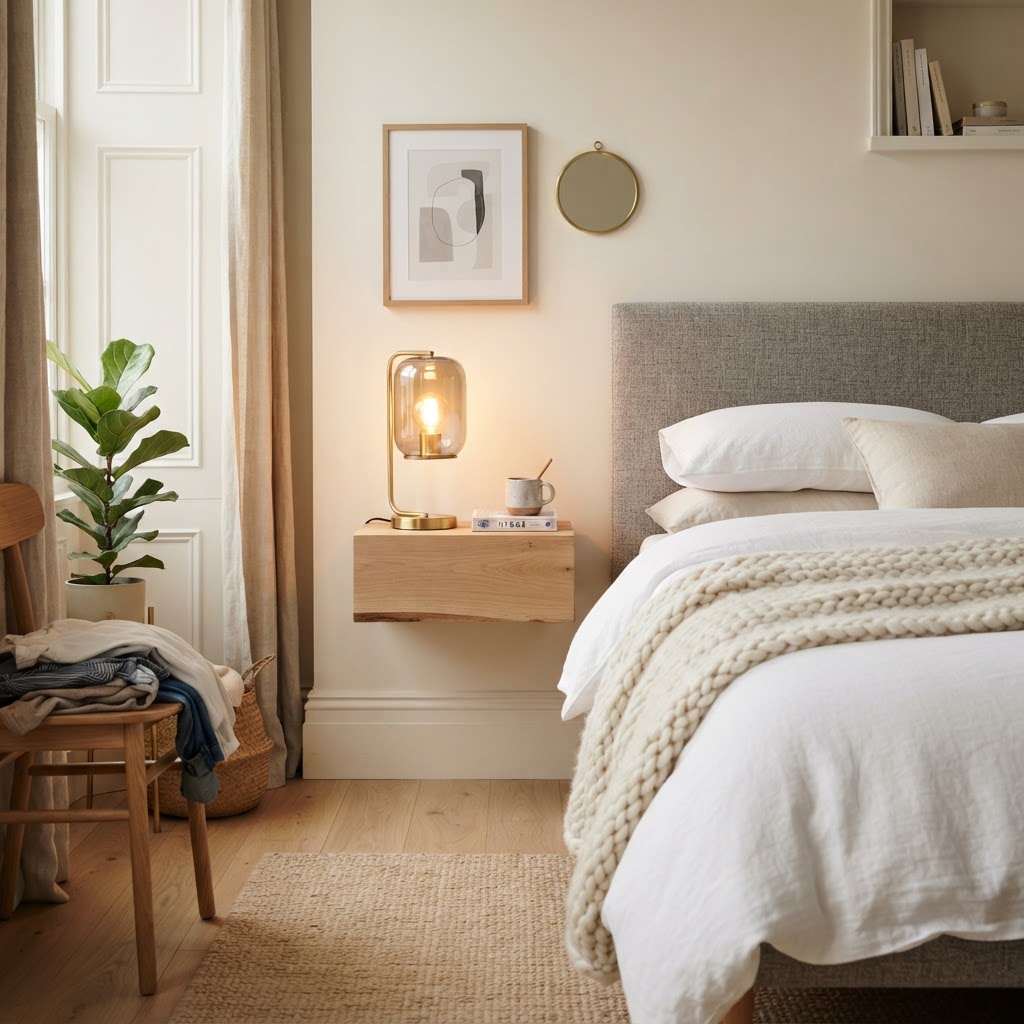
Traditional nightstands often consume floor space and make a room feel boxy. Swapping them for wall-mounted floating drawers instantly opens up the perimeter of the bed. This simple change allows more of the floor to be seen, which tricks the brain into perceiving the room as larger. Utilizing wall-mounted options also allows for easy cleaning, maintaining that crisp, hotel-like aesthetic.
Storage Strategy Comparison
Lighting Strategies for a Luxe Atmosphere
Lighting is the single most important factor in making a tiny room feel luxe, as poor overhead lighting can flatten the room and make it feel clinical. Aim for a layered lighting scheme that incorporates at least three distinct sources: ambient, task, and accent. Experts recommend using bulbs with a color temperature between 2700K and 3000K to achieve a warm, inviting glow that mimics the hospitality industry’s standard for luxury suites. Dimmers are a non-negotiable addition for a luxurious feel, as they allow you to transition the room from a workspace to a soft, intimate retreat. By placing light sources at varying heights—such as a floor lamp in a corner, wall sconces at head height, and a bedside lamp—you create depth that prevents the eyes from focusing on the room’s actual walls.
Selecting a Luxe Color Palette
Color choices dramatically impact the perception of scale. While white is the classic choice for small rooms, a ‘luxe’ aesthetic often benefits from deeper, moodier tones that add dimension. If you prefer light colors, stick to a monochrome palette—using various shades and textures of cream, beige, or taupe prevents the space from feeling flat while keeping it airy. If you prefer darker tones, consider a navy blue or forest green accent wall behind your bed. This creates a focal point that adds depth and sophistication. When paired with high-quality linens and metallic accents, these darker shades make a tiny bedroom feel like a hidden, high-end jewel box. Research indicates that using a uniform color for baseboards, walls, and trim can visually push the boundaries of a small room outward by up to 10%.
Furniture Choices That Save Space
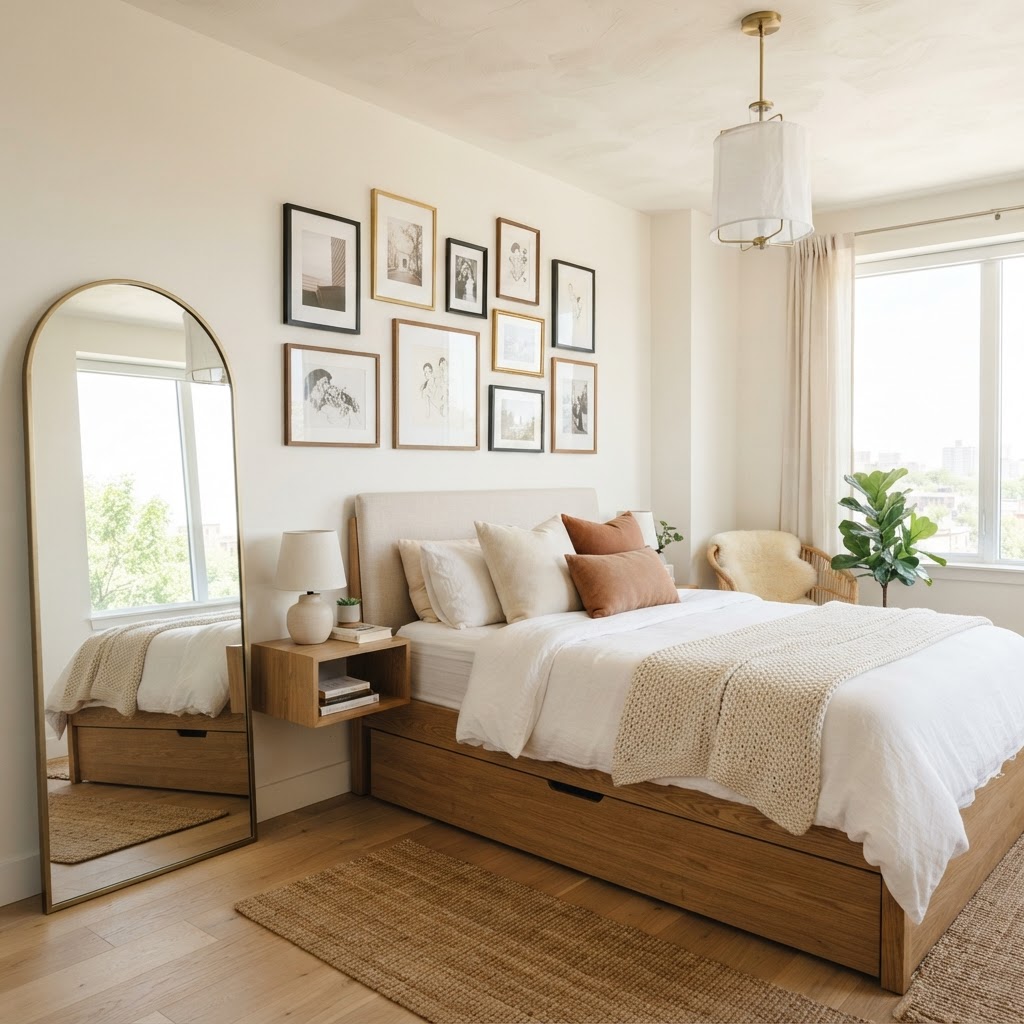
Furniture in a small bedroom should be multifunctional or visually light to maintain an airy atmosphere. A heavy, dark wood bed frame will overwhelm a small room, so look for beds with slender metal frames, upholstered headboards, or built-in hydraulic storage underneath. Utilizing the space under your bed is a classic trick for small-space living, but ensure you use attractive bins or custom drawers to keep it looking polished. Choose pieces with visible legs rather than solid bases, as the ability to see the floor underneath furniture increases the perception of open space.
Multifunctional Pieces
If your room serves multiple purposes, such as a bedroom and home office, use furniture that bridges the gap. A desk that doubles as a vanity with a mirror above it saves precious floor space while maintaining a high-end look. By selecting pieces that serve two functions, you reduce the total furniture count by 30%, which directly correlates to a more luxe, uncluttered aesthetic.
Textures and Fabrics: The Key to Comfort
To achieve a cozy tiny bedroom aesthetic that feels expensive, invest heavily in high-thread-count textiles to create a “cloud-like” effect. Start with 400+ thread count cotton or bamboo sheets, add a plush duvet, and finish with an array of pillows and a weighted throw blanket. Mixing textures is essential for depth; combine smooth silk or satin pillowcases with a chunky knit throw or velvet cushions. These varying textures add tactile interest to the room without requiring extra furniture or physical objects. In a small space, textiles are your primary tool for adding personality without sacrificing the clean, open look of the room. Aim for at least four different fabric types—such as linen, velvet, silk, and wool—to create a professional, layered interior design look.
Mirrors and Reflective Surfaces
It is the oldest trick in the book, but for a good reason: mirrors expand space. A large floor-to-ceiling mirror or a series of framed mirrors can double the visual size of a room. Position them across from a window to capture natural light and bounce it throughout the space, brightening up even the darkest corners. Consider mirrored closet doors if your room has built-in storage. This prevents the closet from feeling like a ‘solid’ wall, making the room feel like it continues beyond the physical walls. The reflections also add a layer of glamour and sparkle that fits perfectly into a luxe design scheme. When placing mirrors, ensure they reflect the most beautiful part of your room to amplify that specific aesthetic feature.
Organization as a Design Feature
In a tiny bedroom, organization isn’t just about utility; it’s part of the aesthetic. If your things are out, they should be beautiful. Use matching hangers in your closet, decant daily essentials into glass or ceramic jars, and keep surfaces clear of clutter. Hidden storage solutions like ottomans with lift-off lids or bedside tables with deep drawers are your best friends. Remember, a small space highlights everything. When every item has a dedicated place, the room naturally stays cleaner. This maintenance is what keeps the ‘luxe’ feeling alive, as clutter is the fastest way to diminish the quality of your interior design. Investing in drawer dividers and closet organizers can increase your functional storage capacity by 50% without adding a single piece of furniture to the room footprint.
Summary of Luxe Small Bedroom Tips
- Use floor-to-ceiling curtains to draw the eye up.
- Opt for wall-mounted lighting to save bedside space.
- Keep the floor clear of excess furniture or decor.
- Incorporate a monochrome or moody color palette for depth.
- Layer high-quality textures like velvet, silk, and wool.
- Use mirrors to bounce light and expand the room.
- Choose furniture with thin legs to maintain a sense of lightness.
FAQ
Q: What is the best color for a small, luxurious bedroom?
A: Monochrome palettes, such as creams and taupes, provide an airy feel, while moody, deep tones like navy or forest green add sophisticated dimension. Use a single color for walls, baseboards, and trim to maximize the appearance of square footage.
Q: How can I make a tiny bedroom look like a hotel room?
A: Focus on high-quality textures, such as velvet and silk, and implement a layered lighting scheme with dimmable fixtures. Clearing all floor clutter and using wall-mounted storage to keep surfaces empty are the quickest ways to achieve a professional hotel-suite aesthetic.
Q: Does painting a small bedroom dark make it look smaller?
A: Not necessarily; painting a room a dark, moody color can actually blur the corners and create an intimate, “jewel box” effect. When paired with metallic accents and warm lighting, dark colors often enhance the perceived luxury of a small space.
Q: What is the most effective way to store clothes in a tiny room?
A: Utilize vertical wall-mounted shelving and under-bed storage containers to free up floor space. Decanting items into uniform, labeled bins and using slim, matching velvet hangers will make the storage feel intentional rather than chaotic.
Q: How much space should I keep clear on the floor?
A: Try to keep at least 24 inches of clear walking path around the bed to maintain an open, uncluttered feeling. Minimizing the number of items touching the floor is the primary design secret for making a small room feel significantly larger.

Leave a Reply