6 No-Drill Floating Shelf Ideas for Apartments
You can install floating shelves in an apartment without drilling by using industrial-strength adhesive strips, tension rod systems, over-the-door hanging units, heavy-duty suction cups, freestanding ladder shelves, or magnetic metal wall panels. These methods securely support storage while protecting your security deposit by requiring zero permanent hardware or wall penetration.
1. Adhesive-Backed Modular Wall Shelves
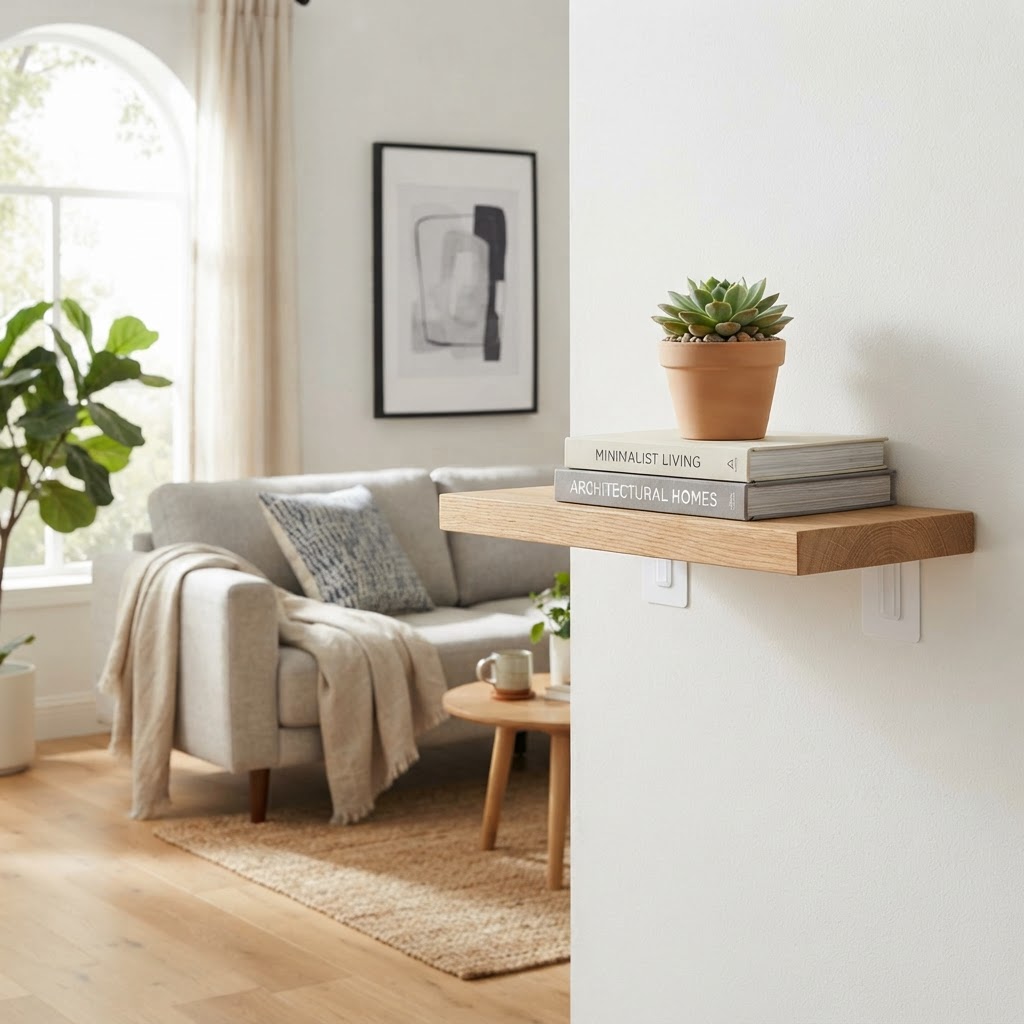
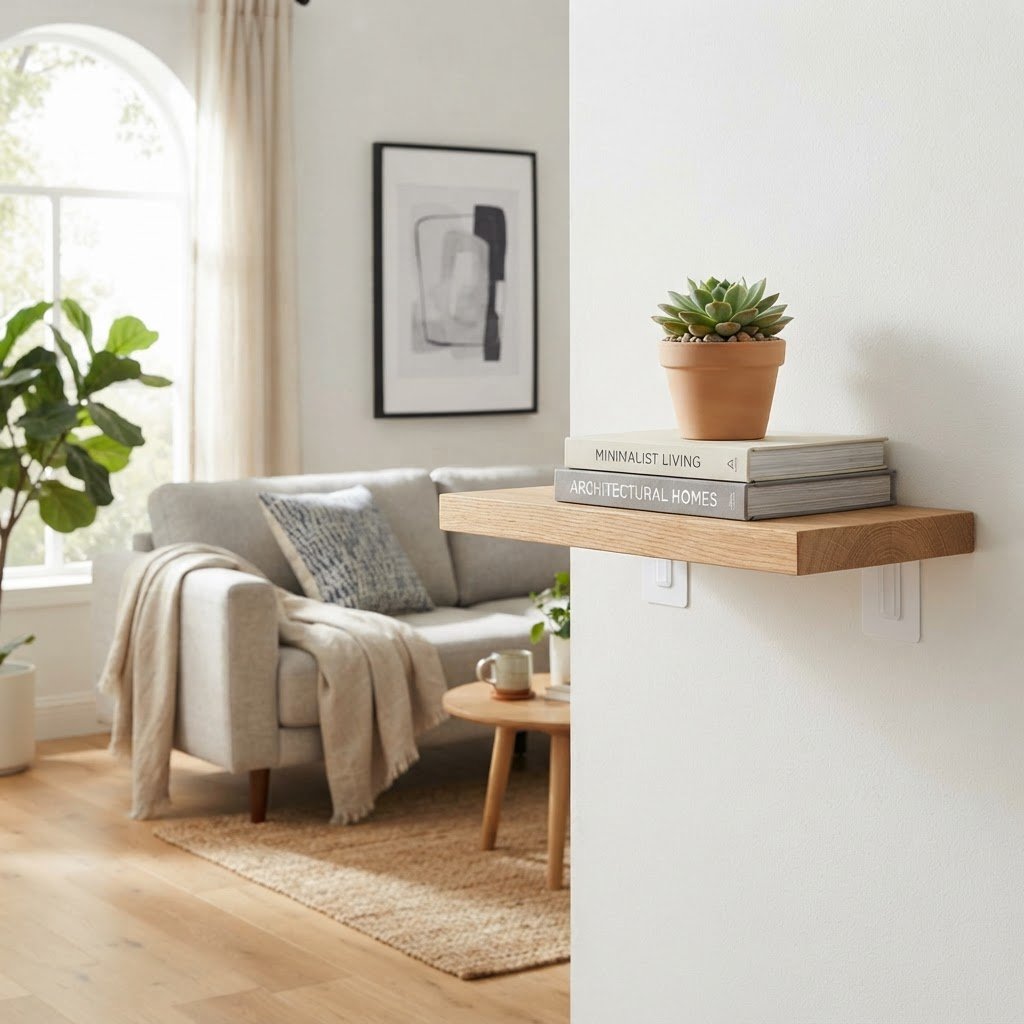
Adhesive technology has evolved significantly, allowing high-strength, command-style mounting strips to support up to 15-20 pounds per shelf when installed correctly. These systems are ideal for lightweight decor, paperback books, and indoor plants, utilizing pressure-sensitive polymers that bond securely to smooth, non-porous surfaces without peeling paint. To achieve the best results, you must prepare the substrate; use 70% isopropyl alcohol to degrease the wall surface, which increases bond strength by up to 40% compared to wiping with water alone. Once the adhesive is applied, wait a full 60 minutes before placing any weight on the shelf to ensure the chemical bond is fully cured.
Choosing the Right Surface
Before applying any adhesive, ensure your walls are clean and dry. Use rubbing alcohol to remove any residual dust or grease, which is critical for a strong bond. Most modular adhesive shelves are designed for smooth, painted surfaces, making them the perfect candidate for most standard apartment walls.
2. Tension Rod Shelving Systems
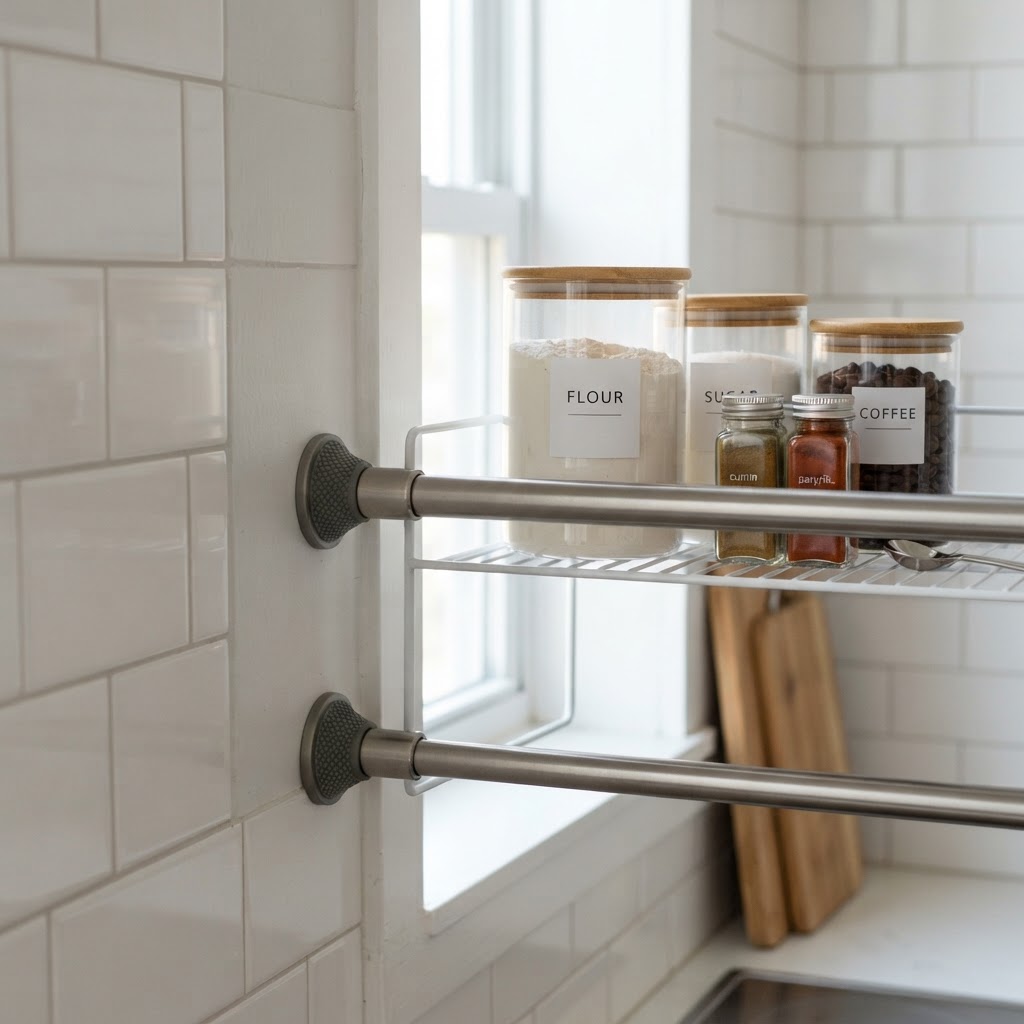
Tension rod shelving utilizes physics-based compression to hold shelves in place, making it the premier choice for awkward alcoves, laundry rooms, or closet spaces where standard drilling is prohibited. By installing two or three spring-loaded tension rods horizontally between two parallel walls, you create a stable, non-invasive support platform for lightweight wooden boards. This method is exceptionally versatile, as you can adjust the height of the shelves in minutes as your storage needs change, and they leave absolutely no physical trace or residue behind upon removal. For maximum stability, ensure the wall surface is clean; if the rods are slipping, clean the rubber end caps with dish soap to restore their original friction levels.
3. Over-the-Door Hanging Storage Units

Over-the-door hanging units leverage often-neglected vertical real estate behind bedroom or pantry doors to provide substantial storage capacity without requiring any wall contact. These units typically feature high-grade steel hooks that drape over the top of a standard 1.5-inch thick door, distributing the weight evenly across the frame. Because the entire load-bearing force is directed toward the door structure itself, these units can often hold significantly more weight than adhesive counterparts, with some heavy-duty metal wire versions supporting up to 50 pounds. This is the most reliable solution for high-frequency storage needs like shoe collections, bathroom toiletries, or pantry spices, offering an instant organizational upgrade that remains completely modular.
4. Heavy-Duty Suction Cup Shelving
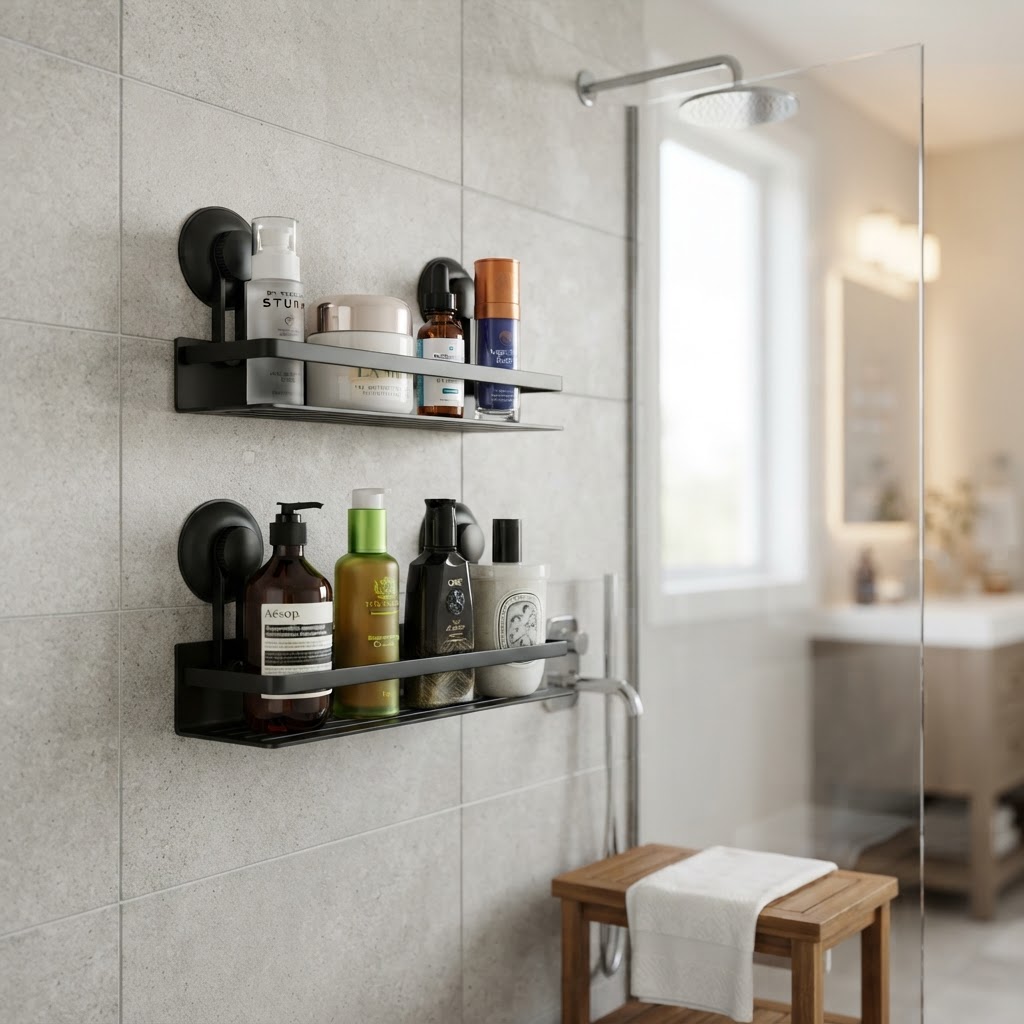
Heavy-duty suction cup shelves utilize advanced vacuum-seal technology to provide stable, temporary storage on non-porous surfaces like glazed tile, glass, or polished laminate. Unlike legacy suction cups that relied on simple pressure, these modern versions include a pump-activated mechanism that removes air to create a 30-40 PSI (pounds per square inch) seal, which can hold up to 25 pounds in wet bathroom environments. To optimize performance, apply a tiny drop of silicone grease to the rubber rim of the suction cup before mounting; this seals any microscopic imperfections in the surface that might otherwise cause a slow air leak over time.
Maintaining Your Suction Shelves
To keep these shelves secure, it is important to re-apply the suction seal every few months. Temperature fluctuations in an apartment can sometimes cause the seal to loosen, so a quick press every so often ensures your decor remains safe and secure without any drilling required.
5. Freestanding Ladder Shelves
Freestanding ladder shelves offer the visual aesthetic of floating shelves while functioning as self-supporting furniture, meaning they never touch the wall. These units operate on the principle of center-of-gravity distribution, resting at an angle that directs the downward force into the floor rather than the wall surface. Because they rely on stability rather than fasteners, they are the most robust choice for heavy items, including large coffee table books, ceramic sculptures, and heavy-duty houseplant collections. Most units are manufactured from powder-coated steel or solid pine, and while they require floor space, they provide the most versatility, allowing you to reconfigure your apartment layout without needing to remove any adhesives or hardware.
6. Magnetic Strip and Metal Wall Tiles
Magnetic strip and metal tile systems provide a highly interactive, modular storage solution that is perfect for kitchens, home offices, or modern-industrial aesthetics. By using removable, high-tack mounting tape to secure thin sheet metal panels to the wall, you create an magnetic “canvas” where you can reposition small metal shelves, spice tins, or utensil holders at will. This system is exceptionally useful for small apartments where you need to maximize vertical workspace; you can shift your shelf height by several inches as you acquire new items, offering unparalleled flexibility. Ensure you select magnets rated for “Neodymium” strength if you intend to store heavier items like kitchen shears or thick books to prevent slippage.
The Importance of Weight Distribution
Even with the strongest adhesives or tension systems, it is vital to respect the weight capacity of your shelving. Always check the manufacturer’s rating. For no-drill options, it is generally safer to distribute the weight evenly rather than piling all your heavy items on one side, which could cause a shift or imbalance over time.
Assessing Your Apartment’s Wall Type
Before you jump into your project, take a moment to understand what your walls are made of. Not all no-drill shelves work on every surface. For example, textured wallpaper or brick walls may not provide the smooth surface necessary for adhesive-backed solutions to work properly.
If you have textured walls, consider a tension system or a freestanding unit instead. For those with glass, tile, or high-gloss paint, adhesive systems will perform beautifully. Testing a small, inconspicuous area with a patch of adhesive is always a smart move to ensure the paint finish won’t be compromised upon removal.
Styling Your New Shelves
Once you have installed your shelves, the fun part begins. A common mistake in apartment decorating is cluttering the shelves too much. To maintain that ‘floating’ airy feel, aim for the “rule of thirds.” Group items in odd numbers, and leave some empty space on each shelf to let the wall color peek through.
Use your shelves to bridge the gap between form and function. For instance, in a living room, combine a trailing houseplant with a stack of your favorite books and a small piece of sculptural decor. This adds character and life to the room without requiring a permanent architectural change.
FAQ
Q: Will adhesive shelves damage my paint when I remove them?
Most modern adhesive strips are designed for damage-free removal, but you must pull the release tab vertically against the wall at a slow, constant rate to prevent paint pulling. If residue remains, use a hairdryer on a low-heat setting to warm the adhesive for 30 seconds before peeling.
Q: Can I use suction cup shelves on drywall?
Suction cups will not function on standard porous drywall because they cannot form a vacuum seal. These shelves are intended strictly for non-porous, smooth surfaces such as glass, glazed ceramic tile, or high-gloss laminate and metal.
Q: How much weight can a tension rod shelf actually hold?
A typical spring-loaded tension rod shelf can hold between 5 to 10 pounds, provided the walls are sturdy and the span is under 36 inches. If you need to store heavier items, opt for a telescoping steel rod that tightens via a screw-lock mechanism for better compression.
Q: What is the best way to determine weight capacity?
Always adhere to the specific load rating provided by the manufacturer on the packaging, which is typically tested for optimal, even weight distribution. As a general rule of thumb, reduce the stated capacity by 20% if your wall surface is older or has multiple layers of paint.

Leave a Reply