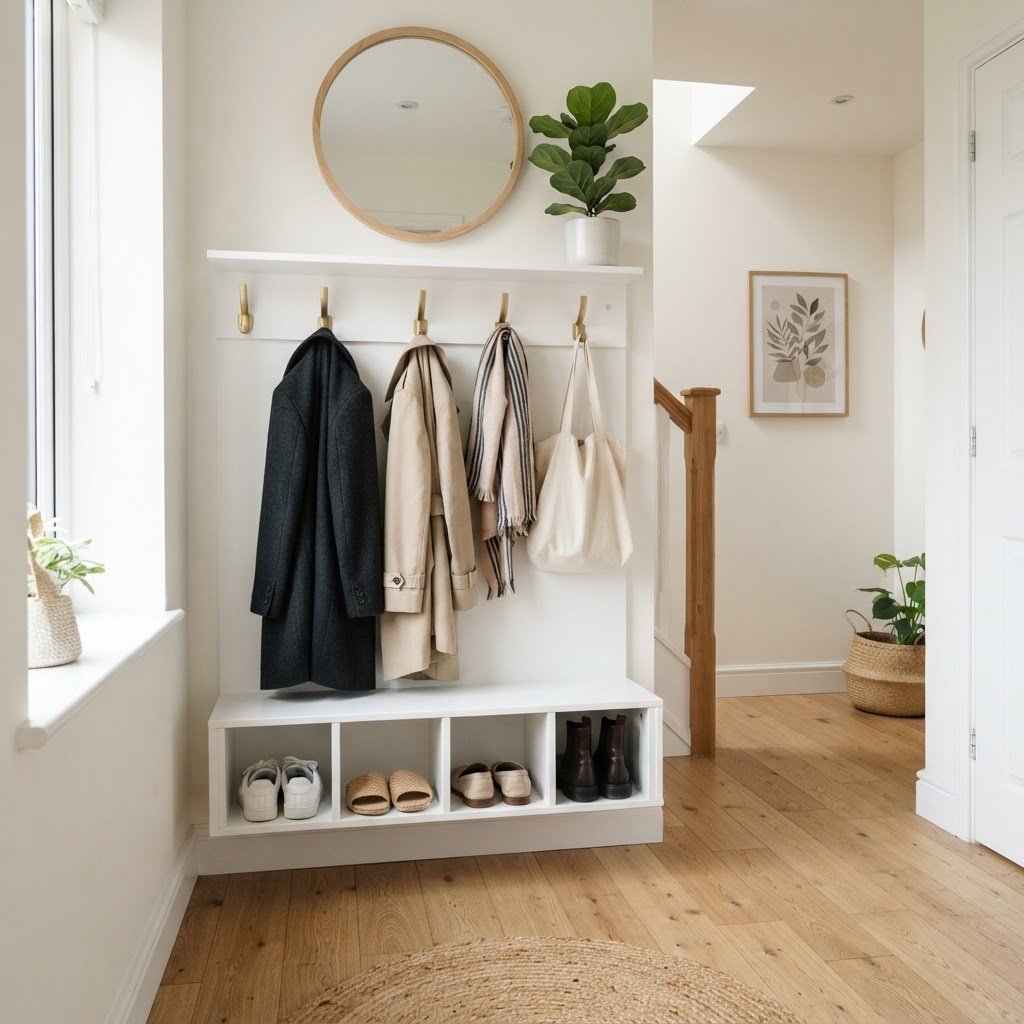
Compact entryway setups with built-in shoe storage and hooks optimize small foyers by utilizing vertical wall space to consolidate footwear and outerwear into one footprint. By choosing multifunctional furniture like hall trees or wall-mounted cabinets, homeowners can eliminate floor clutter and create a functional landing zone even in spaces under 10 square feet.
The Anatomy of an Efficient Small Entryway
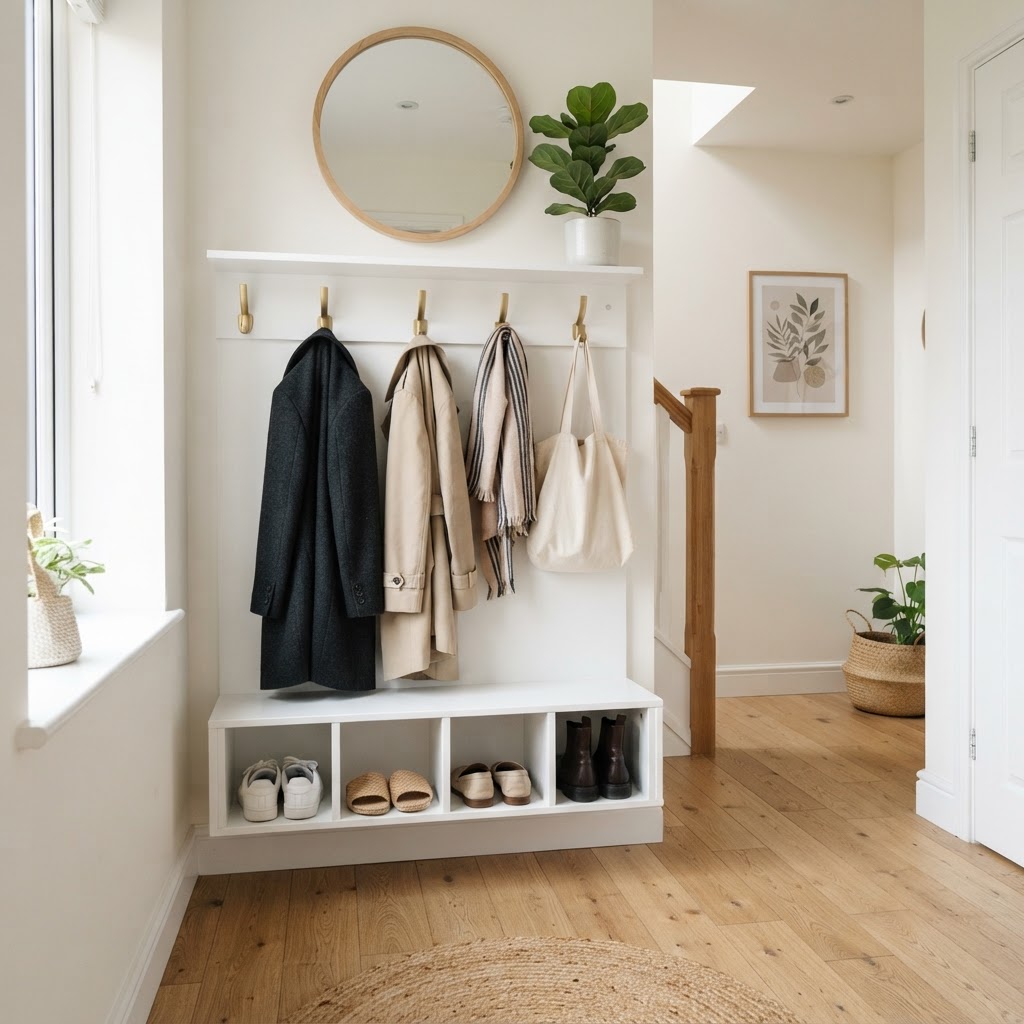
Designing an organized zone in a limited area requires a strategic approach that prioritizes both vertical and horizontal space. A successful setup relies on two main components: high-capacity storage for footwear and reliable hanging points for outerwear. When these two elements are combined, you eliminate the “floor clutter” that makes a small room feel cramped. According to space-planning experts, a 12-inch depth is the “golden threshold” for narrow entryways, allowing for most adult shoe sizes to fit within a tip-out drawer or shelf while maintaining clear walking paths.
Why Dual-Purpose Furniture Wins
Standalone shoe racks often occupy valuable floor space without providing extra utility. In contrast, multifunctional units that feature built-in shoe storage and hooks allow you to store coats, bags, and shoes in a single vertical column. This approach keeps your floor clear, creating the illusion of more space while ensuring that every item has a dedicated “home.” Using a unit that reaches at least 60-72 inches in height helps draw the eye upward, making the room feel larger than it actually is.
Assessing Your Available Wall Space
Before you invest in any furniture, take accurate measurements of the width and depth of your entry. Note the location of light switches, heaters, and door swings. Understanding these constraints will help you determine whether you need a slim wall-mounted unit or a freestanding hall tree that anchors to the wall for safety. Remember to account for a 2-inch clearance buffer around all sides to prevent hardware from scratching your walls.
Choosing the Right Furniture for Your Needs
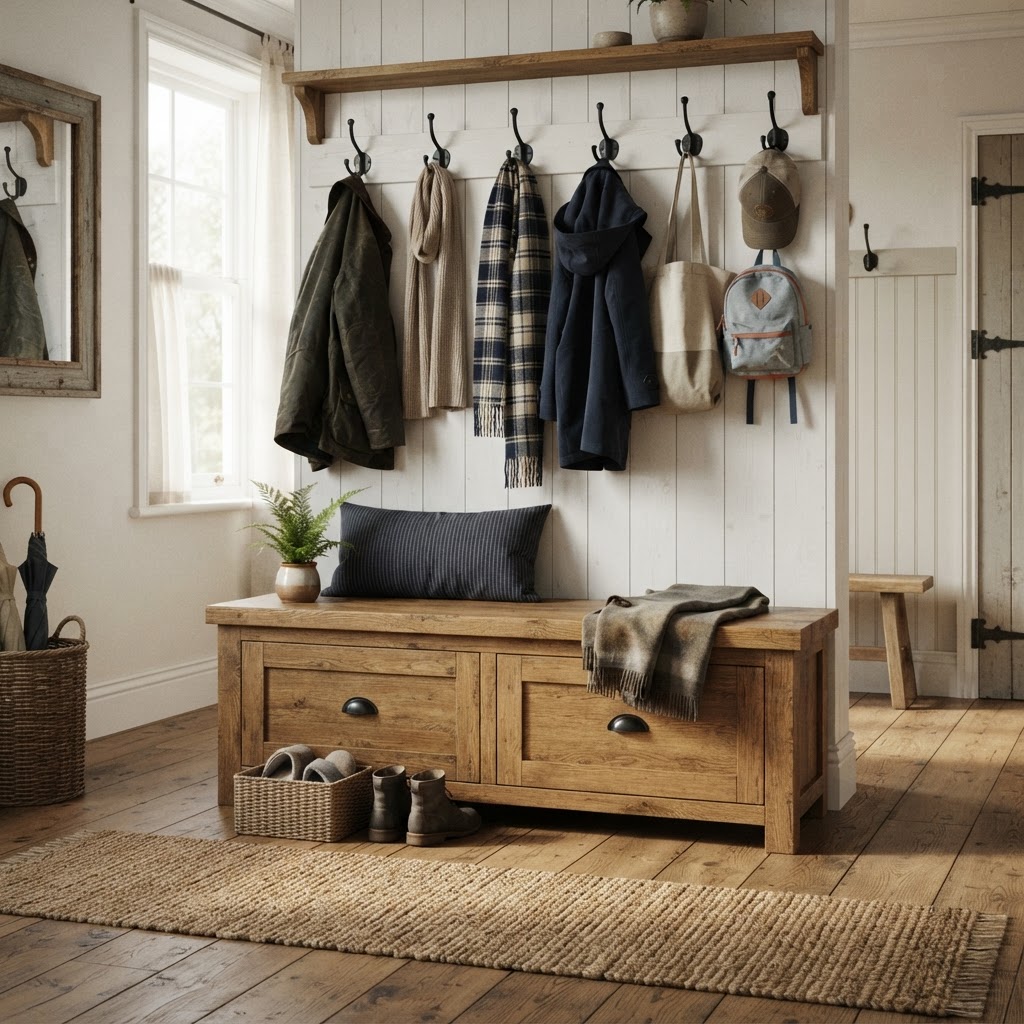
Selecting the perfect piece of furniture depends on your personal lifestyle and the specific layout of your home. Whether you opt for a sleek, modern hall tree or a rustic bench with integrated storage, the priority should be matching the unit’s dimensions to your daily needs. Modular systems are particularly effective for renters, as they allow you to start with a $150 base unit and expand with shelves or hooks as your storage requirements evolve over time.
Many homeowners prefer modular systems, which allow for customization as your storage requirements evolve. For instance, you might start with a bench and a set of hooks, and eventually add a matching overhead shelf or a mirror for final style checks. This flexibility is essential for those living in rentals or homes with non-standard wall dimensions where off-the-shelf fixed units might not fit.
Vertical Storage: Maximizing Hooks and Shelves
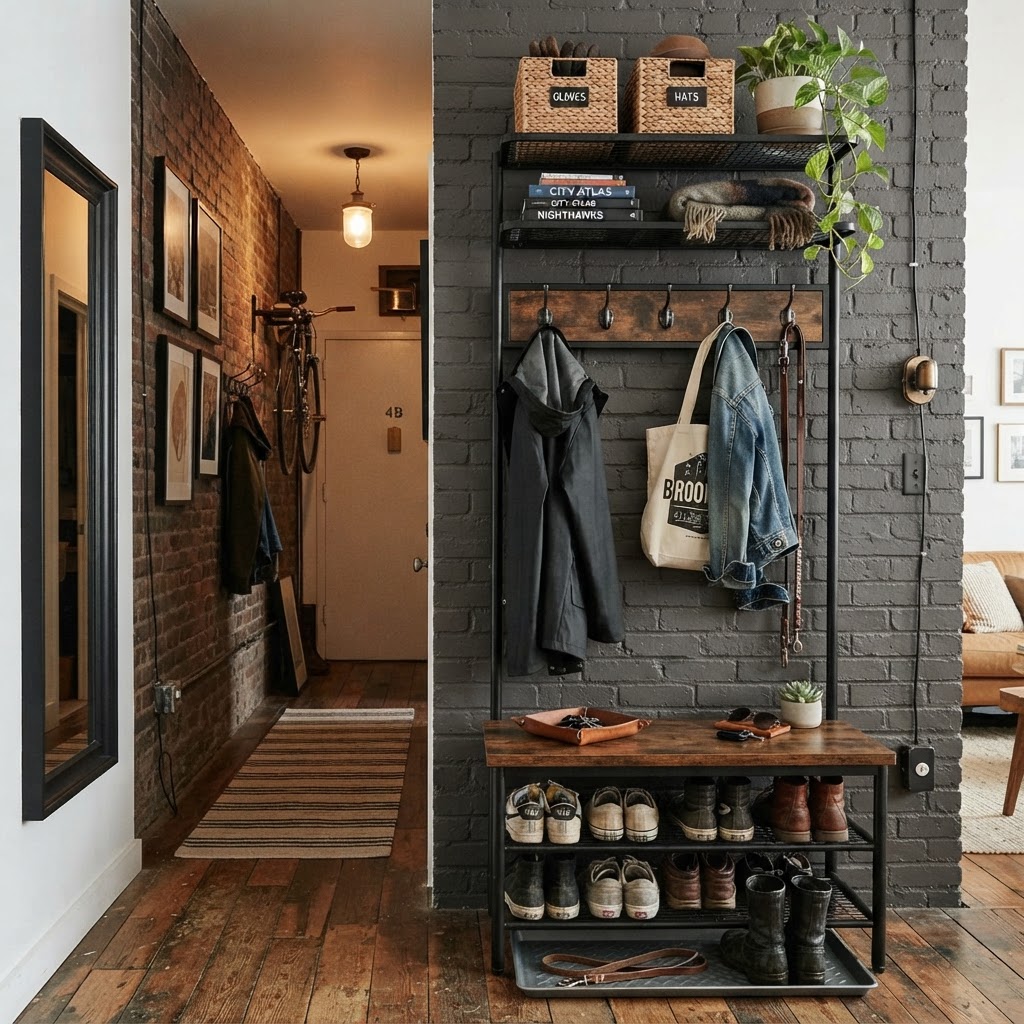
When your floor is tiny, look up. Utilizing the walls effectively is the cornerstone of any effective entryway organization strategy. Wall-mounted racks are particularly useful because they don’t consume any floor footprint, leaving room for a slim shoe cabinet or a boot tray below. For optimal usage, place your primary coat hooks at a standard height of 60 inches from the floor, and secondary children’s hooks at 36-40 inches.
Strategic Hook Placement
For a family, height matters when it comes to hooks. Place higher hooks for adult coats and lower ones for children’s bags and jackets. This encourages everyone to participate in keeping the space tidy, rather than leaving items on the floor. Always choose durable hooks that can support heavy winter coats—ideally, look for hooks rated for at least 15 pounds to prevent pulling away from the drywall under the weight of winter gear.
The Power of Floating Shelves
Adding a shallow floating shelf above your hook rack provides a perfect landing spot for keys, mail, and sunglasses. By keeping these small items off the primary surfaces, you prevent the buildup of “junk pile” clutter that typically plagues entryways. Use small decorative bins on these shelves to keep smaller items contained and out of sight. A shelf depth of 6-8 inches is ideal to prevent it from encroaching too far into the narrow hallway space.
Managing Footwear with Built-in Storage
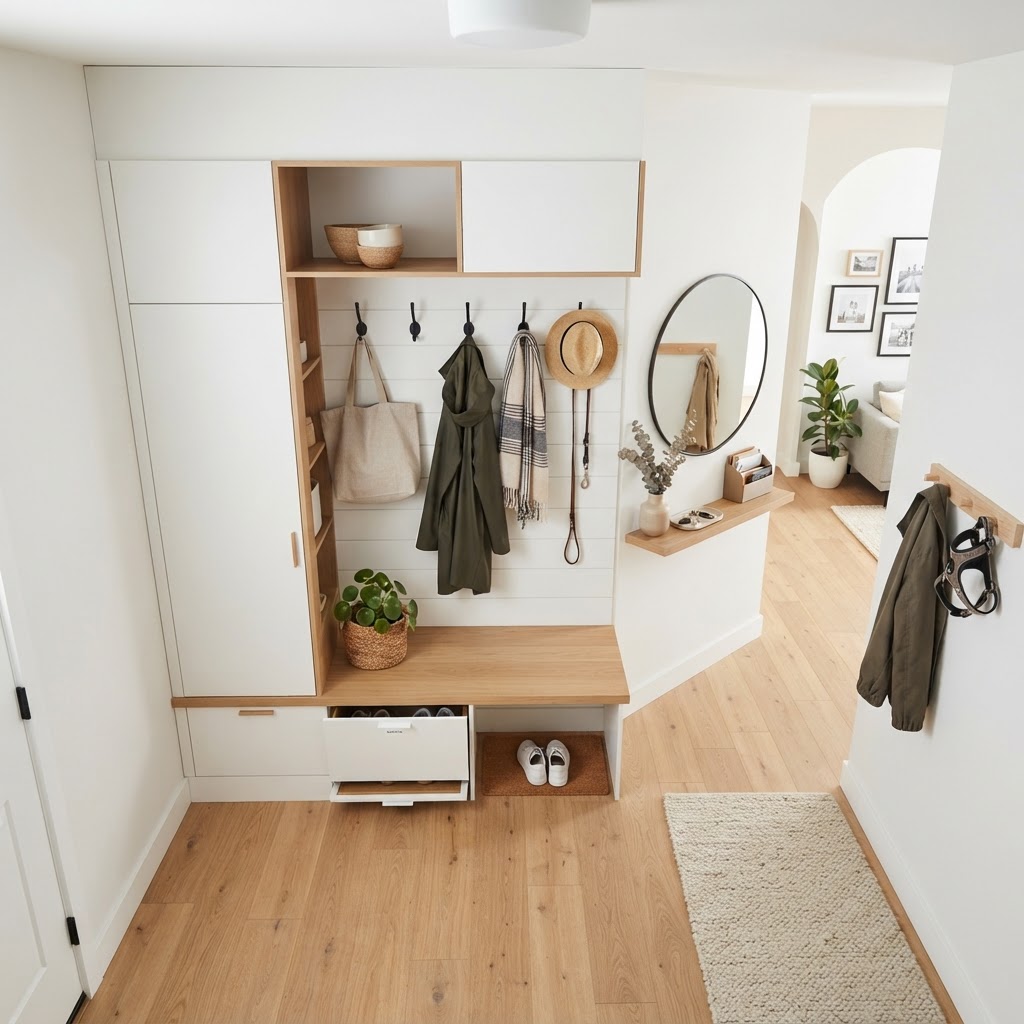
Shoe management is often the most difficult part of home organization. Compact entryway setups with built-in shoe storage provide the perfect solution by hiding your collection behind elegant cabinet doors or organizing them within open-front cubbies. Closed cabinets are superior for maintaining a clean, minimalist aesthetic, as they hide the visual noise of mismatched shoes which can make a small foyer feel chaotic.
If your entryway is extremely narrow, look for “tip-out” shoe drawers that hold shoes vertically, effectively cutting the required depth of the unit in half compared to traditional shelves. These units typically range from 7 to 10 inches in depth, making them perfect for corridors or apartment doors where space is limited to a single wall.
DIY Solutions for Custom Entryway Organization
If off-the-shelf furniture doesn’t fit your layout, consider a DIY approach. A custom-built mudroom bench using stock kitchen cabinets is a classic way to achieve a high-end look on a budget—often costing 40-50% less than custom-fitted built-ins. You can easily add a back panel featuring stylish beadboard and heavy-duty coat hooks to create a seamless, integrated look that spans the entire wall width.
Tailoring Your Materials
Using paint to match your cabinetry to the wall color is a design pro trick that helps larger furniture pieces “disappear” into the room. Light colors like white, cream, or light grey will make a small hallway feel significantly larger, while bold, dark hues can create a moody, sophisticated focal point in a modern home. For high-traffic areas, use a semi-gloss or high-gloss finish, which is roughly 30% more durable and easier to wipe clean than matte or flat paints.
Safety and Durability Considerations
No matter the design, always anchor your furniture to the studs in your walls. This is particularly important for units with hooks, which undergo stress as coats are hung and removed. Durable finishes like semi-gloss paint or high-pressure laminates will also ensure that your entryway can withstand the daily abuse of wet umbrellas, snowy boots, and heavy bags. Always use wall anchors or toggle bolts if you cannot locate a stud directly behind your chosen mounting point.
Styling Your Compact Entryway for Maximum Impact
Even a functional entryway should be aesthetically pleasing. Your small space is the first thing guests see, so make it count by incorporating personality and warmth. Use lighting to your advantage, such as a stylish sconce above your hook area or LED strips hidden under your floating shelf for a modern, high-end feel. Proper lighting can increase the perceived value of a small entryway by up to 20% compared to dark, dimly lit corridors.
- Add a small mirror to open up the space and reflect light, effectively doubling the visual depth of the wall.
- Incorporate a small, durable rug to catch dirt and define the area; ensure it is low-pile to prevent door interference.
- Use a cohesive color palette that complements the rest of your home’s decor for seamless flow.
- Add a small plant or a decorative bowl to bring life and texture to the surface without adding bulky clutter.
- Ensure the area is well-lit for easy navigation during evening arrivals by using motion-sensor bulbs.
FAQ
Q: How do I choose the best shoe storage for a tiny entryway?
Choose a tip-out shoe cabinet with a depth of less than 10 inches to maximize storage without obstructing your walkway. These units store shoes vertically, allowing you to fit 8-12 pairs of shoes in a footprint that traditional flat-shelf shoe racks simply cannot accommodate in small spaces.
Q: What is the ideal height for entryway wall hooks?
Install primary coat hooks at 60 inches from the floor for adult items and 36-40 inches for children’s gear. This height range prevents long coats from dragging on the floor and ensures that items remain accessible for all family members to encourage daily organization habits.
Q: Can I use kitchen cabinets for a DIY mudroom bench?
Yes, using standard kitchen cabinets is an excellent way to create a custom look at a fraction of the price of professional millwork. Simply secure the base cabinets to the wall studs, add a sturdy wood topper for seating, and attach a backboard with hooks to complete the high-end mudroom aesthetic.
Q: How can I make a small, dark entryway look larger?
Paint your entryway furniture the same color as the walls to reduce visual friction and make the piece feel integrated into the architecture. Pair this with a wall-mounted mirror and high-contrast lighting to bounce light around the room, which helps expand the perception of space instantly.
Q: Are wall-mounted units better than freestanding furniture?
Wall-mounted units are superior for small spaces because they leave the floor clear, which creates an unobstructed line of sight. This extra floor space makes a tiny entry feel significantly larger, whereas freestanding furniture consumes floor area and can make the room feel boxy or cluttered.

Leave a Reply