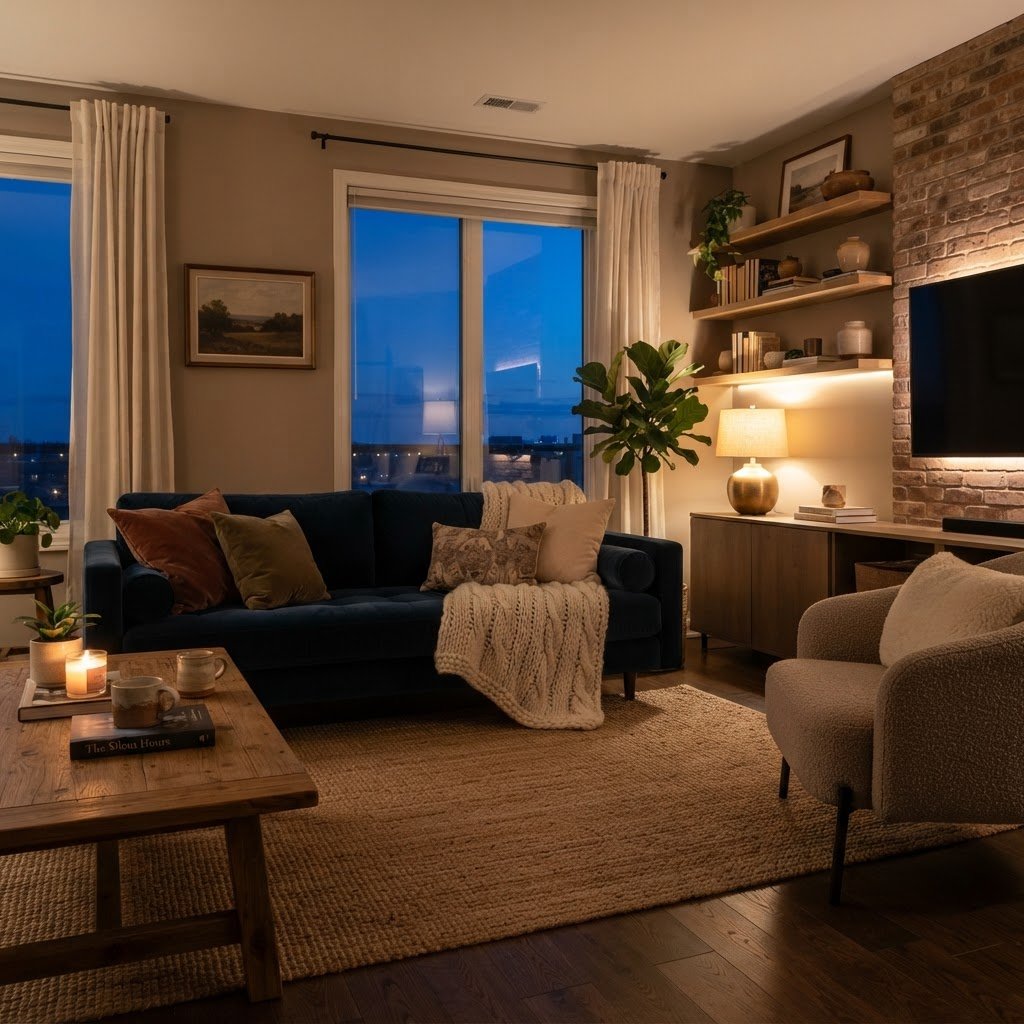
Warm Lighting Ideas for Cozy Living Rooms: A Stylish Hug
To create a cozy living room that feels like a stylish hug, use soft, warm light bulbs in the 2,700K to 3,000K range, layer your illumination with ambient, task, and accent lighting, and install dimmer switches to adjust intensity for different times of the day.
The Philosophy of Atmospheric Illumination
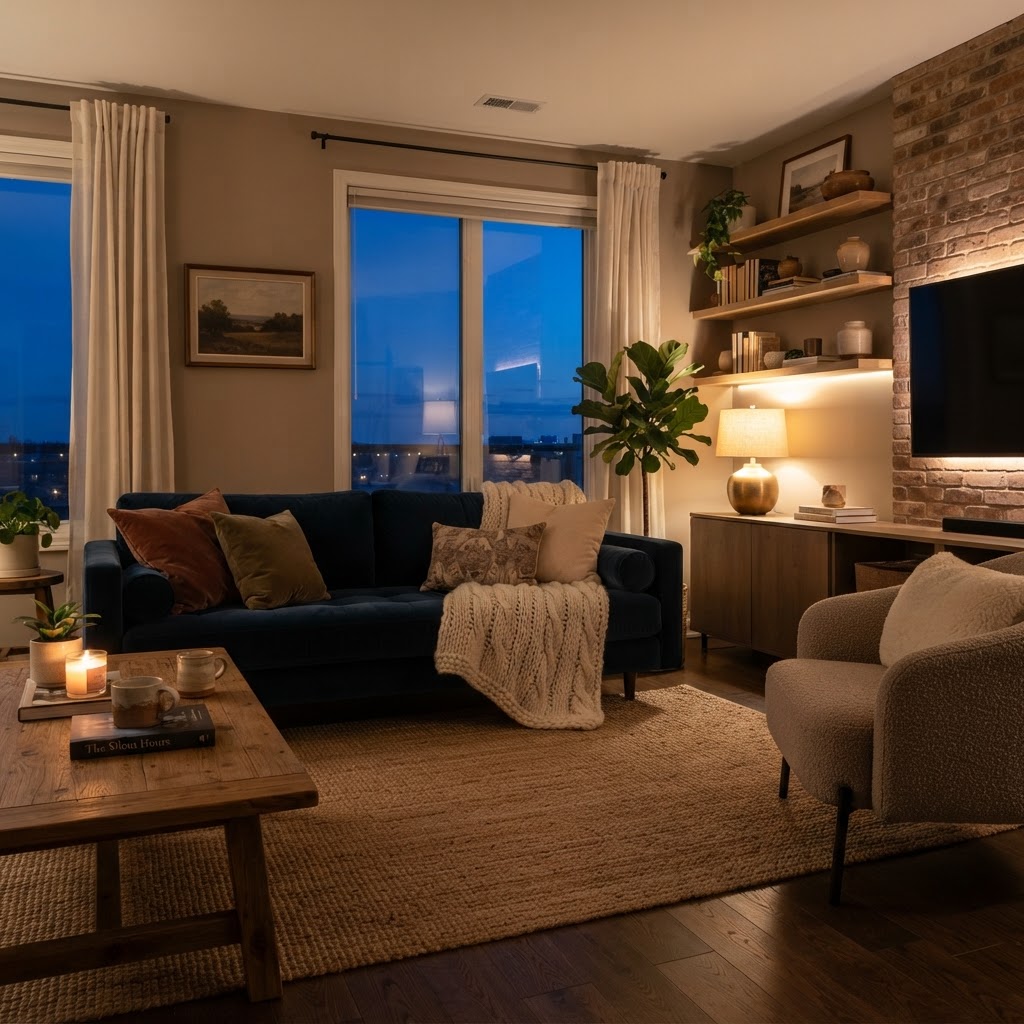
Lighting serves as the heartbeat of interior design, dictating mood and enhancing architectural textures through precise color temperature control. To move away from clinical, cold spaces, you must master the Kelvin scale. Daylight or cool white bulbs (above 4,000K) create an institutional feel, whereas bulbs between 2,700K and 3,000K emit a warm, golden glow that mimics the comfort of sunset. By ensuring all light sources share this temperature, you create a cohesive “stylish hug” effect that feels intentional and professionally curated. Consistency is the primary factor that transforms a fragmented, amateur layout into a high-end, inviting sanctuary. Research suggests that 80% of perceived “coziness” in interior design is directly tied to the warmth of the light color rather than the furniture cost.
Layering Light: The Art of Depth
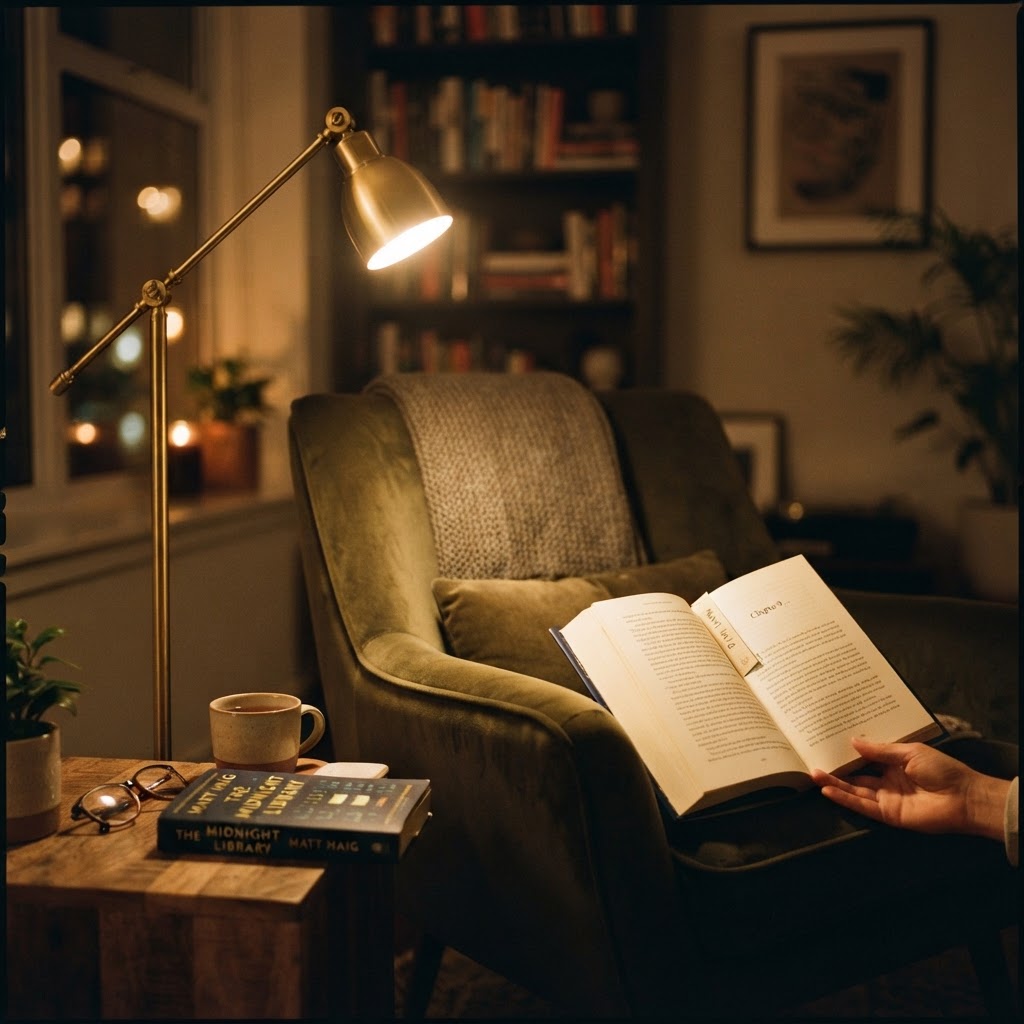
Mastering the art of layering involves balancing three distinct light sources—ambient, task, and accent—to create a multidimensional visual experience that avoids the “flat” look of single-fixture overhead lighting. Ambient lighting provides the base layer of uniform light; however, it should be kept at lower intensities to maintain comfort. Task lighting, such as a focused reading lamp, provides 500 to 800 lumens of brightness precisely where you need to perform activities, while accent lighting draws the eye to decorative elements like art or bookshelves. By diversifying your light sources at different heights, you prevent harsh shadows and create depth. Professional designers recommend a minimum of three light sources per 100 square feet to ensure a balanced, “layered” aesthetic that feels both sophisticated and functional.
Choosing the Right Fixtures for Coziness
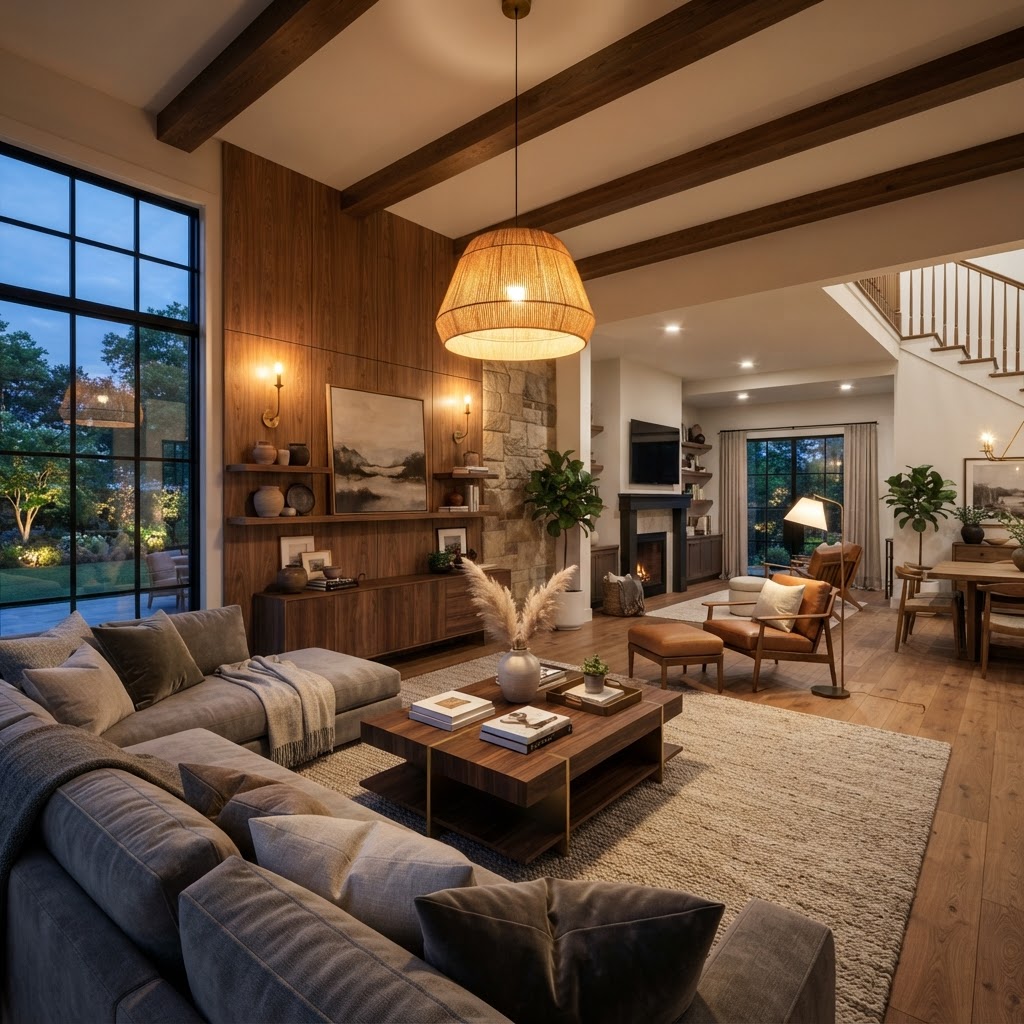
Fixtures act as the jewelry of your living room, where the choice of material—such as fabric, frosted glass, or woven rattan—directly influences how light diffuses throughout the space. Floor lamps are essential for filling dark corners and providing eye-level illumination, which is significantly more flattering than light directed from the ceiling. When choosing shades, opt for linen or heavy cotton fabrics that filter light to remove harsh edges, creating a softer radiance. For a vintage or rustic aesthetic, exposed Edison-style bulbs are acceptable if kept at a low lumen output (under 400 lumens), adding a nostalgic, golden glow. Avoid clear glass fixtures unless paired with dimmers, as they can cause distracting glare that breaks the cozy atmosphere.
The Power of Table and Floor Lamps
Dimming: The Secret Weapon
Installing dimmer switches is the single most effective way to transition your living room from a functional space to a relaxed sanctuary, offering complete control over the room’s intensity. Standard non-dimmable light switches force a “one-size-fits-all” intensity that rarely matches the nuanced needs of an evening environment. A high-quality dimmer switch allows you to reduce light output by up to 90%, providing the exact flexibility required for activities like watching a movie, hosting friends, or simply unwinding after work. Beyond the aesthetic benefits, installing a dimmer is a low-cost, high-ROI home improvement that can extend the lifespan of your LED bulbs by reducing the thermal load and energy consumption by 20-30% on average when dimmed. This adaptability allows your home to breathe and shift its mood seamlessly, reinforcing the “stylish hug” effect in every season.
Strategic Placement for Maximum Impact
Placement strategy focuses on indirect illumination, where light is bounced off surfaces like walls and ceilings rather than directed at seating areas, to eliminate glare and create a soothing, ambient wash. To maximize the impact, place floor lamps behind your sofa to provide a backlight that adds depth to the room while keeping the main seating area free of harsh light. Wall sconces are highly effective when placed 60 to 66 inches from the floor, perfect for highlighting artwork without casting distracting reflections. Additionally, incorporating warm-toned LED strips under shelving units (with a CRI of 90+ for accurate color rendering) adds a layer of modern sophistication that emphasizes texture. Always avoid placing lights directly in front of televisions to prevent screen glare, which causes eye strain and ruins the peaceful atmosphere you are curating.
Bringing Nature In Through Light
Warm lighting interacts uniquely with natural materials like wood, velvet, and linen, amplifying their organic beauty and making them feel richer and more tactile. Natural wood grain, for instance, reflects the 2,700K color spectrum in a way that highlights its gold and red undertones, making furniture feel more vibrant. To enhance this, pair your interior lighting with window treatments that regulate natural light; sheer curtains can soften harsh midday sun into a dreamy, diffused glow, while heavy velvet drapes create a “cocoon” effect in the evenings. By coordinating the texture of your lampshades—using materials like raw silk or coarse linen—with your existing decor, you bridge the gap between artificial light and natural design elements, creating a cohesive environment that feels rooted in nature.
Smart Lighting and Automation
Modern smart lighting technology allows for seamless scene-setting, automatically shifting your home’s color temperature and intensity as the sun sets to maintain a perfect “cozy” balance. Using smart bulbs or hubs, you can program a “relaxation mode” that triggers at 7:00 PM, slowly dimming lights and shifting them to a warmer 2,200K temperature to help signal to your body that it is time to wind down. This level of automation is not merely a convenience; it ensures that your environment remains consistent without the need for manual adjustment, keeping your living room in that “hug” state automatically. Most smart systems integrate with voice assistants, allowing you to control the entire room’s ambiance with a simple command, making it easier to maintain the ideal atmosphere during busy evenings.
FAQ
Q: What is the best Kelvin rating for a cozy living room?
For a warm, cozy feeling, choose bulbs in the 2,700K to 3,000K range. This range provides a gentle, yellowish-white light that promotes relaxation and makes spaces feel more intimate compared to cooler, clinical light temperatures.
Q: Can I use cool white bulbs in a living room?
It is generally recommended to avoid cool white bulbs (4,000K+) in a living room, as they can feel too harsh or institutional. If you need a cooler light for specific tasks, consider using a smart bulb that can change color temperatures throughout the day.
Q: How many lamps should I have in a living room?
A good rule of thumb is to have at least three light sources per 100 square feet to ensure balanced layering. A mix of floor lamps, table lamps, and overhead fixtures helps eliminate dark corners and provides a multidimensional lighting scheme.
Q: Do dimmer switches save money?
Yes, installing dimmer switches can save you money and energy. By reducing the light output, you lower your electricity consumption, and lower heat levels can potentially extend the overall lifespan of your light bulbs.
Q: What is the best height for wall sconces?
Wall sconces should typically be mounted 60 to 66 inches from the floor, measured to the center of the fixture. This height ensures the light is at eye level for seated guests and effectively highlights artwork or architectural features.

Leave a Reply