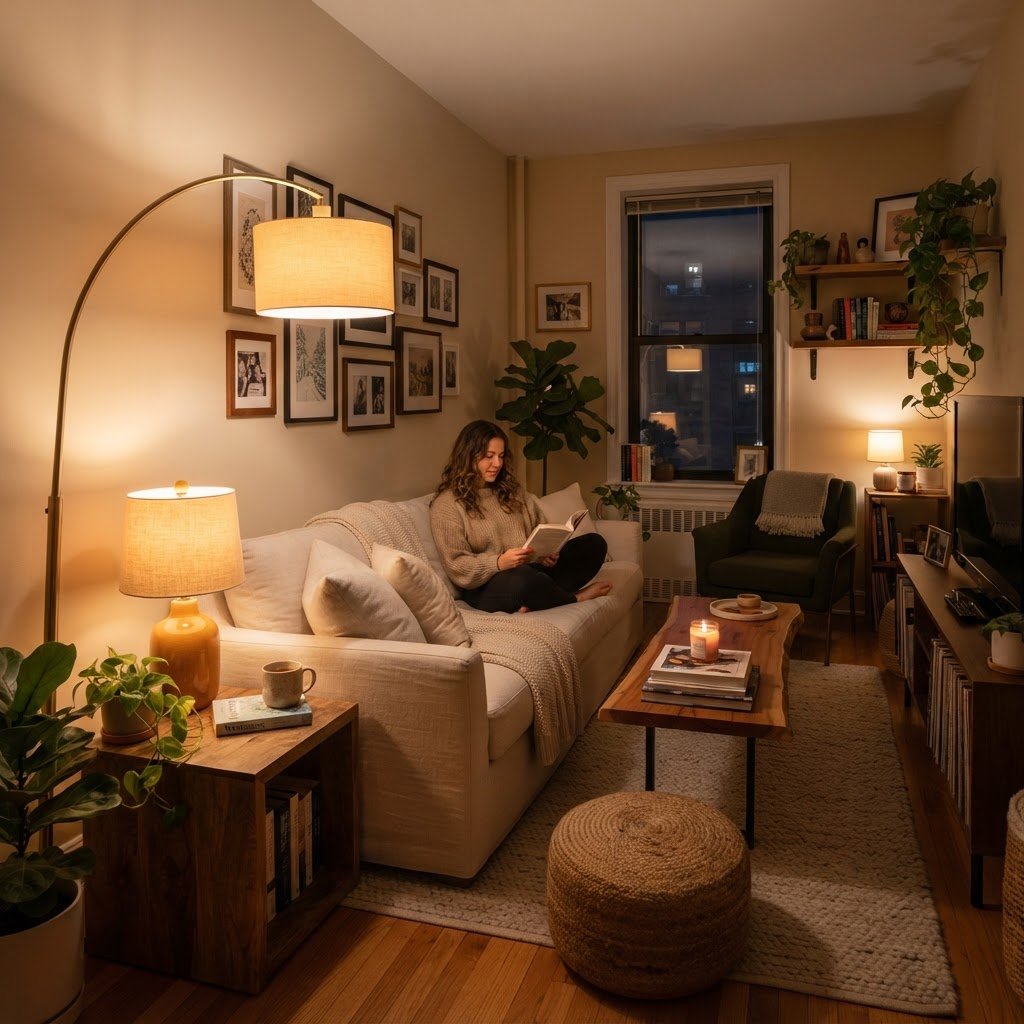
8 Easy Ways to Create Warm Ambient Lighting in a Small Apartment
You can create warm ambient lighting in a small apartment by layering light sources, using bulbs between 2700K and 3000K, and strategically placing floor and table lamps. By avoiding overhead lighting and using mirrors to reflect light, you can instantly transform a clinical space into an expansive, cozy sanctuary.
The Power of Layered Lighting
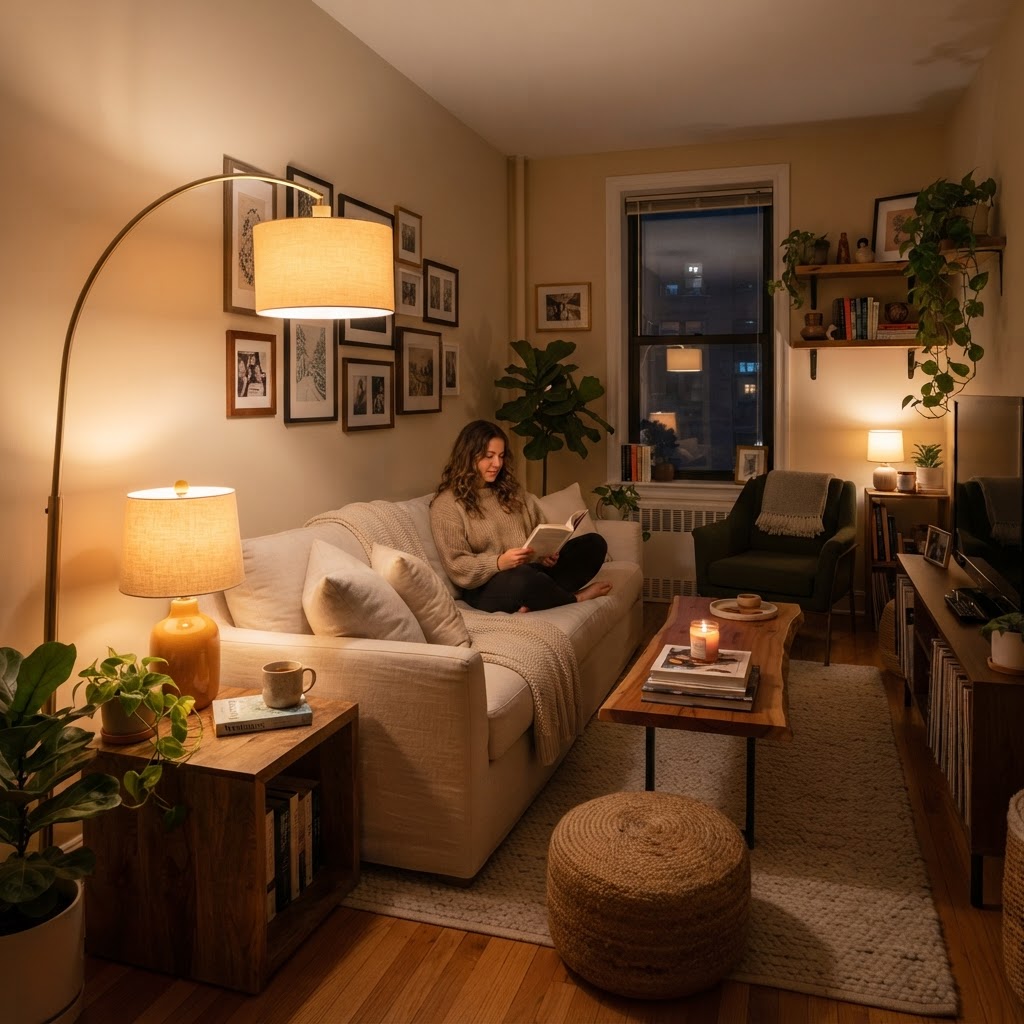
Layered lighting is the professional design strategy of combining ambient, task, and accent fixtures to eliminate harsh shadows and create depth in compact rooms. In small apartments, relying on a single overhead fixture creates “cave-like” corners, whereas layering creates visual boundaries that make the room feel larger. To achieve this, ensure you have at least three sources of light at different heights: low (floor lamps), medium (table lamps), and high (ceiling fixtures or wall sconces). This distribution prevents the eye from being drawn to a single, sterile point. Experts recommend using a 1:3:5 ratio of light intensity to ensure specific zones remain functional while the rest of the room glows softly. By diversifying the sources, you effectively soften sharp edges of furniture, which is crucial in studio layouts where living, sleeping, and working areas often overlap. Integrating different types of bulbs—such as warm-white LEDs and smart-enabled filaments—allows you to customize the mood based on the time of day, transitioning from high-visibility task mode to a relaxed evening glow in seconds.
Why Temperature Matters
Color temperature, measured in Kelvins (K), is the most critical factor in defining the emotional comfort of your apartment’s lighting environment. For a warm, inviting atmosphere, you must stick to bulbs in the 2700K to 3000K range; these mimic the soft, golden output of traditional incandescent bulbs. Anything labeled “daylight” or exceeding 4000K produces a blue-tinted, clinical light that suppresses melatonin and makes living spaces feel like office cubicles or surgical suites. Swapping out your existing bulbs is a high-impact, low-cost project, typically costing under $25 for a standard apartment pack. You should aim for a consistency of temperature across your living area, as mixing warm and cool bulbs causes visual fatigue and makes a small room feel disjointed. If your apartment has built-in fixtures that cannot be changed, consider using warm-tinted glass diffusers or smart bulbs that allow for Kelvin adjustment via your phone. By maintaining a strict 2700K baseline, you ensure every corner of your home feels cohesive, intentional, and architecturally planned regardless of the actual square footage.
Utilize Floor Lamps for Height and Warmth
Floor lamps are the quintessential solution for renters because they introduce height and warm illumination without the need for mounting hardware or electrical rewiring. In a small apartment, the goal is to choose slim, vertical profiles or tripod-based lamps that consume less than 1 square foot of floor space while casting light upward or outward. Placing a floor lamp in a dim corner “washes” the wall with light, which psychologically pushes the boundaries of the room and makes the walls seem further apart. When shopping, prioritize fabric or paper shades over metal or clear glass to naturally diffuse the light, preventing glare and harsh shadows. A floor lamp with an adjustable neck or a dimmer switch provides added versatility, allowing you to direct light toward a reading nook in the evening while keeping the rest of the room ambient. Investing in a lamp with a base that fits flush against a wall can save precious circulation space, ensuring your lighting is functional without becoming a tripping hazard. For maximum effect, place the floor lamp behind a sofa or near an indoor plant to create a “light pool” that highlights textures and adds three-dimensional depth to your interior design.
Embrace Table Lamps for Intimacy
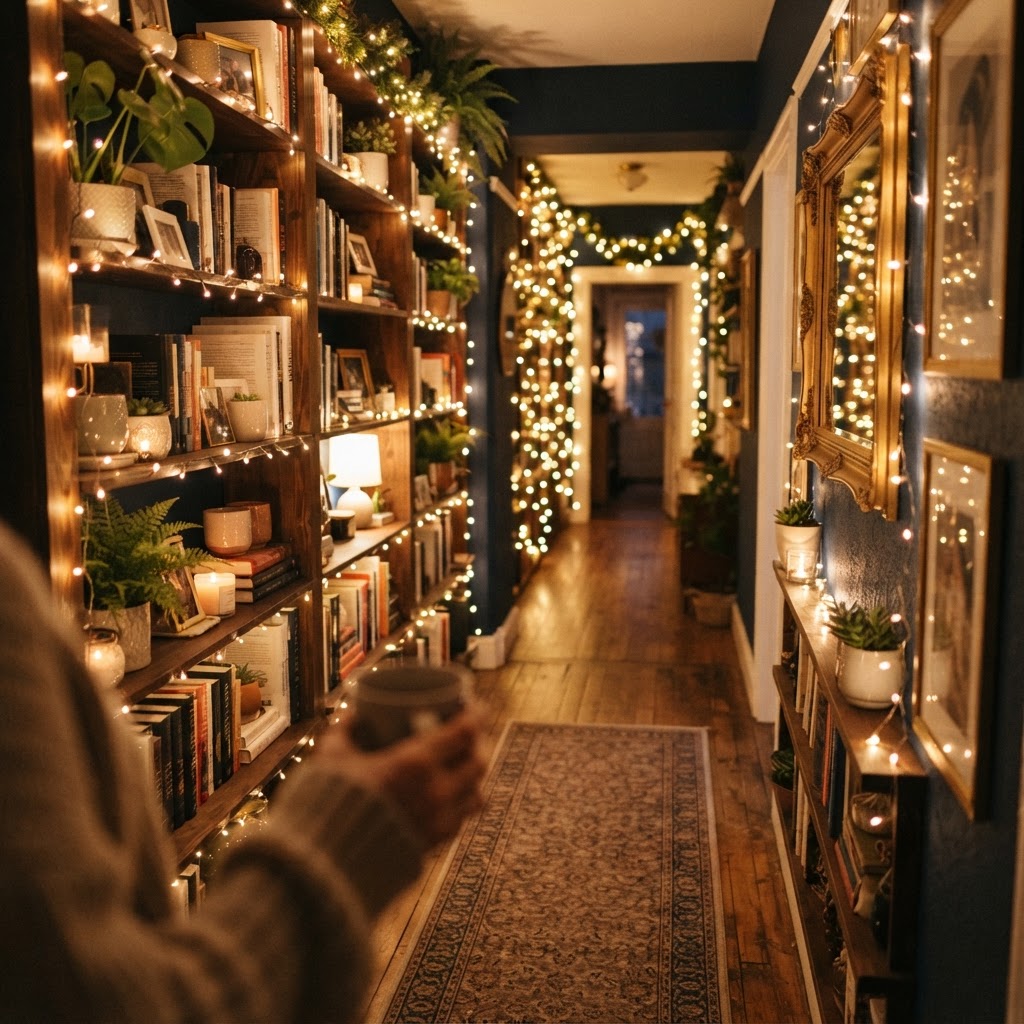
Table lamps at eye level are essential for creating an intimate atmosphere by softening the mid-level planes of your apartment. Placing a pair of matching table lamps on either side of a console table or sofa adds visual symmetry, which is a key design tactic to make a small room feel organized and sophisticated. Symmetry helps the brain perceive a space as curated, reducing the visual “clutter” often found in smaller apartments. When selecting table lamps, consider the density of the lampshade material: linen or woven fabrics filter light more effectively than plastic or hard synthetic shades, resulting in a warmer, glowing effect. Placing these lamps on dimmer-enabled smart plugs allows you to control the entire “glow” of your apartment from your sofa. Furthermore, the base of the lamp should be proportional to the surface it sits on; a heavy, ceramic base adds an anchor for visual weight, while a thin metal base creates an airy, modern feel. By grouping these lamps near reflective surfaces, you can further amplify the warmth, turning standard furniture into high-end, glowing focal points that feel intentionally styled rather than merely functional.
Install Dimmers for Ultimate Control
Dimmers are the single most effective tool for transforming an apartment’s function, allowing you to adjust lighting from bright, task-oriented levels to a soft, relaxing evening glow instantly. For renters who cannot touch the wall wiring, plug-in dimmers or smart bulbs controlled via Bluetooth/Wi-Fi represent a permanent-quality upgrade that can be moved to your next home. Dimming your lights by just 20% can save roughly 10% on energy costs while significantly extending the lifespan of your LED bulbs. Smart bulbs also allow for scheduling; you can automate your lighting to gradually dim as evening approaches, syncing your home environment with your circadian rhythm. Using dimmers also masks imperfections in a room, as high-intensity light draws attention to wall texture and dust, whereas low-intensity light creates a smooth, flattering aura. If you are using multiple lamps, syncing them to one dimming controller ensures that your entire space transitions together, creating a unified ambient experience that makes your apartment feel far more high-end and luxurious than its footprint might suggest.
Incorporate String Lights and Fairy Lights
String lights add a whimsical, ethereal quality to small apartments when used as architectural highlights rather than just party decor. To avoid the “dorm room” look, incorporate them inside clear glass vessels, behind curtains for a soft backlighting effect, or lining the perimeter of a high bookshelf to create a “floating” light profile. Choose warm-white LEDs with thin, flexible copper wiring that can be easily hidden or integrated into decor like exposed pipes or wall molding. For a cleaner look, opt for globe-style fairy lights that provide a more sophisticated appearance than the standard Christmas-tree variety. These lights should be used sparingly as an accent layer, providing just enough soft luminance to navigate the room at night without needing to turn on full-sized lamps. When placed strategically around the ceiling line, they can draw the eye upward, creating the illusion of higher ceilings and a more airy vertical volume. This technique is especially useful in studio apartments where you want to distinguish a sleeping area with a soft, dreamlike atmosphere that sets it apart from the main living zone.
Use Mirrors to Reflect and Amplify
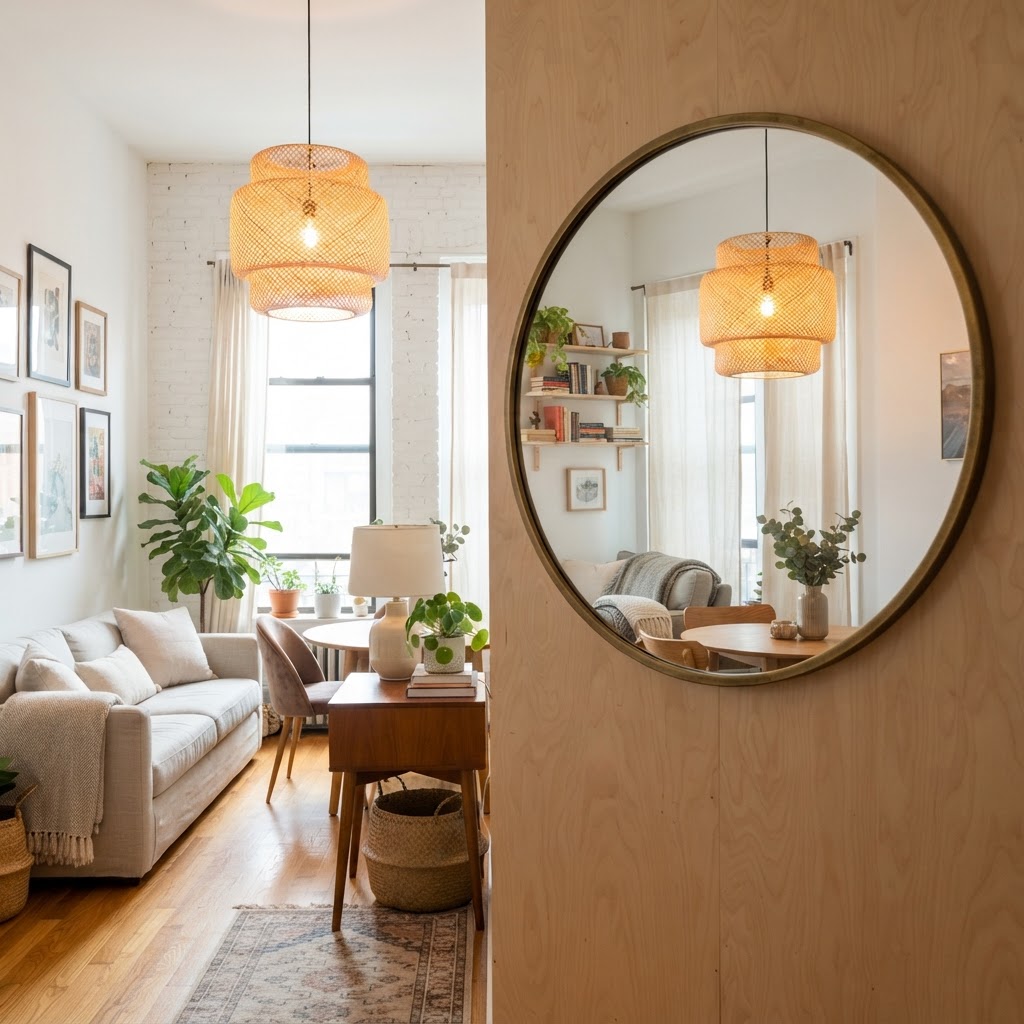
Mirrors act as a secondary light source by bouncing existing illumination back into the room, effectively doubling the impact of every lamp you own. A strategic design choice involves placing a large, floor-length mirror opposite a window or behind a pair of table lamps to capture and disperse light into darker, neglected corners. In small apartments, this technique reduces the “boxed-in” feeling by creating the perception of depth and an open, continuous space. For the best results, use mirrors with metallic or warm-toned frames (like brass or gold) to add an extra layer of warmth to the reflected light. Placing a collection of candles on a mirrored tray can create a dramatic, glowing centerpiece that amplifies the flicker without needing extra floor space. This is a “must-use” tactic for windowless bathrooms or hallway entries where natural light is non-existent. By multiplying your light sources through reflection, you can achieve a bright, airy feeling during the day and a deep, cozy glow at night, essentially squeezing every bit of visual performance out of your modest light fixtures.
Add Task Lighting with Style
Task lighting is essential for daily living, but it must be selected to match the overall ambient mood of the room so it doesn’t break your aesthetic flow. Use focused lights like mid-century modern desk lamps or wall-mounted swing-arm sconces, which clear up surface area on bedside tables or desks, helping the room look larger. The key is to keep the light source low and directed at the work surface; light spills that hit the walls at eye level should be avoided to maintain a consistent atmosphere. Choose bulbs with high Color Rendering Index (CRI) ratings—ideally 90+—for your task lights so that colors appear accurate and vibrant, whether you are cooking or reading. Because task lighting is meant to be functional, ensure the fixture itself adds to the room’s style; a matte brass finish or a textured ceramic base can turn a simple task lamp into an accent piece. By keeping your task light contained to a small footprint, you ensure that the warm ambient “background” of your room remains undisturbed, creating a professional-looking environment that supports both productivity and relaxation.
Group Candles for a Natural Glow
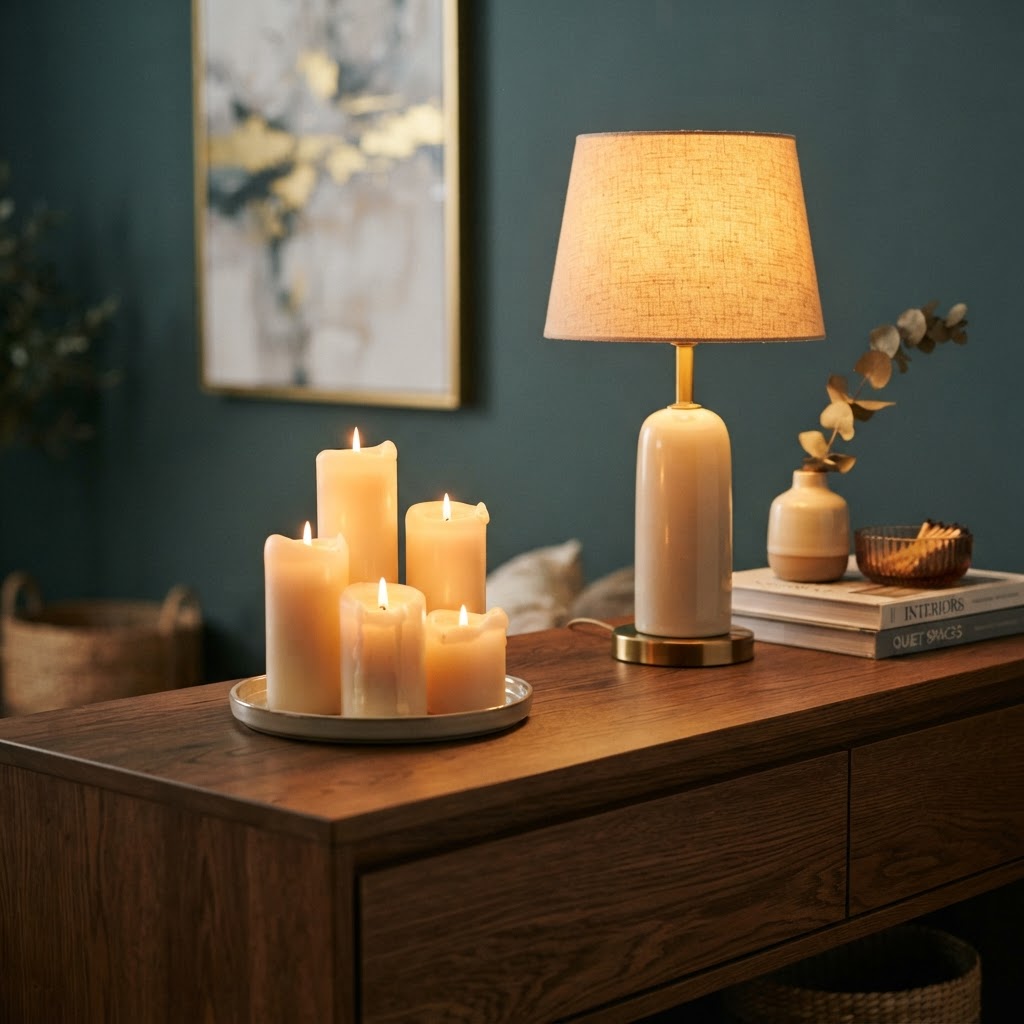
Grouping candles in sets of three or five creates a dynamic, flickering focal point that provides a genuine, organic warmth impossible to replicate with electric bulbs. In a small apartment, use a decorative tray to corral your candles, which prevents them from looking messy and protects your surfaces from wax. Since real flame emits a specific 1800K light temperature, it is the most “warm” light source you can add to your home. For safety, or to accommodate busy lifestyles, high-quality flameless LED candles with wax exteriors and rhythmic flickering mechanisms have become standard. These provide the same visual impact without the risk of fire or the need for constant replacement. Place these groupings on your dining table, coffee table, or fireplace mantle to create a cozy, luxurious ambiance that serves as the perfect “finish” to your daily lighting routine. The organic light of candles helps to soften the digital nature of a modern home, making your small space feel more lived-in and serene after a long day.
FAQ
What is the best color temperature for a cozy home?
The best color temperature for a cozy home is between 2700K and 3000K, as this range produces a soft, golden glow similar to traditional incandescent bulbs. Avoiding bulbs above 4000K prevents your living space from feeling like a harsh, blue-tinted office.
How can I make a small room look bigger with lighting?
You can make a small room look bigger by placing floor lamps in dark corners to “push back” the walls and using mirrors to reflect existing light. Increasing the total amount of light sources at various heights creates depth and eliminates shadows that make rooms feel claustrophobic.
Can I use overhead lights in a small apartment?
While overhead lights are functional, they should be used sparingly because they often create harsh, clinical shadows that shrink a room. It is better to rely on lower-positioned light sources like table lamps and floor lamps to create a more intimate and welcoming environment.
Are smart bulbs worth it for renters?
Smart bulbs are highly recommended for renters because they provide dimming and color-temperature control without requiring permanent electrical modifications. They allow you to customize the mood of your apartment instantly and are easily portable when you move to a new location.
What is the 1:3:5 lighting ratio?
The 1:3:5 lighting ratio is a design rule of thumb suggesting that a room should have light sources at different intensity levels to create interest and depth. By balancing ambient, task, and accent lighting, you avoid the “flat” look that a single, standard ceiling fixture creates.

Leave a Reply