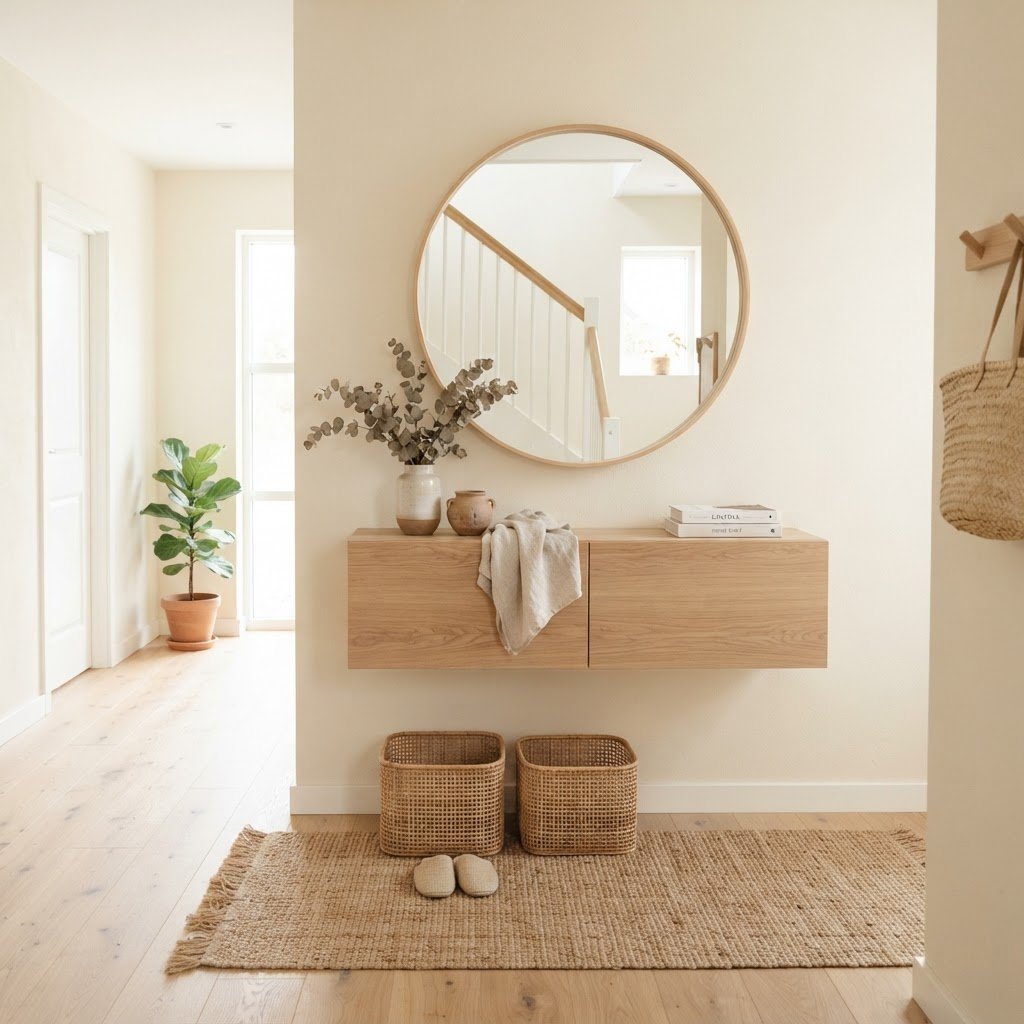
Neutral Entryway Ideas: How to Make Small Foyers Feel Huge
To make a small foyer feel huge, utilize a monochromatic neutral color palette, install floor-to-ceiling mirrors to double visual depth, and prioritize wall-mounted, floating furniture to keep floor space unobstructed. These strategic design choices manipulate light reflection and line-of-sight, effectively tricking the eye into perceiving a significantly more expansive entryway.
The Power of a Neutral Color Palette
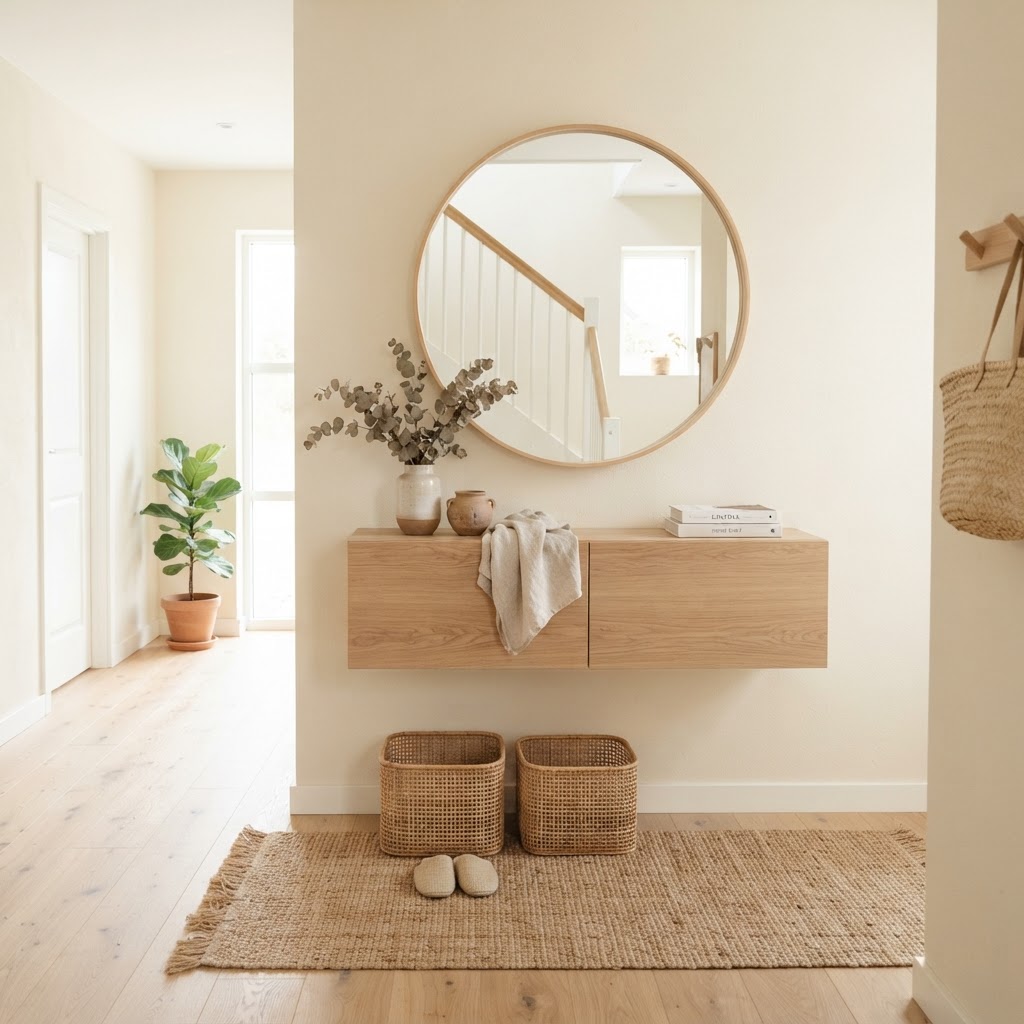
Neutral tones are the most effective tool for expanding perceived space because they reflect ambient light rather than absorbing it. By painting walls, trim, and ceilings in a cohesive shade like alabaster, soft cream, or light taupe, you eliminate harsh visual boundaries that typically shrink a room. When the wall color matches your trim, the transition between surfaces disappears, causing the eye to travel across the entire space without interruption. This technique, often called “color drenching,” is a proven architectural method to make walls recede.
To prevent a neutral space from feeling flat or sterile, you must incorporate varied textures. A monochromatic palette requires depth through tactile materials to maintain interest. For instance, pair a smooth, cream-colored wall with a nubuck leather bench or a chunky woven seagrass basket. According to interior design standards, using at least three distinct textures in a neutral room prevents visual fatigue. You should also consider the LRV (Light Reflectance Value) of your paint. Aim for colors with an LRV of 60 or higher; this ensures that at least 60% of the light hitting the surface is reflected back into the room, maximizing the brightness of your foyer.
Reflecting Light with Strategic Mirrors
Mirrors function as a secondary light source by reflecting natural light from adjacent rooms back into a dark or narrow hallway. Placing a large mirror opposite a doorway or window allows it to catch incoming light and distribute it across the floor and walls, effectively doubling the light output in the space. For maximum impact, install an oversized mirror that spans at least 60% of the wall width. If you have low ceilings, select a vertical rectangular mirror to draw the eye upward, creating the illusion of extra height.
Choosing the Right Frame Style
For a truly neutral look, choose frames that blend with your wall color rather than popping against it. A thin, white-washed wood frame or a sleek, frameless design will keep the look seamless. If you prefer a subtle hint of contrast, a light champagne or soft matte metal finish can add a touch of warmth without feeling heavy or intrusive to the overall neutral aesthetic. When selecting a mirror, look for beveled edges; these refract light at different angles, providing a subtle shimmer that makes the mirror feel like a functional piece of art rather than just a utility item.
Streamlining Furniture for Maximum Flow
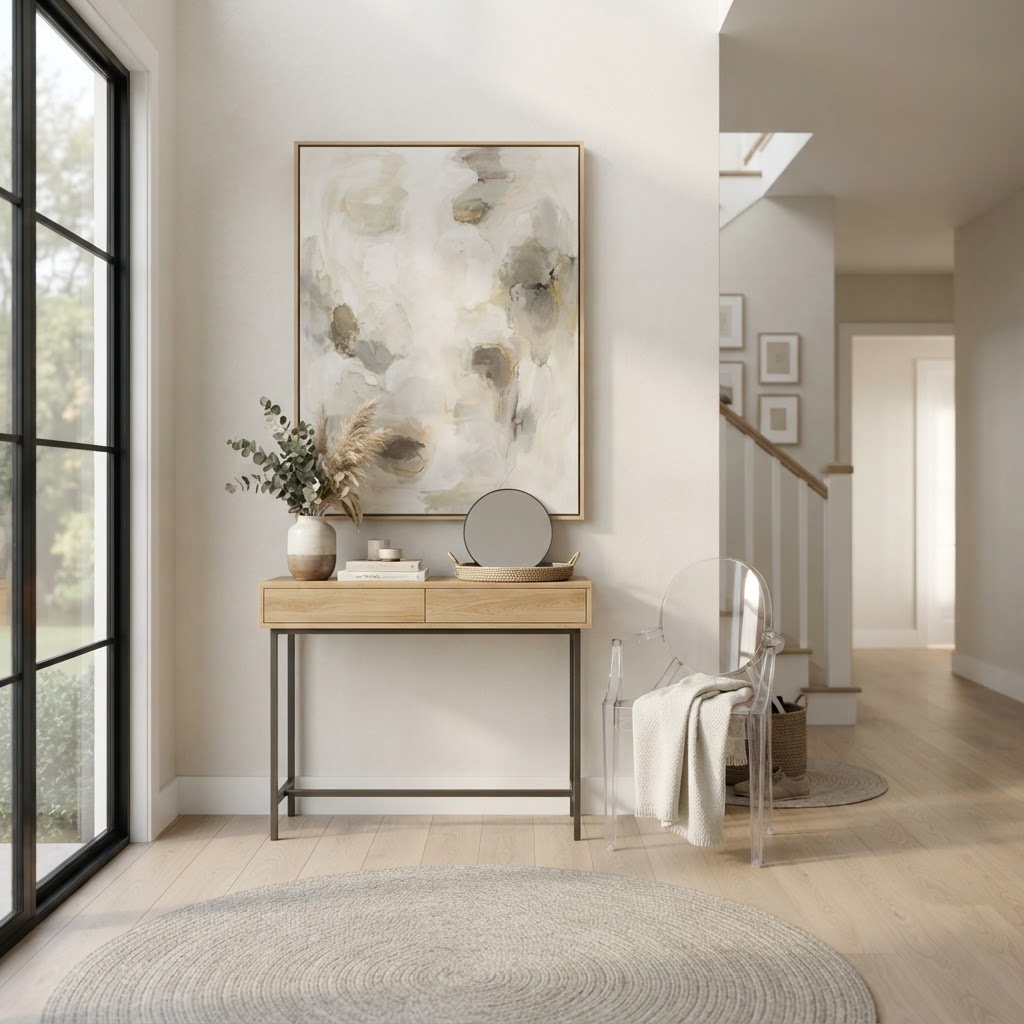
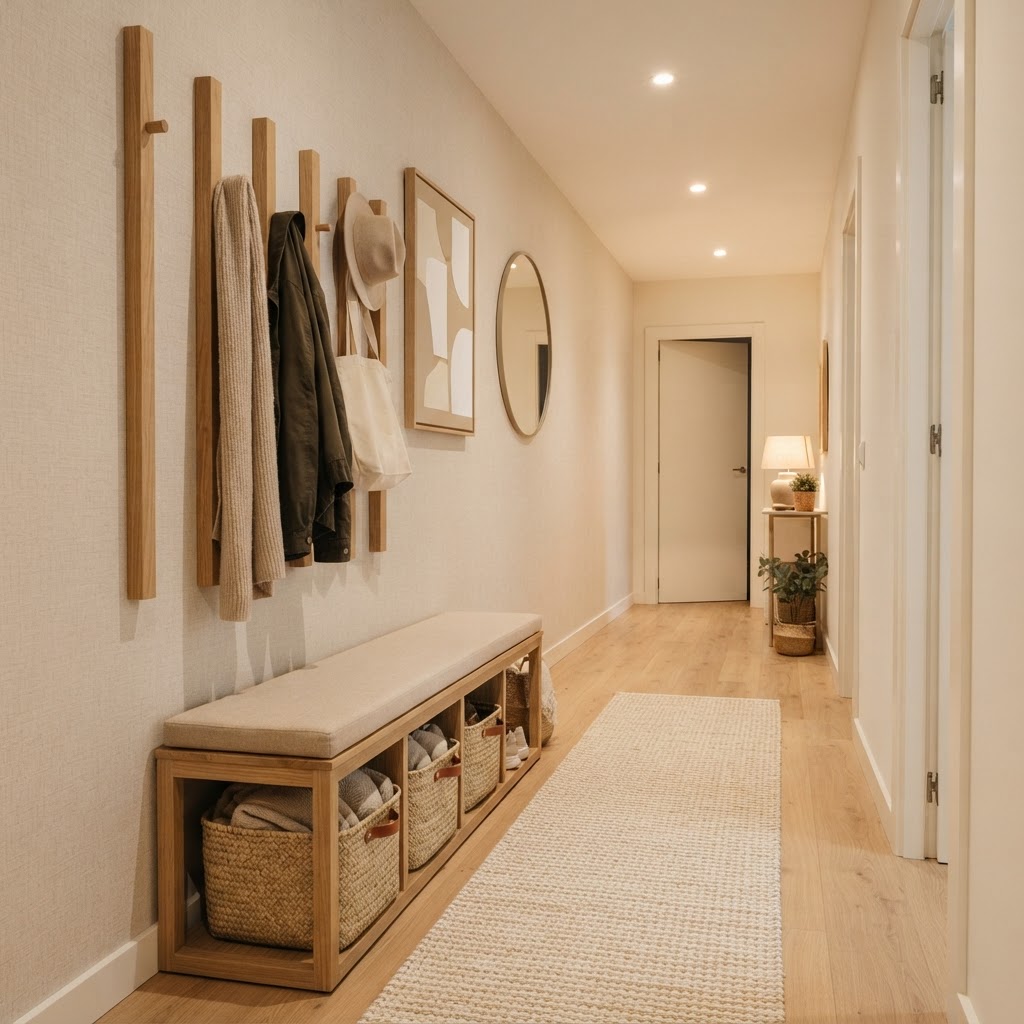
Furniture in a tiny foyer must provide maximum functionality while maintaining a minimal visual footprint to keep traffic flow efficient. The primary goal is to keep as much floor area visible as possible; research indicates that seeing more floor area directly correlates to a feeling of “roominess.” Floating furniture, such as wall-mounted consoles or drop-leaf tables, is ideal because it removes bulky legs that clutter the floor. If you must use floor-based furniture, choose pieces with open legs (like hairpin legs) rather than solid bases to allow the eye to see through the furniture.
When choosing storage, prioritize slim profiles. A standard console is 16–18 inches deep, but for small entryways, look for “shallow” consoles that are 10–12 inches deep. These can still hold essentials like keys and wallets without impeding the hallway path. By combining a floating shelf with a wall-mounted coat rack, you save roughly 4 square feet of floor space compared to a traditional coat tree, providing more room for movement while keeping your entry organized and visually uncluttered.
Vertical Storage and Organization Tips
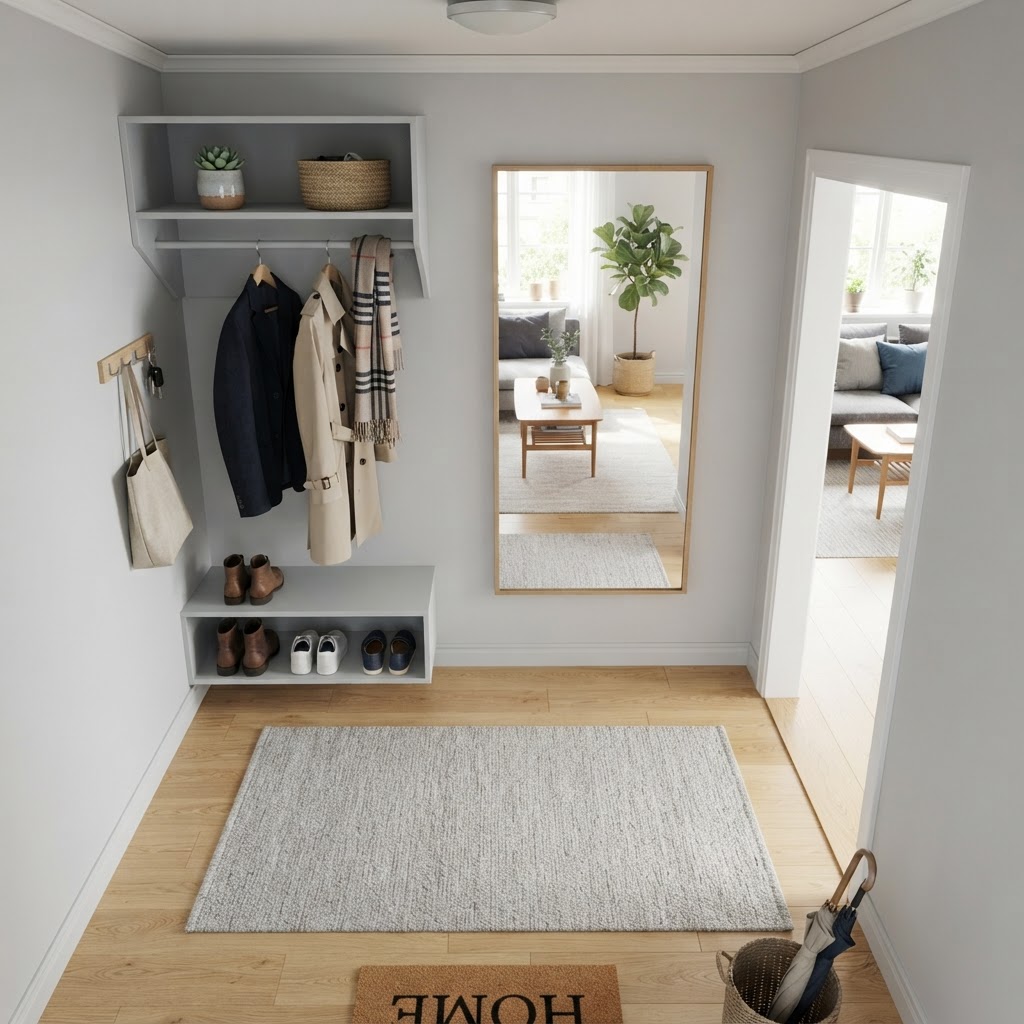
When floor space is at a premium, vertical storage is the most efficient way to maximize your home’s utility. Installing storage that reaches toward the ceiling pulls the visitor’s line of sight upward, which effectively masks the narrowness of a cramped foyer. A floor-to-ceiling unit that is color-matched to the wall acts as a “built-in,” making the storage appear as part of the architecture rather than added clutter. Using open-backed shelving or vertical hooks allows for quick access to daily items while maintaining a clean, minimalist profile.
Essential Organization List
- Wall-mounted hooks placed at varying heights for coats and umbrellas.
- Slim, wall-mounted console tables with shallow drawers for keys and mail.
- Vertical shoe racks that tuck neatly behind a door or inside a tight corner.
- Textured woven baskets tucked under a bench for hidden seasonal storage.
- Lightweight, clear acrylic organizers to keep small items contained without visual clutter.
By grouping these items at a consistent height (e.g., all hooks at 60 inches from the floor), you create a structured, professional look that reduces the perception of “mess” in small spaces.
Maximizing Light Sources
Lighting should be layered to eliminate shadows that can make a small room feel boxed in. In an entry, you should implement three levels of lighting: ambient, task, and accent. Ambient light, such as a flush-mount fixture, provides base illumination, while task lighting like a wall sconce over a mirror helps with final outfit checks. Avoid heavy chandeliers, as these lower the perceived ceiling height; instead, choose low-profile, LED-integrated fixtures that provide a wider beam angle.
Color temperature is equally important; for neutral spaces, stick to bulbs between 2700K and 3000K. This warm-white range ensures your cream, beige, or white walls feel cozy and inviting rather than sterile. If you are unable to add electrical fixtures, LED strip lighting is an excellent, cost-effective solution. Applying warm-light strips beneath a floating console or along the underside of a shelf provides a “floating” effect that adds depth and makes the piece look more expensive and custom-built.
Choosing the Right Rugs and Textiles
Rug selection is critical in small entryways, as a correctly sized runner can anchor the space while a poorly chosen mat can slice it in half. Avoid small, square mats that look like “islands” on the floor; these draw attention to the limited width of the space. Instead, use a long, narrow runner that extends as far as possible along the walkway. This creates a visual path that leads the eye toward the center of your home, encouraging movement.
When choosing textiles, prioritize durability and low-pile textures. A natural jute or sisal runner is ideal for high-traffic areas because it provides a durable, organic texture that fits perfectly with a neutral color scheme. If you prefer something softer, look for a wool blend with a low-loop pile. Low-pile rugs are less likely to create tripping hazards and prevent the “bunching” effect that can make a small foyer feel chaotic. Opt for a runner that leaves only 3–6 inches of floor space exposed on either side for the most professional, integrated look.
Maintaining Minimalism for Longevity
Minimalism is the maintenance phase of small-space design; it ensures that your entryway does not revert to a storage graveyard for discarded items. To maintain the effect of a large space, you must strictly limit “visual noise.” This means that for every new item you introduce to your foyer, one must be removed. By keeping surfaces clear of excess decor, you allow the eye to rest, which is a fundamental requirement for making a room feel expansive.
Rotating items seasonally is an effective strategy to keep your entryway feeling fresh without adding clutter. Limit your decor to one large, impactful object—like a sculptural vase or a piece of architectural art—rather than a collection of smaller trinkets. Small trinkets create visual clutter, which makes a space feel crowded. By adhering to the “one-in-one-out” rule and focusing on one large focal piece, you ensure your entryway retains its high-end, spacious aesthetic indefinitely.
FAQ
Q: What is the best color to make a small entryway look bigger?
Light, warm-toned neutrals like alabaster, soft cream, or light taupe are best. These shades reflect light and blur wall boundaries, making the space feel more open compared to darker, absorbing colors.
Q: Should I use a mirror in a tiny foyer?
Yes, a mirror is one of the best tools for small spaces. It doubles the perceived depth of the room and acts as a secondary light source when placed to reflect light from windows or other rooms.
Q: How can I organize shoes in a small entry without floor clutter?
Use vertical shoe storage or wall-mounted cabinets with a slim profile. These solutions keep footwear off the floor and tucked away, preserving the walkway and creating a cleaner visual line that makes the space feel larger.
Q: Are runner rugs good for small entryways?
Yes, a runner rug that covers most of the walking path helps lengthen the space. A light-colored runner with a subtle, low-contrast pattern draws the eye toward the interior of the home and effectively connects the area.
Q: What lighting is best for a narrow foyer?
Layered lighting, including flush-mount ceiling fixtures and LED strips, is ideal for small foyers. Use warm-toned bulbs (2700K-3000K) to ensure the space feels inviting and to prevent the “dark corner” phenomenon.

Leave a Reply