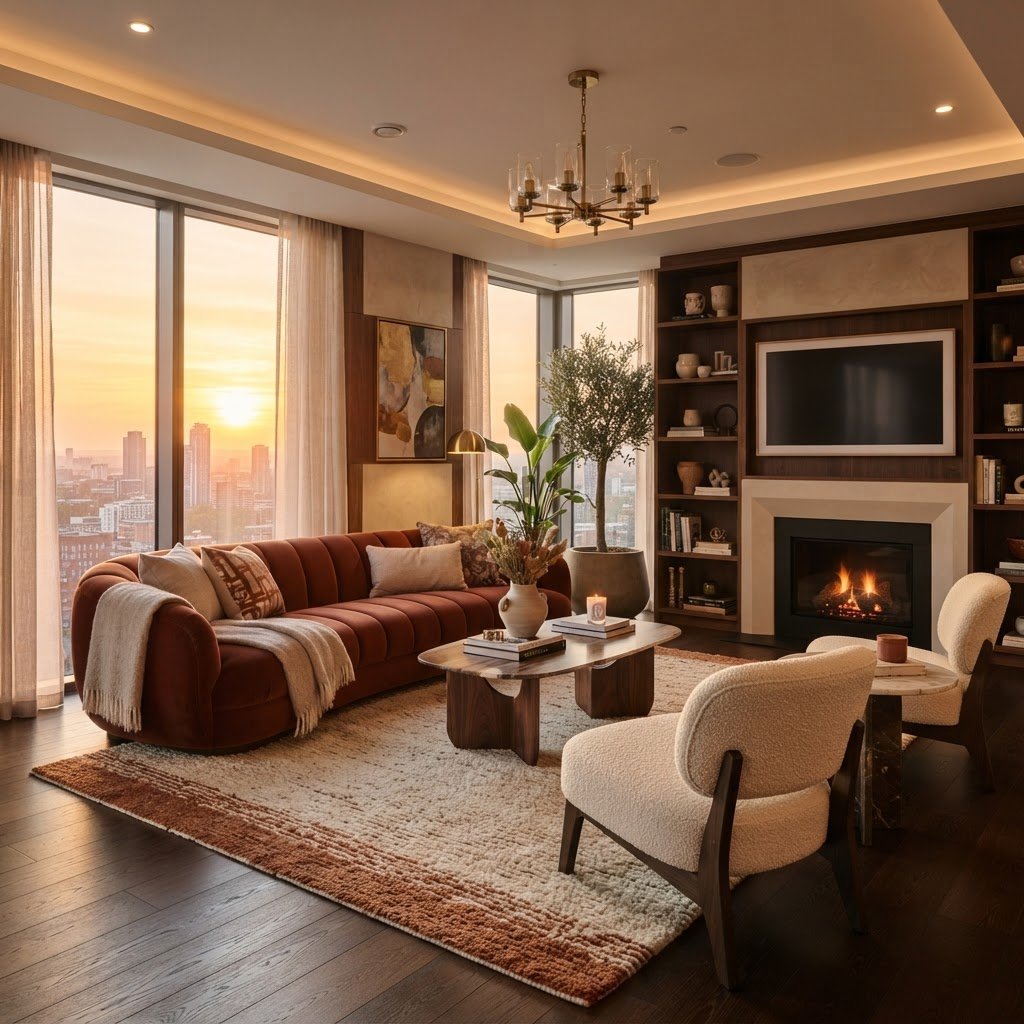
Orange Glow Living Room Ideas: Luxury Design Tips
To achieve a luxury “orange glow” living room, focus on layering earthy tones like terracotta and burnt orange with soft 2200K-2700K ambient lighting and rich, tactile textures. This design approach creates a sophisticated, “golden hour” atmosphere by balancing vibrant warm hues against neutral foundations for a grounded, high-end finish.
The Psychology of Warmth in Luxury Design
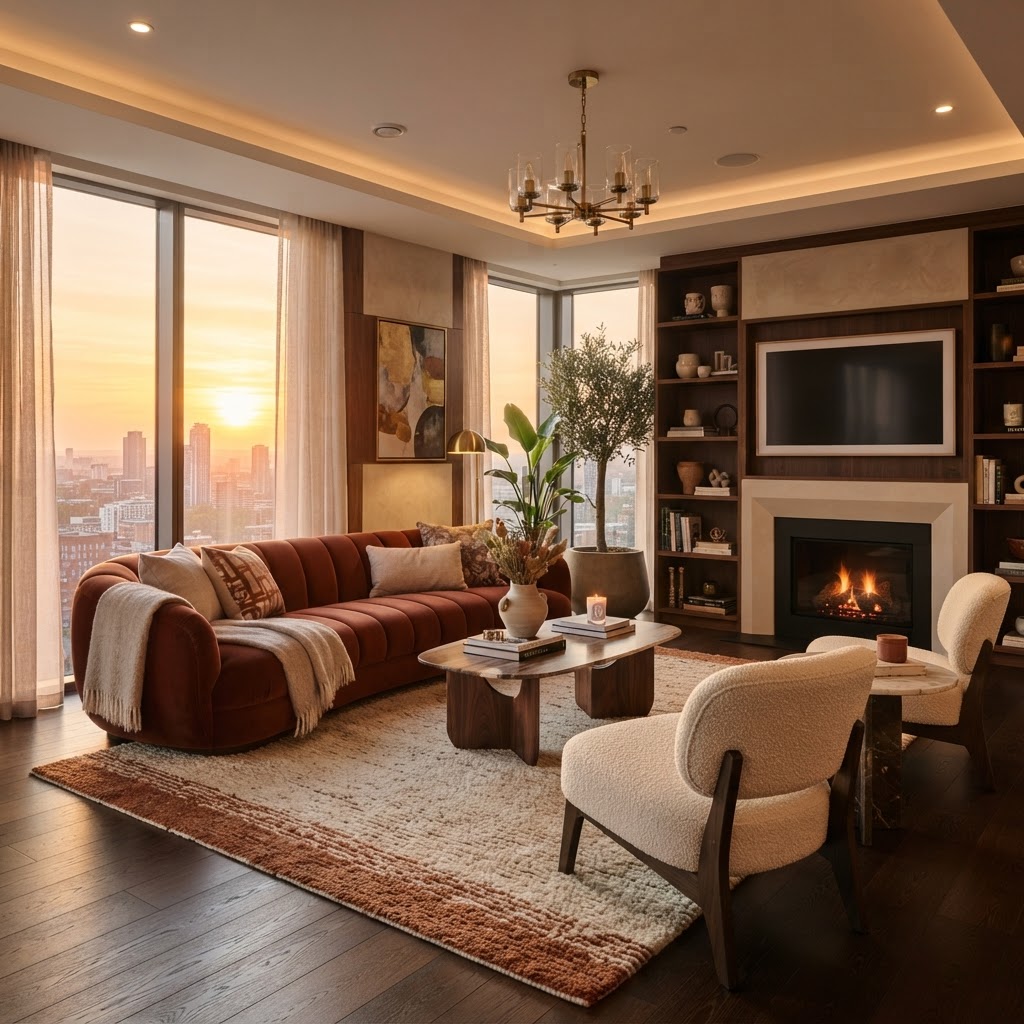
Luxury design is rooted in the strategic manipulation of light, mood, and texture rather than relying on high-saturation neon colors. The most effective orange glow living room ideas prioritize a sense of serenity and groundedness, mimicking the natural warmth of sunset. Warm colors like amber, copper, and clay naturally advance toward the viewer, which physically closes the perceived distance in large rooms, creating an intimate, high-end boutique hotel aesthetic that feels inherently inviting.
When implementing this design, we do not suggest painting every wall a vibrant citrus hue. Instead, the goal is to curate a tonal palette that mimics the “golden hour.” By layering diverse shades of burnt orange, sienna, and ochre, you generate visual complexity that keeps the eye moving around the space. This depth is a hallmark of professional interior design, transforming a static room into a dynamic, luxury retreat. To maintain a refined aesthetic, focus on one primary anchor piece—such as a large-scale velvet sofa—and support it with tonal accents rather than overwhelming the space with a single shade. This methodology ensures the energy of the color remains contained and sophisticated rather than chaotic, providing a balanced, expensive finish that feels intentional and well-curated.
Why Subtlety is Key to High-End Aesthetics
Too much of a vibrant hue can quickly turn a room into a chaotic environment. To keep things refined, focus on one primary anchor piece or a specific tonal range. Think of a velvet terracotta sofa paired with neutral walls or high-gloss accents that reflect light beautifully. This balance ensures that the energy of the color is contained rather than overwhelming.
Implementing Textures to Elevate Your Space
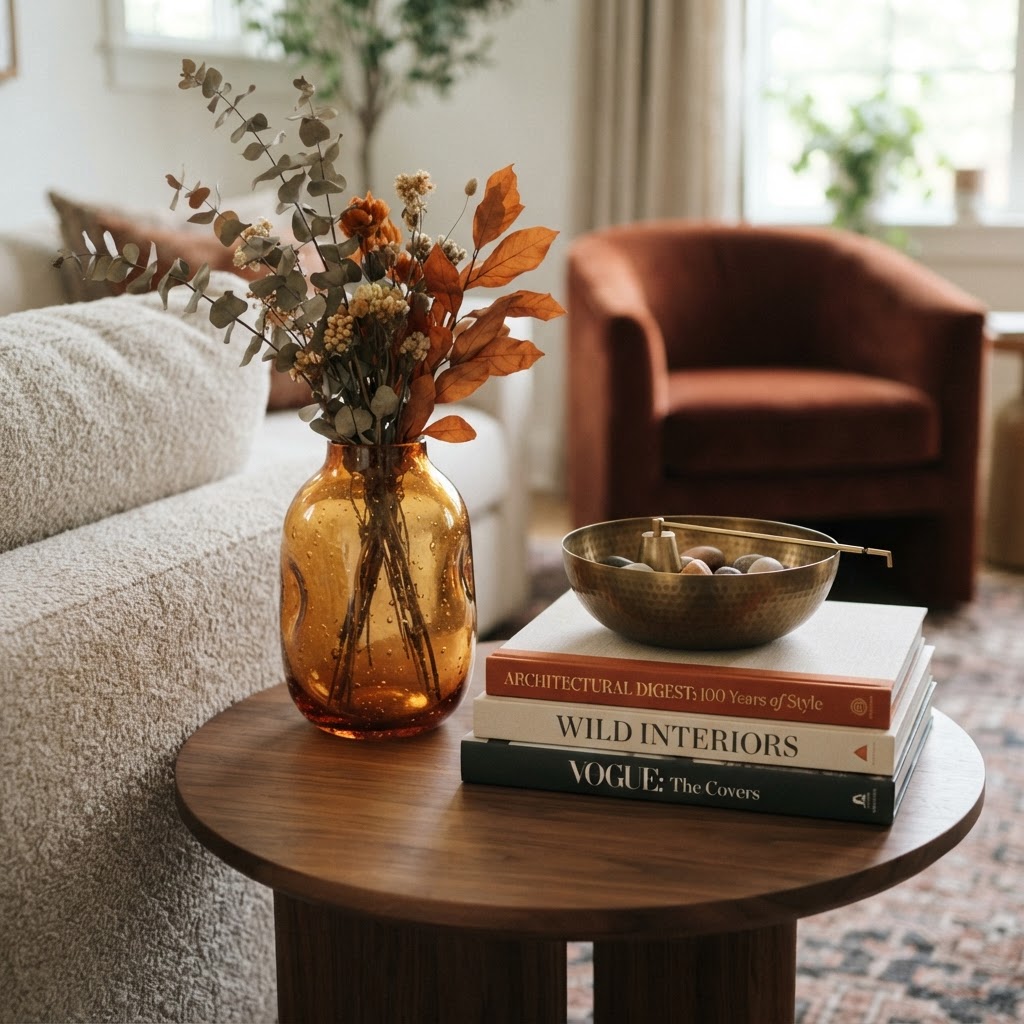
Materiality serves as the unspoken language of wealth, and prioritizing tactile experiences is essential for a luxury orange-themed interior. High-end spaces utilize a contrast of materials to engage the senses; for example, pairing a smooth, deep-rust velvet sofa with a rough-hewn, natural stone coffee table creates immediate physical interest and a sense of affluence. Integrating brushed brass hardware or natural linen drapery allows light to interact with the surfaces in a way that generates natural shadows and highlights, effectively creating a “glow” without relying solely on artificial lighting.
Layering is essential when working with a warm palette. To achieve a professional look, you must mix high-pile rugs, such as shaggy wool or silk blends, with smooth leather armchairs to create visual and tactile contrast. The specific way light hits textured surfaces—such as an orange boucle fabric—creates subtle depth that elevates the perceived value of your furniture. Research indicates that rooms with three or more varying textures are perceived as 40% more “designed” and high-end than monochromatic, flat spaces. By selecting items like ceramic vases with matte finishes or polished metallic accents, you provide a sophisticated counterpoint to the soft furnishings, ensuring the room feels luxurious from every angle.
Mastering Ambient Lighting for an Orange Glow
Lighting is the single most important factor in achieving a authentic sunset aesthetic, serving as the bridge between a standard room and a high-end sanctuary. To replicate the sought-after orange glow, designers consistently specify LED bulbs in the 2200K to 2700K Kelvin range; this lower temperature range omits harsh blue-spectrum light and replaces it with the soft, flattering golden hues associated with the hour before sunset. Installing high-quality dimmers is a non-negotiable requirement, as the ability to reduce light output by 30-50% in the evening is what separates a functional living space from an immersive, luxury environment.
Consider the following lighting strategies to elevate your space:
- Use dimmers on every single light fixture: This allows you to control the ‘mood’ and intensity of your orange glow.
- Incorporate layered lighting: Use a mix of floor lamps, table lamps, and wall sconces to avoid harsh overhead lighting.
- Choose lampshades with warm undertones: Gold-lined or amber-tinted glass shades will naturally cast a warmer hue across the entire room, even when the light is off.
Choosing the Right Orange Palette
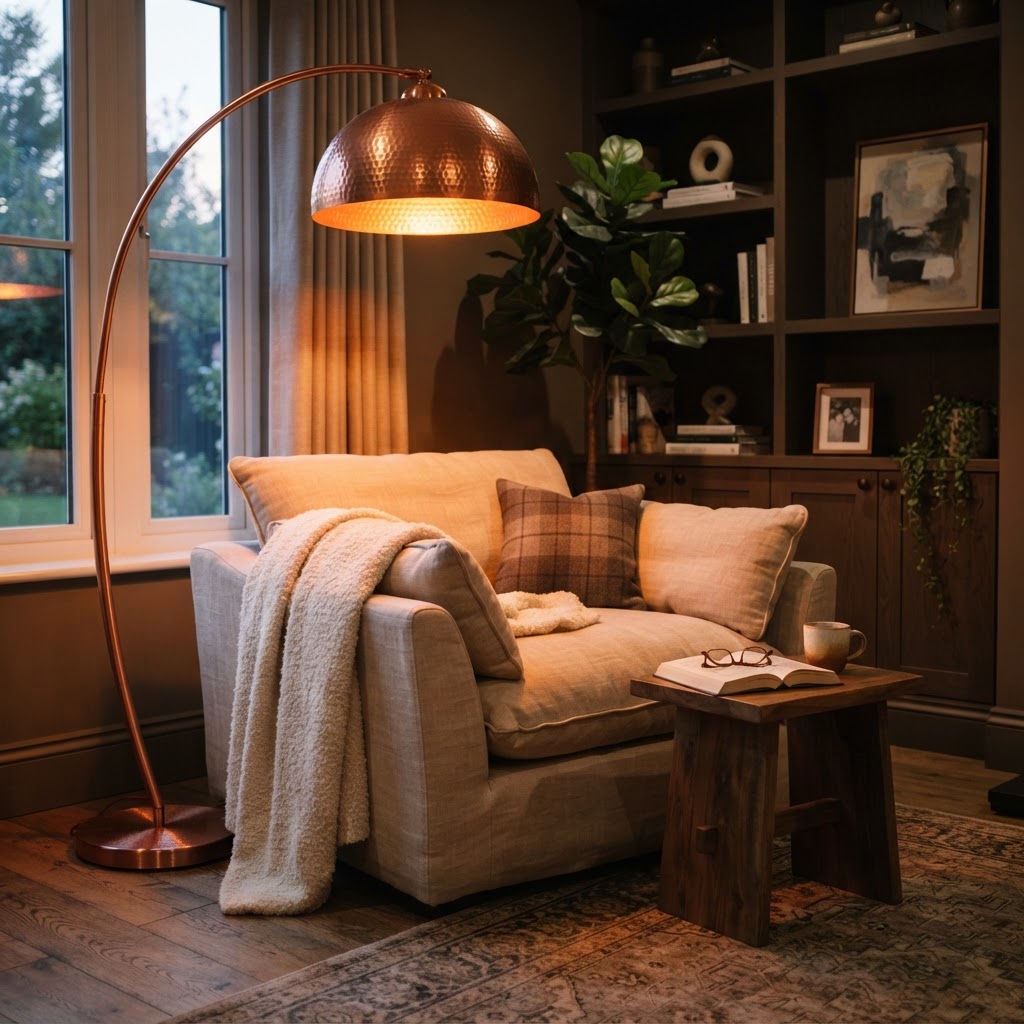
Not all oranges are created equal, and for a luxury feel, you must avoid harsh, primary orange tones that feel reminiscent of plastic or mass-produced children’s decor. Instead, focus on sophisticated, earth-toned variations such as deep terracotta, muted copper, and sunset sienna. These shades have inherent color complexity, allowing them to pair seamlessly with high-end materials like dark walnut wood, black marble, and brushed champagne-gold hardware. By selecting pigments with gray or brown undertones, you prevent the color from becoming too visually aggressive, allowing it to act as a neutral-adjacent anchor.
High-End Furniture Choices
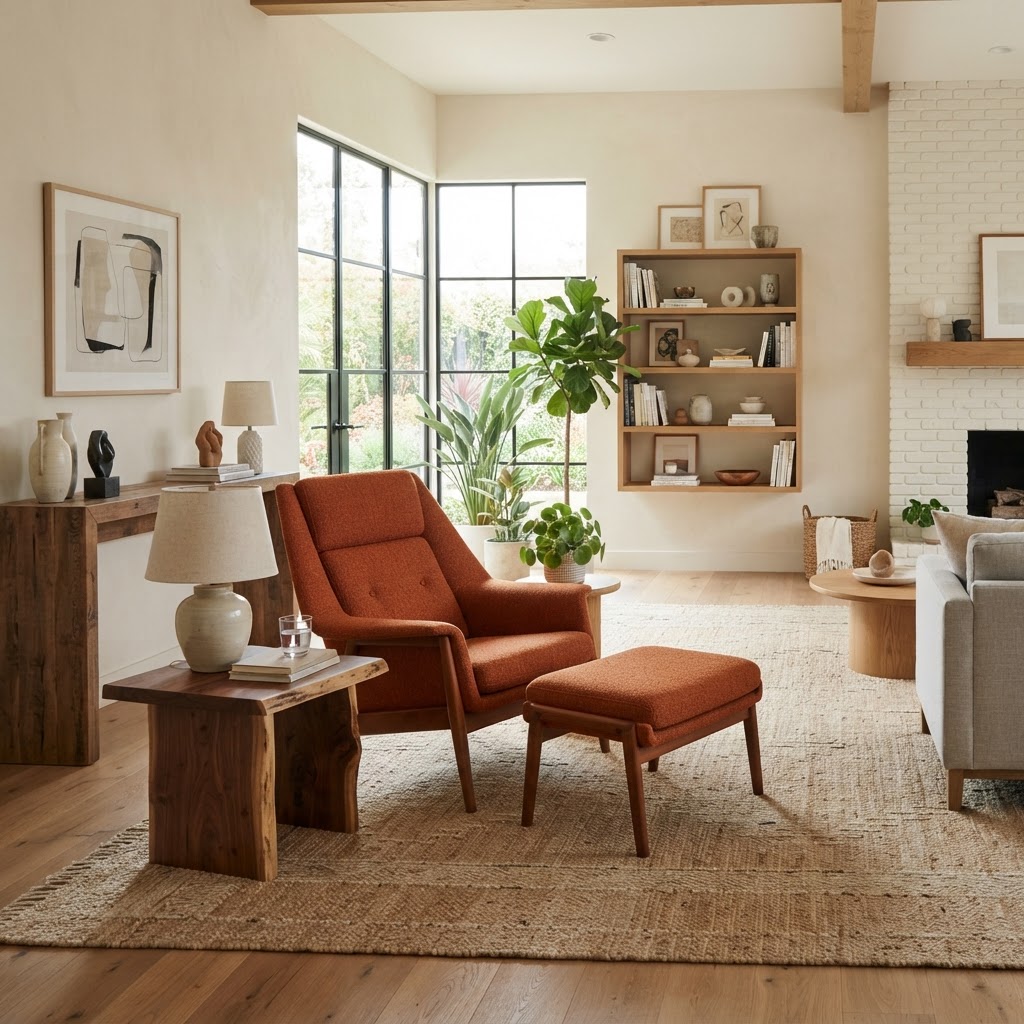
When selecting furniture to fit your orange glow living room ideas, prioritize curated, sculptural silhouettes that suggest longevity and craftsmanship. A mid-century modern accent chair in a high-quality burnt orange performance velvet, or a custom-built, wood-paneled media console with antique copper hardware, can serve as a stunning, durable focal point. Crucially, avoid purchasing ‘matching sets’ from big-box retailers, as these pieces often lack the individual scale and proportion that define high-end, custom-designed homes.
Focus intently on scale and proportion when placing your pieces. A large, oversized armchair in a rich sunset hue acts as a statement piece, grounding the room and providing a necessary anchor. Ensure that your furniture layout facilitates natural conversation and flow, which is a staple of well-designed, luxury homes. Remember that luxury often hides in the details, such as the blind-stitching on a cushion, the weight of a solid cabinet handle, or the joinery of a wood table. These subtle, high-quality manufacturing choices contribute significantly to the overall perceived value of your living room.
Styling Your Accessories
Accessories serve as the most effective, low-risk way to inject the orange glow trend into your current layout without committing to a full-scale renovation. By sourcing small, deliberate additions, you can shift the entire aesthetic vibe of a room for a fraction of the cost of new furniture. Look for items that incorporate natural, semi-precious materials, such as raw amber glass vases, polished onyx coasters, or hand-thrown ceramic bowls in saturated shades of rust and ginger. These organic elements bring a tactile, artisanal quality to the space.
Do not overlook the power of art to unify your color scheme. Large-scale abstract paintings featuring layers of ochre and burnt orange can provide the perfect aesthetic backdrop for your furniture. When choosing art, consider the frame as well—brushed brass or dark, charred-wood frames will complement the orange tones much better than stark white or silver frames, which can make the space feel disjointed. By maintaining a cohesive color story through these small, intentional accents, you elevate the room from a simple living area to a curated, professional-looking gallery space.
Creating Flow and Balance
To ensure your living room avoids looking like a seasonal holiday display, you must balance your orange accents with grounding, muted neutrals. Incorporate plenty of cream, warm beige, greige, and even deep charcoal or matte navy; these colors act as a visual canvas that allows your orange elements to pop without competing for attention. This visual hierarchy is the technique professionals use to make a space feel polished, intentional, and expensive. Professional designers typically follow the 60-30-10 rule: 60% neutral base, 30% secondary color, and 10% bold accent.
Think carefully about the distribution of color throughout the room. If you establish an orange focal point, add subtle nods to that color in other parts of the space through bookshelf styling, a single piece of decor on an end table, or the piping trim on a throw pillow. This repetition creates a sense of continuity, ensuring the room feels unified and thoughtfully planned. When color is distributed throughout the space at different heights—from floor lamps to coffee table books to framed art—it creates a cohesive design story that feels deliberate rather than accidental.
FAQ
Q: What is the best color temperature for an orange glow living room?
For a luxury orange glow, use light bulbs in the 2200K to 2700K range. This temperature mimics the warm, soft light of a sunset and avoids the harsh, clinical blue undertones found in 4000K+ bulbs, which can make warm colors look washed out.
Q: How do I incorporate orange without making the room look cheap?
Focus on using high-quality textures like velvet, brushed brass, and natural stone rather than bright, plastic-like shades. Pair these deep, sophisticated oranges with grounding neutrals like charcoal, cream, or navy to maintain a balanced, intentional aesthetic that prioritizes depth over intensity.
Q: Should I paint my walls orange to get the look?
Painting entire walls orange is often overwhelming; instead, aim for terracotta or muted clay wall treatments if you want a bold look. Otherwise, it is safer and more luxurious to use orange as an accent through furniture, decor, and strategic lighting to maintain flexibility.
Q: What are the best accent colors for orange living rooms?
To create a high-end look, pair orange with navy blue, charcoal gray, or dark forest green to create a moody, sophisticated contrast. For a softer, warmer look, pair orange tones with cream, beige, or rich chocolate brown for a classic, earthy, and organic atmosphere.

Leave a Reply