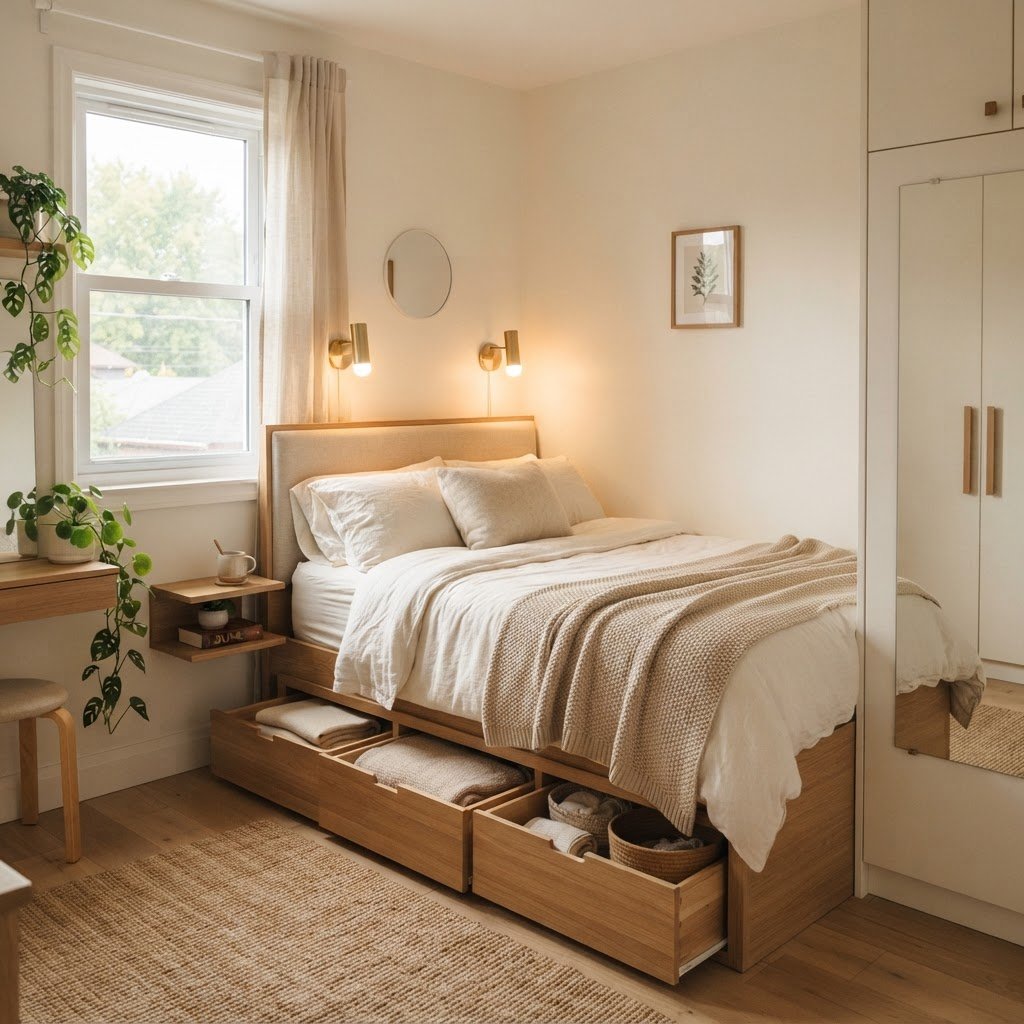
Living in a small bedroom requires balancing multifunctional furniture with vertical storage to maximize limited square footage while maintaining a peaceful aesthetic. By utilizing wall-mounted lighting, light-reflecting surfaces, and intentional zoning, you can effectively transform a cramped apartment or studio into an organized, relaxing sanctuary that promotes better sleep and rejuvenation.
The Power of Color and Light
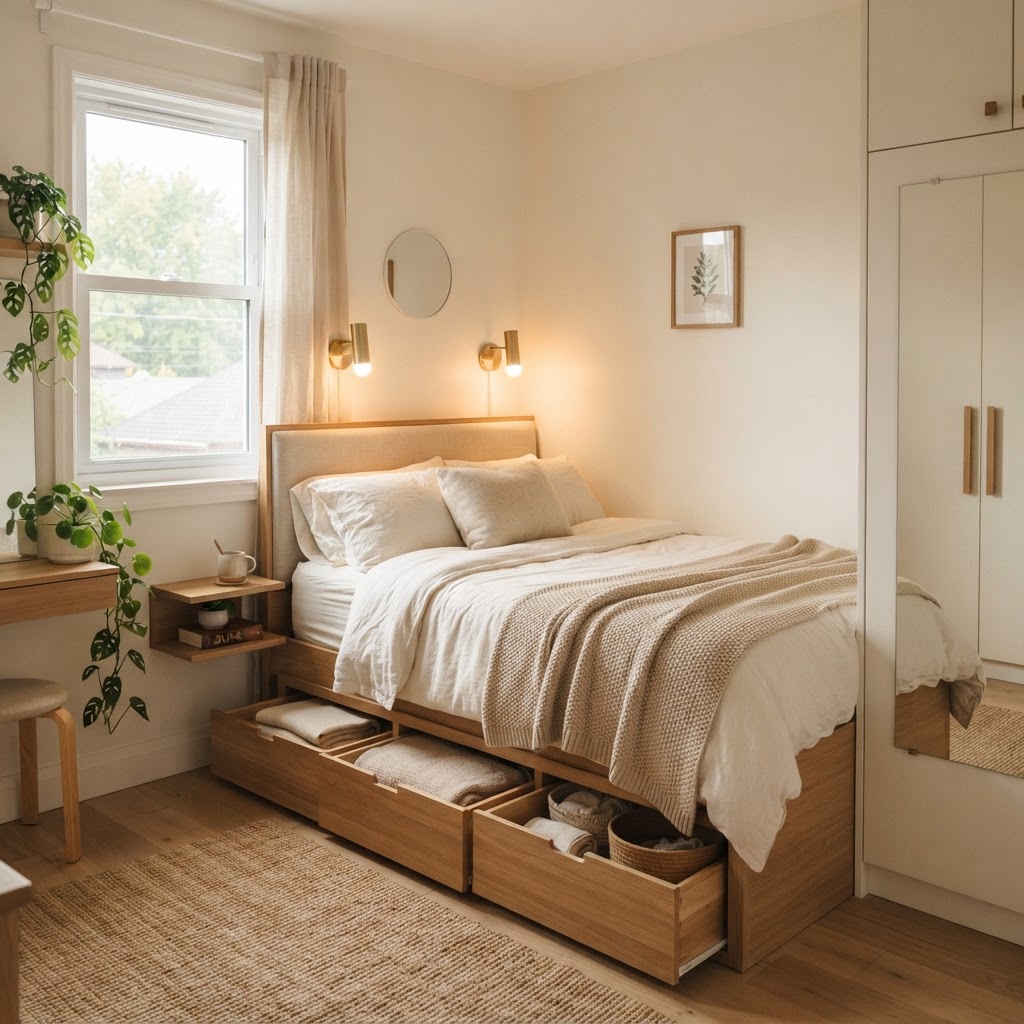
One of the most effective small bedroom ideas involves manipulating light and color to create the illusion of depth by using light-reflective palettes. Experts recommend a monochromatic color scheme using shades like ‘Swiss Coffee’ white or soft ‘Agreeable Gray’ to blur room boundaries, which makes walls appear to recede and increases perceived volume by up to 15%. To enhance this effect, prioritize matte finishes for walls to reduce harsh glares, paired with semi-gloss trim to subtly bounce natural light into darker corners. You should avoid dark, saturated accent walls that absorb light, as they visually shrink a bedroom; instead, introduce color through low-profile textiles.
Lighting Strategies for Small Rooms
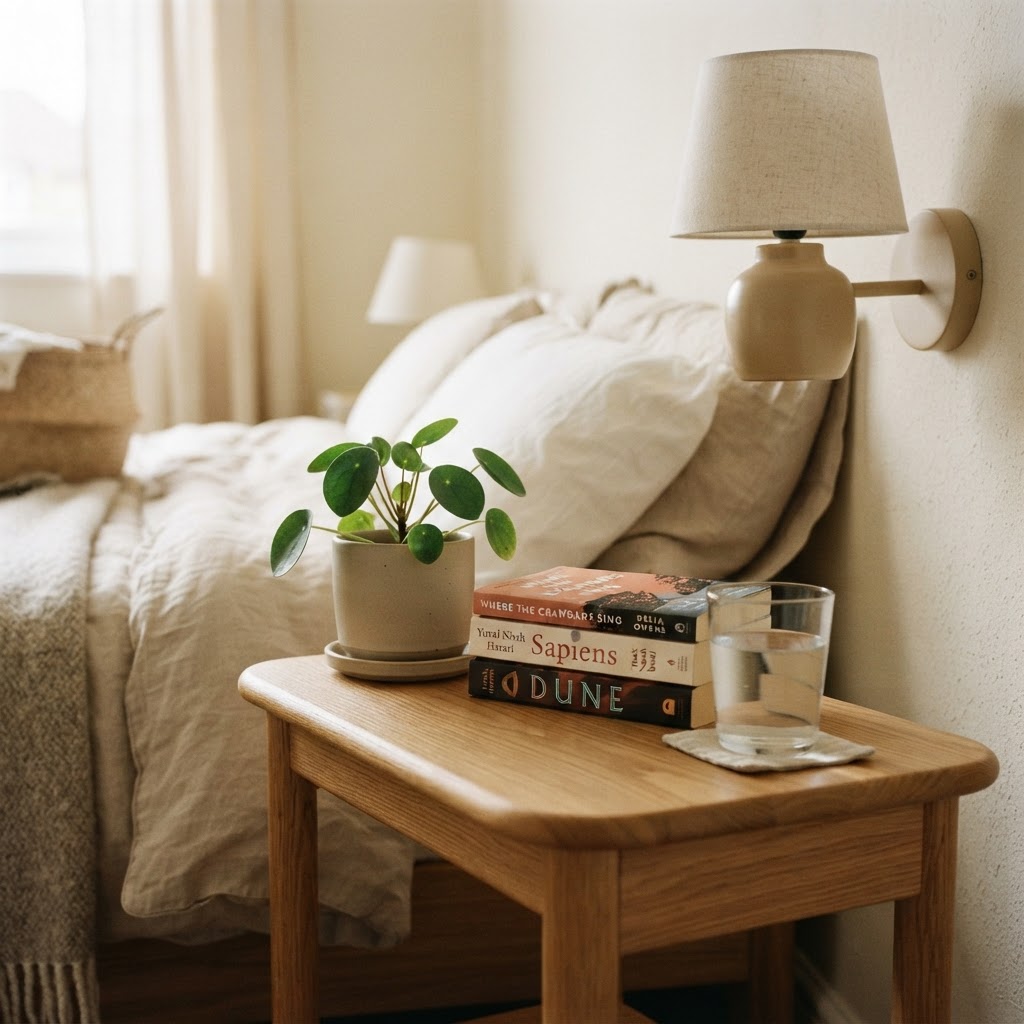
Lighting should prioritize verticality by eliminating bulky floor lamps, which typically occupy two square feet of precious floor space. Instead, integrate wall-mounted sconces with plug-in cords or hardwired bedside lights to keep nightstands completely clear for essential items. A layered lighting approach—combining 3000K warm-temperature ambient overhead lights with directed 2700K task lighting—creates a cozy, ‘hotel-style’ atmosphere. Research indicates that warm, dimmable lighting improves sleep quality by signaling the brain’s circadian rhythm to produce melatonin, making these lighting choices both functional for space and health.
Maximizing Vertical Storage Solutions
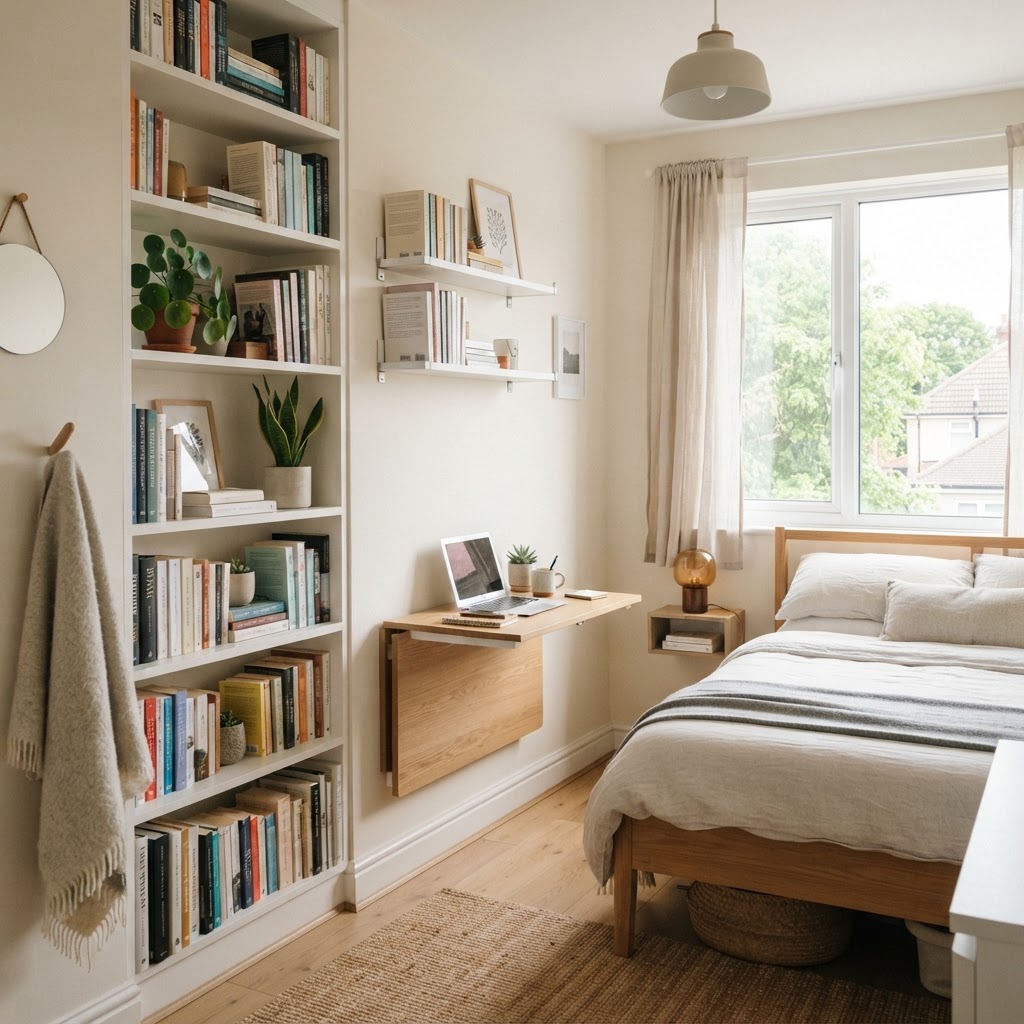
When floor space is limited, your best asset is your wall height, which effectively doubles your storage capacity without increasing the furniture footprint. Installing floor-to-ceiling shelving units allows you to draw the eye upward, a classic interior design technique that makes ceilings feel higher and rooms feel grander. You should target the top 12 inches of your wall space for seasonal storage bins, leaving lower levels for frequently accessed items like books or electronics.
Creative Wall-Mounted Options
Consider floating shelves or wall-mounted desks that can fold away when not in use. This approach saves space while ensuring that every item in your room serves a purpose. By keeping your surfaces clean, you inherently reduce stress and create a more relaxing environment. A wall-mounted desk can often support up to 50 pounds, proving that you don’t need a heavy permanent piece to maintain high functionality in a studio layout.
Choosing Multifunctional Furniture
In a tiny apartment, every piece of furniture must serve at least two purposes to justify its presence in a cramped bedroom. Beds with integrated hydraulic lifts or under-bed storage drawers are the most efficient investments, providing up to 20 cubic feet of storage space that otherwise sits idle. When selecting these pieces, prioritize designs with raised, slim legs; seeing the floor underneath the bed creates a ‘floating’ visual effect that prevents the room from feeling heavy or cramped.
Ottomans and Nested Tables
Look for ottomans that double as storage chests or nested side tables that can be stacked when extra room is needed. Multifunctional pieces are the backbone of successful small bedroom ideas because they provide utility without visual bulk. Choose items with slim legs; seeing the floor underneath furniture can make a room feel larger and more open. If your floor space is less than 80 square feet, stick to furniture with rounded edges to improve flow and prevent hip-bumping in tight corridors.
Mirrors and Reflective Surfaces
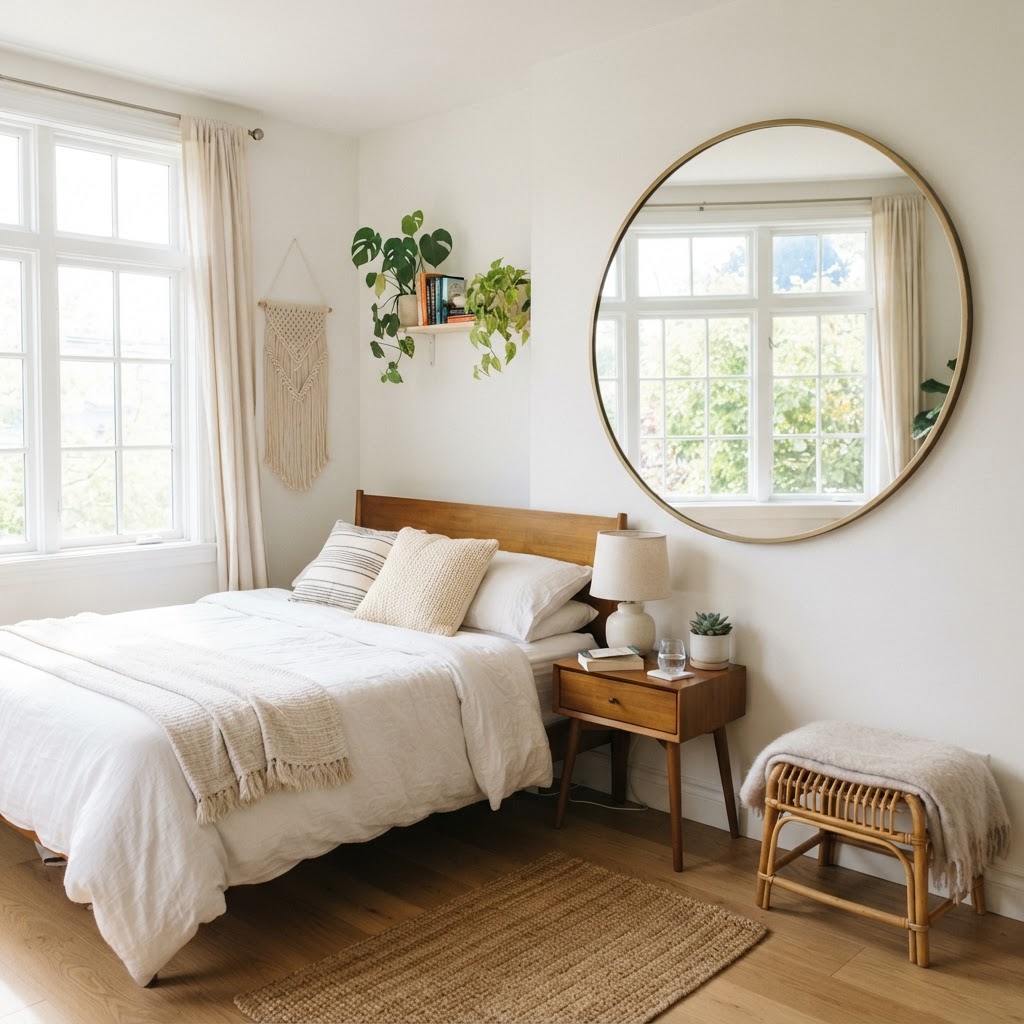
Mirrors are a classic designer trick for a reason, effectively doubling the perceived light and space in a small bedroom. Placing a large floor mirror or a wall of mirrors creates a reflection that tricks the eye into thinking the room is twice its actual size. For the best effect, place your mirror directly opposite a window so it bounces natural light throughout the space. If a wall mirror isn’t possible, consider mirrored closet doors; this simple upgrade can hide storage while acting as a seamless light-reflector across the entire bedroom wall.
Curating Your Bedding for Comfort
Your bed is the center of the room, so treat it as the focal point by using luxury-focused, space-efficient textiles. Even in a small space, high-quality, plush bedding can make the room feel luxurious without taking up physical room space. Layering textures—think a soft wool throw, linen sheets, and silk pillows—adds visual interest. Avoid heavy, patterned comforters that can make a room feel busy. Stick to solid, neutral colors that match your wall palette; a tidy, well-made bed is the simplest way to make a bedroom look professionally designed and instantly more relaxing.
Zoning Your Tiny Sanctuary
Even if your bedroom is just a corner of a studio apartment, you can create a sense of “zones” that help separate living from sleeping. Use a large area rug to anchor the bed and physically separate it from your workspace or living area. This psychological boundary helps your brain separate work from rest, which is essential for relaxation and improved mental health in tight living quarters.
Privacy Curtains and Room Dividers
If you live in a studio, consider installing a ceiling-mounted curtain track to create a soft, flexible partition. A sheer, neutral-colored curtain provides visual privacy for your sleeping area while still letting light filter through to the rest of the room. It is a soft, romantic touch that adds character and depth to any small bedroom without the permanence and bulk of a bookshelf divider.
Decluttering as a Lifestyle
None of the small bedroom ideas mentioned will work if the room is filled with unnecessary items. Adopt a minimalist mindset. Before you move into a tiny space, take the time to purge clothes, books, and gadgets you no longer use. Every item in a small room should either be functional or spark joy. Follow the ‘one-in, one-out’ rule, where for every new item you bring into your bedroom, an old one must be donated or discarded, ensuring your space stays within its storage limits.
Incorporating Personal Touches
Just because a space is small does not mean it lacks personality. Use your vertical wall space for a curated gallery wall or a single piece of statement art. Adding plants can also bring life to a cramped corner, cleaning the air and providing a connection to nature that is vital for mental health. Choose low-light varieties like Snake Plants or Pothos that thrive in small spaces and don’t require sprawling floor pots.
FAQ
Q: How can I make a tiny bedroom look bigger?
Using light, monochromatic color palettes and large mirrors is the fastest way to make a tiny bedroom look bigger. These elements reflect light and create depth, preventing walls from feeling like they are closing in on you while making the space appear significantly more expansive.
Q: What is the best furniture for small bedrooms?
Multifunctional furniture is essential, such as beds with built-in storage drawers or ottomans that double as seating and storage. Opt for pieces with thin, elevated legs to expose more floor area, which reduces visual clutter and makes the room feel airier and more open.
Q: How should I light a small bedroom without floor space?
Utilize wall-mounted sconces or ceiling-suspended pendant lights instead of traditional floor lamps. These solutions free up valuable surface area on nightstands and floor space, while providing warmer, more directed ambient light that improves the room’s mood and functionality.
Q: How do I store items in a small bedroom without a closet?
Leverage vertical space by installing floor-to-ceiling shelving units and over-the-door storage organizers. By drawing the eye upward and utilizing hidden spaces under the bed, you can maximize your storage capacity without sacrificing the limited floor space available in your room.
Q: What color scheme is best for a small room?
Stick to a monochromatic palette of soft whites, light creams, or pale greys to create an expansive, airy feel. These neutral colors reflect light effectively, making the bedroom feel larger and more serene compared to darker, high-contrast color choices that can make a space feel busy and confined.

Leave a Reply