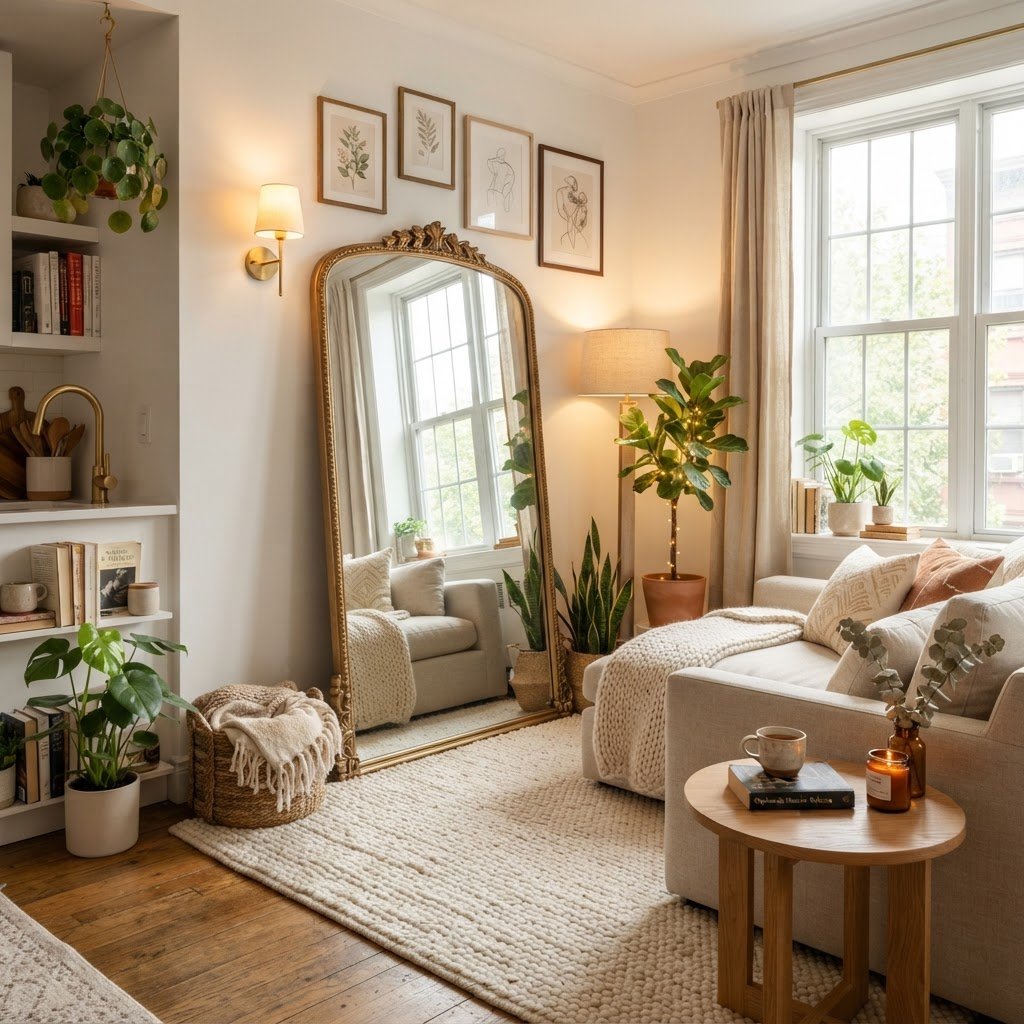
Simple No-Damage Changes That Make Tiny Apartments Feel Designer
You can make a tiny apartment feel designer by replacing builder-grade light fixtures, swapping cabinet hardware, and utilizing floor-to-ceiling decor like leaning mirrors and high-hung curtains. These non-permanent modifications enhance the visual aesthetics and perceived volume of your space without violating lease agreements or risking your security deposit.
Master the Art of Lighting Layers
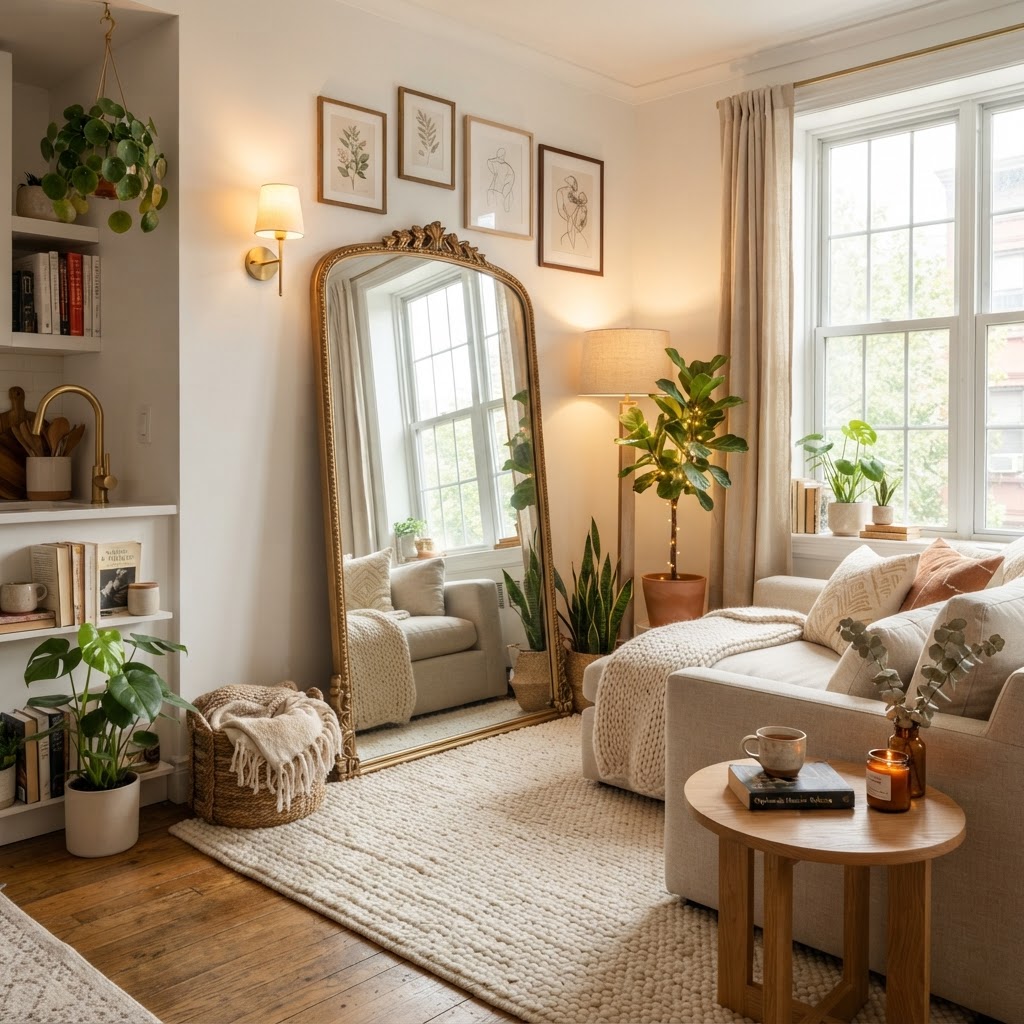
One of the most effective ways to upgrade a rental is by replacing generic overhead “boob lights” with stylish fixtures that match your personal aesthetic. Most landlords allow these swaps provided you retain the original fixtures to reinstall upon move-out. If electrical work is prohibited or intimidating, focus on a layered lighting scheme using floor lamps and table lamps to eliminate dark corners. Incorporating at least three sources of light—ambient, task, and accent—at different heights is a professional design trick that adds depth to a cramped room. A statement floor lamp or a structural wall sconce acts as a piece of functional sculpture, elevating the room’s sophistication level instantly. Harsh, clinical overhead light often exposes imperfections and makes small rooms feel cramped, whereas layered, dimmable lighting creates an atmosphere of intimacy and luxury. When selecting bulbs, always opt for warm-toned light (2700K–3000K) to create a cozy, premium feel, as cooler daylight bulbs (4000K+) can wash out colors and make furniture look significantly cheaper than it truly is.
Why Lighting Changes Everything
Harsh, singular overhead light sources tend to make tiny apartments feel cold and clinical. By using warm-toned bulbs and multiple light sources at varying heights, you draw the eye around the room, which creates the illusion of more space. A high-end floor lamp or a sleek sconce can act as a piece of sculpture, adding character that makes the room feel curated rather than temporary.
Choosing the Right Bulbs
Always opt for soft white (2700K to 3000K) bulbs to add instant coziness to your space. Avoid daylight bulbs unless you have a workspace that requires sharp visibility, as they often wash out colors and make furniture look cheaper than it actually is.
Upgrade Hardware Without Damage
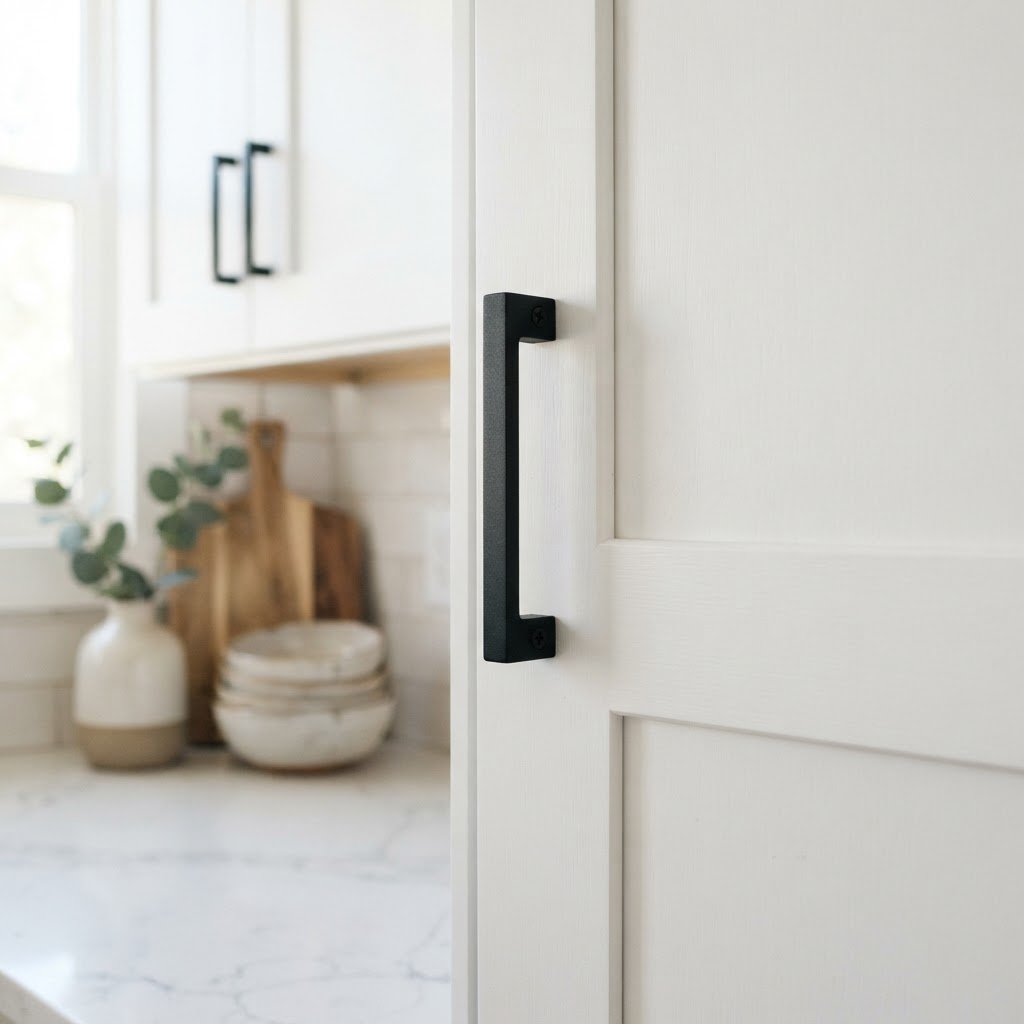
Standard builder-grade kitchen and bathroom hardware is the fastest way to make a space feel dated. Replacing knobs and pulls is one of the most impactful no-damage changes you can make, typically costing under $100 for an entire kitchen. Keep all the original hardware in a clearly labeled Ziploc bag so you can switch them back quickly when your lease ends. High-quality hardware—like solid brass or matte black zinc-alloy—adds a tactile, “weighty” feel that signals luxury to the user. When shopping, prioritize standard center-to-center measurements (usually 3 or 3.75 inches) to ensure a perfect fit with existing pre-drilled holes. This subtle modification changes the entire aesthetic of your kitchen or bathroom, transforming basic white cabinetry into a bespoke, high-end feature. While it is a relatively small investment in terms of time and money, the visual payoff is immense, turning a generic rental kitchen into a space that feels personal and curated. For the best result, stick to a cohesive finish that matches your light fixtures or plumbing hardware to create a professional, designer-led flow throughout the entire apartment.
The Impact of High-End Finishes
Updating cabinet pulls to matte black, brushed brass, or polished nickel changes the entire aesthetic of your kitchen. It provides a “designer” finish that makes basic white cabinets look like custom cabinetry. While it is a small investment, the visual payoff is immense, turning a generic kitchen into a space that feels personal and high-end.
Incorporate Large-Scale Art and Mirrors
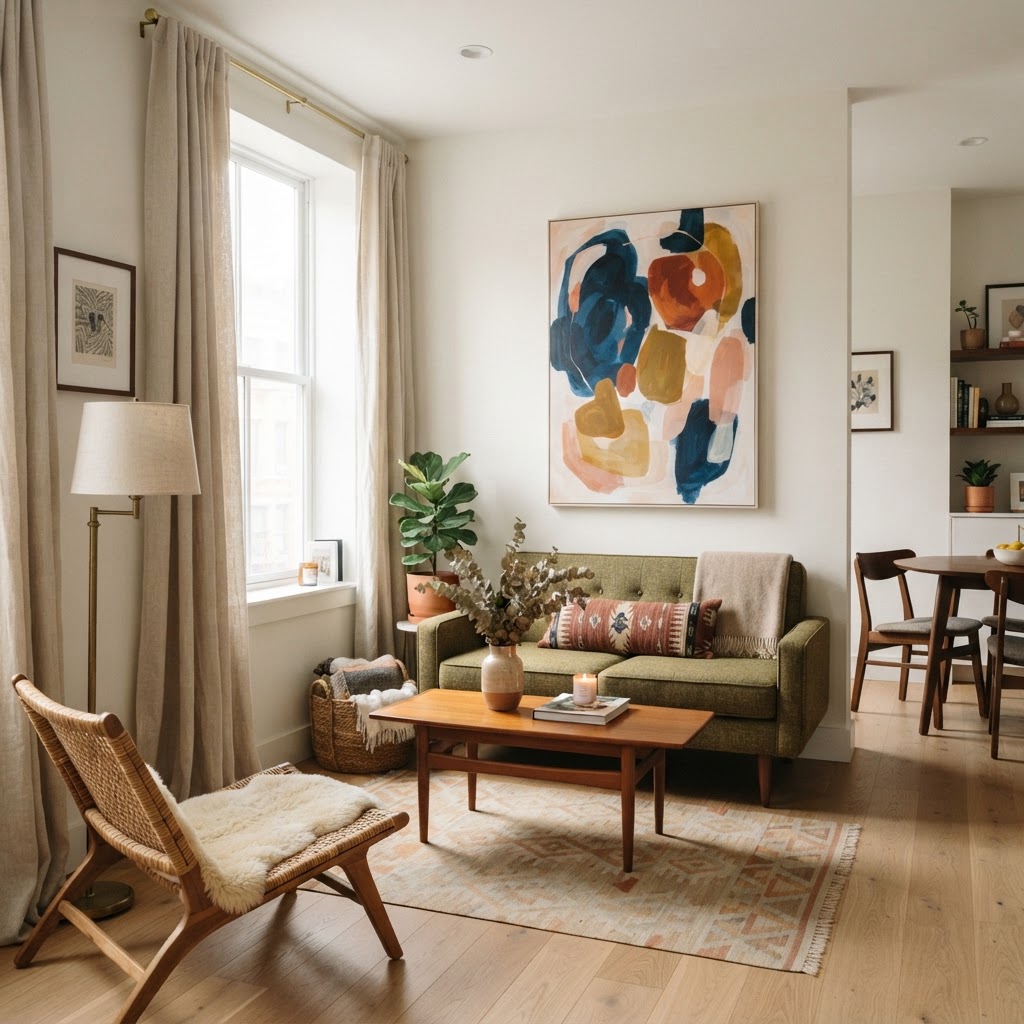
Blank white walls are the hallmark of an uninspired rental that makes an apartment feel closed in. Instead of cluttering walls with tiny frames that create visual noise, focus on one large-scale piece of art or a floor-to-ceiling mirror. These items anchor a room and serve as a focal point that distracts from the limited square footage. A mirror measuring at least 60 inches tall placed near a natural light source acts as a “second window,” effectively doubling the perceived depth of the room. When hanging art, use heavy-duty adhesive strips or small finishing nails which leave only pin-sized holes that are easily filled with toothpaste or spackle upon move-out. The goal is to create a “gallery” effect rather than a “dorm room” effect; one oversized piece will always feel more expensive than a collection of smaller, mismatched frames. Strategically placing these items creates an immediate sense of intention and scale, making the apartment feel like a deliberate, designed home rather than a temporary living situation. Always ensure the mirror reflects an organized, clean corner of the home to maximize the sense of openness and tranquility.
Strategic Mirror Placement
Mirrors are the oldest trick in the small-space handbook for a reason: they bounce light and reflect the depth of the room. A large leaning mirror propped against a wall—secured with furniture anchors that require minimal patching—doubles the visual square footage. Ensure the mirror reflects a window or a clean, organized corner of the room to maximize the sense of openness.
The Power of Textiles and Area Rugs
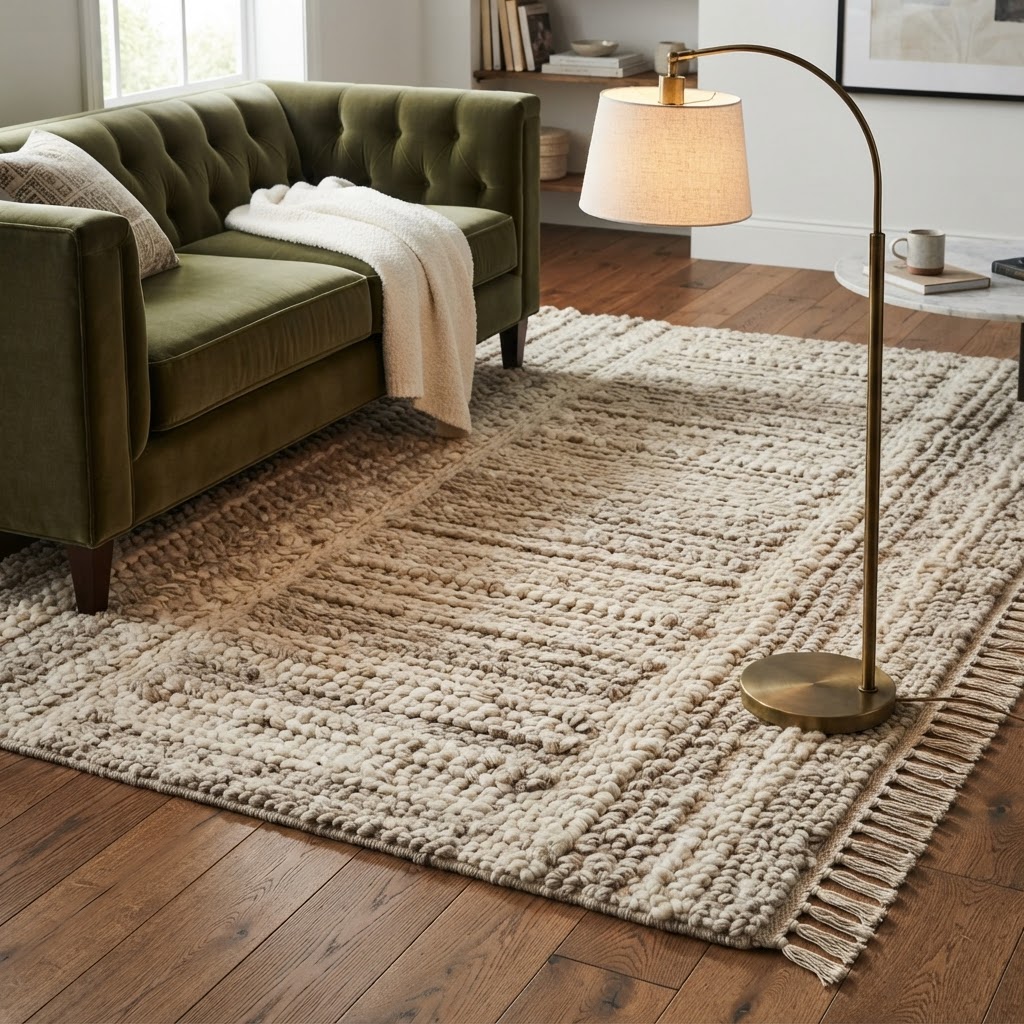
In tiny apartments, flooring is often the most unattractive, “builder-grade” element that dictates a rental’s cheap appearance. If you are stuck with scratched linoleum or worn carpet, cover it completely with large-scale area rugs. A common mistake is buying a rug that is too small, which makes the room feel cramped; instead, ensure your rug is large enough that at least the front legs of all furniture sit on it, which helps define zones and makes the space feel expansive. Layering rugs—perhaps a natural jute base with a softer wool or synthetic blend on top—adds necessary texture, which is a hallmark of professional, designer interiors. Complement this with high-hanging linen or velvet curtains. By mounting your curtain rod as high as possible—closer to the ceiling than the window frame—you effectively draw the eye upward, tricking the brain into perceiving higher ceilings. Utilizing high-quality textiles like heavy velvet pillows or chunky knit throws provides a tactile sense of luxury, softening the hard, sterile edges of modern rental construction and adding a layer of comfort that defines a home.
Textures That Add Luxury
Add depth to your apartment by incorporating different textiles like velvet throw pillows, wool blankets, and linen curtains. Curtains are particularly important; hang them as high as possible—closer to the ceiling than the window frame—to trick the eye into thinking the ceilings are higher than they actually are.
Utilize Renter-Friendly Wall Treatments
If you have a strict “no paint” policy, high-quality peel-and-stick wallpaper is your best tool for a high-impact renovation. Modern adhesive wallpapers are designed for easy, residue-free removal, allowing you to add pattern, color, or texture to an accent wall in a bedroom or entryway. Before applying, always order a sample, as the texture of your wall (e.g., orange-peel vs. smooth) can impact how the adhesive bonds. Clean the surface thoroughly with a mild soap solution and ensure it is bone-dry before beginning. Use a felt-edge squeegee to eliminate air bubbles as you work, and always leave a slight overlap between strips to account for minor wall shifting or expansion. This simple change allows you to inject your personality into a space that feels otherwise stagnant, providing a custom designer look without touching a drop of permanent paint. When it comes time to move, use a hair dryer to slightly warm the adhesive, which makes the removal process clean and entirely damage-free for the drywall beneath.
Best Practices for Peel-and-Stick
- Always buy a sample first to test if your wall texture is compatible.
- Clean the surface thoroughly with mild soap and water before application.
- Use a plastic smoothing tool to remove air bubbles as you go.
- Take your time during removal to avoid any adhesive residue.
Vertical Storage and Floating Furniture
Tiny apartments often suffer from a lack of floor space, requiring you to think vertically. Look for storage solutions that maximize height, such as floor-to-ceiling bookshelves or modular wall-mounted units that use tension rather than screws. “Leggy” furniture—pieces with tapered wooden or metal legs—is essential for small-space design because it allows the floor to remain visible underneath, which makes the room feel significantly larger and less congested. Decluttering is the final step in a designer-led transformation. No amount of decor can hide a messy home; invest in decorative woven baskets or lidded ottomans to house daily clutter, keeping your horizontal surfaces clear. An organized, minimalist home naturally feels more sophisticated and expensive. Furthermore, try to create functional zones by using area rugs or furniture placement to divide your studio space into specific activity areas, such as a “living” zone and a “sleeping” zone. By giving every item a home and every activity a defined space, you eliminate visual noise, creating a polished, intentional look that belies the limited square footage of your apartment.
FAQ
Can I paint my apartment walls if I am a renter?
Most leases prohibit painting, but you can use peel-and-stick wallpaper to create the same impact. Always check your specific lease terms, and if you do paint, ensure you have written permission and agree to paint the walls back to their original neutral color before move-out.
How do I hang curtains without putting holes in the wall?
You can use heavy-duty tension rods for inside mounts or adhesive command-hook curtain rod brackets for outside mounts. These solutions are renter-friendly, require no drilling, and can easily support the weight of most standard-weight fabric curtains.
What is the best way to make a small kitchen look expensive?
Replace the existing builder-grade cabinet pulls and knobs with high-quality metal hardware in a consistent finish like brass or matte black. This quick swap provides a professional, custom-designed appearance without needing to replace any permanent fixtures or cabinets.
Do area rugs really make a small room look bigger?
Yes, provided you choose the right size; a large area rug anchors the furniture and defines the space, preventing it from feeling like a random collection of items. A rug that is too small makes the room look fragmented and tiny, while a large rug adds cohesion and depth.
How can I add luxury to a rental without damaging it?
Incorporate high-texture fabrics like velvet, linen, and faux fur to add warmth and tactile luxury to your space. Combining these with soft, warm-toned ambient lighting creates an elevated, boutique-hotel feeling that makes a rental feel like a permanent, custom-designed home.

Leave a Reply