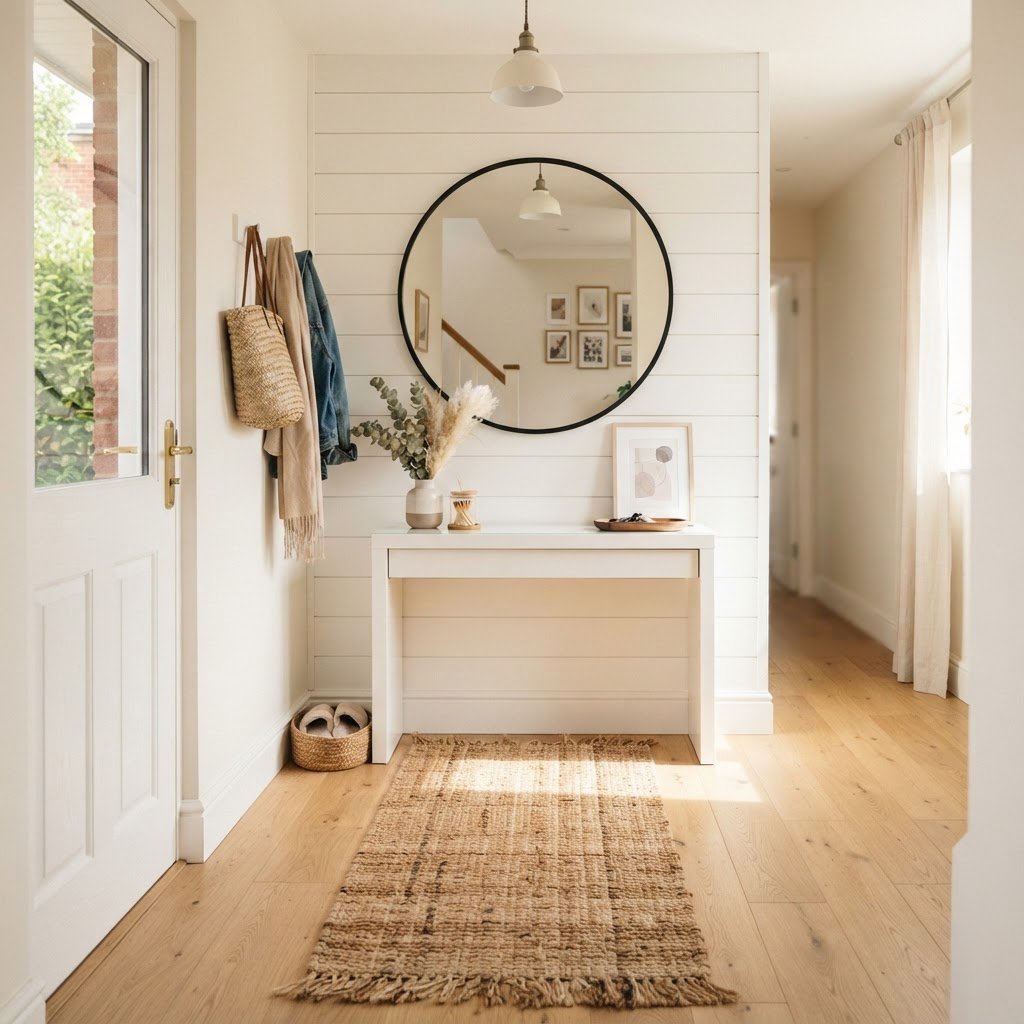
28 Entryway Looks That Make the Most of a Little Space
To maximize a small entryway, use vertical wall storage like floating shelves, multi-functional furniture such as storage benches, and strategic lighting to create the illusion of space. These 28 design-focused strategies transform cramped transition zones into functional, stylish foyers that maintain organization while leaving a lasting first impression.
The Power of Vertical Storage
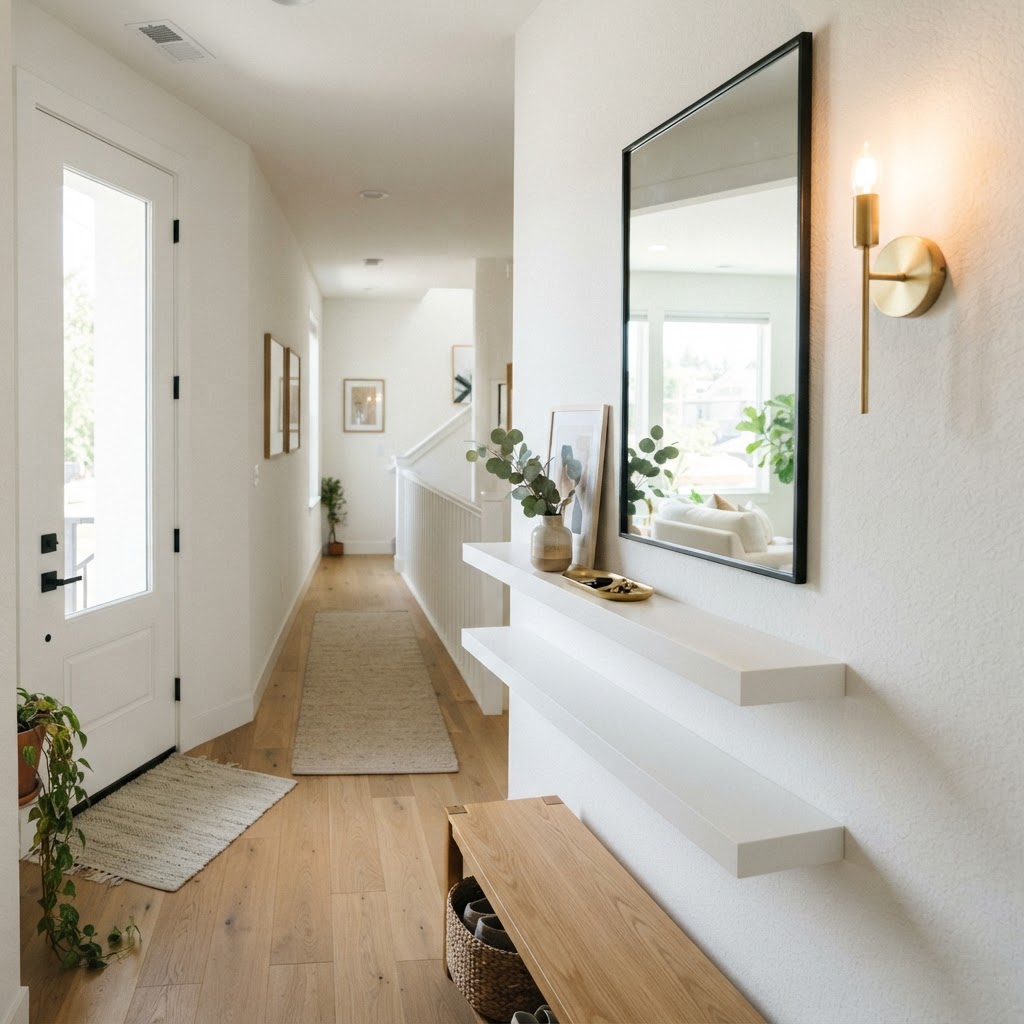
When floor space is at a premium, the only way to gain square footage is to move upward. Utilizing wall space is the most effective method for keeping clutter off the ground and creating a clear walkway. By installing wall-mounted coat racks, floating shelves, or tall, narrow bookcases, you create the optical illusion of height while providing essential storage for keys, mail, and outerwear. This approach allows you to maintain floor clearance, which is critical in entryways measuring less than 15 square feet.
Installing Floating Shelves
Floating shelves are a game-changer for narrow corridors, offering a place to display decorative accents, plants, or small baskets for daily necessities without the 15-20 inch depth requirement of a traditional console table. To maximize the effect, mount a mirror above your shelf; this technique doubles visual depth and distributes ambient light throughout the room.
Why Verticality Works
Vertical storage draws the eye upward, making the room feel taller and more expansive. When you clear the floor of shoes and bags, you create a cleaner, more organized aesthetic. Professional designers recommend keeping heavy items no higher than 5 feet to maintain accessibility while ensuring the upper visual space remains uncluttered.
Multi-Functional Furniture Choices
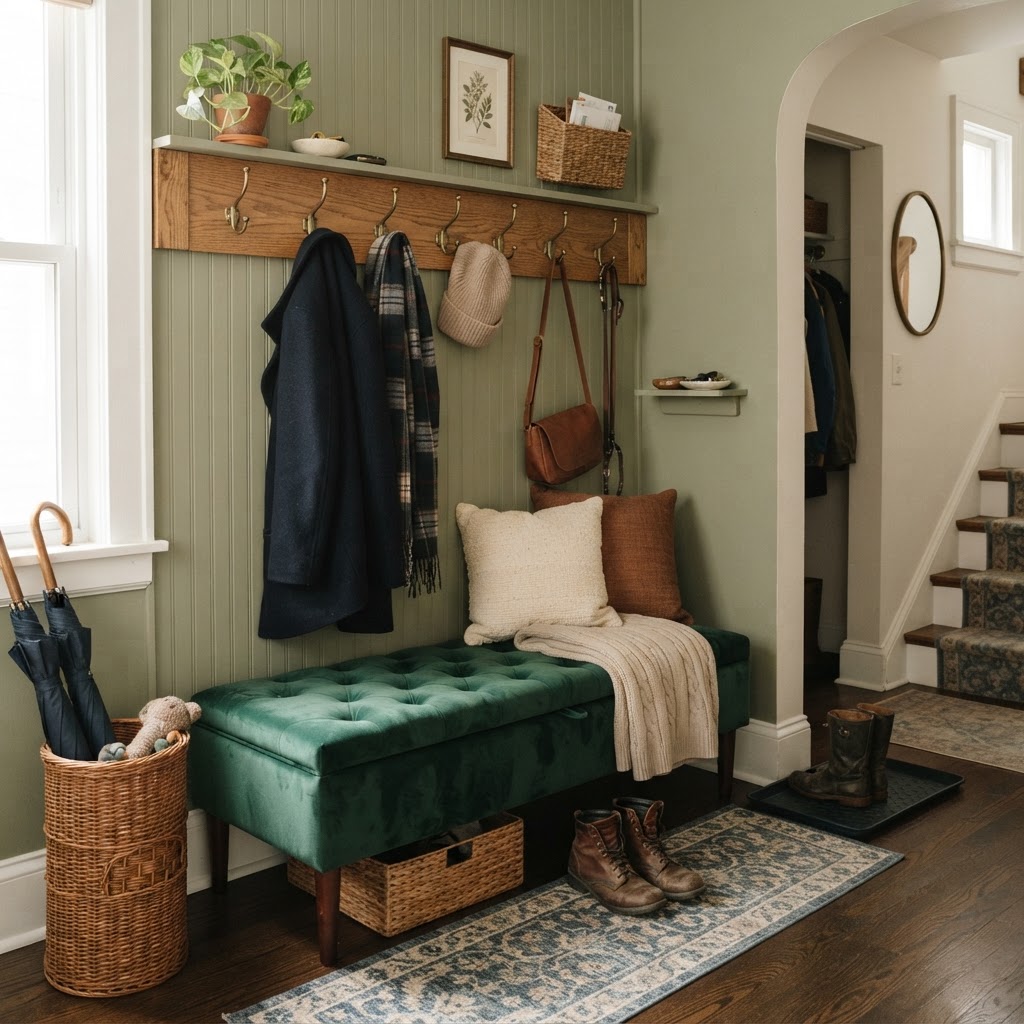
Furniture in a tiny foyer must serve multiple purposes to justify its footprint. Prioritize items like lift-top ottomans or storage benches, which provide a dedicated seating area for putting on shoes while hiding seasonal clutter inside. For optimal flow, look for pieces with a maximum depth of 14 inches to avoid encroaching on hallway walkability.
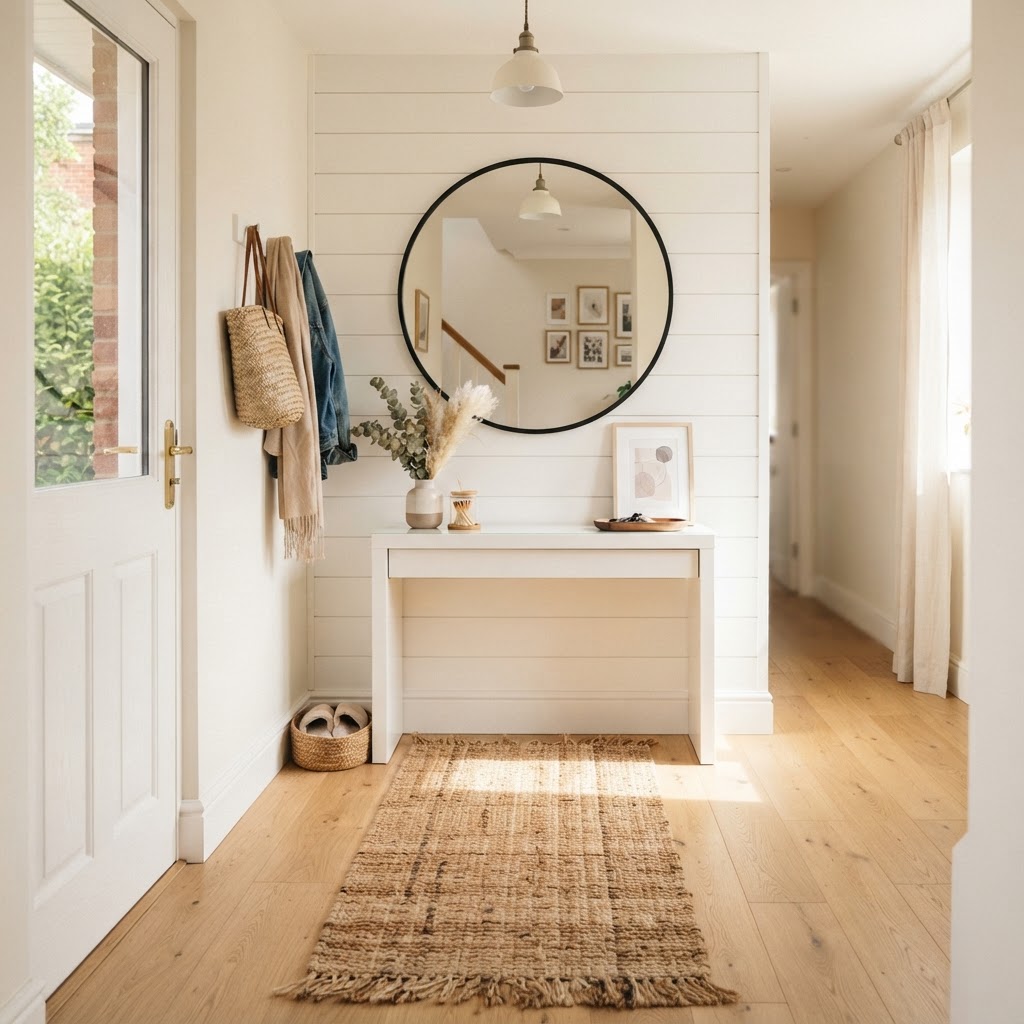
Selecting a slim-profile console table is another expert strategy. Opt for models featuring integrated drawers or bottom shelves. You can easily tuck a 12-inch woven basket under a console table to hold umbrellas, scarves, or slippers, keeping everything neatly concealed while maintaining quick accessibility for your daily departure.
Defining the Zone with Decor
Even if your entryway is just a sliver of wall near the door, you can define it as a separate ‘room’ through creative decor. Use a runner rug to anchor the space and create a visual path; a standard 2×6 or 2×8 foot runner can transform a sterile hallway into a welcoming passage.
Color perception is essential in small-space design. Using light, neutral wall colors creates an expansive feel, while a bold accent wall or patterned wallpaper provides intentionality, signaling to the brain that the entryway is a distinct destination rather than just a hallway passage. Treating the zone as a specific room helps anchor the layout of your entire home.
Optimizing Lighting and Mirrors
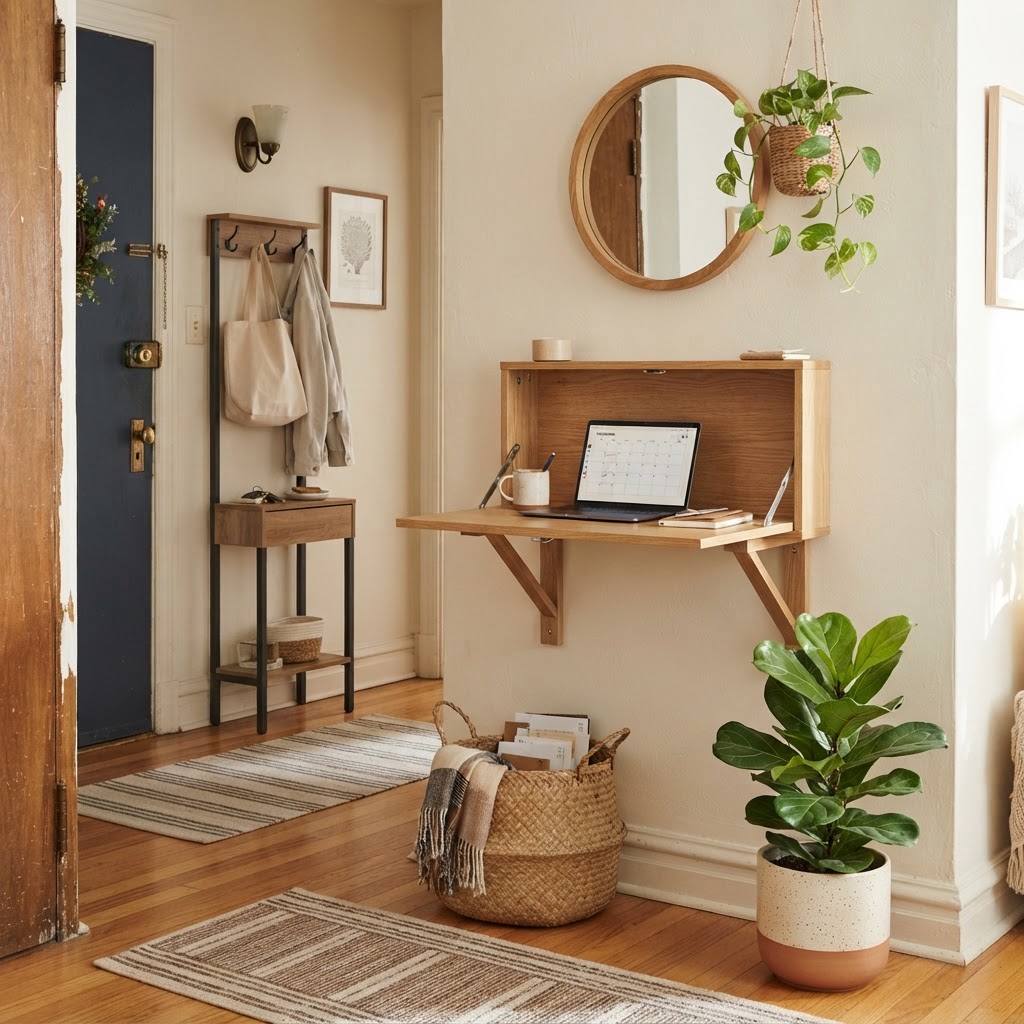
Lighting is the most critical variable when dealing with limited square footage. A dark, cramped entry feels claustrophobic, but a well-lit space feels open and inviting. If natural light is unavailable, install a statement sconce or a semi-flush mount fixture with a warm color temperature (approx. 2700K-3000K) to provide illumination without overwhelming the ceiling.
Mirrors remain the most effective tool for increasing visual volume. By placing a large, framed mirror opposite the door, you create the optical illusion of depth. This placement reflects incoming light back into the space and tricks the eye into perceiving additional depth behind the wall. Always aim for a mirror width that occupies at least 50% of the wall space to achieve a noticeable design impact.
Practical Organization Strategies
Maintaining a tiny entryway requires a disciplined system to avoid the ‘drop-and-go’ syndrome. Implement a strict ‘one-in, one-out’ policy for all footwear to ensure your storage capacity is never overwhelmed. Invest in a wall-mounted mail sorter to ensure bills and letters never accumulate on your surfaces, which is the primary cause of a cluttered look.
Using clear acrylic hooks or high-quality brass hardware can make a significant difference in how the space feels. When hardware is designed like jewelry, it serves as an aesthetic feature rather than a utilitarian eyesore. Keep seasonal items stored away in bins in a closet or under-bed storage to ensure your daily rotation remains lean and manageable throughout the year.
Creative Small-Space Hacks
Sometimes, you have to get creative with unconventional spots and foldable furniture. If you lack space for a console table, consider a slim, wall-mounted drop-leaf desk that acts as a surface for your phone and wallet before folding flat against the wall.
Think about the door functionality as a prime storage real estate. While over-the-door organizers are often associated with dorms, choosing high-end versions made of leather, felt, or heavy-duty matte metal can provide a sophisticated look. Utilizing the back of the front door for scarves, hats, or lightweight jackets frees up significant physical space inside your primary hallway closets.
Maintaining a Clutter-Free Foyer
Consistency is the secret to a high-end look. Spend exactly two minutes at the end of every day performing a ‘foyer reset.’ Hang coats, place shoes in their designated bins, and clear the surface of your console table. This proactive daily habit prevents the accumulation of clutter and ensures your home makes a great first impression every single morning.
FAQ
How do I make a tiny entryway look bigger?
To make a small entryway look larger, install a large mirror to reflect light and increase perceived depth. Additionally, keep the floor clear of clutter by utilizing vertical wall storage and choosing light-colored wall paint to brighten the area and eliminate shadows.
What is the best furniture for a narrow hallway?
Use furniture with a depth of 14 inches or less, such as slim-profile console tables or wall-mounted drop-leaf desks. Storage benches are also excellent, as they provide seating and hidden internal organization while occupying minimal horizontal space.
How can I hide clutter in my entryway?
Use multi-functional furniture like ottomans with lift-tops or storage benches with interior compartments to hide shoes and bags. For smaller items like mail, use wall-mounted organizers or baskets that fit neatly onto shelves to keep counters clear.
Should I put a rug in a small entryway?
Yes, a runner rug is highly recommended because it anchors the space and defines the foyer as its own distinct zone. A runner also protects your flooring and adds texture, making the transition area feel like an intentional part of the home design.

Leave a Reply