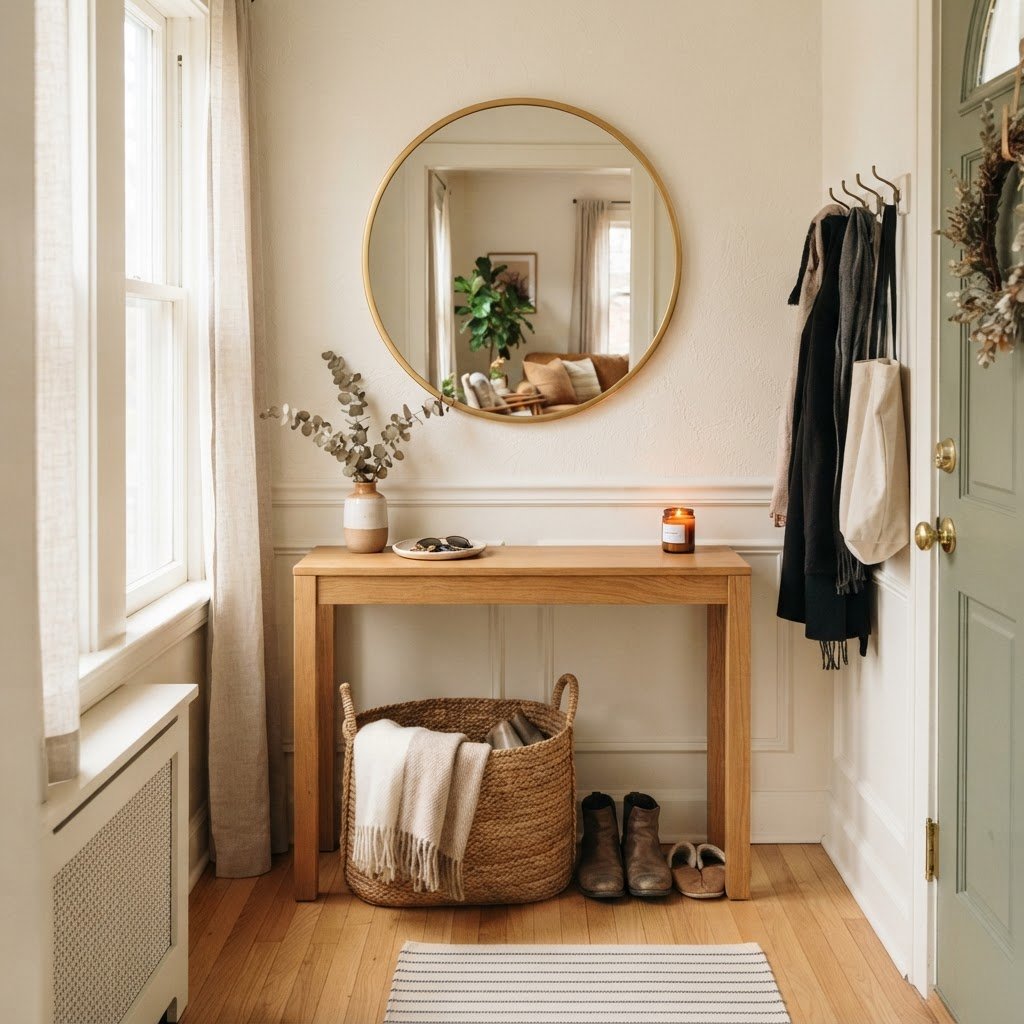
A tiny entryway requires a slim console table, wall-mounted mirror, dedicated shoe storage, multi-functional wall hooks, storage baskets, a compact bench or stool, targeted lighting, and a durable runner rug to maximize limited square footage. These eight elements prioritize vertical utility and multi-functional design to eliminate daily clutter effectively.
Assess Your Space and Needs
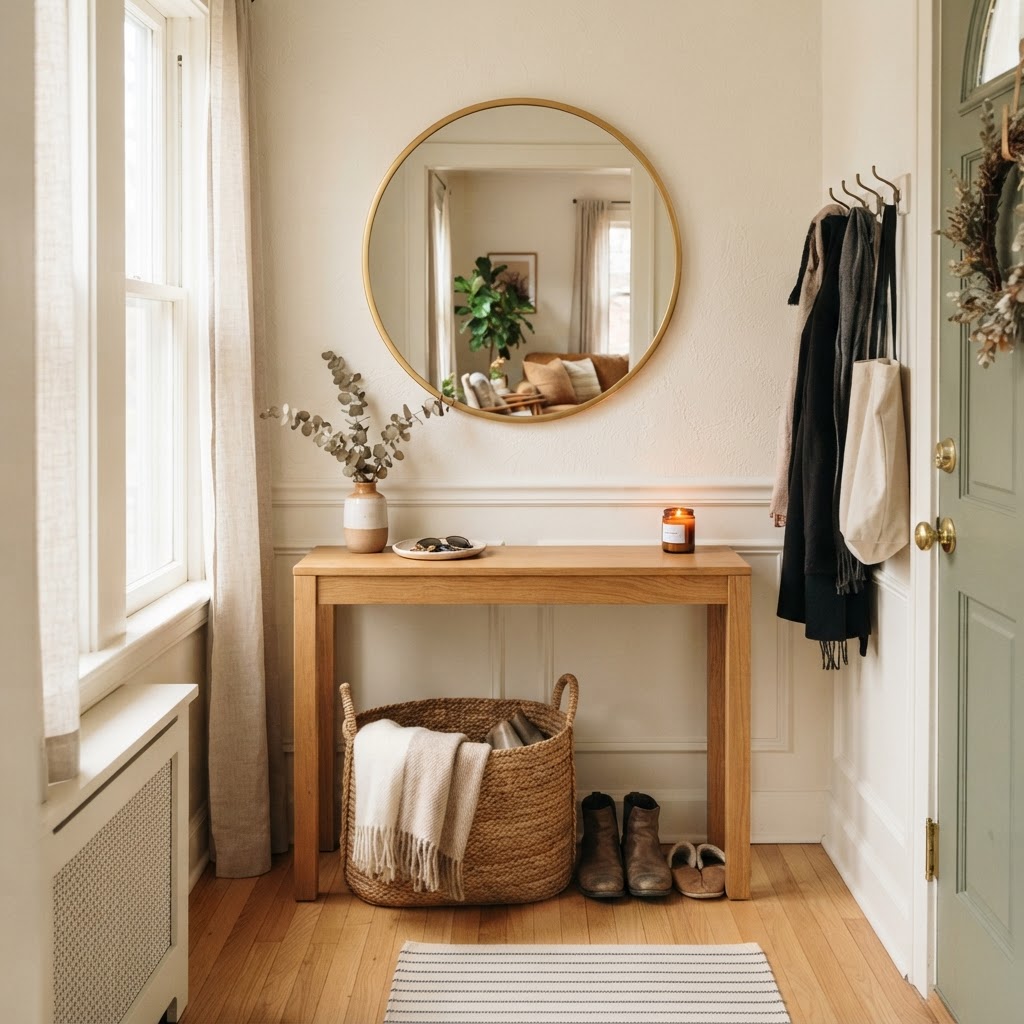
Before you run out to purchase furniture, take a moment to observe your habits. Do you kick off your shoes immediately? Do you need a place for mail, keys, and leashes? A tiny entryway needs are unique to your household traffic, so mapping out exactly what passes through your door every day will help you prioritize. Efficiency is the key to success in a footprint of less than twenty square feet. Consider the following comparison to determine your best storage strategy based on your household size:
The Art of Vertical Storage
When your floor space is limited, your walls become your best friend. Vertical storage is a design game-changer because it draws the eye upward, making the room feel taller while keeping your floor clear. Consider floor-to-ceiling shelving or high-mounted hooks that prevent the “clutter pile-up” that often ruins small spaces. By utilizing the 6 to 8 feet of wall height typically ignored, you can increase your storage capacity by 40% without losing any precious walking paths.
1. The Slim-Profile Console Table
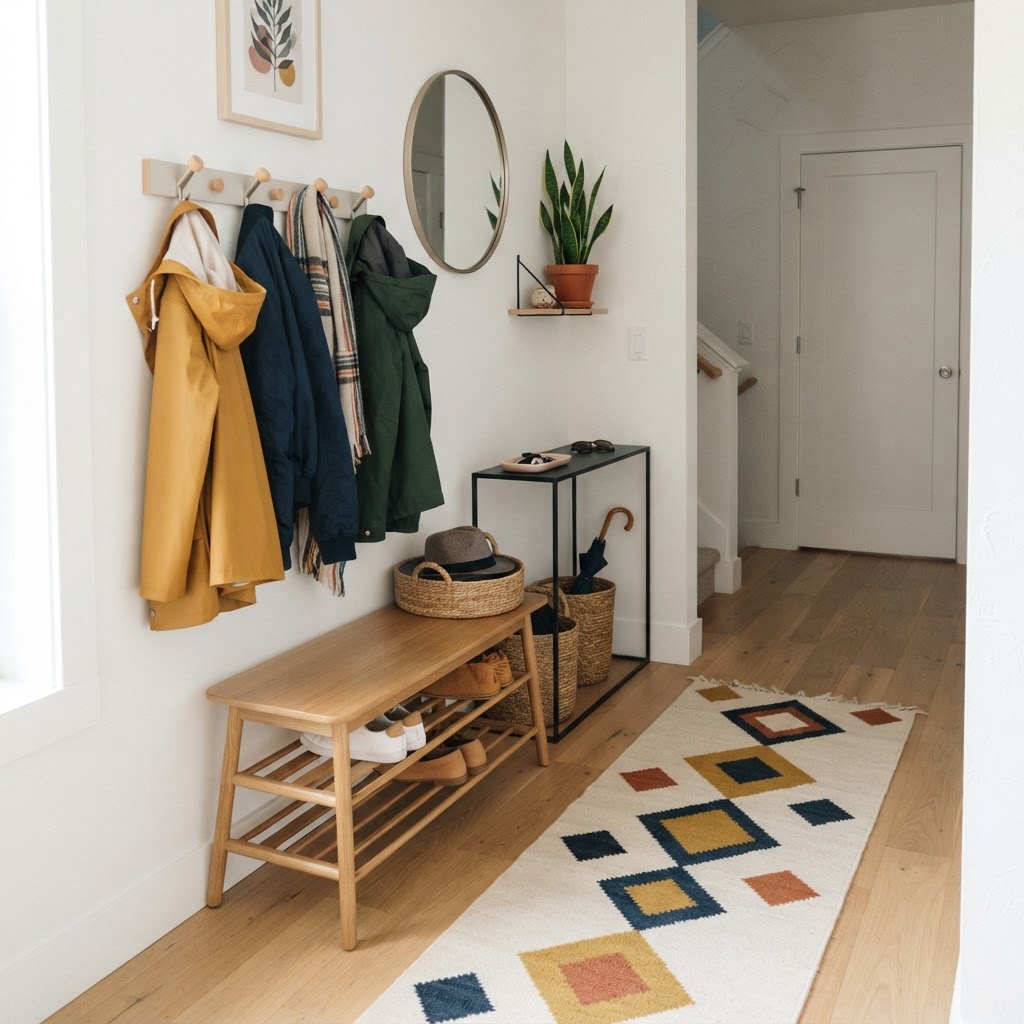
A console table acts as the command center of any entryway, providing a necessary “landing zone” for daily essentials like keys and wallets. For tight quarters, look for pieces with a depth of 10 to 12 inches; anything wider will impede flow in a hallway narrower than 48 inches. Opting for a demi-lune (half-moon) shape is a classic strategy to eliminate sharp corners that you might bump into. Furthermore, choosing a console with a bottom shelf increases your usable surface area for baskets or footwear storage by approximately 50%, allowing you to organize items vertically rather than spreading them across your floor.
2. A Wall-Mounted Mirror
Mirrors are non-negotiable in small space design as they physically expand the perception of the room by reflecting light and depth. A mirror placed directly across from or adjacent to a light source can increase the perceived brightness of a dark foyer by up to 30%. To maximize this effect, install a large, frameless mirror to create an uninterrupted surface that blends into the wall. Not only does this serve as a critical “check-in” point before you exit, but it also creates a functional focal point that draws attention away from the cramped dimensions of the floor.
3. Dedicated Shoe Storage
The biggest enemy of a tidy entryway is the pile of sneakers, boots, and flats scattered across the floor, which can reduce floor accessibility by 25%. To keep your home feeling clean, you must have a designated home for every pair of shoes. A tilt-out shoe cabinet is the gold standard for narrow hallways because it secures footwear behind a sleek, vertical panel—usually only 7 to 9 inches deep. If you prefer open storage, look for a multi-tiered rack that fits precisely beneath your console table to utilize the “dead space” that often goes to waste in modern floor plans.
4. Multi-Functional Wall Hooks
Forget bulky coat trees that take up valuable floor space; wall-mounted hardware provides superior organization for limited square footage. Install a row of heavy-duty, decorative hooks at varying heights—usually 60 inches for adults and 36 inches for children—to optimize usability for every member of the household. Modern industrial or farmhouse-style hardware doubles as wall art, meaning you don’t need additional wall decor that could clutter the room further. By assigning specific hooks for bags, umbrellas, and coats, you maintain an open, clean floor that makes a small room feel significantly larger than its actual dimensions.
5. Baskets for Hidden Clutter
Baskets are the unsung heroes of organization, functioning as a “catch-all” for items that lack a designated home. To keep your entryway cohesive, select uniform woven seagrass or wire bins that fit snugly under your furniture. This technique works because it standardizes the visual appearance of disparate objects like gloves, scarves, or pet leashes. Studies in home organization show that closed storage containers reduce the “cognitive load” associated with clutter, helping homeowners feel more relaxed the moment they cross the threshold into their living space.
6. A Slim Bench or Stool
Having a place to sit while putting on or taking off shoes is a luxury that small spaces can easily afford if you utilize smart furniture sizing. Seek out a narrow storage bench, ideally measuring no more than 14 inches deep, which can double as a hidden storage unit for seasonal gear. Alternatively, a backless ottoman is an excellent solution for the smallest of entryways; you can slide it entirely under a console table when it is not in use, ensuring your walking path remains completely unobstructed during the rest of the day.
7. Targeted Lighting Solutions
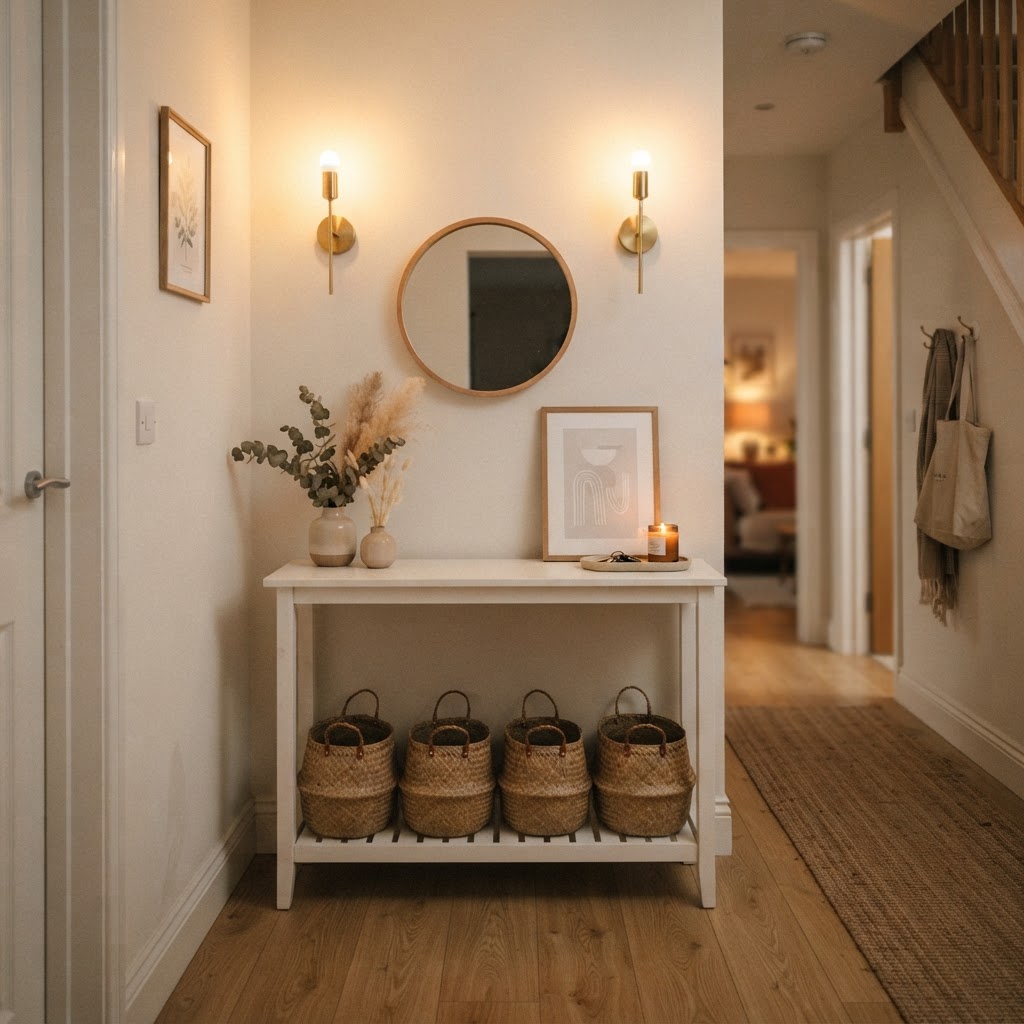
Lighting is one of the most neglected aspects of foyer design, yet it dictates the entire “warmth” of the home entrance. Since entryways rarely feature natural light sources, you should install wall sconces to provide ambient glow without consuming surface space. Aim for a color temperature of 2700K to 3000K, which mimics warm, inviting indoor lighting rather than sterile office illumination. If your entryway lacks hardwired electrical outlets, battery-operated LED motion-sensor lights or sleek plug-in sconces are highly effective, budget-friendly alternatives that can be installed in under 15 minutes.
8. A Decorative Rug or Runner
A runner rug is the foundation of your entryway, serving both aesthetic and protective functions. Choose a low-pile, high-traffic rug (usually 2’6″ x 8′) to ensure your door clears the fabric when opening and closing. Material selection is vital: look for 100% polypropylene or wool blends, which are inherently stain-resistant and can handle heavy foot traffic without matting. A horizontal stripe pattern will visually widen a narrow hall, while a long vertical runner can effectively lead the eye toward the interior of the home, creating a sense of transition and intentional flow.
FAQ
Q: What is the best way to keep a small entryway organized daily?
Set a mandatory daily reset ritual where all shoes are placed in racks and coats are returned to hooks every evening. Spending just two minutes tidying your “drop zone” before going to bed prevents long-term clutter buildup and ensures a clean start for the following morning.
Q: How can I make a tiny entryway look bigger?
Use a large wall-mounted mirror to reflect light and increase perceived depth, and choose a light-colored palette for your walls and floors. Keeping the floor visible and free of scattered shoes is the single most effective way to make any small entryway feel significantly larger.
Q: What type of furniture is best for a narrow hallway?
Prioritize furniture with a slim profile, such as console tables under 12 inches deep or wall-mounted floating shelves. Choosing pieces that offer multi-functional storage, like a bench with internal compartments, allows you to hide clutter while providing necessary seating without encroaching on your walking space.
Q: How do I choose the right size runner for my entryway?
Select a runner that leaves at least 4 to 6 inches of floor space on either side to prevent the rug from looking cramped or tripping people. Ensure the runner length extends past the door’s arc, typically aiming for at least 6 to 8 feet long to cover the high-traffic zone.

Leave a Reply