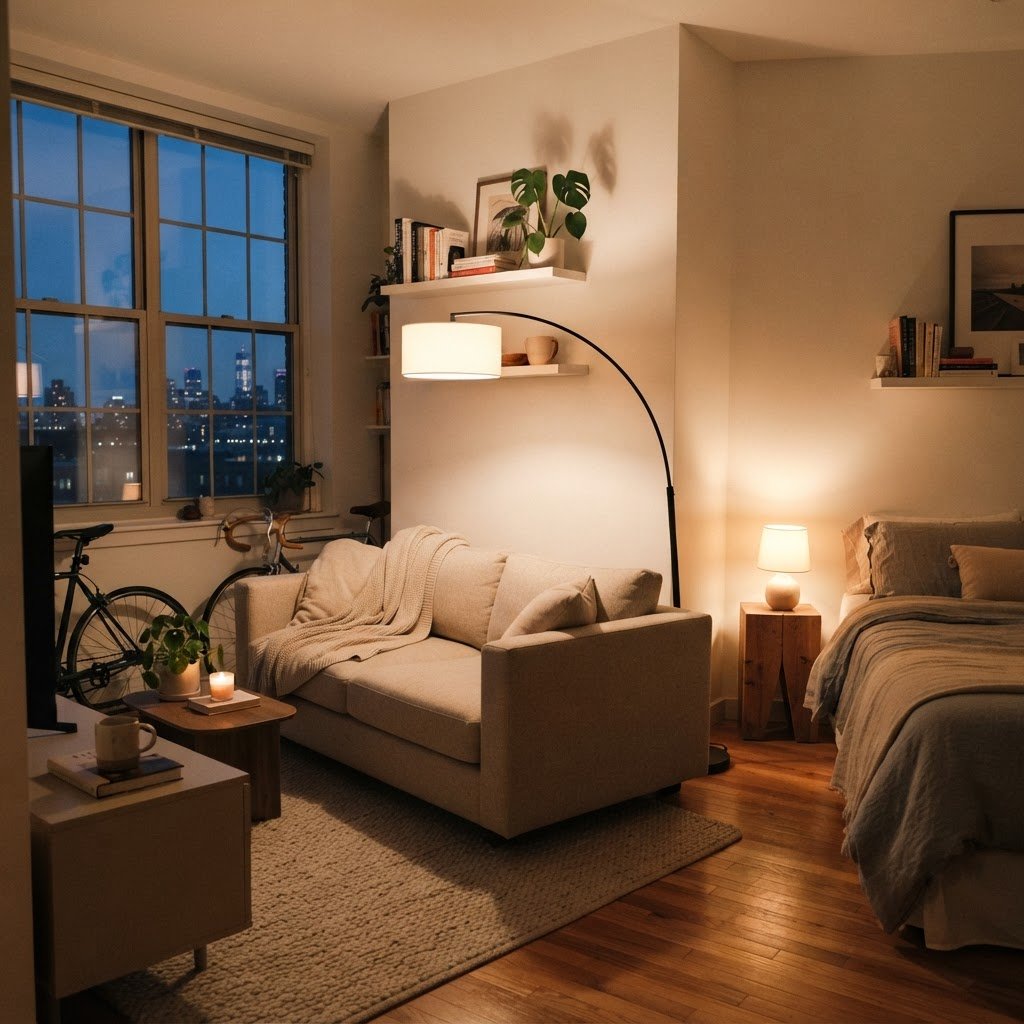
Small Space Cozy Lighting Hacks with Affordable Lamps
To make a small space feel larger and more inviting, use “layering” by combining ambient, task, and accent lighting at eye level rather than relying on a single overhead source. By positioning warm-toned bulbs (2700K–3000K) in corners and using reflective surfaces like mirrors, you can visually expand cramped rooms without costly renovations.
The Psychology of Cozy Lighting
Lighting fundamentally alters the perception of depth and volume in compact living areas, turning sterile boxes into comfortable sanctuaries. In a small studio, harsh overhead lighting creates dark, receding corners that make walls feel closer; conversely, warm, diffused light softens these boundaries and tricks the brain into perceiving more open space.
Integrating the right lighting strategy is about controlling the “visual temperature” of your home. Experts recommend using bulbs in the 2700K to 3000K range to avoid the clinical blue hue of standard LEDs, which can make small rooms feel like waiting rooms. By focusing light at eye level—using table lamps, wall sconces, and floor lamps—you create a “pool” effect that draws the focus toward your curated decor rather than the room’s limited dimensions. When light is distributed across three layers (ambient, task, and accent), it adds architectural depth. For example, placing a warm-toned lamp on a side table does more than provide illumination; it creates a psychological focal point that makes the room feel intentional and “styled” rather than merely cramped.
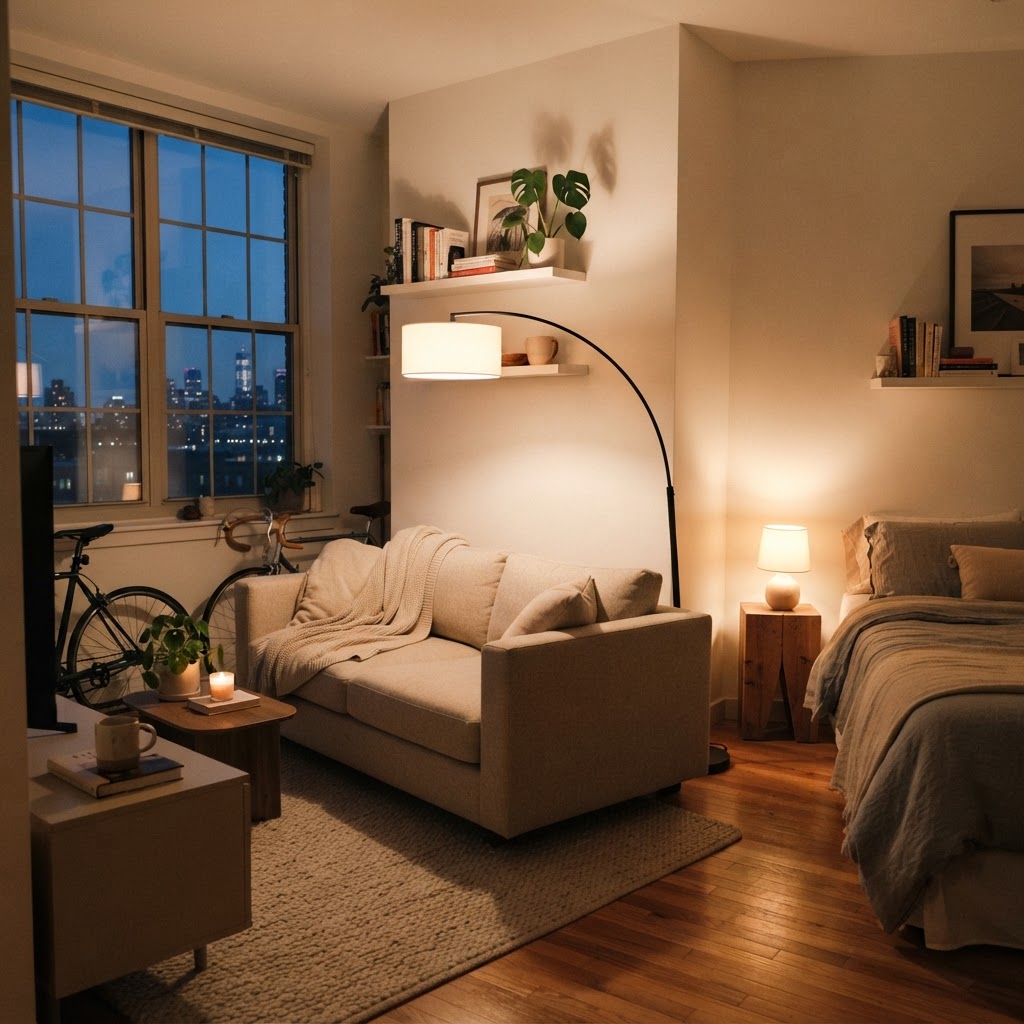
Why Layering Matters
Interior designers rely on the “Rule of Three” to build depth: ambient light provides the base, task lighting handles functional needs, and accent lighting highlights unique textures. In a 200-square-foot studio, you can execute this by utilizing one floor lamp for ambient glow, a desk lamp for work, and a small LED strip or puck light for accenting a shelf. This layered approach ensures no corner remains dark, preventing the “tunnel vision” effect that often plagues tiny apartments.
Choosing Affordable Lamps That Work
Finding affordable, high-quality lighting requires prioritizing versatile shapes over decorative embellishments that may not fit a tight floor plan. When shopping for budget-friendly fixtures—often found for $15 to $40 at discount retailers—focus on neutral materials like matte metal, linen, or ceramic that can be easily updated.
Opting for task lamps with adjustable arms allows you to redirect light exactly where needed, effectively saving square footage on tiny surfaces. Clip-on lamps are the ultimate “space-hacker’s” tool; they provide utility on shelves or headboards without occupying a single inch of desk or floor space. If you find a lamp base that fits your aesthetic but has an outdated shade, replacing it with an oversized, drum-shaped linen shade can increase light diffusion and instantly mimic the look of a $200 boutique piece. By keeping the silhouette of your lamps slim—avoiding bulky, ornate bases—you prevent the room from feeling cluttered. Always measure your table surface before buying; a lamp base should ideally take up no more than 30% of the available surface area to maintain a balanced, airy look.
Strategic Placement for Visual Expansion
Strategic placement of light fixtures is the most effective way to visually push back walls and eliminate the shadows that shrink a room. Corner lighting is particularly effective; by placing a floor lamp behind an armchair or in a dark nook, you fill the “dead space” and trick the eye into seeing more square footage than actually exists.
Another advanced technique involves utilizing reflective surfaces to amplify your existing lumen output. Placing a lamp in front of a mirror effectively doubles the perceived brightness of the room without requiring a higher-wattage bulb or extra power consumption. This is a “double-duty” hack that adds both light and depth to a flat wall. Furthermore, consider the direction of the light: wall-washing—where light is directed up the wall from behind a sofa—creates an indirect, soft glow that highlights wall height and minimizes the appearance of clutter. For those working with awkward layouts, using light to create zones is essential. By placing a specific task lamp in your reading corner, you visually “separate” that area from your sleeping or kitchen zones, creating the illusion of a multi-room home within an open-concept floor plan.
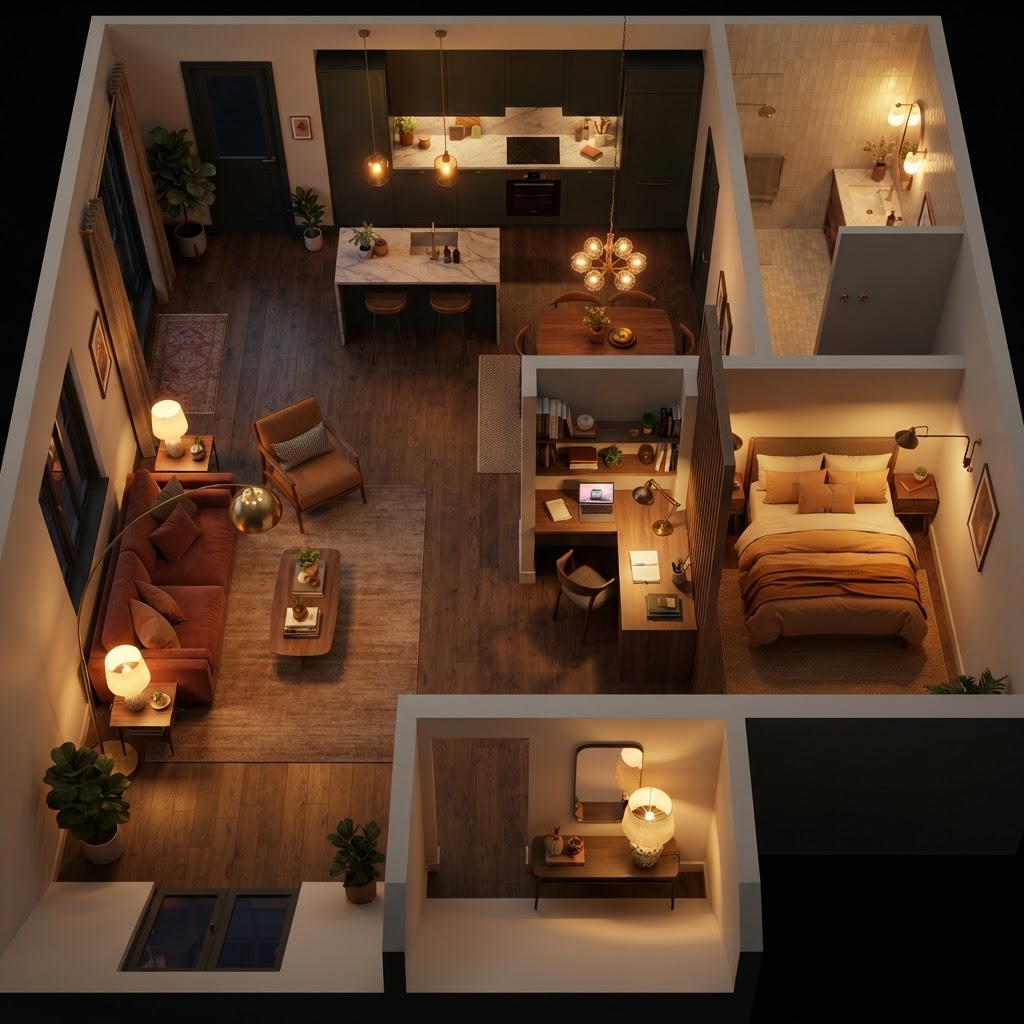
Table Lamp Tactics for Tiny Tables
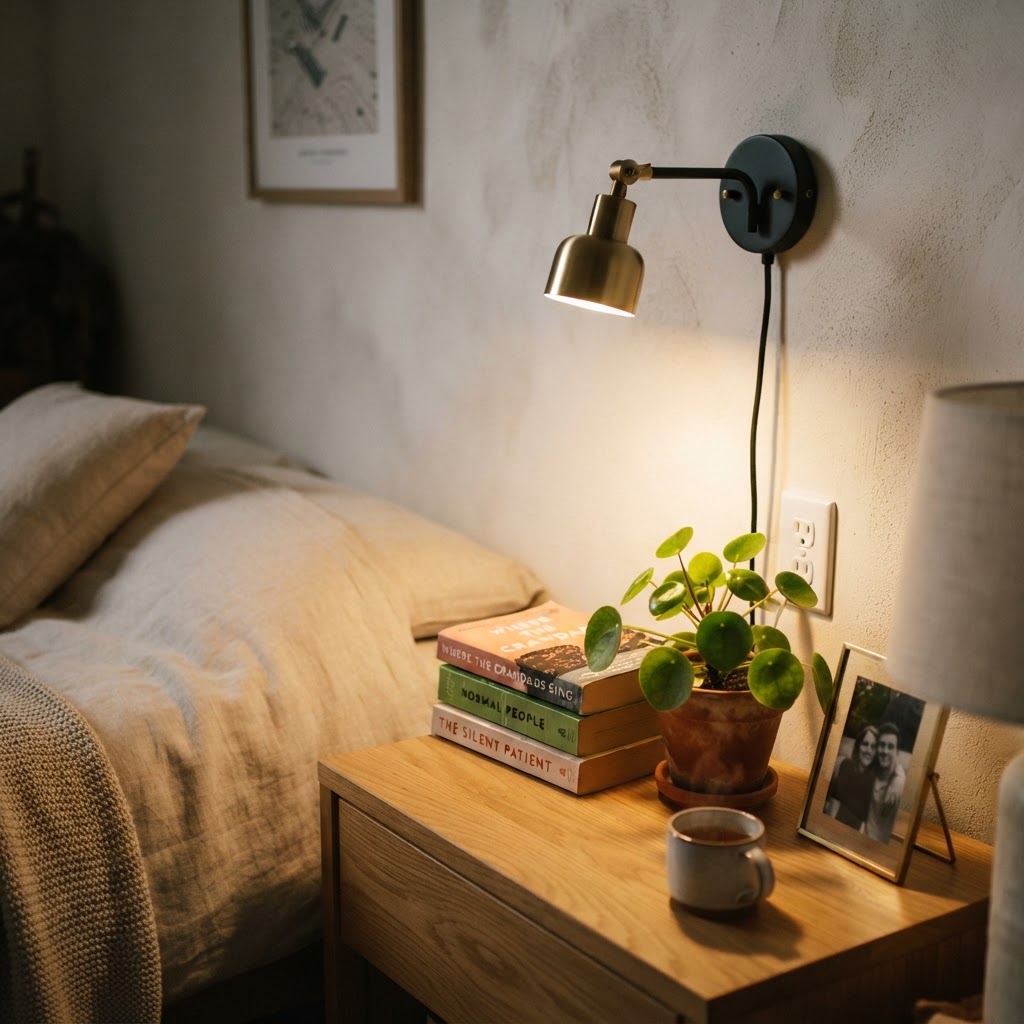
Surface area is a luxury in small spaces, requiring innovative lamp choices that integrate into your furniture rather than fight for space. When traditional bases won’t fit, pivot to wall-mounted plug-in sconces that offer a clean, built-in aesthetic without requiring an electrician or drilling into walls.
If you must use a table lamp, prioritize models with “slim profiles”—bases that are no wider than 4 inches. These take up minimal space while still providing necessary task lighting for nightstands or entry consoles. Another modern solution is the touch-sensor lamp, which eliminates the need for bulky switches or tangled cords, keeping your small table looking streamlined and tidy. Consider the height of the lamp relative to your seating; a lamp that is too tall can cause glare, while one that is too short creates unnecessary shadows. A good rule of thumb is that the bottom of your lampshade should be roughly at eye level when you are seated. This ensures the light is directed at your activity rather than directly into your eyes, which helps keep the small room feeling comfortable and intimate rather than harsh and clinical.
Utilizing Vertical Space and Height
Floor lamps are the secret weapon for making ceilings feel higher, provided you select designs that emphasize verticality rather than horizontal footprint. Models with thin, tripod-style legs or singular poles draw the eye upward, effectively “stretching” the room and creating an airy atmosphere that feels much larger than its actual dimensions.
To maximize this effect, position these lamps behind large furniture pieces like sofas or armchairs to create a soft “wash” of light that illuminates the wall. This indirect glow is significantly more flattering than direct lighting because it highlights the architecture of the space rather than focusing on items that create visual clutter. You can also utilize “uplighting” by placing a small, inexpensive floor lamp to point light toward the ceiling; this pushes the visual boundaries of the room upward, making the ceiling feel less restrictive. Avoid lamps with heavy, opaque shades that block light from traveling toward the ceiling, as these will trap the glow and make the room feel top-heavy. Instead, choose shades that are translucent or open at the top to allow light to bounce off the ceiling, creating an expansive, open-room effect.
DIY Upgrades for Budget Lighting
Customizing affordable, “big-box” lighting is the fastest way to achieve a high-end look on a budget while ensuring your fixtures match your specific decor style. A $10 lamp can be transformed into a custom piece with a simple $6 can of matte black or brushed gold spray paint, allowing it to seamlessly integrate into your apartment’s color palette.
Beyond paint, the most significant “hidden” upgrade is the light bulb itself. Integrating smart bulbs (typically available for $10–$15 each) allows you to control color temperature, brightness, and even scheduling via your smartphone. This adds a level of luxury and utility that standard bulbs cannot match. For instance, you can dim the lights to 30% for a movie night or increase brightness to 100% for cleaning, all without moving from your couch. Don’t overlook small hardware tweaks either: swapping a cheap plastic cord for a fabric-wrapped cord cover can hide an eyesore and turn a standard cable into a decorative element. Finally, adding a plug-in dimmer switch to a non-dimmable lamp provides the most “bang for your buck” for mood control, instantly allowing you to create that elusive, intimate “cozy” vibe in any corner of your small home.
Simple Customizations
- Change the cord: If your lamp has an ugly cord, a simple fabric cord cover can hide it or make it a stylish accent.
- Add a dimmer: If your lamp doesn’t have a built-in dimmer, you can buy an inexpensive plug-in dimmer switch online.
- Switch the shade: A larger or drum-shaped shade can change the direction and diffusion of the light, making it feel more intentional.
Creating Zones with Light
Using light to create zones is the most effective psychological tool for preventing a studio apartment from feeling like a disorganized pile of furniture. By assigning specific light sources to your living, sleeping, and working areas, you create distinct “rooms” within one open-concept space, providing structure and visual consistency.
To achieve this, ensure that your lighting levels remain consistent across all zones so the transition from the reading nook to the sofa doesn’t feel jarring. When you want to host friends, you can turn off task-specific lights (like desk or kitchen pendant lights) and keep only the ambient floor lamp or accent wall-sconces on, which instantly shifts the room’s energy to a social, intimate atmosphere. This creates a cohesive look that feels curated by a professional designer rather than randomly assembled. By layering these zones, you stop the eye from scanning the entire “messy” room at once, and instead allow it to focus on one well-lit area at a time. This keeps your small space feeling structured, intentional, and, above all, incredibly cozy.
FAQ
What is the best color temperature for a cozy home?
The best color temperature for a cozy atmosphere is between 2700K and 3000K, which provides a warm, inviting yellow-toned glow. Avoid “cool white” or “daylight” bulbs above 4000K, as these create a harsh, clinical environment that makes small rooms feel smaller and colder.
How can I make my ceilings look higher with lighting?
To make ceilings look higher, use floor lamps that direct light upward or position lamps behind furniture to create a wall-washing effect. This “up-light” draws the eye toward the ceiling, creating an illusion of vertical height and making the room feel significantly more open.
What are the best lamps for a tiny apartment?
For a tiny apartment, choose slim-profile floor lamps, clip-on task lamps, and plug-in wall sconces to save floor and table space. These options provide necessary illumination without the clutter of bulky bases or extra cords, keeping your living surfaces clear and functional.
Do mirrors actually make a room brighter with lamps?
Yes, placing a lamp in front of a mirror effectively doubles the light output by reflecting the glow back into the room. This technique expands the depth of the space and increases brightness without the need for additional fixtures or higher-wattage bulbs.
How do I use lighting to separate zones in a studio?
Separate zones in a studio by using specific light sources for each area, such as a dedicated task lamp for your desk and a floor lamp for your living area. When these zones are independently lit, it creates psychological boundaries that make the room feel organized and intentionally designed.

Leave a Reply