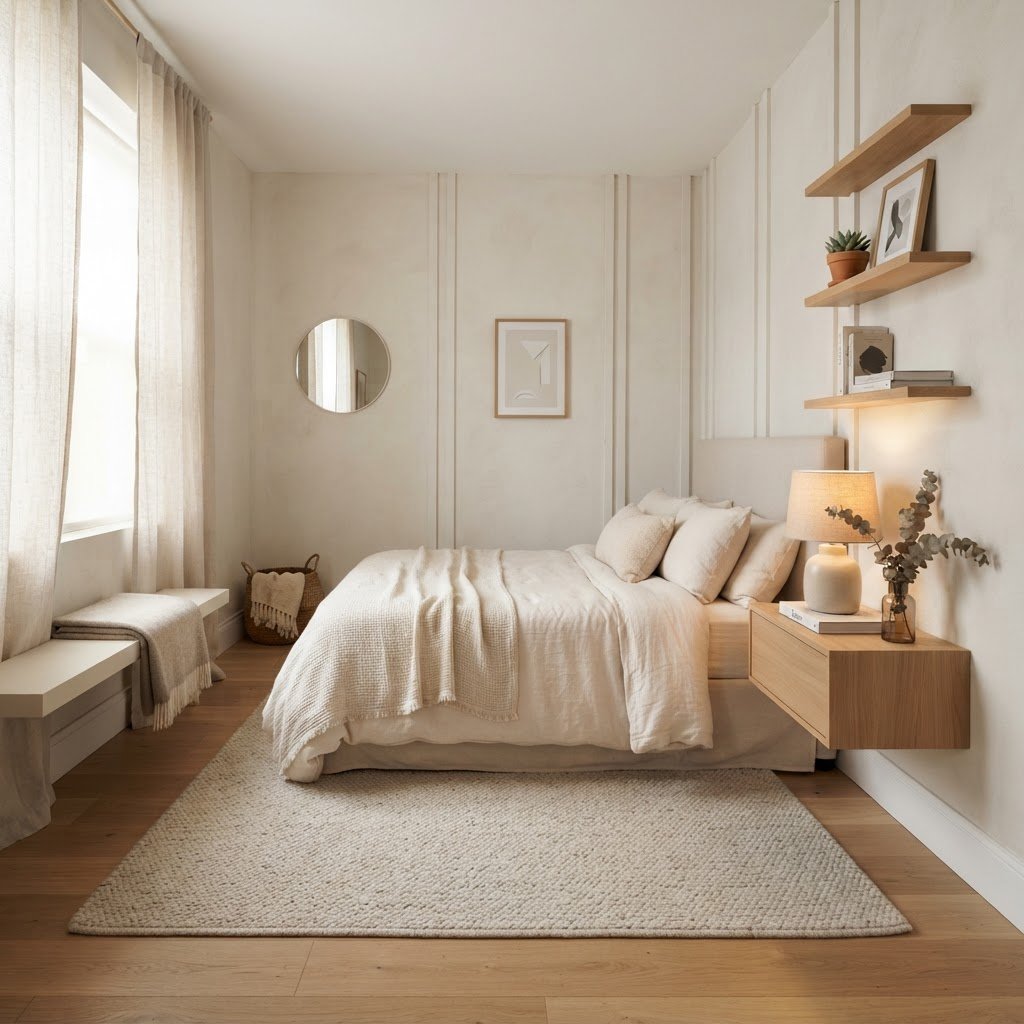
Small bedroom storage is best maximized by utilizing vertical wall space, choosing multi-functional furniture, and implementing a strict decluttering strategy to maintain a clear floor plan. By shifting storage from the floor to walls and selecting pieces like under-bed drawers or wall-mounted desks, you can increase your usable bedroom capacity by up to 40% while maintaining an airy, open aesthetic.
The Philosophy of Vertical Design
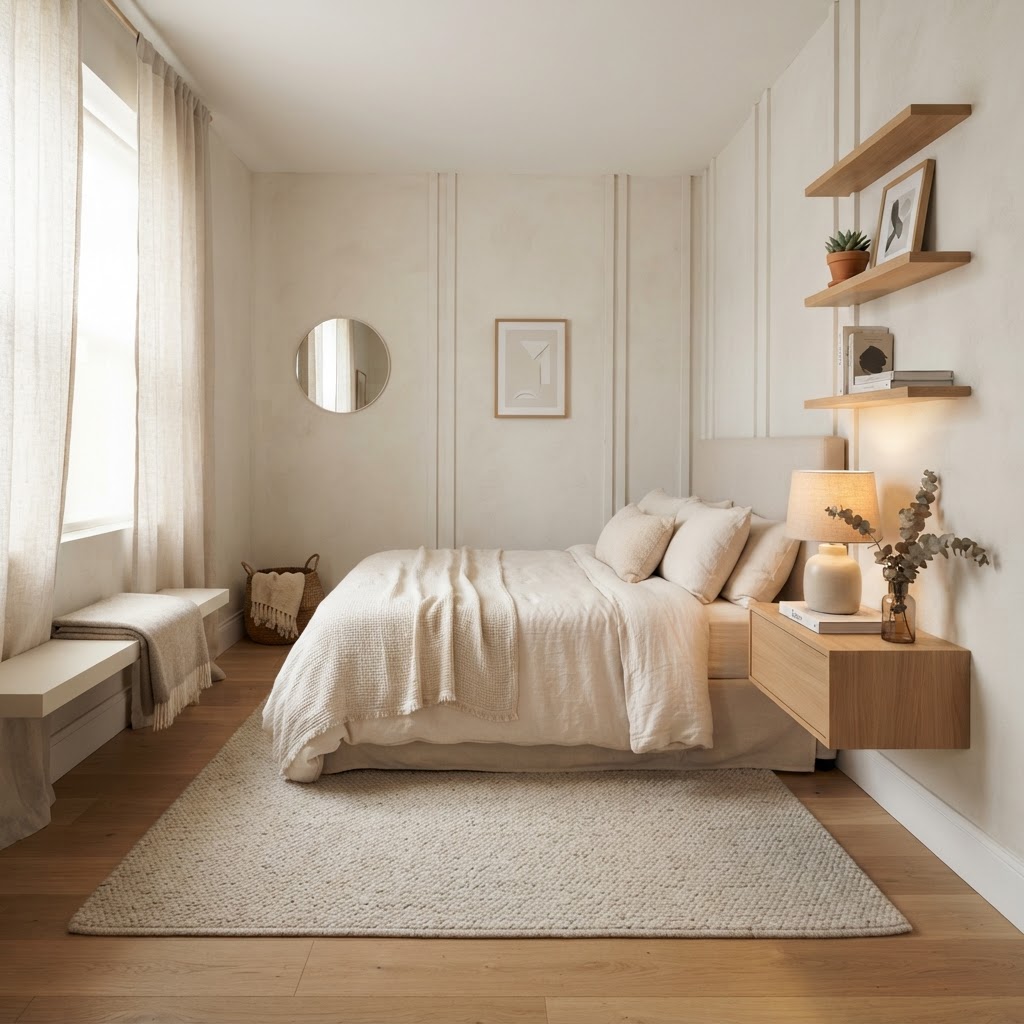
When floor space is scarce, your walls become your most valuable real estate for storage and visual expansion. Many people overlook the 6 to 8 feet of vertical space above their dressers, desks, and headboards, leaving a significant amount of potential storage unused. Vertical design is not just about mounting shelves; it is about drawing the eye upward, which naturally makes a room feel taller and more spacious. By installing shelving that reaches within 12 inches of your ceiling, you force the eye to travel upward, creating the illusion of height. This strategy is particularly effective in rooms with ceilings lower than 8 feet, as it prevents the furniture from feeling “stuck” to the floor. Furthermore, utilizing high-level shelves keeps rarely used items—like off-season bedding or sentimental keepsakes—out of your daily visual path, which reduces the psychological feeling of clutter in a confined space.
Utilizing Wall-Mounted Furniture
Floating nightstands and wall-mounted desks are game-changers for small rooms because they provide essential surfaces without creating floor-level obstructions. By removing the legs of traditional furniture, you clear the floor space underneath, which creates a sense of openness and makes the room significantly easier to clean. Consider installing long, floating shelves above your bed to serve as a modern headboard substitute that doubles as a bookshelf or display area. When you reclaim the 2 to 4 square feet typically occupied by nightstand legs, you improve traffic flow around the bed.
Choosing the Right Shelving Systems
Modular shelving units are highly versatile because they allow you to customize your storage based on your specific needs. Use adjustable brackets so you can move shelves as your storage requirements evolve over time. For a cohesive look, paint your shelves the same color as your walls so they appear to blend into the architecture rather than protruding into the room, reducing visual noise. When installing, always use a level and ensure hardware is rated for your wall type (e.g., toggle bolts for drywall, masonry anchors for brick) to safely support items weighing over 20 lbs.
Unlocking Hidden Storage Potential
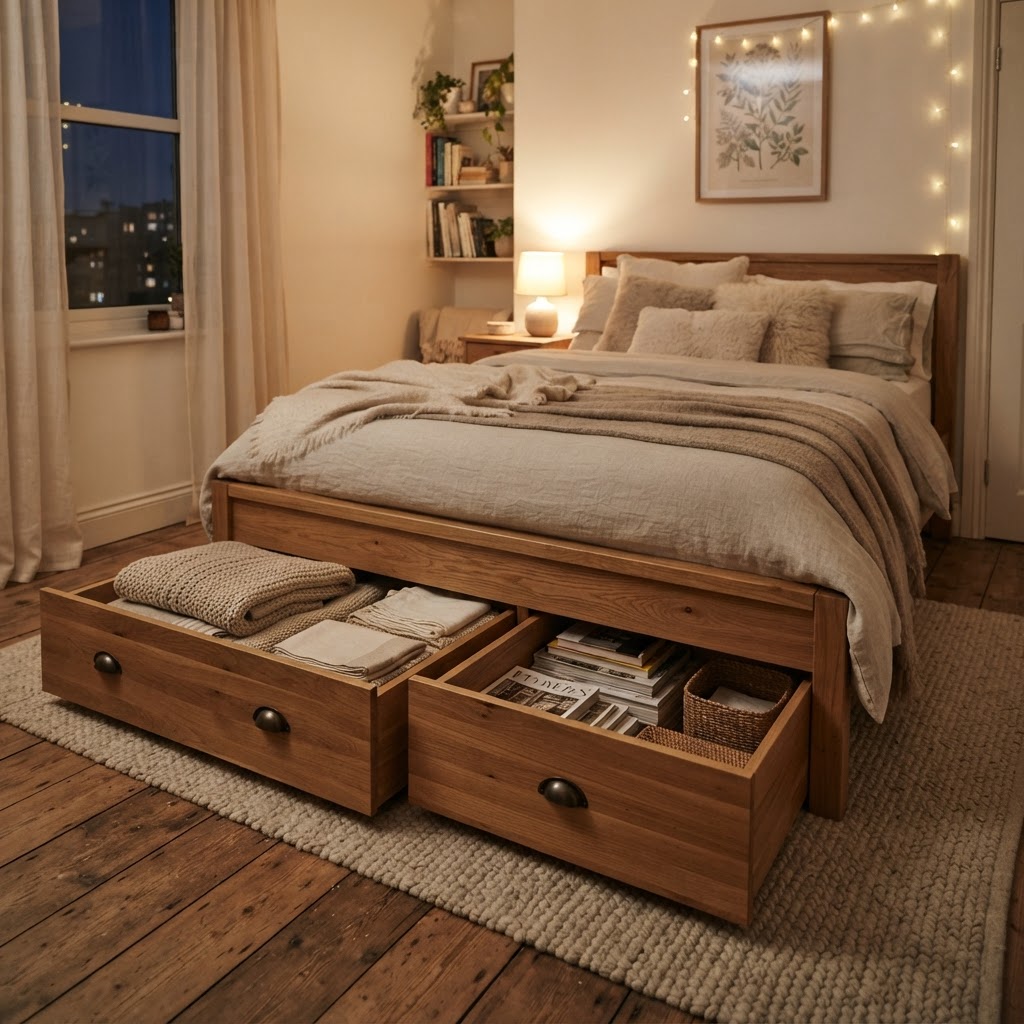
The most effective small bedroom ideas involve pieces of furniture that work double duty, ensuring that every square inch of the room justifies its existence. If a piece of furniture doesn’t provide storage, it is likely taking up floor space you cannot afford to waste. Look for beds with built-in drawers, ottomans with removable tops, and dressers that can serve as vanity tables. Professional organizers often suggest the “Rule of Two,” which mandates that every furniture piece must fulfill two functions—aesthetic presence and utility. By replacing a standard bed frame with a storage-integrated platform, you can gain between 10 to 15 cubic feet of hidden storage capacity. This is ideal for seasonal clothing, extra linens, or bulkier items that do not fit in your primary closet. Prioritize modular storage solutions that allow for future flexibility, such as changing drawer configurations or adding secondary shelves as your organizational needs shift throughout the year.
Choosing Multi-Functional Furniture
Platform beds with deep drawers underneath are arguably the best investment for a compact bedroom. These drawers can hold an entire season’s worth of clothing, extra bedding, or even bulky winter coats. If you cannot afford a new bed frame, consider using aesthetic fabric bins or rolling crates that fit perfectly underneath your existing bed frame to achieve a similar result. When choosing under-bed bins, aim for a height of 6 to 8 inches to ensure they slide freely without scratching your floor. Opt for opaque fabric bins to maintain a tidy look, or clear plastic if you need to quickly locate items.
The Power of Under-Bed Organization
To make under-bed storage work, prioritize bins that slide easily on smooth surfaces using casters or felt pads. Invest in clear containers if you have a wide variety of items so you can see exactly what is inside without needing to pull every bin out. Always measure the height from the floor to your bed frame before purchasing containers to ensure a perfect fit that doesn’t look messy or disorganized. Leaving even a 1-inch gap between the top of the bin and the frame bottom will prevent jamming.
Mastering Closet Optimization
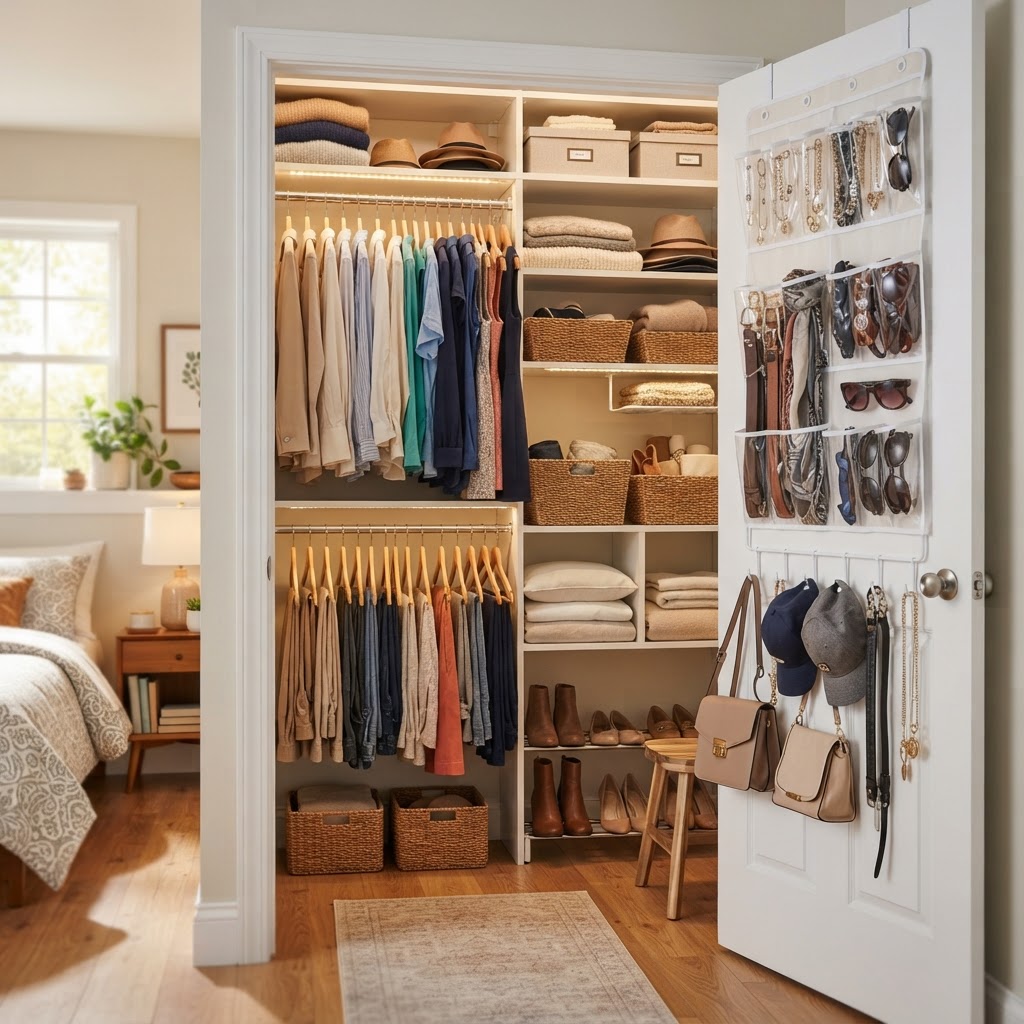
Most reach-in closets are underutilized due to inefficient rod placement, but you can increase your capacity by up to 50% by maximizing vertical and door-back areas. By installing a double-hanging rod system, you effectively double the amount of clothing you store in your closet. Adding shelves 12 inches above the top rod also creates a perfect spot for seasonal items like hats, bags, or extra linens. Many homeowners ignore the “dead space” at the bottom of the closet; placing a stack of modular drawers or a shoe rack here keeps the floor clear while organizing smaller accessories. When updating your closet, prioritize a modular system with adjustable tracks, which allows you to change the shelf heights as your wardrobe changes. For example, moving shelves closer together can accommodate more folded sweaters, while removing them creates room for longer dresses or coats.
Implementing Door-Back Organizers
Don’t forget about the back of your closet door, which acts as a secondary storage wall. Install an over-the-door shoe organizer or a series of hooks to hold scarves, belts, jewelry, or robes. Keeping these small items off your dressers will instantly make your room feel more organized and less chaotic. Using an organizer with clear pockets allows you to see small accessories instantly, saving you time during your morning routine. Ensure the organizer is securely fastened to prevent it from swinging or banging against the door when closed.
Decluttering Strategy for Small Spaces
The most important rule for small spaces is a strict “one in, one out” policy. Every item you bring into your bedroom should serve a purpose or bring you joy. Regularly audit your closet to remove items you haven’t worn in over a year. A minimalist approach is naturally the best friend of a small room. Perform a seasonal “reset” every 90 days to ensure your closet is not storing dormant items that occupy valuable cubic footage.
Creative Lighting for an Airy Feel
Lighting plays a significant role in how big or small a room feels because shadows in the corners of a room create a “shrinking” effect. Natural light is your best friend, but if your room lacks windows, artificial light must be used strategically to illuminate dark corners. Avoid bulky floor lamps that take up valuable floor space; instead, opt for wall-mounted sconces or pendant lights that hang from the ceiling. A layered lighting approach—using a combination of warm ambient lighting and focused task lighting—can make a room feel expansive. Install LED strips under floating shelves or behind the headboard to provide a soft glow that eliminates harsh shadows. When selecting bulbs, aim for 2700K to 3000K (warm white) for a cozy bedroom feel. Proper illumination can make a room feel up to 20% larger by removing dark visual boundaries, effectively “pushing” the walls outward.
Using Mirrors to Expand Depth
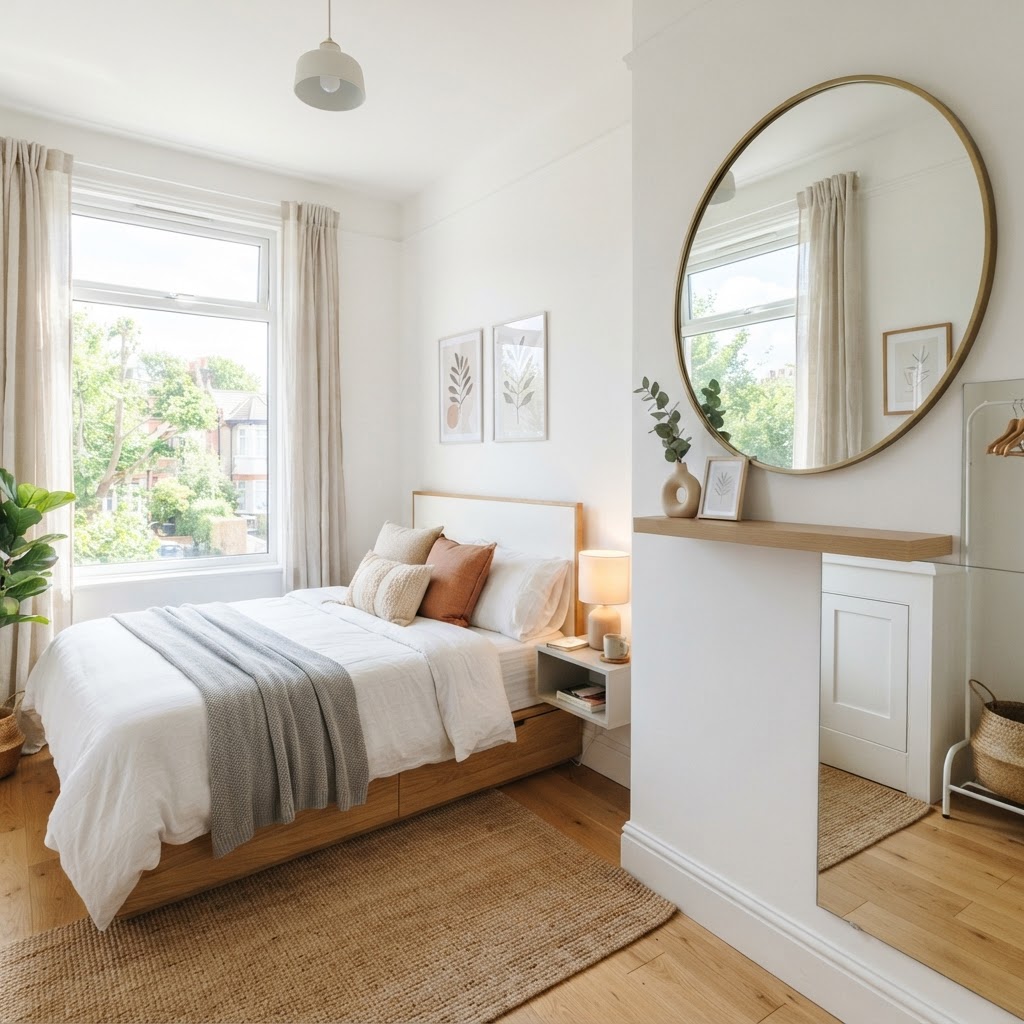
Mirrors are a classic design trick that never fails to double the perceived depth of a room. By placing a large mirror directly across from a window, you reflect natural light deeper into the space. A full-length mirror leaning against a wall or mounted on the back of a door not only helps you get dressed but also tricks the eye into thinking the room is twice its actual size. If you have a small window, placing a mirror adjacent to it can create the illusion of a second, larger window, further brightening the interior.
Maximizing Corner Real Estate
Corners are often dead zones in bedroom design, but they offer excellent potential for vertical storage when approached with the right geometry. Corner shelving units are specifically designed to fit into 90-degree angles, turning unused wall space into a functional display or storage area. This is a perfect place for plants, books, or small decorative items that add personality to your room without consuming the center floor space. By installing corner-specific shelves, you can utilize approximately 3 to 5 square feet of otherwise wasted air. Consider using tension-rod corner shelves if you are a renter and cannot drill into the walls. These allow you to maximize vertical storage for small objects like alarm clocks, charging stations, or books. When filling these corners, balance the weight; place heavier books at the bottom shelf and lighter, more decorative items toward the top to maintain visual balance and structural stability.
Corner Desks and Vanities
If you need a workspace or a vanity, look for pieces designed for corners. These pieces occupy space that would otherwise be empty while providing a dedicated area for activities. Keeping your work surface in a corner helps create a mental boundary between sleep and productivity, which is crucial in a multifunctional small bedroom. Choose corner units that feature rounded edges to avoid sharp, intrusive corners that can make a tight space feel dangerous or cramped.
Smart Textile and Color Choices
The color palette you choose for your small bedroom can influence your perception of space by creating a sense of continuity. Light, neutral tones such as off-white, soft gray, or pastel blue help reflect light and push walls away visually. This does not mean you cannot use color, but consider keeping your largest surfaces light and adding pops of color through bedding, rugs, or artwork to maintain depth. Avoid high-contrast patterns on large surfaces like curtains or wall-to-wall carpets, as these can make the space feel cluttered. Instead, focus on textures like linen, wool, or cotton in neutral shades, which add visual interest without overwhelming the eyes. A monochromatic color scheme, where the walls, trim, and large furniture pieces share similar light tones, is the most effective way to eliminate visual “stops” that make a room look broken up.
Maintaining a Clutter-Free Aesthetic
Clutter is the enemy of a small bedroom, as it draws the eye to chaos rather than the room’s design. Use decorative baskets and boxes to hide away the small items that inevitably accumulate on nightstands. By keeping surfaces clear, you create a sense of calm and order that makes a small room feel intentional rather than cramped. Consider the following checklist for keeping your room organized:
- Clear off nightstand surfaces daily.
- Use labels for hidden storage bins.
- Purge non-essential items every three months.
- Keep the floor clear of stray clothing or bags.
- Utilize vertical wall hooks for jackets.
FAQ
Q: How can I make a small bedroom look bigger?
Use light, neutral wall colors and large mirrors to reflect light and expand the visual depth of the room. Keeping the floor visible by using wall-mounted furniture and high-legged pieces significantly increases the perceived square footage of the bedroom.
Q: What is the best way to store clothes in a small room?
Install a double-hanging rod system in your closet and utilize the space under your bed for long-term storage using flat, rolling bins. This combination clears floor space while effectively doubling your available hanging and seasonal storage capacity.
Q: How do I choose the right storage furniture?
Prioritize pieces that serve dual purposes, such as an ottoman with internal storage or a bed frame with integrated drawers. Look for modular, wall-mounted items like floating nightstands to ensure floor space remains open and easy to clean.
Q: Should I use open or closed shelving?
Use closed storage for messy items to keep the room looking clean, and save open shelving for a limited selection of decorative items. Too much open storage in a small room can quickly lead to a cluttered appearance, so keep it sparse and organized.

Leave a Reply