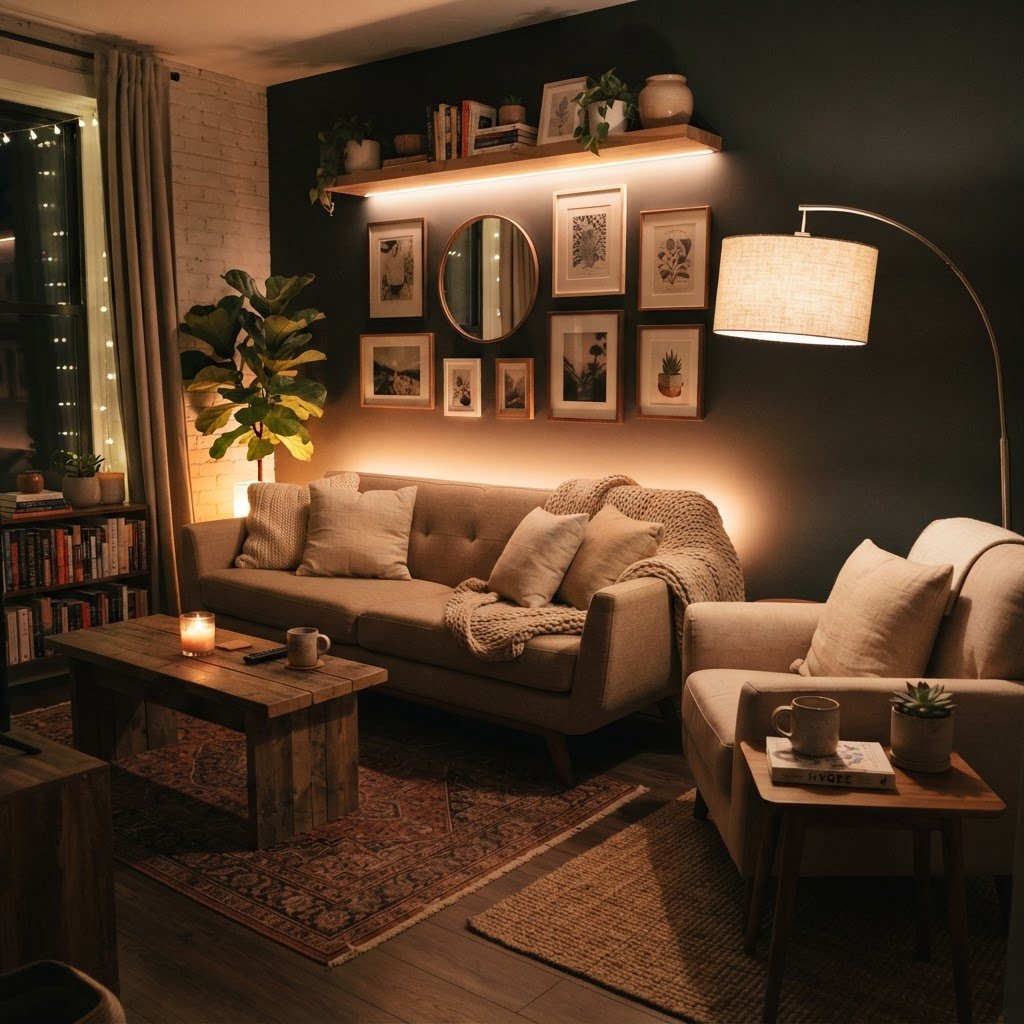
Living in a compact apartment or a small home often feels like a constant battle against clutter and claustrophobia. Many people mistakenly believe that bright, stark white light is the only way to expand a room, but the secret actually lies in the intentional use of warm lighting tricks that make small rooms feel bigger. When you harness the power of soft, golden hues, you create depth, eliminate harsh shadows, and define zones that trick the eye into perceiving more square footage than actually exists.
Lighting is essentially the ‘jewelry’ of an interior design scheme, yet it is frequently ignored by homeowners looking to open up tight spaces. By shifting your focus from a single, overpowering overhead light to a multi-layered lighting strategy, you can soften the corners of a room and create a sense of expansion. This article explores seven proven methods to reshape your perception of space using warmth and strategic positioning.
The Psychology of Warm Light in Compact Spaces
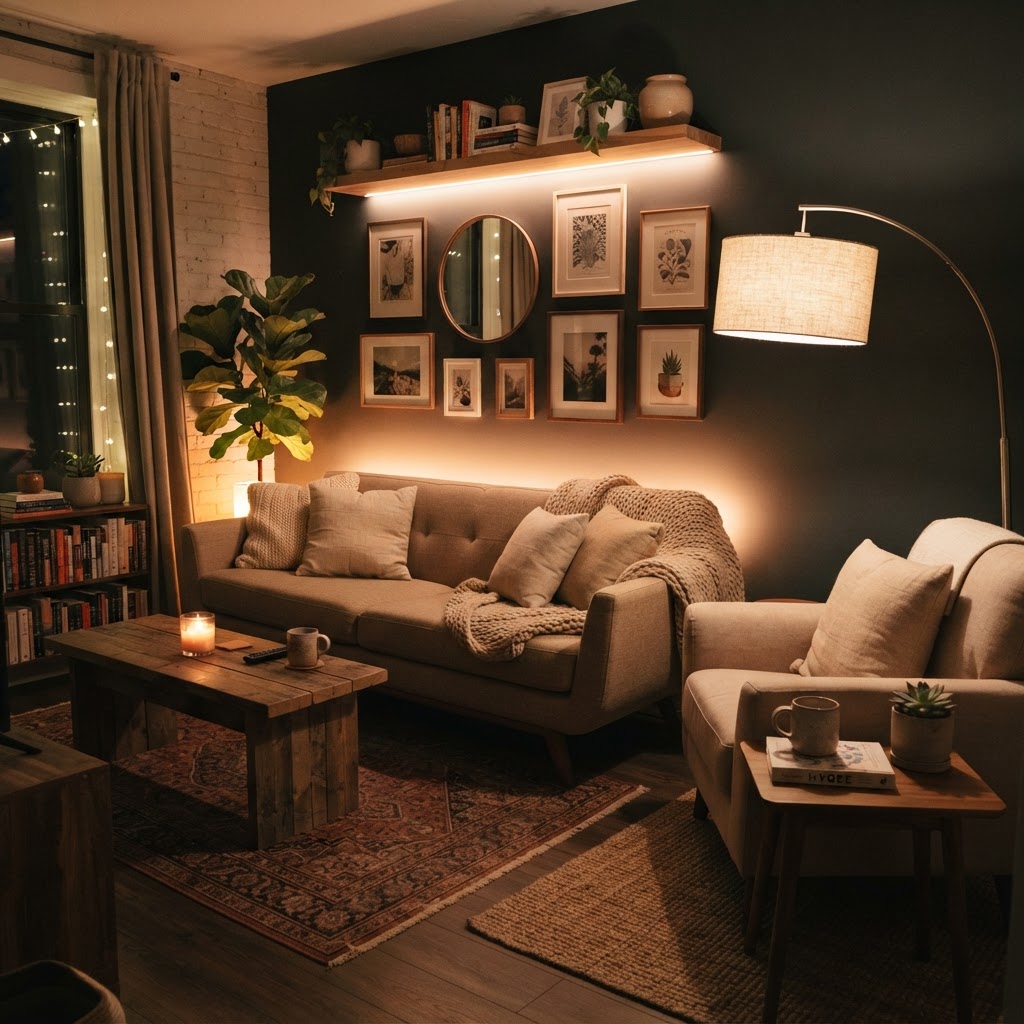
Warm light, typically falling within the 2700K to 3000K range on the Kelvin scale, mimics the gentle glow of a sunset or candlelight. In small interior environments, bright cool light can often make walls look clinical and expose every imperfection, which only serves to make the room feel more closed in. Conversely, warm light creates a welcoming atmosphere that naturally encourages relaxation and visual comfort.
When we talk about making a room feel larger, we are really talking about visual weight and depth perception. Warm light bounces off walls more softly, which reduces the harsh contrast that makes a small room feel boxed-in. By utilizing these warm lighting tricks that make small rooms feel bigger, you are essentially softening the borders of your living area, effectively pushing the walls outward in the eyes of the viewer.
1. Utilize Multiple Light Sources for Layering
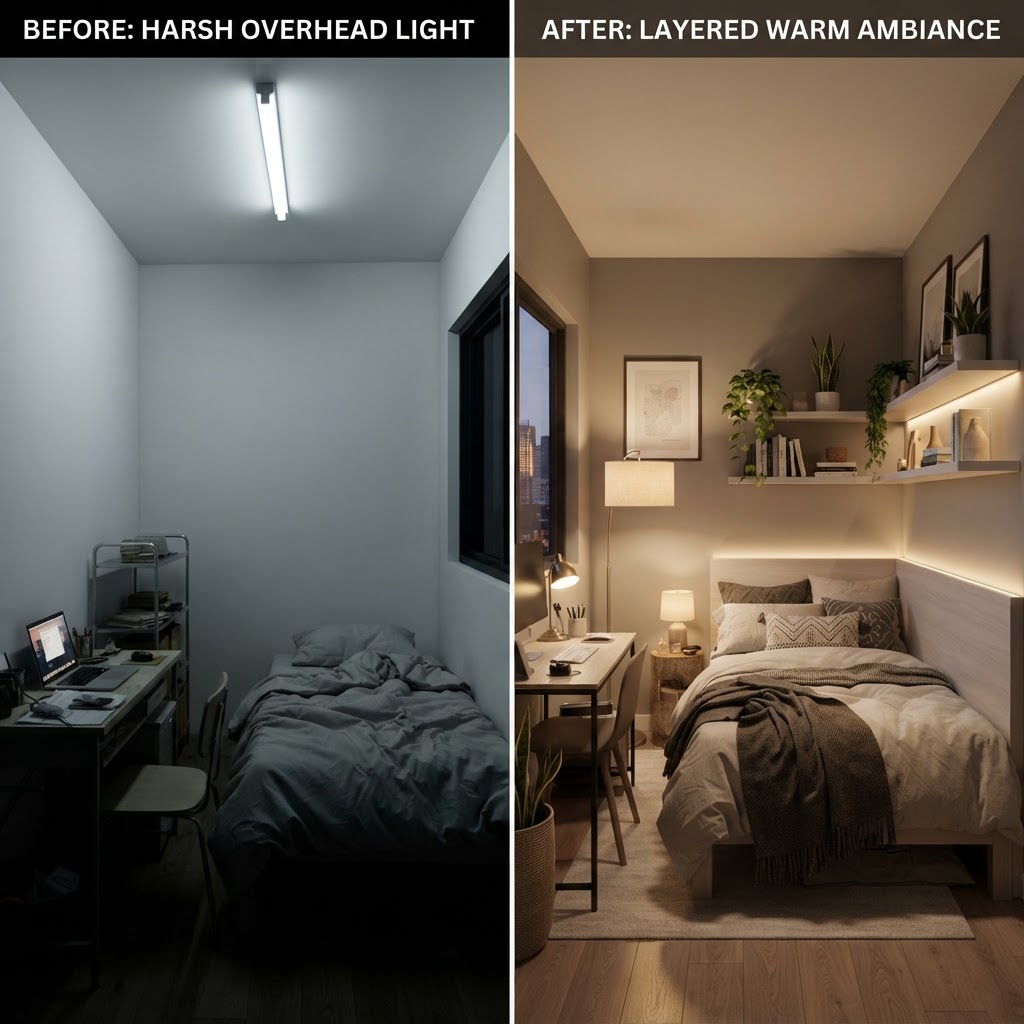
The most common mistake in small room design is relying on a single ‘big light’—the standard overhead flush mount. This creates a flat, singular plane of light that washes out textures and makes corners feel like dark, oppressive voids. To fix this, you must introduce layers.
Layering involves placing light sources at different heights throughout the room. Think about a floor lamp in a corner, a table lamp on a side table, and subtle wall sconces. By distributing light across various points in the room, you force the eye to wander, which makes the space feel more complex and substantial.
2. Highlight Perimeter Walls to Expand Boundaries
Our perception of room size is largely dictated by our perception of where the walls begin and end. If the center of the room is bright but the corners are dark, the room will inherently feel smaller. By directing light toward your perimeter walls, you essentially define the boundaries of the room more clearly, pushing them visually back.
Practical Wall Lighting Ideas
- Wall Sconces: Install matching sconces on either side of a piece of art or a window.
- Picture Lights: Use low-wattage, warm-toned picture lights to draw attention to wall decor, which keeps the light from being trapped in the middle of the floor.
- LED Strips: Conceal warm LED strips behind floating shelves or cornices to create a soft ‘wall-washing’ effect.
Using these fixtures to cast light onto your vertical surfaces is one of the most effective warm lighting tricks that make small rooms feel bigger, as it eliminates the ‘tunnel vision’ effect caused by floor-only lighting.
3. Emphasize Depth with Reflective Surfaces
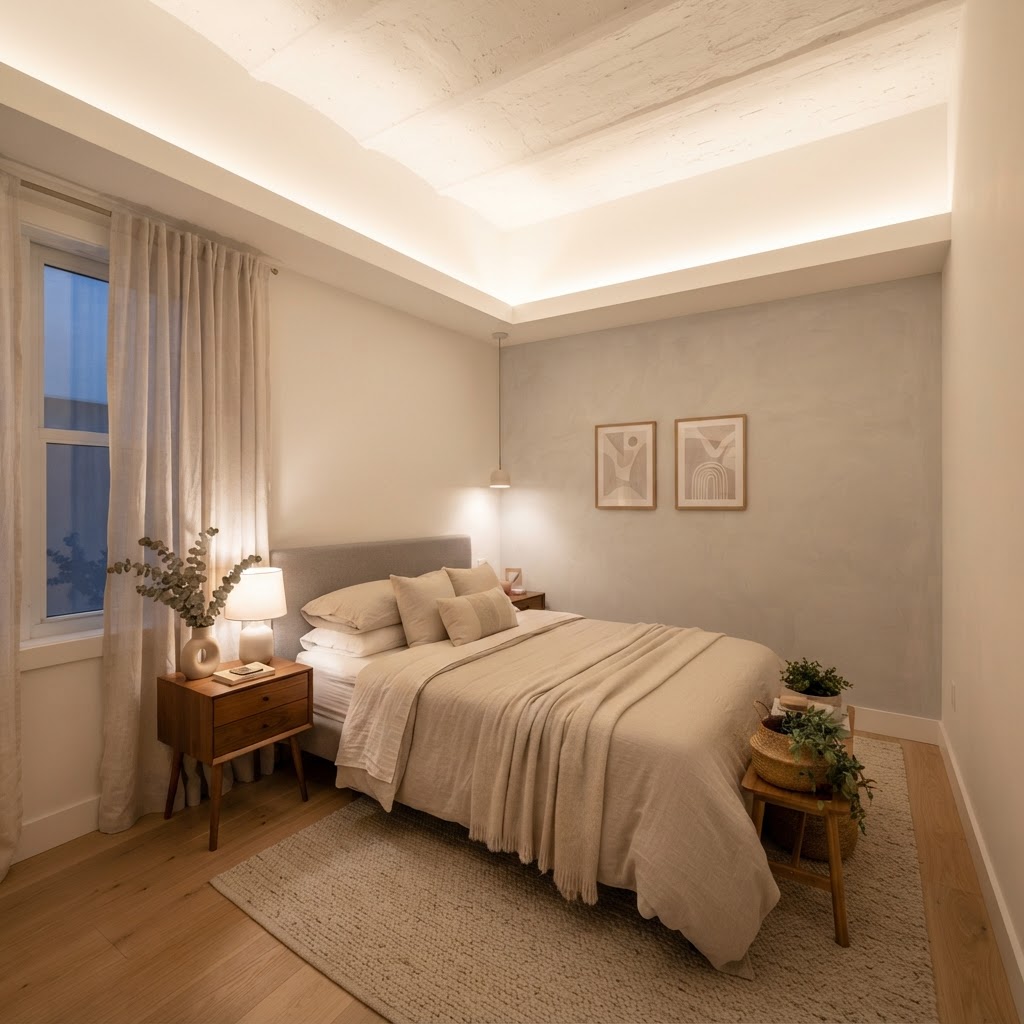
Light and reflection are best friends. When you combine warm lighting with reflective surfaces like mirrors, polished wood, or metallic accents, you create a multiplier effect. A well-placed lamp reflecting off a mirror can make a room feel like it has an entire ‘hidden’ section behind the glass.
Place a floor lamp near a tall mirror so that the warm light bounces into the darker, neglected parts of the room. This not only increases the total light output but also adds layers of visual depth that confuse the brain into thinking there is more space than there actually is.
4. Use Uplighting to Increase Ceiling Height
If you are dealing with a low ceiling, your room will naturally feel smaller. Uplighting is a technique where light is directed toward the ceiling rather than downward toward the floor. This draws the eye upward, accentuating the vertical dimension of the room.
Look for small, floor-standing canisters or portable spotlights that can be hidden behind plants or furniture. When these are angled toward the ceiling, they create a ‘floating’ effect, making the ceiling seem higher than it is. This simple shift in light direction is a cornerstone of professional lighting design for small spaces.
5. Ditch the Clutter with Integrated Lighting
Clutter is the enemy of a small room. Floor lamps and table lamps take up precious floor and surface space, which can sometimes work against your goal of feeling ‘bigger.’ This is where integrated lighting becomes your best friend.
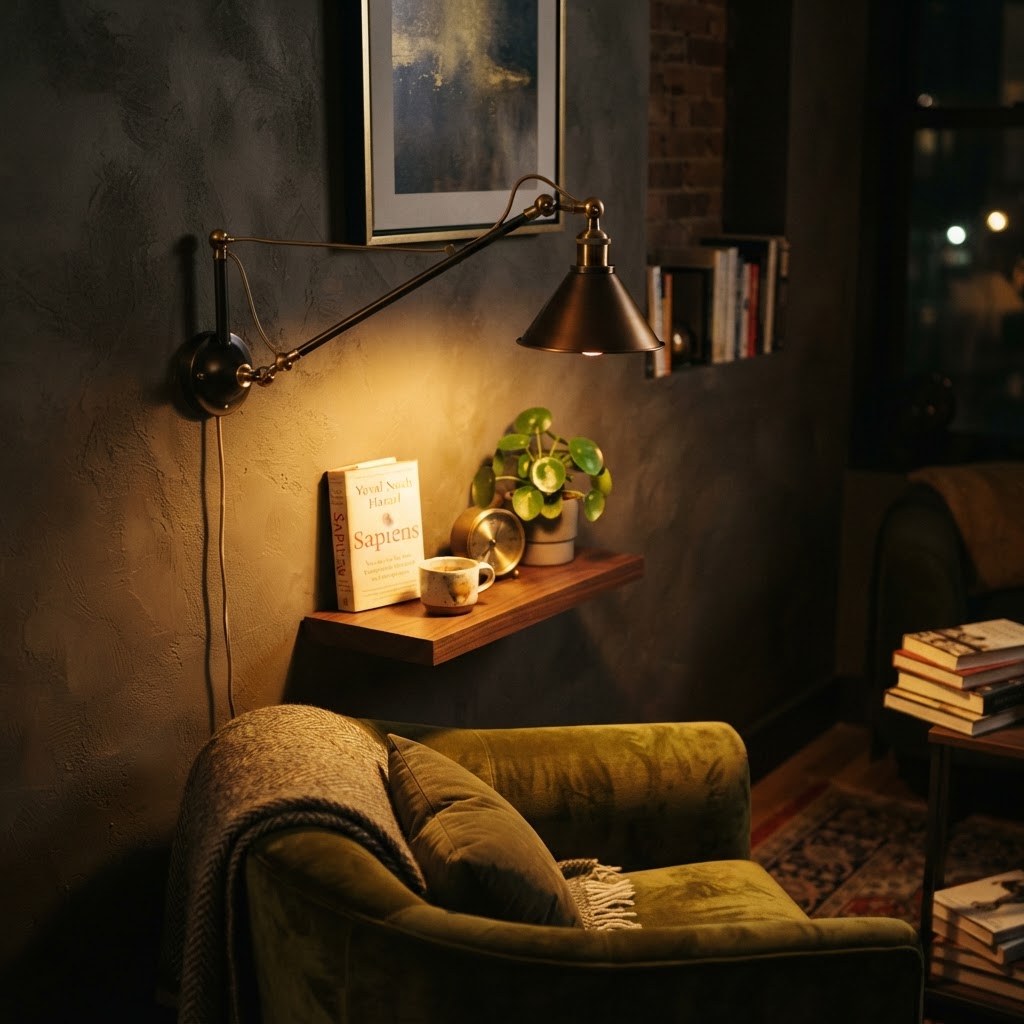
Consider replacing table lamps with wall-mounted swing-arm lamps or plug-in pendant lights that hang from the ceiling. By removing the corded clutter from your tables and floor, you create a sense of cleanliness and order. When a room feels less cluttered, it inherently feels larger.
6. Create Focal Points with Accent Lighting
When a room has no focal point, it can feel like an undefined, chaotic mess. Using warm lighting to highlight a specific piece of furniture, a bookshelf, or a piece of wall art creates a ‘destination’ for the eye. When you have a clear focal point, the rest of the room recedes into a cozy, supporting role.
For example, use a small, warm-toned spotlight to illuminate a painting. This creates a visual anchor. As your visitors walk into the room, their eyes are drawn to the depth and warmth of that highlight, rather than the tight dimensions of the room itself.
7. Embrace Dimmers to Control Mood
Fixed lighting is rarely the answer for every situation. By installing dimmer switches, you gain total control over the atmosphere. On a bright, sunny afternoon, you might not need much light. In the evening, however, dialing your warm lights down to 30% can create an intimate, cozy sanctuary.
Dimming your lights also helps in managing the contrast in a small room. If a room is too bright at night, it can feel harsh and tight. By lowering the intensity, you create soft pools of light that emphasize comfort over clarity, making the space feel more like a retreat and less like a cramped box.
The Strategic Benefits of Layered Ambiance
When you combine these seven tricks, you are doing more than just illuminating a room; you are curating an experience. A small room that is properly lit feels intentional and curated, whereas a poorly lit small room feels accidental and cramped. The goal is to move away from the ‘big light’ and toward a constellation of small, warm, and inviting sources.
Remember that lighting design is an iterative process. You don’t have to install everything at once. Start by adding one floor lamp in a dark corner, or swapping out your bulbs for warmer color temperatures. Once you see the impact of these changes, you will quickly understand why these warm lighting tricks that make small rooms feel bigger are the most cost-effective way to renovate your living space without moving a single wall.
Conclusion
Transforming your small room into a spacious-feeling sanctuary doesn’t require knocking down walls or buying expensive custom furniture. By focusing on the temperature, direction, and intensity of your lighting, you can reshape the entire vibe of your home. Start by adding warm, layered light sources today, and watch how your cramped space begins to breathe.
Are you ready to brighten your home? Try replacing your existing harsh white bulbs with 2700K warm LEDs and see the difference immediately! Share your before-and-after results in the comments below, or subscribe to our newsletter for more interior design hacks that save space and money.

Leave a Reply