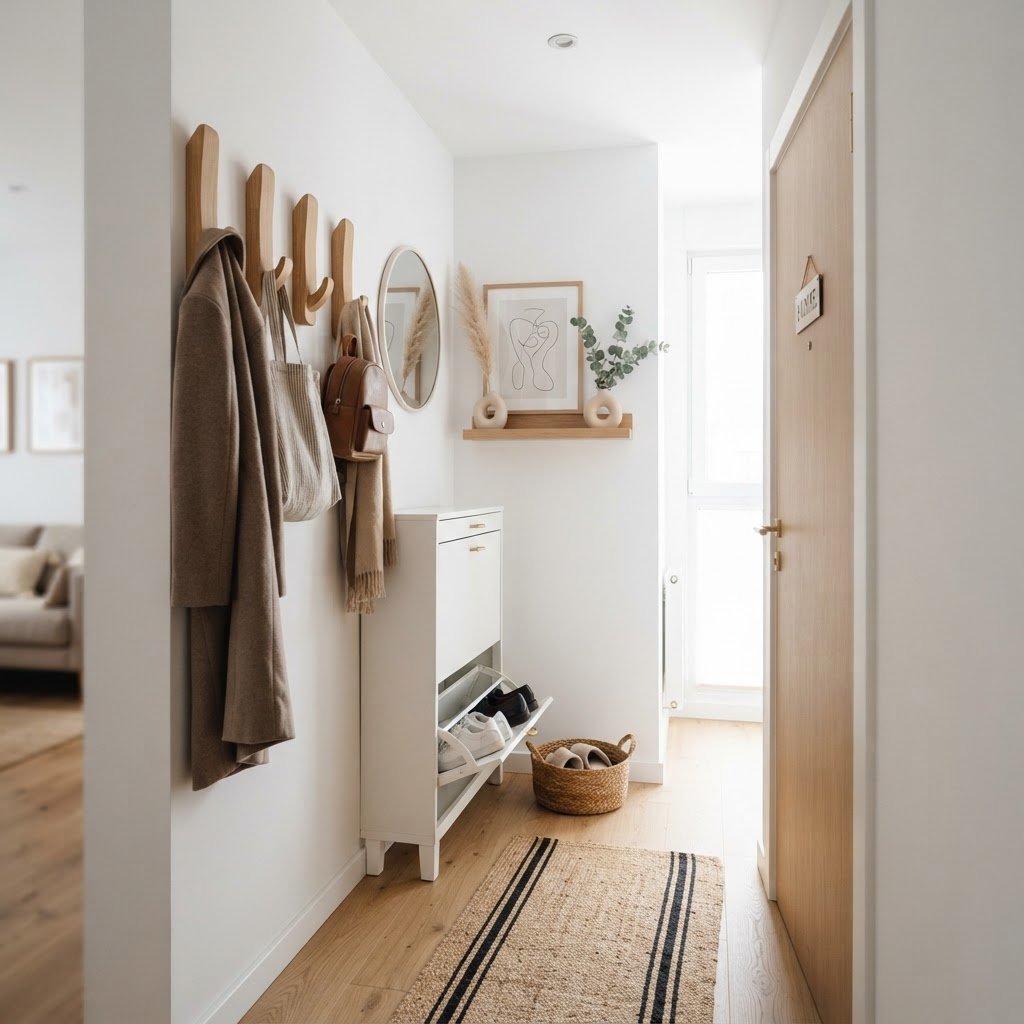
Walking into a home should be a calming experience, yet for many living in apartments or tiny homes, the front door opens directly into a chaotic pile of footwear and forgotten mail. You can organize a micro entryway by installing vertical wall-mounted hooks, utilizing slim-profile tilt-out shoe cabinets, and establishing a dedicated landing strip for daily essentials like keys and mail within three feet of the entrance. This approach clears floor space, reduces visual noise, and creates a functional buffer zone between your home and the outside world.
The Psychology of the Micro Entryway
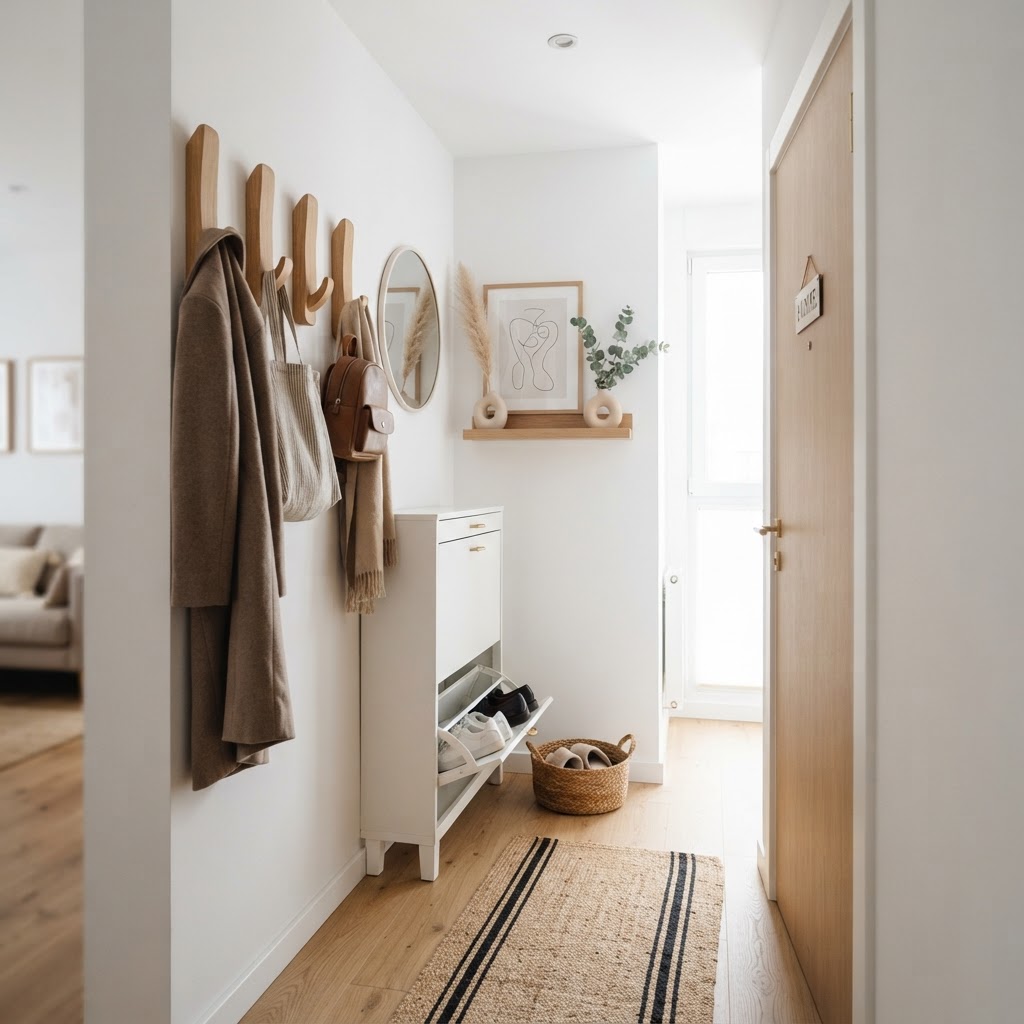
Your entryway acts as a psychological buffer zone between the chaos of the outside world and the sanctuary of your home. When this area is clogged with clutter, it creates a subconscious feeling of stress before you have even taken off your coat, as visual clutter is proven to elevate cortisol levels. The goal is to create a ‘drop zone’ that is intentional rather than accidental. In a micro entryway, there is zero margin for error; if you put one bag on the floor, it blocks the path, and if you leave a stack of mail on a chair, it becomes a permanent pile. The lack of surface area means that every single item needs a dedicated home. If an object does not have a designated spot, it will inevitably end up on the floor, contributing to the cycle of mess. Research suggests that keeping entryways clear improves mood, as individuals associate a tidy transition space with a successful shift from professional or social demands back into their private life. By viewing the entryway as a high-value zone rather than a storage closet, you can maintain a cleaner home with minimal daily effort.
Maximizing Vertical Wall Space
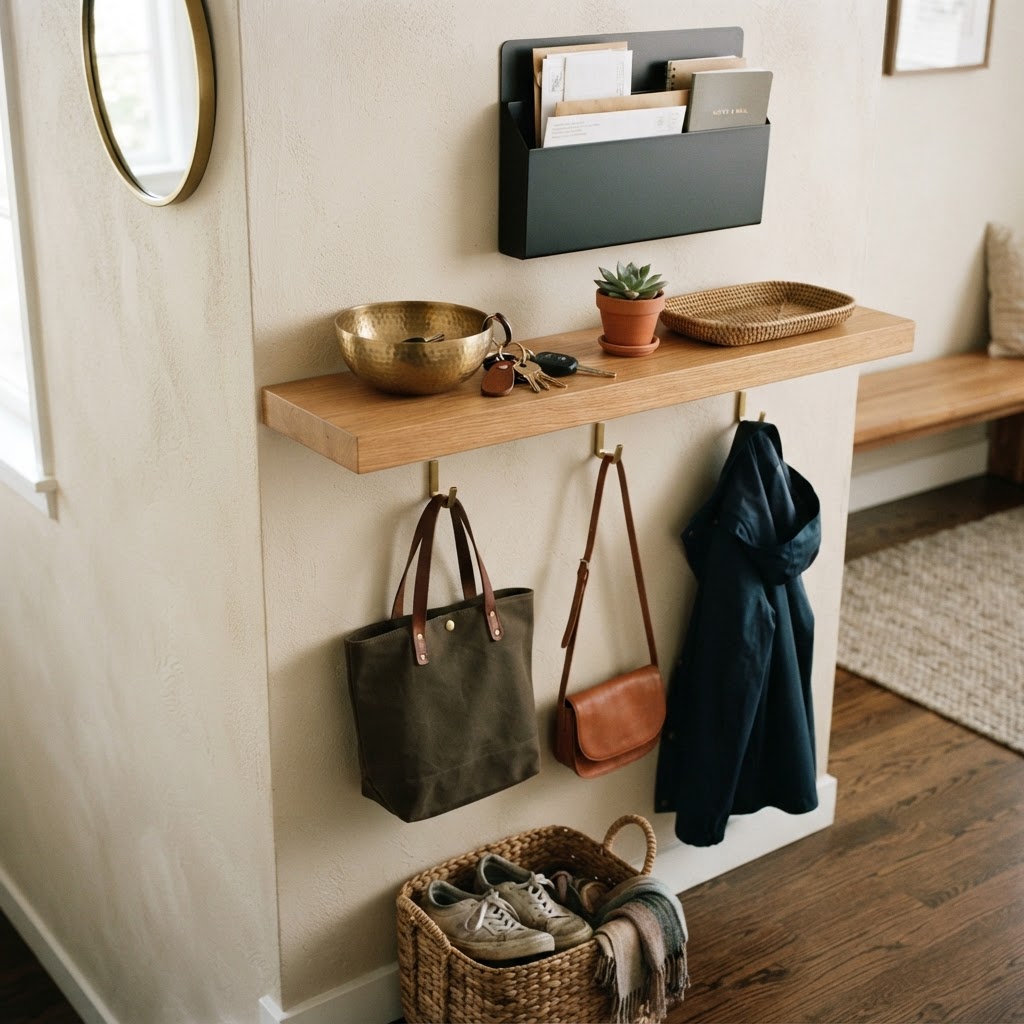
When floor space is non-existent, your walls become your most valuable real estate for storage and organizational efficiency. Many people make the mistake of focusing only on what can sit on the floor, but looking up is the secret to successful small-space living. By utilizing the vertical height of your wall, you can lift items off the ground and create a sense of openness. Consider installing a series of hooks at different heights; low hooks (approx. 36 inches from the ground) are perfect for bags and children’s items, while higher hooks (60 inches+) hold seasonal coats or umbrellas. Wall-mounted mail organizers, preferably placed 48 inches high, are game-changers for keeping surfaces clear. By shifting focus vertically, you reclaim 4-6 square feet of floor space in a typical micro-entryway layout.
Mastering the Art of Shoe Storage
Shoes are usually the primary culprits in entryway mess, and in a micro entryway, you cannot simply toss them into a basket, as this quickly leads to a tangled, unhygienic mess. Instead, look for slim, closed storage units that prioritize efficiency over capacity. Tilt-out shoe cabinets are the industry standard for narrow hallways, as they are often less than 10 inches deep. These units typically hold 6–12 pairs of shoes while hiding them completely behind a sleek facade, preventing the visual clutter that open racks create. Another superior option is a floating shelf positioned just 4 inches off the ground, which allows you to slide shoes underneath without them crowding the floor surface. If your hallway is less than 36 inches wide, always prioritize wall-mounted solutions to ensure the walking path remains unobstructed and complies with basic safety egress standards.
Creating a Functional Key and Mail Drop Zone
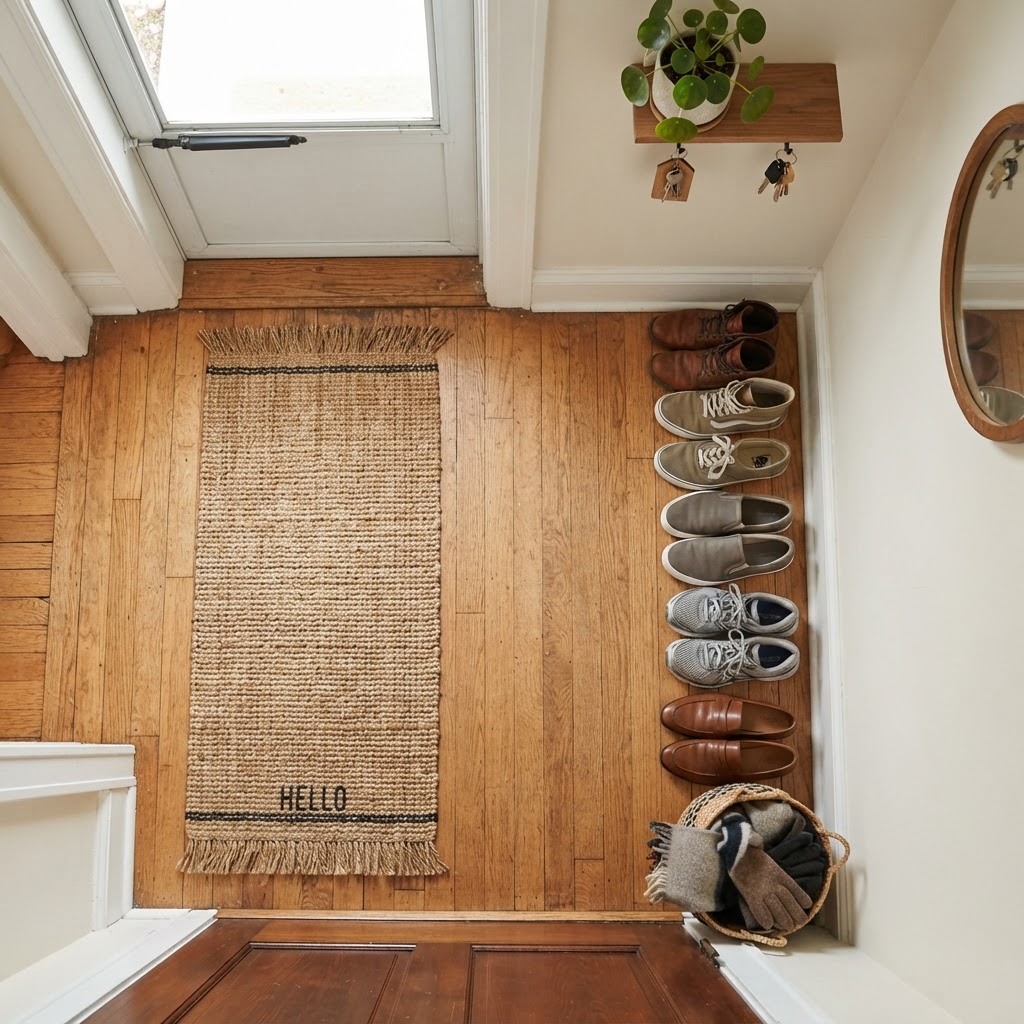
Keys, wallets, and mail are small items that cause the most frustration when lost, and the secret is to establish a ‘landing strip’ the moment you walk through the door. If you have to walk ten feet into your home to put your keys down, they will likely end up on a kitchen counter or, worse, inside a random pocket. Ideally, your landing strip should be located within 3 feet of your front door. If you don’t have room for a full console table, use a small, wall-mounted floating shelf (12–15 inches wide). Pair this with a decorative bowl for your keys and a vertical file sorter for your mail. By keeping these items vertically aligned, you save precious square inches of surface space while ensuring every item has a specific home.
Managing Bags and Accessories
Bags often sit on the floor because they are heavy, but they are also magnets for clutter; therefore, choose hooks that are sturdy enough to support the weight of a laptop bag or a heavy tote. Most standard adhesive hooks fail under loads exceeding 3 pounds; instead, invest in heavy-duty metal wall hooks that are screwed directly into the studs, which can hold up to 25 pounds each. If you have a small closet near your entrance, install a door-back organizer to store purses and seasonal accessories like scarves or hats, which effectively doubles your storage capacity without taking up any footprint. For a cleaner, more modular look, use a long, continuous rail hook system that spans the width of your wall. This allows you to space items out, preventing the ‘crammed’ look while ensuring every bag has its own designated hanging point rather than being piled on a bench.
Establishing Daily Maintenance Habits
Organization is not a one-time event; it is a lifestyle, and even the most perfectly designed micro entryway will fail if you don’t practice daily maintenance. The ‘one-in, one-out’ rule is essential here: if you buy a new pair of shoes, consider which older pair can be moved to a closet or donated. Make it a habit to perform a five-minute reset every evening. Sort the mail into ‘action,’ ‘shred,’ and ‘recycle’ piles immediately, and hang up your keys as soon as you enter the house. Research indicates that habits are formed in 66 days on average; by dedicating just five minutes each day to tidying this space, you prevent the accumulation of items that eventually lead to a full-blown entryway disaster. Focus on resetting the ‘landing strip’ so that every morning starts with a clear, functional space rather than a chaotic pile of last night’s debris.
Selecting Furniture for Small Entryways
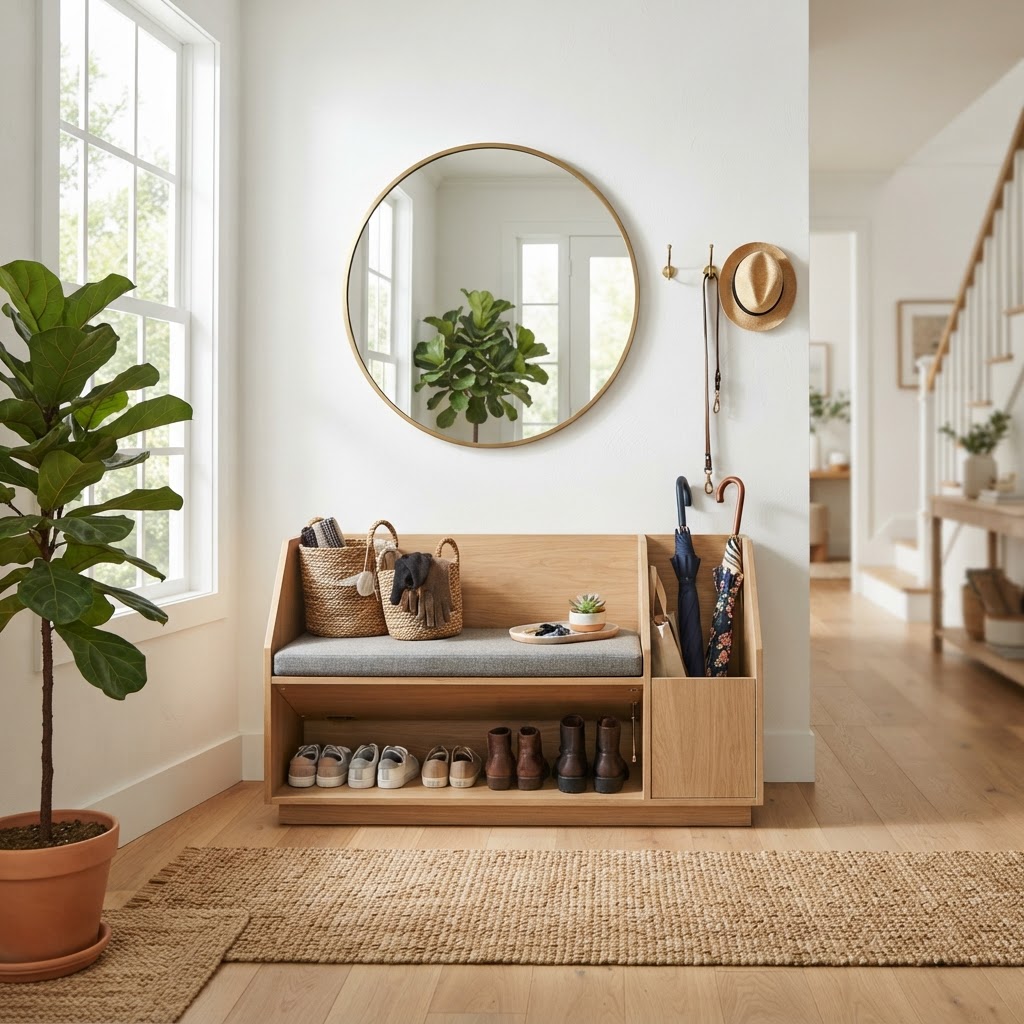
When buying furniture for a tiny foyer, look for pieces with dual purposes to maximize utility. A storage ottoman can serve as a place to sit while putting on shoes while also providing a bin for umbrellas or shopping bags. Furniture with legs often feels lighter than furniture that sits flat on the floor, as it allows your eyes to see more floor space, making the area feel larger. Additionally, adding a mirror to your entryway is a classic interior design trick. It not only allows you to do a final outfit check, but it also reflects light, making a small, dark entryway feel significantly brighter and more spacious. Combine this with warm, focused lighting (3000K color temperature is ideal for a welcoming glow) to create a defined atmosphere, even if it is just a small corner of a living room.
The Importance of Decluttering
Before you start organizing, you must declutter, as it is impossible to organize a micro space that is filled with items you don’t actually use. Take a moment to evaluate your current inventory: do you have shoes that hurt your feet, or mail that has been sitting there for three months? Create three categories: Keep, Donate, and Trash. If an item doesn’t serve a purpose or bring you joy, it has no business living in your high-traffic entry zone. By aggressively purging, you free up the space needed for items you actually use on a daily basis. Aim to remove at least 20% of your current entryway items to see an immediate change in traffic flow and accessibility.
FAQ
Q: What is the best way to store shoes in a very narrow entryway?
A: The best way to store shoes in a narrow entryway is by using tilt-out shoe cabinets, which are typically less than 10 inches deep. These units store shoes vertically, hiding them from view and keeping your walking path clear of hazards.
Q: How can I make my micro entryway look bigger?
A: You can make a micro entryway look bigger by adding a large mirror to reflect light and choosing furniture with exposed legs to show more floor space. Using light, neutral paint colors also creates a visual sense of expansion in cramped areas.
Q: Should I use adhesive hooks or screw-in hooks for my bags?
A: You should use screw-in, heavy-duty metal hooks for bags, as they are anchored into the wall studs and can hold significant weight. Adhesive hooks often fail under the weight of laptop bags, which can cause damage to the wall or the bag itself.
Q: What is the ‘landing strip’ concept?
A: The landing strip is a designated, clutter-free zone within 3 feet of your door where you immediately place your essentials like keys, mail, and wallet. Establishing this habit prevents these items from migrating to other surfaces in your home.
Q: How often should I declutter my entryway?
A: You should perform a light five-minute reset daily to clear out mail and trash, and a deep decluttering session once every three months. This quarterly purge helps remove items that have accumulated seasonally, such as old winter boots or outdated mail.

Leave a Reply