How to Make a Tiny Bedroom Feel Twice as Big
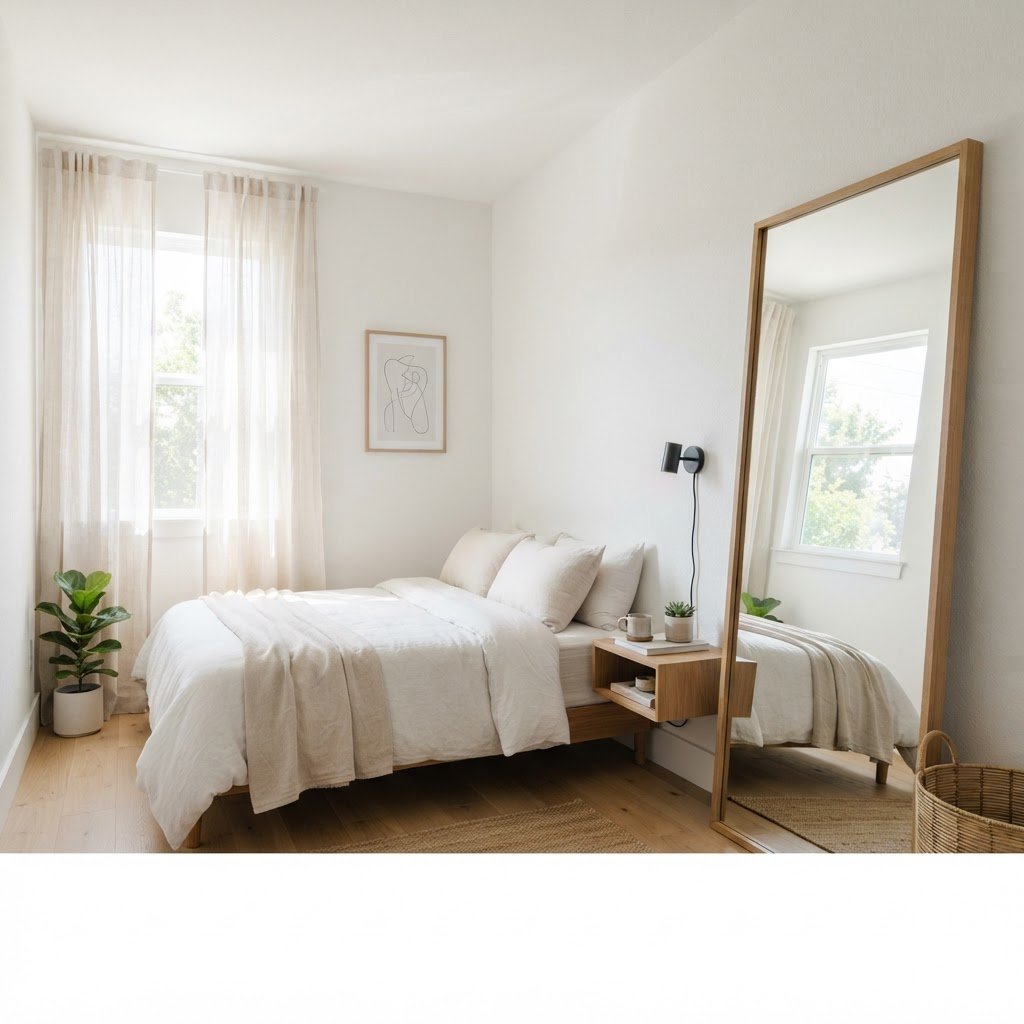
To make a tiny bedroom feel twice as big, prioritize a monochromatic light color palette, incorporate floor-to-ceiling mirrors, and utilize “leggy” furniture that exposes the floor. These strategic design choices trick the human brain into perceiving greater depth and vertical height, effectively expanding the visual footprint of a cramped space.
The Power of a Strategic Color Palette
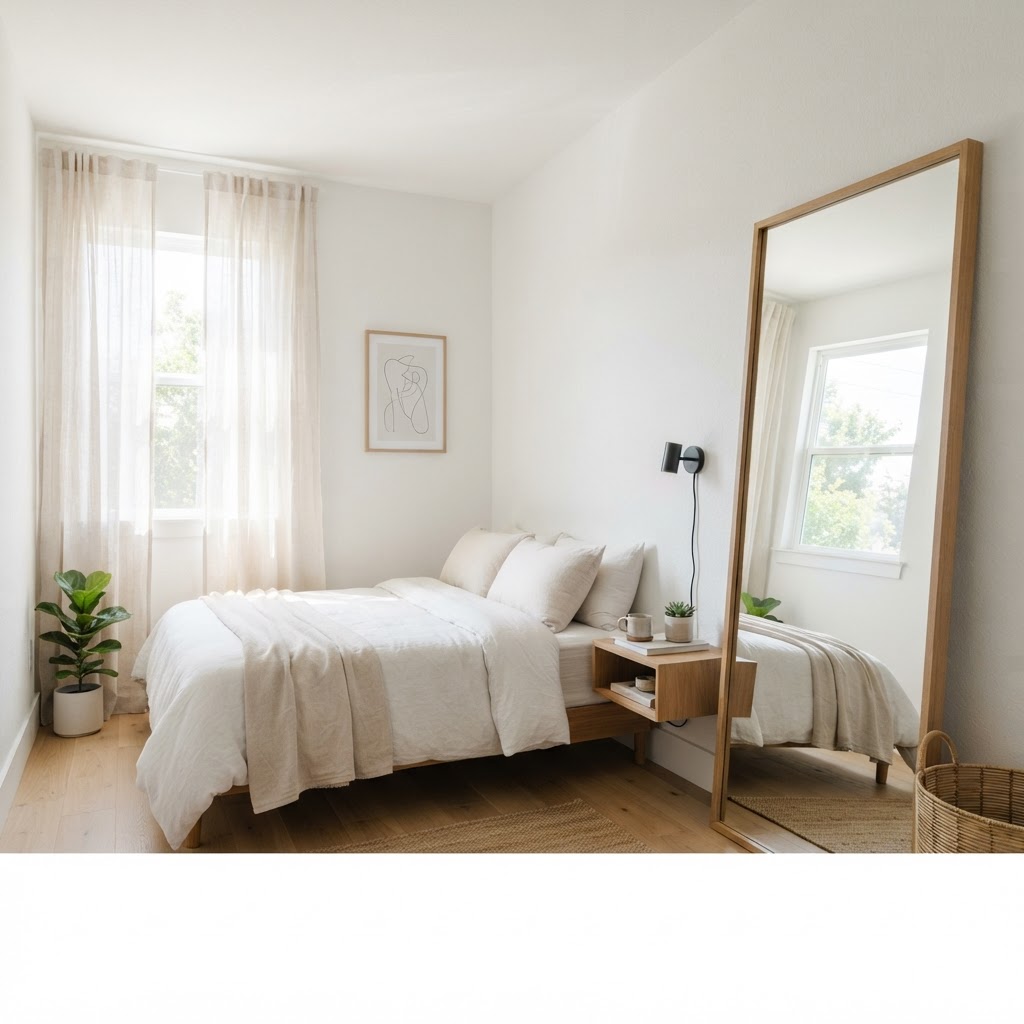
Color serves as the most effective tool for expanding a room visually by blurring boundaries and minimizing harsh transitions that highlight small dimensions. When you select colors for a small bedroom, aim for high-light-reflective values (LRV) above 60 to bounce natural light across the space. Pale blues, cool greys, and crisp off-whites are industry-standard choices because they appear to recede, effectively pushing walls outward.
Painting baseboards, door frames, and even ceilings the exact same shade as the walls creates a continuous “envelope” effect. This eliminates the sharp visual breaks usually caused by contrasting trim. Without these defining lines, the brain struggles to accurately measure the room’s limits, perceiving the area as significantly larger. If you prefer depth, restrict darker hues to the ceiling or a single accent wall, as painting all four walls in a dark color will contract the room by absorbing light rather than reflecting it. For optimal results, use a matte finish on walls to hide surface imperfections and a satin finish on trim for a subtle light-catching contrast.
Using Mirrors to Create Depth
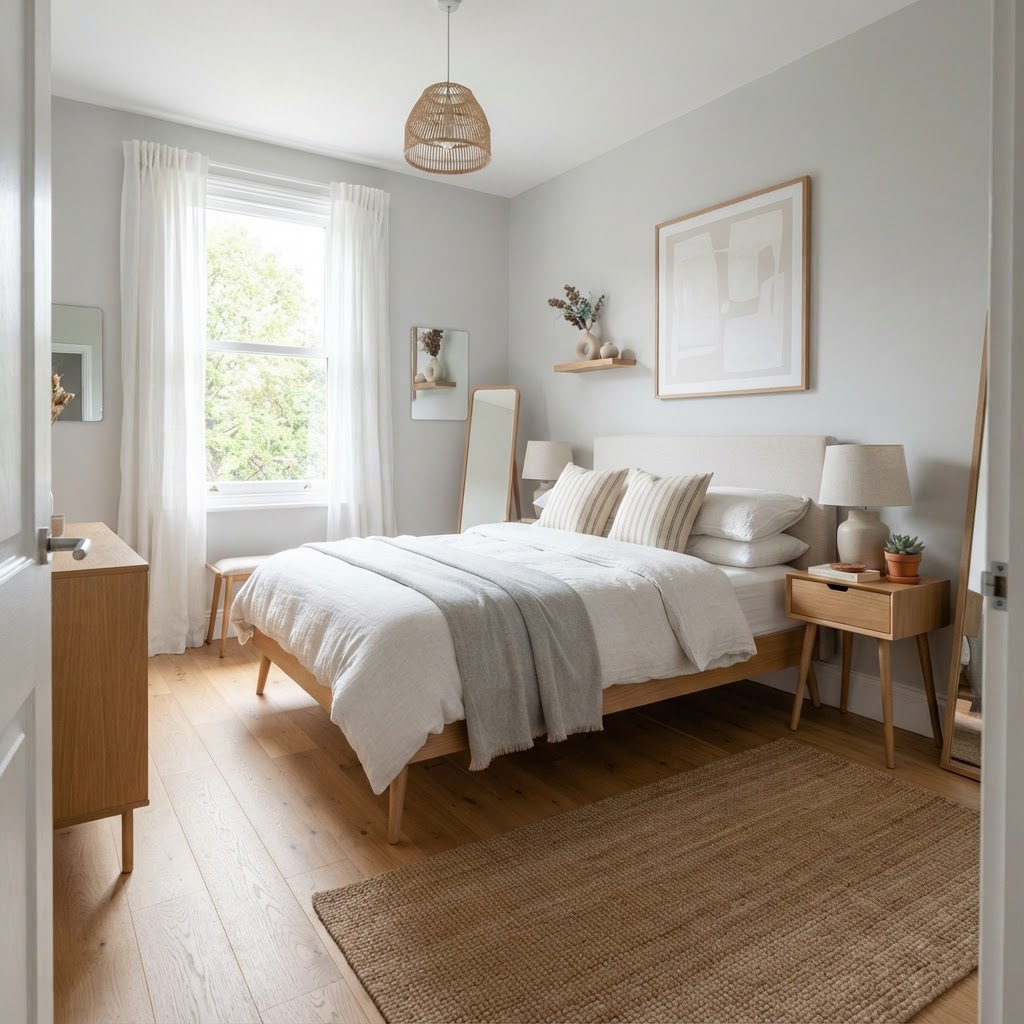
Mirrors are the single most powerful tool for doubling the perceived size of a room because they reflect both light and space, creating a “window” effect where none exists. A well-placed mirror does more than just decorate; it creates an optical illusion that tricks the depth perception of anyone entering the room. For maximum impact, install a floor-to-ceiling mirror opposite a window. This captures outdoor light and green space, effectively importing the outdoors inside and removing the feeling of a “boxed-in” wall.
Beyond traditional wall-mounted mirrors, integrate reflection into your functional furniture. Mirrored closet doors are a classic design hack that turns a heavy, obstructive storage unit into a light-reflecting plane. By camouflaging the closet, you remove its visual weight from the room. Consider the following comparison to maximize mirror placement:
When choosing mirrored pieces, avoid placing them directly across from your bed if you prefer a calming sleep environment, as excessive reflection can feel overstimulating. Instead, focus on reflective surfaces on nightstands or dresser fronts to maintain a cohesive, airy, and sophisticated aesthetic that keeps the eye moving throughout the space.
Mastering Light for Spatial Illusion
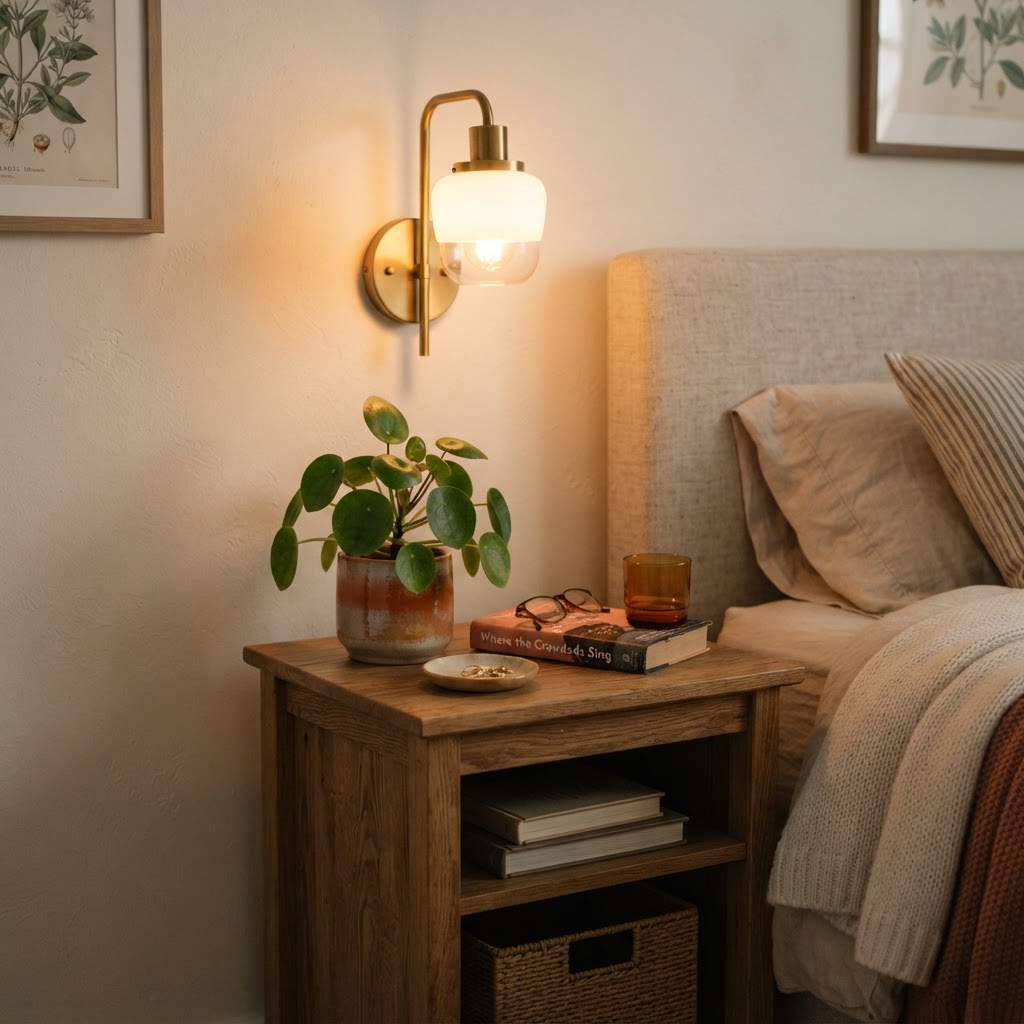
A layered lighting strategy is essential because a single overhead fixture casts harsh shadows in the corners of a room, which makes it feel smaller and more enclosed. To expand the space, you must eliminate these dark pockets by distributing light at multiple heights—ambient, task, and accent. Installing wall-mounted sconces on either side of the bed is a pro move that frees up surface area on nightstands while creating a balanced, high-end look.
Incorporate hidden LED strips behind your headboard or underneath floating shelves to cast a “halo” glow on the walls. This creates a floating effect for furniture, which makes the floor area appear larger by suggesting more negative space. Furthermore, always prioritize natural light by using sheer fabrics like linen or light-filtering cotton instead of heavy, room-darkening velvet. If you require privacy, install roller shades that roll completely into the header to expose the entire window frame. Drawing the eye to the window, rather than the wall, significantly increases the perceived size of the room.
Furniture Choices That Save Space
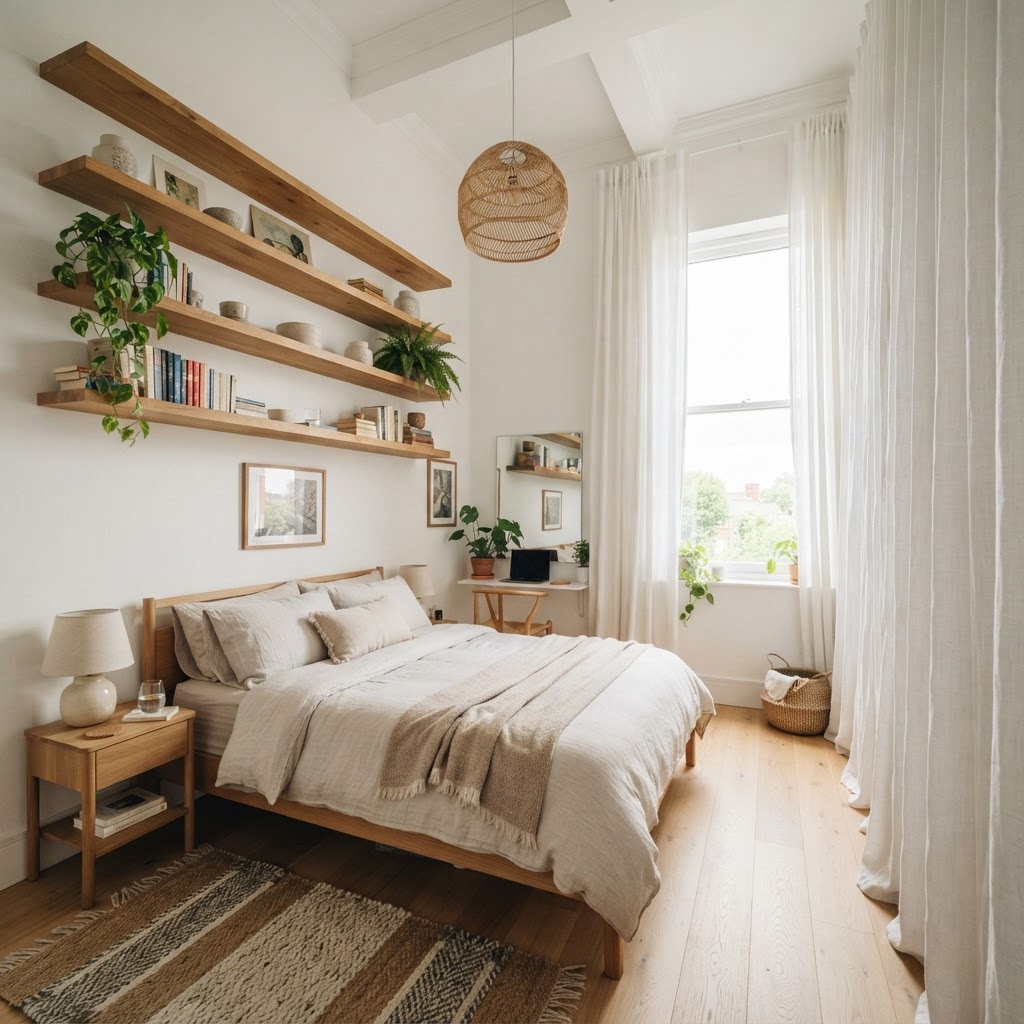
Furniture selection for a small bedroom must prioritize visual “lift” and multi-functionality to avoid overwhelming the limited floor area. Choose pieces with slender, tapered legs—often called “leggy” furniture—to expose more of the floor. When the eye can track the floor continuously beneath a dresser or bed frame, the brain registers the room as having a larger footprint. Solid, floor-sitting furniture blocks the view of the floor, creating a visual “stop” that makes a room feel compressed.
Invest in multi-purpose items that hide your clutter, as a messy room will always feel smaller than it actually is. Look for beds with integrated hydraulic lift storage or ottomans that provide deep compartments for linens and out-of-season clothing. By concealing your belongings inside the furniture, you maintain a minimalist aesthetic that keeps the room open and breathable. A clutter-free space is not just organized; it is a design feature that allows the architecture of the room to shine through.
Maximizing Vertical Real Estate
Look up to maximize your square footage, as walls offer the most underutilized storage and aesthetic potential in any compact bedroom. By mounting items high on the wall, you force the eye to travel upward, creating an artificial sense of height. Install floating shelves near the ceiling to display decor, or use floor-to-ceiling curtains that skim the floor to elongate the windows.
Mounting curtain rods flush with the ceiling is a high-impact, low-cost trick. By hiding the wall space above the window, you create a seamless vertical line that makes windows look significantly larger. Ensure your shelves are not overloaded; a light, curated display of books or small art pieces is much better than a wall crammed with items. This strategy balances out a narrow floor plan by adding a third dimension of space.
Maintaining Minimalism to Prevent Clutter
Minimalism is the maintenance strategy required to keep a small bedroom from feeling claustrophobic. It is not about living with nothing; it is about keeping surfaces clear of the visual noise that makes a room feel cramped. The “one in, one out” rule is an effective system: for every new item you bring into your bedroom, you must donate or discard an old one.
Daily habits are crucial for success in small spaces. Make your bed every morning to immediately set an organized tone. Utilize under-bed storage containers to manage seasonal items so they do not take up closet or floor space. Keep bedside tables restricted to three items maximum (e.g., a lamp, one book, and a small plant). By keeping the horizontal surfaces clear, you prevent the feeling of “stuff” creeping into your personal sanctuary and overwhelming your space.
FAQ
What are the best colors to make a small room feel bigger?
Light, cool-toned colors like soft whites, pale blues, and light greys are the best for expanding a space. These colors reflect light effectively and make walls appear to recede. Using a monochromatic palette with matching trim further eliminates visual breaks that shrink a room.
Do mirrors actually make a room look bigger?
Yes, mirrors make a room feel larger by reflecting light and creating the illusion of a “window” or extra space. For the best result, place a large mirror directly across from a light source or a doorway to maximize the sense of depth in the room.
How high should I hang my curtain rods?
Always hang your curtain rods as close to the ceiling as possible, rather than right above the window frame. This vertical extension draws the eye upward, creates a sense of taller ceilings, and makes the windows appear significantly more dramatic and larger than they are.
What is “leggy” furniture and why does it help?
“Leggy” furniture refers to pieces with slim, elevated legs that reveal the floor underneath. Being able to see the floor continuously beneath a bed or dresser prevents the room from feeling crowded or heavy, which is essential for maintaining an airy and open atmosphere.
How can I declutter a very small bedroom?
Implement the “one in, one out” rule and prioritize multi-functional storage like under-bed drawers or wall-mounted floating shelves. Keeping horizontal surfaces clear of personal items and knick-knacks will instantly make your bedroom feel more spacious and serene.

Leave a Reply