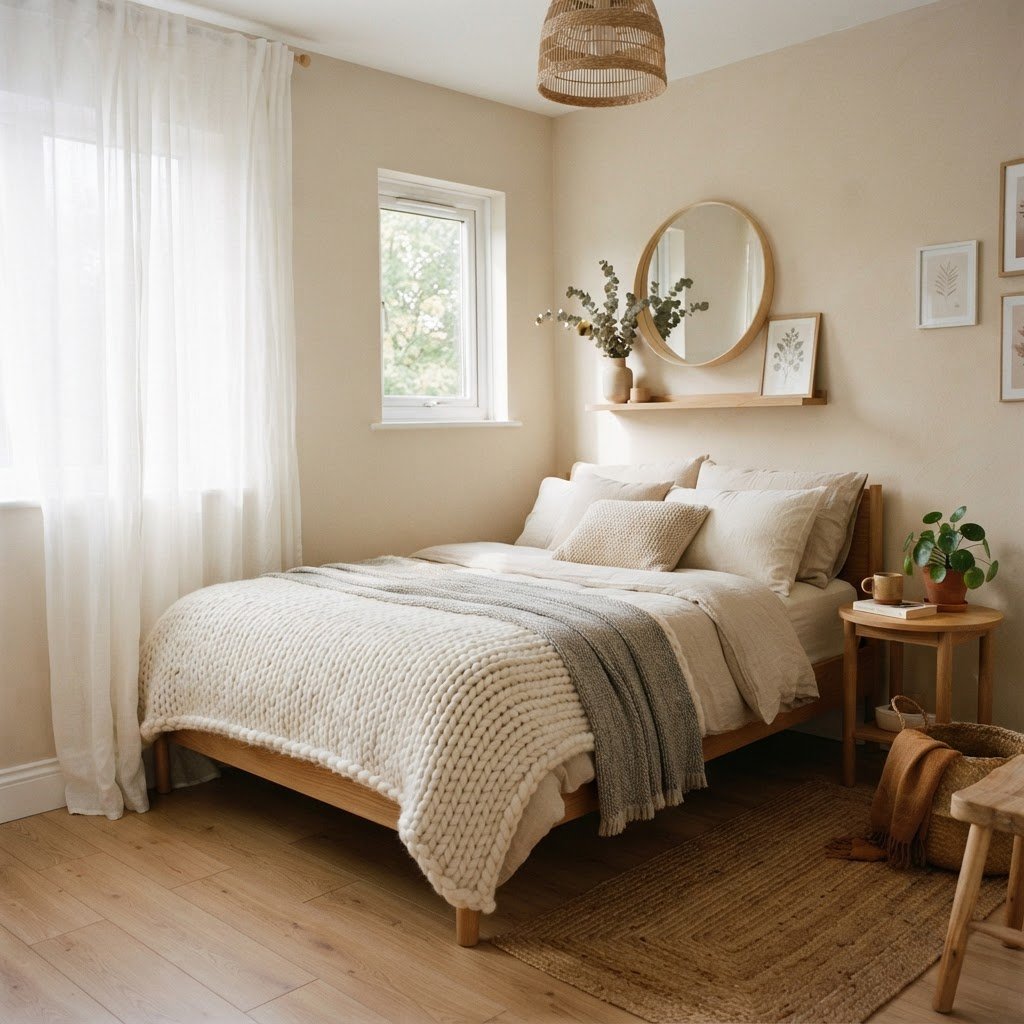
How to Create a Cozy Tiny Bedroom Aesthetic
To create a cozy tiny bedroom aesthetic, prioritize a light neutral color palette, utilize vertical storage solutions like floating shelves, and invest in multifunctional furniture to maximize floor space. By reducing visual clutter and layering warm textures, you can transform a cramped area into a cohesive, tranquil, and spacious-feeling retreat.
The Psychology of Small Space Design
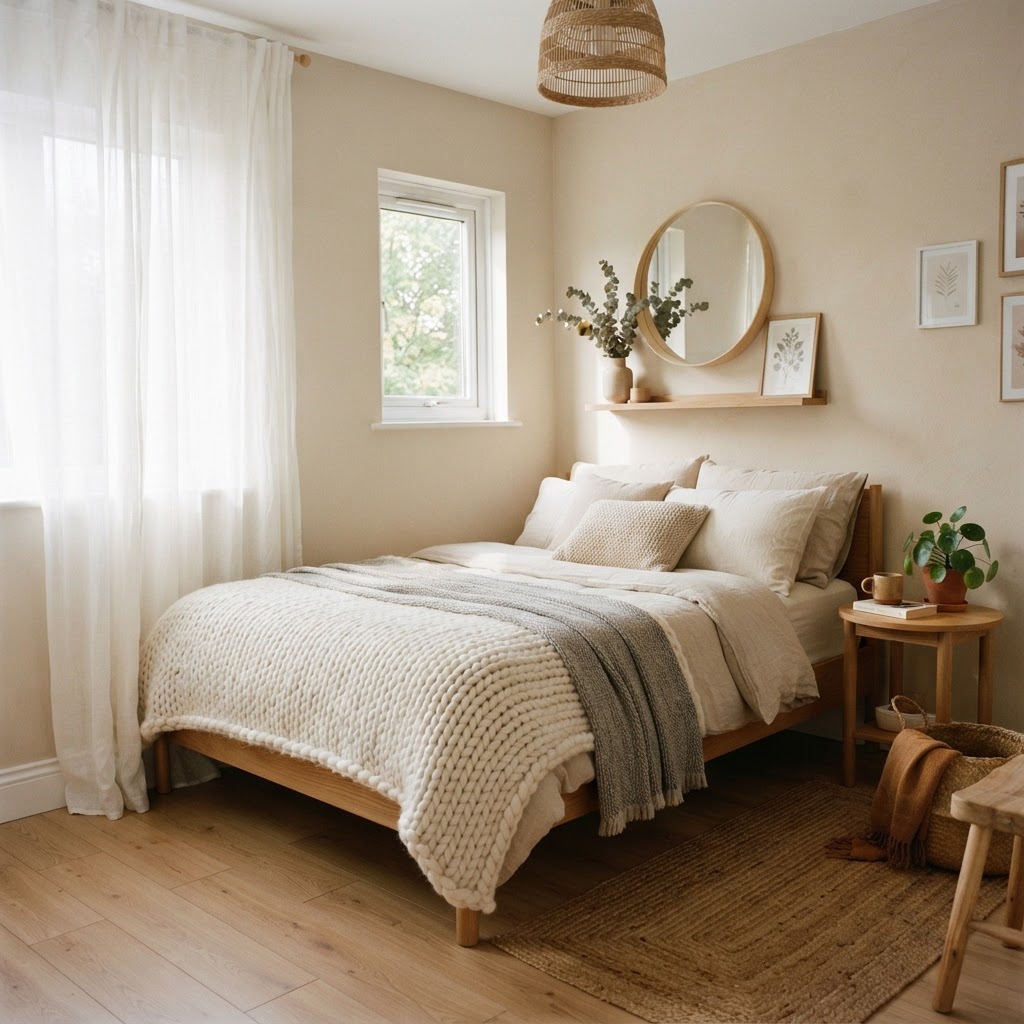
Visual cohesion is the primary driver of perceived space; when a room lacks a unified theme, the brain struggles to process excess stimuli, resulting in a feeling of confinement. Achieving a cozy tiny bedroom aesthetic requires limiting your color palette to two or three main tones to prevent the “overwhelm” effect. Research in interior design psychology suggests that monochromatic schemes with subtle texture variations can increase the perceived size of a room by up to 15% because the eye is not forced to stop at sharp color boundaries. By simplifying your environment, you create “visual breathing room,” which allows the occupant to focus on high-quality focal points rather than general clutter. Every item in a small room must serve a specific function or provide significant emotional value to prevent the space from feeling chaotic. By curating your belongings, you naturally draw attention toward the room’s intentional design rather than its limited physical dimensions, making the area feel like a curated retreat rather than a storage unit.
Choosing the Right Color Palette
Color serves as the most effective tool for depth manipulation; light, neutral tones like eggshell, warm greys, or pale sage reflect up to 80% of incident light, effectively blurring room corners. When walls, baseboards, and trim are painted the same shade, you eliminate the visual “fencing” created by contrast, which helps trick the eye into perceiving the room as an extension of the hallway. While high-contrast designs can be visually arresting, they often shrink a room by segmenting the line of sight. If you desire a dark feature wall, apply it to the wall behind the headboard only to avoid “boxing in” the space.
Maximizing Vertical Storage Solutions
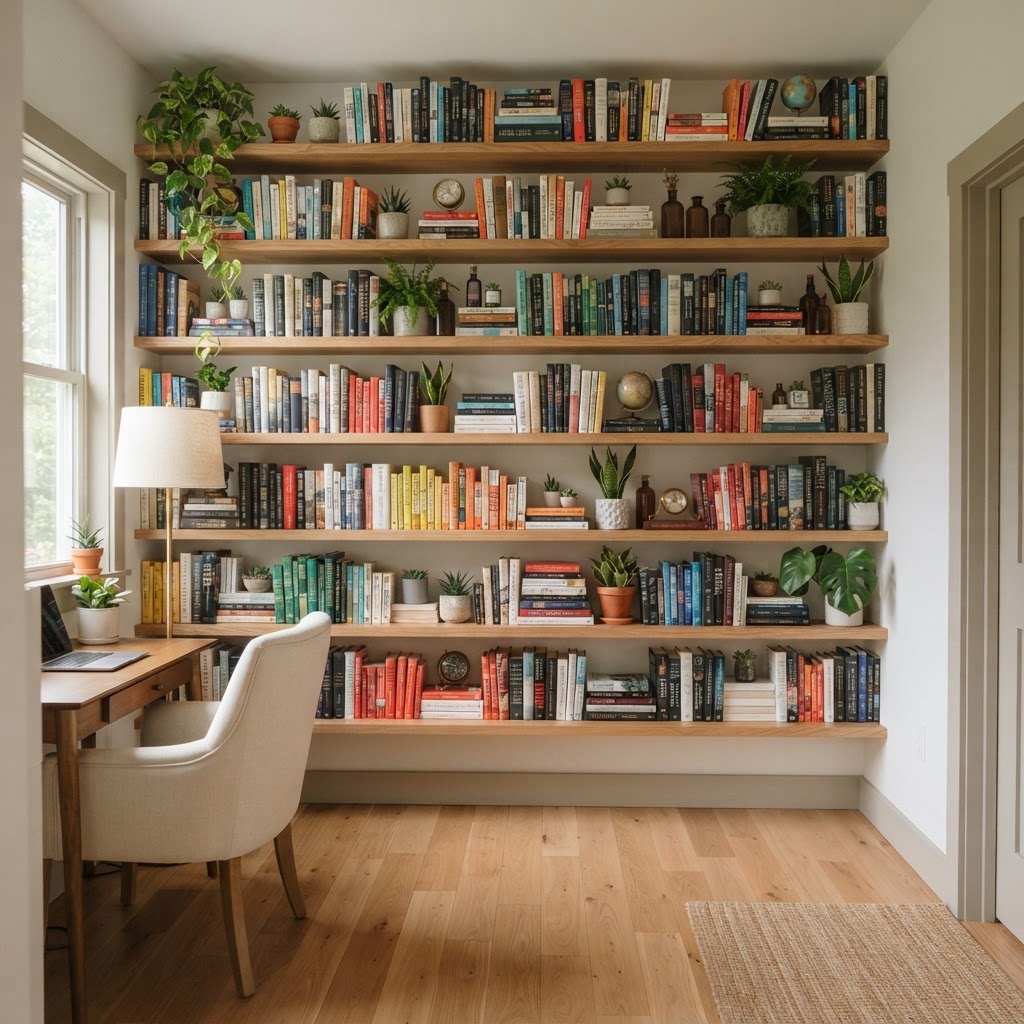
Vertical space is the most underutilized asset in small bedrooms, and capitalizing on it is essential for floor-plan efficiency. Floating shelves are superior to bookcases because they lack a “visual footprint” on the floor, keeping sightlines clear and the room feeling airy. Consider installing shelving systems 12 to 18 inches below the ceiling; this draws the eye upward, highlighting ceiling height and diverting focus away from the room’s horizontal limitations. For maximum efficacy, use wall-mounted racks or over-the-door organizers to house items that would otherwise end up on the nightstand or dresser. Research indicates that keeping at least 60% of floor space clear creates a stronger psychological sense of comfort and spaciousness. When installing storage, ensure the hardware matches the wall color to make the shelves disappear into the background. Using vertical storage allows you to treat the room as a three-dimensional volume rather than a two-dimensional square, significantly increasing your functional capacity without sacrificing your aesthetic goals or creating a feeling of claustrophobia.
Rethinking Your Furniture Layout
Furniture placement dictates the flow of energy and movement, and breaking the habit of pushing all pieces against the wall can lead to a more sophisticated, designer-forward look. Positioning a bed slightly away from the wall—even by just three inches—allows the eye to travel behind the furniture, creating an illusion of depth that makes the room appear wider. Prioritize multifunctional furniture pieces that provide a 2-in-1 return on investment, such as hydraulic storage beds that offer 10–15 cubic feet of hidden storage. When shopping for furniture, always look for “leggy” pieces; being able to see the floor underneath a dresser or vanity prevents the piece from looking like a solid, heavy block.
Lighting Techniques for Small Spaces
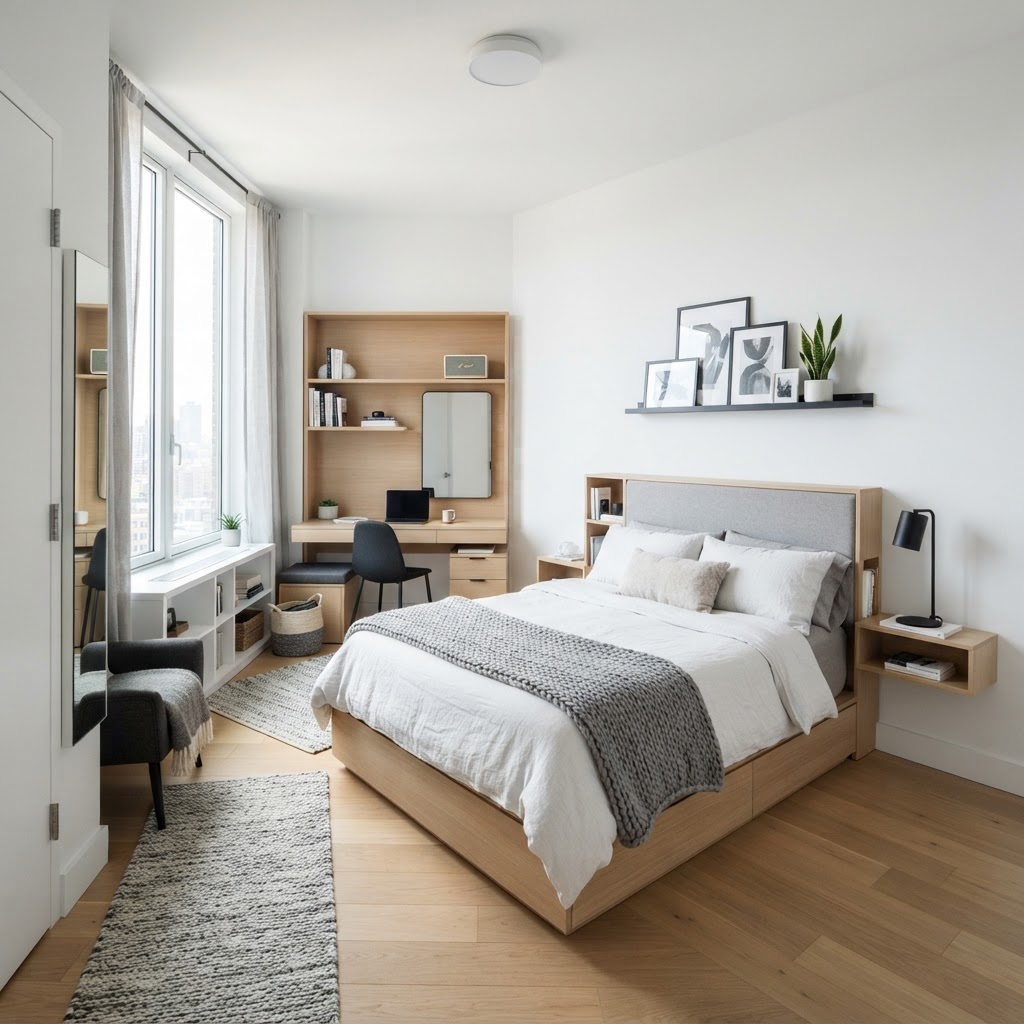
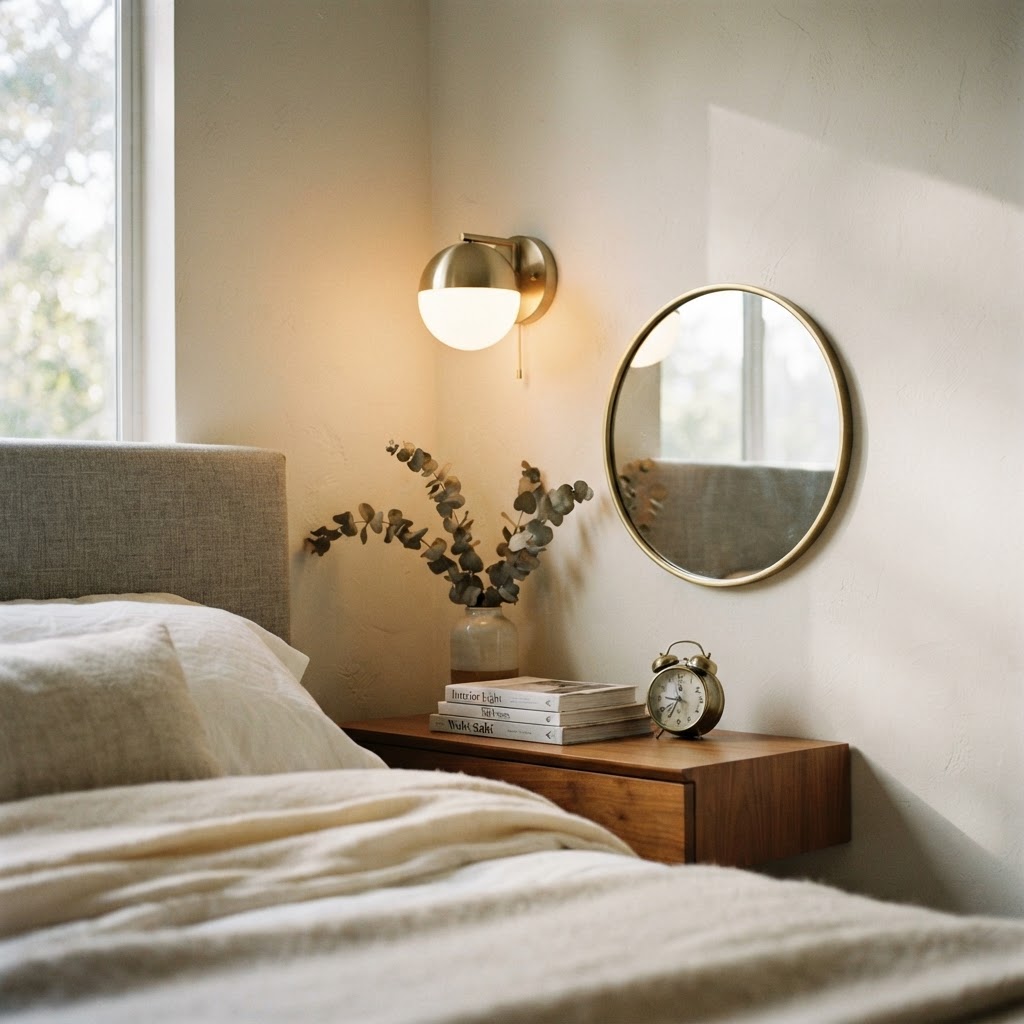
Lighting is the fundamental layer of interior design, and in small bedrooms, it must be used to eliminate deep, shadowy corners that physically define the room’s small size. Harsh, singular overhead lights create “tunnel vision,” whereas layering multiple, lower-intensity light sources—such as bedside sconces, warm LED strips behind the headboard, and dimmable floor lamps—creates a soft, ambient glow that hides room boundaries. Aim for a mix of 2700K to 3000K color temperatures to maintain a warm, cozy atmosphere. Installing wall-mounted swing-arm lamps is a professional trick to reclaim surface space on nightstands, allowing you to use smaller, more delicate furniture pieces without sacrificing utility.
Mirrors as a Design Tool
Mirrors function by reflecting light and duplicating the room’s internal volume, effectively acting as an “optical window.” To maximize their impact, place a large floor mirror directly opposite a window or a primary light source; this bounce effect can increase the perceived brightness of a room by up to 30%. For small bedrooms, a cluster of smaller mirrors or a single oversized lean-to mirror is more effective than standard wall-mounted varieties because they create a clearer, less cluttered reflection of the space.
Mastering the Art of Minimalism and Texture
Minimalism is the intentional curation of your environment to prioritize items that provide either high utility or genuine aesthetic joy. In a tiny bedroom, clutter acts as a physical barrier that restricts movement and peace of mind; therefore, hidden storage should be your priority. Once you have decluttered, introduce luxury through texture rather than volume. Because you lack the square footage for complex furniture arrangements, focus on high-pile rugs, velvet cushions, and chunky knits to provide sensory richness. These elements anchor the room and create a “cocooning” effect, which is the hallmark of the cozy aesthetic. By keeping the color of these textiles within the same tonal family as your walls, you add warmth without creating visual noise. Texture is the secret weapon that transforms a sparse, minimalist room into a welcoming sanctuary.
The Role of Textiles and Bedding
Your bed typically occupies 40-50% of the room’s total footprint, making it the unavoidable centerpiece of your design. Choosing bedding with complex, loud patterns can cause the room to feel cluttered and smaller than it actually is; sticking to solid, tonal, or subtle textured bedding allows the room to breathe. Layering is a vital design technique here; use a high-quality base sheet, a plush duvet, and a decorative quilt to build height and volume. This adds a sense of opulence that contrasts beautifully with the small dimensions of the space. Additionally, making the bed with crisp, neat layers every morning immediately signals that the room is a controlled, tidy space, which is essential for feeling relaxed in a small footprint.
Common Mistakes to Avoid
Small room design often fails due to improper scaling, where homeowners use undersized furniture that makes the room feel like a dollhouse. Avoid the “tiny furniture trap” by opting for one or two larger, high-impact pieces rather than several small, cluttered items. Heavy, light-blocking curtains are another common mistake; replace these with sheer, floor-to-ceiling drapery to maintain privacy while maximizing natural light intake. Finally, avoid filling your walls with dozens of small, scattered frames, which draw attention to the limited wall area. Instead, select one large-scale piece of artwork or a single cohesive gallery arrangement to provide a clear focal point and ground the room. Maintaining harmony between furniture size and wall scale is the defining factor between a room that looks “small” and one that looks “intimate.”
FAQ
Q: What is the best color for a tiny bedroom to make it look bigger?
Light, neutral tones like soft creams, warm grays, or pale sage greens are best because they reflect light and soften corners. These colors create an illusion of depth by blurring the boundaries between walls and trim, making the room feel more expansive than a dark or high-contrast color scheme.
Q: Should I push all my furniture against the walls in a small bedroom?
No, pushing all furniture against the walls can make a room feel like a rigid, empty box. Pulling your bed or desk a few inches away from the wall creates a sense of depth and flow, which makes the space feel more curated, dynamic, and architecturally intentional.
Q: How do I store items in a bedroom without floor space?
Utilize vertical wall space by installing floating shelves, wall-mounted sconces, and overhead storage units near the ceiling. By drawing the eye upward and keeping your floor clear of bulky furniture, you maximize your storage capacity while maintaining a sense of openness and airiness in the room.
Q: Does minimalist design mean I have to have an empty room?
Minimalism is about intentionality rather than emptiness, meaning you should keep only items that provide either high utility or joy. By removing clutter and choosing a few high-quality, textured pieces, you create a cozy, luxurious atmosphere without the sensory overload that often makes small rooms feel cramped.
Q: How can mirrors help a small bedroom?
Mirrors double visual depth and amplify existing light when placed strategically. By positioning a large mirror opposite a window, you reflect natural light into the room, which brightens dark corners and makes the space feel significantly larger and more open than its actual physical dimensions.

Leave a Reply