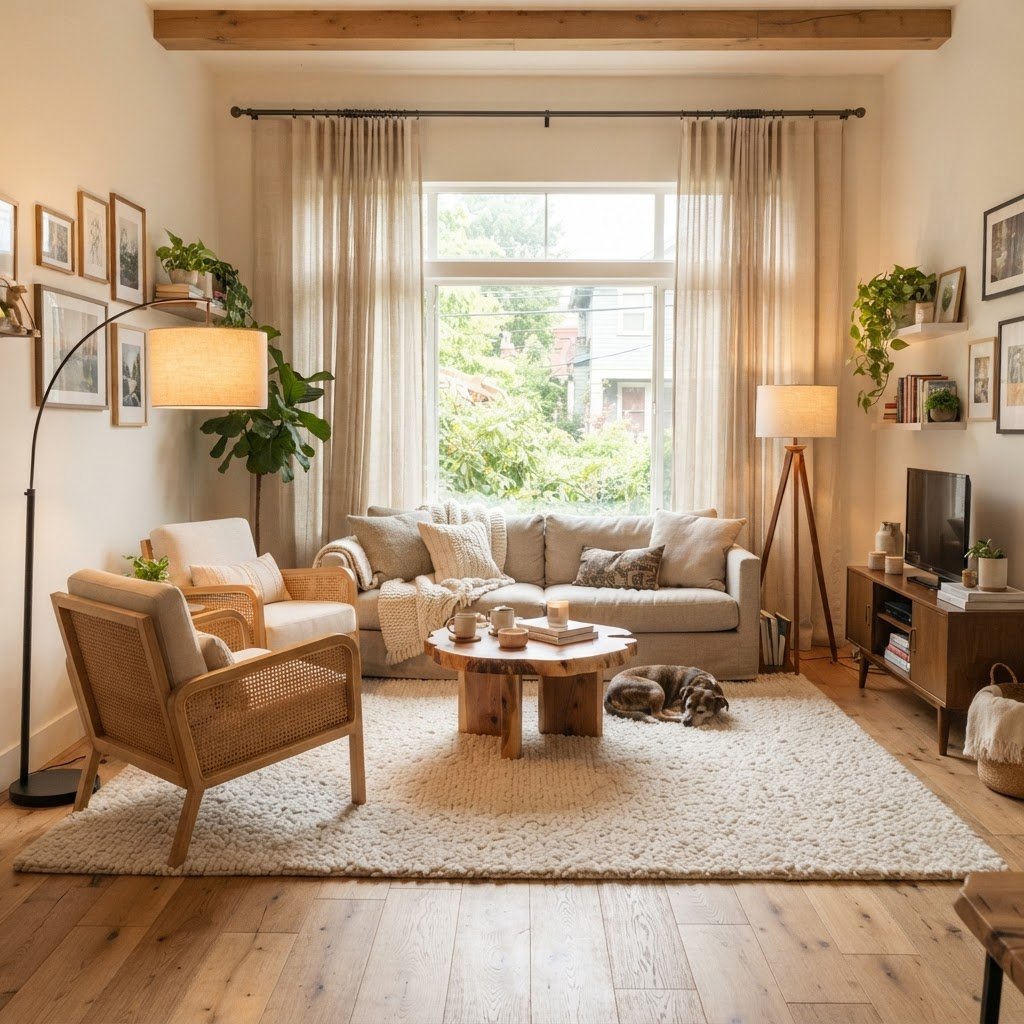
How to Make Your Rental Living Room Feel Custom and Cozy
To make a rental living room feel custom and cozy, prioritize layering warm ambient lighting, utilizing peel-and-stick wallpaper for visual interest, and defining spaces with high-quality area rugs. These strategic, non-permanent design choices effectively mask standard rental features like sterile white walls and worn flooring while adding personal character.
The Power of Layered Lighting
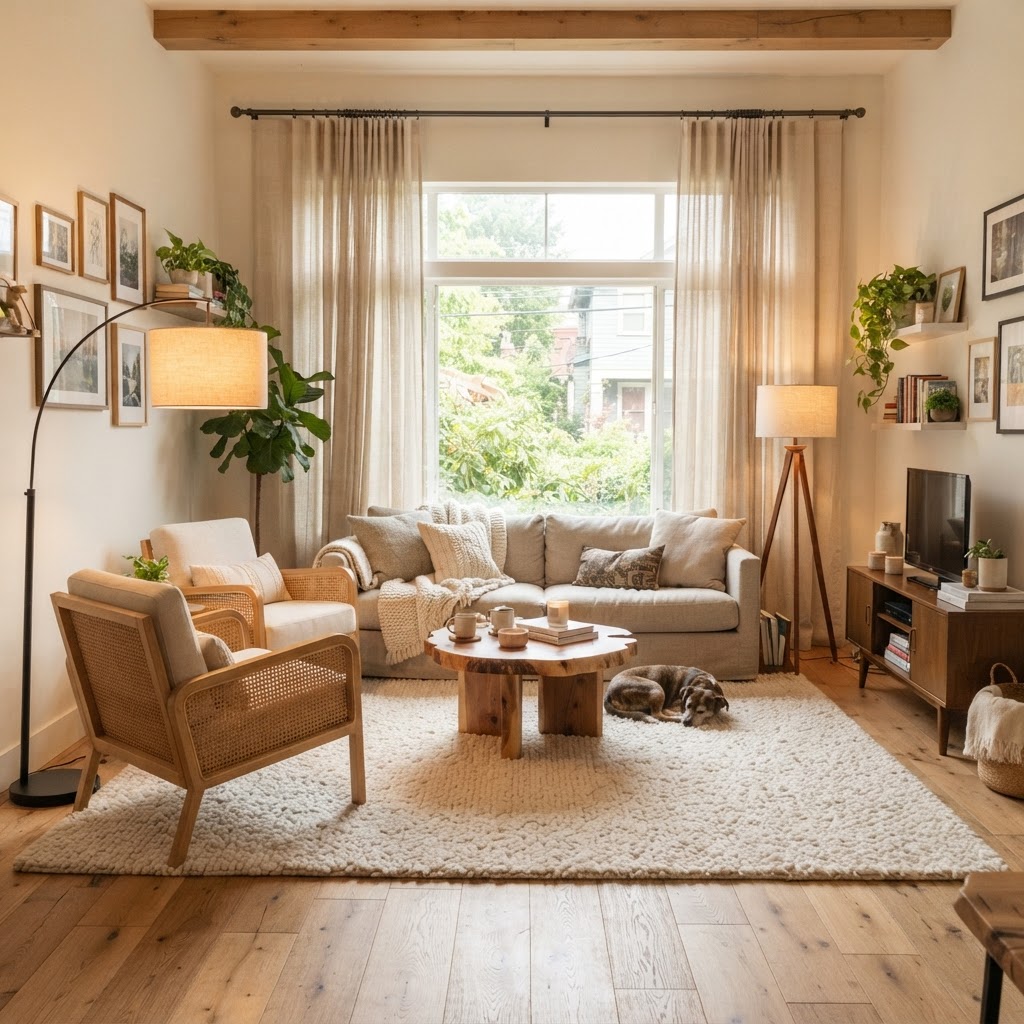
Most rental units come with harsh, overhead lighting that does little to create a relaxing atmosphere, so replacing this with layered, warm-toned lighting is the fastest way to elevate your space. Aim for a mix of at least three light sources in your living room—floor lamps, table lamps, and accent lighting—to eliminate dark corners and create a bespoke, moody ambiance.
Incorporating Ambient and Task Lighting
To achieve a custom aesthetic, move beyond a single ceiling fixture. Incorporate floor lamps with warm-toned bulbs (ideally 2700K to 3000K) to add height and texture to corners. Table lamps on side tables help create “pools” of light that make a room feel smaller and more intimate. By placing these lamps at different heights, you draw the eye around the room rather than focusing on the standard ceiling light.
Dimmable Solutions
If your apartment lacks dimmers, use smart bulbs or plug-in dimmers. These small additions provide instant control over your mood, making the room feel more like a bespoke space rather than a sterile rental. Smart bulbs often cost under $15 each and can be adjusted via your smartphone, allowing you to transition from bright cleaning light to a cozy evening glow without professional electrical work.
Refreshing Walls Without Permanent Paint
One of the biggest hurdles for renters is the inability to paint walls, but modern peel-and-stick wallpaper provides a high-impact, damage-free alternative. This material is typically made from vinyl or fabric, allowing you to cover large areas that can be removed in minutes when your lease expires without leaving behind residue or needing a paint touch-up.
Using Temporary Wall Treatments
Choose a peel-and-stick pattern that complements your furniture. Whether you opt for a bold geometric print or a subtle grasscloth texture, this simple change makes your rental living room feel custom and cozy instantly. If you are hesitant about wallpapering an entire room, consider creating a single focal wall behind your sofa, which usually requires only 2 to 3 rolls of standard 24-inch wide wallpaper. Ensure your wall is clean and dry before application to maximize adhesion and longevity for the duration of your stay.
Maximizing Comfort With Textiles
Textiles are the soul of any cozy room, and since you cannot change permanent flooring or architectural details, rugs and curtains are your primary tools for transformation. A high-quality area rug acts as the room’s foundation, providing acoustic dampening and warmth, while curtains offer a sense of height and luxury that standard metal blinds simply cannot achieve.
Layering Rugs and Curtains
Invest in a high-quality area rug that covers most of your floor space; a 6×9 or 8×10 rug is often necessary to properly anchor a standard sofa. If the existing carpet is worn, a thick wool or high-pile synthetic rug hides imperfections while adding softness underfoot. Similarly, hanging floor-to-ceiling curtains on a tension rod or a non-damaging command-hook curtain rod makes your windows look larger and adds an architectural element that feels high-end and custom.
Texture and Color Palette
Incorporate throw blankets and pillows in varying textures like velvet, linen, or chunky knits. A monochromatic palette (using varying shades of the same color) can make a room feel larger and more cohesive, while deep, warm colors add that signature cozy vibe. Aim to mix at least three different textures (e.g., leather, wool, and cotton) to keep the space visually interesting without needing to add extra items.
Furniture Placement for Flow and Function
How you arrange your furniture determines how a space functions, and strategic placement can turn a cramped apartment into an efficient, custom-feeling environment. In a rental, you want to avoid “floating” furniture in the middle of a room unless it serves a distinct purpose, such as acting as a walkway guide or defining a specific activity zone.
Zoning Your Living Space
Use your rug to anchor your seating area by ensuring at least the front legs of all furniture pieces are placed on the rug. Position your sofa, armchairs, and coffee table so they create a conversational circle rather than pushing all furniture against the walls. If you have an open floor plan, place a console table behind the sofa to delineate the living area from the dining area. This simple act of organization creates a sense of intentionality that feels custom-made, separating your “living” zone from the rest of the floor plan.
Incorporating Personal Touches and Art
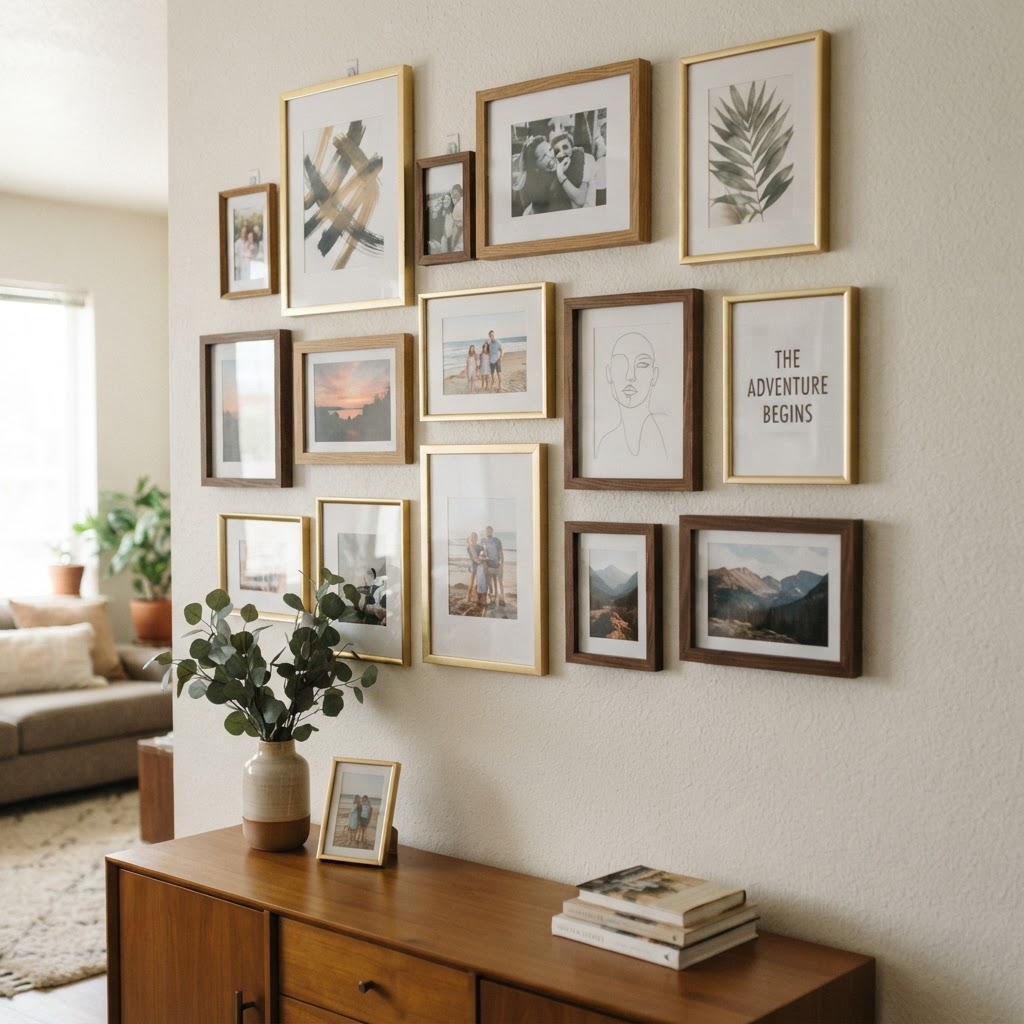
Blank walls are a renter’s biggest enemy, but you don’t need to put holes in the drywall to display art. Use damage-free adhesive strips or large floor mirrors leaning against the wall to create a custom gallery feel that adds depth to your room.
Curating a Meaningful Display
Displaying personal items, travel souvenirs, and books makes a space feel like a home rather than a temporary dwelling. Consider using picture ledges that require only a few small holes—which are easily patched with spackle later—or simply lean your frames on a bookshelf or mantle. By grouping smaller items in odd-numbered clusters, you create a professional-looking display that highlights your personality without the commitment of wall-mounted shelves.
Greenery and Natural Elements
Nothing breathes life into a rental living room faster than house plants, as they provide scale, color, and a sense of calm that helps a rental feel like a custom-designed home. Plants effectively bridge the gap between indoor and outdoor aesthetics, softening the harsh corners often found in modern apartment construction.
Choosing the Right Plants
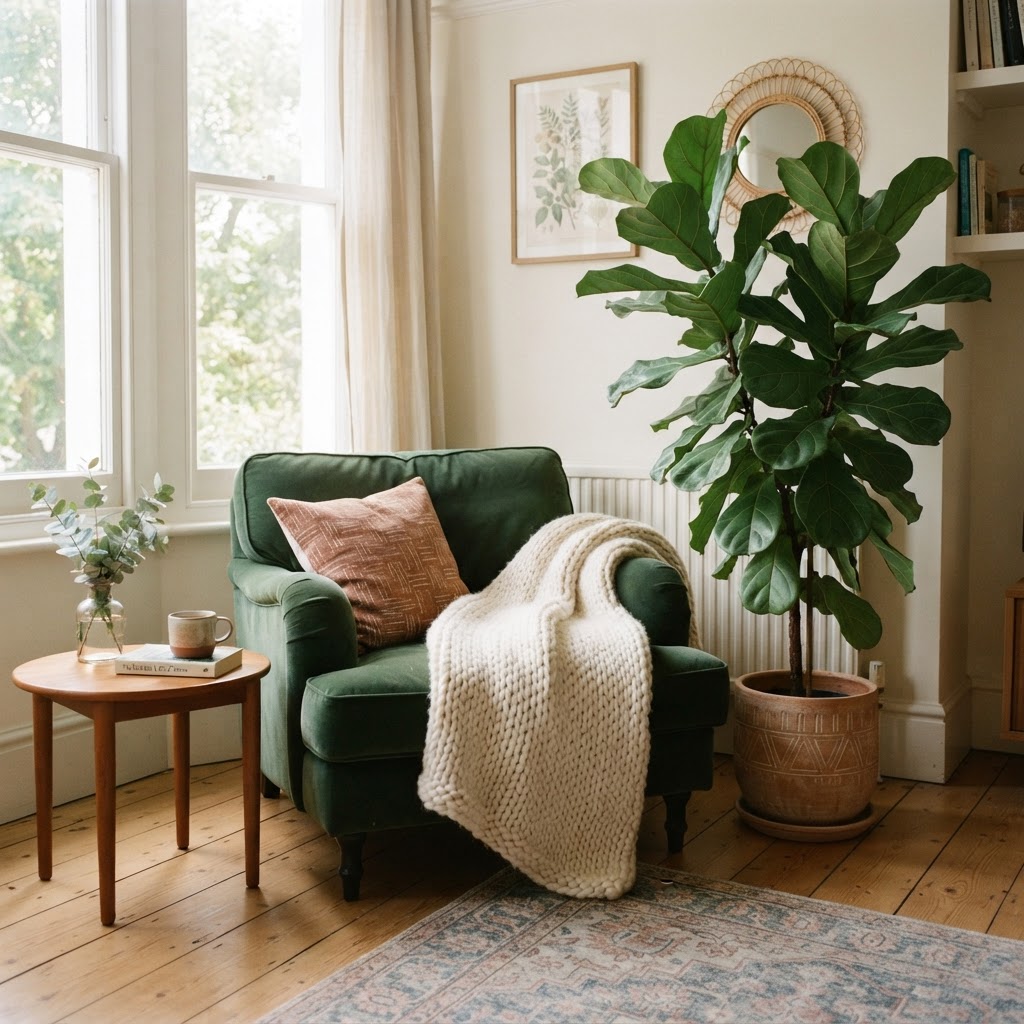
Select plants based on your lighting conditions. A tall Fiddle Leaf Fig or a cascading Pothos can dramatically transform a corner, often taking up dead space that would otherwise feel empty. Pair them with stylish, elevated planters that add height and interest to your room’s visual layout. Elevating a plant on a stand not only makes it a focal point but also allows for better air circulation around the pot.
Summary of Renter-Friendly Upgrades
- Install dimmer switches or use smart light bulbs for mood lighting.
- Utilize peel-and-stick wallpaper to create a custom feature wall.
- Hang floor-to-ceiling curtains to elevate the look of standard windows.
- Use large area rugs to cover unattractive or worn flooring.
- Choose furniture with legs to make the space feel lighter and more spacious.
- Add house plants to bring texture and organic shape to your room.
FAQ
Q: Does peel-and-stick wallpaper really come off without damaging walls?
Yes, high-quality peel-and-stick wallpaper is specifically designed to be removed cleanly from standard drywall. If you heat the material slightly with a hair dryer during removal, the adhesive softens, making it even easier to peel off without stripping the underlying paint.
Q: What is the best way to hang heavy curtains without drilling holes?
Use heavy-duty tension rods or adhesive-backed curtain rod brackets designed for renters. These solutions can support most standard-weight curtain panels and allow you to achieve the high-end floor-to-ceiling look without leaving permanent marks on your window frames or walls.
Q: How can I make a small rental living room look bigger?
Focus on a light, monochromatic color palette and use mirrors to reflect light around the room. Choosing furniture with exposed legs instead of solid bases allows the eye to see more floor space, which tricks the brain into perceiving the area as larger than it actually is.
Q: Is it possible to change rental lighting without an electrician?
Yes, you can easily upgrade lighting by using plug-in wall sconces or smart LED bulbs in existing fixtures. If you choose a rental-friendly plug-in sconce, you can mount it using adhesive strips or a simple nail, avoiding any complex wiring changes while gaining focused task lighting.
Q: How many plants do I need to make an impact in a living room?
Start with three plants of varying sizes—one large statement plant, one medium-sized plant for a table, and one trailing plant for a shelf. This “rule of three” creates a balanced, organic look that instantly makes any room feel curated and vibrant.

Leave a Reply