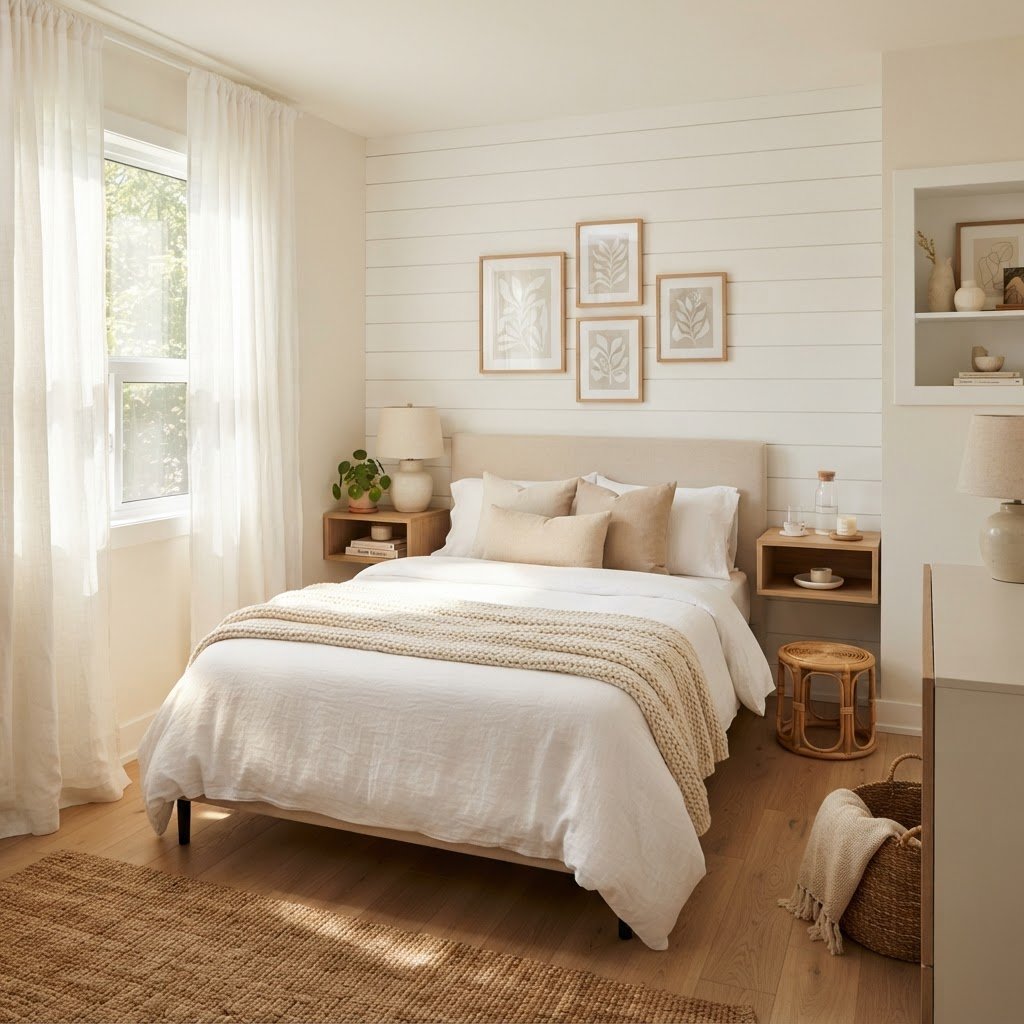
To transform a small bedroom in a single weekend, focus on a light-reflecting color palette, vertical storage utilization, and multi-functional furniture placement. By clearing clutter, maximizing wall space, and introducing layered lighting, you can increase your room’s functional square footage and create a sanctuary without requiring expensive renovations or construction.
The Power of Color and Light
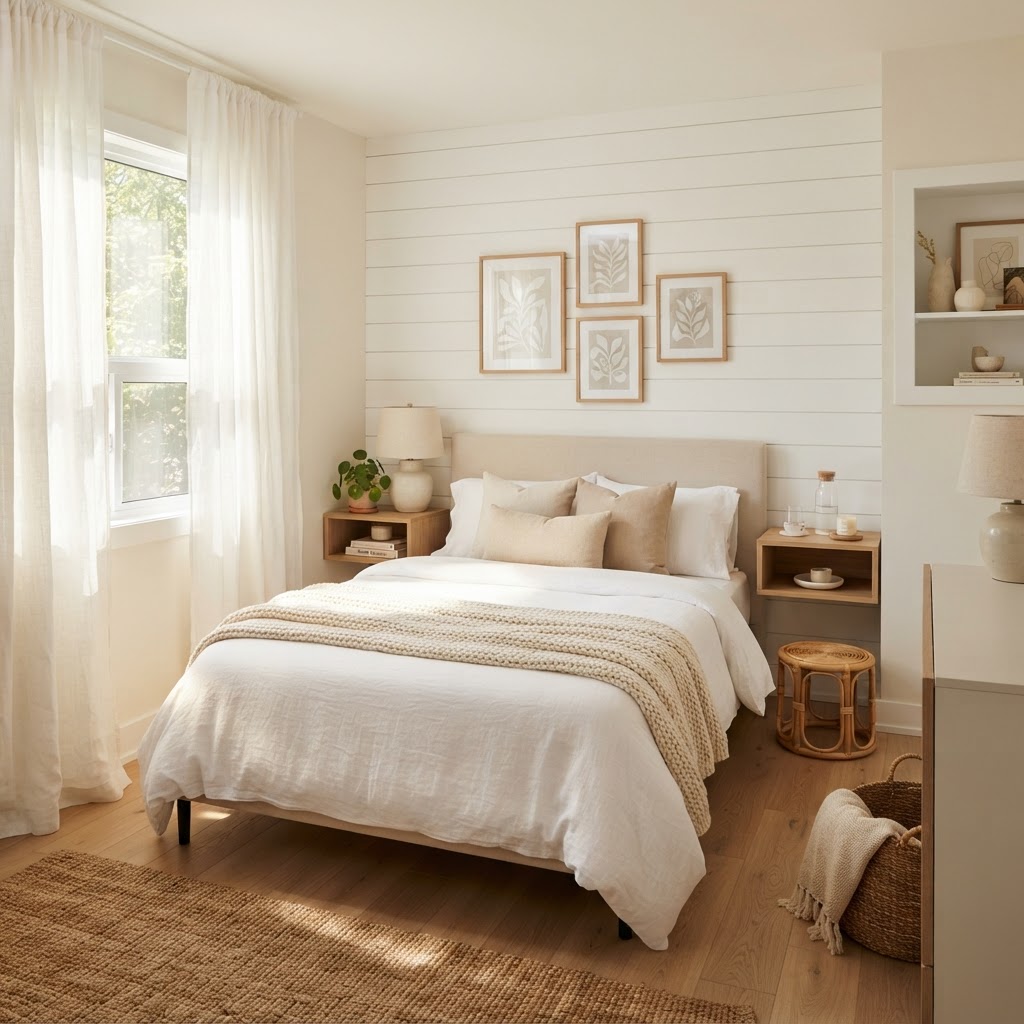
Strategic application of color and light is the fastest method to expand a small bedroom’s perceived dimensions. Research suggests that high-reflectance paint colors, such as “off-white” or “pale gray” with a satin finish, can increase the light levels in a room by up to 20%. When choosing a palette, stick to a monochromatic scheme to eliminate visual “breaks” in the wall, which tricks the eye into seeing an continuous, larger surface area. For example, matching the color of your curtains to your wall paint can make the room feel four to six inches taller. To prevent the space from feeling sterile, incorporate three distinct textures within the same hue: a velvet pillow for sheen, a wool rug for weight, and linen bedding for a soft, organic finish. Avoid heavy window treatments that block natural light; instead, use cordless roman shades or sheer panels that maintain privacy while allowing maximum solar gain. Furthermore, prioritize layered artificial lighting by placing sconces at a height of approximately 30 inches above the mattress, which saves surface space while creating a warm, ambient glow that defines the room’s borders.
Choosing the Right Palette
While crisp white is a classic choice, don’t be afraid to experiment with soft neutrals, pale blushes, or serene light blues. These shades recede, which makes walls feel as if they are pushing outward, creating an airy atmosphere. To add depth, use varying textures within that same color family—think linen bedding, a wool rug, and velvet throw pillows.
Optimizing furniture layout requires prioritizing floor clearance and selecting pieces that serve multiple purposes. A standard bedroom layout often wastes space by pushing furniture against walls, but pulling the bed slightly off the wall or centering it can improve flow and allow for easier access. Use the “Rule of Thirds” when selecting furniture size; in a room under 120 square feet, choose furniture where the largest piece takes up no more than one-third of the floor area. Replacing bulky traditional nightstands with wall-mounted floating shelves can recover up to two square feet of floor space per side, which significantly reduces feelings of claustrophobia. Additionally, consider the “float test”: if you can see more floor surface area, the room will look bigger. When selecting a bed, opt for models with integrated storage drawers or a headboard that incorporates shelving, effectively replacing the need for a separate dresser or bookcase. This consolidation of furniture pieces reduces the total volume of items in the room, keeping lines clean and functional.
Scaling Down and Floating Pieces
If your bed is pushed into a corner, consider floating it in the center of the wall to create a more balanced “boutique hotel” feel. Ensure that you have enough space to walk comfortably on both sides. If your nightstands are too bulky, swap them for floating shelves or narrow wall-mounted consoles. This frees up precious floor space, making the room appear much larger and cleaner.
The Versatile Headboard
If you are lacking storage, consider an upholstered headboard with built-in cubbies or a tall headboard that reaches toward the ceiling to draw the eye upward. A headboard can serve as a decorative focal point while simultaneously providing utility, which is a staple among small bedroom makeover ideas for renters and owners alike.
Smart Storage Solutions for Small Bedrooms
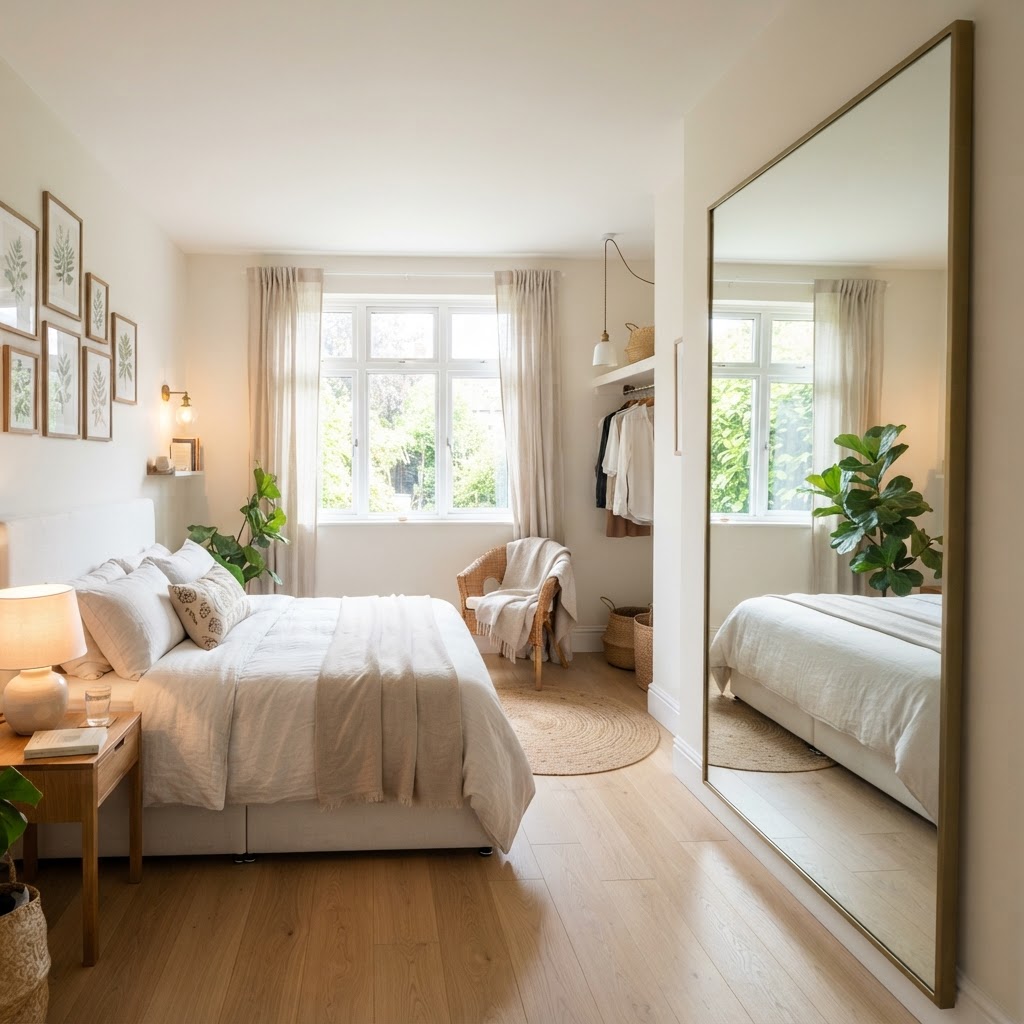
Smart storage in a small bedroom relies on capturing “dead space” that typically goes unused, such as vertical wall surfaces and the under-bed area. Experts recommend utilizing the top 18 inches of wall space near the ceiling for “high-frequency storage,” where you can place baskets containing seasonal items like extra linens or off-season clothing. Using matching containers—such as linen-lined wicker baskets or uniform plastic bins—ensures the storage remains visually cohesive rather than cluttered. Under-bed storage can gain you an additional 10–15 cubic feet of space, which is roughly equivalent to a small dresser. To maximize this, look for rolling containers with a height of 6–8 inches that slide easily under most standard frames. If your bed frame is too low, installing heavy-duty furniture risers can add 3 to 6 inches of clearance, allowing for larger storage containers. Remember that every item in a small room should have a designated “home,” and utilizing modular organizers inside your closet can increase hanging or shelf capacity by up to 50% compared to standard shelving configurations.
Utilizing Vertical Wall Space
Install shelving above your door frame or along the upper perimeter of the walls for books and seasonal items. Use baskets or uniform bins to keep these items looking tidy rather than chaotic. This creates a “gallery” effect that keeps the floor clear of stray belongings.
Under-Bed Optimization
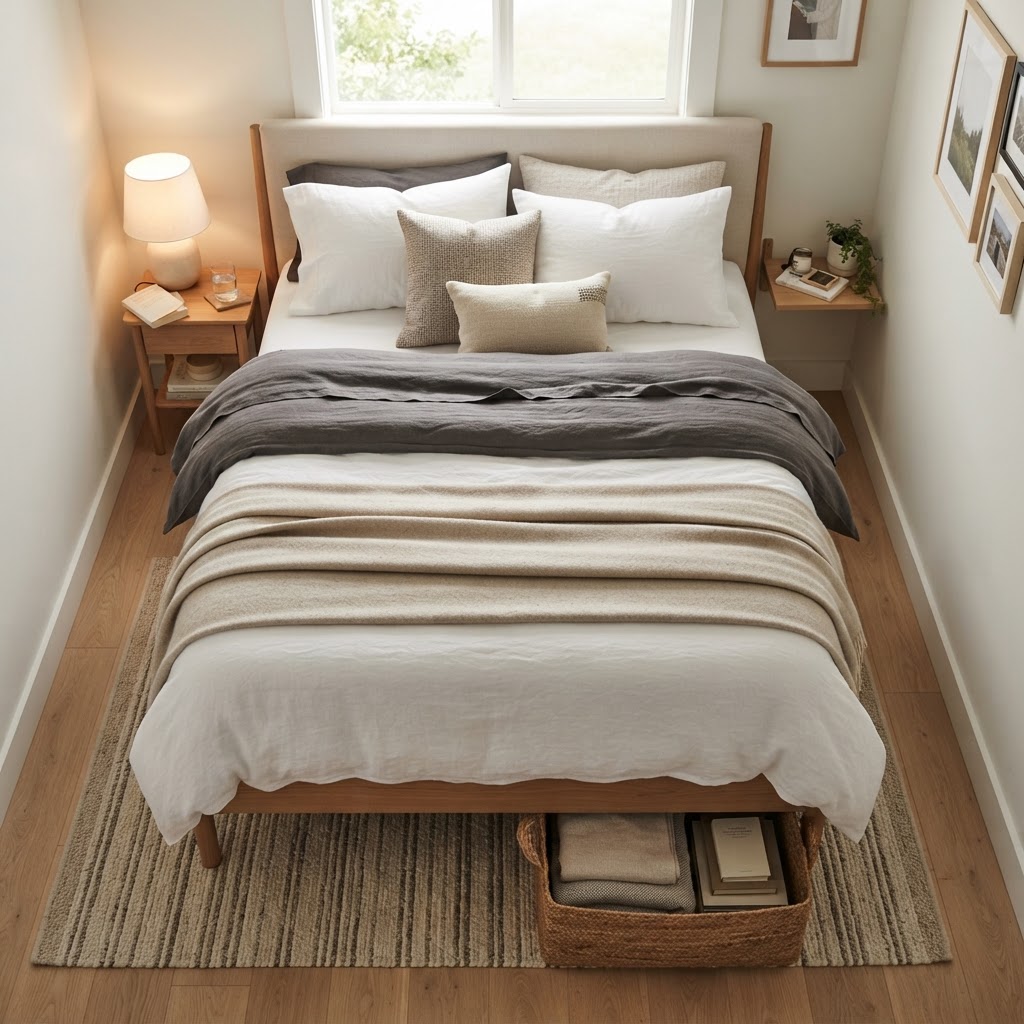
The area beneath your bed is prime real estate that is often overlooked. Invest in low-profile rolling bins to store off-season clothing, extra linens, or shoes. If your bed frame is too low, consider using bed risers to create that extra few inches of storage space, which can be easily hidden with a longer bed skirt.
DIY Decor and Personal Touches
Personalizing a small bedroom should focus on high-impact, low-volume decor that adds character without encroaching on living space. One effective tactic is the “Single Statement” approach: choose one vertical wall for an accent treatment, such as a peel-and-stick mural or vertical wood slats, which creates a focal point that anchors the room without cluttering flat surfaces. Mirrors are an essential design tool in small rooms because they reflect light and create a sense of depth; a large mirror placed opposite a window can brighten a room significantly. When selecting art, a single oversized piece is generally better than a “gallery wall” of small frames, as too many small items can make a small room feel chaotic and busy. For decor that serves a purpose, choose wall-mounted hooks for accessories or a sleek, decorative tray on the dresser to corral daily items. These touches infuse your personality into the space while maintaining a clean, minimalist aesthetic that is vital for a restful, sleep-optimized environment.
Creating a Focal Point
Select one wall to serve as an accent. This could be a bold wallpaper, a gallery of framed art, or a DIY wood-slat feature wall. A focal point anchors the room and diverts attention away from the lack of space. Keep the other walls neutral to ensure the room does not feel overwhelmed by color or pattern.
Mirrored Elements
Mirrors are a classic trick, but they are essential in a small bedroom makeover. A large floor mirror leaning against a wall or a series of smaller mirrors arranged in a grid will reflect light and trick the eye into seeing more depth. Place a mirror opposite a window to amplify the natural light entering the room.
Textile Layers and Cozy Vibes
Textiles are the most important elements for providing comfort in a small bedroom without taking up floor space. High-quality bedding should be the centerpiece, layered to create a sense of “nesting”; start with a neutral sheet set, add a textured quilt for weight, and finish with a decorative duvet folded at the end. An area rug is critical for “zoning” the bed within a small room—ensure the rug is large enough that at least 18 inches of it extends beyond the sides of the bed, which prevents the room from feeling like a floating island. When selecting curtains, mounting the rod as close to the ceiling as possible rather than directly above the window frame can visually “stretch” the room’s height by several inches. Use lightweight, natural fabrics like linen or cotton to ensure breathability and to keep the space from feeling heavy. By focusing on tactile comfort—soft throws, plush rugs, and crisp sheets—you can ensure the bedroom feels like a luxury retreat, regardless of its footprint.
The Art of Layering Bedding
Invest in high-quality sheets and layer them with a duvet, a quilt, and decorative throws. This creates a plush, inviting appearance. For the floor, a large area rug that extends under the bed will ground the room and prevent it from feeling like a series of disconnected floating objects.
Adding Softness with Curtains
Even if you do not need heavy privacy, installing curtains from ceiling to floor can add height to your room. This simple change makes ceilings appear higher and provides a luxurious, tailored look that makes a small bedroom feel sophisticated.
Organizing the Weekend Timeline
Executing a bedroom makeover in 48 hours requires a strict, task-oriented schedule to avoid decision fatigue and mission creep. On Saturday, focus exclusively on the “clear and prepare” phase; removing every item from the room allows you to see the space with fresh eyes and ensures no corner is neglected. Use Sunday for installation and styling, starting with lighting and shelving—the elements that require physical labor—before ending with soft goods like textiles. This linear approach keeps you from getting distracted by small decor items while the functional foundation is still incomplete.
Why a Plan Matters
Following a timeline prevents the common “renovation fatigue” that causes projects to drag on for weeks. By committing to specific tasks each morning and afternoon, you ensure that you don’t get stuck in analysis paralysis. Focus on one major task at a time, starting with the biggest visual changes like paint, and finishing with the smallest details like styling.
FAQ
Q: What is the best color to paint a small bedroom to make it look bigger?
Light, cool-toned colors such as soft blues, pale grays, or off-whites are best for making a small bedroom appear larger. These shades reflect natural light and recede visually, which helps the walls feel further away than they actually are.
Q: How can I fit more storage in a small bedroom without adding furniture?
Utilize vertical wall space by installing high shelving above door frames or using deep, rolling under-bed storage containers. These methods allow you to maximize unused areas without sacrificing precious floor space in your sleeping quarters.
Q: Does putting a mirror in a small bedroom really help?
Yes, mirrors are highly effective at creating the illusion of more space. Placing a large mirror opposite a window allows it to reflect both natural light and the view of the room, doubling the perceived depth and brightness of the area.
Q: Can I hang curtains if I have a small room with low ceilings?
Absolutely; mounting your curtain rod as close to the ceiling as possible—rather than right above the window frame—creates the optical illusion of increased ceiling height. Using floor-length panels further accentuates this vertical line for a more luxurious feel.
Q: What is the most common mistake when decorating a small bedroom?
The most common mistake is using oversized, bulky furniture that disrupts the flow of the room. Always measure your space before purchasing pieces and opt for “leggy” furniture that shows floor space beneath, which prevents the room from feeling cramped.

Leave a Reply