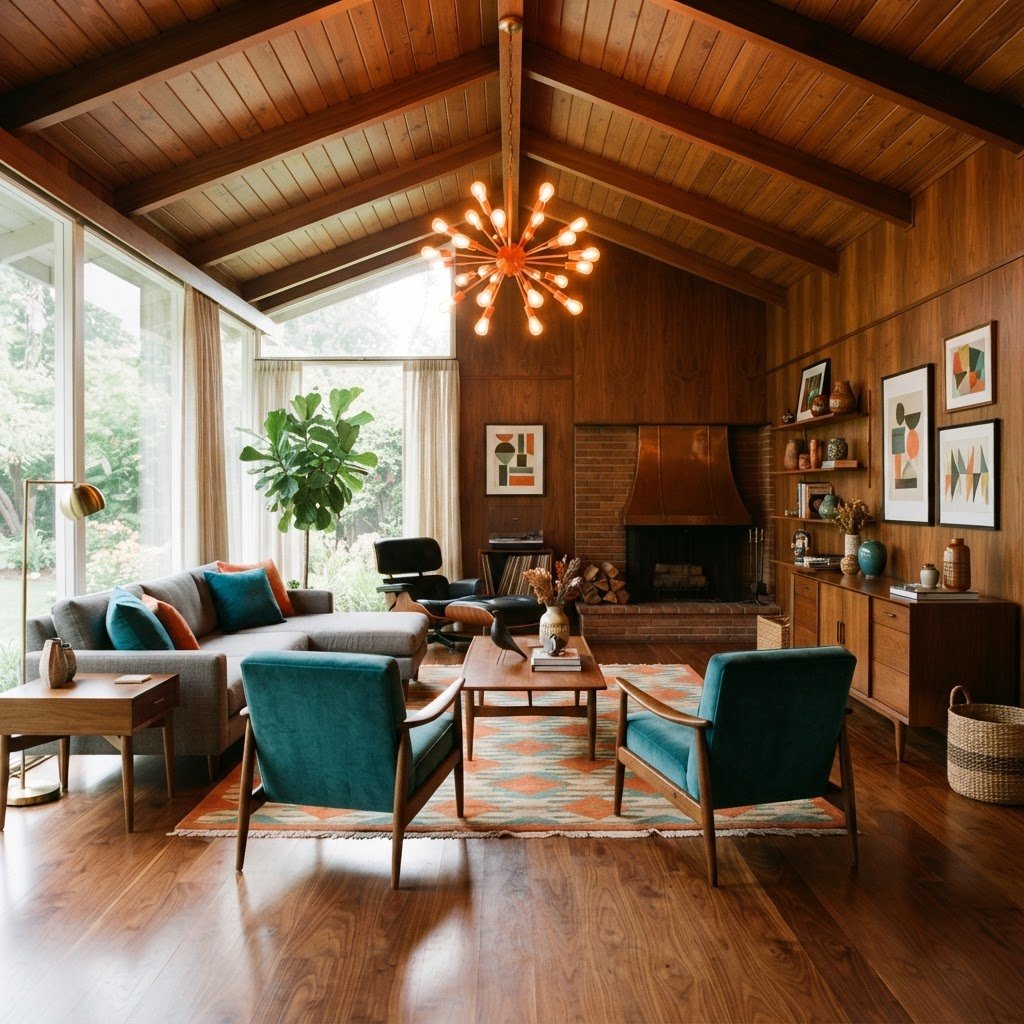
Mid-century colorful living room lighting serves as a vibrant focal point that balances functional illumination with iconic 1950s aesthetic flair. To master this look, prioritize sculptural fixtures in bold primary hues, mix warm ambient glow with task-focused lamps, and utilize materials like enameled metal and colored glass to define your space.
The Evolution of Mid-Century Color Palettes
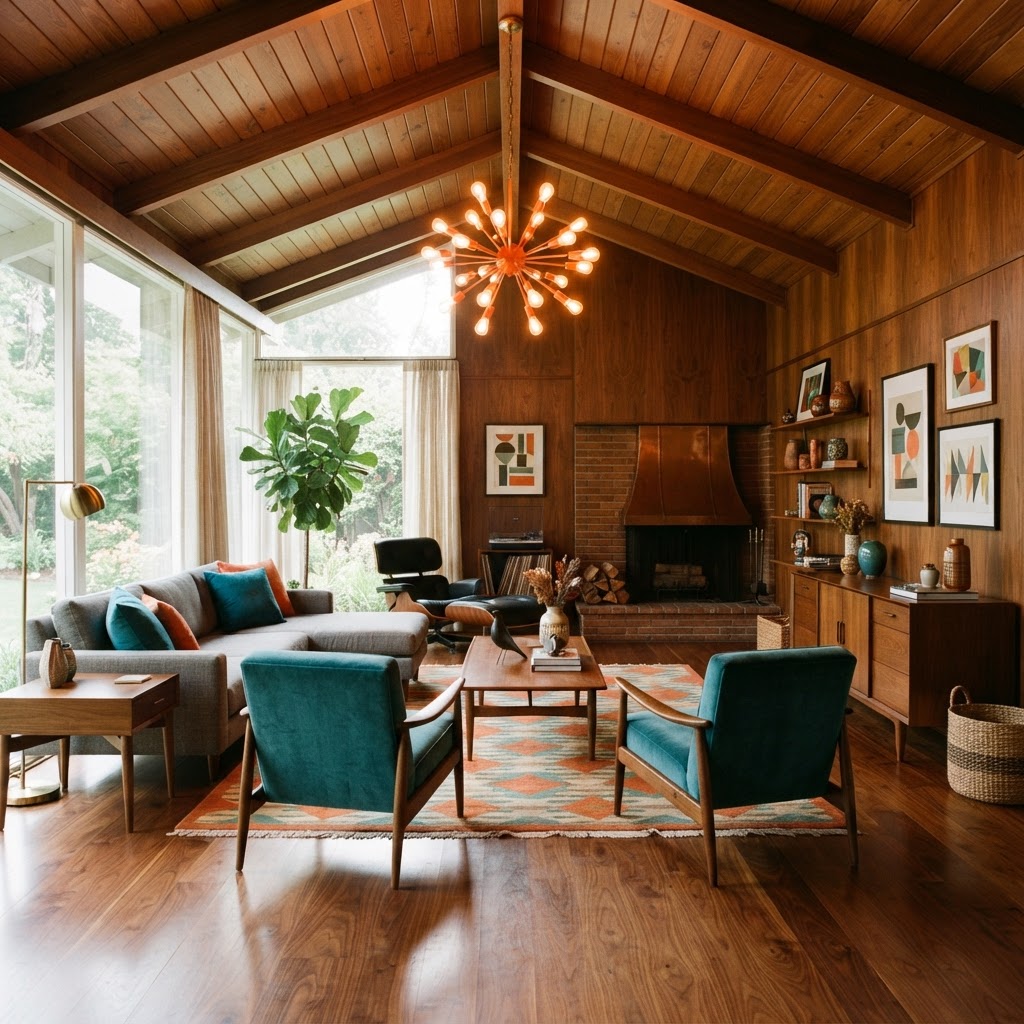
Mid-century modern design shifted away from dark, heavy Victorian ornamentation toward an optimistic color palette inspired by industrial innovation and the atomic age. During the post-war era of the 1940s and 50s, designers embraced synthetic dyes and materials, resulting in a spectrum dominated by mustard yellow, burnt orange, deep teal, and avocado green. These colors were not mere decorative accents; they represented a cultural pivot toward energy, confidence, and accessibility in home furnishing.
Integrating Hues Through Lighting
Lighting fixtures functioned as three-dimensional art pieces rather than just utility items. An orange globe pendant or a chartreuse table lamp acts as a primary color anchor, drawing the eye toward the room’s most significant seating areas. When selecting your fixtures, look for period-accurate materials such as enameled metal, translucent colored glass, and molded acrylics. These materials catch ambient daylight to create a soft, diffused glow. To achieve professional results, consider the following impact of different fixture types on your color story:
Iconic Lamp Shapes That Define the Era
Mid-century lighting design is defined by specific silhouettes derived from space-age exploration, atomic physics, and organic biomorphic abstraction. Understanding these geometries is essential for curating a cohesive colorful living room lighting ensemble that feels both authentic and intentional rather than purely novelty-based.
The Sputnik Chandelier
As the most recognizable fixture, the Sputnik chandelier features radiating arms tipped with light bulbs that capture the mid-century obsession with the Space Race. While traditional versions favor brass or chrome, seeking out versions with colored glass shades or painted caps provides a unique, whimsical twist. These fixtures are best hung as a center-room anchor where their wide diameter (often ranging from 20 to 36 inches) can be fully appreciated.
The Mushroom Lamp
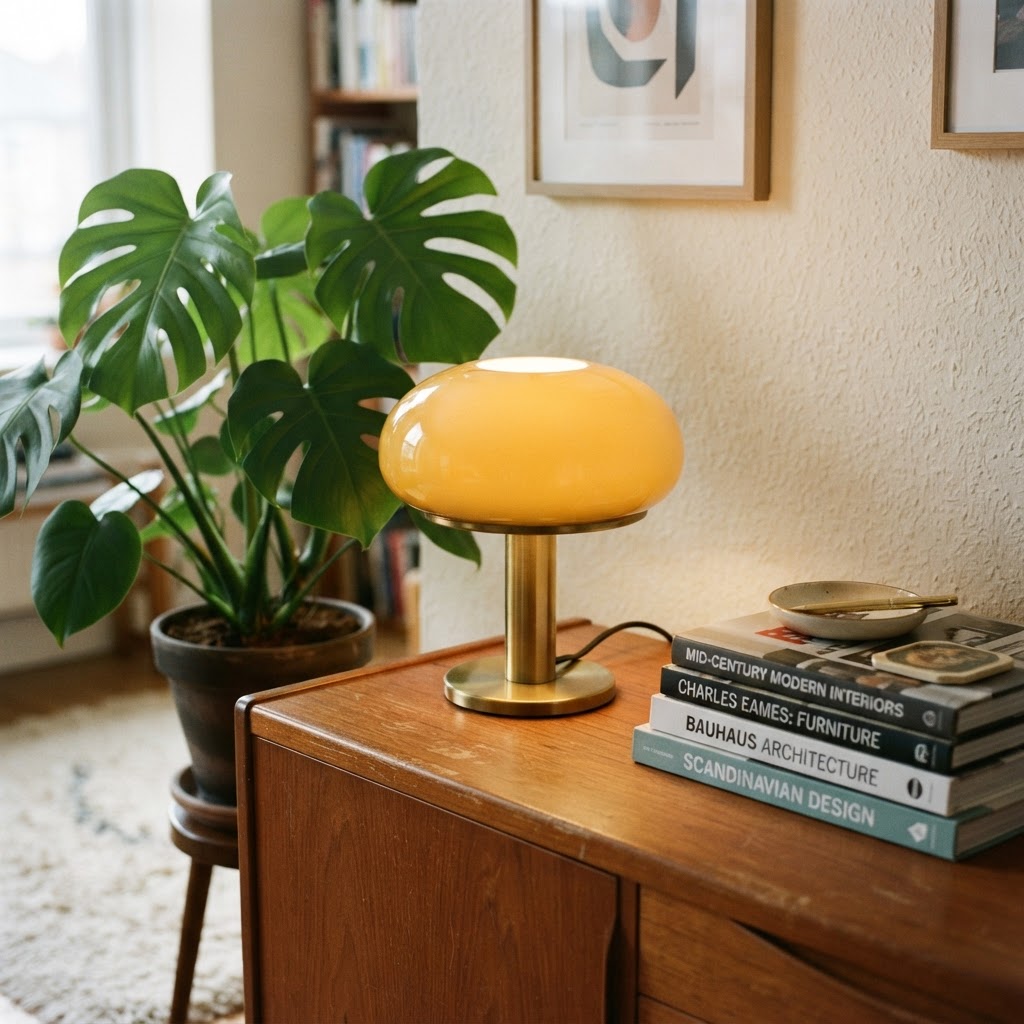
Often crafted from colorful, thick acrylic or opal glass, the mushroom lamp serves as a classic staple of the 1960s aesthetic. These lamps are ideal for low-profile consoles or side tables, casting a focused downward light that creates an intimate, “cozy” mood. Because of their curved, organic shape, they provide a necessary softness to spaces filled with the sharp, linear edges of mid-century modern teak furniture.
Mixing Vibrant Colors with Neutral Bases
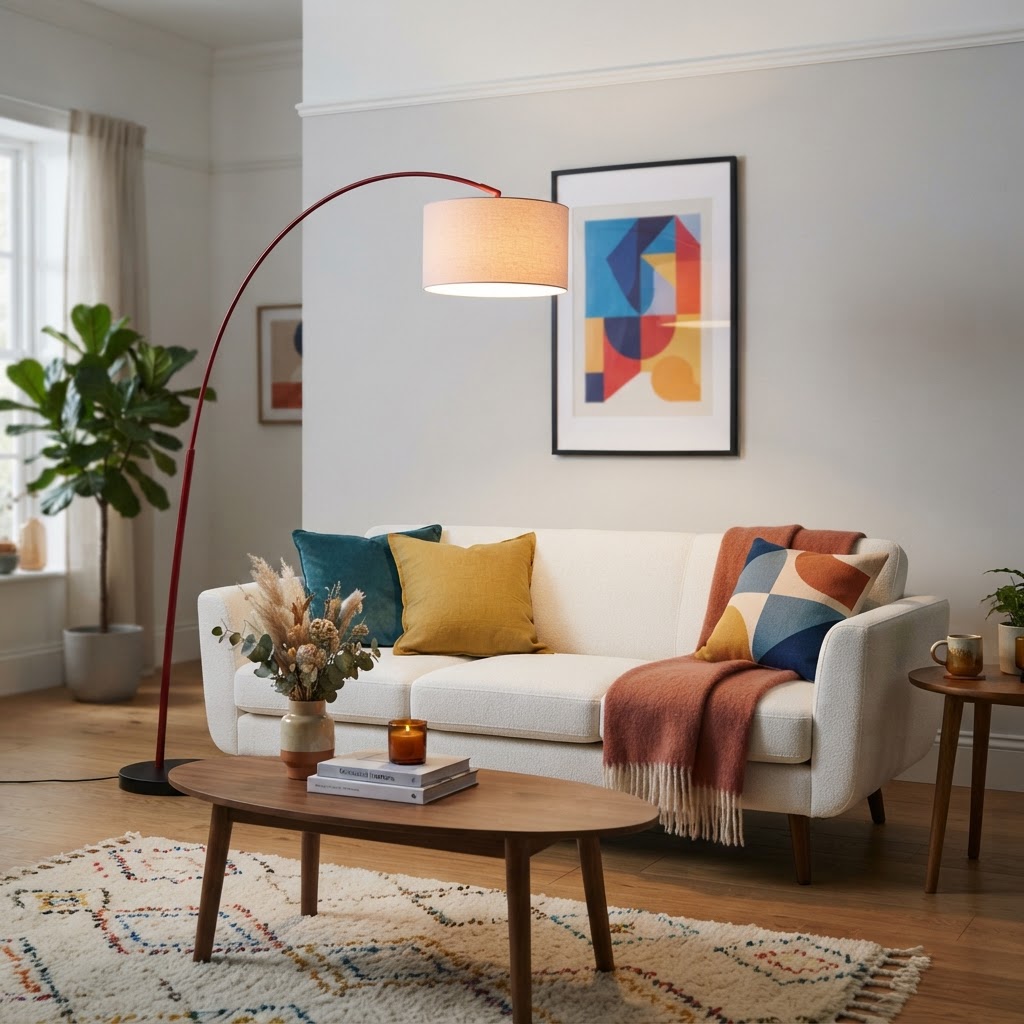
Strategically using neutral walls—such as cream, warm grey, or natural walnut wood—as a backdrop allows your colorful lighting fixtures to act as the “jewelry” of the living room. By maintaining a neutral base, you prevent a space filled with bold colors from feeling chaotic or visually overwhelming. A bright red or yellow arched floor lamp placed against a white wall creates an immediate, sophisticated focal point that defines the area as a purposeful design choice.
Balance and Proportions
To ensure your lighting creates harmony, follow the rule of repetition: if you incorporate a specific blue pendant, mirror that tone in your throw pillows, a rug, or mid-century wall art. This strategy creates a cohesive narrative that makes the room feel intentionally curated. Furthermore, ensure your proportions reflect the scale of the room; a oversized chandelier in a small apartment will break the intended flow, while a tiny lamp on a large sideboard will look lost. Aim for a balance where the light fixture consumes no more than 10-15% of the visual space of its immediate surrounding area.
The Role of Materiality in Retro Lighting
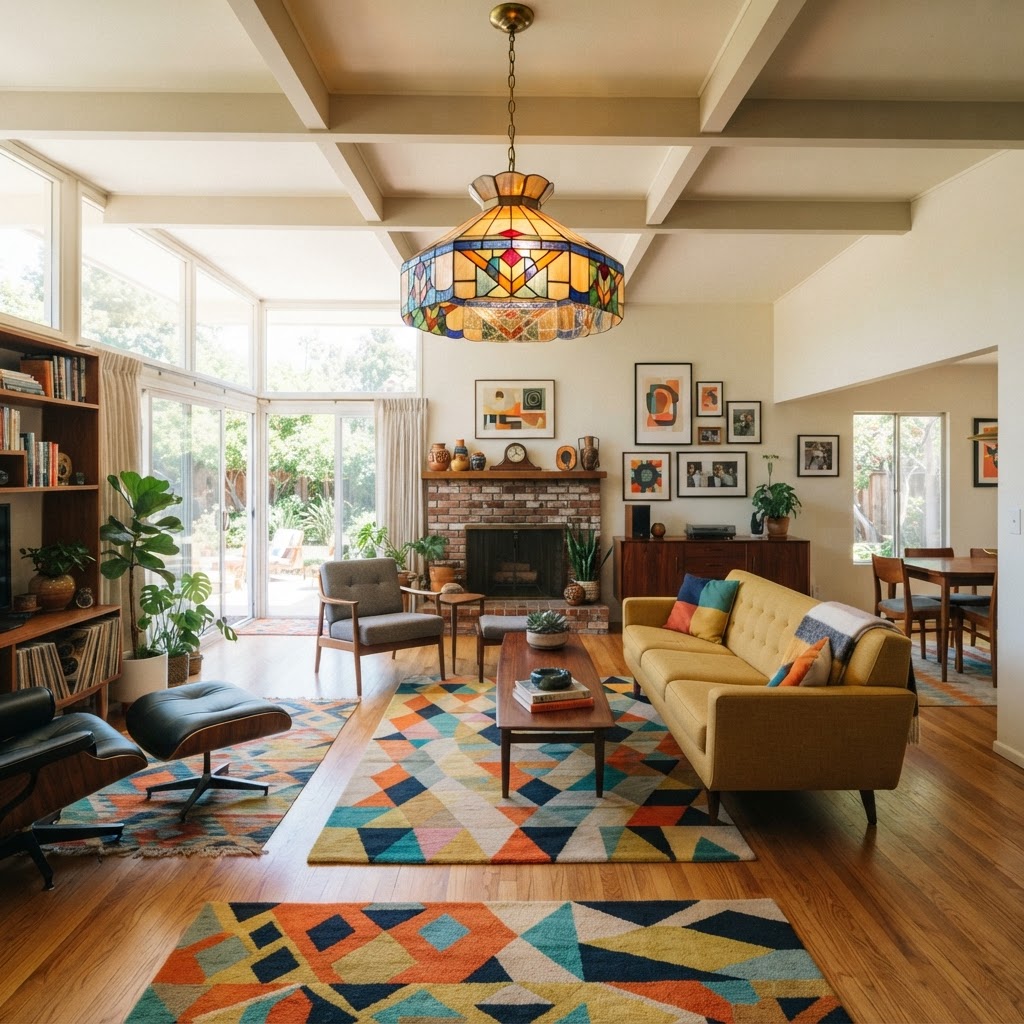
Mid-century design thrived on the intersection of new, experimental technology and natural beauty, leading to a unique blend of materials. Lighting from this era typically pairs organic elements like teak wood accents with industrial components such as painted aluminum or brass. This juxtaposition of “soft” and “hard” materials is what gives mid-century lighting its distinct personality and durability.
Why Material Matters
Choosing the right material fundamentally alters the quality of your room’s light. Spun aluminum shades are designed to direct light toward a task area, which is highly effective for reading nooks or workspaces. Conversely, milk glass or multi-colored glass globes diffuse light across a 360-degree radius, which is superior for general ambient lighting. When selecting your fixtures, always consider the texture of the light source in relation to your furniture fabrics—for instance, matte finishes pair well with velvet upholstery, while shiny acrylics complement clean, leather-bound pieces.
Styling Tips for Your Living Room
Styling your mid-century space starts with defining a specific “color story” rooted in a geographical or stylistic theme. For example, a Southwest-inspired theme focuses on terra cotta, sage, and sunshine yellow, whereas a California modern look emphasizes oceanic teals and bright whites. Once you select a theme, you can curate lighting that matches that specific aesthetic.
Creating Layers of Light
Professional lighting design always utilizes a three-layered approach: ambient, task, and accent lighting. Ambient light provides the base level of brightness, usually through a chandelier or ceiling fixture. Task lighting should be placed near reading chairs or desks to reduce eye strain, and accent lighting—such as a small colorful sconce—is used to highlight specific pieces of art or architectural features. By separating these three layers, you gain the ability to shift the mood of your living room from “productive” during the day to “relaxing” in the evening.
Incorporating Modern Technology with Vintage Style
Mid-century colorful living room lighting can easily incorporate modern energy-efficient technology without sacrificing the retro aesthetic. Most manufacturers now offer high-quality reproductions that support standard E26 sockets, making them fully compatible with modern LED bulbs. You can even use smart home bulbs that adjust color temperature, allowing you to cycle between a cool, morning daylight and a warm, evening glow via your smartphone.
Sustainability and Lighting
Investing in high-quality fixtures reflects the long-term, sustainable mindset of the mid-century era. Look for solid materials like steel, brass, and glass rather than cheap, glued-together plastic. Dimmable features are essential for both sustainability and atmosphere; by dimming your lights by just 20%, you can significantly extend the life of your bulbs while creating a softer, more inviting environment that feels authentic to the period.
Troubleshooting Common Lighting Design Mistakes
Avoid these common pitfalls to ensure your room remains professional and functional:
- Over-lighting: Avoid flooding a room with bright, direct overhead light. Use layers to keep the atmosphere warm.
- Scale Issues: Ensure floor lamps provide sufficient clearance for movement and that hanging chandeliers do not block sightlines.
- Monochromatic Fatigue: If your room is already color-heavy, balance your fixtures with neutral-toned light to prevent visual “noise.”
FAQ
How can I make my mid-century lighting look authentic?
To achieve an authentic look, prioritize vintage-inspired materials like brass, opal glass, and enameled steel rather than modern plastic imitations. Look for geometric shapes typical of the era, such as globes, Sputnik rays, or mushroom silhouettes, which define the mid-century aesthetic.
Does colorful lighting fit in a small living room?
Yes, colorful lighting acts as a high-impact accessory that doesn’t consume valuable floor space. For small rooms, opt for a statement pendant light or colorful wall sconces to draw the eye upward and create a sense of depth without cluttering the floor.
What color temperature is best for MCM lighting?
For the most authentic feel, use warm white LED bulbs between 2700K and 3000K. This temperature mimics the incandescent glow of original 1950s bulbs, ensuring that your vibrant, colorful fixtures cast a soft, welcoming light across your living room furniture.
How do I mix different metallic finishes with colorful fixtures?
Mixing metals is common in mid-century design, so don’t fear pairing brass or gold-toned fixtures with chrome or black accents. Use your primary light fixture as the dominant metal and use smaller secondary pieces to create an eclectic, layered, and purposeful visual story throughout the room.
Can I use smart bulbs in retro light fixtures?
Most retro-style fixtures with standard bulb bases are fully compatible with smart LED bulbs. Using smart bulbs allows you to adjust the hue and intensity of your colorful lighting, enabling you to switch between vibrant daytime energy and relaxing nighttime ambiance.

Leave a Reply