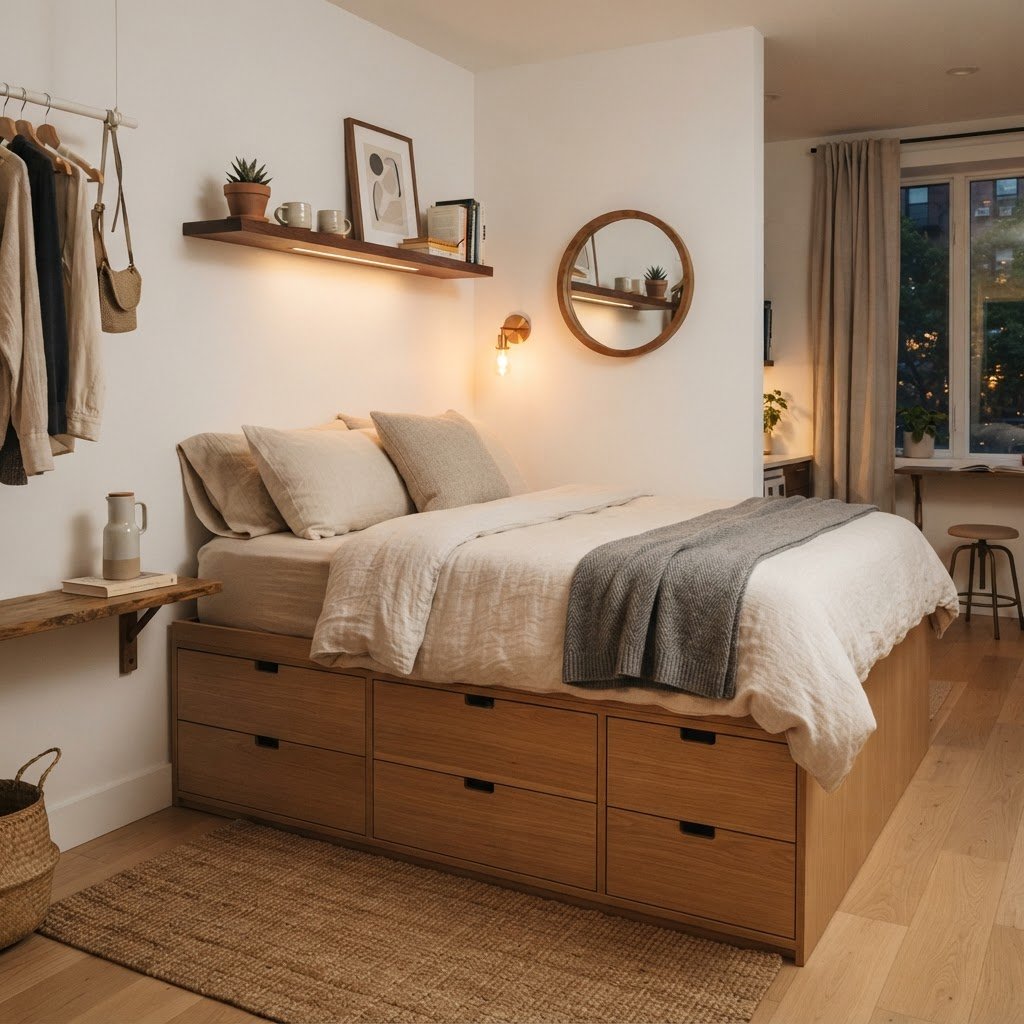
Space-Saving Bedroom Ideas for Tiny Apartments
To maximize a tiny bedroom, prioritize vertical storage, multi-functional furniture like hydraulic beds, and light-layering techniques to create an illusion of space. By replacing bulky nightstands with floating shelves and keeping surfaces clear, you can transform a cramped footprint into an efficient, sophisticated, and comfortable sanctuary.
Rethinking Your Layout for Maximum Flow
The most effective way to improve flow in a small bedroom is to avoid pushing every piece of furniture against the walls, which creates a dead, cavernous center. By pulling the bed away from the wall even just a few inches, you create a “floating” effect that makes the room feel airier. If your bedroom must double as a workspace, utilize a visual divider like a tall open-back bookshelf or a folding screen. This strategy defines zones without sacrificing natural light. According to interior design standards, keeping at least 24 inches of clearance around the bed is ideal for traffic, though in tiny apartments, 18 inches is a functional minimum to maintain accessibility.
Prioritizing Your Bed Placement
Your bed is the room’s anchor, so its position determines whether your space feels claustrophobic or intentional. Placing the bed in a corner is a popular technique to reclaim square footage for a desk or lounge chair, but it requires styling to avoid a dorm-room look. Use a floor-to-ceiling oversized headboard to add professional structure. This creates a visual “anchor” that makes the corner placement look like a deliberate design choice rather than a necessity.
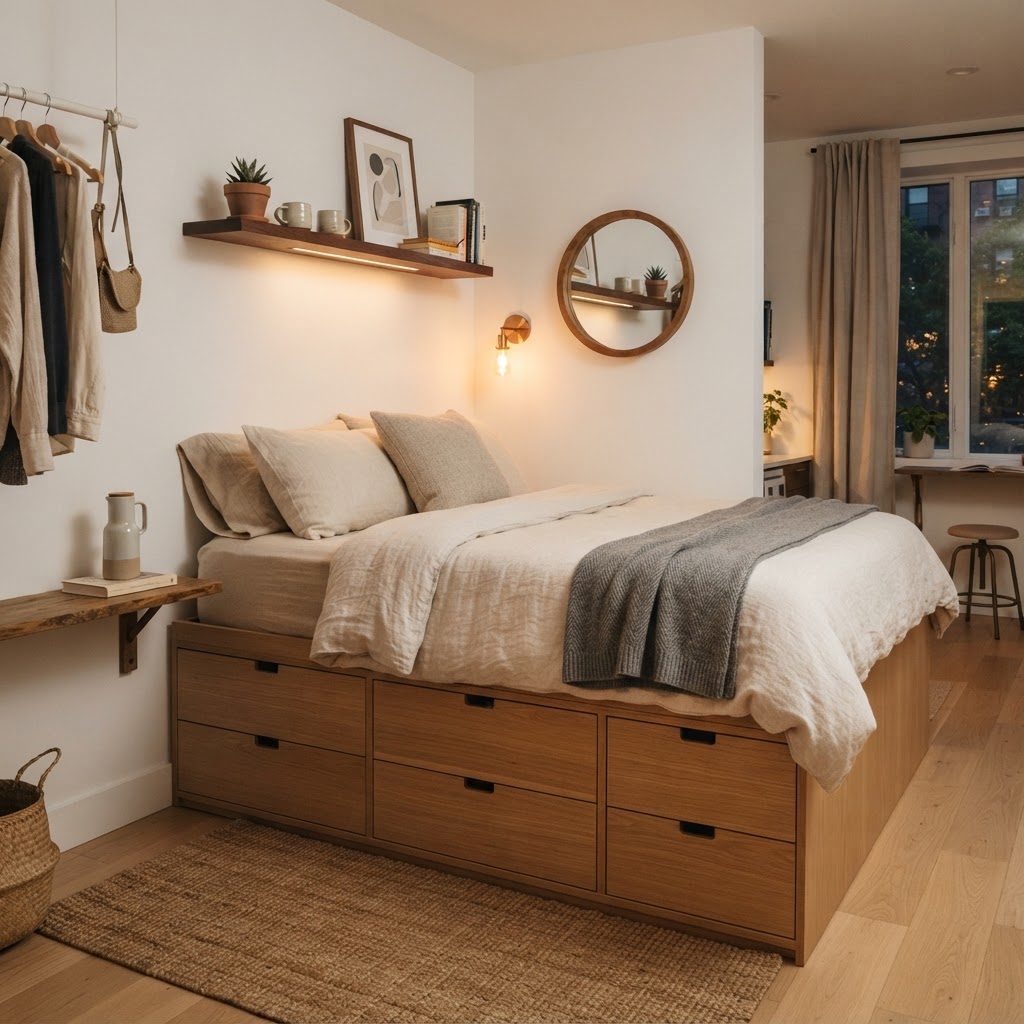
The Magic of Vertical Storage Solutions
When floor space is exhausted, your walls become your most valuable square footage for storage. Installing floating shelves above the bed, desk, or doorway allows you to store books, plants, and decorative items that would otherwise clutter limited nightstand or dresser surfaces. Aim for tall, floor-to-ceiling wardrobes; when furniture reaches the ceiling, it draws the eye upward, effectively “tricking” the brain into perceiving more height in the room. A common design rule is to mount curtains as high as possible near the ceiling to further emphasize verticality and add a layer of perceived luxury.
Creative Wall-Mounted Hacks
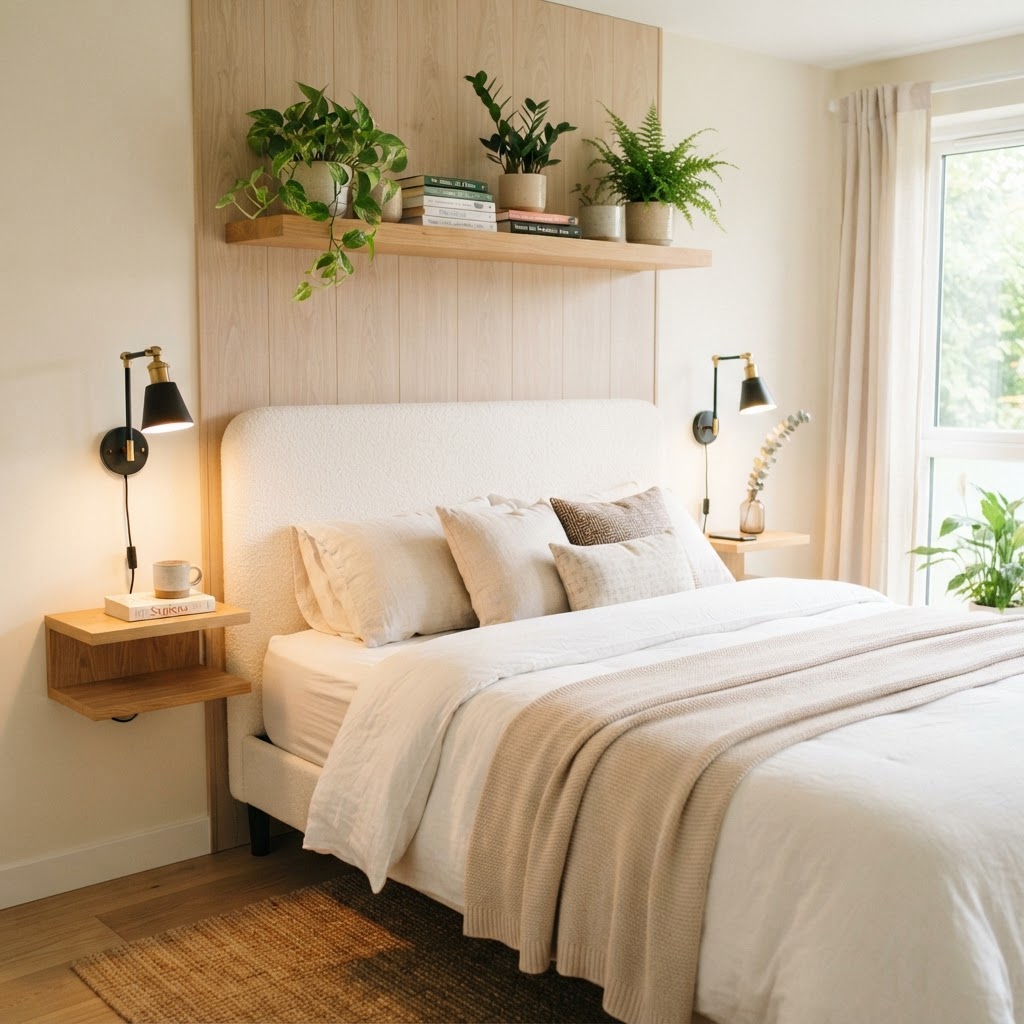
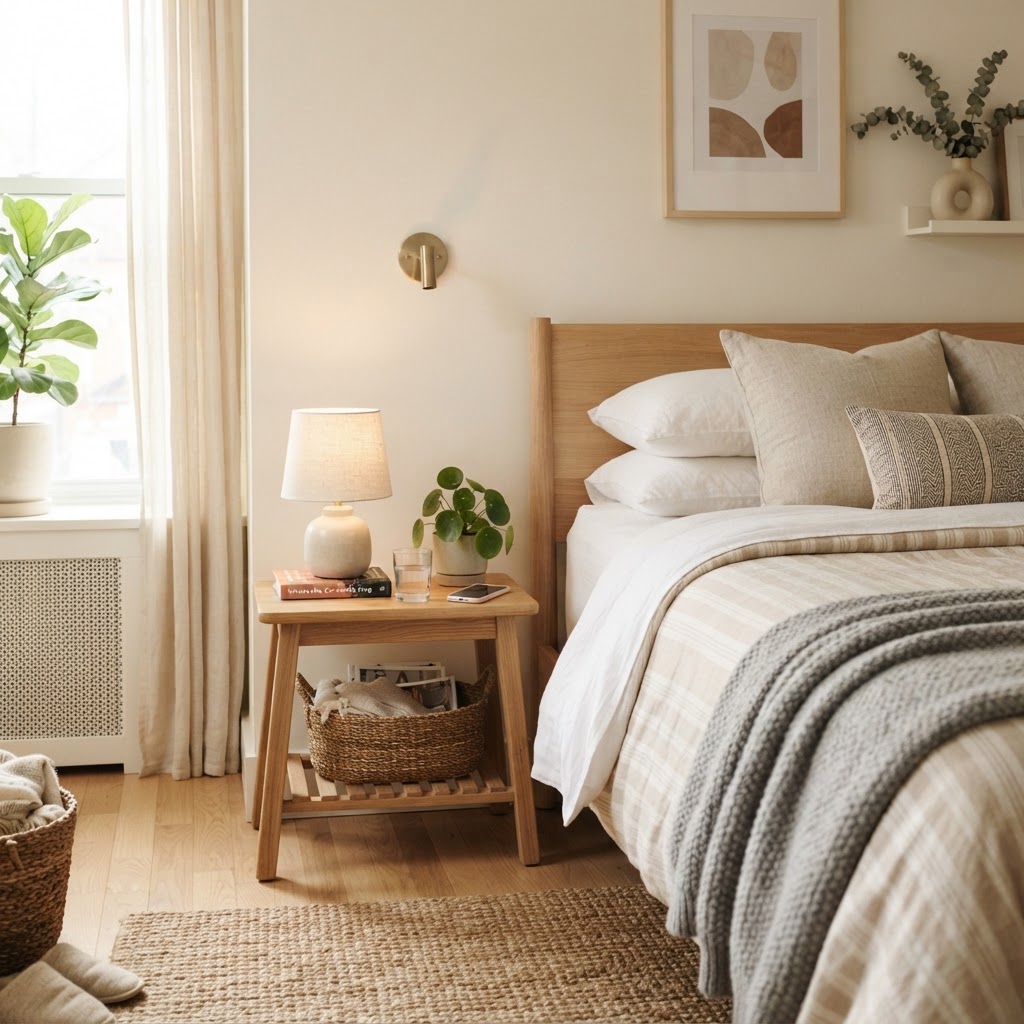
Don’t limit yourself to shelves; mount your lighting directly to the walls to eliminate the need for bulky floor lamps or traditional side tables. Wall sconces provide a high-end, hotel-like aesthetic while freeing up every square inch of your nightstand. Consider using swing-arm sconces, which provide adjustable task lighting for reading without the footprint of a table lamp. By clearing your nightstand, you reduce visual clutter, which is essential for making a tiny room feel larger and more serene.
Investing in Multi-Functional Furniture
Every piece of furniture in a tiny apartment must perform at least two functions to justify its place in the room. Beds with built-in storage—specifically hydraulic lift-up frames—are the gold standard for small spaces, as they provide the equivalent of a dresser’s worth of storage inside the footprint of the mattress. This internal cavity is ideal for storing heavy winter coats, extra bedding, or travel suitcases that would otherwise dominate your closet. When shopping, look for furniture that is elevated on legs; seeing the floor underneath a piece of furniture creates a sense of openness that “solid-base” furniture destroys.
The Versatile Nightstand Replacement
If floor space prohibits a standard nightstand, switch to a wall-mounted floating shelf. These can be installed at the exact height you need, saving space while offering a clean, modern look. Alternatively, a small, multi-purpose stool can act as a nightstand during the day and provide an extra seat when guests arrive. This “fluid” approach to furniture prevents the room from feeling static or over-crowded, allowing you to adapt the room’s function based on the time of day.
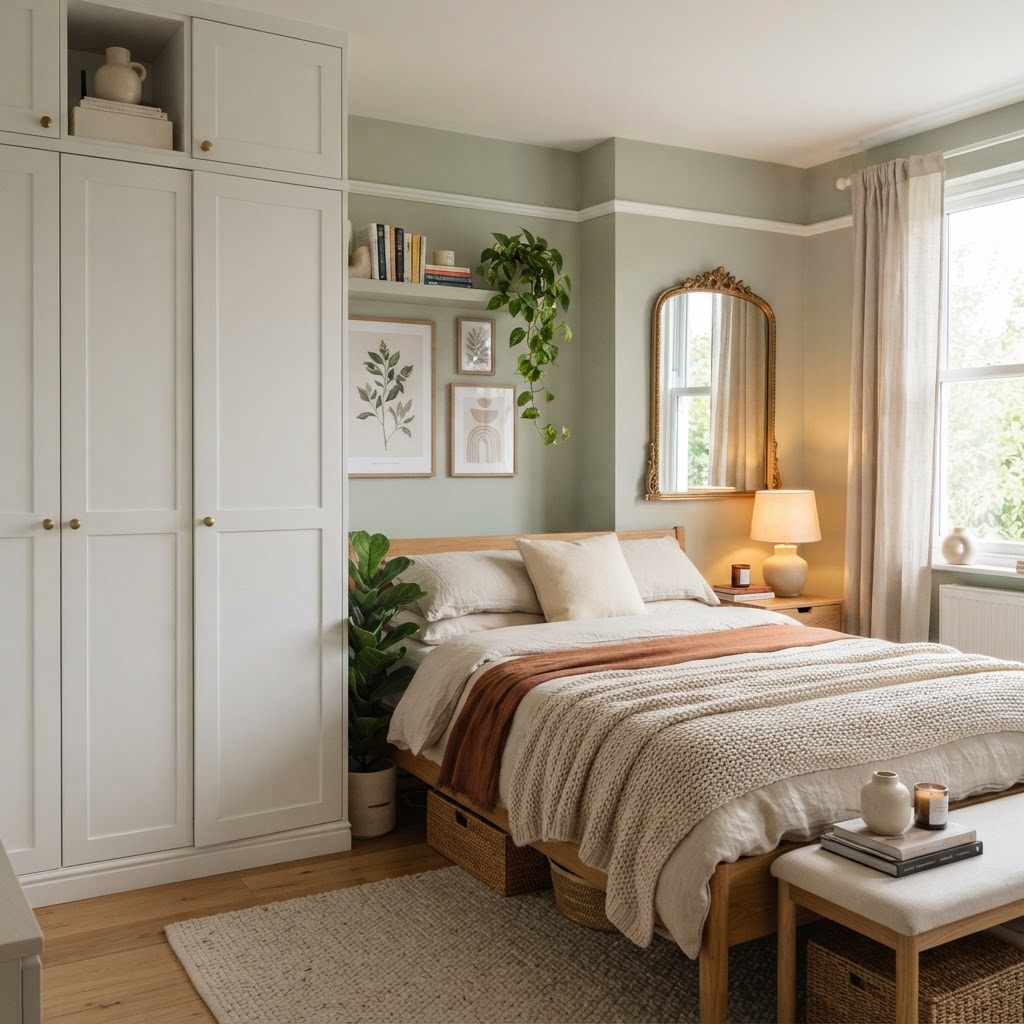
Brightening the Space with Strategic Lighting
Lighting is the most significant factor in changing the perceived dimensions of a room. Avoid relying on a single, harsh overhead light, which casts deep shadows in corners and makes the room feel boxed in. Instead, use a layered lighting approach by combining ambient ceiling lights, task-oriented wall sconces, and warm accent lighting like LED strips behind headboards. Placing mirrors opposite a window is a proven interior design tactic that reflects natural light deep into the room, creating an illusion of depth that can make a 100-square-foot room feel significantly larger.
Keeping it Personal Through Textures
Small rooms often suffer from feeling “sterile” or “cheap” if they are too minimalist, so you must introduce texture to create warmth and personality. Incorporate tactile elements like chunky-knit wool blankets, velvet cushions, or natural jute rugs. These materials draw the eye and create a cozy, “cocoon” effect that feels intentional rather than small. Regarding your color palette, you do not have to stick to white; deep, moody colors like forest green or navy can actually make a bedroom feel more sophisticated. Just ensure the ceiling remains a crisp, matte white to prevent the room from feeling like it is closing in on you.
Organizing the Hidden Spaces
Clutter is the primary enemy of a functional small bedroom. Utilize the back of your bedroom door for over-the-door organizers to manage shoes, scarves, or beauty products. For under-bed storage, use clear, lidded bins with labels to ensure you can find items quickly without dumping contents on the floor. The goal is to ensure every item has a “home,” which prevents surface creep—the accumulation of daily items on dressers and nightstands that makes a small room feel chaotic.
Minimalist Habits for Small Living
Adopting a minimalist mindset is the most sustainable way to live in a tiny apartment. Conduct a quarterly audit of your belongings, keeping only items that serve a daily purpose or have significant emotional value. A curated collection of art or a few high-quality meaningful mementos will always look more “designed” than an overabundance of random decor. Remember that in a small space, less is always more; every item you own takes up valuable visual and physical space that could otherwise contribute to your comfort.
FAQ
Q: What is the best bed size for a very tiny bedroom?
A: A full-size bed is generally the best balance for small spaces, as it fits two people while leaving more floor room than a queen. If you are single, a twin XL or a daybed with trundle storage is often more functional than a larger bed that consumes the entire room.
Q: Can I use dark paint in a small bedroom?
A: Yes, dark paint can make a small bedroom feel like a luxurious, cozy “cocoon” rather than a small box. To succeed with dark colors, ensure your ceiling is painted a bright, clean white and that you have ample layered lighting to prevent the room from feeling like a cave.
Q: How do I store clothes without a large closet?
A: Invest in a vertical wardrobe unit that reaches the ceiling or use an open-concept clothing rack combined with under-bed storage bins. Prioritizing clothing storage that utilizes wall height rather than floor space is the most effective way to manage a limited wardrobe area in a small apartment.
Q: Should I put my bed against the wall in a tiny room?
A: Placing a bed against a wall or in a corner is a great way to save space, but you should anchor it with a headboard to make the placement look intentional. Adding wall sconces and floating shelves nearby will help frame the bed and make the corner feel like a deliberate sanctuary.
Q: How can I make a tiny bedroom look bigger instantly?
A: You can make a small bedroom look bigger by adding large mirrors, using floor-to-ceiling curtains, and choosing furniture with legs that expose the floor underneath. Keeping the floor as clear as possible and maximizing vertical wall space are the two fastest ways to increase the sense of room size.

Leave a Reply