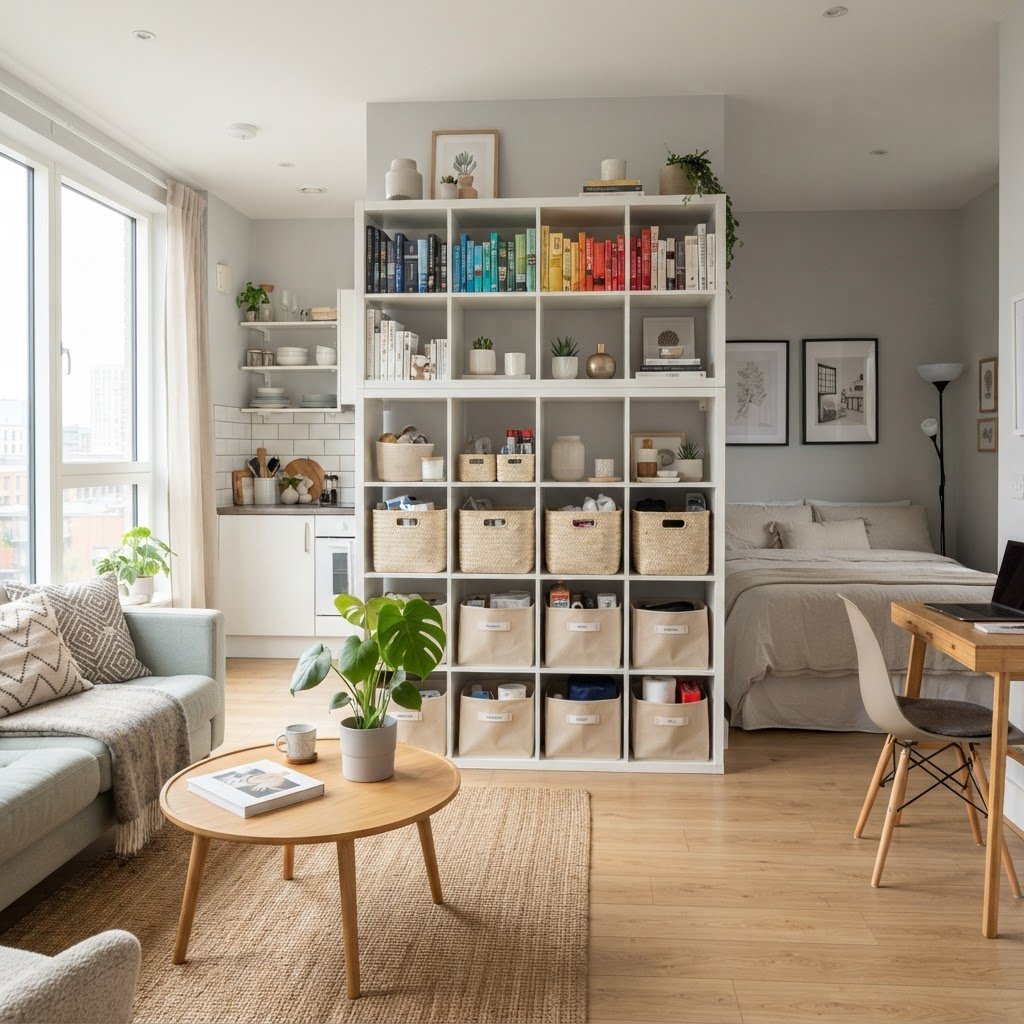
7 Damage-Free Storage Ideas That Maximize Small Spaces
Maximize your small space without risking your security deposit by utilizing vertical storage solutions, modular furniture, and adhesive-based organizers. These damage-free methods, such as over-the-door systems, tension rods, and rolling carts, allow you to increase usable storage capacity without requiring any wall drilling, permanent mounting, or professional renovation work.
The Philosophy of Non-Permanent Organization
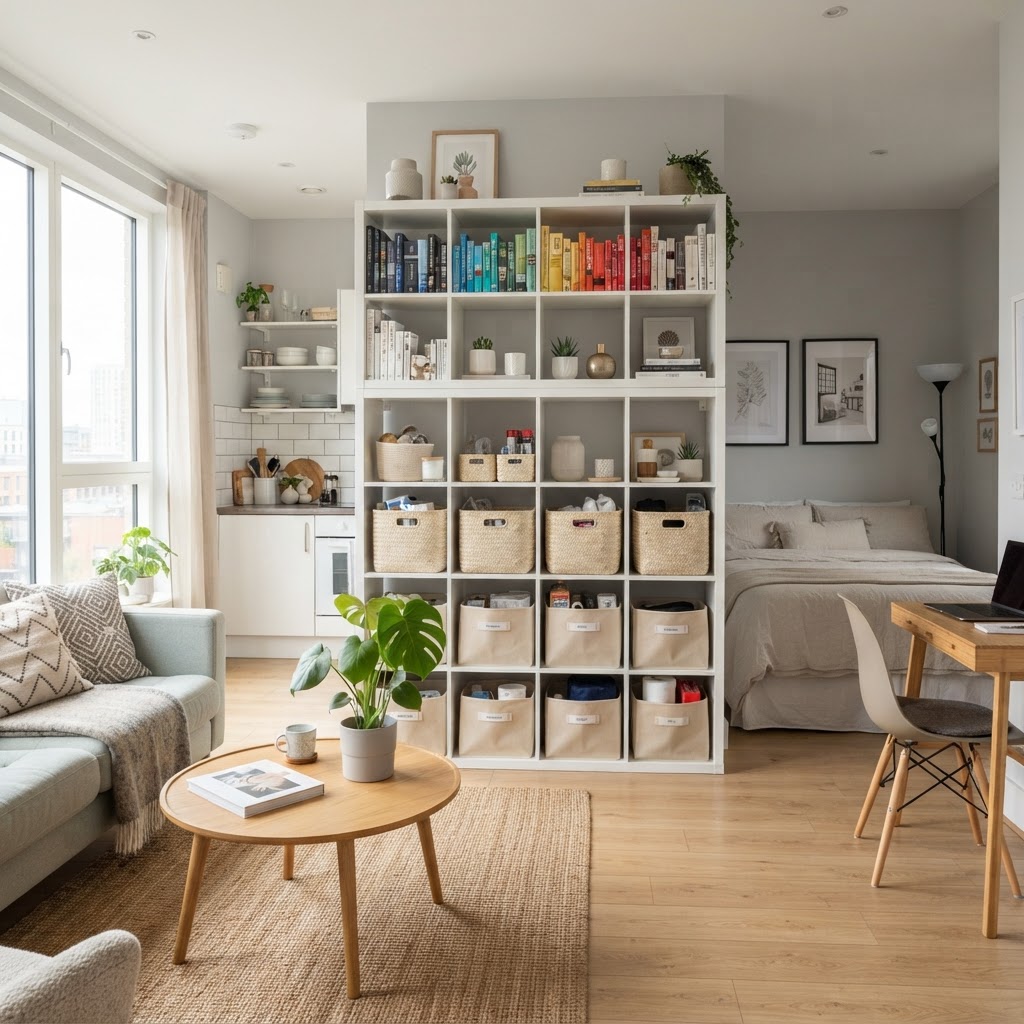
Effective non-permanent organization relies on the principle of verticality and multi-functional design to reclaim square footage. Rather than viewing a small apartment as a limitation, treat it as a puzzle where every piece of furniture must serve at least two purposes. By focusing on freestanding units and temporary adhesives, you maintain the flexibility to reconfigure your layout whenever your living situation changes. This approach is not only renter-friendly but also highly mobile, ensuring that your investment in storage units pays off across multiple future residences. A key strategy is to utilize the “dead space” in your home—the areas above eye level, behind doors, and inside cabinet frames—where storage density can be increased by up to 40% without compromising your floor space.
Why Damage-Free Matters for Renters
Damage-free organization prevents the loss of security deposits, which often cost renters between $500 and $2,000 depending on the unit size. Beyond the financial impact, these methods provide the freedom to iterate on your home design. If you need to pivot your workspace or reorganize your bedroom for better flow, you can do so in minutes without the need for drywall patching, sanding, or matching paint colors. This agility allows renters to maintain a high-end, “custom-built” aesthetic that remains fully compliant with strict landlord policies.
1. Utilize Over-the-Door Hanging Systems
The back of a door represents the most underutilized real estate in any small home, offering a vertical surface that can instantly double your storage for accessories, toiletries, or kitchen tools. By installing high-quality over-the-door organizers that hook securely over the frame, you bypass the need for hardware while maintaining a stable, sturdy platform. Choose organizers with varying pocket depths to accommodate items ranging from bulky cleaning sprays to slim belts and scarves. For a cohesive look, opt for matte-black or white metal frames; these materials resist rust and moisture better than fabric alternatives, especially in humid bathroom environments. When choosing these systems, verify that your door clearance—the gap between the door and the frame—is at least 3mm to ensure the brackets do not prevent the door from latching closed properly.
2. Leverage Heavy-Duty Command Hooks and Adhesive Strips
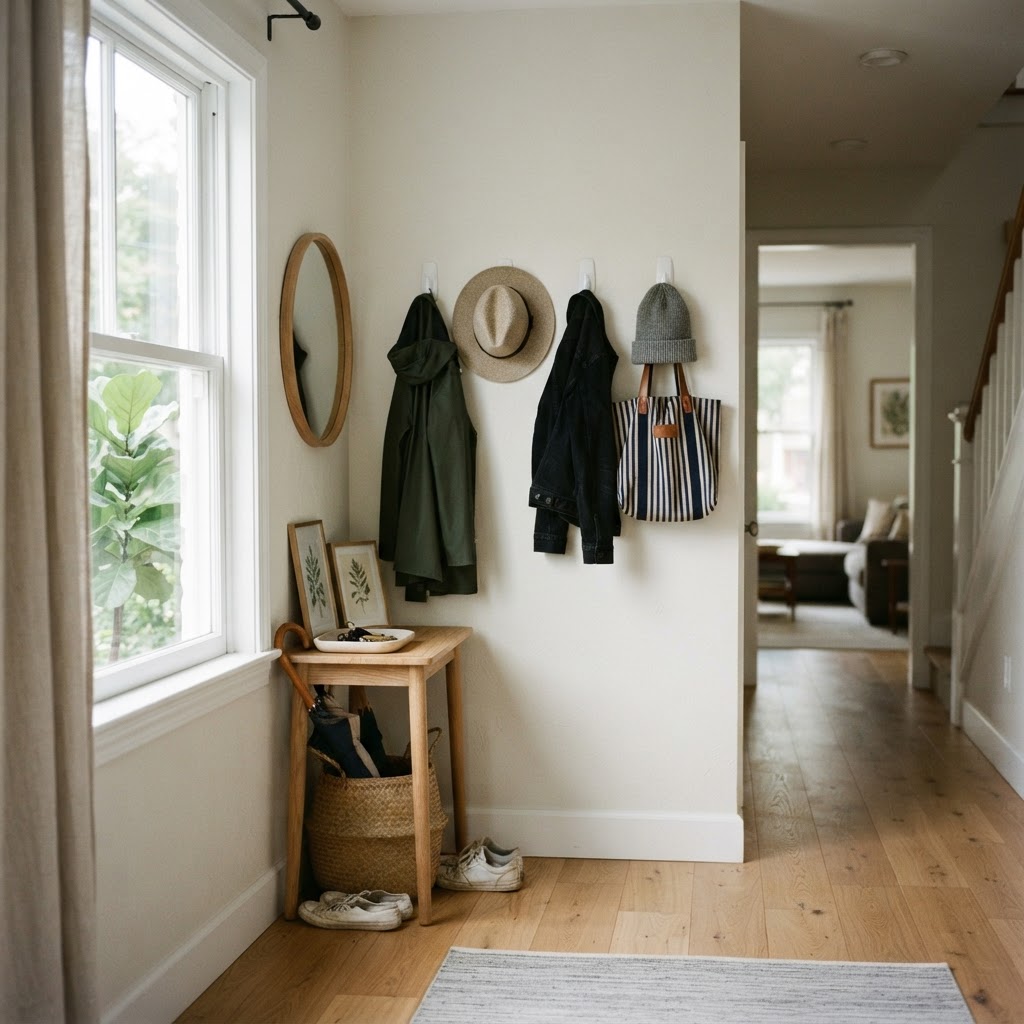
Heavy-duty adhesive strips serve as the foundational tool for creating wall-mounted storage that supports up to 15 pounds per hook, provided the surface is prepped correctly. To maximize the effectiveness of these products, always clean the wall surface with isopropyl alcohol before application to remove dust and oil, which ensures a 100% bond strength. Create a gallery-style drop zone near your entryway to store keys, umbrellas, and coats, effectively clearing your floor of clutter. For heavier items like coats or bags, use a strip-to-hook ratio of 2:1 to distribute the weight load evenly. This system is particularly effective for renters who want a “mudroom” feel without the installation of permanent coat racks. Always follow the manufacturer’s recommendation to wait at least 60 minutes after applying the strips before hanging any weight on the hooks to allow the adhesive to set.
3. Invest in Multi-Functional Furniture
Multi-functional furniture is the most effective way to integrate storage into your home without adding a single extra piece of hardware or surface clutter. Focus on pieces that offer hidden, “in plain sight” storage, such as ottomans with internal hollow spaces for seasonal linens or platform bed frames that utilize hydraulic lifts for deep under-bed storage. When shopping, prioritize solid wood or metal over particle board, as these materials handle the constant wear of opening and closing compartments more gracefully over time. A dual-purpose piece, such as a nightstand that features a deep drawer rather than an open shelf, increases your storage capacity by roughly 50% compared to standard open-air designs. By consolidating your storage needs into your primary furniture pieces, you maintain a minimalist aesthetic while keeping your daily essentials within arm’s reach and completely out of view.
4. Tension Rods for Custom Dividers
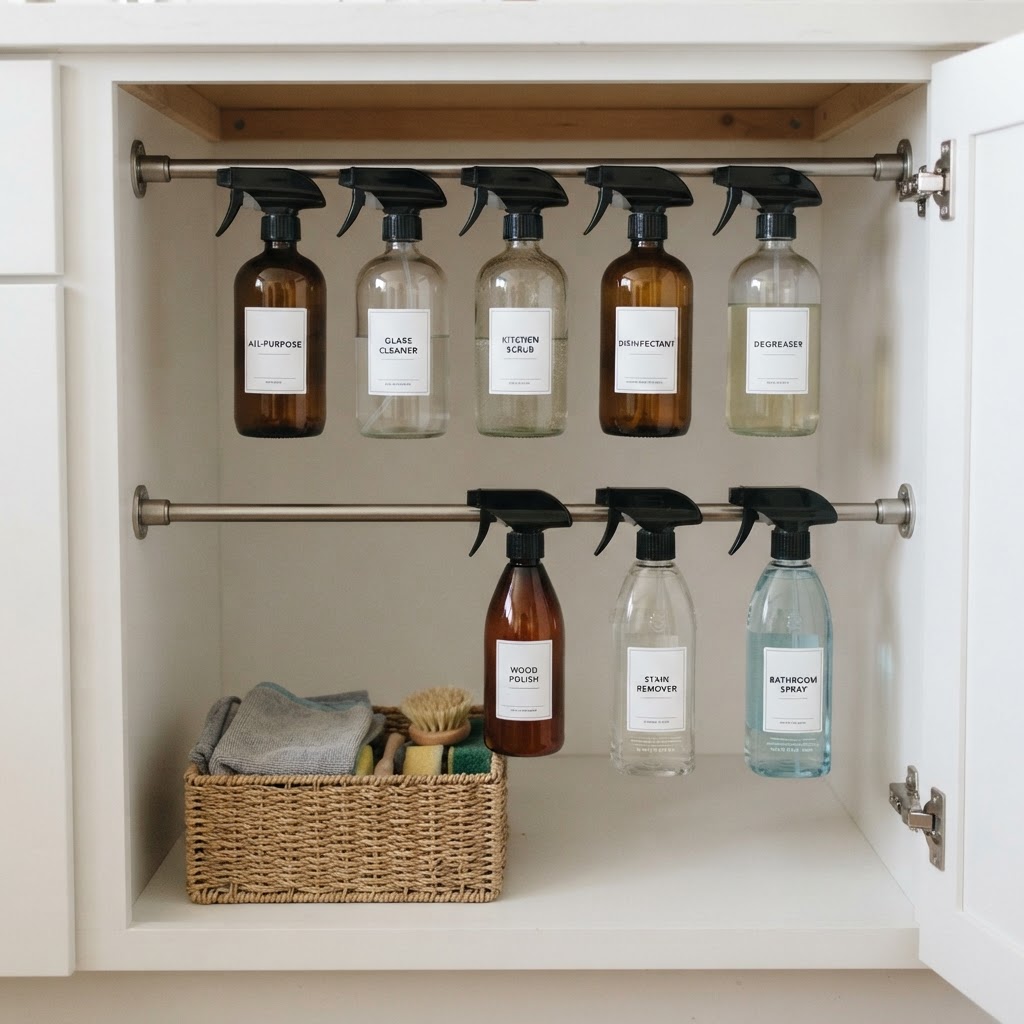
Creating custom organization within deep cabinets or closets is best achieved through the use of tension rods, which lock into place using spring-loaded pressure. Place a rod horizontally inside a kitchen cabinet to store cleaning supplies by their triggers; this keeps the floor of the cabinet free for bins or bulk items. For deep closets, install a tension rod vertically or horizontally to act as a divider for handbags, shoes, or stacks of sweaters, preventing items from collapsing into a disorganized pile. Because these rods are adjustable, they can typically cover spans from 12 to 72 inches, making them versatile for everything from a tiny bathroom cabinet to a large walk-in closet. No drilling is required, and removal takes less than five seconds, leaving the paint and drywall completely untouched.
5. Modular Open Shelving Units
Modular shelving offers a scalable storage solution that grows with your specific spatial requirements and can be fully disassembled when you move to a new property. Unlike built-in wall shelves, modular cubes can be stacked to reach the ceiling, utilizing vertical space that is otherwise wasted in small apartments. When arranging these, place the heaviest items in the bottom cubes to maintain a low center of gravity and prevent tipping. You can customize the look by using different bins—canvas for soft items, plastic for liquids, or woven baskets for a natural aesthetic—which makes it easy to hide “clutter-prone” items. This system is ideal for renters because it can be reconfigured; for example, you might use a 4×4 setup in a living room and then break it into two 2×4 units for a bedroom later. This inherent flexibility ensures your furniture remains useful regardless of your square footage.
6. Magnetic Strips for Kitchen and Craft Supplies
Installing magnetic strips provides an instant, space-saving wall display for metal items that would otherwise occupy valuable drawer or countertop space. In a kitchen, a high-strength magnetic knife bar can hold stainless steel utensils, whisks, and measuring cups, keeping them ready for use. To protect your landlord’s paint, apply a strip of blue painter’s tape to the wall first, then mount the magnetic strip onto the tape using heavy-duty double-sided tape. In office or craft settings, magnetic strips are perfect for storing metal tins holding paperclips, pens, or sewing needles. This method keeps your desk or workspace surfaces clear, which is proven to increase productivity by reducing visual noise. Ensure the strip is mounted at a height that is ergonomic for your reach, typically 40 to 45 inches above the floor in a kitchen setting.
7. Rolling Carts for Mobile Organization
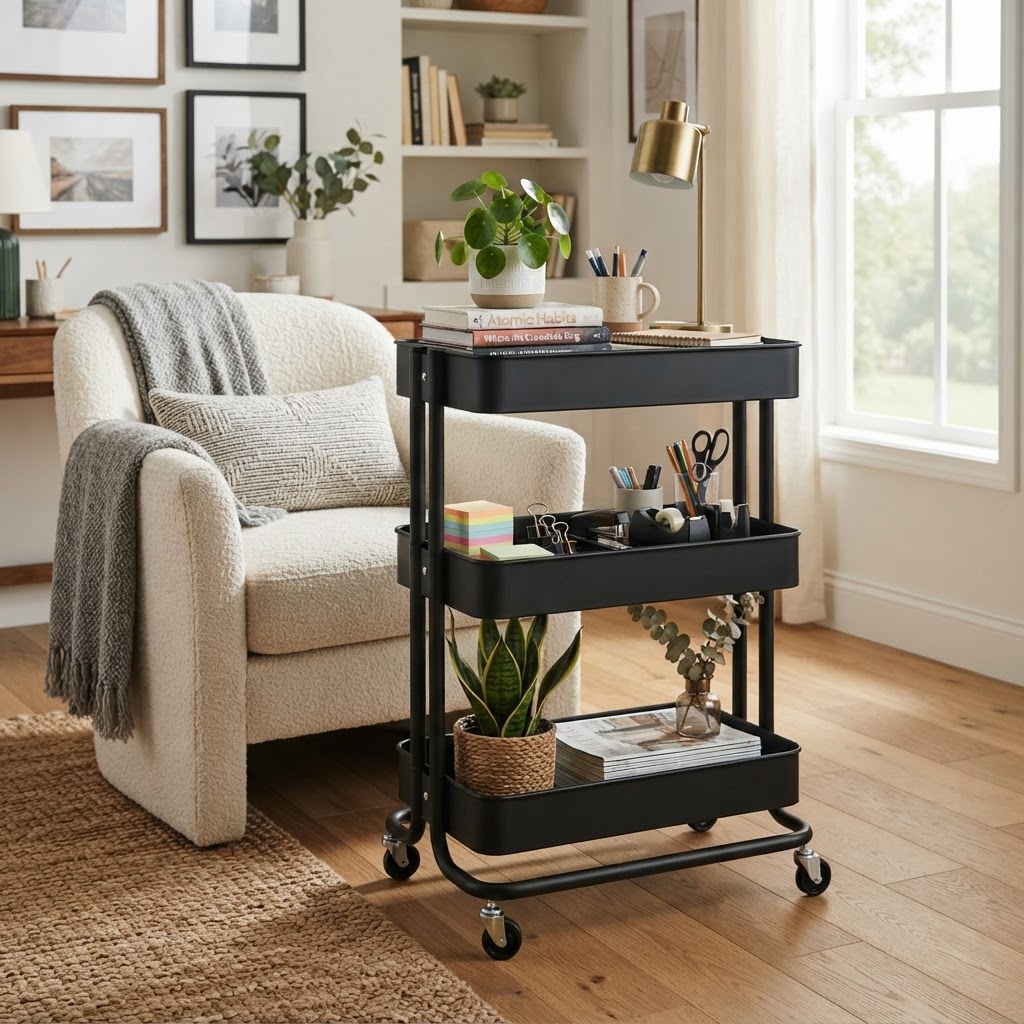
Rolling utility carts provide a high-mobility storage solution that allows you to shift your supplies from room to room as your activities change. These three- or four-tier carts are ideal for “task-based” organization: keep a dedicated coffee cart for your mornings, a beauty cart for your nighttime routine, or an office supply cart for your work hours. Because the carts are typically only 15 to 18 inches wide, they can fit into awkward gaps between appliances or beside desks, reclaiming “dead” inches of floor space. The wheels allow you to pull the storage to you rather than having to walk to a cupboard every time you need a tool. Most steel carts can hold up to 20 pounds per shelf, making them sturdy enough for books, small appliances, or heavy plant collections while remaining 100% portable for your next move.
FAQ
Can I use adhesive hooks on textured walls?
Adhesive hooks often struggle on textured walls because the uneven surface prevents a full seal for the adhesive. For textured surfaces, consider using tension-mounted shelves or furniture that doesn’t require wall contact to ensure security and prevent the hooks from falling.
How much weight can a tension rod hold safely?
A standard heavy-duty tension rod can typically support between 10 and 20 pounds when fully extended, depending on the rod’s diameter and the surface texture of the walls. Always check the manufacturer’s weight rating on the packaging, as rods designed for curtains are usually not intended for heavy storage loads.
What is the best way to remove adhesive strips without damaging paint?
The best way to remove adhesive strips is to pull the tab slowly and steadily in a downward direction, parallel to the wall, to stretch the adhesive. Avoid pulling outward or snapping the tab, as this increases the likelihood of peeling the paint or drywall paper along with the strip.
Can I stack modular shelving units safely?
You can safely stack modular shelving units up to three or four tiers high if they are anchored to each other with manufacturer-provided connectors. For units taller than 4 feet, it is highly recommended to use a non-damaging furniture strap to secure the unit to the wall to prevent tipping.
How do I maximize small pantry storage without drilling?
Maximize small pantries by using over-the-door pocket organizers for snacks and tension rods to create shelf dividers for trays or baking sheets. You can also use clear, stackable plastic bins on existing shelves to create vertical organization layers that double your functional pantry storage space.

Leave a Reply