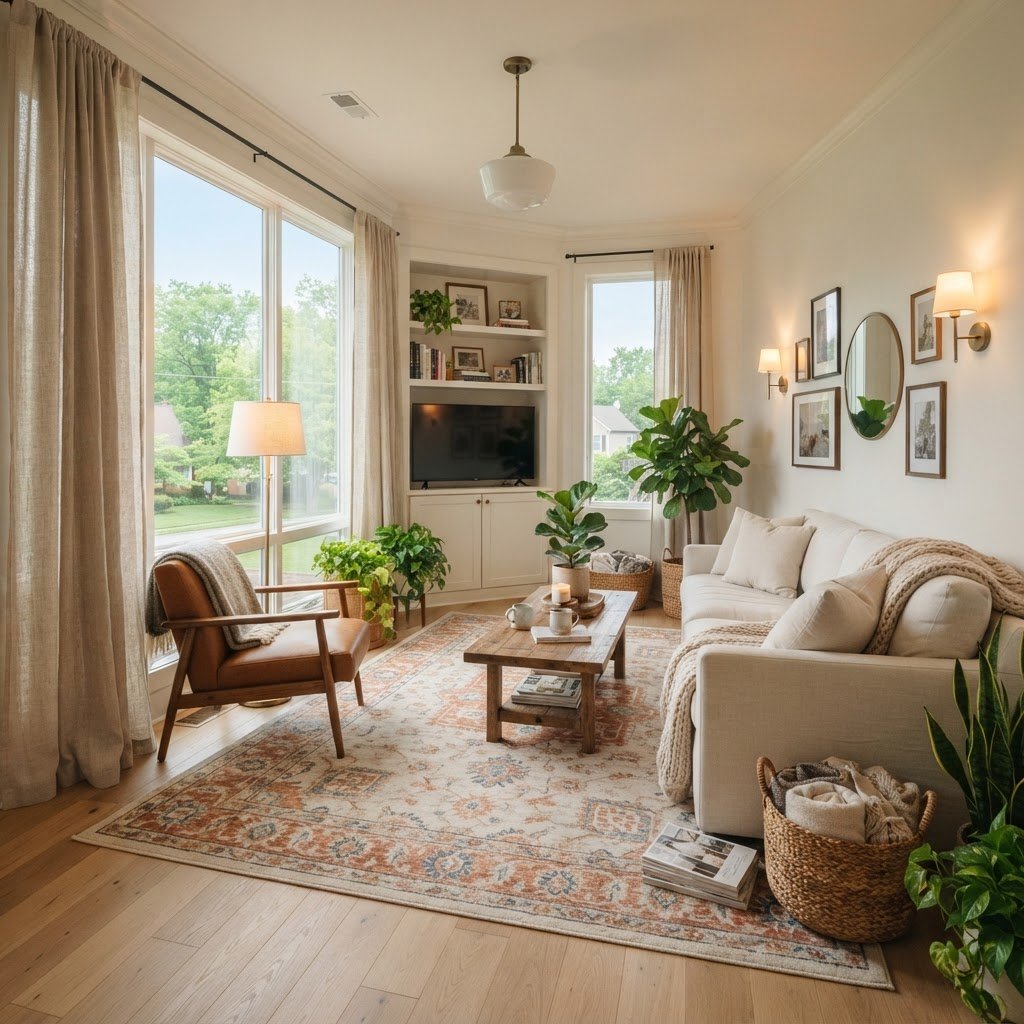
How to Make Your Rental Living Room Feel Custom and Cozy
To make your rental living room feel custom and cozy, replace standard overhead lighting with layered lamps, anchor the space with large area rugs, and utilize peel-and-stick wallpaper or oversized gallery walls to hide generic finishes. These non-permanent design strategies allow you to personalize your home while strictly adhering to standard rental lease agreements.
The Power of Layered Lighting
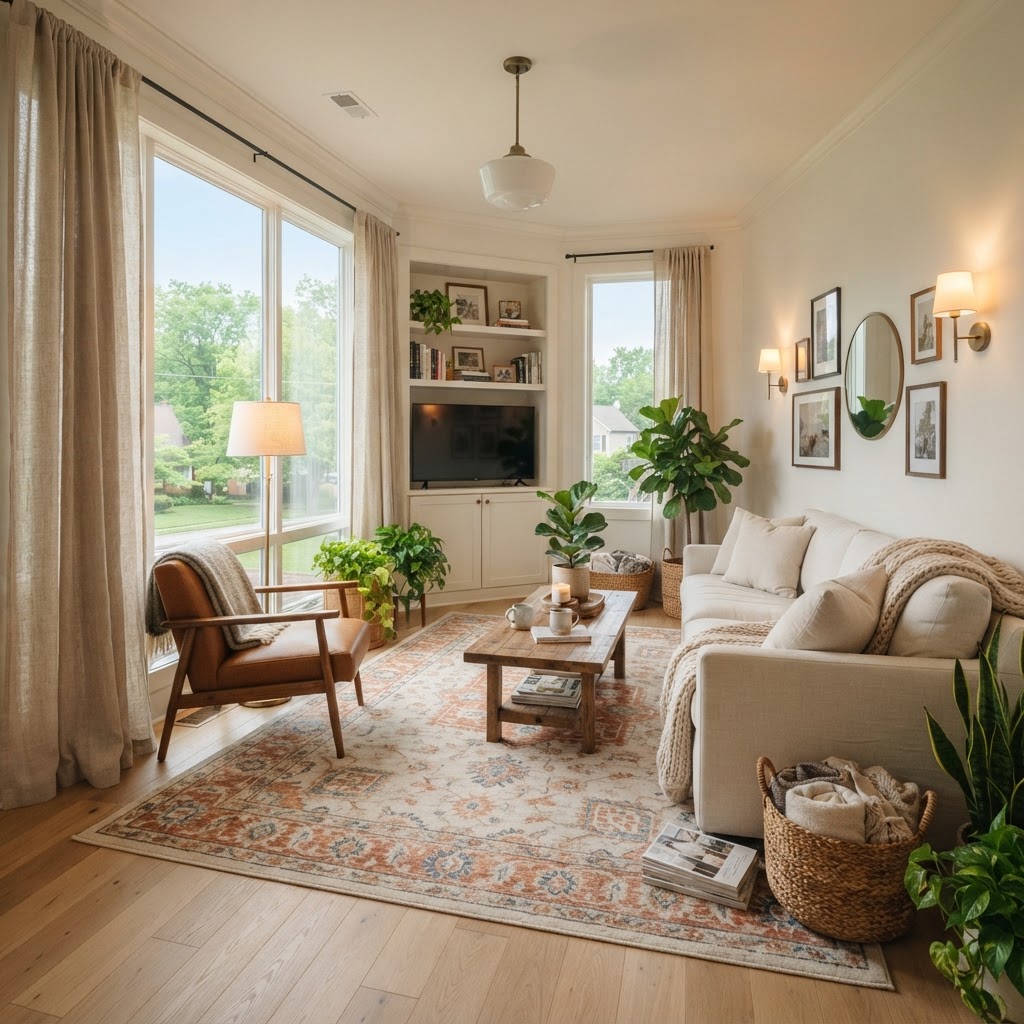
Lighting is the most effective tool to transform a sterile rental, as standard “boob lights” often drain warmth and visual appeal from a room. By implementing a layered lighting strategy, you can eliminate harsh shadows and create a high-end designer ambiance without installing new fixtures. Designers recommend a “three-point” lighting approach: ambient light for general visibility, task lighting for functionality, and accent lighting for mood.
Incorporating Ambient and Task Lighting
Begin by investing in at least three light sources per room to create depth. Use floor lamps with warm-toned bulbs (2700K color temperature) to anchor corners and table lamps to create pools of light on side tables. For those with limited floor space, plug-in wall sconces mounted with heavy-duty command strips provide a built-in aesthetic without requiring electrical work. Integrating smart bulbs with dimmers allows you to shift from bright, productive morning settings to intimate, cozy evening tones instantly. Research suggests that warm light below 3000K reduces eye strain and promotes relaxation in residential settings.
Textiles as the Ultimate Softener
Hard flooring and plain walls feel industrial, but high-quality textiles can soften these edges to create a sense of bespoke luxury. A large area rug is the single most impactful textile investment; experts recommend ensuring at least the front legs of your furniture sit on the rug to visually anchor the space. Textiles like wool, velvet, and linen introduce natural fibers that dampen echoes and add tactile warmth to modern, minimalist rental architecture.
Choosing Curtains for Height
Window treatments often define the ceiling height perception of an entire room. To create a custom look, mount your curtain rod at least 6 to 10 inches above the window frame, extending it nearly to the ceiling. This vertical extension draws the eye upward, tricking the brain into perceiving higher ceilings than the standard 8 or 9 feet. Opt for floor-to-ceiling curtains that graze the floor; curtains that are too short cut the room in half visually. Selecting heavy, double-lined fabric not only adds a high-end look but provides superior insulation, which can reduce heating and cooling costs by up to 15% in older rental buildings.
Elevating Walls Without Permanent Changes
Temporary wall treatments, specifically peel-and-stick wallpaper, have revolutionized rental decor by providing a removable way to add depth or color to a standard white space. By selecting an accent wall behind your sofa, you create a focal point that draws attention away from dated architectural details. Modern adhesive technology now allows these papers to be removed without peeling paint, provided you follow the manufacturer’s prep instructions exactly, typically involving a clean, dust-free surface application.
Creative Wall Decor Ideas
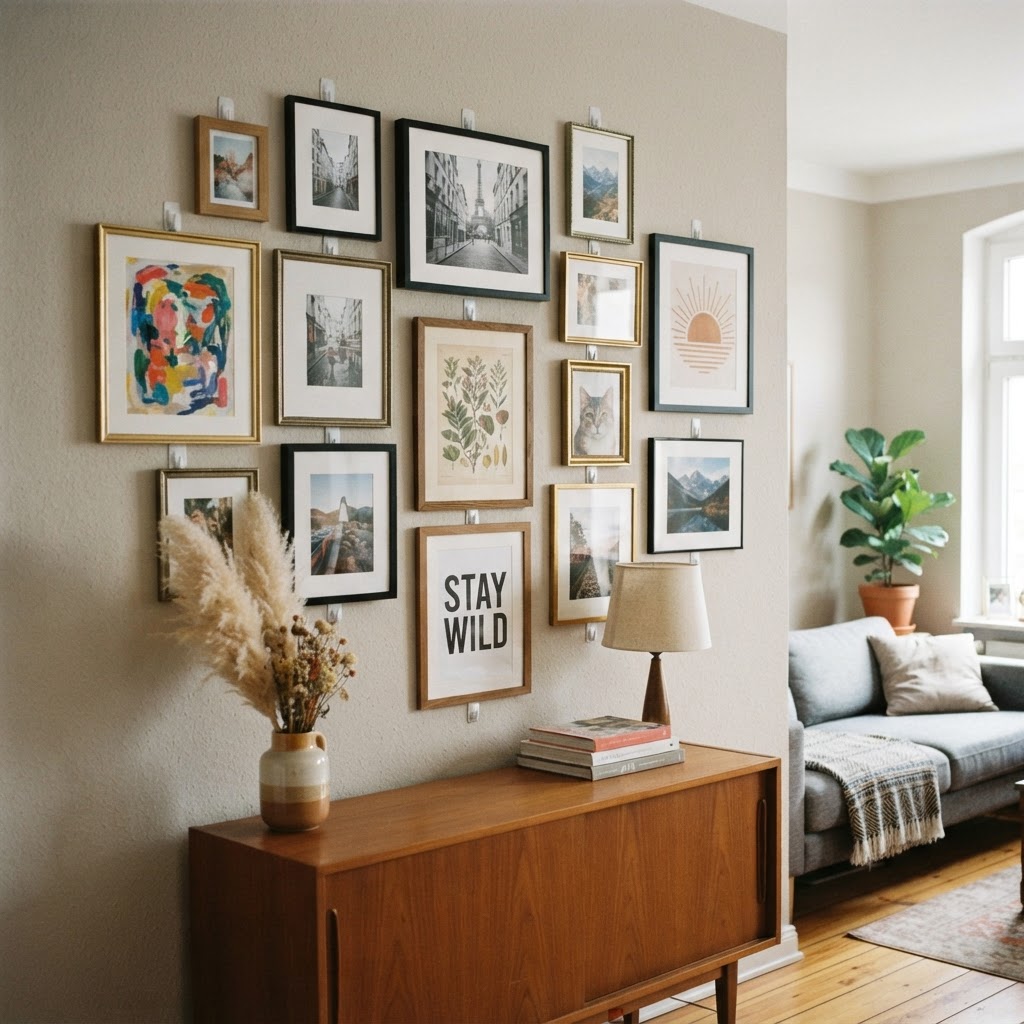
If wallpaper feels too permanent, gallery walls offer a dynamic alternative that can grow with your collection. To ensure a professional finish, use paper templates of your frames on the wall before committing to adhesive hooks. A common mistake is hanging art too high; keep the center of the main piece at approximately 57 to 60 inches from the floor—the standard “gallery height.” Use heavy-duty command strips or tension rods to hang items securely, ensuring you follow weight capacity guidelines for frames exceeding 5 pounds. Remember that when you curate your wall decor, you define the mood and color story of the entire home.
Customizing Through Furniture Placement
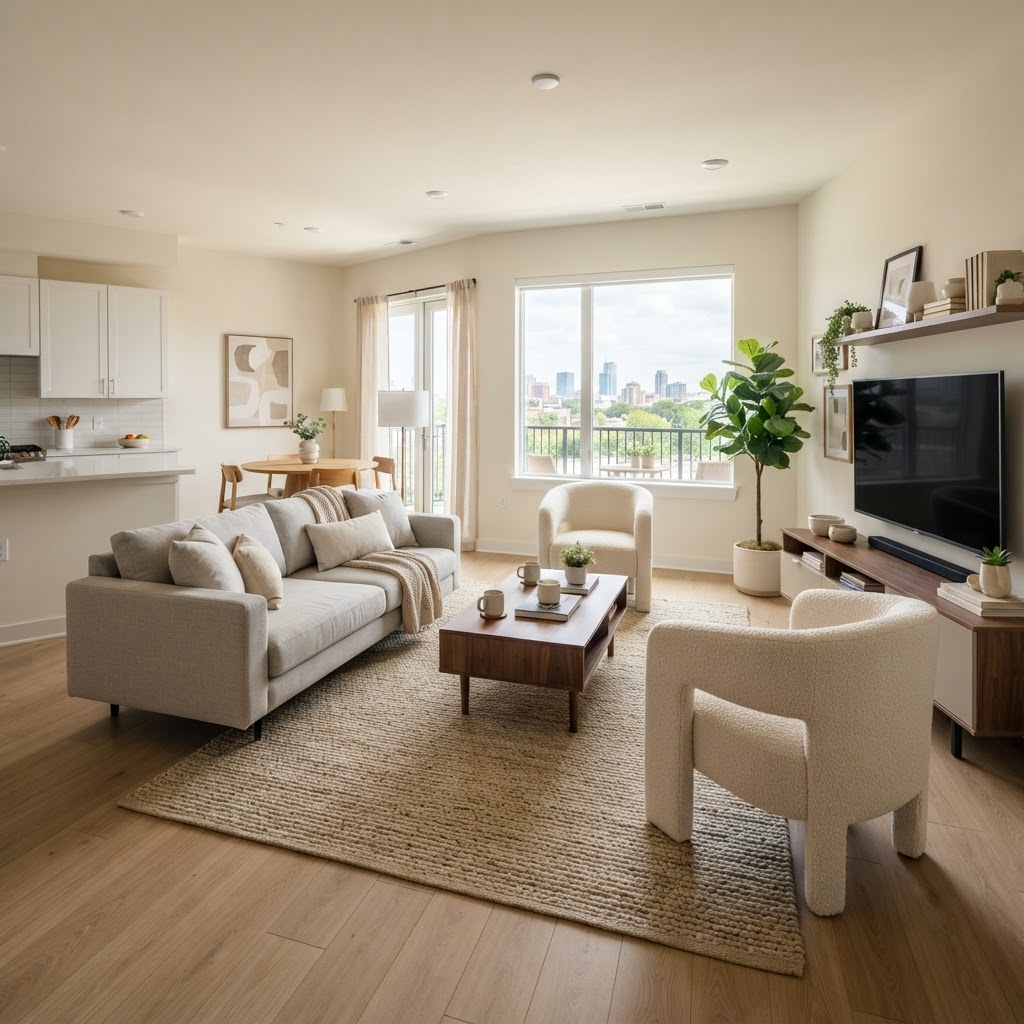
Strategic furniture placement is the foundation of high-end design, and breaking the habit of “wall-hugging” is essential for a custom feel. Floating your furniture—pulling the sofa and chairs away from the walls and into the center of the room—creates an intimate conversation zone and improves room traffic flow. This creates “dead space” behind the sofa that can be utilized for a console table, adding an extra layer of storage or decor, which often makes a cramped room feel significantly larger and more deliberate.
The Importance of Scale
Proportion is the secret to high-end interiors, and choosing furniture that fits the room’s scale is vital. Many renters mistakenly buy “apartment-sized” furniture, which often makes a room feel like a showroom rather than a home. Instead, prioritize one or two oversized statement pieces, such as a large sofa or a deep armchair, to provide a sense of substance. If your rental living room is small, multi-functional furniture like nesting tables or ottomans with hidden storage is essential. These pieces allow you to maintain a clean aesthetic while maximizing square footage, ensuring your rental feels like a permanent sanctuary.
Bringing Nature Indoors
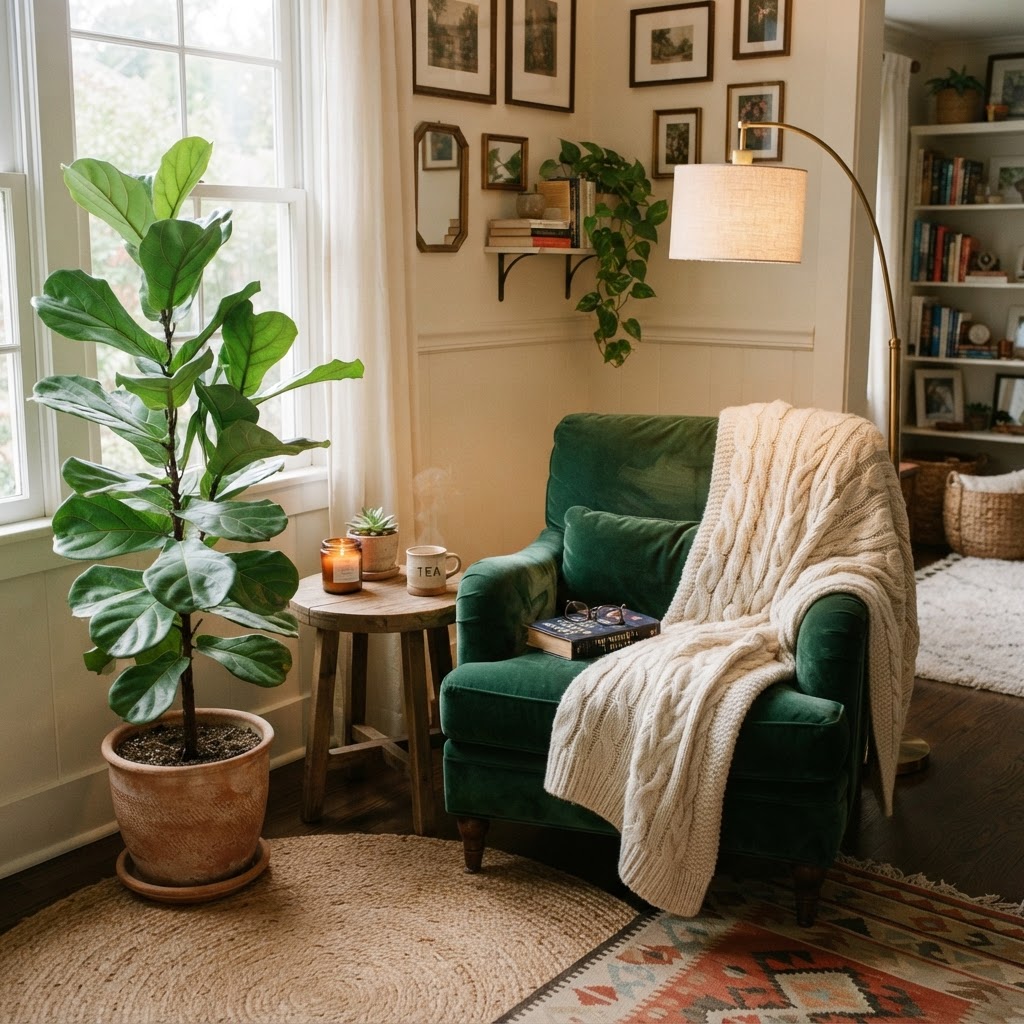
Plants serve as the ultimate organic design element that adds life and color to neutral rental spaces. Large-scale plants like the Fiddle Leaf Fig or Monstera act as living sculptures that reach heights that furniture often cannot. By grouping plants of varying sizes and leaf textures, you create a “curated jungle” effect that masks dull corners or unappealing structural columns common in older apartment buildings.
Benefits of Houseplants in Rentals
Beyond aesthetics, plants are one of the few decor items that improve indoor air quality by filtering volatile organic compounds (VOCs). If your rental lacks natural light, choose low-light-tolerant species like Snake Plants (Sansevieria) or Pothos, which can thrive in nearly any orientation. To tie the greenery into your decor, place pots inside decorative baskets or neutral ceramic planters that align with your color palette. This provides a professional, cohesive look that makes the apartment feel intentionally styled rather than just filled with plants.
Adding Personal Accents and Details
To truly make your rental living room feel custom and cozy, you must layer in personal items that reflect your unique lifestyle. Bookshelves styled with favorite titles, framed personal photos in consistent frames, and curated vintage finds create an authentic “lived-in” vibe. While big furniture provides the structure, these personal accessories define the personality of the space, distinguishing it from a temporary stop-gap.
Styling Tips for Cohesion
Follow these steps to maintain a cohesive look:
- Limit your color palette to three main tones to avoid visual clutter.
- Use decorative trays to group smaller items on coffee tables to keep surfaces looking organized.
- Incorporate mirrors to bounce light and expand the perceived size of the room.
- Swap out standard cabinet or drawer hardware if the landlord allows, keeping the originals to re-install later.
- Layer throws and pillows in varying textures like wool, linen, and faux fur.
FAQ
How can I make a rental look expensive without a renovation?
Focus on height and texture: use floor-to-ceiling curtains, replace builder-grade light fixtures with floor lamps, and add large-scale area rugs. These elements elevate the room’s proportions and provide a tactile, luxurious finish that feels custom rather than mass-produced.
Can I paint my rental apartment walls?
Most landlords allow painting if you return the walls to the original neutral color upon move-out. Always check your specific lease agreement first or ask for written permission before starting, and ensure you use a high-quality primer to make the final painting back to white easier.
How do I hang decor without damaging walls?
Use high-quality adhesive strips like 3M Command hooks, which are designed to be removed without damaging paint. For heavier items, consider using tension rods inside window frames or leaning large mirrors and art against walls to create a layered, intentional look without needing a single nail.
What are the best plants for a low-light rental?
Snake plants, ZZ plants, and Pothos are ideal for low-light rental environments as they are highly resilient. These plants require minimal maintenance and can survive in indirect or lower light levels while still providing the height and organic shape needed to warm up a sterile apartment.
How do I deal with an awkwardly shaped rental room?
Use area rugs to define distinct “zones” within the larger room, such as a seating area and a small workspace. Floating your furniture away from the walls creates pathways and makes the room feel more intentional and spacious, rather than simply having all items pushed to the perimeter.

Leave a Reply