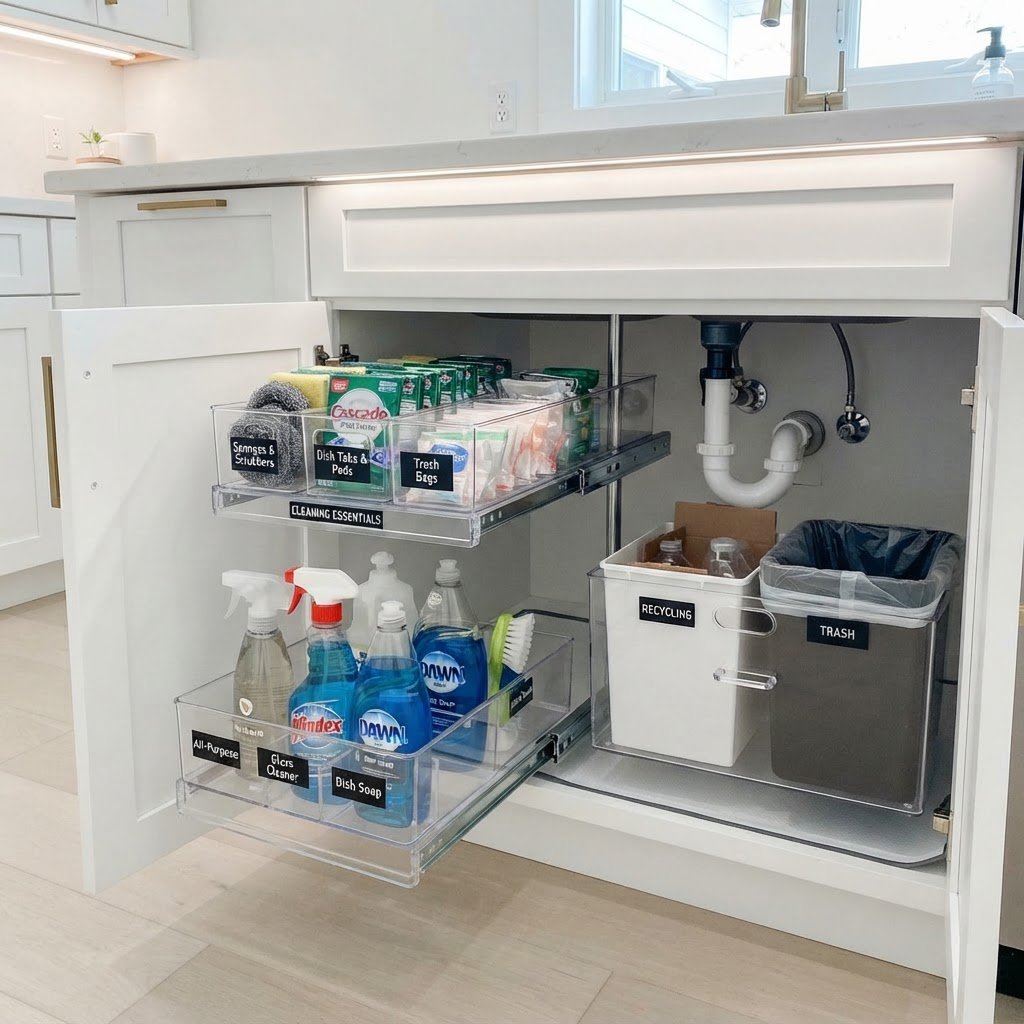
Is there any area in the home more prone to chaos than the space beneath the kitchen sink? Often treated as a ‘toss it and forget it’ zone, this dark, plumbing-filled cabinet frequently becomes a graveyard for half-empty cleaning bottles, mismatched sponges, and plastic bags. However, implementing clever under-sink organization ideas can turn this cluttered void into a highly functional storage hub. When you maximize your small kitchen storage, you not only save time searching for supplies but also prevent the frustration of leaks or lost items going unnoticed. By treating this neglected real estate with the same care as your pantry or cutlery drawers, you can reclaim significant space, making your cooking and cleaning routines feel much more efficient.
The First Step: Clearing and Categorizing
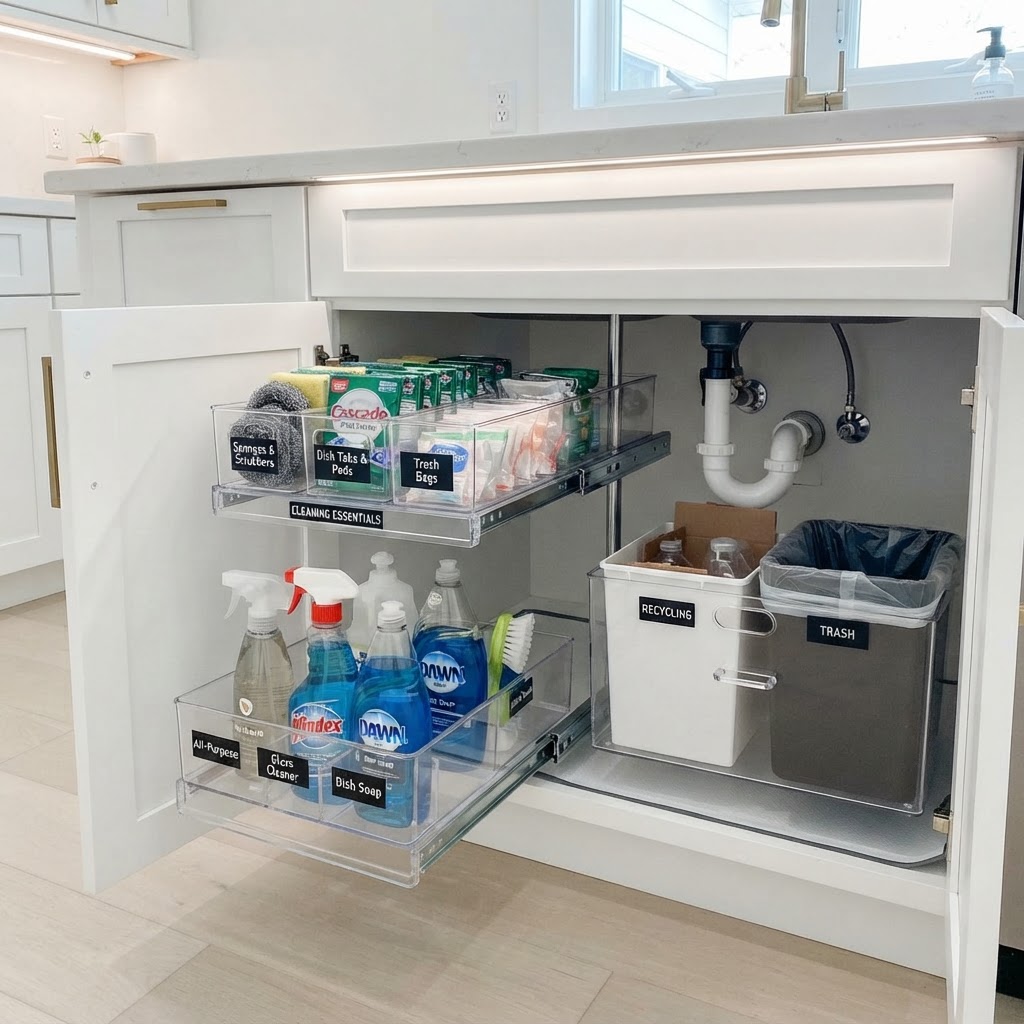
Before you run out to buy fancy bins or shelves, you must start with a clean slate. Empty the entire contents of the space under your sink, setting aside items that have expired, leaked, or haven’t been used in years. This is a critical step in effective kitchen cabinet organization.
Once everything is out, wipe down the base of the cabinet, as this is a prime spot for hidden crumbs or old liquid spills. Categorize your items into groups such as ‘All-Purpose Cleaners,’ ‘Sponges and Scrubbers,’ ‘Dishwashing Supplies,’ and ‘Backstock.’ This sorting process is essential to determine what storage solutions you actually need rather than just what looks good on social media.
Utilize Vertical Space with Stackable Bins
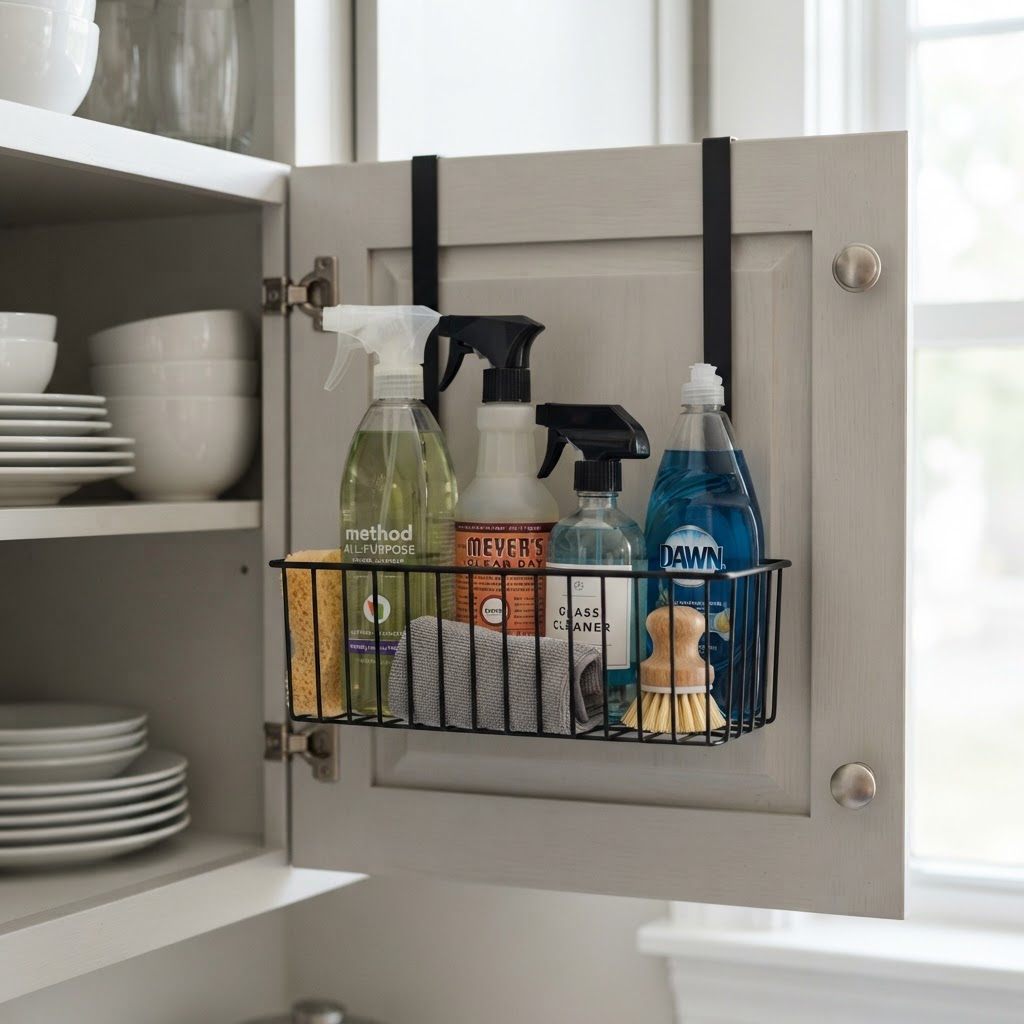
Most people leave too much ‘dead air’ at the top of their under-sink cabinets. Because the plumbing usually occupies the center and back, the sides and upper reaches are often completely ignored. Stackable bins are one of the most versatile under-sink organization ideas because they allow you to exploit that vertical space effectively.
Clear, stackable drawers work wonders here, allowing you to see exactly what you have without rummaging. Use the bottom drawer for heavier items like bulk refills and the top drawer for smaller items like dishwasher tabs or scrub brushes. This keeps everything tidy and prevents smaller bottles from getting lost behind larger ones.
Maximizing Door Space for Essentials
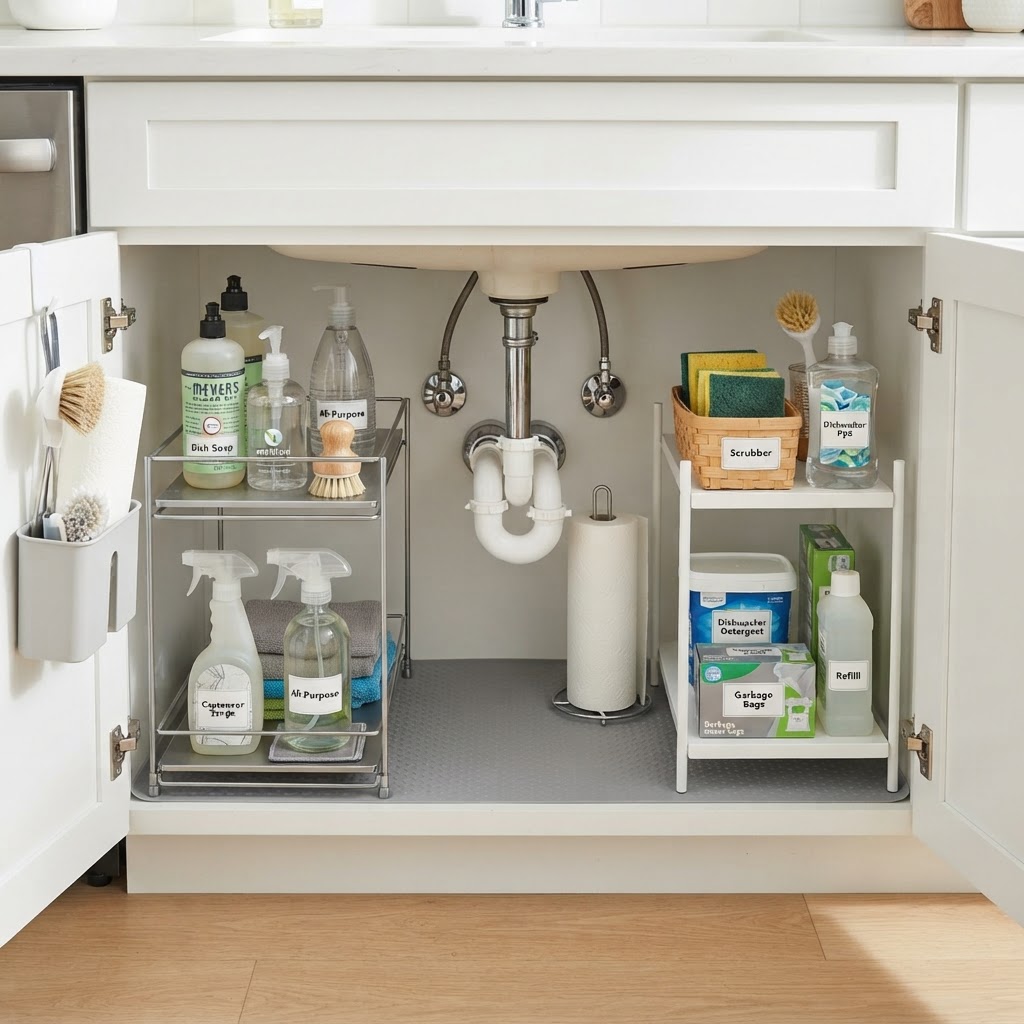
Never overlook the inside of your cabinet doors. When you have a small kitchen, the doors are basically free, unused storage potential. Installing over-the-door organizers can instantly create homes for items you need to grab in a hurry, like dish soap, gloves, or spray bottles.
Alternatively, consider using adhesive hooks to hang your dish towels, scrub brushes, or even a small waste bag holder. By mounting these items on the door, you clear up valuable real estate on the floor of the cabinet, making it easier to navigate around the pipes and hoses that often obstruct the area.
The Magic of Pull-Out Organizers
If your under-sink space is particularly deep and dark, you are likely losing items in the back forever. Pull-out organizers or sliding trays are the gold standard for under-sink storage solutions. They turn a static, deep cabinet into a functional, accessible drawer-like system.
Install a two-tier sliding rack that works around your existing plumbing pipes. This allows you to pull out the contents of the cabinet completely into the light of the kitchen, giving you full visibility and easy access. It effectively eliminates the need to crawl on your hands and knees just to find the glass cleaner.
Choosing the Right Materials for Wet Environments
When looking for under-sink organization ideas, always consider the environment. It is a damp area prone to leaks. Avoid porous materials like untreated wood or cardboard, which can warp or grow mold if exposed to moisture.
Instead, opt for plastic, acrylic, or powder-coated metal organizers. These materials are not only water-resistant but also incredibly easy to wipe clean if a soap bottle happens to drip or leak. Placing a protective liner or a plastic tray at the very bottom of the cabinet is another smart, proactive strategy to catch future spills before they damage the base.
Customizing for Your Specific Pipes
Every under-sink area is different because of where the plumbing pipes, garbage disposal, and electrical outlets are located. This is why a ‘one-size-fits-all’ approach to under-sink storage solutions rarely works. Before purchasing anything, take careful measurements of the width, height, and depth, but also map out exactly where the pipes interfere.
Consider using tension rods to hang spray bottles. This is a brilliant, inexpensive trick: place a tension rod across the upper part of the cabinet and hook your sprayers onto it. This creates a hanging storage system that works perfectly even in cabinets with awkward, off-center piping.
Creative Labeling and Maintenance
Organization isn’t just about the initial setup; it is about maintainability. If other members of your household are constantly putting things back in the wrong place, it will quickly become disorganized again. Labeling your bins can act as a gentle reminder of where things belong.
Maintain Your System
- Review the space every 3 months.
- Dispose of empty or near-empty bottles.
- Re-tighten any adhesive hooks that may have loosened.
- Wipe down the interior shelf surfaces to prevent dust buildup.
Conclusion
Transforming the space beneath your kitchen sink might seem like a daunting project, but the rewards are well worth the effort. By applying these under-sink organization ideas, you create a system that works for you, not against you. From installing pull-out racks to leveraging door space, these small changes result in a much more efficient, manageable, and stress-free kitchen. Start with one section today, and enjoy the satisfaction of a clutter-free cabinet. Take action now: set a timer for 30 minutes this weekend and clear out that under-sink area—your future, organized self will thank you every time you open that cabinet door.

Leave a Reply