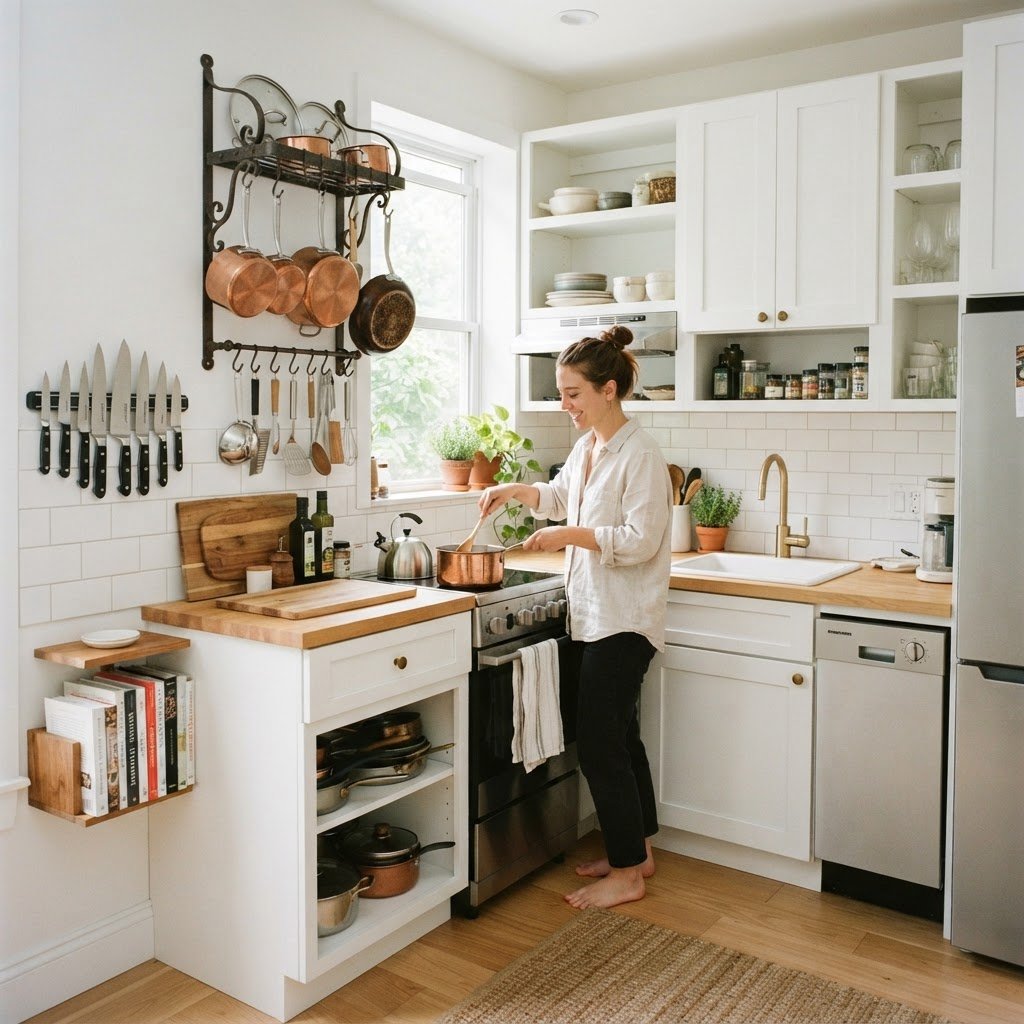
Living in a home with a kitchen under 100 square feet might feel restrictive, but with the right mindset, it can actually lead to a more streamlined cooking experience. An efficient kitchen workflow in tiny spaces is not just about aesthetics; it is about respecting the movement between your prep area, cooking zone, and cleaning station. When every square inch counts, you must eliminate wasted movement and prioritize functionality over clutter. By rethinking how you store tools and manage your counter space, you can turn even the smallest galley or kitchenette into a professional-grade culinary sanctuary.
Understanding the Golden Triangle in Small Spaces
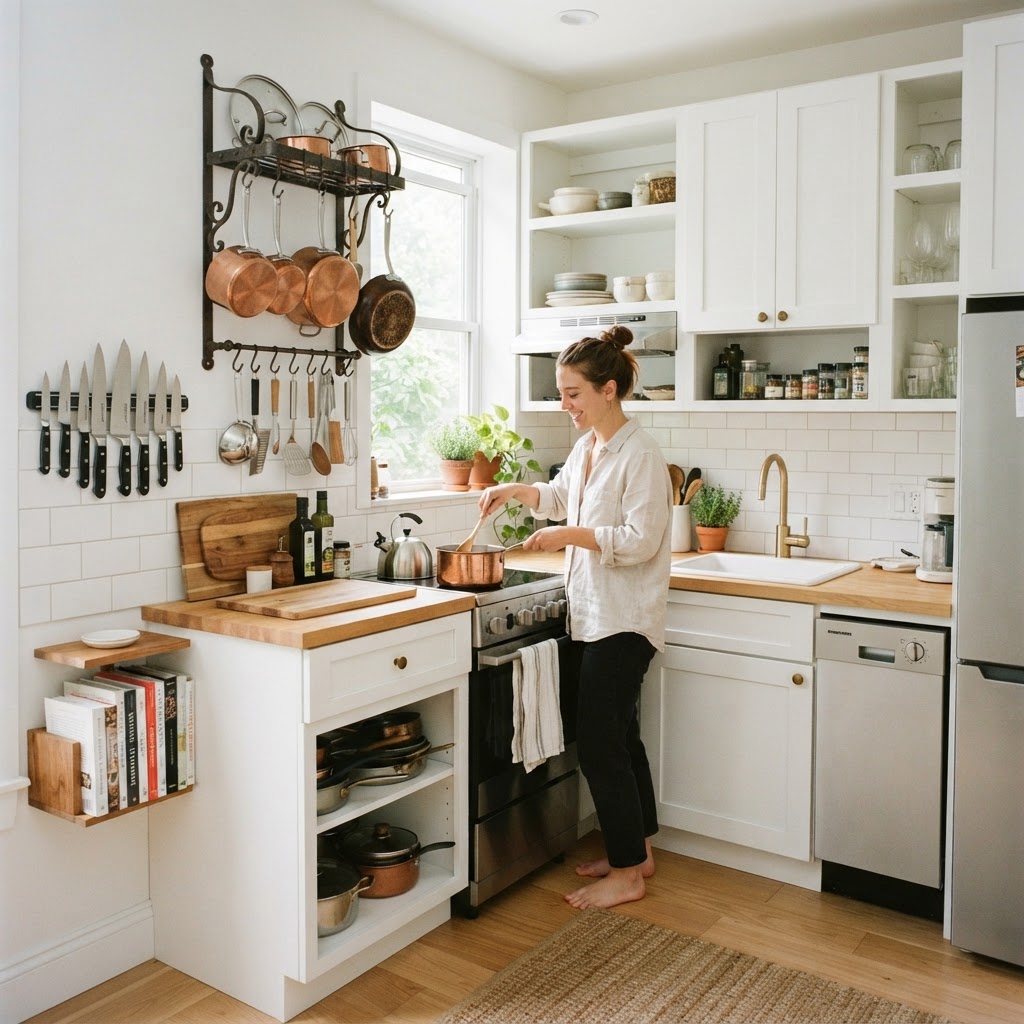
The traditional kitchen work triangle connects the stove, sink, and refrigerator. In a compact kitchen, this triangle is naturally compressed, which can be an advantage for speed, but a nightmare for congestion. The goal is to keep these three points accessible without forcing you to dance around obstacles.
Mapping Your Movements
Begin by observing your current cooking habits. Do you find yourself walking back and forth to grab spices while something is burning on the stove? If so, your workflow is broken. In a tiny space, your most-used items must be within arm’s reach of your primary prep station. Keep your knives, cutting boards, and frequently used oils clustered together to minimize unnecessary steps.
Decluttering to Enhance Efficiency
Small kitchens act as a filter for your belongings. You simply cannot keep gadgets you use once a year. If you have a pasta maker or a specialized bread slicer that takes up half your cupboard, it is time to reconsider its place in your life.
The One-In-One-Out Rule
Adopt a strict policy: for every new kitchen gadget you bring in, an old one must go. This ensures that your kitchen storage remains lean and functional. Take an inventory of your drawers; if you have four spatulas but only use one, discard the others. Minimalism is not just a style choice; it is a tactical requirement for tiny kitchen management.
Managing Workflow During Cooking Prep
Workflow is not just about storage; it is about your process. Professional chefs rely on ‘mise en place’—everything in its place—before they turn on a heat source. This practice is even more critical in a compact kitchen where you cannot afford to chop vegetables while the oil is already smoking.
Preparing Ingredients in Advance
Before you start cooking, have all your ingredients chopped, measured, and placed in small bowls. This allows you to focus entirely on the cooking process, reducing the risk of mistakes. In a tiny kitchen, doing your ‘mise en place’ at the dining table or a temporary folding table can save your limited counter space for the actual cooking. It ensures that your workflow remains smooth from start to finish.
Maintenance and Daily Habits
A tidy kitchen is a productive kitchen. In a space under 100 sq ft, a small pile of dirty dishes can make the room feel completely unusable. You must commit to cleaning as you go rather than letting tasks pile up.
The ‘Clean-As-You-Go’ Strategy
Keep a large bowl in the sink for scraps as you prep. Wipe down counters between tasks. By the time your meal is ready to serve, your prep area should already be clean. This habit prevents the overwhelming feeling of a massive cleanup after dinner, which is the quickest way to kill your motivation to cook in a small home.
Lighting and Aesthetics
Believe it or not, lighting plays a role in your workflow. Shadows in a dim corner can make it harder to see what you are doing, leading to slower movements and potential accidents. Use under-cabinet LED lights to brighten your work surfaces. Better visibility means faster, more confident movements.
Visual Clarity Improves Flow
When your kitchen is well-lit and organized, it feels larger and more inviting. Use light-colored organizational bins to keep items grouped together inside cabinets. This reduces visual noise and helps you identify exactly what you need with a quick glance. A streamlined visual environment contributes significantly to the overall efficiency of your kitchen workflow.
Conclusion
Mastering an efficient kitchen workflow in tiny spaces is a journey of refinement. By utilizing vertical storage, creating distinct zones, and adopting a ‘clean-as-you-go’ philosophy, you can maximize even the smallest cooking area. Remember that your kitchen should work for you, not against you. Take one section at a time, clear the clutter, and start cooking with confidence. Are you ready to transform your tiny kitchen? Start by clearing your counters tonight and see the difference in your next meal prep!

Leave a Reply