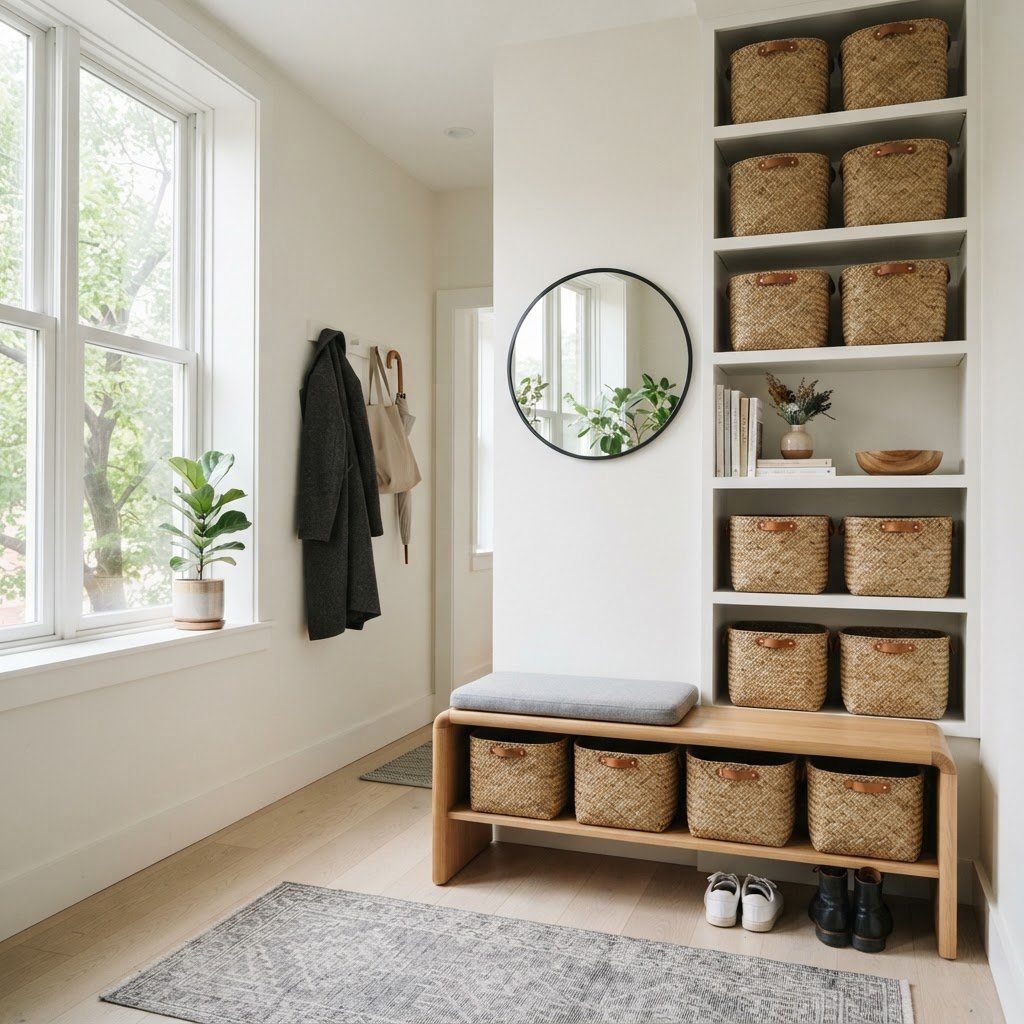
To create more storage in a small entryway without a closet, maximize your vertical wall space with floor-to-ceiling shelving, install tiered wall hooks, and utilize multifunctional furniture like benches with internal storage. Implementing a designated landing strip for daily essentials and using door-back organizers will further clear floor clutter and increase capacity.
Assessing Your Vertical Space Potential
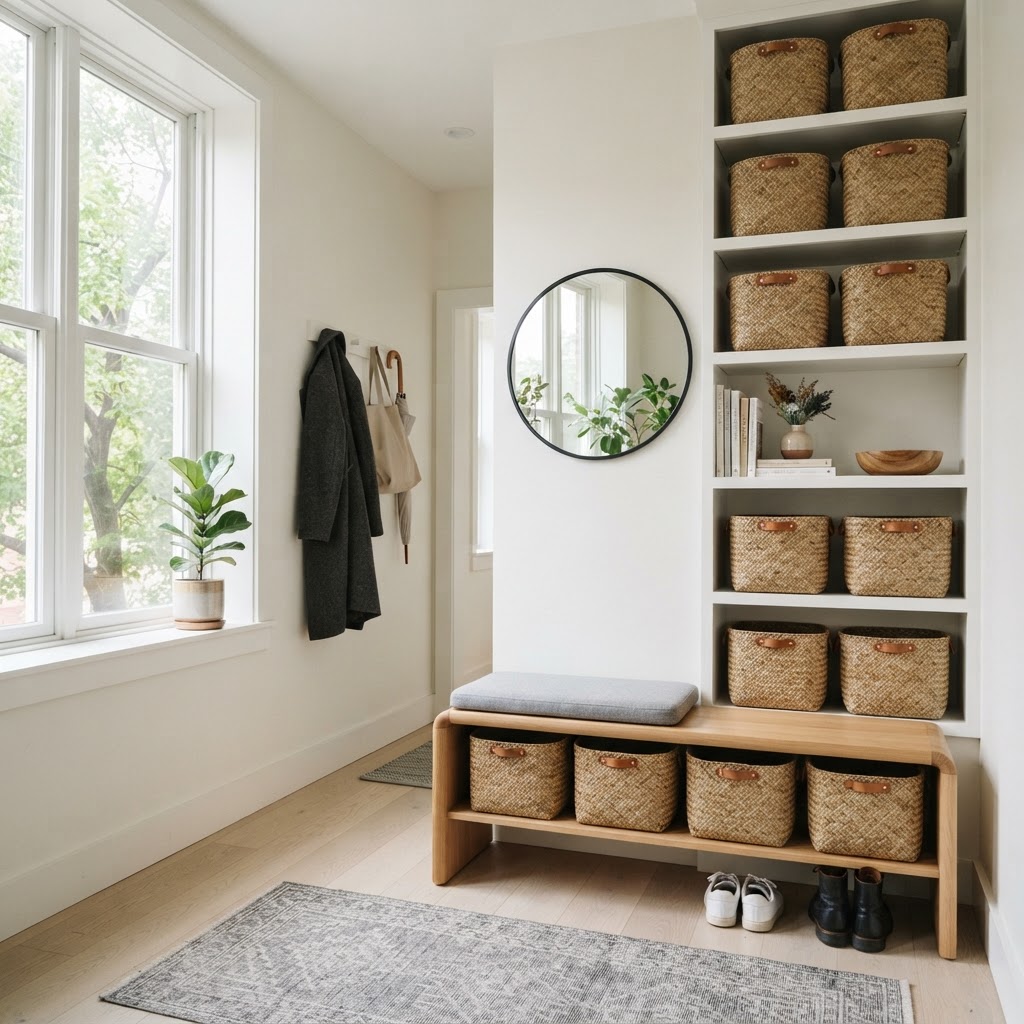
When floor space is non-existent, your walls become your best friend for maximizing square footage in tight apartments. Many people ignore the vertical area above eye level, but this is prime real estate for seasonal items or things you do not need every single day. By installing shelving units that reach closer to the ceiling—ideally within 12 inches of the ceiling line—you draw the eye upward and create the illusion of a taller space while gaining massive storage capacity. A standard 12-inch deep shelf can hold approximately 4 to 6 storage bins per 3 feet of width, effectively tripling your storage footprint compared to floor-only units.
The Power of Floor-to-Ceiling Shelving
Open shelving is a game-changer for small apartment entry organization. You can use deep shelves for baskets that hold bulky items like scarves and umbrellas, keeping them out of sight but easily accessible. Opting for light-colored or white shelving can keep the area feeling airy, preventing a small, narrow hallway from feeling cramped or cluttered. Utilizing closed-door cabinets for the bottom 3 feet of your vertical space creates a cleaner look, while the top shelves remain open for decorative items or rarely used gear.
Choosing the Right Hardware for Your Needs
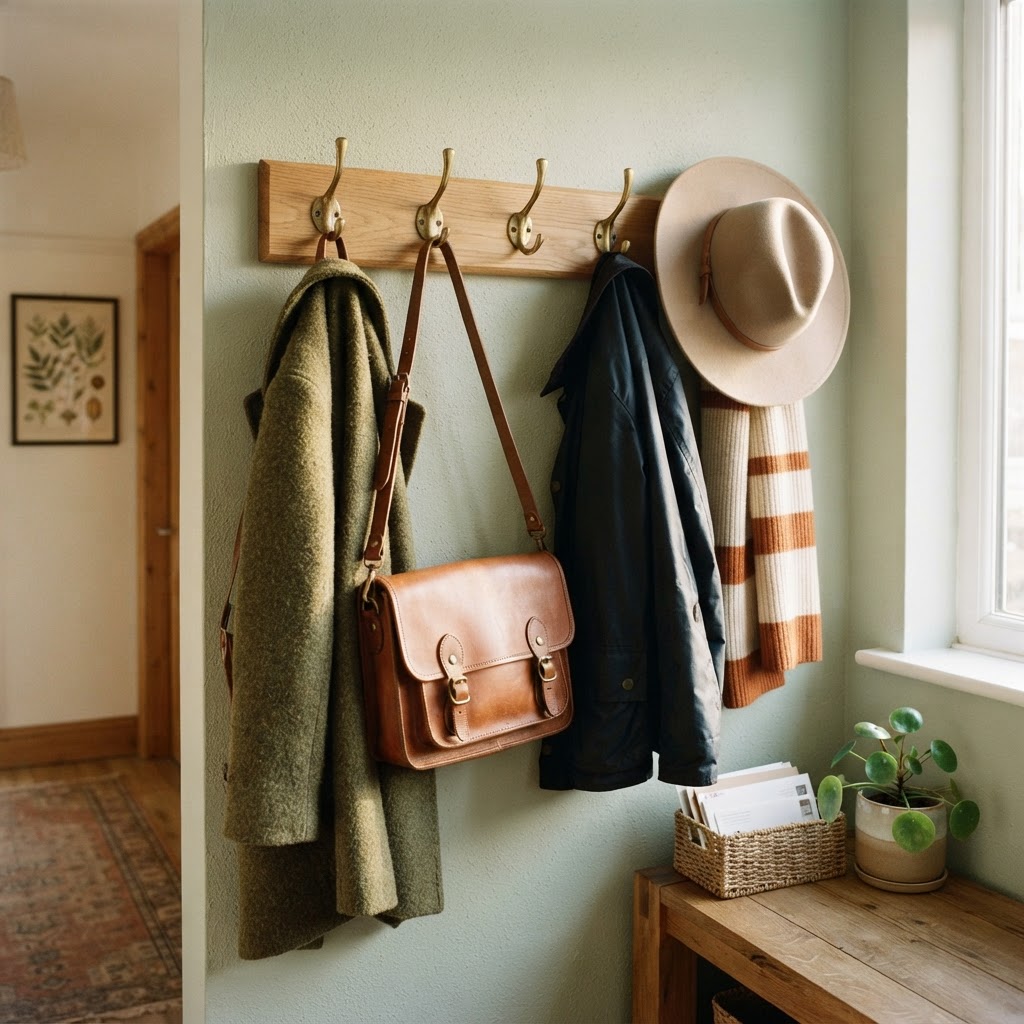
If you lack a closet, hardware such as hooks and racks will be the backbone of your storage system. Do not settle for just one or two basic hooks; instead, consider a full-length wall rack or a series of staggered hooks to utilize every available inch. This approach allows you to hang heavy winter coats at a lower level—roughly 50 to 55 inches from the floor—and lighter accessories like hats or dog leashes higher up, maximizing vertical surface area. If you are struggling specifically with footwear, you might find our guide to smart shoe storage solutions for narrow entryways helpful for reclaiming your floor area.
Stylish and Functional Hooks
Look for hardware that matches your interior aesthetic. Brass, matte black, or brushed nickel hooks can turn your storage wall into a decorative feature. Think of them as “wall jewelry” that provides a place for your bag, coat, and keys without sacrificing style for the sake of utility. For the best stability, ensure hooks are screwed into wall studs or utilize high-strength toggle bolts that can support at least 25 pounds each.
Investing in Multifunctional Furniture
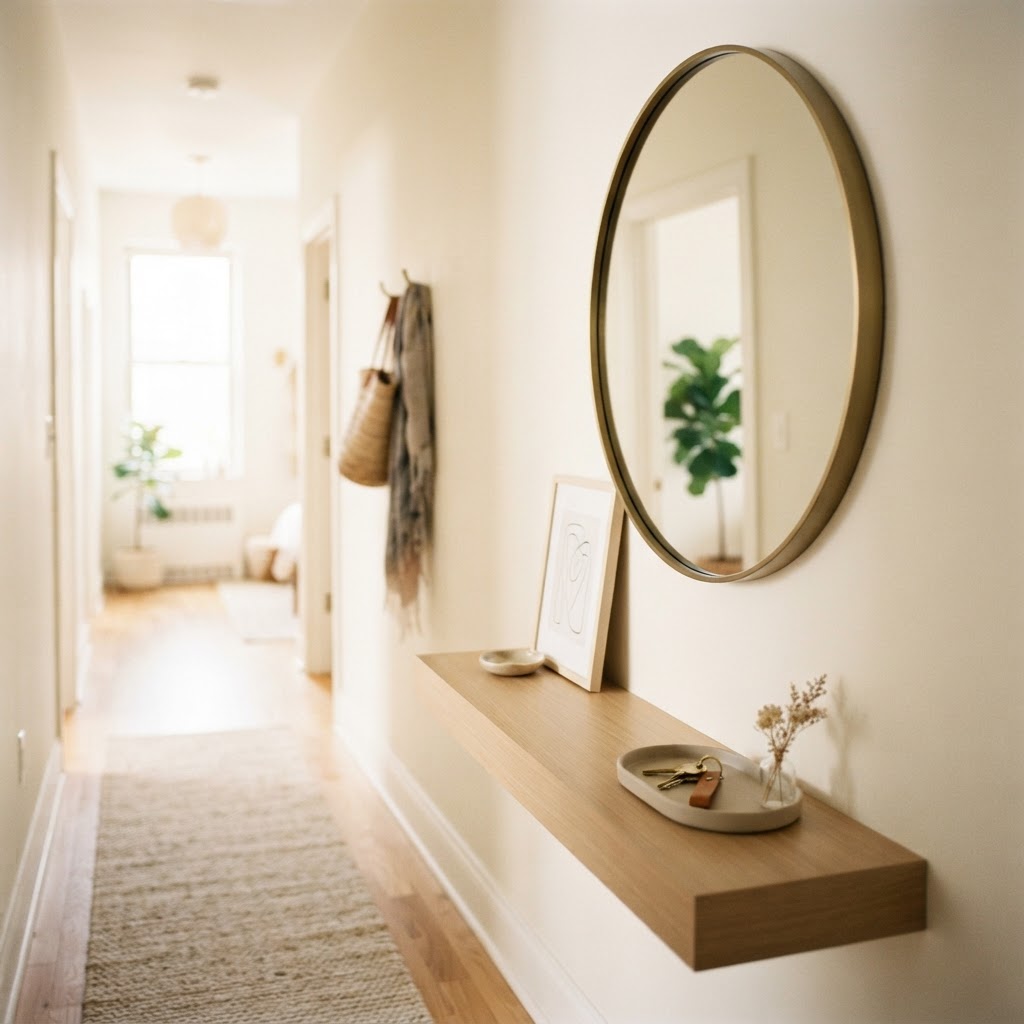
Every piece of furniture in a small entryway must earn its keep by serving at least two distinct purposes. If you cannot fit a coat rack, look for slim-profile console tables—ideally under 12 inches deep—that include integrated drawers or bottom shelves. A small bench with internal storage is perhaps the most valuable piece you can own, offering a place to put on your shoes while hiding away the clutter that would otherwise inhabit your entryway floor. Research shows that integrating seating at the door reduces floor clutter by up to 40% because it provides a dedicated spot for shoes rather than leaving them in a pile.
Utilizing Door-Back Storage Solutions
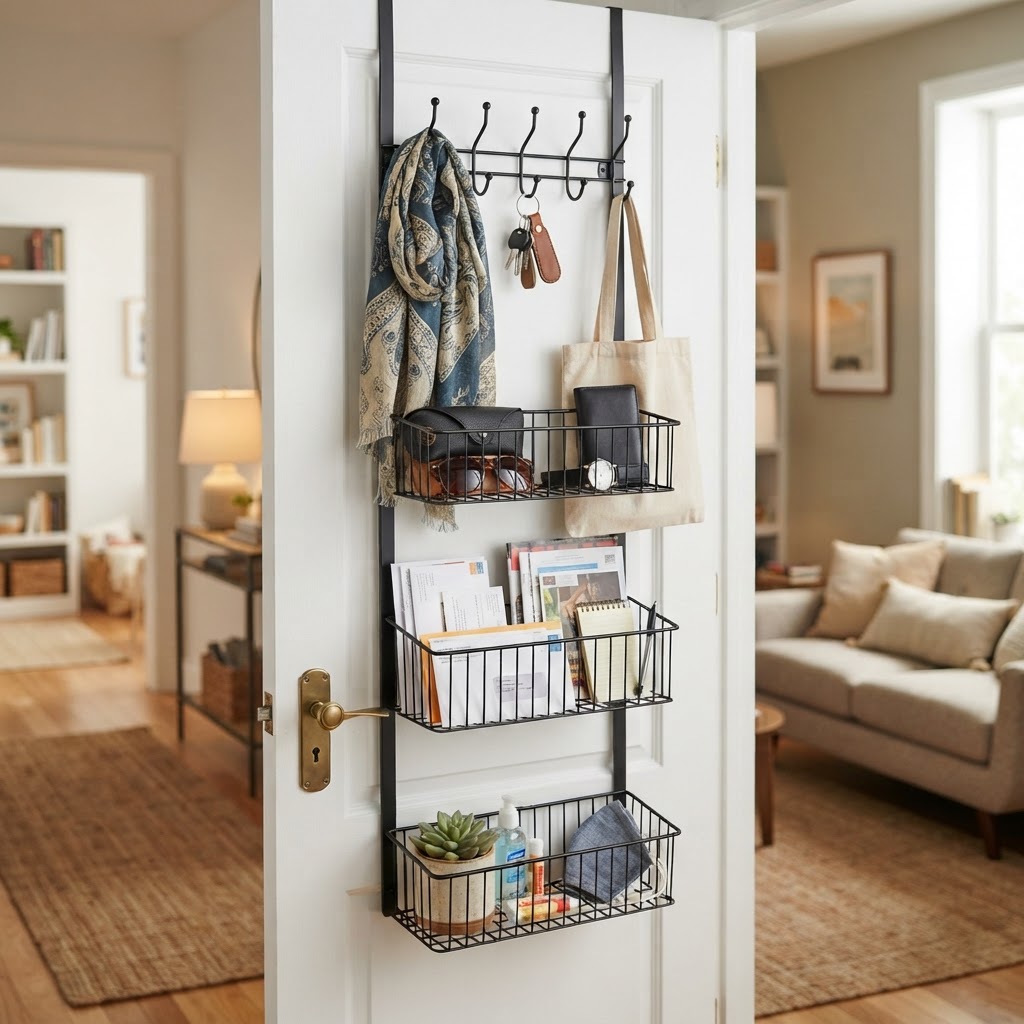
Do not overlook the back of your front door as a potential storage goldmine for small-item organization. Over-the-door organizers are not just for bathrooms or bedrooms anymore; they are essential for entryways. You can find sleek, minimalist versions designed specifically for apartments that hold everything from mail and sunglasses to slippers and spare umbrellas. These units can effectively add 4 to 6 square feet of usable storage space that would otherwise remain completely empty.
Customizing Your Door Storage
For a truly seamless look, paint your organizer the same color as the door. This camouflage technique minimizes the visual “noise” of your accessories and helps maintain a cohesive design. When you are figuring out how to create more storage in a small entryway, the goal is to make your storage solutions feel like a natural part of the architecture rather than an afterthought. Using adhesive-free hanging brackets protects your rental’s door finish while providing reliable, weight-bearing support.
Strategic Use of Mirrors and Lighting
While mirrors do not provide physical storage, they are essential for your entryway organization plan. A large, wall-mounted mirror bounces light around the space, making it feel significantly larger than it actually is. When the entryway feels bigger, it is much easier to keep it tidy and organized, as the sense of openness discourages the tendency to pile items on the floor. For maximum effect, place the mirror opposite your primary light source to amplify illumination throughout the small foyer.
The Role of Task Lighting
Adding a small, rechargeable motion-sensor light inside your storage bins or under your hooks can make a huge difference during late-night returns home. Effective lighting ensures that you can find what you need quickly, which prevents the frustration that leads to items being thrown on the floor in a hurry. Wireless LED puck lights or motion-activated strips can be purchased for under $20 and are easy to install without electrical wiring.
Implementing a Daily Landing Strip Routine
Having the hardware is only half the battle; maintaining order requires a daily system. Create a designated “landing strip” for incoming mail, keys, and wallets. Use a small tray on a surface to contain these items, preventing them from scattering across your living space. By categorizing items into specific bins immediately upon entry, you can reduce visual clutter by 75%.
Maintaining Your Organized Space
- Establish a daily habit of sorting mail immediately upon arrival.
- Keep a small bin for recycling at the door to discard junk mail before it enters your home.
- Dedicate five minutes each evening to resetting the entryway for the next morning.
- Rotate seasonal items into bins stored under your bed or in closets to keep the entryway lightweight.
FAQ
Q: How can I hide entryway clutter without a closet?
Use furniture with closed storage, such as lidded benches or console tables with drawers, to hide shoes and accessories. Adding woven baskets to open shelving also effectively conceals miscellaneous items while keeping them organized and easily accessible.
Q: What is the best way to store shoes in a small entry?
Install a slim, wall-mounted shoe cabinet or use an under-bench storage rack to keep floor space clear. Vertical tiered shoe racks are excellent for narrow areas, allowing you to store 6 to 12 pairs of shoes in less than one square foot of floor space.
Q: Are over-the-door organizers safe for rental doors?
Yes, modern over-the-door organizers are generally safe for rental doors as they use non-damaging, over-the-top brackets that do not require drilling. Always ensure the bracket width matches your door thickness to prevent wobbling or scratches on the door frame.
Q: How do I make a small entryway look bigger?
Use large wall-mounted mirrors and light-colored paint to reflect light and create depth. Keep the floor clear of clutter, as visible floor area is directly correlated to the perceived size of the room, making a tiny space feel significantly more open and inviting.
Q: What should every small entryway have?
A functional landing strip for keys and mail, vertical storage for coats, and adequate lighting are non-negotiable. These three elements ensure that your entry is efficient, safe, and organized regardless of the limited square footage available in your apartment.

Leave a Reply