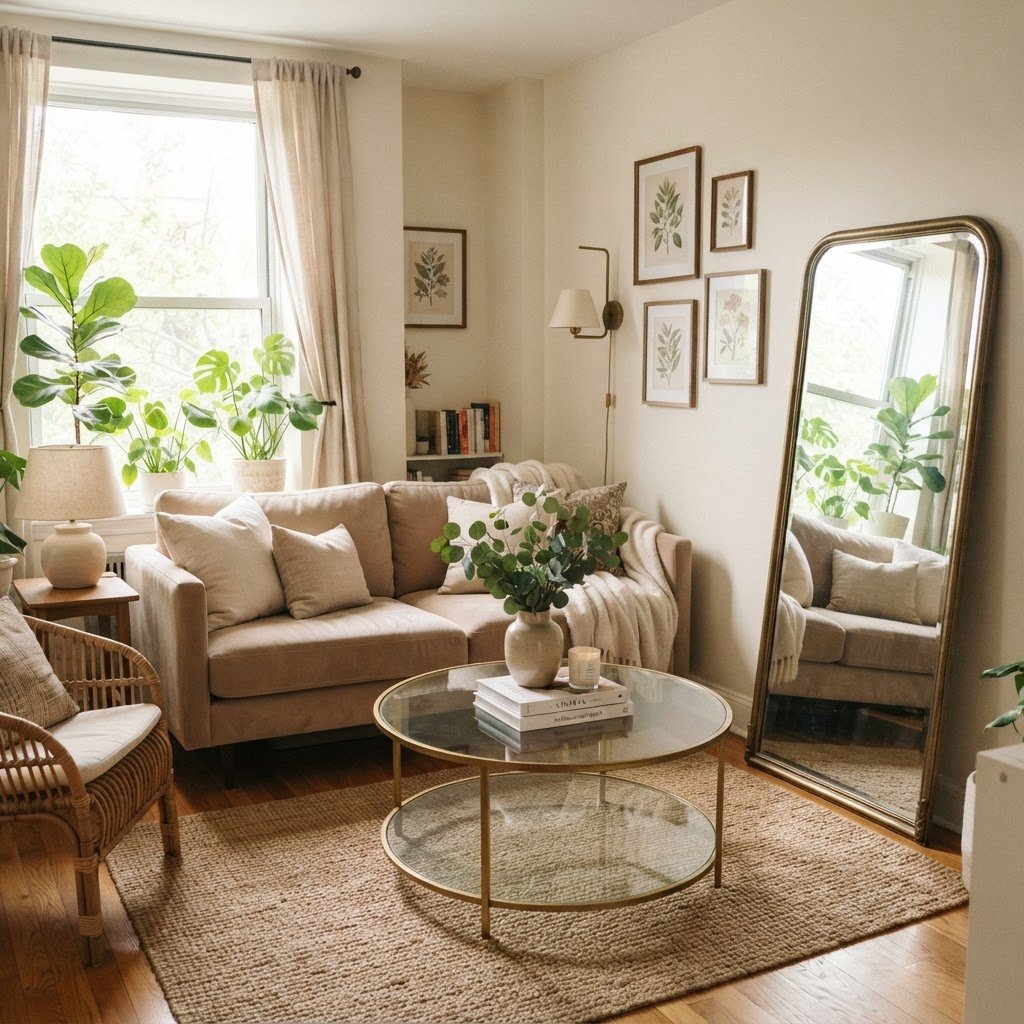
Designing a space with limited square footage often feels like an impossible puzzle, but implementing the right cozy small living room ideas can turn a cramped area into a serene sanctuary. Many homeowners struggle with the balance between functionality and aesthetic appeal, often resulting in rooms that feel cluttered or unfinished. By focusing on intentional choices, you can create a layout that feels airy, inviting, and entirely your own. Whether you are living in a studio apartment or a modest starter home, these strategies will help you redefine your environment without sacrificing comfort.
## The Power of Strategic Furniture Selection
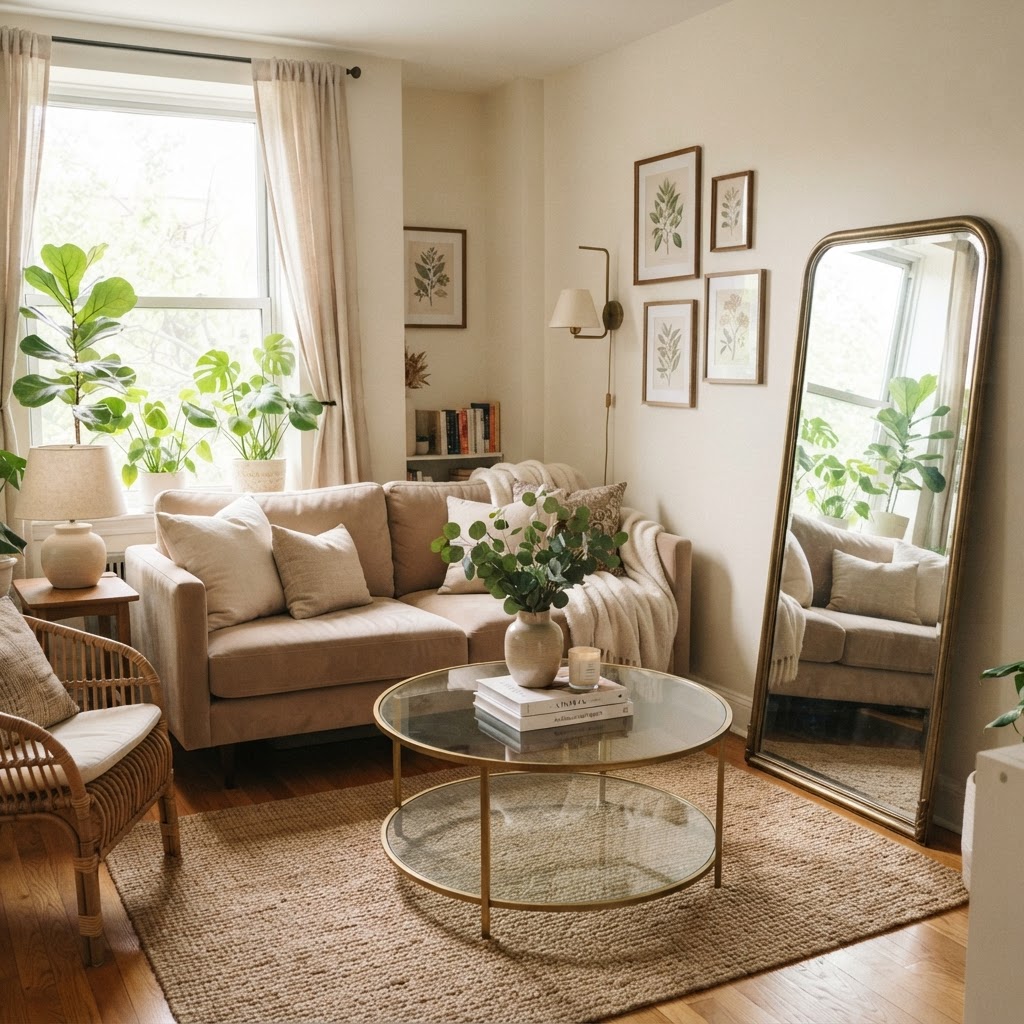
Selecting furniture for a compact area requires a shift in mindset; instead of choosing pieces based solely on comfort, you must prioritize scale and versatility. Large, bulky sectionals can quickly consume a room, leaving no space for circulation or decorative accents. Instead, look for low-profile sofas with exposed legs, which create a sense of openness by allowing your eye to travel under the piece.

### Prioritizing Multi-Functional Pieces
When every square inch counts, your furniture should perform double duty. A storage ottoman can serve as a footrest, a coffee table, or even additional seating for guests when needed. Consider nesting tables that can be tucked away when not in use, or sleeper sofas that provide a guest bed without requiring an extra bedroom. By choosing items that serve multiple purposes, you minimize the need for surplus furniture, which is the fastest way to make a room feel cramped.
## Utilizing Vertical Space for Storage
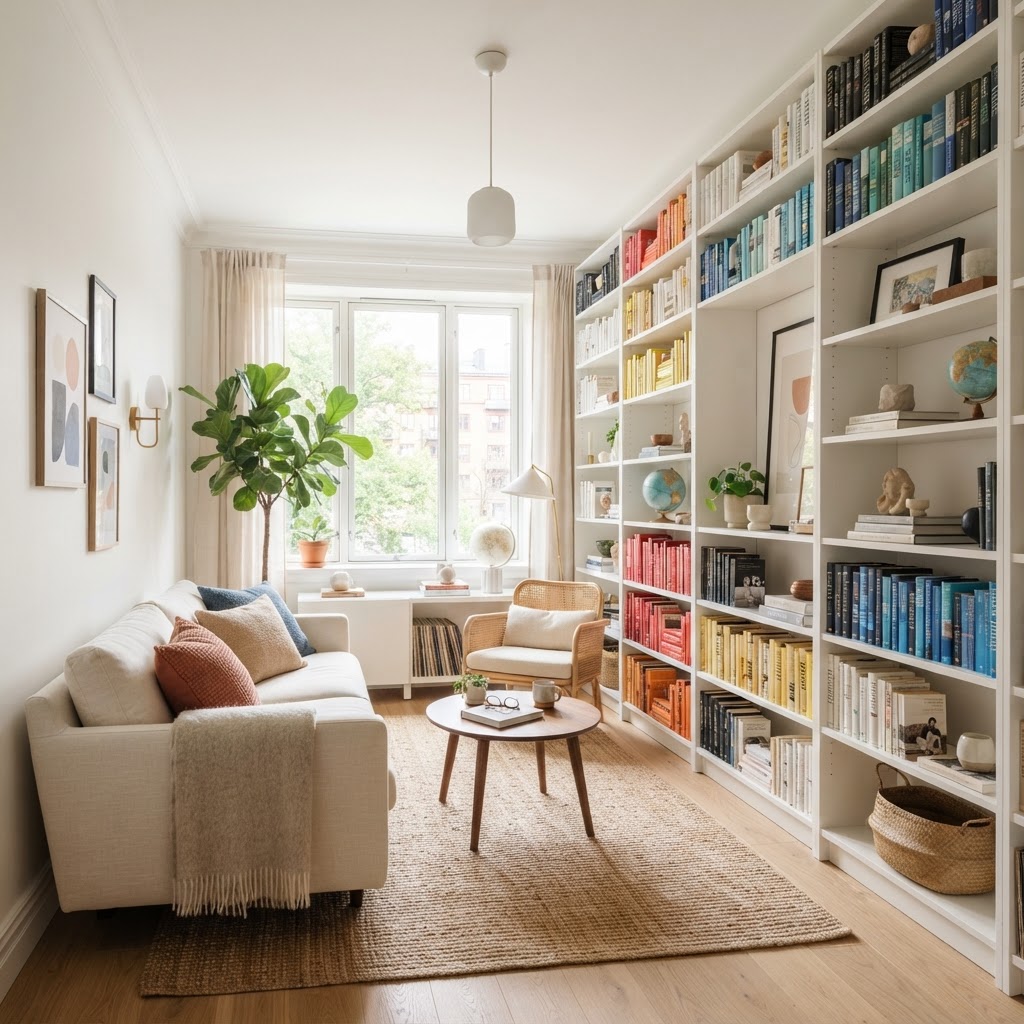
One of the most effective cozy small living room ideas is to stop looking at the floor and start looking at the walls. Many people neglect the upper third of their living room, leaving valuable storage or decorative space completely unused. By installing floor-to-ceiling shelving, you draw the eye upward, which gives the illusion of higher ceilings and adds significant storage capacity for books, plants, and art.
Consider adding wall-mounted sconces instead of bulky floor lamps to keep floor space clear and clean. Tall, slender bookshelves or floating shelves can hold your essentials while keeping the footprint of the room light. When you move items off the floor, the room instantly feels larger, less cluttered, and much more intentional, especially when you incorporate these clever living room storage ideas.
## Mastering the Art of Lighting
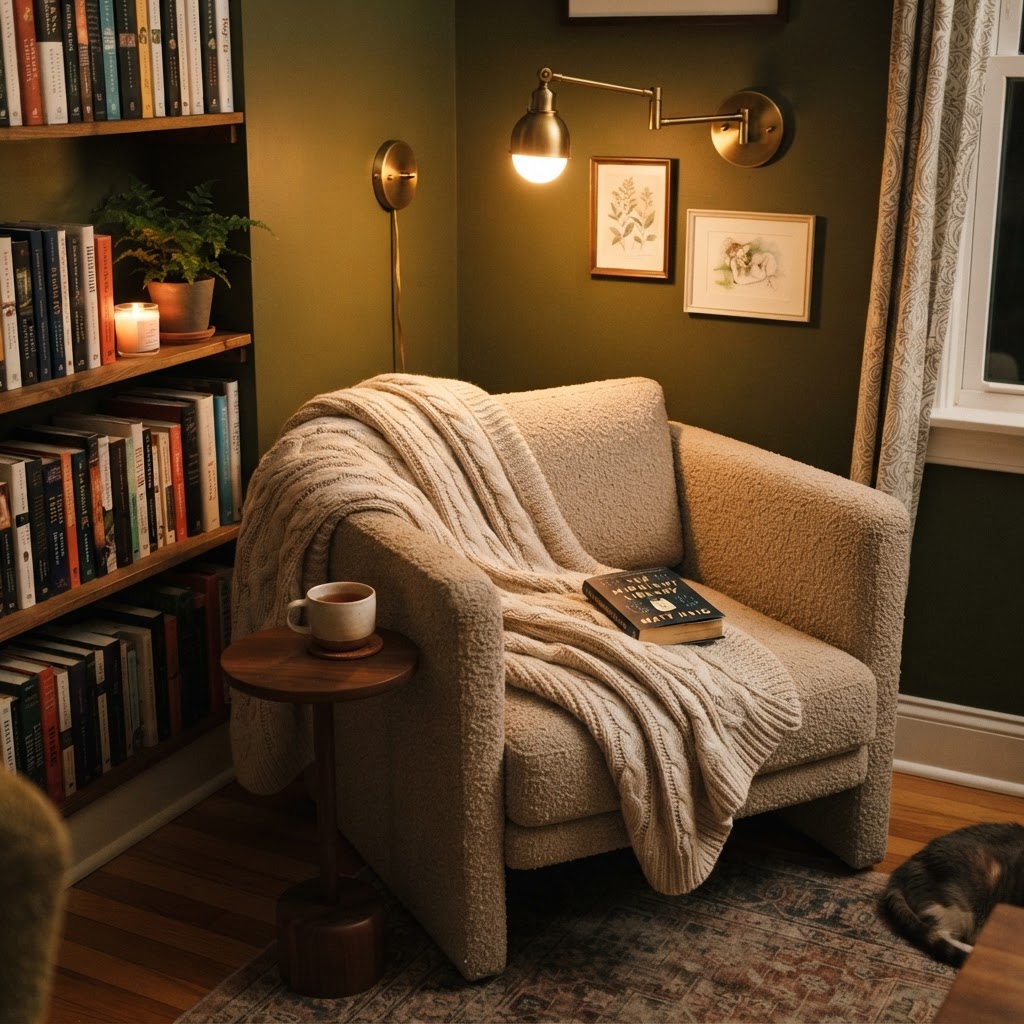
Lighting is perhaps the most important element in small-space design, yet it is often the most overlooked. A single overhead light can create harsh shadows that shrink a room, while a layered lighting plan can expand its boundaries. To achieve that desired cozy vibe, you need to incorporate at least three sources of light at different levels: eye-level floor lamps, table lamps on side tables, and warm-toned accent lighting.

Layering light allows you to customize the mood throughout the day. Soft, warm bulbs create an intimate atmosphere in the evening, while bright, natural-light-mimicking bulbs can energize the space in the morning. Use mirrors strategically near these light sources to reflect glow deeper into the room, creating an expansive effect that makes the space feel twice its size.
## Creating Visual Flow with Color and Texture
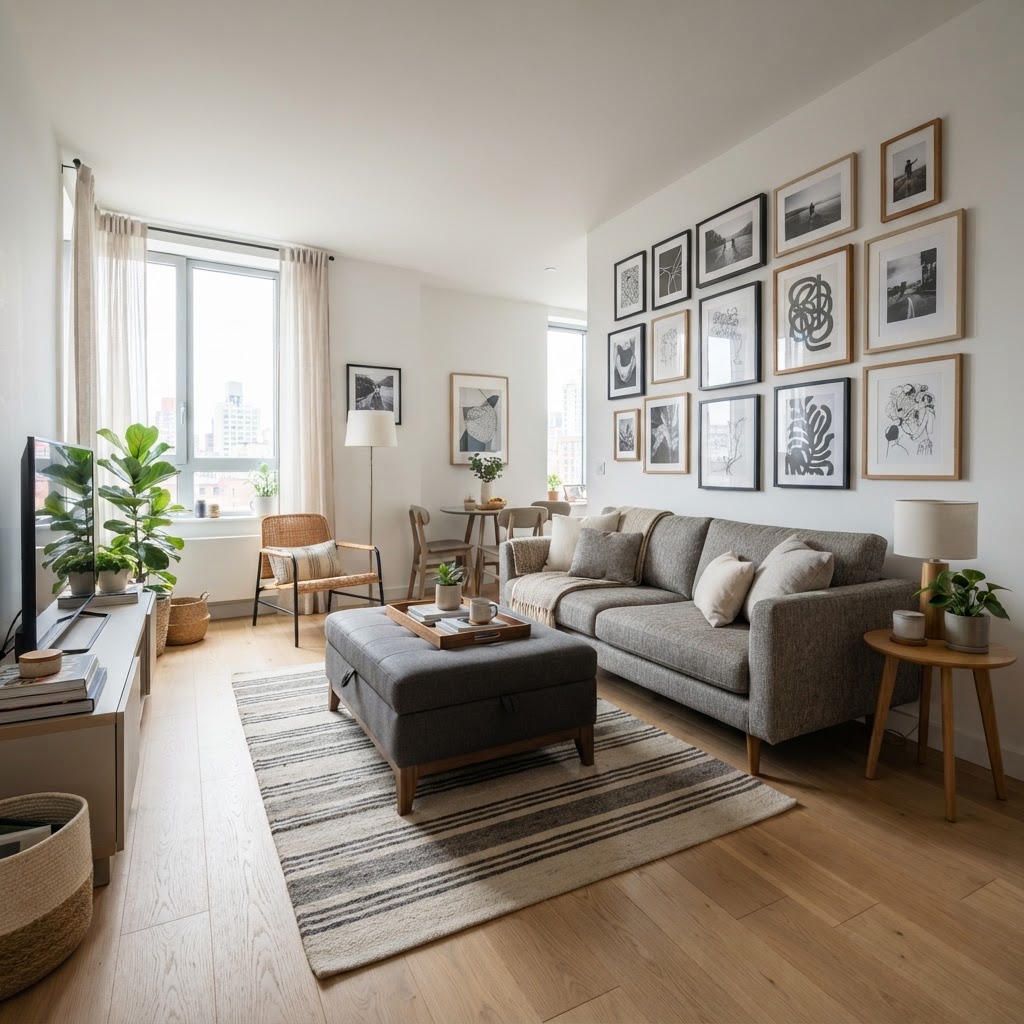
While the “light colors make a room look bigger” rule is a classic for a reason, you do not have to commit to an all-white aesthetic to achieve a cozy atmosphere. The secret lies in monochromatic or tone-on-tone color palettes. By using variations of the same hue, you prevent the eyes from jumping between starkly different colors, which can make a space feel choppy.
Instead of color, focus on texture to bring warmth to the room. A chunky knit throw, a linen sofa, a velvet pillow, and a jute rug create depth and interest without adding visual clutter. The goal is to keep the room feeling unified so that it feels like a cohesive, well-thought-out environment rather than a collection of disparate pieces.
## Strategic Layouts for Better Flow
How you place your furniture determines how the room functions on a daily basis. Many people push all their furniture against the walls in an attempt to open up the center, but this often makes the room feel like a waiting room. Instead, try pulling your furniture a few inches away from the wall to create a floating effect that feels much more sophisticated.
If you have a narrow room, consider placing the sofa perpendicular to the longest wall. This can break up the space and even create a natural “zone” for a workspace or a reading nook behind the sofa. Remember that circulation paths should be at least 30 inches wide; if you have to squeeze past a piece of furniture, it is likely too big for your specific layout.
## Incorporating Personal Touches without Clutter
Minimalism is helpful in small spaces, but that does not mean you have to abandon your personality. To maintain a clean look while displaying items you love, use the “one in, one out” rule and focus on curated displays. A gallery wall, for example, can add a huge amount of character to a room without taking up a single square inch of floor space.

Choose a few meaningful pieces of art rather than dozens of tiny trinkets that create visual noise. Use decorative trays to corral smaller items on coffee tables, keeping surfaces looking intentional rather than messy. When you display items with purpose, you create a home that feels cozy and personalized rather than sparse and cold.
## Using Mirrors to Maximize Space
There is no better way to double your space visually than by using mirrors. A large floor mirror leaning against a wall or a decorative mirror hanging above a console table bounces light around the room and creates a “window” effect where there might otherwise be a solid wall. This is a classic designer trick that is essential for anyone interested in implementing cozy small living room ideas effectively.
For best results, place your mirror across from a window to pull the natural outdoor light into the center of the room. If your living room lacks a view, a mirror can help mimic that sense of depth, ensuring that you never feel boxed in or confined by your walls.
## Why Scale Matters in Every Choice
We often fall in love with furniture pieces in showrooms that are designed for massive open-concept houses, but bringing those pieces into a small home is a recipe for disaster. Before purchasing anything, map out your floor plan with painter’s tape. You might be surprised to see how much room a sofa actually takes up.
Focus on furniture that has “visual weight.” A glass coffee table, for example, has very little visual weight because you can see through it to the rug underneath, making it a perfect choice for tiny rooms. By being mindful of these proportions, you can ensure that every element supports the feeling of a cozy, comfortable, and well-designed home.
## Conclusion
Creating a comfortable home isn’t about how many square feet you have, but about how you utilize the space you’ve been given. By focusing on multi-functional furniture, smart lighting, and vertical storage, you can transform your home into a relaxing retreat. Remember that design is an evolution; start by decluttering, choose pieces that serve a clear purpose, and don’t be afraid to pull your furniture away from the walls. Which of these cozy small living room ideas are you going to try first? Share your favorite transformation tips in the comments below, or start by reorganizing your bookshelf today to see the difference it makes!

Leave a Reply