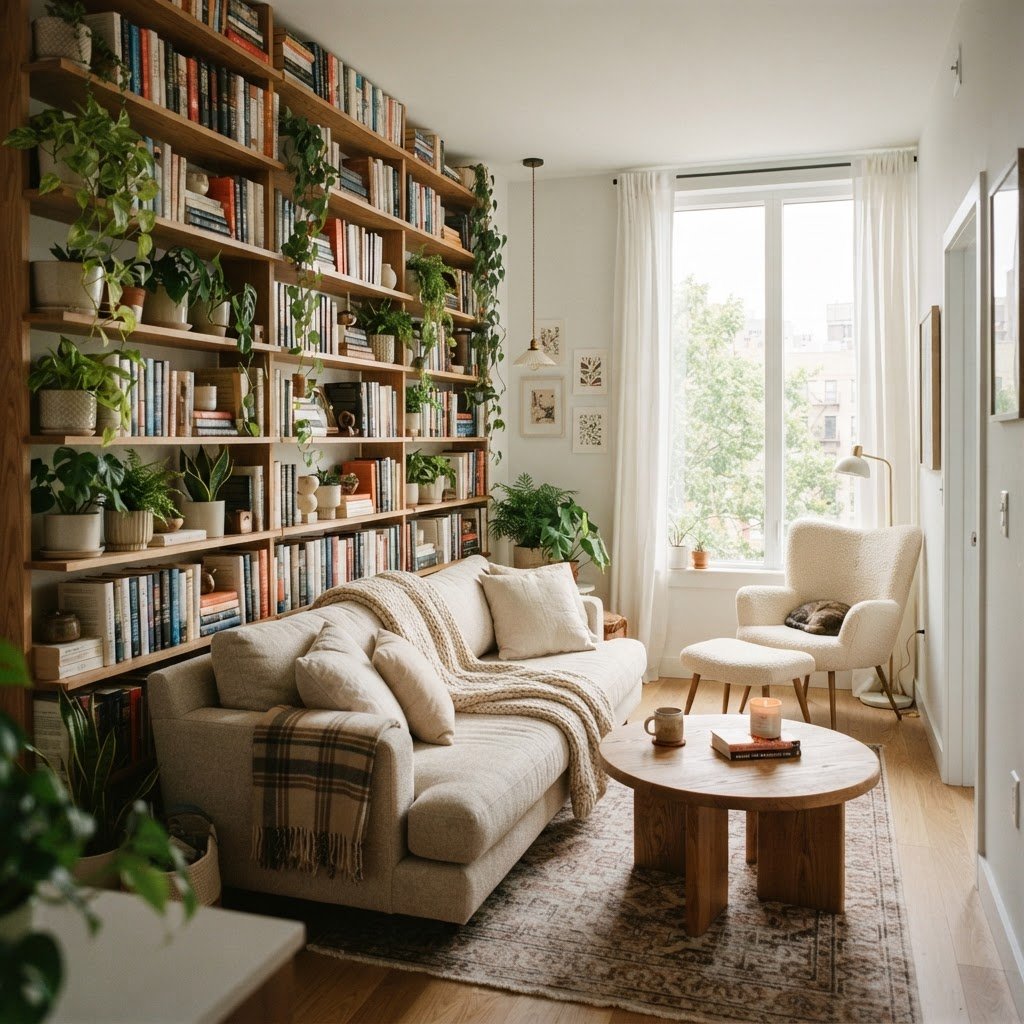
Living in a compact urban apartment often feels like a constant battle against clutter. When your floor footprint is limited, the key to successful small living room organization isn’t just about purging belongings; it is about looking up. Learning how to effectively use vertical space in a small living room can turn a cramped, chaotic box into a streamlined sanctuary that feels twice as large. By drawing the eye upward, you create an illusion of height while simultaneously freeing up precious square footage for movement. Whether you are dealing with a tiny studio or a cozy townhouse, these seven strategies will help you reclaim your space and elevate your home’s aesthetic. ## Rethink Your Shelving with Floor-to-Ceiling Built-ins 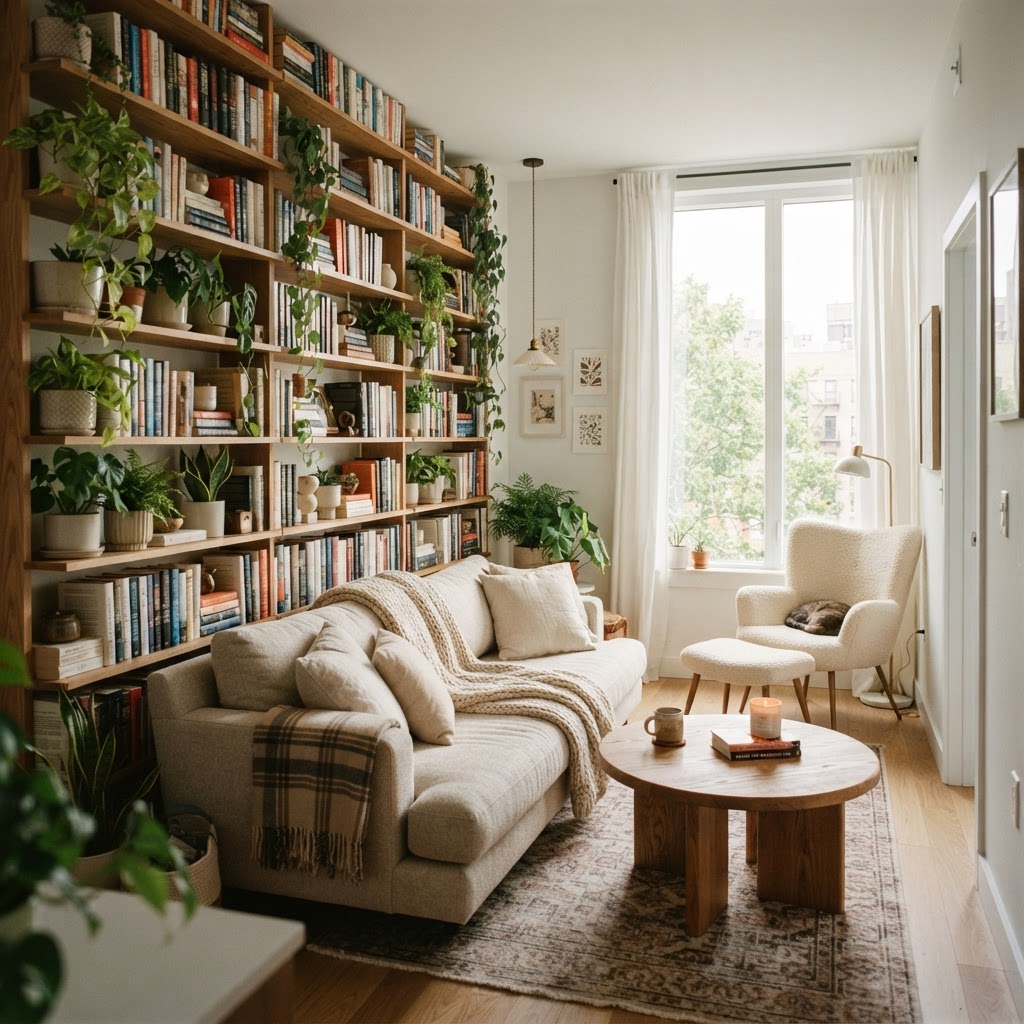 One of the most impactful ways to transform a room is to install shelving that reaches the ceiling. Traditional low-profile bookcases often feel like they are cutting the room in half, but a tall unit forces the eye to track upward, emphasizing the height of your walls rather than the width of your floor. ### Customizing Your Vertical Storage Custom built-ins are ideal, but you can achieve a similar high-end look using modular shelving systems from IKEA or other home retailers. The trick is to secure them to the wall and ensure they span the entire length or height of the focal wall to maintain a clean, architectural appearance.
  #### Curating Your Display Items When filling high shelves, focus on visual weight. Place heavier, functional items like storage baskets or books on the lower levels, and reserve the highest shelves for decorative items that don’t need daily access. This creates a balanced, “weighted” look that feels intentional rather than haphazard. ## Utilize Floating Shelves for Flexible Organization
 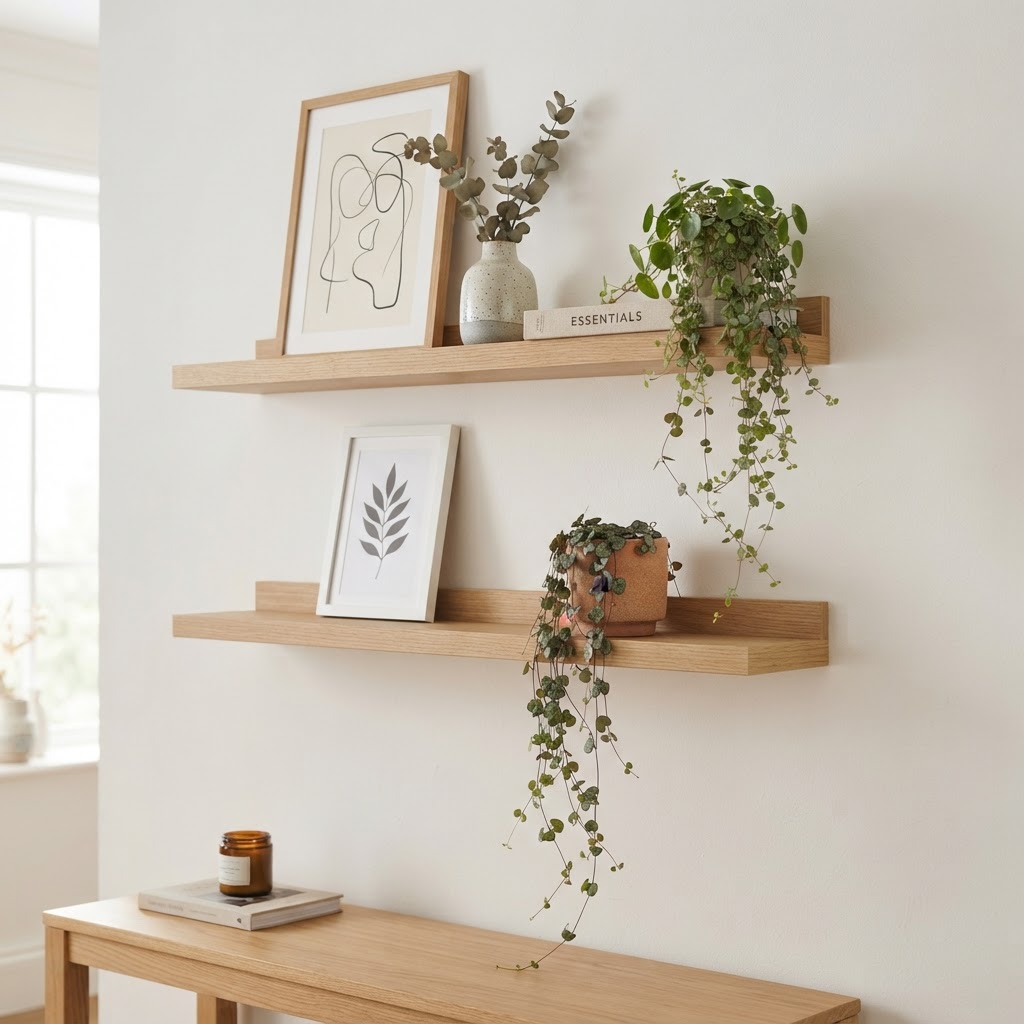 Floating shelves are the unsung heroes of small apartment storage. Unlike bulky cabinets, they take up virtually zero floor space, making them perfect for tight corners, awkward nooks, or the space directly above your sofa. Because they do not have visible brackets or supports, they appear to hover, keeping the sightlines open and airy. This is essential in a small environment where visual “noise” can quickly make a room feel claustrophobic. Beyond simple shelving, there are many clever living room storage ideas that can help you maintain a clutter-free environment without sacrificing your personal style. ### Styling Your Shelves To keep your shelves from looking like a cluttered storage unit, follow the rule of thirds. Group items in odd numbers, mix heights, and leave some negative space. A mix of books, a small trailing plant, and one or two meaningful objects will make your vertical display feel like an art gallery. ## Hang Art and Mirrors to Direct the Eye Upward
 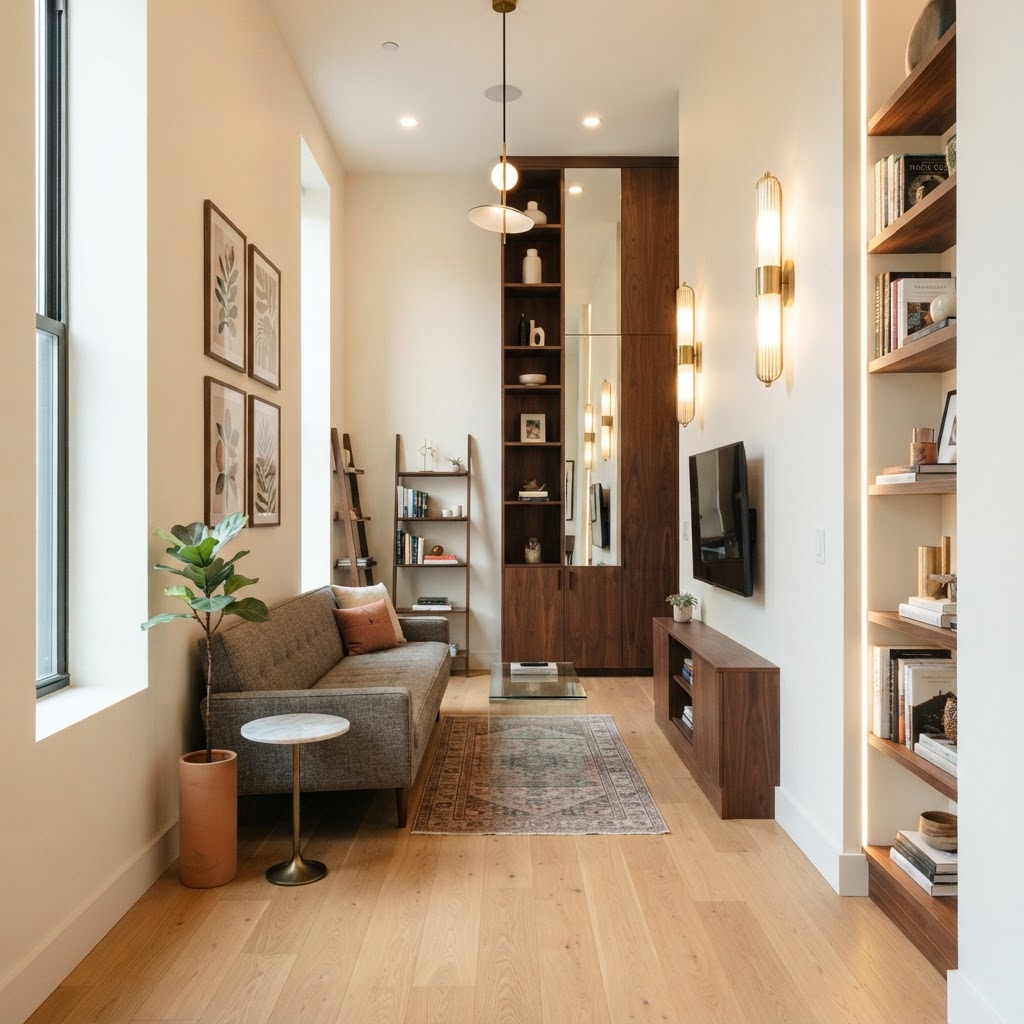 Vertical space isn’t just for storage; it is for visual stimulation. Hanging art or mirrors higher than you might initially think can dramatically change how a room feels. If you hang a mirror near the top of the wall or lean a tall, oversized floor mirror against the wall, you are effectively duplicating the height of the room. This bounce of natural light will make the space feel brighter, more open, and significantly more expansive. ## Choose Tall and Narrow Furniture Profiles
  When selecting furniture, look for pieces that favor verticality over horizontal mass. Instead of a wide, clunky media console, consider a tall, narrow ladder-style unit or a slender bookshelf with cabinet doors at the bottom for hidden storage.
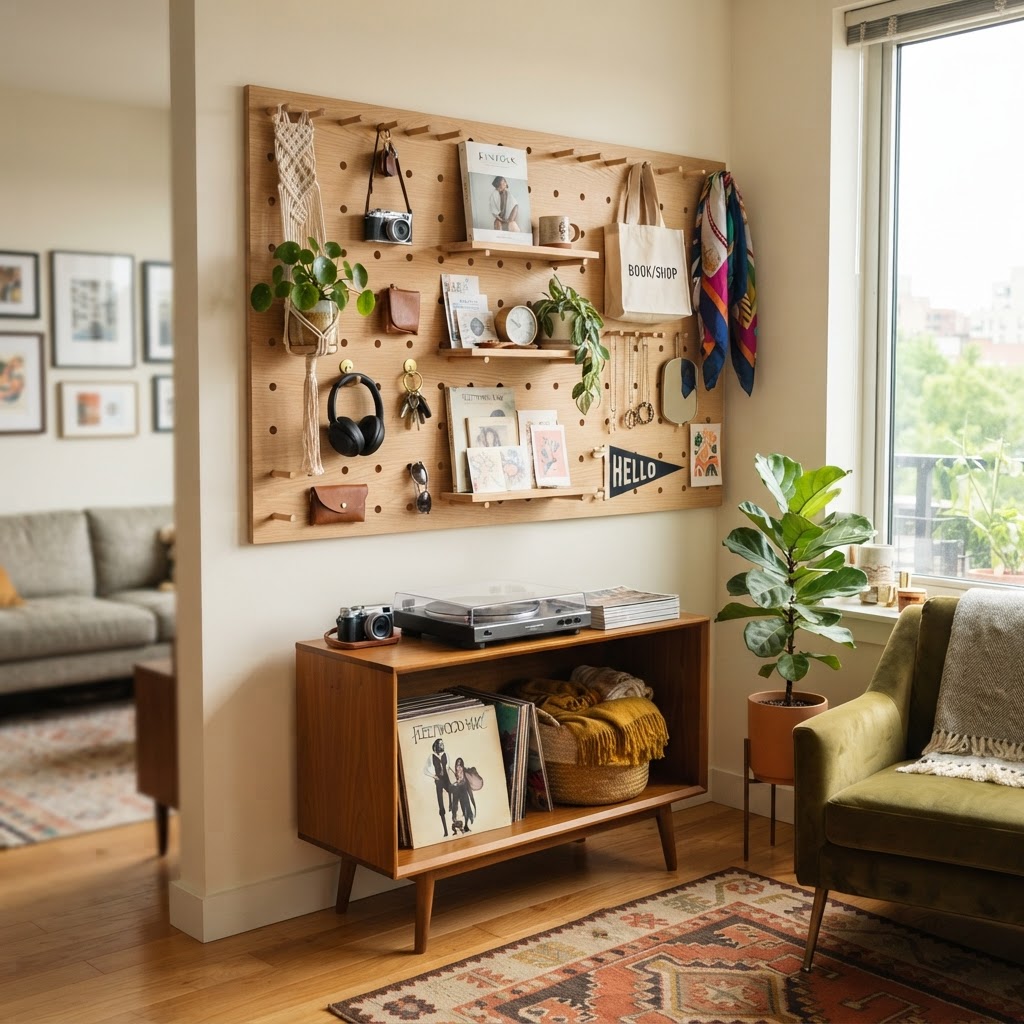
  By selecting furniture that draws the eye upward, you minimize the “ground-level clutter” that often makes a small room feel crowded. High-backed chairs or curtains hung from the ceiling also contribute to this effect, visually stretching the wall space toward the rafters. ## Mount Your Lighting Instead of Using Floor Lamps Floor lamps are wonderful for ambiance, but they take up valuable floor space that you likely cannot afford. Wall-mounted sconces are a brilliant alternative that provides task lighting without cluttering your floor or side tables. Installing plug-in sconces above your couch or near your reading nook is a simple way to introduce layers of light. This move serves a dual purpose: it clears your surface area for drinks or books and adds a sophisticated, designer look to your small living room organization strategy. ## Maximize Door and Wall Backing Space We often ignore the back of doors or the hidden wall space behind furniture. Over-the-door organizers, while traditionally reserved for bedrooms, can be disguised or used creatively in a living area for items like blankets, magazines, or charging stations. ### The Power of Pegboards For a more modern approach, consider mounting a stylish wooden or metal pegboard. This provides a modular, ever-changing vertical surface where you can hang everything from plants and small baskets to tech accessories. It is the ultimate tool for someone who loves to reconfigure their space based on their changing needs.
  ## Incorporate Hanging Planters to Bring Life Upward Plants add vitality to a room, but they can quickly take over all your available surface space. By using ceiling hooks or wall-mounted planters, you can introduce greenery into your home without losing a single inch of table space. Select vining plants like Pothos or English Ivy for a lush, cascading effect. The natural vertical growth pattern of these plants further emphasizes the height of the room, drawing the eye up to the ceiling and adding a soft, organic texture to the sharp lines of your shelves and furniture. ## Creating Vertical Zones for Multipurpose Living If your living room also serves as a home office or dining space, use vertical dividers to create clear boundaries. Open bookshelves acting as room dividers can provide significant storage while maintaining the light flow of the room, giving you the benefit of a separate zone without the weight of a solid wall. By being deliberate about how you section off these areas using tall storage solutions, you create a sense of order in an otherwise busy space. This “zoning” approach helps your brain organize the room, making it feel less like a multi-purpose jumble and more like a carefully curated apartment. ## Conclusion Mastering vertical space is about shifting your perspective. By moving your storage from the floor to the walls and utilizing the height of your ceilings, you create a living room that is not only functional but visually inspiring. Whether you start with a set of simple floating shelves or a full-scale wall unit, every inch you claim upward is an inch of freedom on the floor. Don’t let a small square footage limit your design potential. Start today by choosing one of these strategies—perhaps installing a few sconces or clearing off your coffee table by moving items to a wall-mounted shelf—and see how much bigger your home can feel. Ready to transform your apartment? Pick your first wall and get started!
7 Smart Ways to Use Vertical Space in a Small Living Room

Leave a Reply