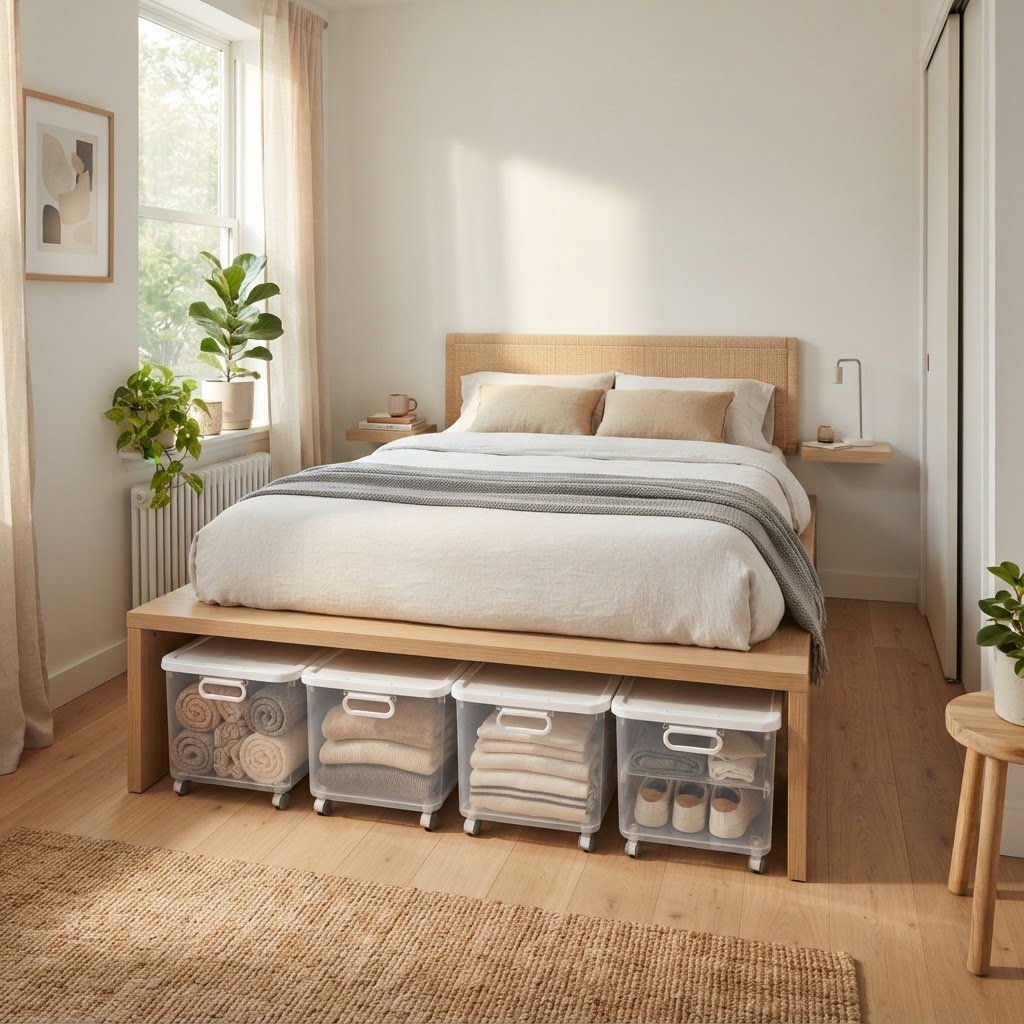
12 Easy Under-Bed Storage Systems for Small Bedrooms
Under-bed storage systems—such as rolling plastic bins, fabric pouches, and DIY wooden drawers—effectively maximize small bedroom square footage by reclaiming overlooked floor space. By measuring your frame clearance and selecting the right container for your specific item frequency, you can double your functional storage capacity without sacrificing room aesthetics.
Assess Your Space and Needs
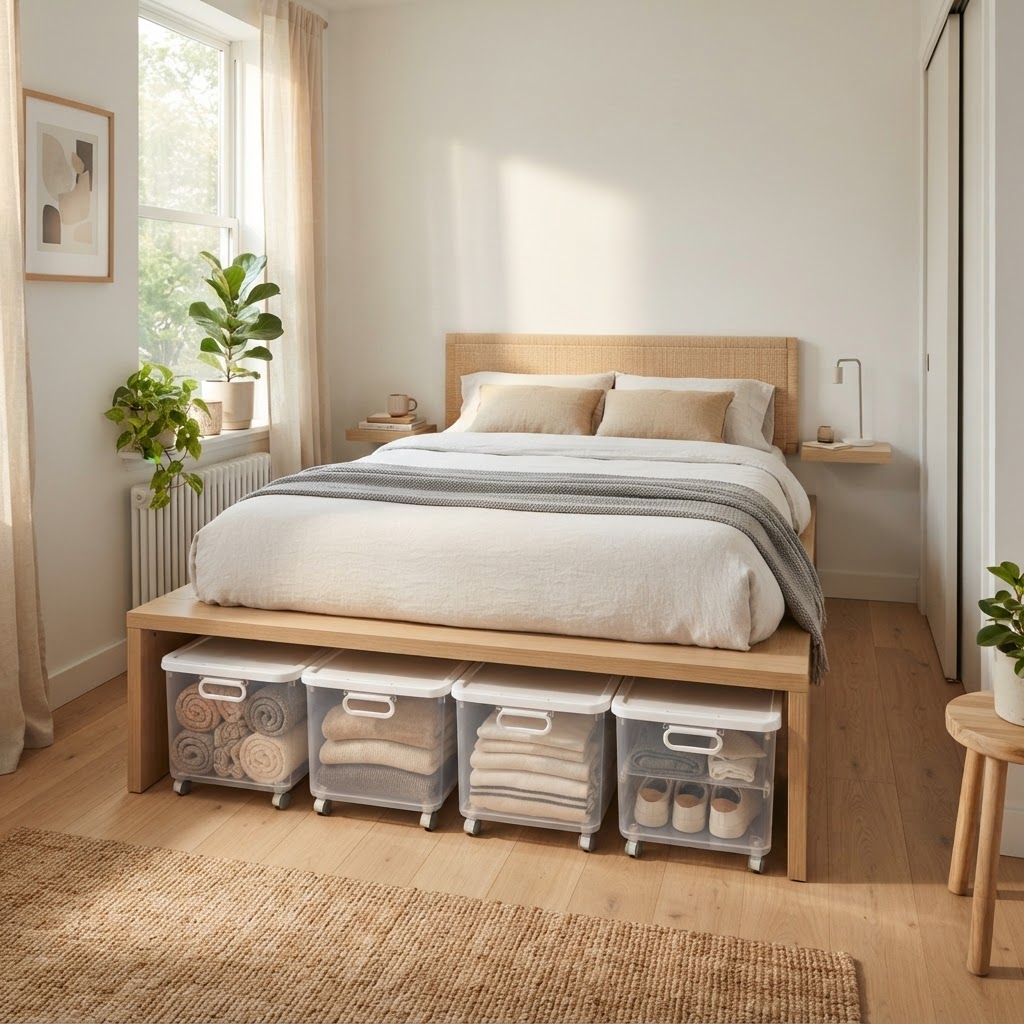
Before you dive into purchasing bins or building custom units, you must first understand the dimensions of your “under-bed” territory. Most standard bed frames offer between 6 to 12 inches of clearance, and verifying this height is critical to preventing the frustration of purchasing bins that jam or fail to slide. Start by measuring the height from the floor to the bottom of your side rail, followed by the length and width of the available footprint. If your bedroom lacks closet space or you are currently working on organizing a small bedroom without a dresser, these under-bed methods provide the capacity for folded clothing, linens, and overflow gear. Proper assessment also includes checking for obstacles like center-support legs or floor vents that might obstruct long, rigid containers. Consider what you intend to store before selecting your systems; daily-use items benefit from smooth-rolling wheels, while long-term seasonal storage is better protected in air-tight, stationary vessels. Creating an inventory of your needs dictates the specific storage vessel required to keep items protected and organized. Use the table below to determine which storage system best fits your specific clearance needs.
Rolling Plastic Bins for Frequent Access
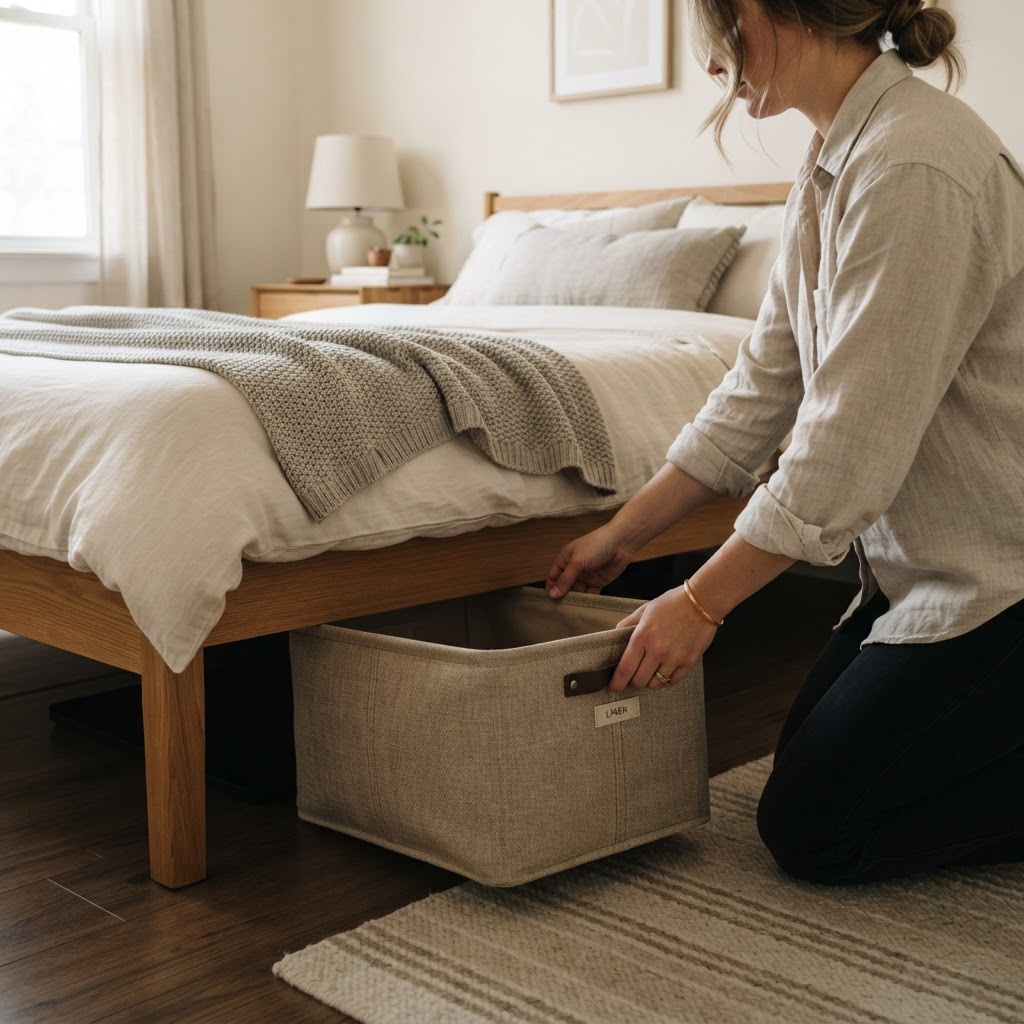
Rolling plastic bins are the workhorses of under-bed organization because they combine low-profile durability with easy mobility. Their smooth-gliding wheels allow you to pull them out with a single hand even when fully loaded, making them ideal for items you rotate monthly, such as shoes, workout gear, or craft supplies. Because these bins are typically made of polypropylene, they provide a reliable barrier against dust, pests, and minor spills compared to open baskets. Look for transparent containers so you can instantly identify the contents without needing to open every box; this visibility reduces the time spent searching for items by roughly 30% during morning routines. To level up your organizational game, consider adding adhesive labels to the front or side of the bins. This small effort saves significant time when you are rushing to get ready. Furthermore, modular bins often feature interlocking lids, which add a layer of structural integrity if you are storing slightly heavier items. By choosing bins that utilize at least 80% of your total available under-bed footprint, you ensure that you aren’t leaving “dead zones” where dust can collect. Always ensure the wheels are rated for your specific flooring type—rubberized wheels are superior for hardwood to prevent scratching, while hard plastic wheels perform best on thick carpeting.
Fabric Zippered Pouches for Soft Goods
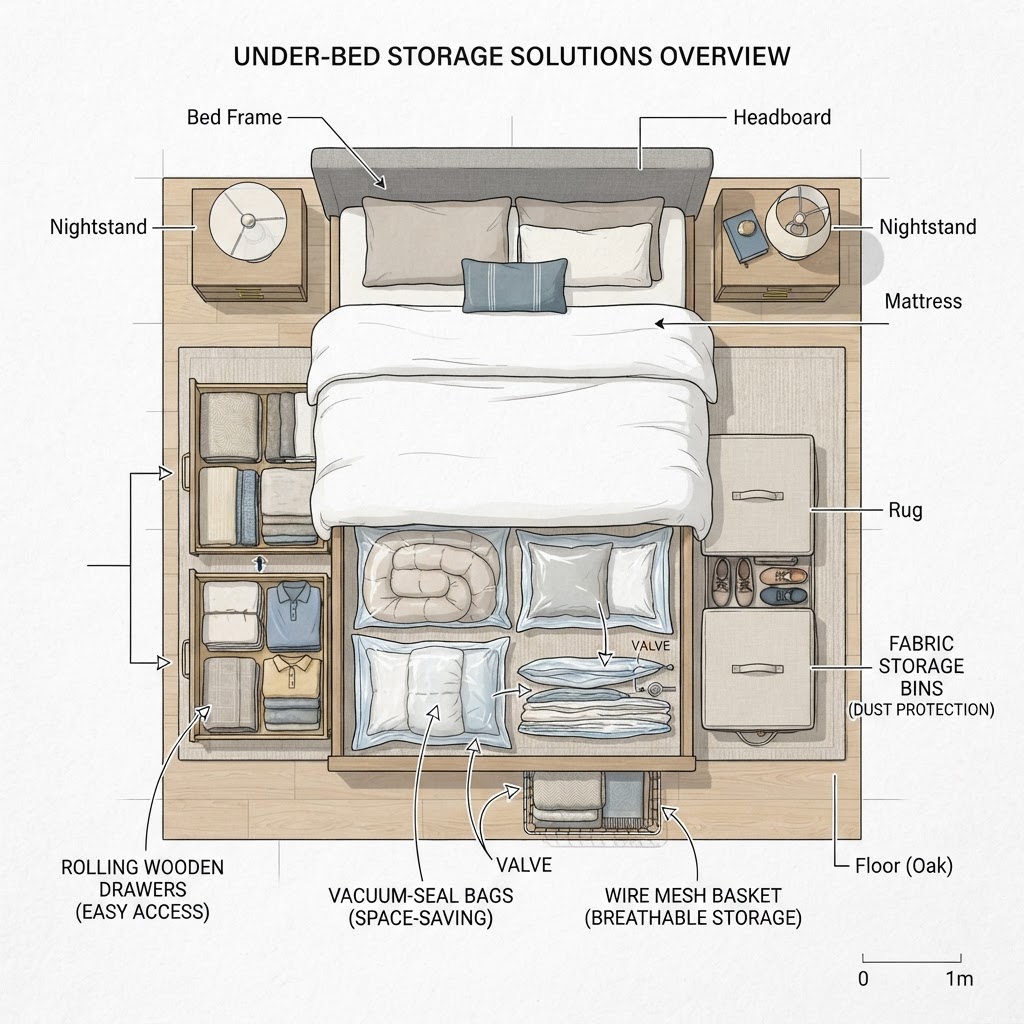
Fabric zippered pouches are a game-changer for beds with very limited clearance, as they possess the flexibility to conform to irregular spaces. Unlike rigid plastic bins that require a fixed height, these fabric bags compress slightly to squeeze into tight corners or around bed frame support legs that might otherwise block bulky containers. They are the premier choice for storing soft goods like bulky sweaters, spare pillows, or guest blankets that don’t need the rigid structure of a hard-sided container. Many premium fabric storage solutions incorporate clear PVC windows, allowing you to peek at the contents without fully extracting the unit. Because fabric is breathable, it is generally safer for natural materials like wool or down compared to airtight plastic, provided your room environment is dry. When empty, these pouches collapse into a flat, compact square, making them the most space-efficient option for small apartment storage when not in active use. When shopping, prioritize materials like reinforced polyester or treated canvas, which offer a higher tear-strength rating than cheaper non-woven synthetic fabrics. By utilizing these soft containers, you can maximize even the awkward, tapered corners of your under-bed space, effectively increasing your total storage capacity by up to 20% compared to using standard rectangular bins alone. Their lightweight nature also makes them easy to slide out, even on rougher carpet textures.
Vacuum-Sealed Bags for Seasonal Rotations
Vacuum-sealed bags are the gold standard for reducing the volumetric footprint of oversized items by up to 75%. When you are dealing with bulky seasonal inventory like heavy winter coats, duvets, or ski gear, volume is your primary constraint; by removing the air, you transform a massive pile of textiles into a flat, manageable package that easily slides under almost any bed frame. This method is particularly effective for residents of small apartments who lack dedicated hall closets or linen storage. To implement this, place your items into the bag, seal the airtight zipper, and use a standard household vacuum to compress the contents. For maximum efficiency, stack these flat bags in layers, placing the heaviest items at the bottom to maintain a level profile. If you live in a humid climate, consider placing a small silica gel packet inside the bag before sealing to wick away any residual moisture, preventing the damp, musty odors that can sometimes affect stored fabrics. While vacuum bags are excellent for space-saving, be cautious with delicate materials like leather or natural fur, which can be permanently damaged by total compression; store these items in breathable containers instead. Keep a permanent marker handy to label the outside of the bags, as they become impossible to identify once fully compressed and stacked.
DIY Wooden Rolling Drawers
For those who appreciate a custom aesthetic, DIY wooden rolling drawers provide a high-end, furniture-grade solution that adds functional value to your bedroom. You can easily repurpose old dresser drawers by simply attaching high-quality caster wheels to the bottom and mounting a decorative handle to the front panel. If you are looking for more ways to decorate a small apartment on a budget, repurposing existing furniture is a fantastic way to stretch your dollars while maintaining your unique style. This approach feels more intentional and polished than store-bought plastic, and it offers the flexibility to paint, stain, or veneer the wood to perfectly match your existing bedroom decor. Building your own drawers allows you to customize the dimensions to the exact height of your bed frame, ensuring that you use every available vertical inch of clearance for maximum storage volume. For the best results, use furniture-grade plywood or reclaimed pine, and ensure the bottom of the drawer is reinforced if you intend to store heavy items like books or weights. Attaching a dust-cover lid made of lightweight fabric or thin plywood can further protect your belongings from debris. When installing casters, use a 4-wheel swivel setup to allow for omnidirectional movement, making it effortless to pull the drawer out from any angle. These units essentially function as a permanent, sliding extension of your bed furniture, making your storage feel like a high-end built-in feature rather than a temporary afterthought.
Multi-Tiered Shelving Units
If your bed is on a high platform frame, you might have enough vertical room to implement a multi-tiered storage strategy rather than relying on a single layer of bins. Instead of just sliding flat bins underneath, incorporating small, low-profile shelving units or modular cubes allows you to double your storage capacity by stacking items vertically. This approach treats the space under your bed like a micro-closet, effectively organizing items by category or frequency of use. Place the items you reach for most frequently, such as daily shoes or current-season clothing, on the top shelf, while tucking away rare items like tax documents or seasonal heirlooms on the bottom tier. This systematic approach helps prevent the “dumping ground” phenomenon where everything is shoved into a single, messy pile that becomes impossible to navigate. When selecting shelving, look for units with open backs to facilitate airflow, which is critical for preventing mildew in the dark, restricted environment beneath a mattress. Use adjustable-height shelves to ensure that every compartment is sized to the items stored within it, minimizing wasted vertical gaps. A well-organized, multi-tiered system can increase your usable under-bed surface area by nearly 100%, turning a void into a highly efficient storage archive.
Divided Trays for Small Essentials
Small accessories often become a tangled, unorganized mess when stored in large, deep bins, making divided trays an essential tool for high-density organization. By utilizing shallow, compartmentalized trays or modular drawer dividers, you ensure that items like belts, jewelry, neckties, and socks remain neatly categorized. You can place these trays inside your larger rolling bins to create a tiered, hybrid system where deep storage exists at the bottom and small, accessible items rest on top. This method is particularly effective for preventing the migration of small parts; when items are contained in individual slots, they are less likely to shift during the movement of the bin. For the best results, measure your internal bin dimensions and purchase custom-fit tray inserts, or create your own using repurposed cardboard boxes covered in decorative contact paper. By addressing the “micro-clutter” of your bedroom, you eliminate the daily frustration of digging through piles, making your overall space feel significantly larger and more serene. When organizing, try to group items by usage frequency—place accessories you wear daily in the front of the bin for quick access and move infrequently used items to the rear compartments.
The “Under-Bed Nightstand” Approach
If your room is too narrow for a traditional side table, you can leverage a pull-out drawer system that functions as a hidden, space-saving nightstand. By installing a shallow, rolling tray that remains tucked under the side of your bed frame during the day, you gain a convenient platform to store reading glasses, chargers, books, and tablets. This system allows you to keep your bedside essentials within arm’s reach without cluttering the limited floor space around your bed. When you are ready for bed, simply slide the unit out to use it as a low-profile surface; in the morning, push it back to regain your floor clearance. This unconventional, dual-purpose usage transforms a dead zone into a functional piece of furniture that adapts to your daily routine. To enhance the experience, ensure the tray glides smoothly and consider adding a small lip to the edge of the tray to prevent items from falling off as you pull it out. This method is particularly brilliant for minimalist design schemes where reducing the number of permanent floor-standing pieces is key to creating a clean, airy, and modern aesthetic.
Maintaining Your Organization System
Consistent maintenance is the secret to ensuring that your under-bed storage remains a long-term asset rather than a temporary fix. Establish a semi-annual habit of auditing your items—once every six months, ideally during your seasonal wardrobe transition—to evaluate what is still serving your needs. If an item hasn’t been removed from the bin in over 12 months, it is likely clutter that should be donated, sold, or discarded. The goal of under-bed storage is to support your current lifestyle, not to act as a permanent archive for unused possessions. During this audit, take five minutes to vacuum the floor beneath the bed to prevent dust, dander, and allergens from accumulating on your storage units. Checking your bins for moisture or signs of pests is also a crucial part of this process, as early detection can save your stored textiles from damage. By keeping your storage space lean and intentional, you ensure that your bedroom remains a relaxing, clutter-free environment that promotes better sleep and lower stress levels.
Essential Tips for Success
- Always vacuum the floor under your bed thoroughly before placing any containers there to prevent dust and allergens from settling on your stored items.
- Use adhesive labels or high-contrast tags so you never have to guess what is in each container without having to pull it out.
- Invest in heavy-duty, rubberized casters if you are building DIY drawers, as cheap plastic wheels can crack or damage hardwood floors.
- Ensure there is at least one inch of space for air to circulate; avoid packing your bins so tightly that moisture gets trapped, which can lead to mold.
- Match the aesthetic of your storage bins to your bedroom decor to ensure the storage system feels like an intentional part of your overall design scheme.
FAQ
Q: How much clearance do I need for under-bed storage?
Most storage solutions require at least 4 to 6 inches of clearance to be functional. If your bed frame has less than 4 inches of space, you should focus on flat, vacuum-sealed bags, whereas frames with 8 inches or more of space can accommodate rolling bins or custom drawers.
Q: What is the best way to prevent moisture under my bed?
To prevent moisture, ensure you are not using airtight plastic containers in humid environments without dessicant packets. Use breathable fabric storage bags for natural textiles and ensure your bins are not pushed against damp exterior walls to allow for proper airflow and prevent mold growth.
Q: How can I keep my under-bed storage from getting dusty?
Use containers with tightly fitting lids or zippered closures to provide a physical barrier against dust. Additionally, vacuum the area under your bed at least once every three months, and consider raising your bed slightly using sturdy furniture risers if you have very low clearance that makes cleaning difficult.
Q: Is it better to use plastic or fabric storage bins?
Plastic bins are superior for protecting items from dust and pests, making them ideal for long-term storage in high-traffic areas. Fabric bins are better for soft, bulky items and tight spaces where the flexibility of the material allows for a tighter fit and better use of irregular corners.
Q: How often should I audit my under-bed storage?
Perform a comprehensive audit of your under-bed storage at least twice a year, ideally when swapping out your summer and winter clothing. Removing items you have not used in over 12 months helps maintain a clutter-free environment and ensures your storage remains dedicated to current necessities.

Leave a Reply