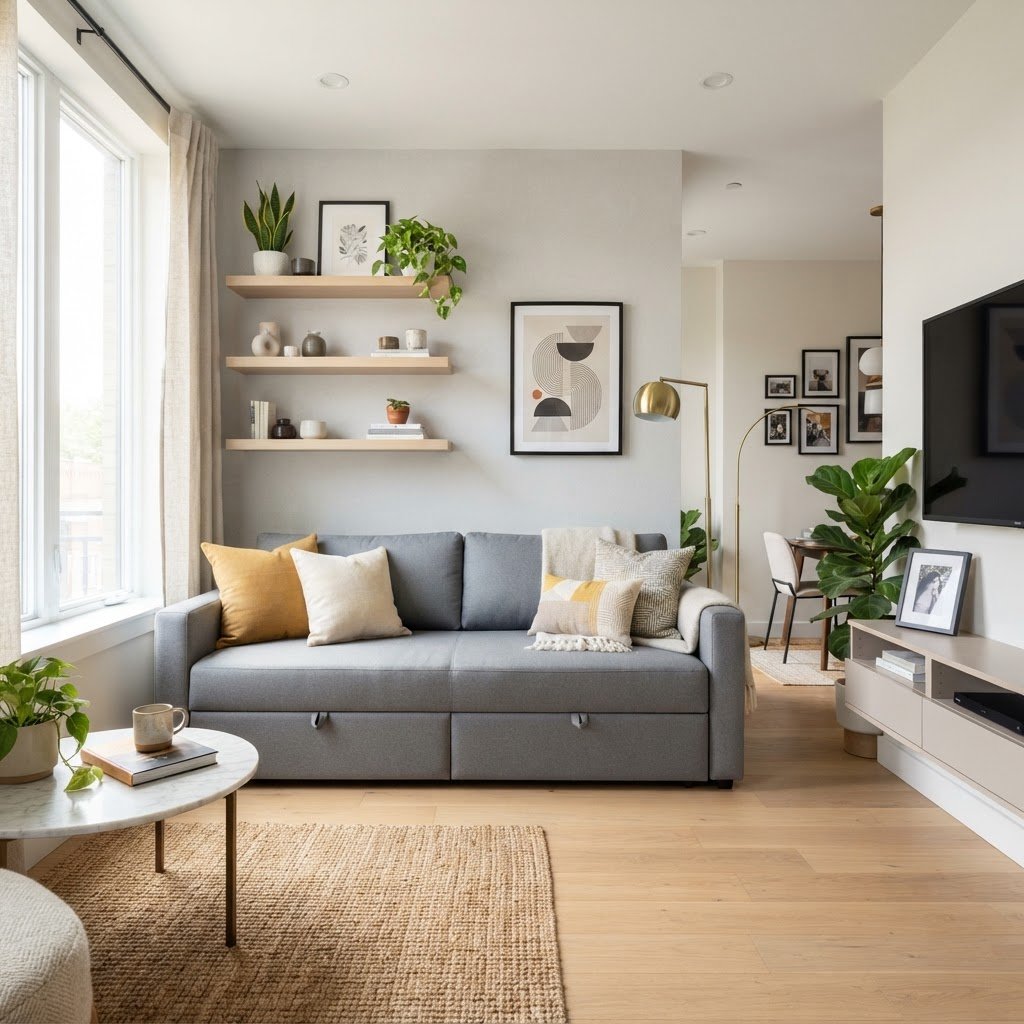
To maximize a compact living space, prioritize multifunctional furniture like sofa beds with integrated storage, utilize vertical wall-mounted units to clear floor space, and incorporate hidden storage solutions like ottomans or nesting tables. These strategies reclaim square footage, reduce visual clutter, and allow small apartments to function with the efficiency of larger homes.
The Importance of Vertical Thinking
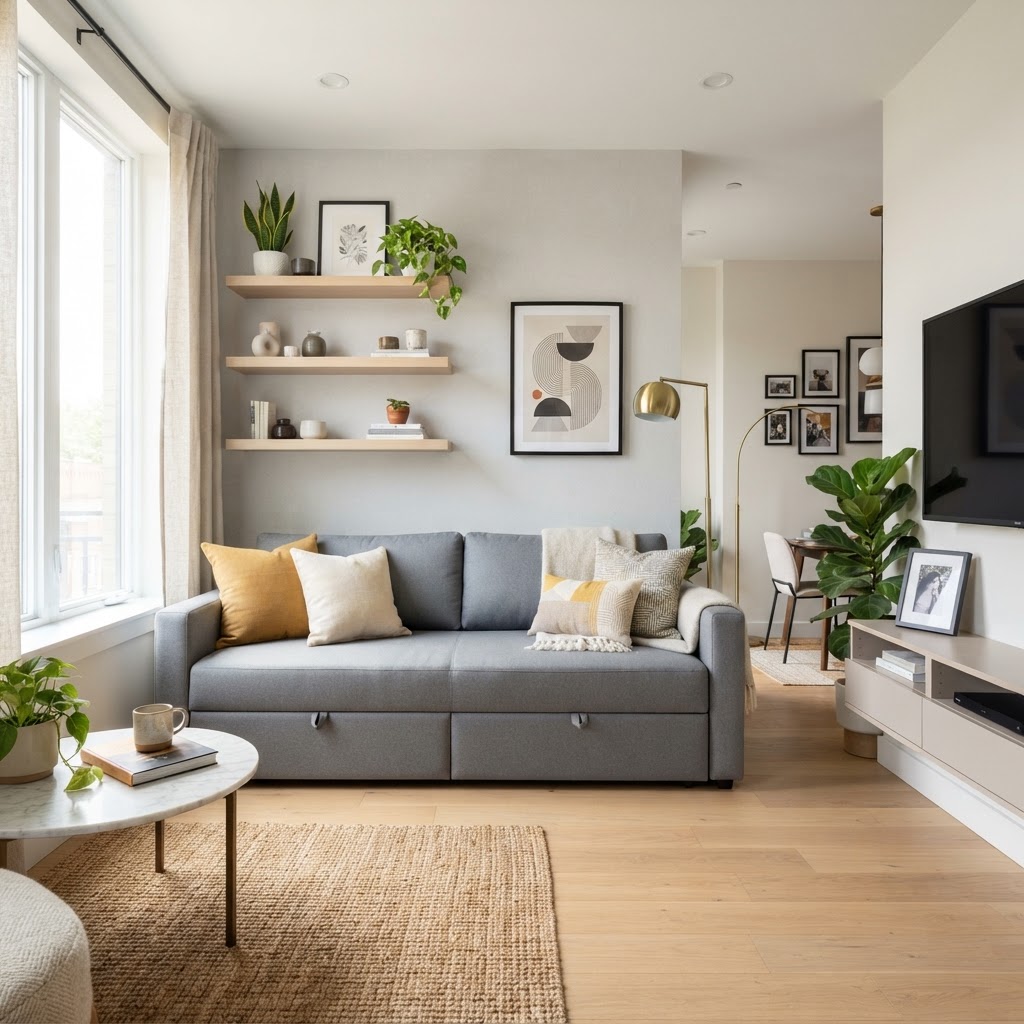
Utilizing vertical wall space is the most effective strategy for introducing storage without cramping a small living area. Instead of floor-bound cabinets, installing floating shelves or wall-mounted units draws the eye upward, creating an optical illusion of increased ceiling height. By keeping “traffic zones” on the floor clear, you ensure a natural flow of movement, which is essential for maintaining comfort in areas under 400 square feet.
Vertical storage serves as both a utility and a focal design feature. Arranging books, plants, and decor on high-mounted shelving transforms functional gaps into aesthetic assets. When evaluating your layout, consider the following benefits of specific wall-mounted furniture:
Benefits of Wall-Mounted Furniture
Wall-mounted desks, drop-leaf tables, and floating consoles provide essential surfaces without the visual weight of legs and pedestals. These items can be folded away when not in use, creating an instant multipurpose space. For example, a wall-mounted desk can serve as a home office during the day and a decorative display shelf in the evening.
Choosing the Perfect Multifunctional Sofa
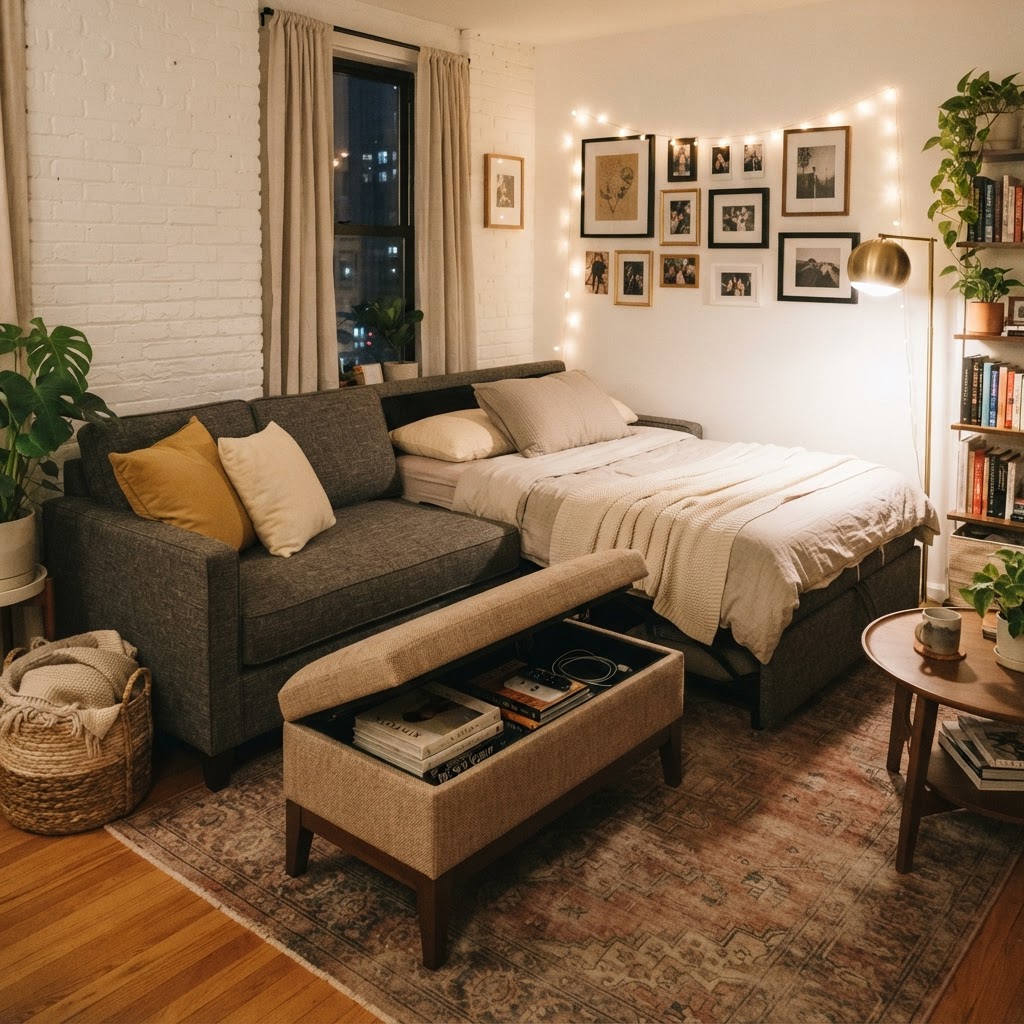
Selecting a sofa that doubles as a storage or sleeping unit is the single highest-impact decision for a small living room. Modern high-quality sleeper sofas now offer minimalist designs that conceal internal mattresses, allowing you to convert a living room into a guest bedroom in less than 60 seconds without sacrificing floor space or style.
When shopping, prioritize models that feature integrated storage compartments under the seat or hollowed armrests. This is a game-changer for storing seasonal items like heavy blankets, extra pillows, or board games. Before purchasing, verify the “open dimensions”—the total area the sofa takes up when fully extended. Ensure there is at least 30 inches of clearance around the perimeter to maintain accessibility.
Creative Hidden Storage Solutions
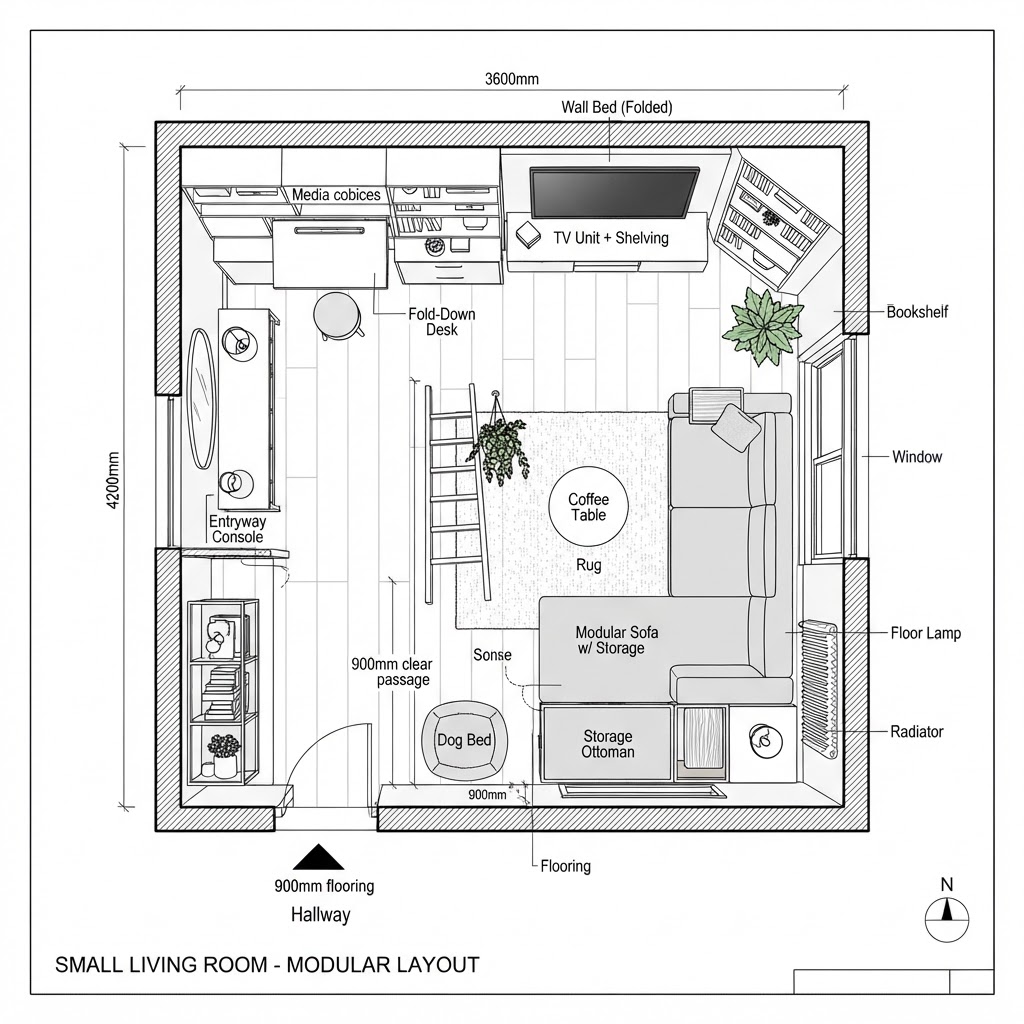
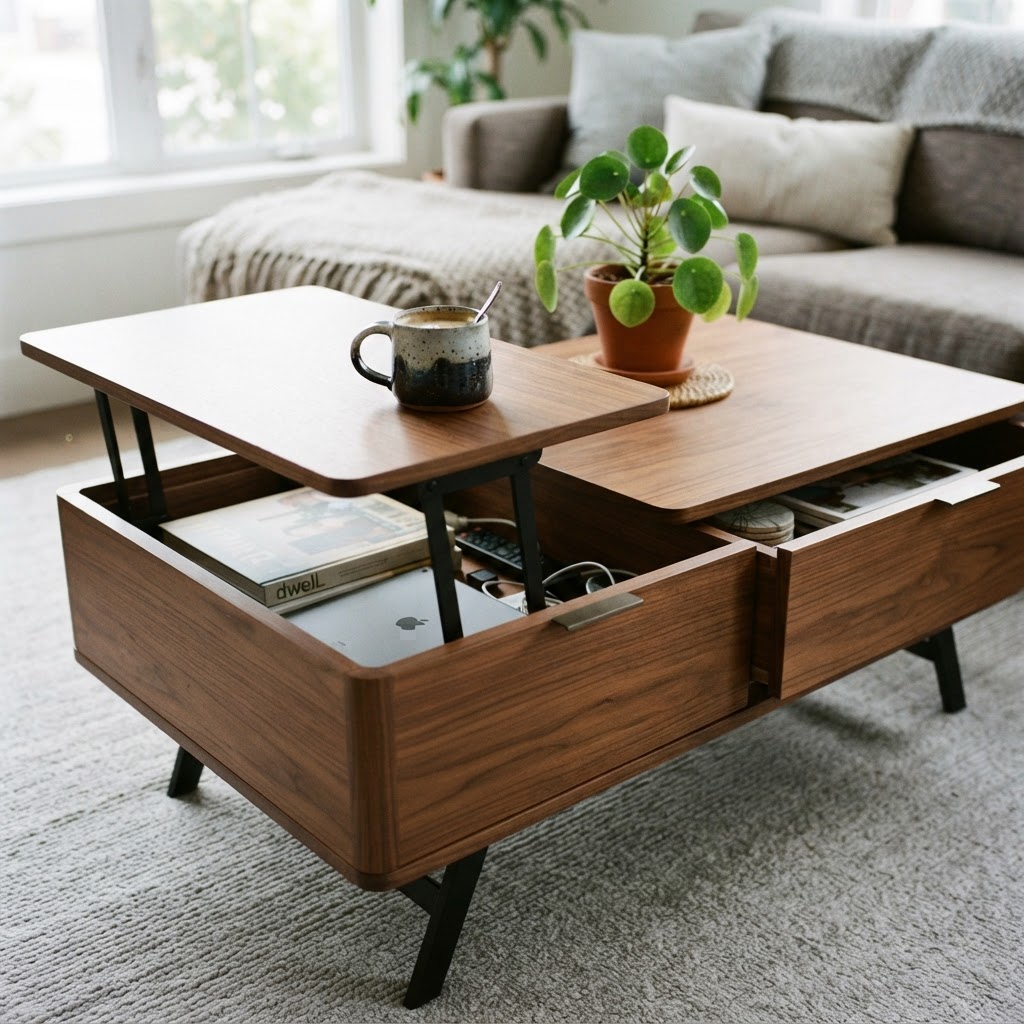
Hidden storage is the secret weapon of interior designers who specialize in small spaces because it keeps essential items accessible yet out of sight. Ottomans with removable lids or flip-top mechanisms are indispensable for storing charging cables, remotes, and magazines. Beyond built-in features, there are many clever living room storage ideas that can help you maintain an organized and clutter-free environment in a compact space.
Consider the space under your coffee table as high-value real estate. A table with a lower shelf or drawers can hold a surprising amount of gear, but if you choose a glass-topped table, ensure the storage underneath is kept neat. For truly minimalist interiors, look for “nesting” coffee tables that can be tucked away when you need extra floor space for activities like yoga or entertaining guests. Utilizing hollow benches or ottomans can effectively hide up to 3-5 cubic feet of household clutter.
Maximizing Natural Light and Mirrors
Lighting and mirrors are critical tools for the perception of space, effectively doubling the apparent size of a room through reflection. By placing a large mirror directly opposite a window, you amplify natural light penetration, which minimizes dark corners that typically make small rooms feel claustrophobic.
Combine lighting with storage by using a mirrored cabinet or a high-gloss armoire that serves a dual purpose: storing your belongings while bouncing light throughout the apartment. Research suggests that well-lit rooms with reflective surfaces can improve mood and increase the perceived “volume” of a room by as much as 20%. Ensure mirrors are cleaned bi-weekly to maintain the reflective quality needed to bounce light effectively across your living zone.
The Role of Modular Furniture
Modular furniture provides the ultimate flexibility for compact living because it allows you to adapt your room layout to different tasks throughout the day. A modular sofa can be configured as a long couch for lounging, or broken into separate armchairs to create conversational zones when guests arrive. If you are looking to refresh your home without overspending, you can learn how to decorate a small apartment on a budget with easy DIY tips that prioritize style and affordability.
Modular shelving systems offer a scalable storage solution that grows with your needs. You can start with a basic unit and add vertical or horizontal extensions as your collection of books or decor grows. This approach prevents the purchase of oversized, static pieces that occupy precious floor space. By choosing modular systems, you ensure every piece of furniture serves a precise, current purpose, keeping your small home free from the unnecessary bulk of outdated furniture setups.
Smart Organization for Small Spaces
Organization in small spaces relies on zoning, which involves assigning specific activities to defined corners of the room. By dedicating one corner to reading, another to media, and a third to dining or working, you create a sense of order. Keep items stored in close proximity to their respective “zones” to minimize clutter migration.
Utilizing baskets and bins to group smaller items is essential for maintaining a clean aesthetic. Labeling or color-coding storage containers saves significant time during daily tasks. Regular decluttering is the final step; aim for a quarterly purge where you remove unused items to ensure your multifunctional furniture retains its utility. Follow these steps for quick results:
- Keep a ‘donate’ box in your closet.
- If you haven’t used an item in a year, it’s time to let it go.
- Choose items that have a purpose or bring you joy.
- Invest in high-quality storage containers that fit your aesthetic.
FAQ
Q: What is the best multifunctional furniture for a studio apartment?
A sofa bed with integrated storage is the best option for a studio. It provides a comfortable sleeping surface at night and a seating area by day, while the storage compartment hides bedding, allowing for a quick transition between functions.
Q: How do I make a small room feel bigger with mirrors?
Place a large mirror directly opposite a primary light source, such as a window. This reflects incoming natural light deeper into the room, creating an illusion of depth and brightness that prevents the space from feeling cramped or dark.
Q: What are the benefits of modular furniture for compact homes?
Modular furniture allows for high flexibility in layout. You can rearrange your seating or shelving sections to fit specific social needs or changing storage demands, ensuring you only occupy the floor space currently required for your lifestyle.
Q: How much clearance do I need for a sofa bed?
Always ensure you have at least 30 inches of clearance around the front and sides of a sofa bed when it is fully extended. This space is the standard minimum required to navigate comfortably around the bed frame and avoid an obstructed walking path.
Q: How often should I declutter a small living space?
Aim to perform a thorough decluttering session every three months. Regularly purging items you haven’t used in the past year ensures that your limited square footage is reserved only for items that provide genuine utility or joy.

Leave a Reply