7 Warm Lighting Tricks That Make Small Rooms Feel Bigger

Living in a compact apartment or a small home often feels like a constant battle against clutter and claustrophobia. Many people mistakenly believe that bright, stark white light is the only way to expand a room, but the secret actually lies in the intentional use of warm lighting tricks that make small rooms feel bigger. When you harness the power of soft, golden hues, you create depth, eliminate harsh shadows, and define zones that trick the eye into perceiving more square footage than actually exists.

Lighting is essentially the ‘jewelry’ of an interior design scheme, yet it is frequently ignored by homeowners looking to open up tight spaces. By shifting your focus from a single, overpowering overhead light to a multi-layered lighting strategy, you can soften the corners of a room and create a sense of expansion. This article explores seven proven methods to reshape your perception of space using warmth and strategic positioning.

The Psychology of Warm Light in Compact Spaces
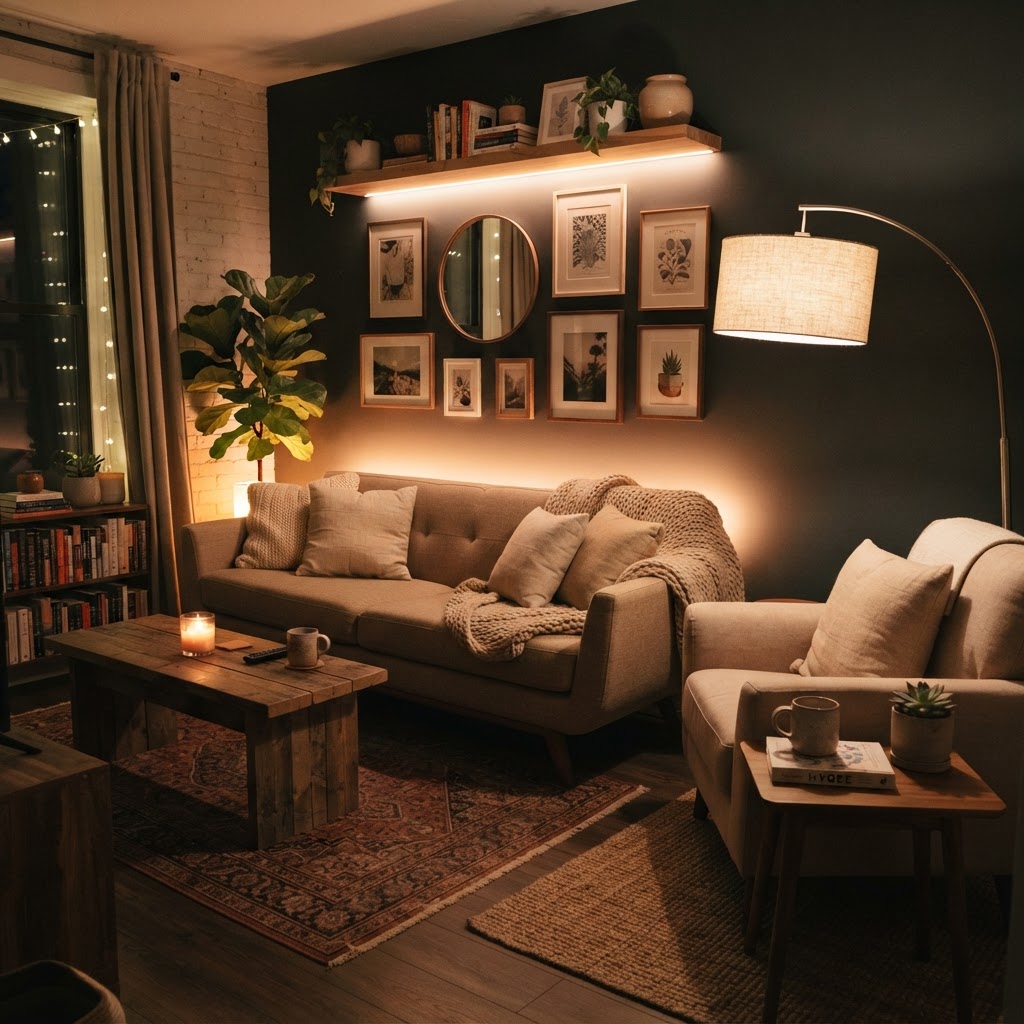
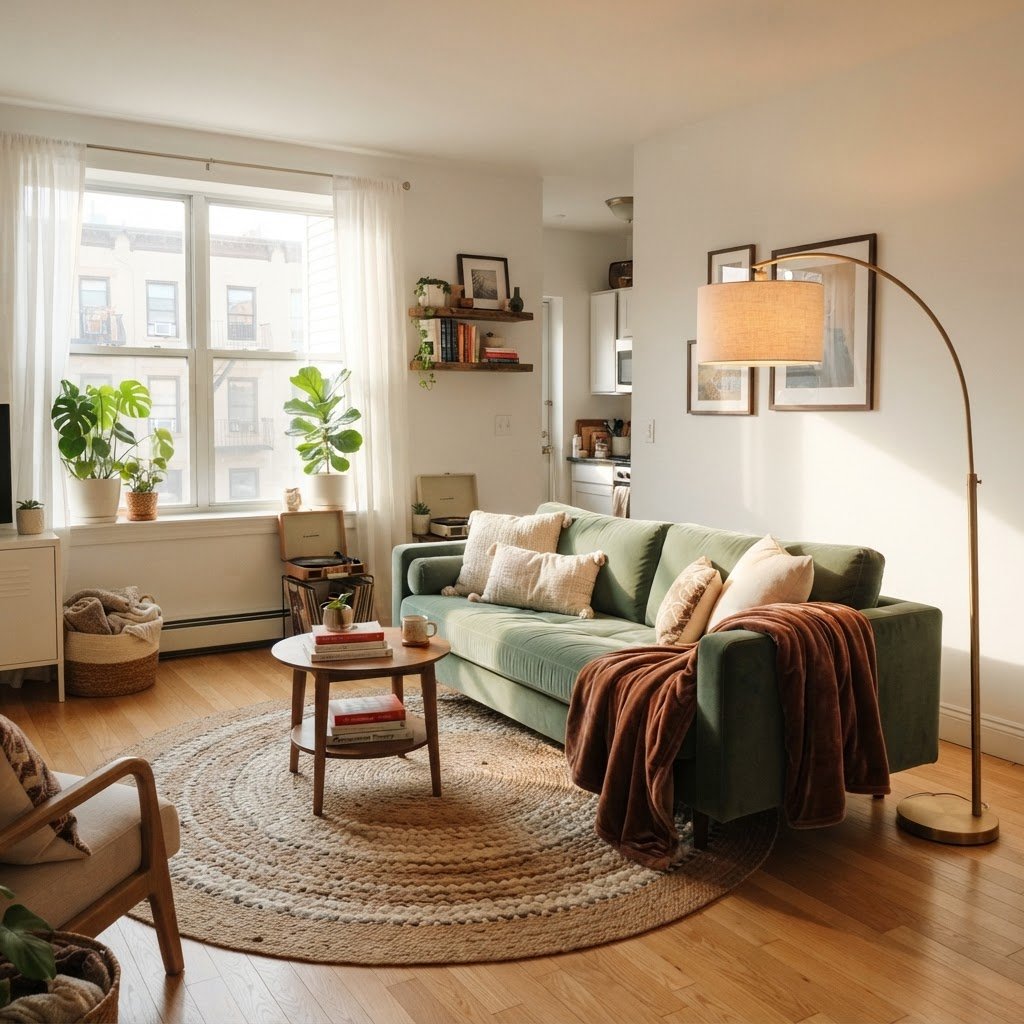
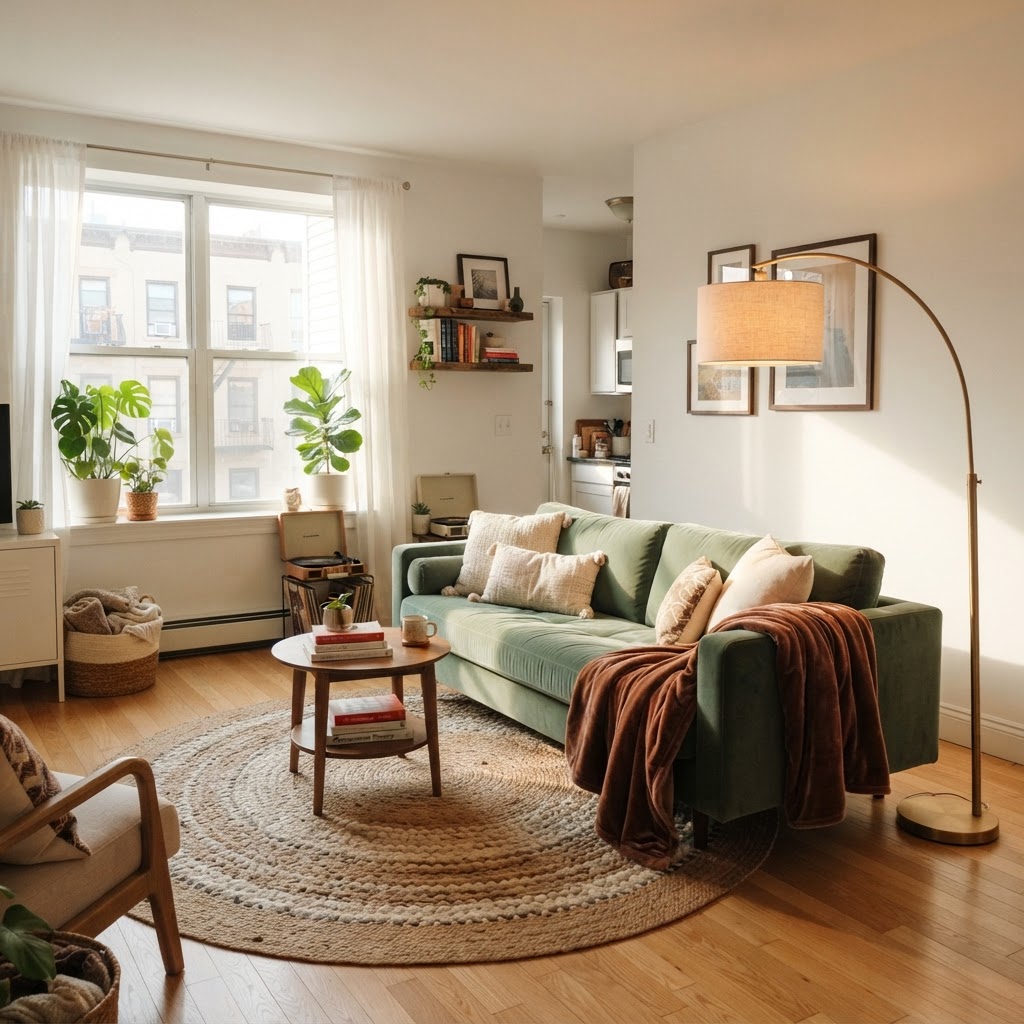
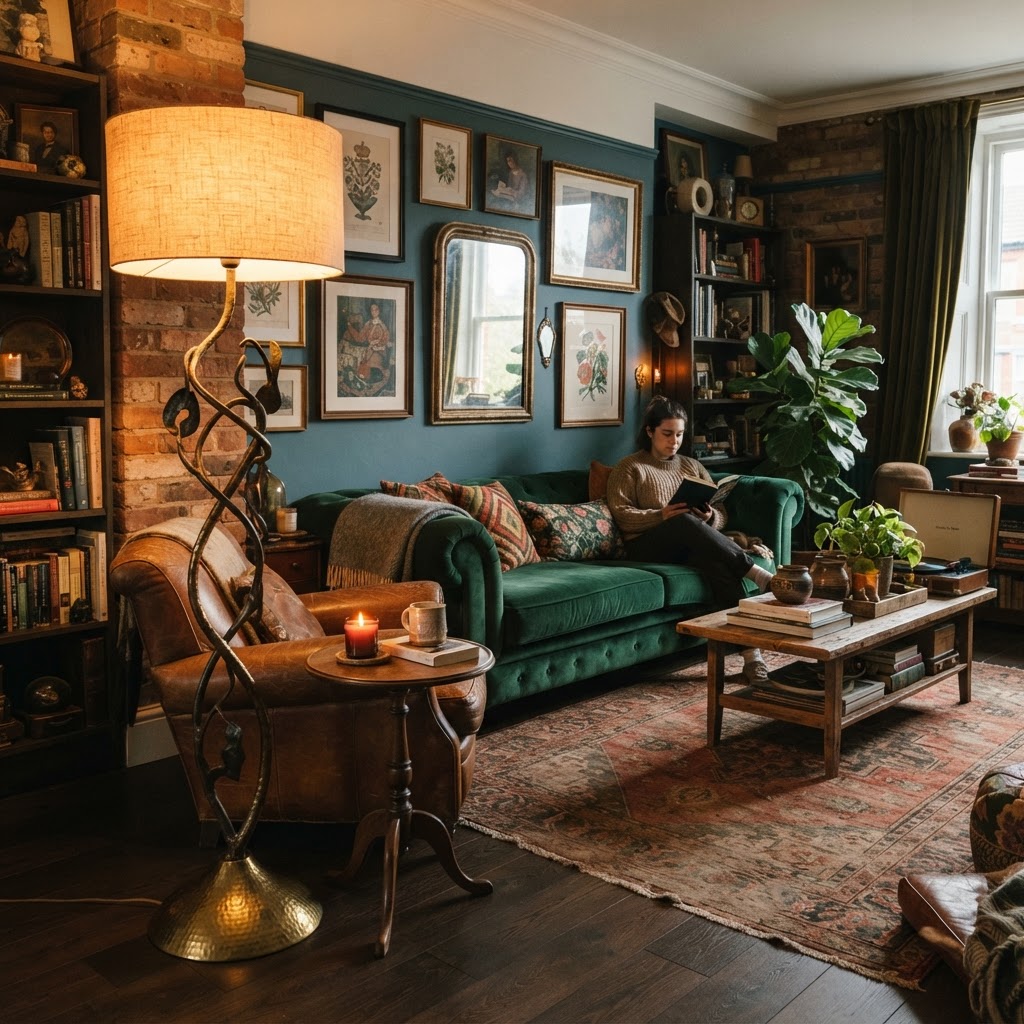
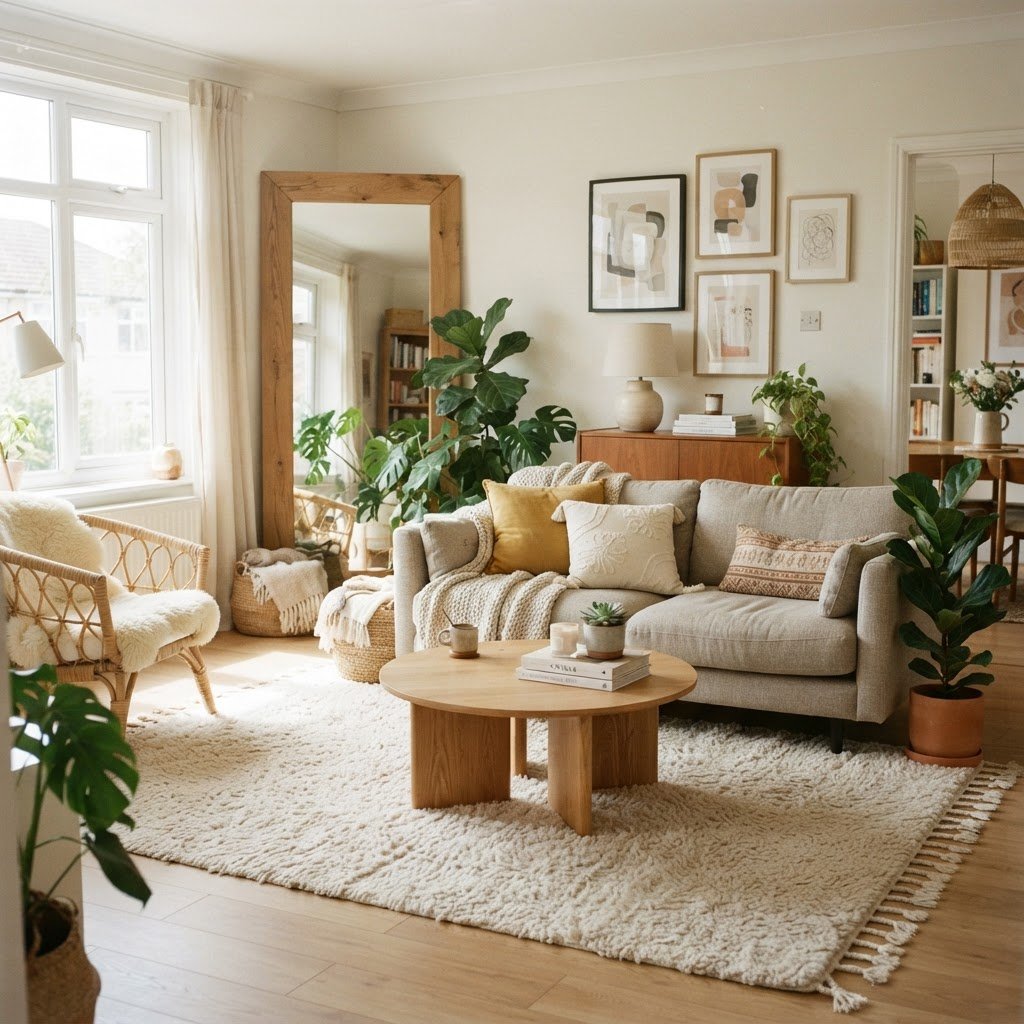
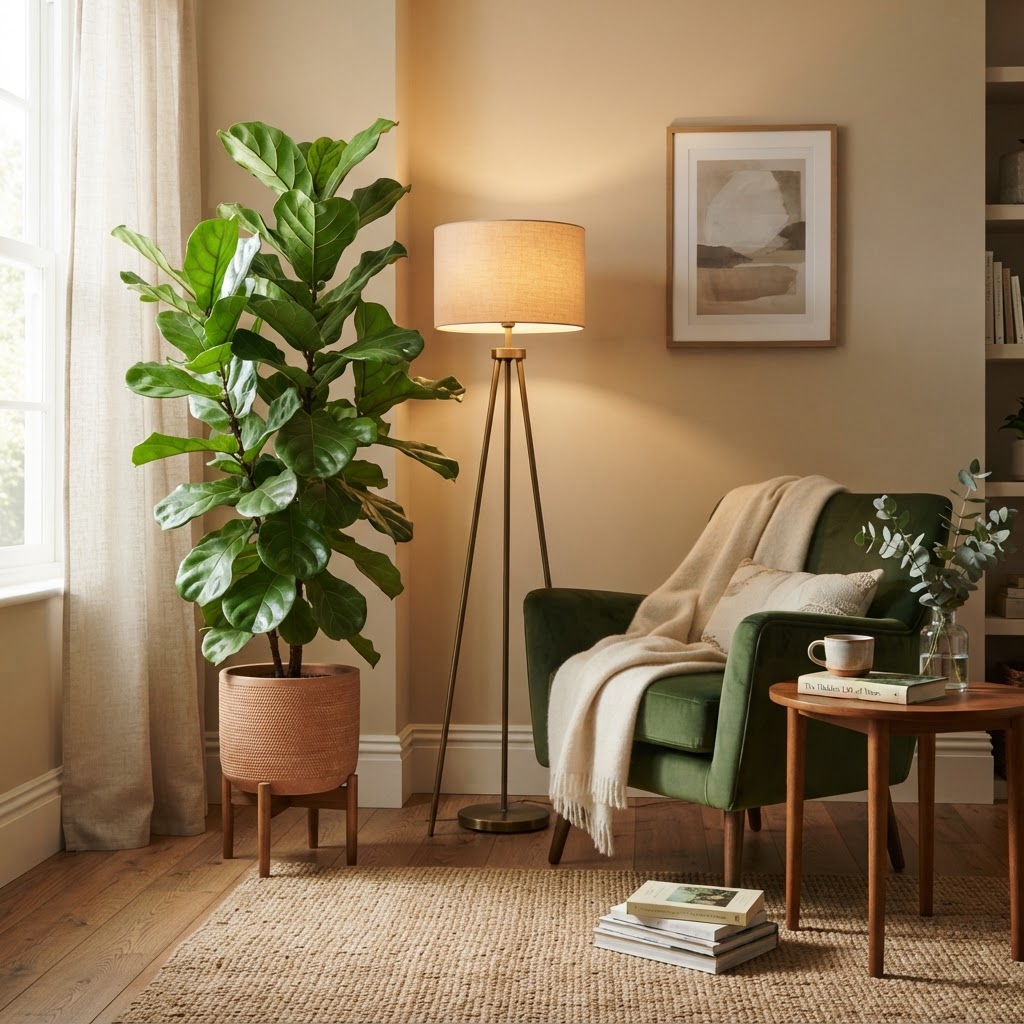
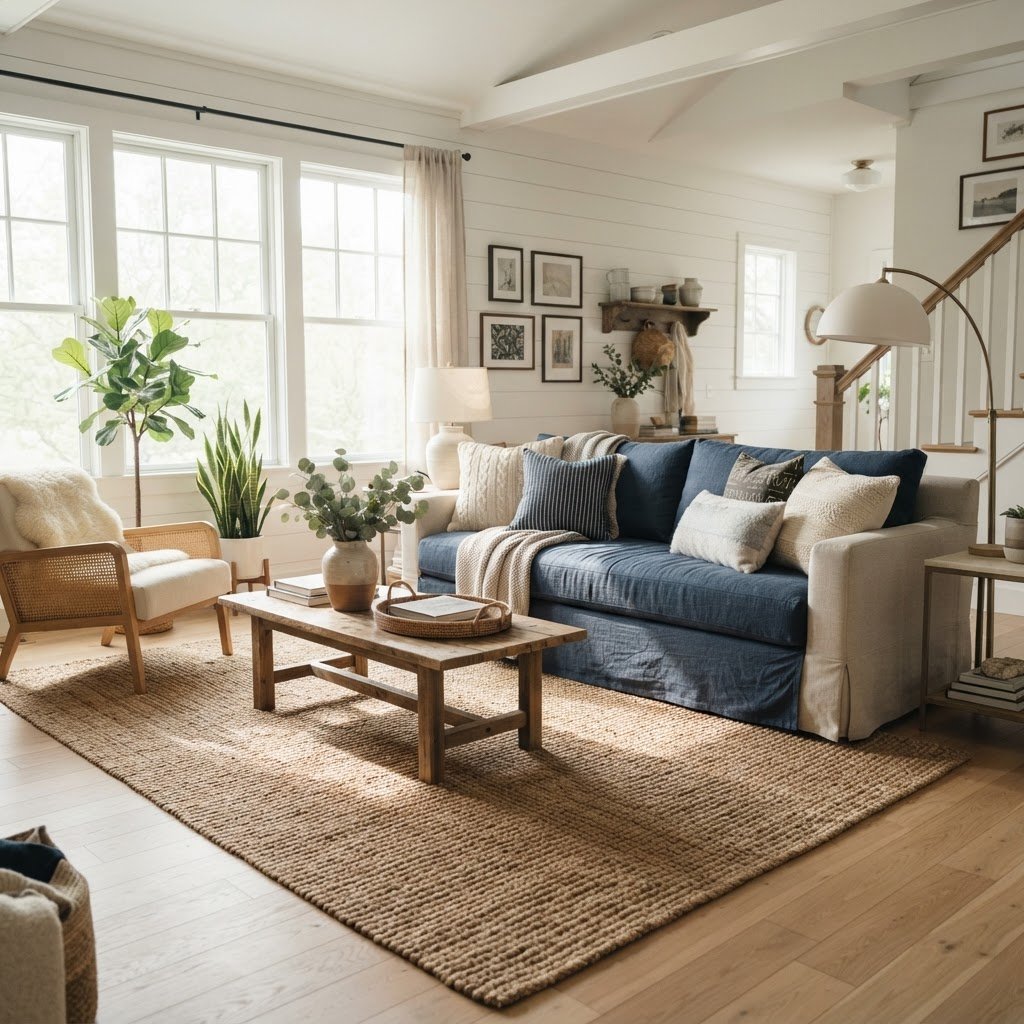
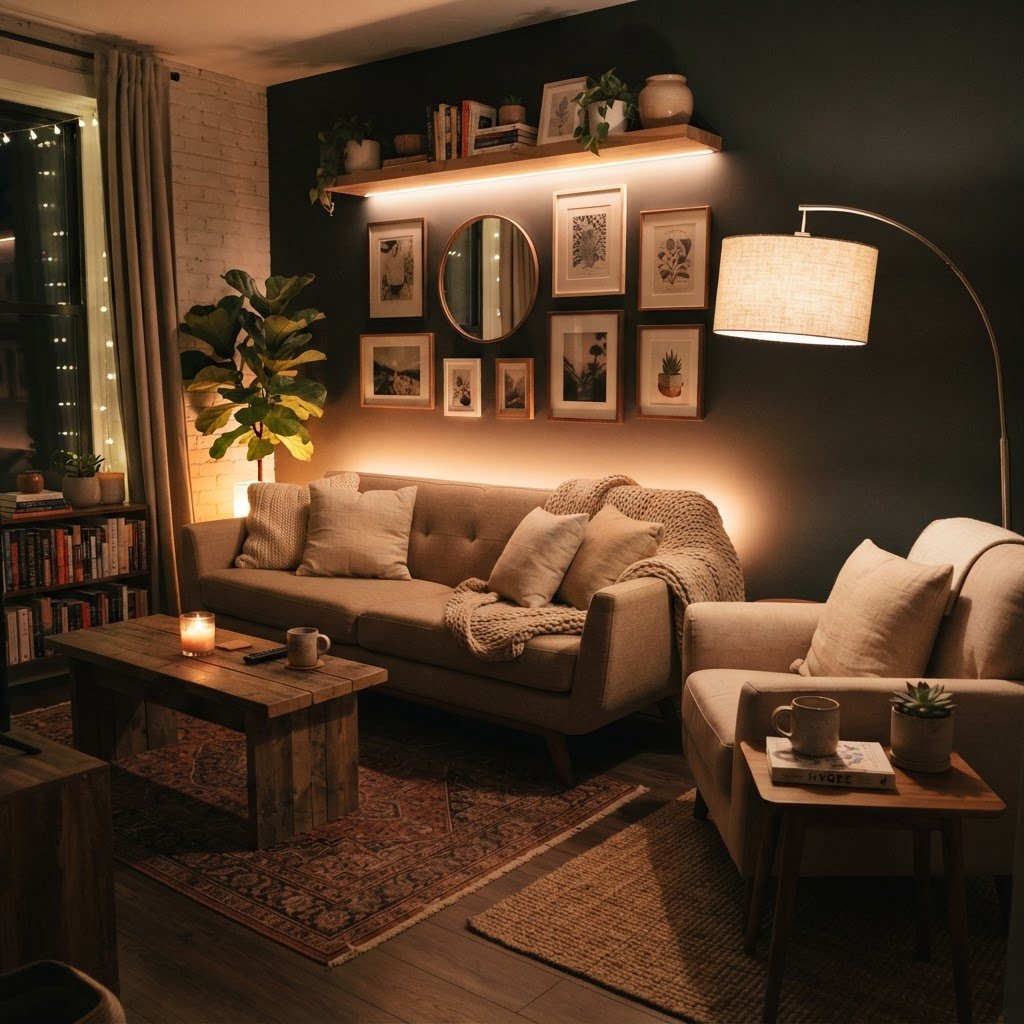
Layering warm light sources creates depth in small living rooms.

Warm light, typically falling within the 2700K to 3000K range on the Kelvin scale, mimics the gentle glow of a sunset or candlelight. In small interior environments, bright cool light can often make walls look clinical and expose every imperfection, which only serves to make the room feel more closed in. Conversely, warm light creates a welcoming atmosphere that naturally encourages relaxation and visual comfort.

When we talk about making a room feel larger, we are really talking about visual weight and depth perception. Warm light bounces off walls more softly, which reduces the harsh contrast that makes a small room feel boxed-in. By utilizing these warm lighting tricks that make small rooms feel bigger, you are essentially softening the borders of your living area, effectively pushing the walls outward in the eyes of the viewer.

1. Utilize Multiple Light Sources for Layering
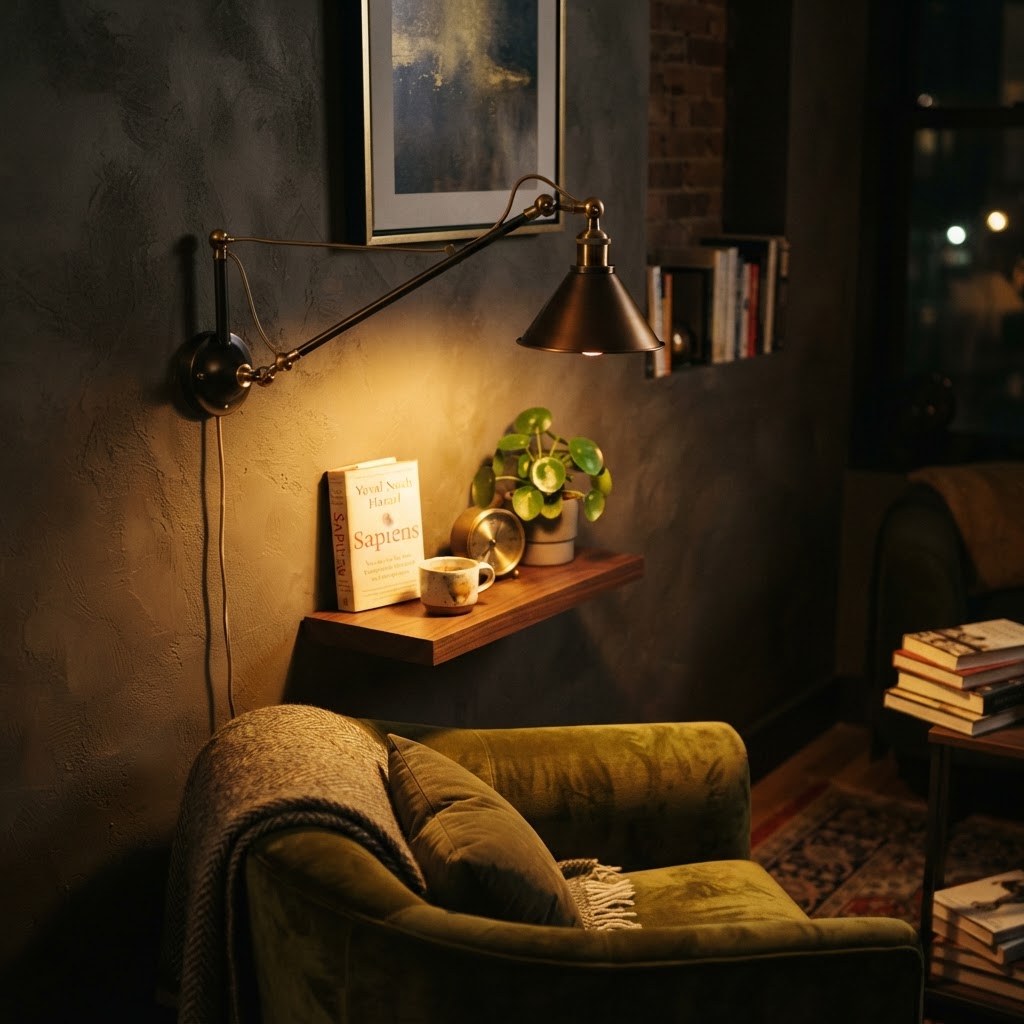
Wall-mounted lighting clears floor space for a larger feel.

The most common mistake in small room design is relying on a single ‘big light’—the standard overhead flush mount. This creates a flat, singular plane of light that washes out textures and makes corners feel like dark, oppressive voids. To fix this, you must introduce layers.

Layering involves placing light sources at different heights throughout the room. Think about a floor lamp in a corner, a table lamp on a side table, and subtle wall sconces. By distributing light across various points in the room, you force the eye to wander, which makes the space feel more complex and substantial.

2. Highlight Perimeter Walls to Expand Boundaries
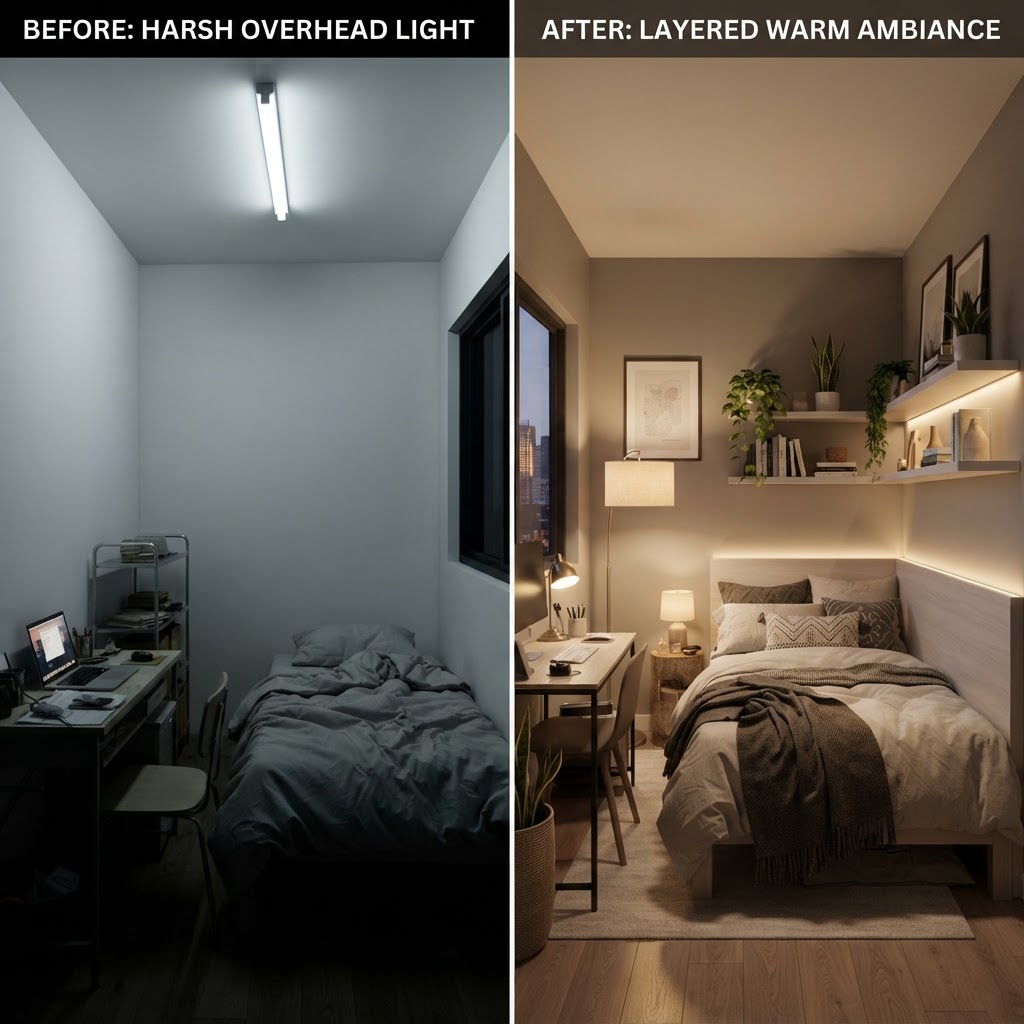
Proper lighting design changes the perceived size of a room.

Our perception of room size is largely dictated by our perception of where the walls begin and end. If the center of the room is bright but the corners are dark, the room will inherently feel smaller. By directing light toward your perimeter walls, you essentially define the boundaries of the room more clearly, pushing them visually back.

Practical Wall Lighting Ideas

  • Wall Sconces: Install matching sconces on either side of a piece of art or a window.
  • Picture Lights: Use low-wattage, warm-toned picture lights to draw attention to wall decor, which keeps the light from being trapped in the middle of the floor.
  • LED Strips: Conceal warm LED strips behind floating shelves or cornices to create a soft ‘wall-washing’ effect.

Using these fixtures to cast light onto your vertical surfaces is one of the most effective warm lighting tricks that make small rooms feel bigger, as it eliminates the ‘tunnel vision’ effect caused by floor-only lighting.

3. Emphasize Depth with Reflective Surfaces
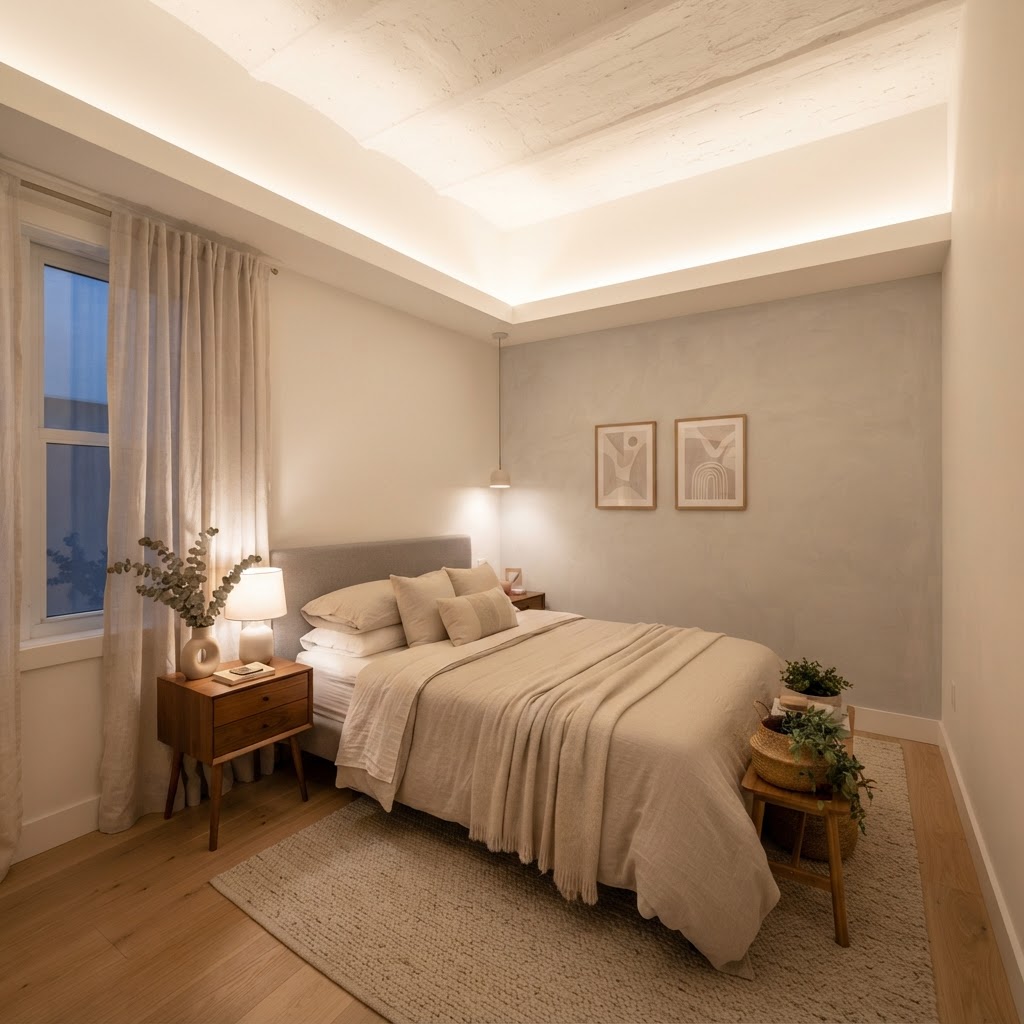
Uplighting creates the illusion of higher ceilings.

Light and reflection are best friends. When you combine warm lighting with reflective surfaces like mirrors, polished wood, or metallic accents, you create a multiplier effect. A well-placed lamp reflecting off a mirror can make a room feel like it has an entire ‘hidden’ section behind the glass.

Place a floor lamp near a tall mirror so that the warm light bounces into the darker, neglected parts of the room. This not only increases the total light output but also adds layers of visual depth that confuse the brain into thinking there is more space than there actually is.

4. Use Uplighting to Increase Ceiling Height

If you are dealing with a low ceiling, your room will naturally feel smaller. Uplighting is a technique where light is directed toward the ceiling rather than downward toward the floor. This draws the eye upward, accentuating the vertical dimension of the room.

Look for small, floor-standing canisters or portable spotlights that can be hidden behind plants or furniture. When these are angled toward the ceiling, they create a ‘floating’ effect, making the ceiling seem higher than it is. This simple shift in light direction is a cornerstone of professional lighting design for small spaces.

5. Ditch the Clutter with Integrated Lighting

Clutter is the enemy of a small room. Floor lamps and table lamps take up precious floor and surface space, which can sometimes work against your goal of feeling ‘bigger.’ This is where integrated lighting becomes your best friend.

Consider replacing table lamps with wall-mounted swing-arm lamps or plug-in pendant lights that hang from the ceiling. By removing the corded clutter from your tables and floor, you create a sense of cleanliness and order. When a room feels less cluttered, it inherently feels larger.

6. Create Focal Points with Accent Lighting

When a room has no focal point, it can feel like an undefined, chaotic mess. Using warm lighting to highlight a specific piece of furniture, a bookshelf, or a piece of wall art creates a ‘destination’ for the eye. When you have a clear focal point, the rest of the room recedes into a cozy, supporting role.

For example, use a small, warm-toned spotlight to illuminate a painting. This creates a visual anchor. As your visitors walk into the room, their eyes are drawn to the depth and warmth of that highlight, rather than the tight dimensions of the room itself.

7. Embrace Dimmers to Control Mood

Fixed lighting is rarely the answer for every situation. By installing dimmer switches, you gain total control over the atmosphere. On a bright, sunny afternoon, you might not need much light. In the evening, however, dialing your warm lights down to 30% can create an intimate, cozy sanctuary.

Dimming your lights also helps in managing the contrast in a small room. If a room is too bright at night, it can feel harsh and tight. By lowering the intensity, you create soft pools of light that emphasize comfort over clarity, making the space feel more like a retreat and less like a cramped box.

The Strategic Benefits of Layered Ambiance

When you combine these seven tricks, you are doing more than just illuminating a room; you are curating an experience. A small room that is properly lit feels intentional and curated, whereas a poorly lit small room feels accidental and cramped. The goal is to move away from the ‘big light’ and toward a constellation of small, warm, and inviting sources.

Remember that lighting design is an iterative process. You don’t have to install everything at once. Start by adding one floor lamp in a dark corner, or swapping out your bulbs for warmer color temperatures. Once you see the impact of these changes, you will quickly understand why these warm lighting tricks that make small rooms feel bigger are the most cost-effective way to renovate your living space without moving a single wall.

Conclusion

Transforming your small room into a spacious-feeling sanctuary doesn’t require knocking down walls or buying expensive custom furniture. By focusing on the temperature, direction, and intensity of your lighting, you can reshape the entire vibe of your home. Start by adding warm, layered light sources today, and watch how your cramped space begins to breathe.

Are you ready to brighten your home? Try replacing your existing harsh white bulbs with 2700K warm LEDs and see the difference immediately! Share your before-and-after results in the comments below, or subscribe to our newsletter for more interior design hacks that save space and money.
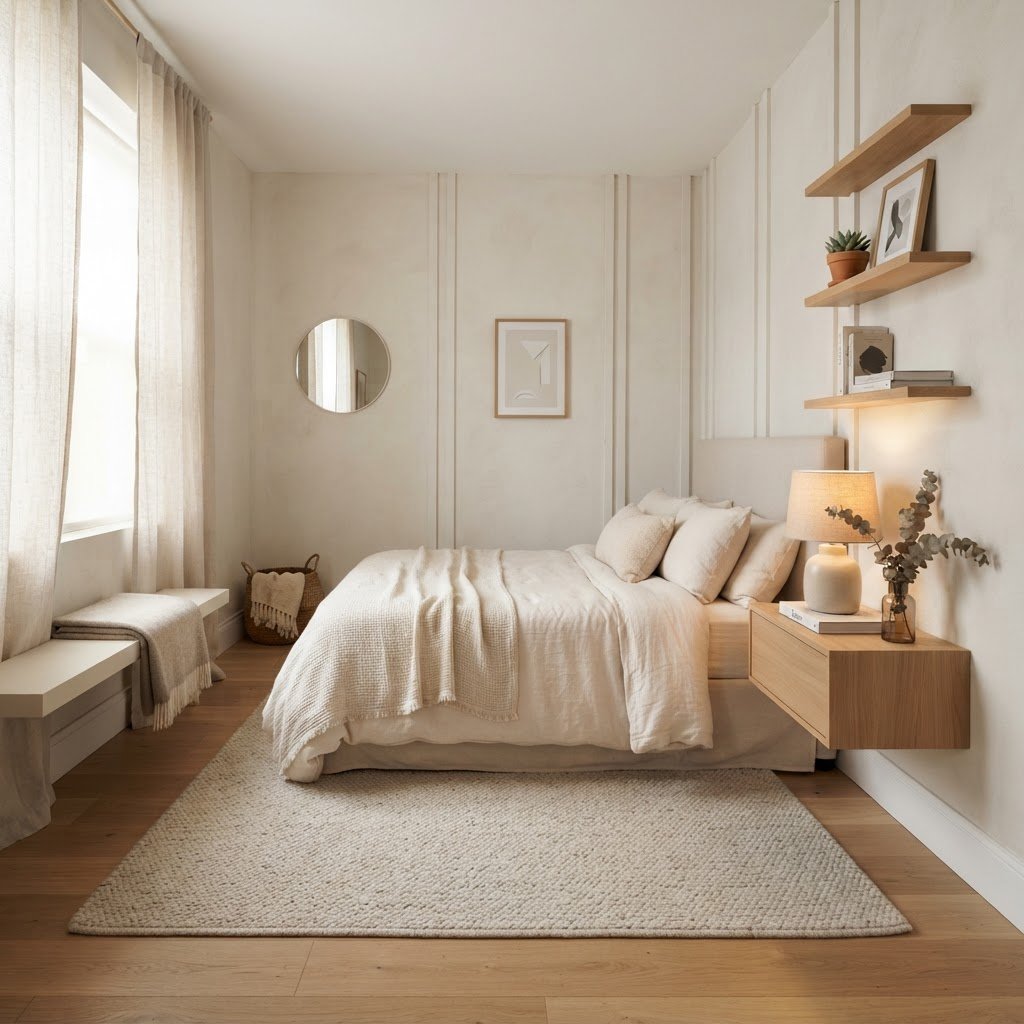
Small Bedroom Ideas: Clever Storage & Vertical Solutions

Small bedroom storage is best maximized by utilizing vertical wall space, choosing multi-functional furniture, and implementing a strict decluttering strategy to maintain a clear floor plan. By shifting storage from the floor to walls and selecting pieces like under-bed drawers or wall-mounted desks, you can increase your usable bedroom capacity by up to 40% while maintaining an airy, open aesthetic.

The Philosophy of Vertical Design

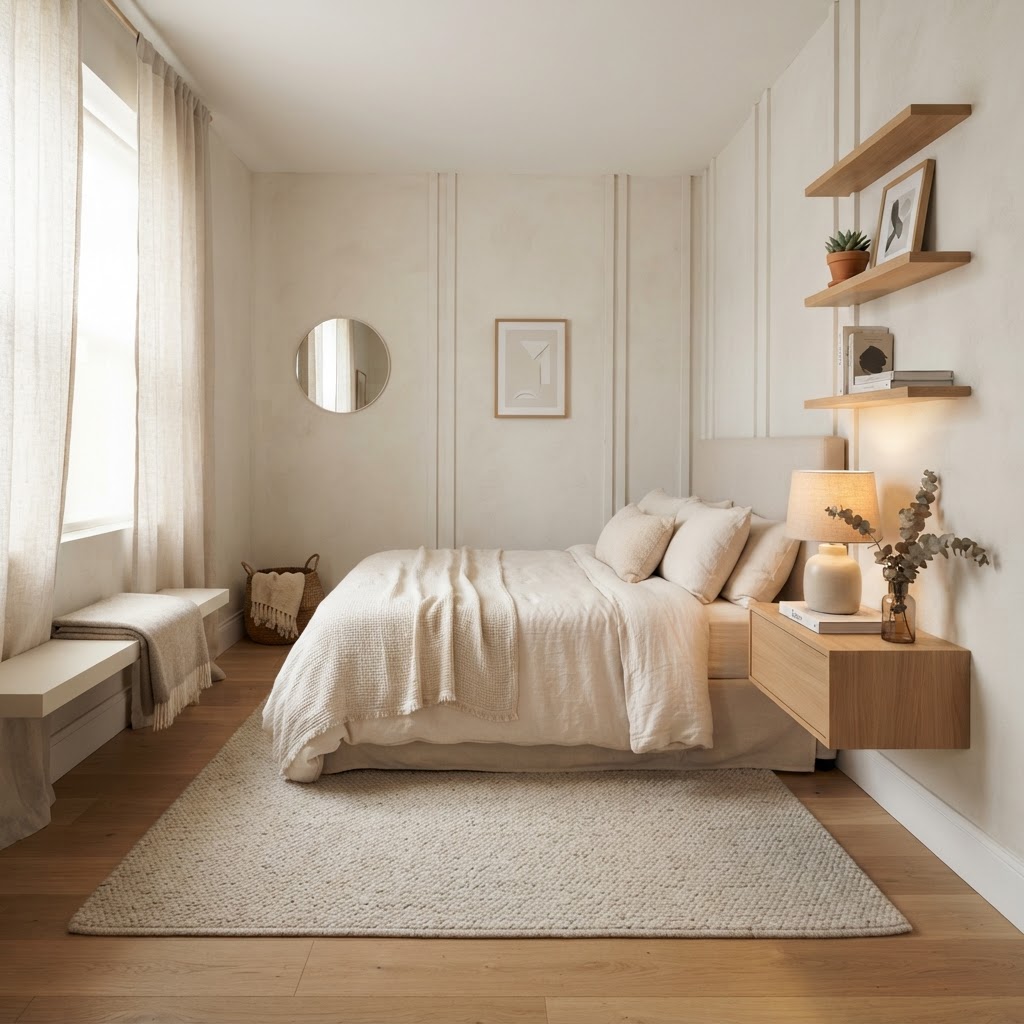
Floating furniture helps create an airy, open feel in small bedrooms.

When floor space is scarce, your walls become your most valuable real estate for storage and visual expansion. Many people overlook the 6 to 8 feet of vertical space above their dressers, desks, and headboards, leaving a significant amount of potential storage unused. Vertical design is not just about mounting shelves; it is about drawing the eye upward, which naturally makes a room feel taller and more spacious. By installing shelving that reaches within 12 inches of your ceiling, you force the eye to travel upward, creating the illusion of height. This strategy is particularly effective in rooms with ceilings lower than 8 feet, as it prevents the furniture from feeling “stuck” to the floor. Furthermore, utilizing high-level shelves keeps rarely used items—like off-season bedding or sentimental keepsakes—out of your daily visual path, which reduces the psychological feeling of clutter in a confined space.

Utilizing Wall-Mounted Furniture

Floating nightstands and wall-mounted desks are game-changers for small rooms because they provide essential surfaces without creating floor-level obstructions. By removing the legs of traditional furniture, you clear the floor space underneath, which creates a sense of openness and makes the room significantly easier to clean. Consider installing long, floating shelves above your bed to serve as a modern headboard substitute that doubles as a bookshelf or display area. When you reclaim the 2 to 4 square feet typically occupied by nightstand legs, you improve traffic flow around the bed.

Feature Traditional Furniture Wall-Mounted Furniture
Floor Space Used High Zero
Visual Weight Heavy Light/Airy
Installation Simple Requires Stud Mounting
Cleaning Access Difficult Easy

Choosing the Right Shelving Systems

Modular shelving units are highly versatile because they allow you to customize your storage based on your specific needs. Use adjustable brackets so you can move shelves as your storage requirements evolve over time. For a cohesive look, paint your shelves the same color as your walls so they appear to blend into the architecture rather than protruding into the room, reducing visual noise. When installing, always use a level and ensure hardware is rated for your wall type (e.g., toggle bolts for drywall, masonry anchors for brick) to safely support items weighing over 20 lbs.

Unlocking Hidden Storage Potential

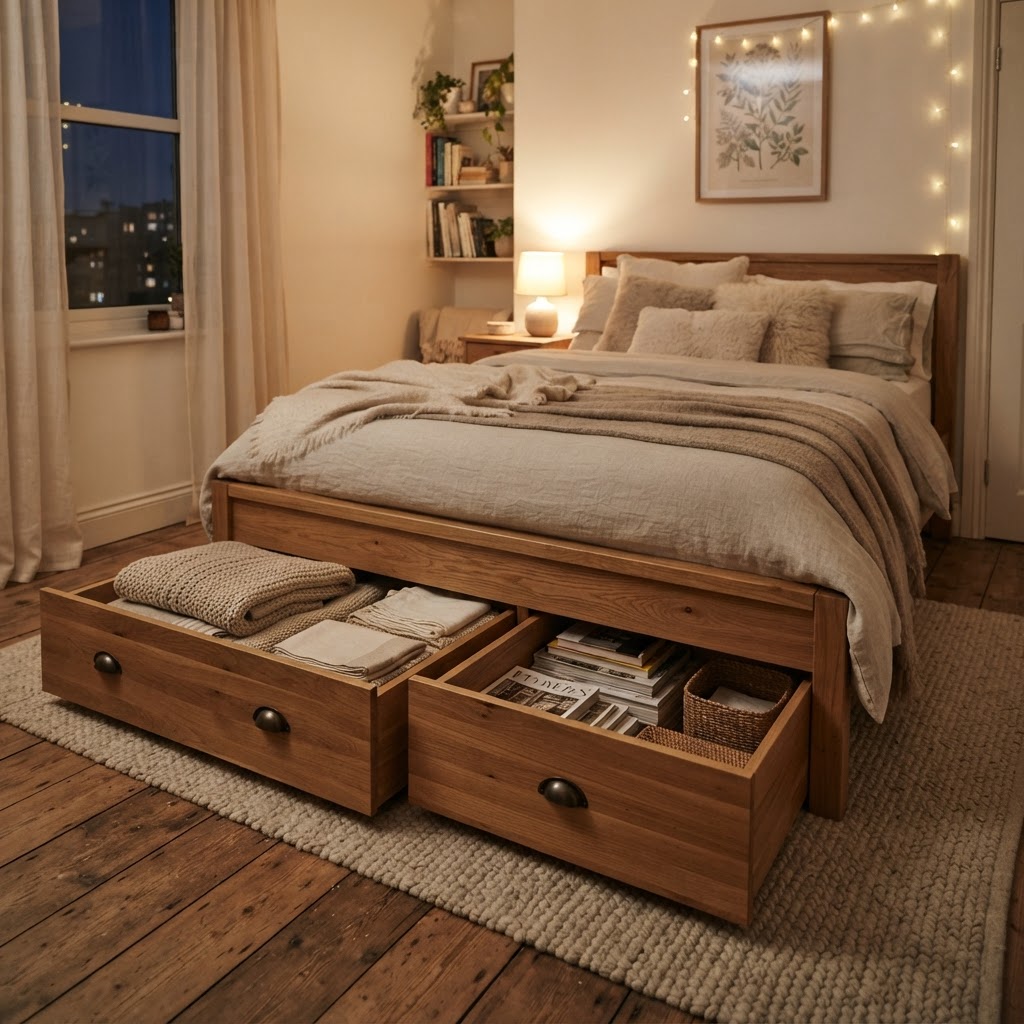
Integrated under-bed storage is perfect for hiding away extra bedding and seasonal items.

The most effective small bedroom ideas involve pieces of furniture that work double duty, ensuring that every square inch of the room justifies its existence. If a piece of furniture doesn’t provide storage, it is likely taking up floor space you cannot afford to waste. Look for beds with built-in drawers, ottomans with removable tops, and dressers that can serve as vanity tables. Professional organizers often suggest the “Rule of Two,” which mandates that every furniture piece must fulfill two functions—aesthetic presence and utility. By replacing a standard bed frame with a storage-integrated platform, you can gain between 10 to 15 cubic feet of hidden storage capacity. This is ideal for seasonal clothing, extra linens, or bulkier items that do not fit in your primary closet. Prioritize modular storage solutions that allow for future flexibility, such as changing drawer configurations or adding secondary shelves as your organizational needs shift throughout the year.

Choosing Multi-Functional Furniture

Platform beds with deep drawers underneath are arguably the best investment for a compact bedroom. These drawers can hold an entire season’s worth of clothing, extra bedding, or even bulky winter coats. If you cannot afford a new bed frame, consider using aesthetic fabric bins or rolling crates that fit perfectly underneath your existing bed frame to achieve a similar result. When choosing under-bed bins, aim for a height of 6 to 8 inches to ensure they slide freely without scratching your floor. Opt for opaque fabric bins to maintain a tidy look, or clear plastic if you need to quickly locate items.

The Power of Under-Bed Organization

To make under-bed storage work, prioritize bins that slide easily on smooth surfaces using casters or felt pads. Invest in clear containers if you have a wide variety of items so you can see exactly what is inside without needing to pull every bin out. Always measure the height from the floor to your bed frame before purchasing containers to ensure a perfect fit that doesn’t look messy or disorganized. Leaving even a 1-inch gap between the top of the bin and the frame bottom will prevent jamming.

Mastering Closet Optimization

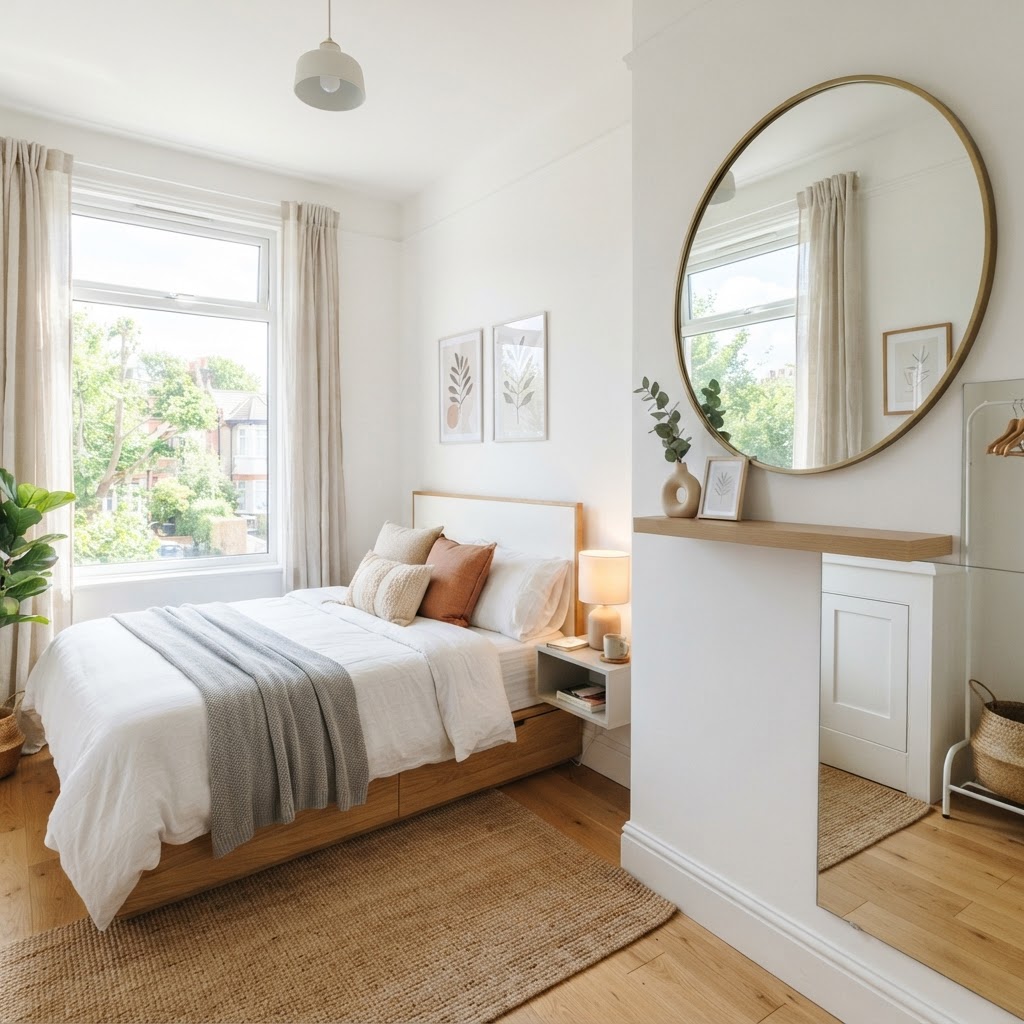
Large mirrors are essential for reflecting light and making a small room look larger.

Most reach-in closets are underutilized due to inefficient rod placement, but you can increase your capacity by up to 50% by maximizing vertical and door-back areas. By installing a double-hanging rod system, you effectively double the amount of clothing you store in your closet. Adding shelves 12 inches above the top rod also creates a perfect spot for seasonal items like hats, bags, or extra linens. Many homeowners ignore the “dead space” at the bottom of the closet; placing a stack of modular drawers or a shoe rack here keeps the floor clear while organizing smaller accessories. When updating your closet, prioritize a modular system with adjustable tracks, which allows you to change the shelf heights as your wardrobe changes. For example, moving shelves closer together can accommodate more folded sweaters, while removing them creates room for longer dresses or coats.

Closet Tip Benefit Efficiency Gain
Double Rods Vertical layering High
Door Hooks Access to accessories Medium
Shelf Dividers Prevents toppling stacks High
Clear Bins Visual inventory Medium

Implementing Door-Back Organizers

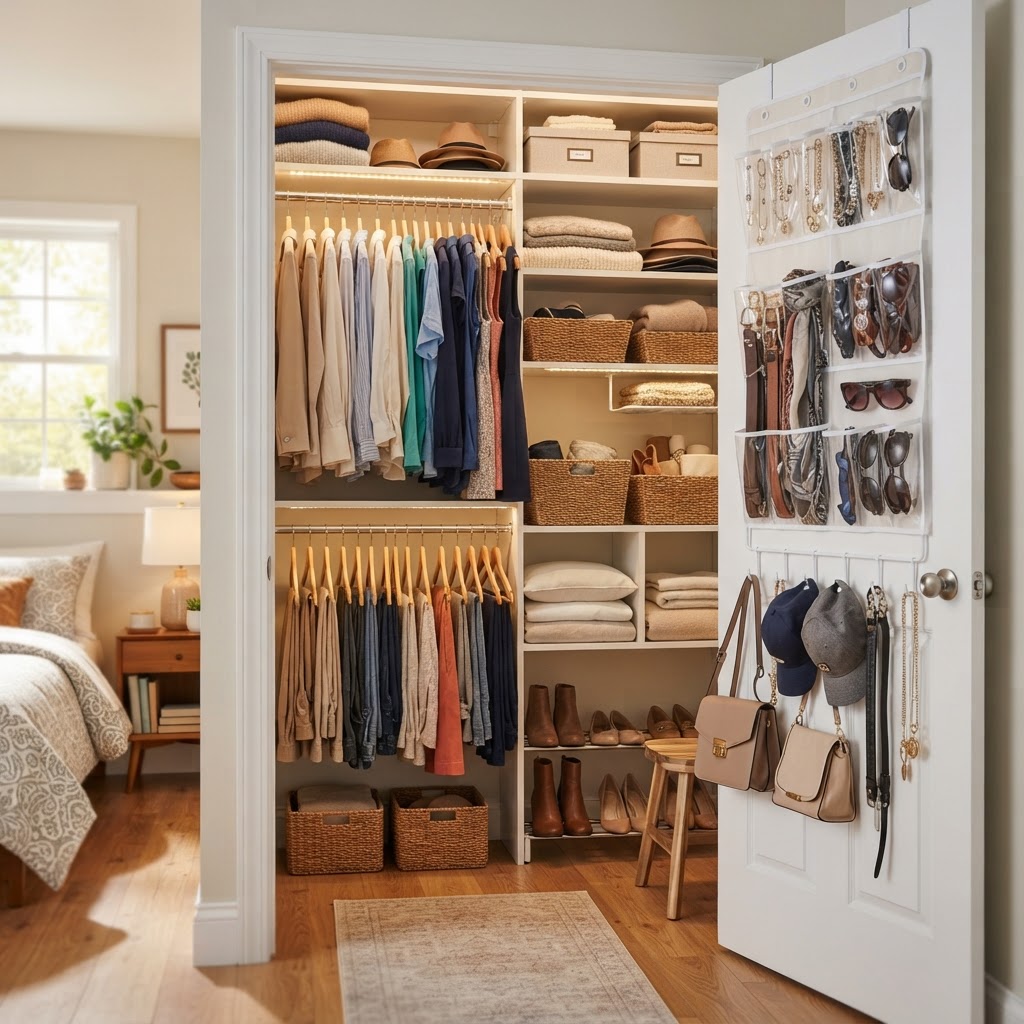
Don’t forget about the back of your closet door, which acts as a secondary storage wall. Install an over-the-door shoe organizer or a series of hooks to hold scarves, belts, jewelry, or robes. Keeping these small items off your dressers will instantly make your room feel more organized and less chaotic. Using an organizer with clear pockets allows you to see small accessories instantly, saving you time during your morning routine. Ensure the organizer is securely fastened to prevent it from swinging or banging against the door when closed.

Decluttering Strategy for Small Spaces

The most important rule for small spaces is a strict “one in, one out” policy. Every item you bring into your bedroom should serve a purpose or bring you joy. Regularly audit your closet to remove items you haven’t worn in over a year. A minimalist approach is naturally the best friend of a small room. Perform a seasonal “reset” every 90 days to ensure your closet is not storing dormant items that occupy valuable cubic footage.

Creative Lighting for an Airy Feel

Don't overlook the back of your doors for essential storage opportunities.

Lighting plays a significant role in how big or small a room feels because shadows in the corners of a room create a “shrinking” effect. Natural light is your best friend, but if your room lacks windows, artificial light must be used strategically to illuminate dark corners. Avoid bulky floor lamps that take up valuable floor space; instead, opt for wall-mounted sconces or pendant lights that hang from the ceiling. A layered lighting approach—using a combination of warm ambient lighting and focused task lighting—can make a room feel expansive. Install LED strips under floating shelves or behind the headboard to provide a soft glow that eliminates harsh shadows. When selecting bulbs, aim for 2700K to 3000K (warm white) for a cozy bedroom feel. Proper illumination can make a room feel up to 20% larger by removing dark visual boundaries, effectively “pushing” the walls outward.

Using Mirrors to Expand Depth

Mirrors are a classic design trick that never fails to double the perceived depth of a room. By placing a large mirror directly across from a window, you reflect natural light deeper into the space. A full-length mirror leaning against a wall or mounted on the back of a door not only helps you get dressed but also tricks the eye into thinking the room is twice its actual size. If you have a small window, placing a mirror adjacent to it can create the illusion of a second, larger window, further brightening the interior.

Maximizing Corner Real Estate

Corners are often dead zones in bedroom design, but they offer excellent potential for vertical storage when approached with the right geometry. Corner shelving units are specifically designed to fit into 90-degree angles, turning unused wall space into a functional display or storage area. This is a perfect place for plants, books, or small decorative items that add personality to your room without consuming the center floor space. By installing corner-specific shelves, you can utilize approximately 3 to 5 square feet of otherwise wasted air. Consider using tension-rod corner shelves if you are a renter and cannot drill into the walls. These allow you to maximize vertical storage for small objects like alarm clocks, charging stations, or books. When filling these corners, balance the weight; place heavier books at the bottom shelf and lighter, more decorative items toward the top to maintain visual balance and structural stability.

Corner Desks and Vanities

If you need a workspace or a vanity, look for pieces designed for corners. These pieces occupy space that would otherwise be empty while providing a dedicated area for activities. Keeping your work surface in a corner helps create a mental boundary between sleep and productivity, which is crucial in a multifunctional small bedroom. Choose corner units that feature rounded edges to avoid sharp, intrusive corners that can make a tight space feel dangerous or cramped.

Smart Textile and Color Choices

The color palette you choose for your small bedroom can influence your perception of space by creating a sense of continuity. Light, neutral tones such as off-white, soft gray, or pastel blue help reflect light and push walls away visually. This does not mean you cannot use color, but consider keeping your largest surfaces light and adding pops of color through bedding, rugs, or artwork to maintain depth. Avoid high-contrast patterns on large surfaces like curtains or wall-to-wall carpets, as these can make the space feel cluttered. Instead, focus on textures like linen, wool, or cotton in neutral shades, which add visual interest without overwhelming the eyes. A monochromatic color scheme, where the walls, trim, and large furniture pieces share similar light tones, is the most effective way to eliminate visual “stops” that make a room look broken up.

Maintaining a Clutter-Free Aesthetic

Clutter is the enemy of a small bedroom, as it draws the eye to chaos rather than the room’s design. Use decorative baskets and boxes to hide away the small items that inevitably accumulate on nightstands. By keeping surfaces clear, you create a sense of calm and order that makes a small room feel intentional rather than cramped. Consider the following checklist for keeping your room organized:

  • Clear off nightstand surfaces daily.
  • Use labels for hidden storage bins.
  • Purge non-essential items every three months.
  • Keep the floor clear of stray clothing or bags.
  • Utilize vertical wall hooks for jackets.

FAQ

Q: How can I make a small bedroom look bigger?

Use light, neutral wall colors and large mirrors to reflect light and expand the visual depth of the room. Keeping the floor visible by using wall-mounted furniture and high-legged pieces significantly increases the perceived square footage of the bedroom.

Q: What is the best way to store clothes in a small room?

Install a double-hanging rod system in your closet and utilize the space under your bed for long-term storage using flat, rolling bins. This combination clears floor space while effectively doubling your available hanging and seasonal storage capacity.

Q: How do I choose the right storage furniture?

Prioritize pieces that serve dual purposes, such as an ottoman with internal storage or a bed frame with integrated drawers. Look for modular, wall-mounted items like floating nightstands to ensure floor space remains open and easy to clean.

Q: Should I use open or closed shelving?

Use closed storage for messy items to keep the room looking clean, and save open shelving for a limited selection of decorative items. Too much open storage in a small room can quickly lead to a cluttered appearance, so keep it sparse and organized.

10 Best Budget-Friendly Cozy Home Ideas for Renters

To create a cozy rental home on a budget, prioritize layered warm-toned lighting, plush area rugs, and floor-to-ceiling curtains, while using temporary adhesive hooks for wall decor. These non-permanent upgrades allow you to personalize your space, hide structural flaws, and improve acoustics without violating lease agreements or risking your security deposit.

Rethink Your Lighting Strategy

Use layered lighting and textiles to instantly warm up your living space.

Lighting is the most significant factor in shifting the mood of a room from clinical to cozy by replacing harsh, overhead “boob lights” with intentional layers of warm-toned illumination. Professional designers recommend a “three-point lighting” approach in every room, utilizing a mix of floor lamps, table lamps, and accent lighting at varying heights to eliminate dark corners and minimize shadows.

The Power of Floor and Table Lamps

Investing in a few stylish floor lamps or budget-friendly table lamps can drastically change how a room feels in the evening. Opt for warm-toned LED bulbs (look for 2700K to 3000K on the packaging) to mimic the golden glow of candlelight. By distributing light at different levels, you eliminate the shadows that make rooms feel smaller and more sterile.

Mixing Patterns and Materials

Don’t be afraid to mix and match textures. A velvet throw pillow paired with a chunky knit blanket on a neutral sofa creates a tactile experience that invites you to sit and stay a while. These accessories are easy to move, store, or change, making them perfect for the rotating nature of rental life.

Temporary Wall Solutions

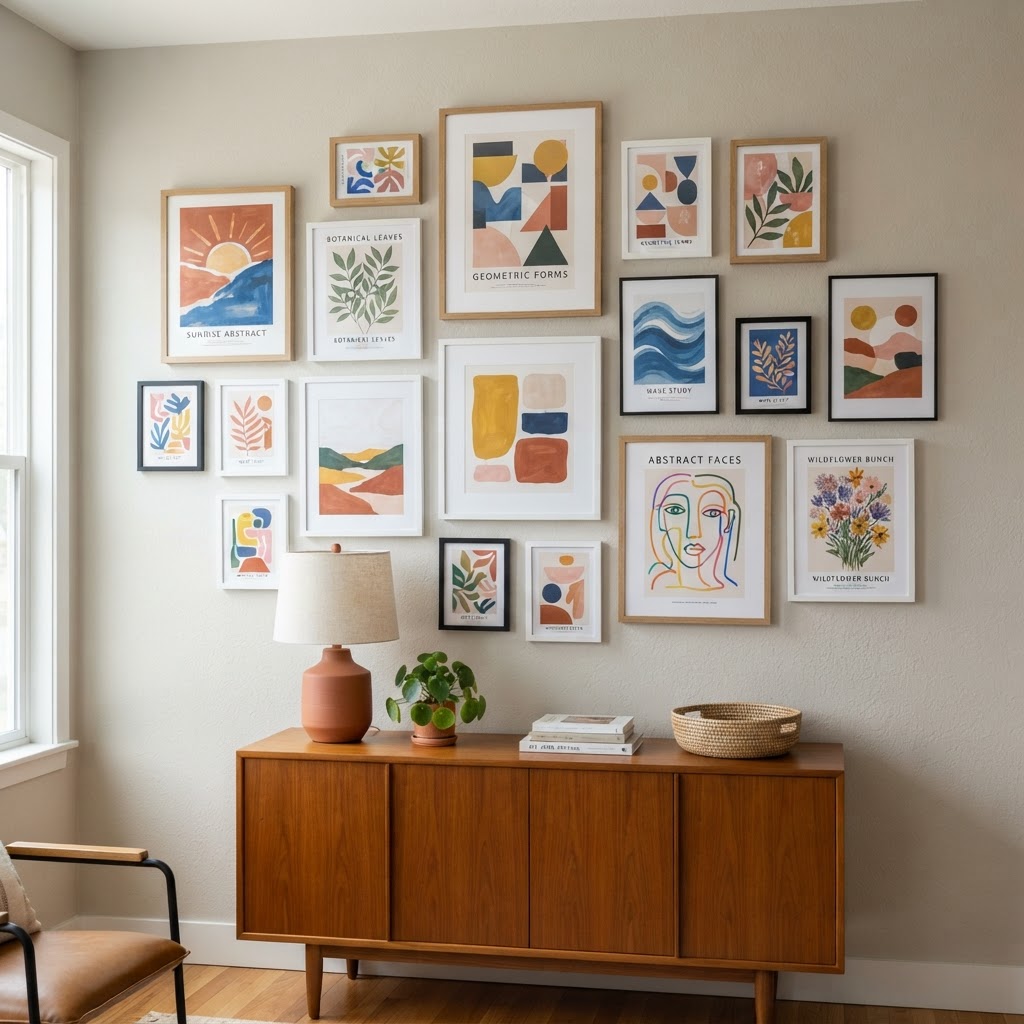
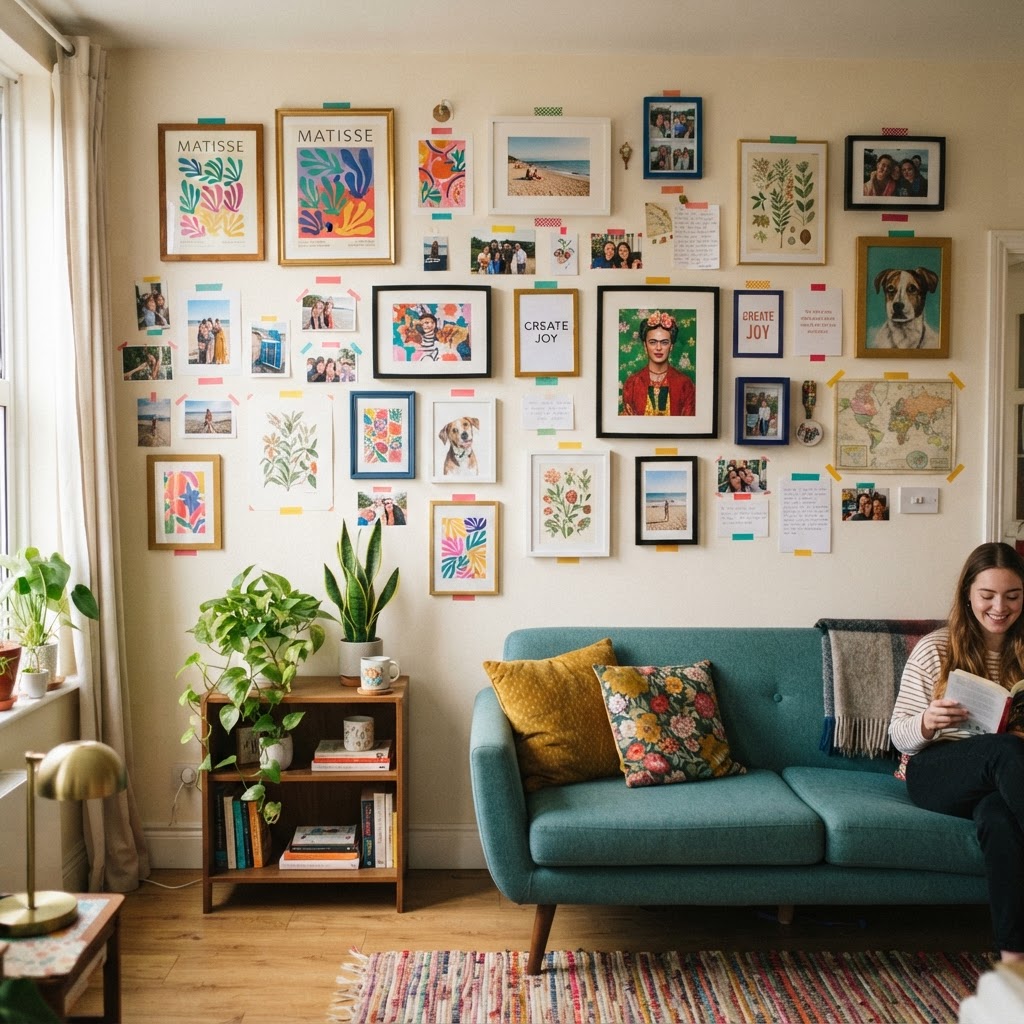
Gallery walls are a great way to personalize rental walls without damage.

White walls are often a renter’s biggest hurdle, but modern peel-and-stick wallpaper offers a non-permanent way to add architectural interest or color without losing your security deposit. Unlike traditional paste-up wallpaper, these vinyl-based products are designed for easy removal, often leaving zero residue if applied to standard primed apartment walls.

Gallery Walls Without the Holes

Creating a gallery wall is one of the most effective budget-friendly cozy home ideas for renters. By using adhesive hanging strips, you can arrange your favorite prints, photos, and art pieces without worrying about wall damage. This is your chance to inject your unique history and personality into the room, creating an environment that feels uniquely yours. For best results, use a leveling tool and paper templates to map out your gallery layout on the floor before adhering items to the wall.

Functional and Flexible Furniture

In many rentals, space is at a premium, making dual-purpose furniture the smartest investment for a cozy, clutter-free environment. Look for storage ottomans, bed frames with built-in drawers, or drop-leaf coffee tables that allow you to maximize every square foot of your apartment.

Maximizing space in a narrow hallway requires a shift in perspective. Instead of looking at floor space as your only asset, start looking at wall capacity. Think of your wall as a vertical grid waiting to be utilized. When you move storage up, you free up the floor, which visually expands the width of your narrow entryway.

Utilizing Vertical Wall Space for Storage

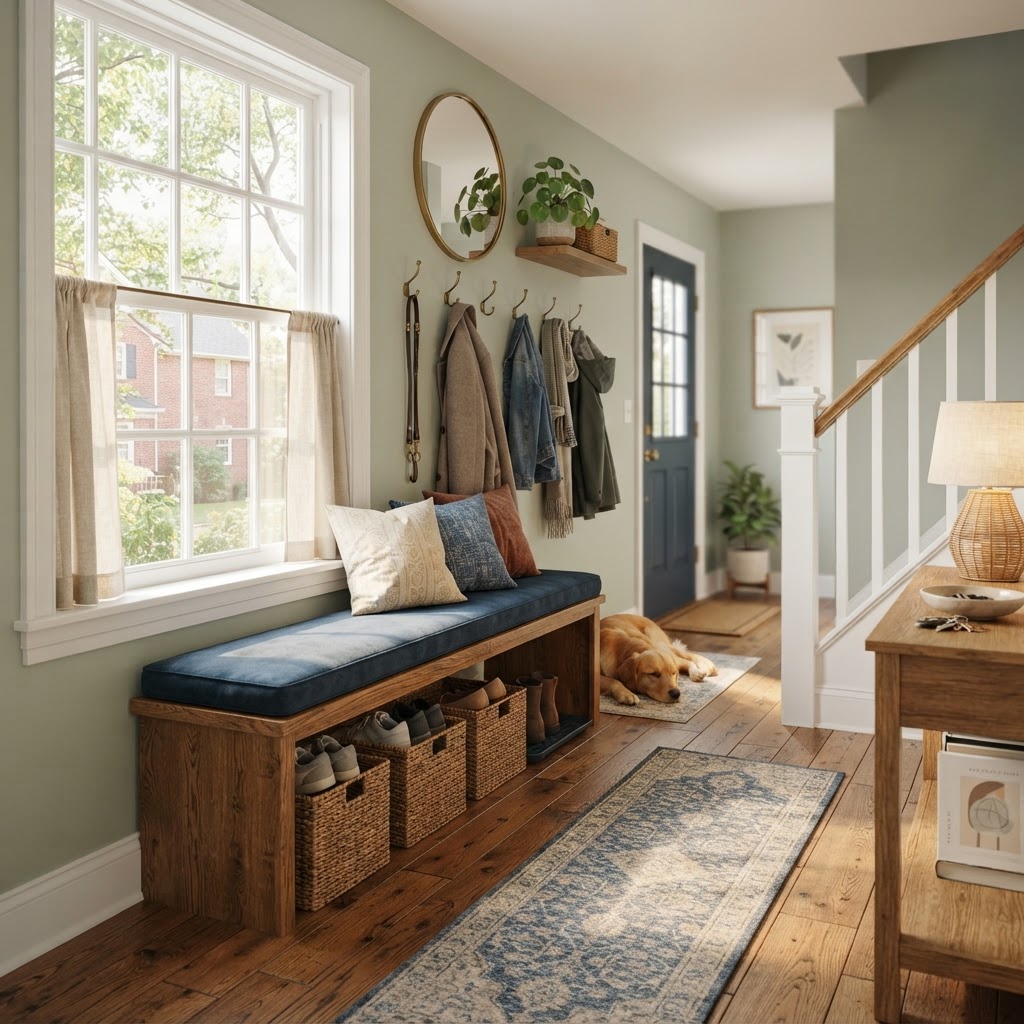
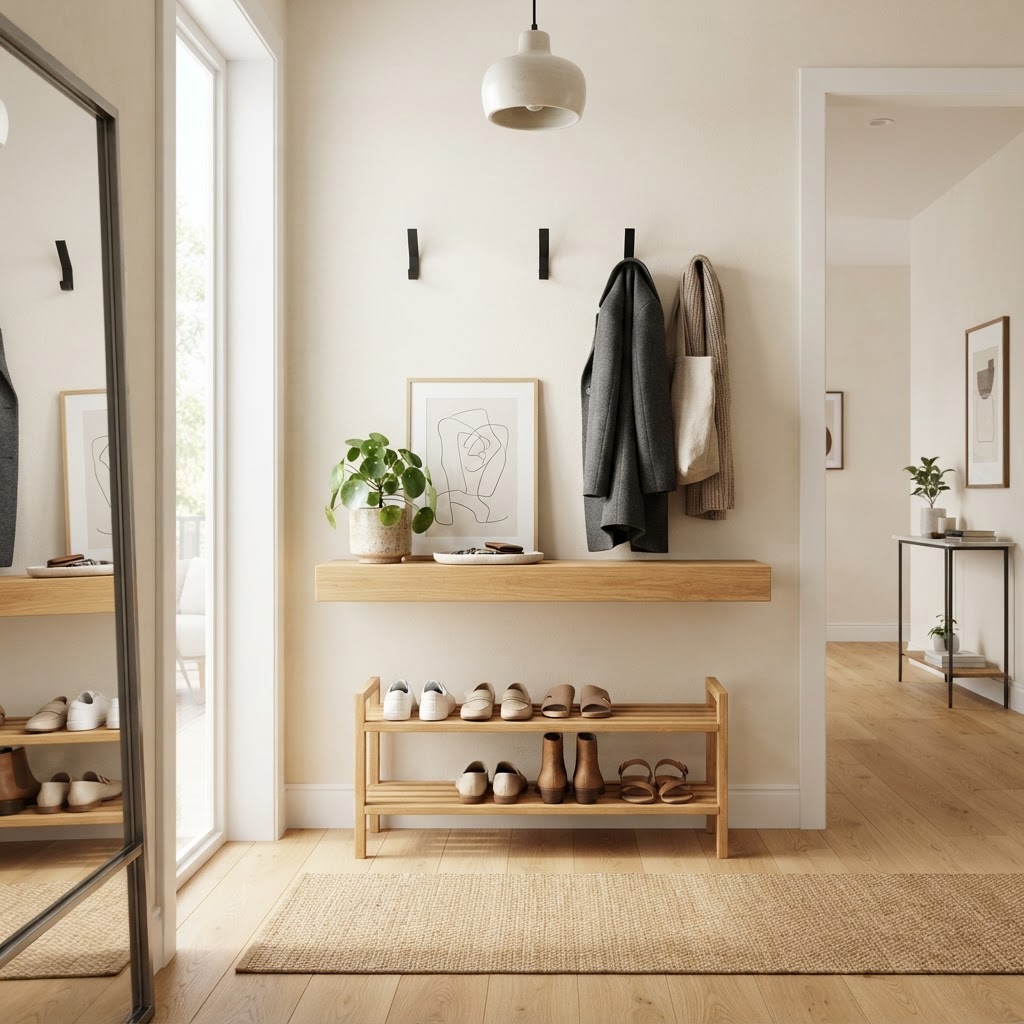
Hidden storage within a wooden bench keeps shoes neatly tucked away in a narrow townhome.

Vertical storage is the secret weapon for any tight hallway. Because you cannot expand the width of your floor, you must expand the depth of your utility by installing items at varying heights. Wall-mounted racks, floating shelves, and hook systems allow you to store essentials without blocking the pathway.

High-Impact Hook Systems

Hooks are perhaps the most underrated tool in the professional organizer’s kit. Rather than a bulky coat rack that consumes floor space, install a row of sleek, modern hooks at eye level. For added utility, consider a double-hook system where you can hang heavy coats on the top and lighter scarves or bags on the bottom.

Choosing the Right Hardware

Choose hardware that matches your home’s aesthetic. Matte black hooks provide a modern, industrial feel, while brass or polished nickel can add a touch of warmth. Ensure they are mounted securely into studs to hold the weight of winter parkas and heavy tote bags throughout the seasons.

Slim-Profile Entryway Consoles and Benches

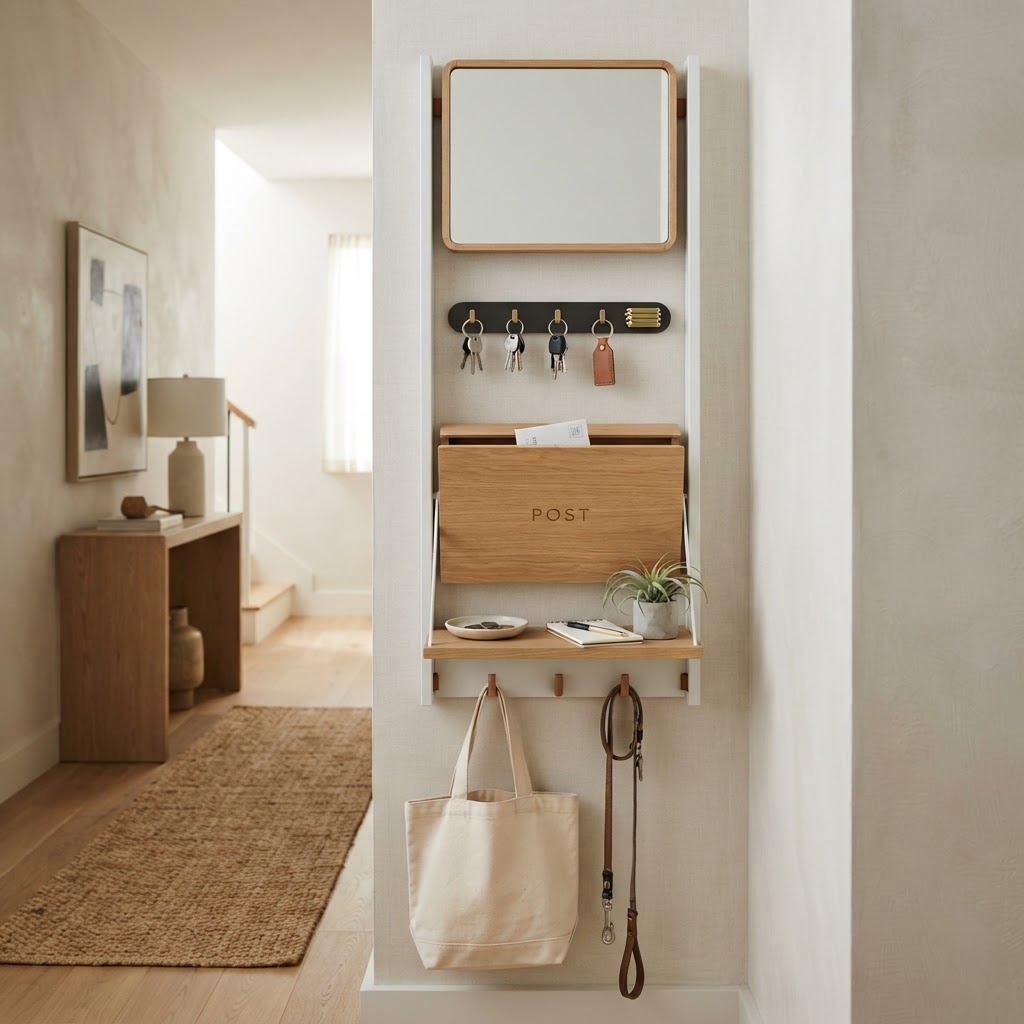
A wall-mounted landing zone keeps small essentials like keys and mail organized and accessible.

When searching for small front door storage ideas, most people make the mistake of buying oversized furniture. In a narrow hallway, every inch of walkway width matters. Look for ‘demi-lune’ or extremely shallow console tables that offer a flat surface for a tray or lamp without impeding movement.

The Multi-Functional Bench

A bench is a staple for a reason, but it can be a trap for clutter. Select a bench that features hidden storage underneath. This could be open cubbies for wicker baskets or a flip-top lid that reveals a cavernous space for blankets, umbrellas, or seasonal boots. This dual-purpose furniture keeps the entry looking tidy while ensuring items are hidden from plain sight.

If you have a particularly long but narrow hall, consider a floating bench. A floating bench is mounted directly to the wall, leaving the floor space underneath completely open. This not only makes the area easier to clean but also creates the illusion of more space because the floor continues uninterrupted under the furniture.

Smart Shoe Storage for Tiny Spaces

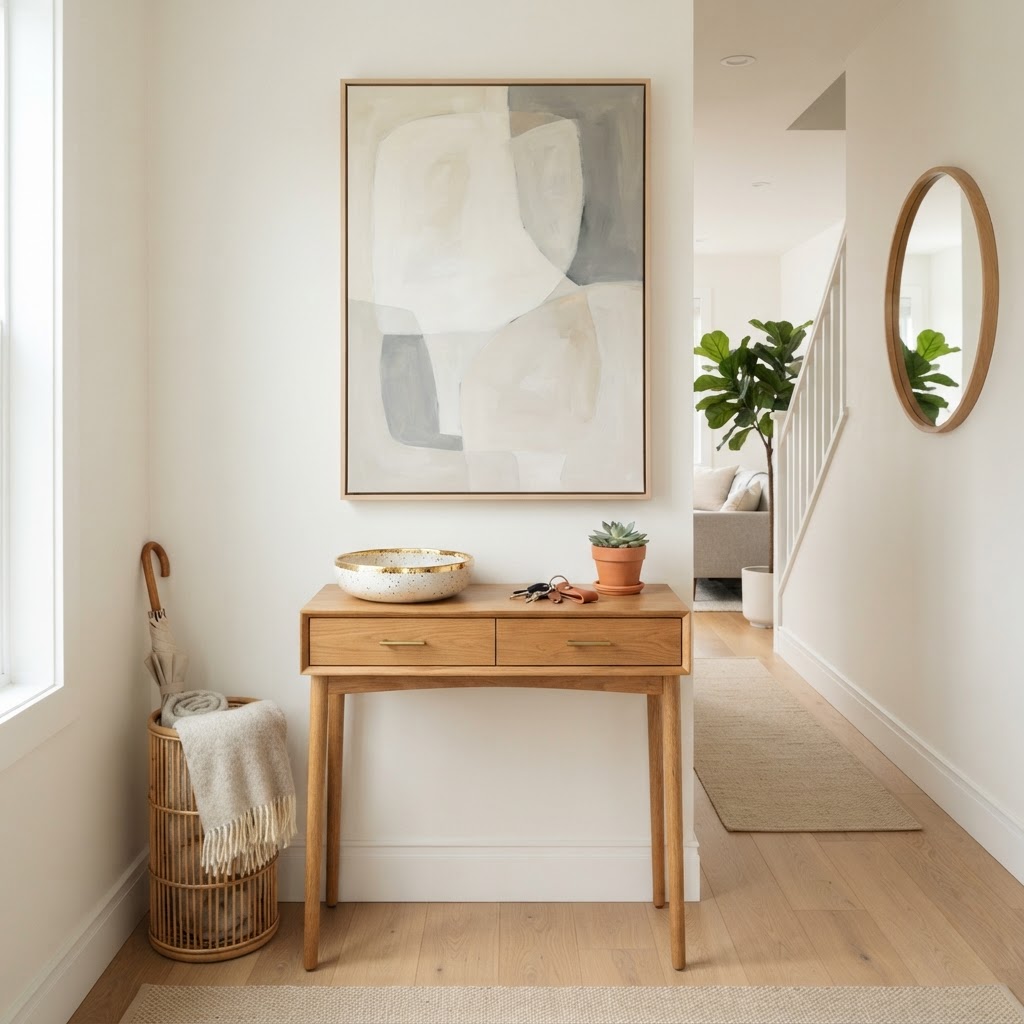
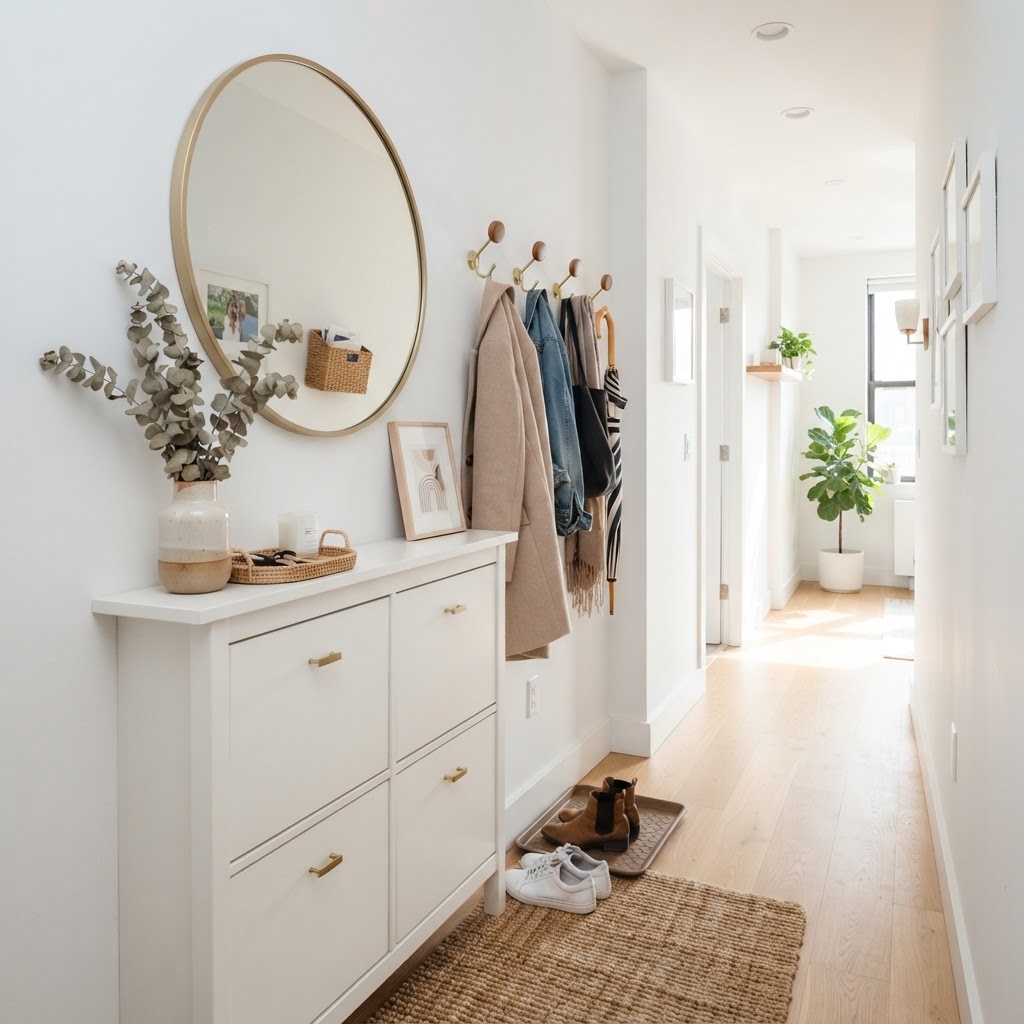
Strategic use of light and minimal furniture makes this narrow entryway feel open and inviting.

Shoes are the primary culprits in most entryway messes. Standard shoe racks are often too deep for modern townhome entryways, forcing them into the hallway and creating a bottleneck. Instead, look for vertical shoe cabinets or ’tilt-out’ designs.

The Tilt-Out Cabinet Strategy

Tilt-out shoe cabinets are genius inventions specifically designed for narrow hallways. They are usually less than 10 inches deep and store shoes at an angle, keeping them concealed behind a door that matches your decor. This is arguably one of the most effective small front door storage ideas for maintaining a minimalist aesthetic in a compact condo.

Organizing by Frequency

To optimize your shoe storage, keep the ‘everyday’ pair at the front or the most accessible shelf. Seasonal items like snow boots or flip-flops should be relegated to the bottom shelves or stored in bins in a separate closet. This ensures that your entryway only contains the items you actually need during the current week.

Hidden Storage and Tech Solutions

Beyond shoes and coats, you need a spot for the small items that inevitably end up everywhere—keys, wallets, mail, and sunglasses. A simple bowl on a console table often becomes a magnet for junk. Instead, use a wall-mounted ‘drop zone’ system.

Creating a ‘Landing Strip’

A landing strip is a dedicated zone for items that come in the door with you. By installing a shallow organizer with a mirror, small drawers, and a mail slot, you create a dedicated ‘home’ for those tiny essentials. The integrated mirror also serves a secondary purpose: it reflects light and makes the narrow space feel significantly larger.

Do not forget about the power of magnetic strips. You can install a thin magnetic bar near the door to hold your keys, which eliminates the need for bulky key hooks. It is a sleek, modern, and highly functional solution for those who want their home to feel organized and clutter-free.

Lighting and Decor to Enhance Flow

While this article focuses on storage, the feeling of a narrow entryway is heavily influenced by lighting and decor. A dark, cluttered hall feels smaller. By installing smart LED lighting under shelves or inside storage benches, you draw the eye toward functional areas while brightening up the space.

Mirrors as Space Enhancers

Never underestimate the power of a large mirror. In a narrow condo entryway, a mirror is a functional must-have for checking your look before you head out, but it also acts as a visual ‘window’ that doubles the perceived size of the area. Place it directly opposite the door or above your main storage unit to amplify light.

The Power of Cohesive Colors

To keep a narrow space from feeling chaotic, stick to a limited color palette. Use shades of white, light grey, or soft pastels for your storage units. When your furniture blends into the wall color, it effectively disappears, reducing visual clutter and allowing the space to breathe.

Conclusion: Your Path to a Tidy Home

Mastering small front door storage ideas is all about being intentional with your vertical space and choosing furniture that serves double duty. By replacing oversized pieces with slim-profile cabinets, utilizing wall-mounted systems, and keeping your ‘landing zone’ clutter-free, you can create an entryway that feels spacious regardless of your square footage.

Start small: pick one area of your entryway today—like a messy shoe corner or a pile of keys—and apply one of these storage solutions. You will be amazed at how a few simple changes can reduce daily stress and make your townhome or condo feel more like the organized sanctuary you deserve. Take the first step toward a more functional home right now!

Cozy Eclectic Home Lighting Ideas with Statement Glow Lamps

Cozy Eclectic Home Lighting Ideas with Statement Glow Lamps

Cozy eclectic home lighting is achieved by layering ambient, task, and accent light sources using a mix of vintage and modern statement glow lamps to create a warm, personalized sanctuary. By combining varied textures, organic shapes, and warm-toned bulbs (2700K-3000K), you can transform sterile spaces into curated, character-filled living environments.

The Philosophy of Eclectic Lighting

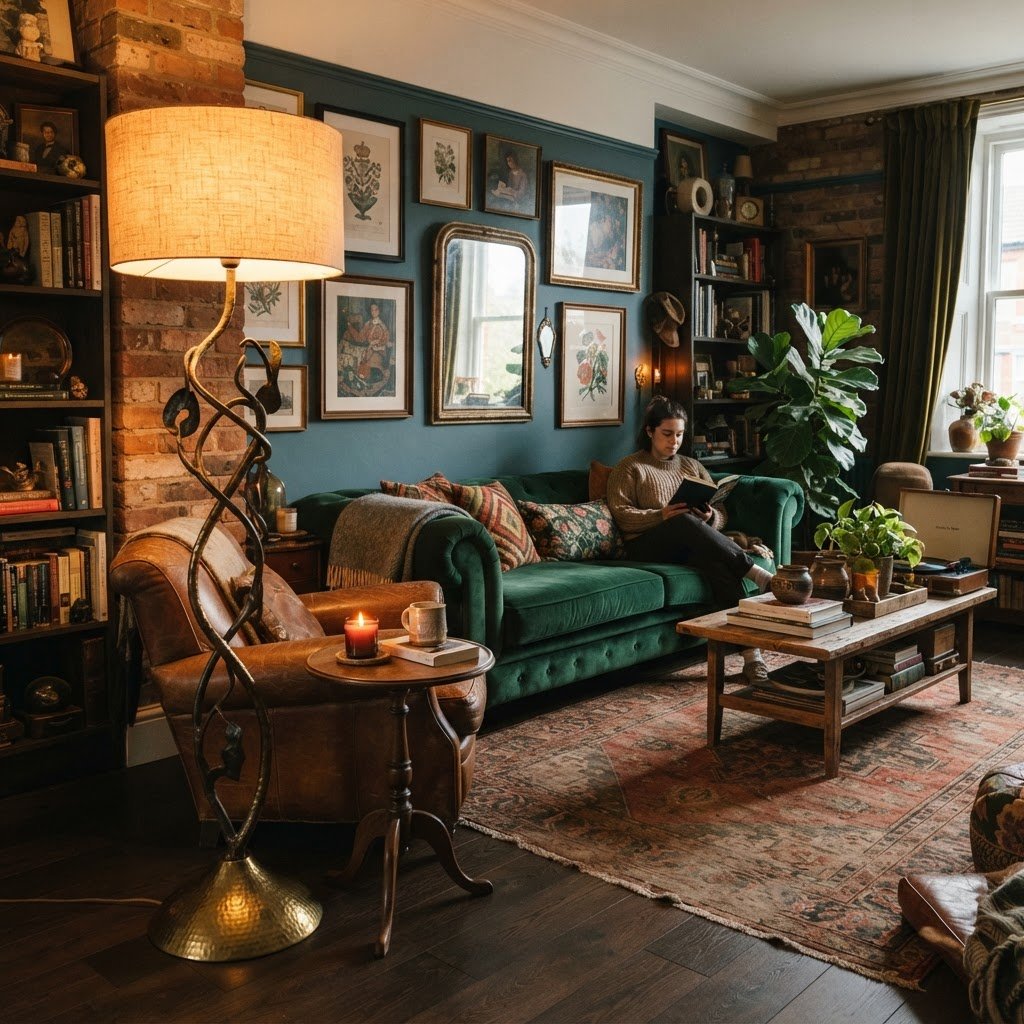
A sculptural floor lamp adds instant character to an eclectic living room.

Eclectic interior design is a sophisticated method of layering different eras, textures, and styles to create a cohesive narrative, moving away from sterile, uniform showroom appearances. When applying this to lighting, the goal is to curate a collection of pieces that feel as though they were acquired over time rather than purchased from a single catalog. Lighting acts as the “jewelry” of a room; it should be functional while functioning as a primary focal point that complements furniture without matching it perfectly.

Why Lighting Defines the Mood

Lighting serves as the invisible backbone of any room, where a single overhead light flattens dimensions while layered lighting creates essential depth and shadow. In an eclectic setting, your fixtures must bridge the gap between design styles. Whether choosing vintage brass lamps, hand-woven rattan, or modern glass orbs, each piece should tell a specific story. Research shows that 80% of perceived comfort in a living space is directly tied to the warmth of the lighting, making the selection of materials and finishes critical to achieving a “lived-in” atmosphere. By avoiding “matchy-matchy” sets, you ensure that every corner of the room feels intentional.

Lighting Type Primary Function Ideal Placement
Ambient General room illumination Ceiling or corner floor lamps
Task Focused light for reading/work Desk lamps or adjustable swing-arms
Accent Highlighting art or textures Wall sconces or gallery spotlights

Integrating Statement Glow Lamps

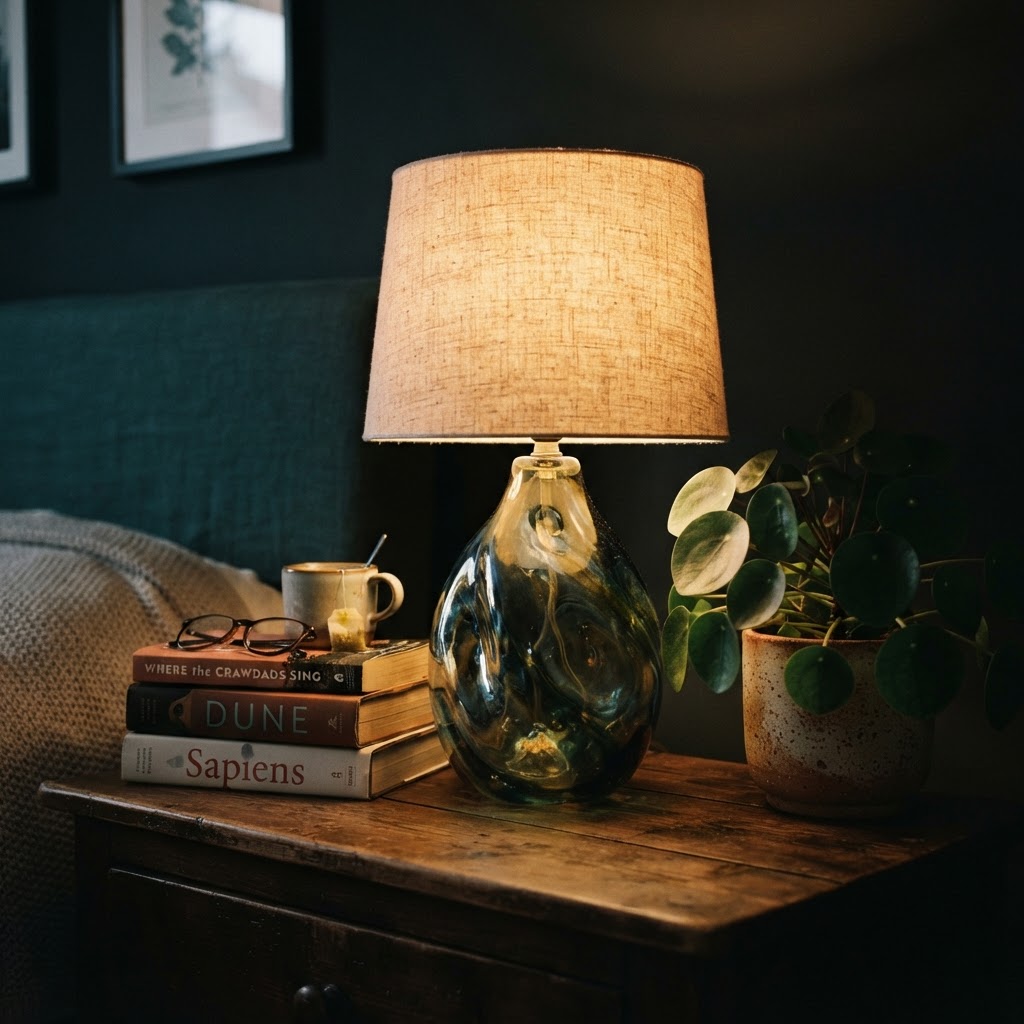
Soft, warm lighting makes any reading nook feel like a sanctuary.

Statement glow lamps are more than just functional light sources; they are sculptural elements that can transform a dull corner into a cozy reading nook or a boring side table into a curated display. A lamp with a strong silhouette maintains its presence even when turned off, serving as an anchor for the room’s eclectic aesthetic. When selecting these pieces, prioritize items that feature asymmetrical shapes or unique materials like hand-blown glass or reclaimed wood, as these items carry higher visual weight and interest.

Features of a Statement Lamp

  • Organic, asymmetrical shapes
  • Unique materials like hand-blown glass or reclaimed wood
  • Warm, dimmable color temperatures
  • Bold silhouettes that command attention

To effectively integrate these, treat them as you would a piece of wall art. Place a large-scale floor lamp next to a minimalist sofa to create immediate visual contrast. Alternatively, cluster smaller, whimsical table lamps on a bookshelf to draw the eye upward and utilize vertical space. Investing in one high-quality, sculptural lamp—typically ranging from $150 to $400 depending on the material—can provide more character than a dozen generic fixtures.

Mastering Layered Lighting Design

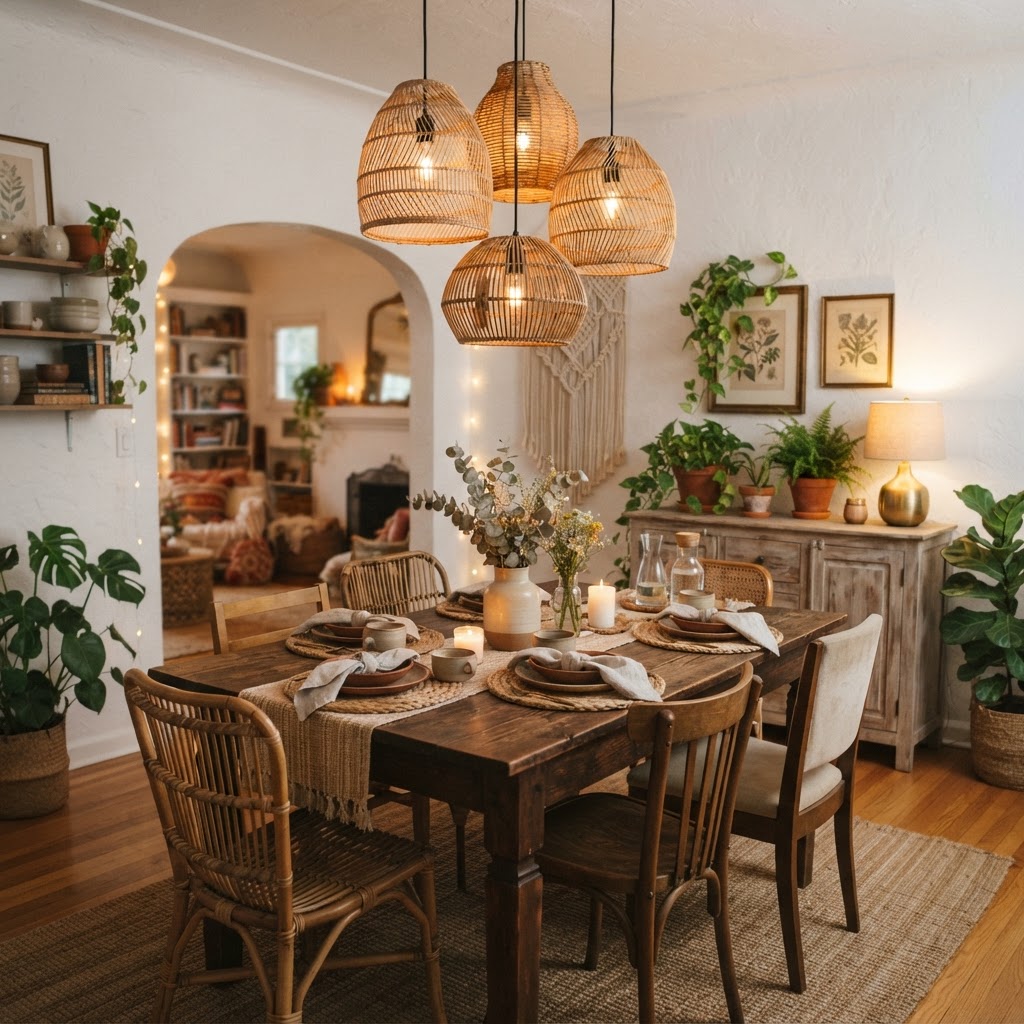
Layered lighting, including rattan pendants, creates a cozy dining experience.

No single light source can achieve the perfect cozy eclectic aesthetic, necessitating a combination of ambient, task, and accent lighting to create a versatile space. This method allows you to adjust the lighting levels according to the time of day or the activity taking place in the room, ensuring the environment remains functional for daily life while staying visually stimulating. For instance, consider using a dimmable floor lamp for a soft ambient glow during dinner, and switching to a directed task lamp when you settle in with a book.

Ambient light provides the overall illumination, usually from a central fixture, while task lighting is focused for specific chores. Accent lighting is where your statement glow lamps truly shine, as they highlight architectural features or textures on your walls. By layering these levels, you avoid the “flattening” effect of overhead lights and allow your home to evolve from a bright, productive space during the day to a serene, warm refuge in the evening hours. Aim for at least three distinct light sources per room to achieve professional-grade depth.

Balancing Materials and Textures

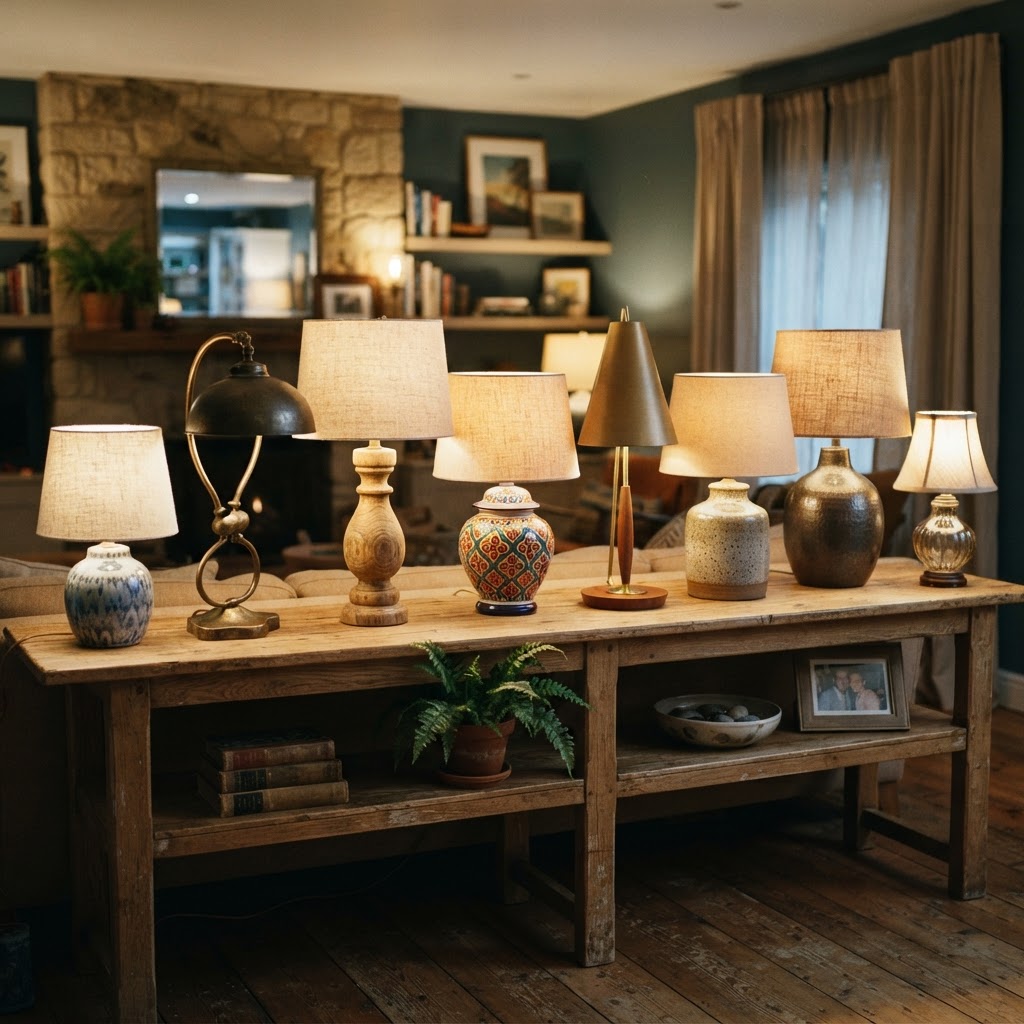
Mix and match lamp materials to perfect your eclectic interior design.

One of the most important aspects of eclectic design is the mixture of materials, where lighting choices should provide a counterbalance to heavier furniture pieces like velvet curtains or leather sofas. A delicate, frosted glass lamp, for example, can soften the harsh lines of a modern, sleek piece of furniture, creating a harmonious visual dialogue. Mixing materials is not about perfect coordination; it is about balance.

The Power of Natural Materials

Using natural materials in your lighting fixtures adds an earthy, organic quality that instantly boosts the “cozy” factor, with rattan, bamboo, and terracotta being staples of the boho-eclectic look. These materials diffuse light in a way that feels soft and gentle rather than clinical. When choosing metal finishes, do not feel pressured to match everything. Mixing polished nickel with antiqued bronze or aged copper adds that collected, historical feel essential for true eclectic style. A successful eclectic room often balances at least three different textures, such as polished metal, raw wood, and fabric shades, to create tactile depth that is pleasing to both the eye and the touch.

Material Lighting Quality Best Use Case
Rattan/Bamboo Diffused/Soft Boho or Coastal eclectic
Polished Metal Sharp/Reflective Mid-century modern touches
Hand-blown Glass Ambient/Artistic Statement focal points

Placement Strategies for Cozy Corners

Lighting placement can dictate the flow of energy in a room, and to maximize the coziness of your home, you must use lighting to highlight areas where you relax. Placing a lamp at eye level while seated creates a sense of intimacy and enclosure, which is perfect for encouraging conversation or long reading sessions. When positioning lamps, consider the “triangle of light” principle, where you place light sources at different heights and locations to guide the eye across the room.

Tips for Effective Lamp Placement

  1. Always use dimmers to control the intensity of your statement pieces.
  2. Position floor lamps in dark corners to expand the visual size of the room.
  3. Create “triangles” of light by placing lamps at different heights throughout the room.
  4. Avoid placing all your light sources against the walls; bring some into the center of the seating area.

By following these layout principles, you can transform a cold, underutilized space into a warm haven. Remember that eclectic style thrives on imperfection, so do not be afraid to experiment with placement until the light feels right for your specific needs. Lighting should be flexible, allowing for adjustments based on whether you are hosting guests or enjoying a quiet night in.

Color Temperature and Bulb Selection

Even the most beautiful statement lamp will feel off if the light quality is wrong. For a cozy eclectic home, always opt for warm white light, specifically looking for bulbs between 2700K and 3000K, which replicate the soft, golden glow of candlelight or a sunset. Cool white or daylight bulbs, typically ranging from 4000K to 6500K, can make a space feel like an office, which is the antithesis of a cozy atmosphere.

Additionally, consider the translucency of your lampshades as they interact with your bulb choice. A thick, opaque shade will direct light downward for a moody, focused effect, while a thinner linen or paper shade will let the light bleed through, creating a soft, ambient haze. To maintain a consistent atmosphere, ensure all bulbs in a single room fall within the same 300K range to avoid jarring shifts in color tones as you move through the space.

Maintenance and Style Evolution

Eclectic style is never truly “finished,” as part of the joy of this design approach is refreshing your space as your personal taste evolves. Keep your lamps clean and dust-free to ensure they emit the best light possible; even a thin layer of dust on a shade can reduce light output by up to 15%. Occasionally swapping lampshades can give an old lamp a completely new look without a major investment.

Don’t be afraid to hunt for unique vintage pieces at thrift stores or flea markets. A beat-up, brass vintage lamp can be restored with a new shade and a fresh cord, becoming a one-of-a-kind statement piece that money cannot buy. This constant evolution is what keeps an eclectic home feeling fresh and authentic, turning your lighting collection into a living history of your personal journey.
FAQ

Q: What color temperature is best for a cozy eclectic home?

For a cozy, inviting atmosphere, use warm white light bulbs between 2700K and 3000K. This range mimics the soft, golden glow of candlelight and helps create a relaxing environment compared to the harsh, clinical feel of cooler, daylight-toned bulbs.

Q: How do I layer lighting in an eclectic living room?

Layering involves combining ambient, task, and accent lighting to create depth. Use a central ceiling fixture for ambient light, task lamps for reading areas, and statement glow lamps or wall sconces as accent pieces to highlight textures and architectural features.

Q: Should I match the metal finishes of my lamps?

No, you do not need to match metal finishes in an eclectic home. Mixing polished nickel, aged copper, and brass creates a “collected over time” look, which is a hallmark of authentic eclectic design. Focus on balanced proportions rather than identical finishes.

Q: How do I make a small room feel larger with lighting?

To make a small room feel bigger, position floor lamps in dark corners to push the boundaries of the space. Additionally, ensure you are creating “triangles” of light by placing lamps at varying heights, which draws the eye upward and adds a sense of openness.

Q: Can I use vintage lamps in a modern home?

Absolutely, vintage lamps are perfect for adding character to modern homes. A worn brass or unique ceramic lamp provides an essential contrast to sleek, contemporary furniture, preventing your home from looking like a staged showroom and adding a layer of historical depth.

12 Easy Apartment Decorating Ideas That Require Zero Drilling

Moving into a new place is exciting, but the restrictions of a rental contract can feel like a creative cage. Most landlords strictly forbid making holes in the walls, which often leaves renters wondering how to add personality to their living space. Fortunately, you can easily elevate your environment with 12 easy apartment decorating ideas that require zero drilling. Whether you want to add color, texture, or functional storage, there are countless ways to make your apartment feel like a home without forfeiting your security deposit.

Use Command Strips and Hooks for Wall Art

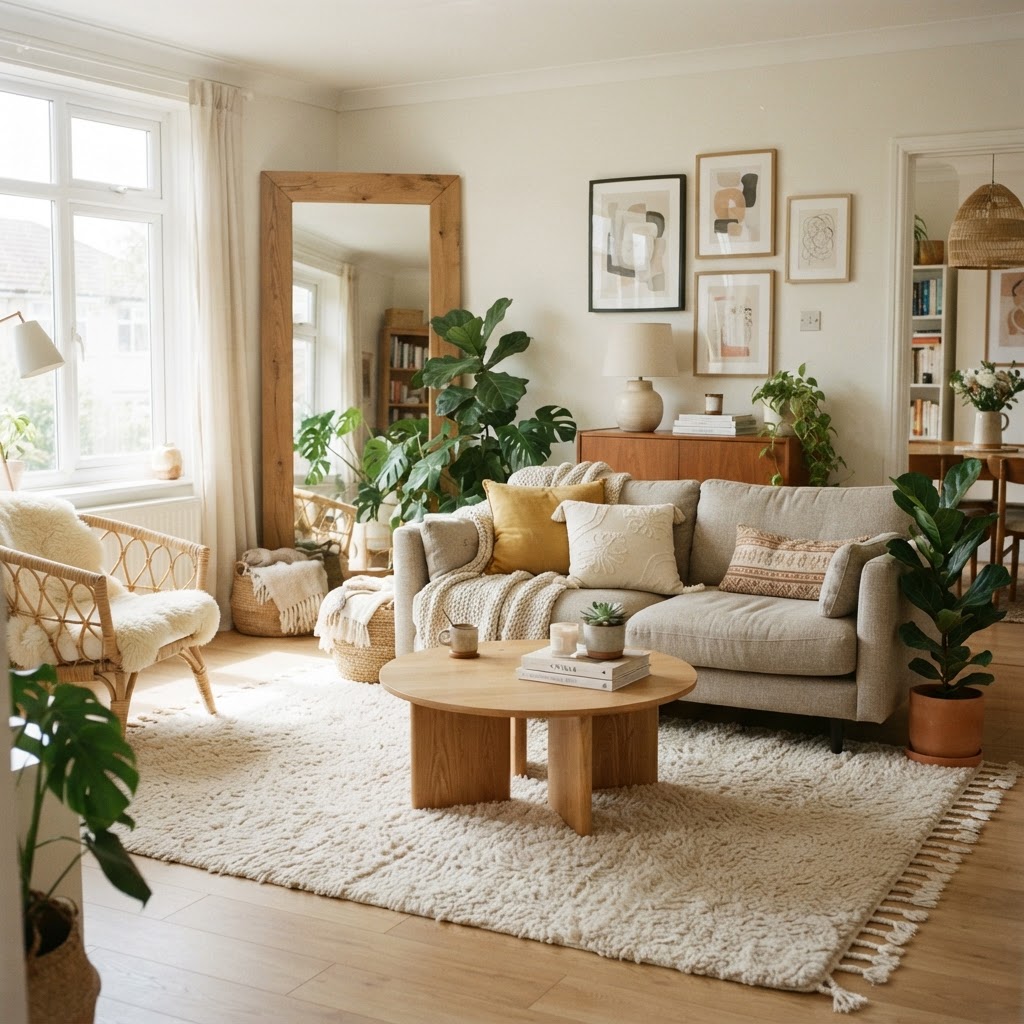
A leaning mirror and area rug add style to a rental without wall damage.

The golden rule of renting is to keep the walls pristine, and Command products are the ultimate lifesaver. These adhesive strips allow you to hang frames, canvases, and mirrors without a single hammer or drill bit. When planning your gallery wall, start by laying out your arrangement on the floor to ensure a balanced look before applying the adhesives to your wall.

Creating a Professional Gallery Wall

To achieve a polished look, focus on consistent frame spacing and cohesive color palettes. Use a mix of larger statement pieces and smaller photographs to add visual depth to your living area. Just remember to clean the wall surface thoroughly with rubbing alcohol before applying the strips to ensure maximum hold. This method is one of the most popular apartment decorating ideas for those who crave a permanent aesthetic without the permanent damage.

Upgrade Your Lighting with Floor Lamps

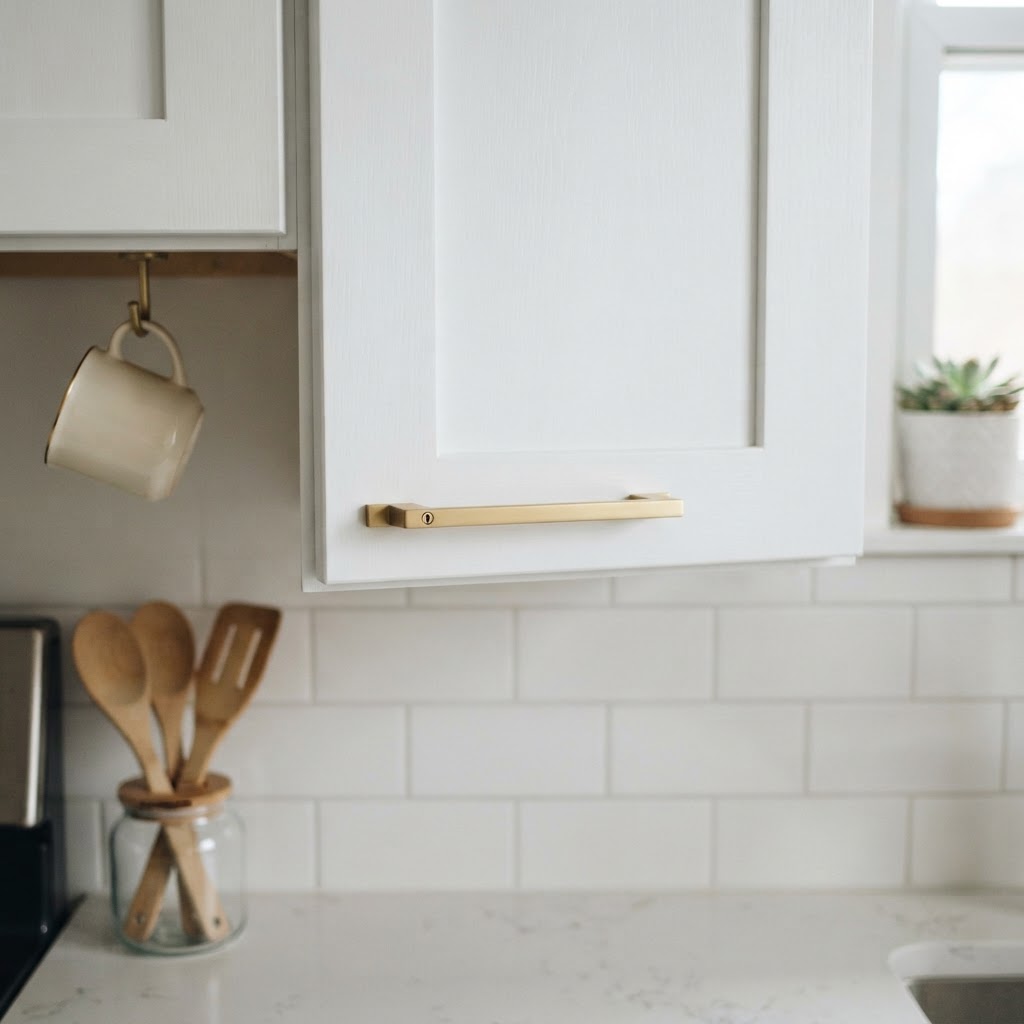
Swapping cabinet hardware is an easy way to upgrade your kitchen instantly.
Many apartments suffer from outdated or inadequate overhead lighting that casts a harsh, uninviting glow. Since you cannot rewire the unit, floor lamps are your best friend for ambient lighting. A stylish arc lamp can hang over your sofa to create a cozy reading nook, while task lamps provide focused light for workspaces. Layering different light sources creates a warm atmosphere that distracts from the plainness of rental ceilings.

Utilize Tension Rods for Window Treatments

Use adhesive strips to design a gallery wall that is 100% rental friendly.

Drilling into window frames to install curtain rods is a major lease violation in most buildings. Tension rods offer a clever solution by fitting snugly inside the window casing using spring-loaded pressure. You can hang sheer curtains for privacy or heavy blackout drapes for better sleep quality. This is a simple, non-invasive way to add color and texture to your windows while making the ceilings appear higher.

Adhesive Wallpaper and Contact Paper

Large plants fill empty corners and bring life to any apartment interior.

If your kitchen cabinets look dated or your bathroom walls are drab, peel-and-stick wallpaper is your best friend. It comes in a variety of patterns and textures that can completely transform a room in an afternoon. Because the material is removable, you can easily strip it off when your lease is up. It is arguably the most impactful way to use no-drill wall decor to personalize your space.

Create Vertical Storage with Over-the-Door Solutions

Space is often limited in rentals, so going vertical is essential. Use over-the-door hooks for towels, robes, or bags to keep clutter off the floor. There are also high-quality, over-the-door shoe organizers that can be repurposed for pantry items or bathroom toiletries. By maximizing these unused spaces, you keep your surfaces clean and your floor clear, which makes any room feel significantly larger and more organized.

Swap Out Standard Cabinet Hardware

Sometimes the smallest changes yield the biggest results in a kitchen or bathroom. You can swap standard, builder-grade drawer pulls and cabinet knobs for modern alternatives that suit your style. Just be sure to keep the original hardware in a small Ziploc bag tucked away in a drawer. When you move out, simply screw the old knobs back on, and your landlord will never know the difference.

Incorporate Large-Scale Plants

Plants are living decor that can fill empty corners, add height to a room, and improve air quality. Since you don’t need to mount anything to the wall, you can use tall floor planters to create natural partitions between living and dining areas. A large Fiddle Leaf Fig or a classic Monstera acts as a focal point that draws the eye away from bland walls. This is one of those timeless apartment decorating ideas that breathes life into any environment.

Use Rugs to Define Zones

Rental apartments often have boring carpet or outdated laminate flooring that you can’t replace. Large area rugs are the perfect tool to cover ugly floors while adding texture and warmth to your home. By choosing rugs with distinct patterns or colors, you can effectively “zone” your open-concept living area into dedicated spaces for dining, relaxing, and working. It anchors your furniture and keeps the room from feeling like a sterile, empty box.

Lean Your Mirrors and Art

Instead of hanging heavy mirrors, invest in large-scale floor mirrors that lean against the wall. A tall, leaning mirror not only adds a touch of elegance but also creates an optical illusion of extra square footage. Similarly, large art prints can be leaned against the wall on console tables or floating shelves, creating a relaxed, bohemian vibe that looks intentional and artistic.

Use Folding Screens for Privacy

If you live in a studio or need to create a private workspace within a shared bedroom, folding screens are a functional decor piece. They act as room dividers that don’t require any installation or construction. You can find screens made of rattan, wood, or fabric that complement your existing furniture. They are also excellent for hiding messy areas like laundry piles or gaming setups when guests are over.

Add Floating Shelves (The No-Drill Way)

Wait, didn’t we say no drilling? While traditional shelves require wall anchors, modern adhesive shelving technology has come a long way. You can purchase heavy-duty adhesive floating shelves that hold books and light decor items. Alternatively, use a sturdy bookcase against the wall and add baskets to the shelves to create a “built-in” look without touching the drywall.

Curate a Cozy Textile Collection

Sometimes, the best decorating strategy involves focusing on what you touch rather than what you look at. By layering plush throw blankets, decorative pillows, and soft area rugs, you create a tactile experience that makes a space feel high-end. Focus on varying fabrics like velvet, linen, and wool to add visual interest. Since textiles are portable, they are the perfect investment for a renter who plans to move in the future.

Conclusion

Decorating a rental shouldn’t feel like a compromise between your style and your security deposit. By focusing on smart, temporary solutions like adhesive products, floor-based storage, and clever textile choices, you can create a home that feels uniquely yours. Remember, the key to successful decorating without drilling is to choose items that are easily removable and versatile enough to move with you to your next home. Start by implementing one or two of these ideas this weekend and watch your apartment transform. Do you have a favorite damage-free hack? Share it in the comments below and start building the home you have always wanted today!

Studio Apartment Bedroom Ideas to Zone Your Space

Living in a studio apartment offers a unique challenge: balancing your sleeping, working, and relaxing areas without feeling overwhelmed by a single room. Finding the right studio apartment bedroom ideas is essential to making your home feel curated rather than crowded. When every square inch counts, the key is defining clear boundaries so that your bed isn’t the focal point of your entire living room. By thoughtfully layering furniture, lighting, and textures, you can create a sanctuary that functions as a multi-room home within a single footprint.

The Art of Zoning Your Studio

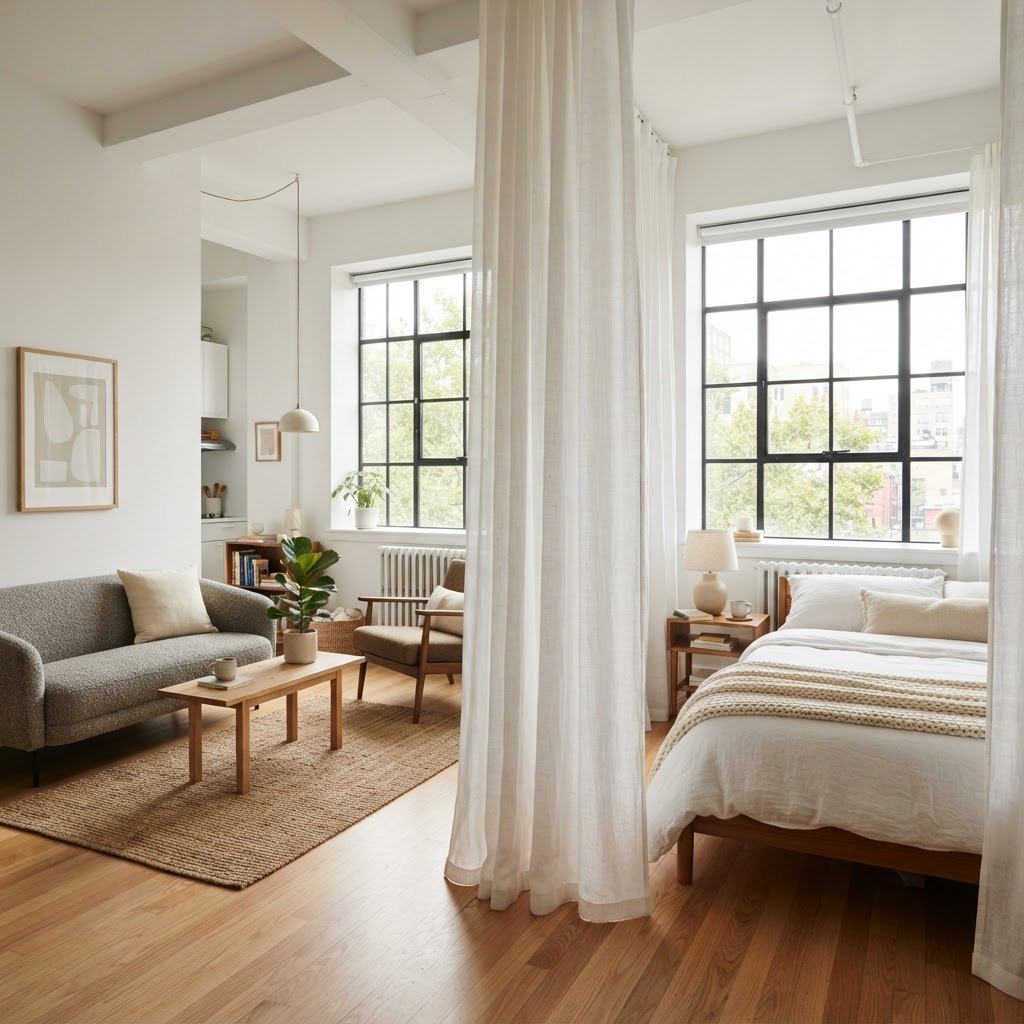
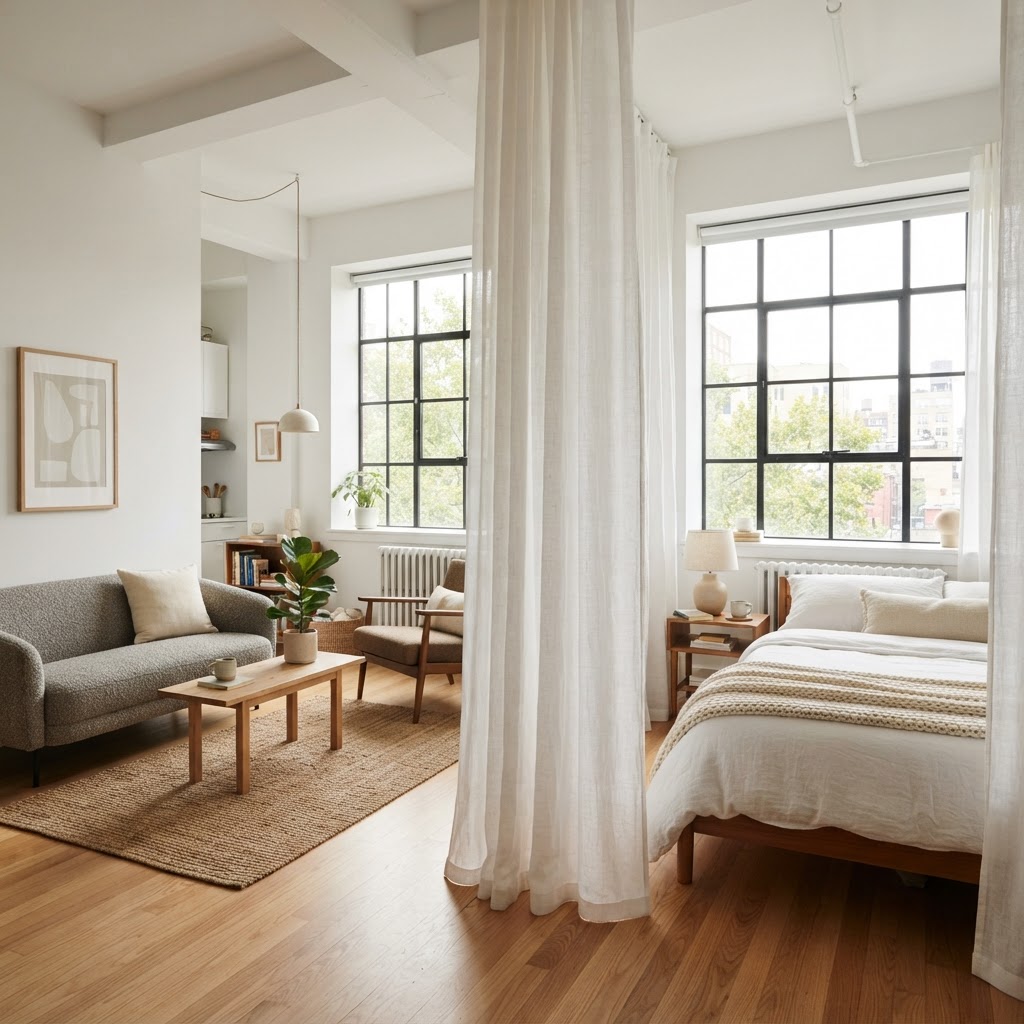
Using curtains provides an elegant way to hide the bed when not in use.

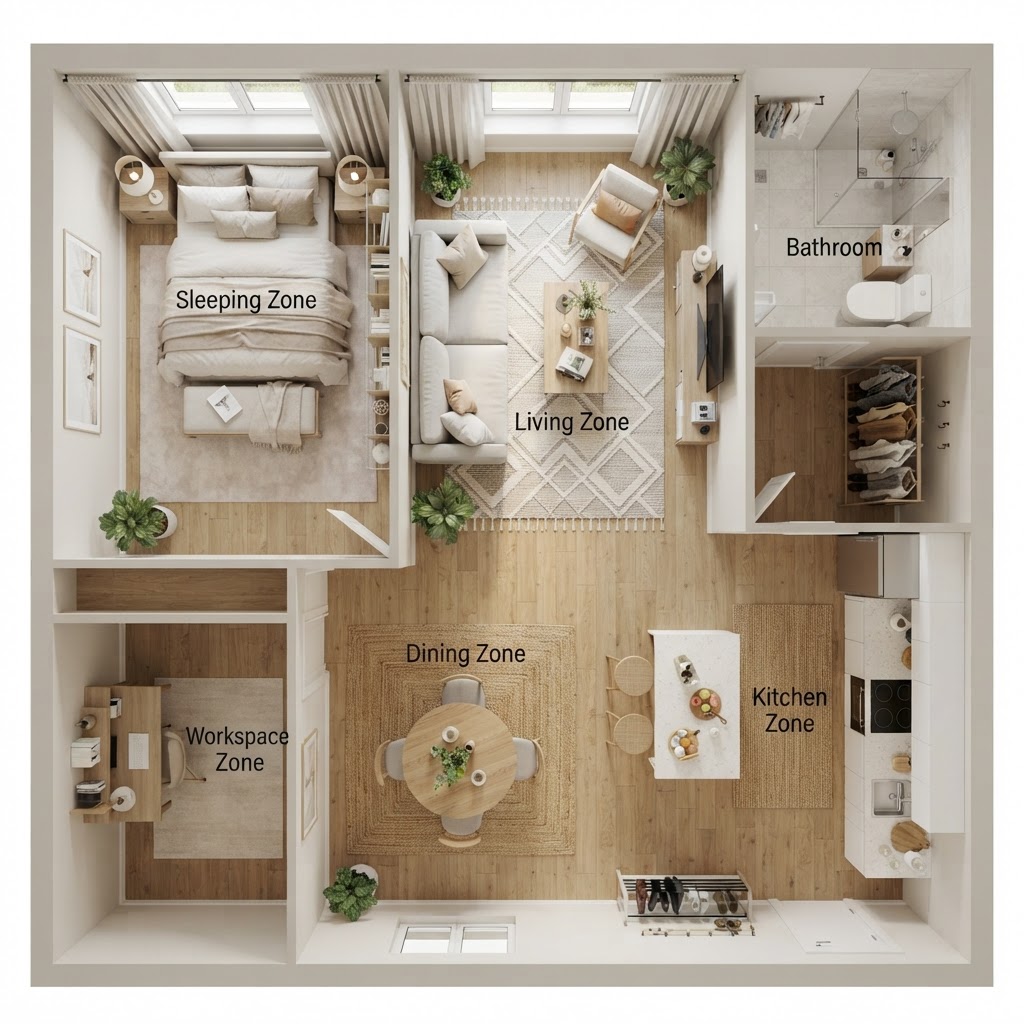
Zoning is the secret weapon of professional interior designers working with micro-apartments. It involves creating invisible walls or physical dividers that signal to your brain that you have transitioned from a workspace to a sleep zone. Without these delineations, your apartment can feel like a chaotic blur of clutter.

Using Vertical Space for Privacy

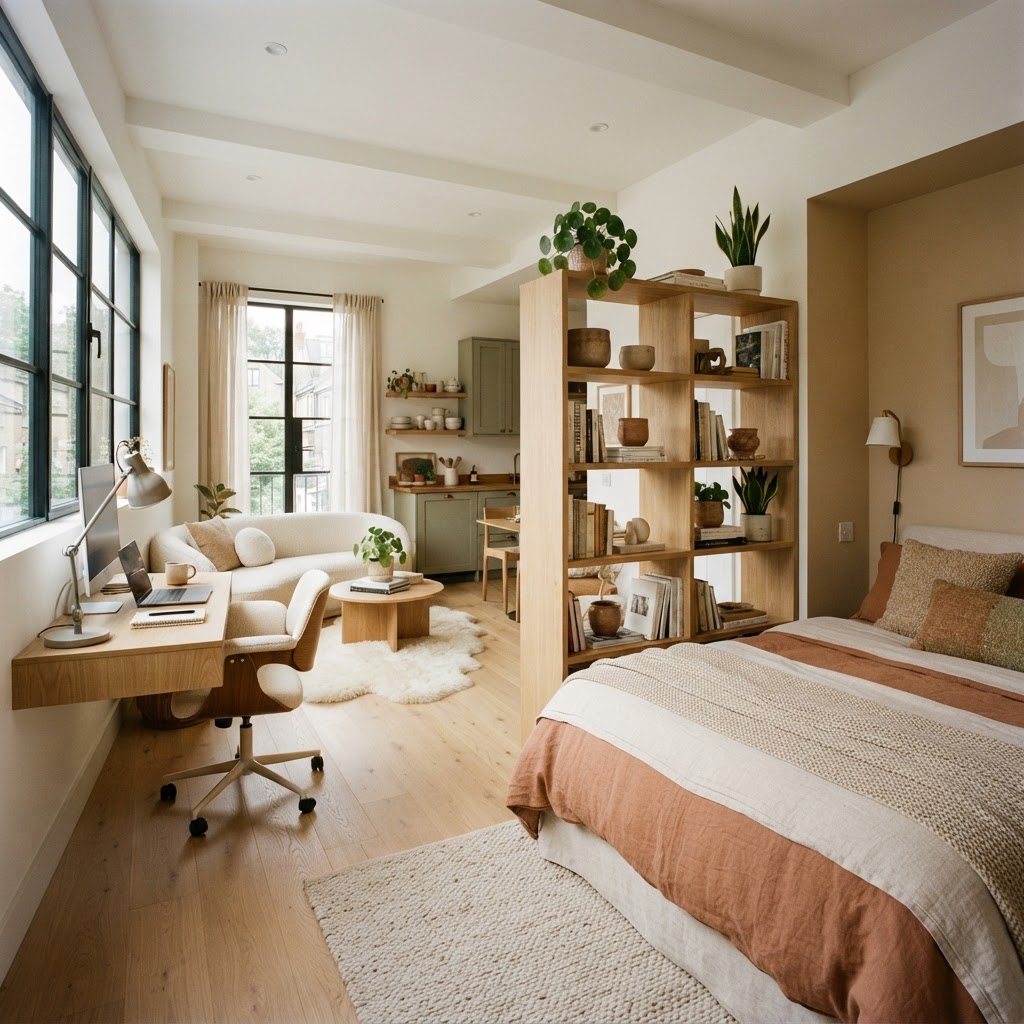
Vertical space is often overlooked, yet it is one of the most effective tools for creating bedroom separation. Think about floor-to-ceiling curtains or open shelving units that allow light to pass through while still providing a visual break.

By drawing the eye upward, you create an illusion of height and depth. A tall bookcase placed perpendicular to the wall can house your books and decor while acting as a structural barrier between your mattress and the rest of the apartment.

Furniture Placement Strategies

Open shelving creates a visual divider without sacrificing natural light.

Where you place your bed defines the flow of the entire apartment. If you have a square layout, consider pulling your bed slightly away from the wall to create a walk-around effect, which feels more luxurious and intentional. If you are working with a long, narrow space, anchoring the bed at one end of the room is usually the most logical choice.

Multifunctional Pieces That Work Hard

Investing in dual-purpose furniture is non-negotiable for studio living. A daybed with integrated storage underneath, or an ottoman that doubles as a coffee table, helps reduce visual noise. When your furniture pulls double duty, you free up floor space, allowing for wider walkways and a less cramped atmosphere.

Creative Room Dividers for Small Spaces

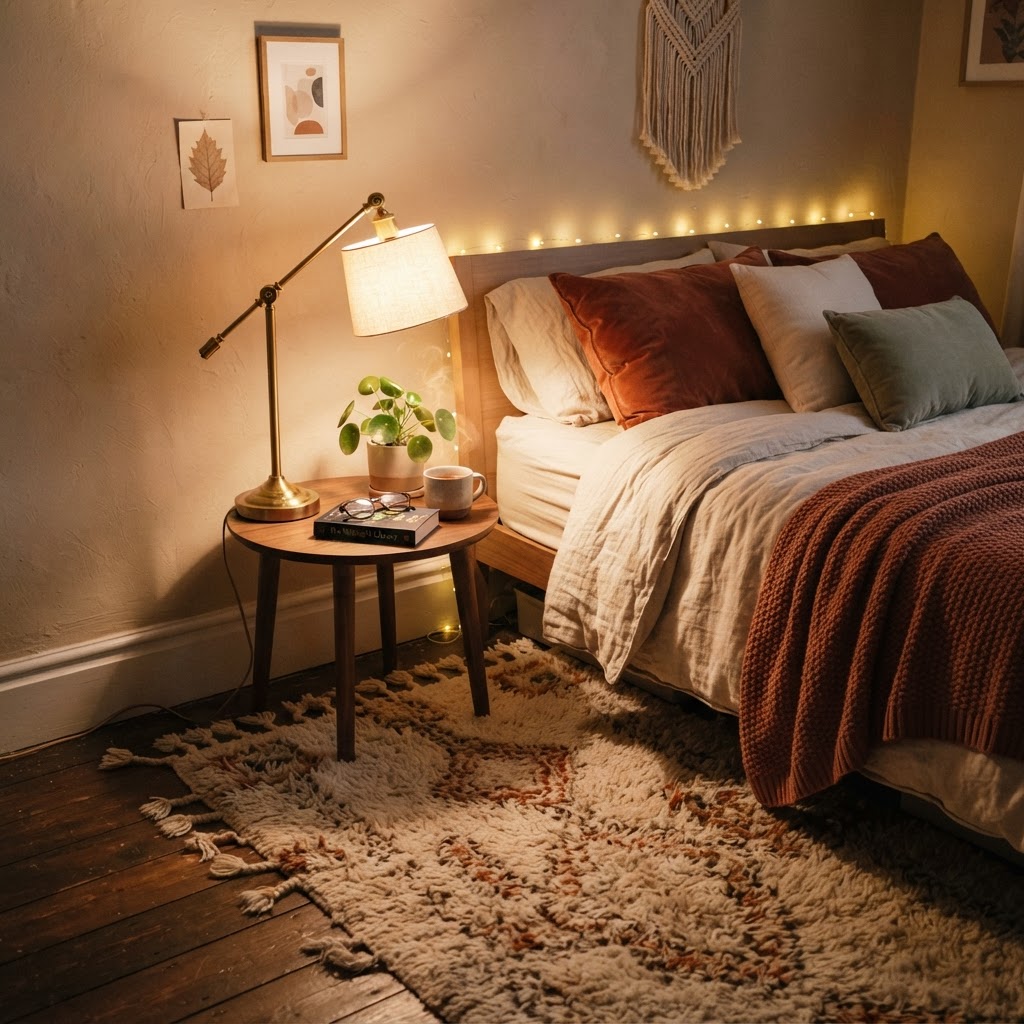
Layered lighting helps define the mood and separates sleeping zones from living zones.

When you need physical separation, you don’t necessarily need construction or permanent walls. Tension rod curtains are a popular and affordable way to hide your sleeping area entirely. When guests come over, you can simply pull the curtain closed, instantly making your bedroom disappear.

Folding screens, often called shoji screens, provide a more architectural look. They can be moved easily and offer a sense of intimacy that is difficult to achieve in an open floor plan. Choose materials that complement your decor style—bamboo for a zen vibe or metal for an industrial aesthetic.

Illuminating Your Different Zones

Area rugs are a simple, effective tool for defining different functions in an open layout.

Lighting is perhaps the most underutilized tool for defining zones. In a studio apartment, you shouldn’t rely on a single overhead light. Instead, use a combination of floor lamps near your reading chair, task lighting at your desk, and warm, low-level lamps near your bed.

Layering Light for Ambience

Creating specific ‘light pockets’ allows you to dim certain areas while keeping others bright. For example, keeping the living room lights bright while you have a soft, golden bedside lamp on creates a clear psychological separation between the active living zone and the restful sleep zone.

Selecting a Cohesive Color Palette

While you want to differentiate your zones, the space should still feel unified. A common mistake is painting walls different colors to signify different zones, which can actually make a small space feel even smaller. Instead, choose a monochromatic or neutral base for your walls.

Then, use rugs to anchor each zone. A large area rug under your bed and a different, complementary rug under your sofa will visually mark the space without physically blocking light or airflow. This is one of the most effective studio apartment bedroom ideas because it is both aesthetic and functional.

Adding Personality Without Clutter

Small spaces can easily become cluttered, but that doesn’t mean they have to be boring. Use wall art to define the personality of each zone. Your bedroom area might benefit from calming, abstract art, while your workspace could feature a gallery wall of inspiring photographs.

Focus on large-scale art pieces rather than dozens of small items. A single, dramatic canvas above your bed can serve as an anchor and provide a sophisticated focal point, preventing the room from feeling like a storage unit.

Practical Maintenance for Studio Living

Living in a single room requires strict organizational discipline. Since everything is in view, you must have a “home” for every object. Utilize under-bed storage bins, closet organizers, and floating shelves to keep your surfaces clear.

The ‘Reset’ Habit

Make it a daily habit to reset your apartment before going to bed. This means folding throws, putting away laptops, and clearing off the dining table. Starting your day in a tidy, zoned space sets a positive tone for your entire schedule.

Conclusion

Mastering studio apartment bedroom ideas is about balancing form and function. By using strategic furniture placement, clever lighting, and soft dividers, you can turn a challenging small footprint into a highly organized and beautiful home. Start by evaluating your most important zones and implement one change at a time to see how it transforms your daily flow. Which of these techniques will you try first? Share your favorite small-space hacks in the comments below or subscribe to our newsletter for more interior design inspiration!

Dopamine Decor Lighting: Bold Lamps to Transform Your Space

The concept of dopamine decor has taken the interior design world by storm, shifting the focus from sterile minimalism to spaces that actively spark joy. At the heart of this vibrant movement is dopamine decor lighting, a design approach that utilizes bold, sculptural, and colorful lamps to stimulate positive emotions. By replacing generic fixtures with pieces that express personality and playfulness, you can instantly lift the mood of any room. Your home should be more than just a place to sleep; it should be a sanctuary that celebrates your unique zest for life through intentional light and color.

The Psychology of Dopamine Decor Lighting

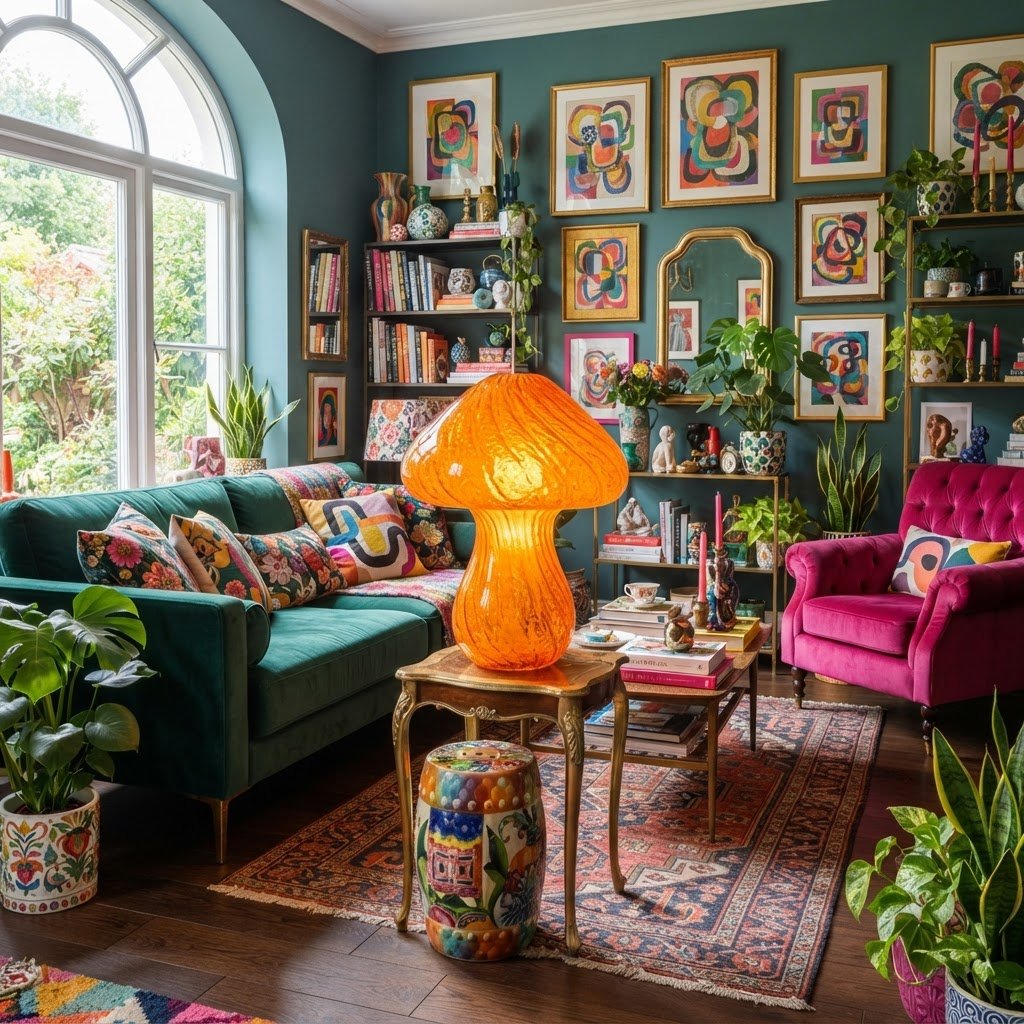
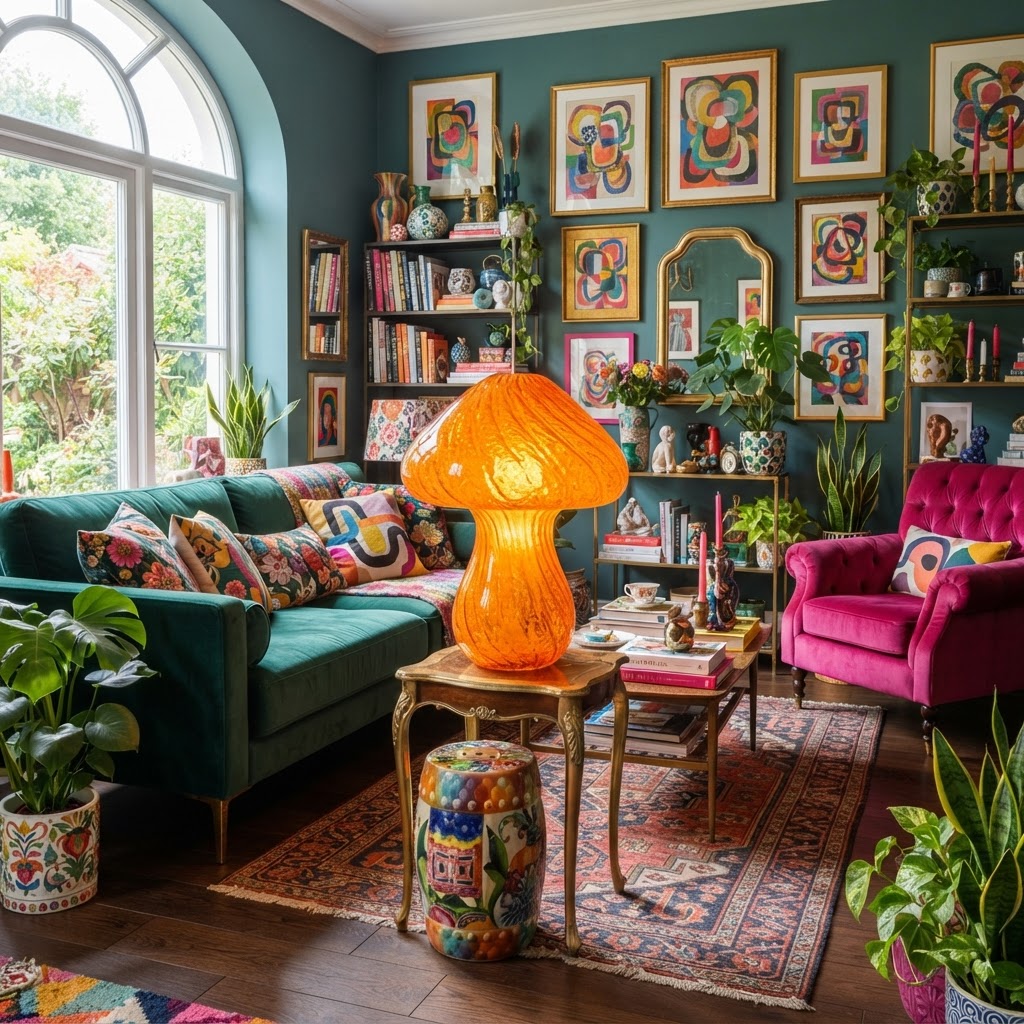
A vibrant mushroom lamp adds a playful touch to a maximalist space.

Why do we feel happier in certain environments? Environmental psychology suggests that our brains respond positively to high-contrast colors, whimsical shapes, and soft, warm light. Dopamine decor lighting taps into this by transforming a functional utility into a source of sensory delight. When you introduce a statement lamp with an unconventional form or a brilliant, unexpected hue, you are essentially curating a ‘visual treat’ for your brain.

How Light Influences Mood

Lighting is perhaps the most significant factor in how a room feels, regardless of the furniture you choose. Harsh, flat overhead lighting can make a space feel institutional and cold, which often suppresses creativity and relaxation. Conversely, layered lighting—especially when emitted from bold lamps—creates shadows and depth that encourage feelings of comfort and curiosity.

Creating a Joyful Ambiance

To achieve this, look for lamps that utilize materials that interact interestingly with light. Frosted glass, translucent resin, and colored acrylics can diffuse light into soft, dreamy washes of color. This effect mimics the natural golden hour, which is scientifically proven to boost serotonin and make us feel more at ease in our surroundings.

Choosing Bold Lamps as Focal Points

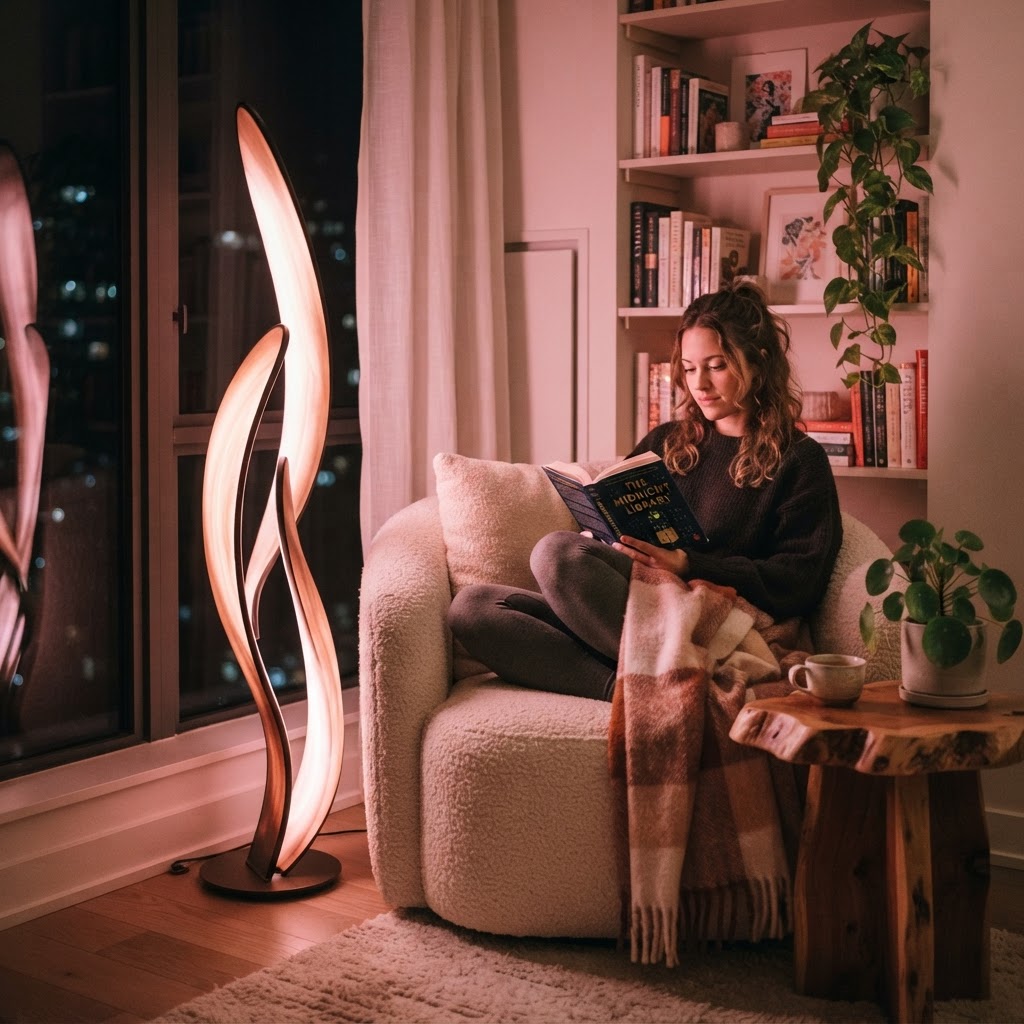
Soft pink ambient lighting creates an inviting and joyful reading nook.

The most effective way to incorporate dopamine decor is to treat your lighting fixtures as works of art. A singular, oversized, or neon-colored lamp can anchor a room and serve as a conversation starter. When selecting your pieces, don’t worry about matching your existing decor perfectly; instead, prioritize items that make you smile the moment you walk through the door.

Types of Statement Lighting to Consider

  • Sculptural Floor Lamps: Choose designs with organic, curvy shapes or architectural, geometric silhouettes that stand out against plain walls.
  • Mushroom Lamps: These mid-century modern classics remain a staple of the trend due to their soft glow and whimsical, fungi-inspired shapes.
  • Neon and LED Art Lights: Incorporate wall-mounted signs or custom light shapes that display words or symbols meaningful to you.
  • Ceramic Glazed Table Lamps: These often feature vibrant, hand-painted patterns that bring a tactile, artisanal quality to a desk or nightstand.

Mastering the Art of Maximalist Lighting

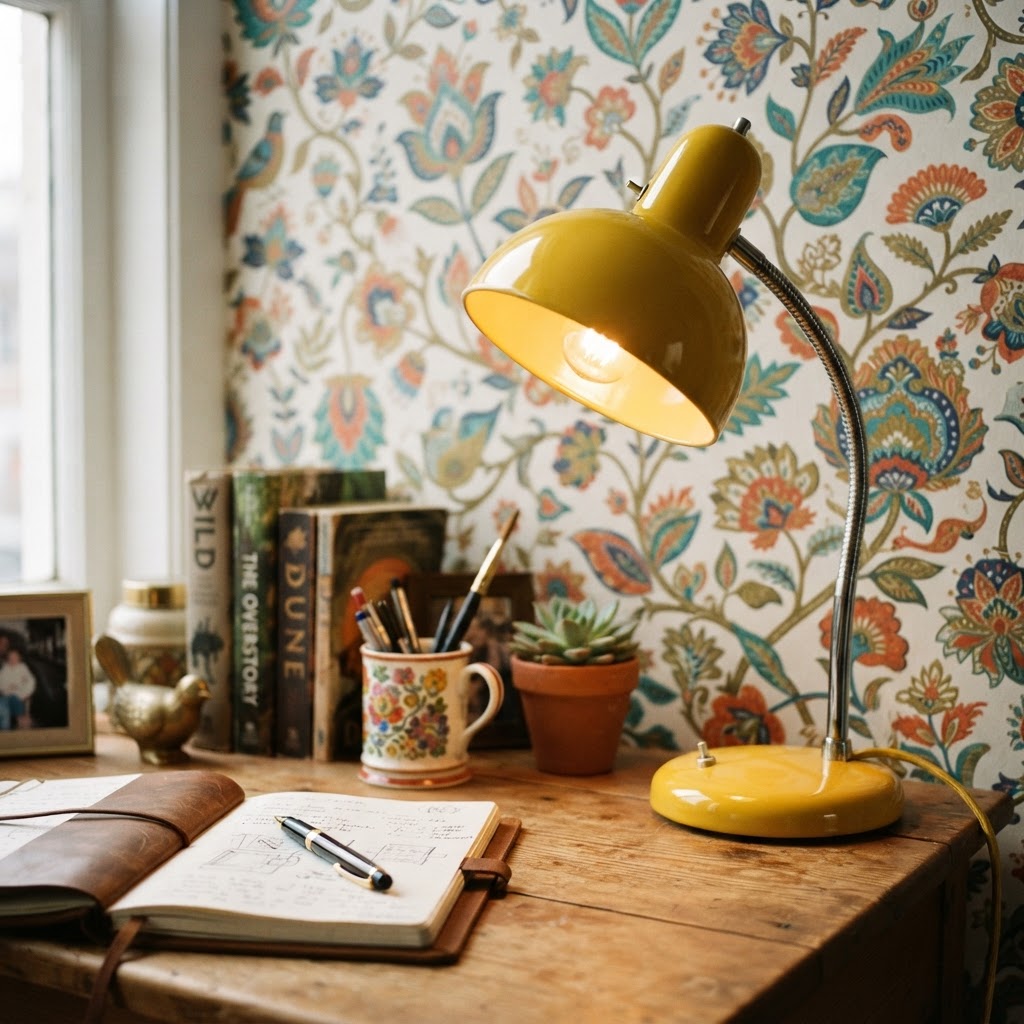
A sunny, retro task lamp brings energy and focus to any workspace.

Maximalism is the sibling of dopamine decor, encouraging us to lean into ‘more is more.’ If you have a penchant for patterns, textures, and vibrant colors, your lighting should not be the exception. Maximalist lighting often involves layering different light sources to create a rich, eclectic atmosphere that feels curated rather than cluttered.

Balancing Boldness with Cohesion

While boldness is key, you must maintain a sense of flow within the room. If your lamp is particularly loud in color, consider balancing it with neutral walls or soft-textured rugs to avoid overstimulation. The goal of dopamine decor lighting is to energize you, not to make you feel anxious or overwhelmed by visual chaos.

The Rule of Three in Lighting

Designers often use the rule of three to balance a space. Try placing a statement floor lamp in a corner, a decorative table lamp on a sideboard, and a warm-hued task light on your workstation. When these are strategically placed, the room feels intentional and balanced, even if every individual piece is a bold, artistic statement.

Incorporating Color Through Illumination

Color is the most potent tool in the dopamine decor toolkit. While standard ‘warm white’ bulbs are safe, they don’t always capture the vibrant energy of this design trend. Experimenting with smart bulbs that allow you to shift the spectrum to soft pinks, oranges, or sunset purples can dramatically alter the emotional landscape of your home.

The Impact of Colored Glass

Beyond the bulb, the lamp shade or base itself can infuse your room with color. A yellow glass lamp base acts as a ‘perpetual sunrise,’ casting a sunny glow even on the gloomiest days. By strategically choosing the color of your fixtures, you are essentially painting with light.

Sustainable Dopamine: Vintage and Thrifted Finds

One of the most rewarding aspects of this trend is that it doesn’t require buying everything brand new. Many of the most iconic bold lamps were manufactured in the 1970s and 80s, decades known for their love of color and daring shapes. Scouring local thrift shops or online marketplaces for vintage lucite, chrome, or stained glass lamps is not only eco-friendly but also ensures that your space feels truly unique.

Upcycling for a Personal Touch

If you find a lamp with a great shape but a boring color, don’t hesitate to give it a DIY makeover. High-gloss spray paint or a new, patterned fabric shade can turn a drab piece into the perfect dopamine-inducing centerpiece. This hands-on process creates a deeper emotional connection to your belongings, which further enhances the positive feelings they evoke.

Strategic Placement for Maximum Joy

Even the most expensive, bold lamp will fail to deliver its full ‘dopamine hit’ if it is placed in the wrong spot. Consider where you spend your time most. Do you need a boost of energy while working at your desk? Place a sculptural, vibrant task lamp right in your direct line of sight. Do you want your bedroom to feel like a cozy, happy retreat? Use dimmable, colored floor lamps to create a sunset effect at night.

Creating Lighting Zones

By dividing your home into specific ‘lighting zones,’ you can control your mood throughout the day. A bright, punchy lamp in the entryway signals that you have arrived in a happy place, while a softer, glowing lamp in the reading nook creates a zone of tranquility. The key is to avoid using one main light for all tasks.

Conclusion

Dopamine decor lighting is much more than a fleeting aesthetic; it is a commitment to prioritizing your happiness within your own four walls. By choosing bold lamps that speak to your soul, layering your light sources, and playing with vibrant colors, you can transform your home into a dynamic space that lifts your spirits every single day. Don’t be afraid to take risks with design—let your lighting reflect your joy, your personality, and your unique perspective on life. Ready to refresh your space? Start by swapping out one generic lamp for a bold, artistic piece today and feel the difference it makes.

Take the first step toward a happier home: pick one area of your house that feels a bit ‘flat’ and commit to finding a statement lamp that brings you pure, unadulterated joy. Your mood will thank you!

5 Fully Reversible Living Room Makeovers Under $100

Giving your home a fresh look doesn’t have to require a massive renovation or a permanent commitment. Whether you are living in a rental unit or just looking to experiment with your style, achieving fully reversible living room makeovers under $100 is entirely possible with a bit of creativity and strategic planning. By focusing on non-permanent solutions that won’t damage walls or floors, you can create a beautiful space that feels entirely new without forfeiting your security deposit or spending a fortune.

Understanding the Art of Reversible Design

Transform your furniture instantly with a stylish, removable slipcover.

Reversible design is all about prioritizing temporary aesthetic changes that can be removed as easily as they were installed. The goal is to focus on layers rather than structural changes. When you are looking for living room makeovers under $100, the secret lies in textiles, lighting, and temporary surface treatments that can easily be packed up when it is time to move or refresh the space again.

The Rules of Temporary Decorating

First, you must avoid anything that requires heavy-duty hardware or permanent adhesives. Instead, rely on tension rods, command strips, painter’s tape, and furniture-based styling. By using decor that stands on its own, you eliminate the risk of leaving behind marks, holes, or residues that can be expensive to repair later.

Why Budget-Friendly Matters

Spending less than $100 forces you to be resourceful, which often leads to more creative design choices. You stop relying on expensive store-bought furniture and start looking at how items can be repurposed. It pushes you to focus on the “big impact” areas, such as color palette and lighting, which dictate the mood of the room far more than expensive luxury items ever could.

Strategy 1: The Power of Textile Overlays

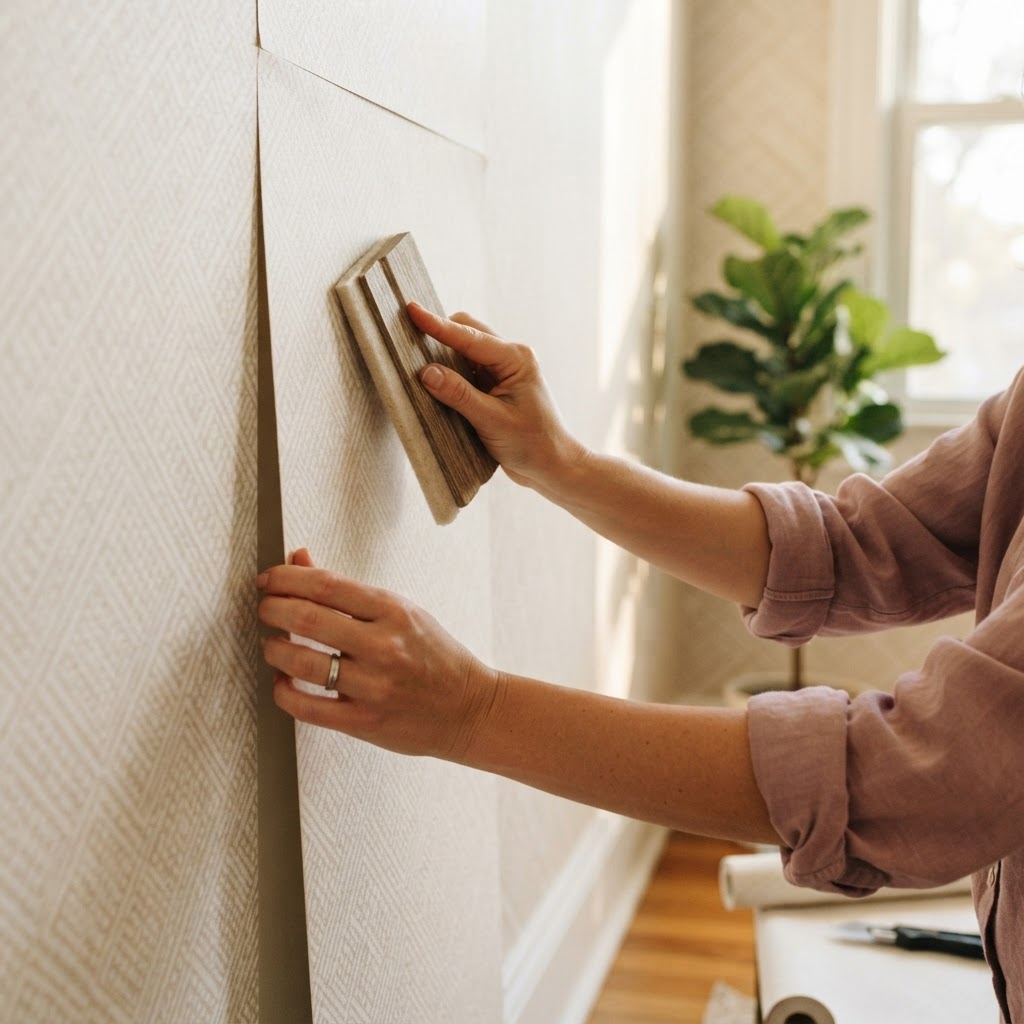
Peel-and-stick wallpaper is the ultimate renter-friendly decor hack.

One of the most effective ways to change the mood of a room is to alter the largest pieces of furniture without actually replacing them. For under $100, you can purchase high-quality slipcovers for your sofa or armchairs. A neutral-toned couch can be transformed into a moody, modern piece with a deep charcoal slipcover, or a light and airy sanctuary with a linen-colored cover.

Layering with throw blankets and accent pillows further reinforces this change. Look for patterned throw pillows that pick up colors from your slipcover to create a cohesive look. By purchasing covers instead of new furniture, you save thousands, and when you move, the slipcovers can go with you, leaving your original furniture exactly as it was.

Strategy 2: Temporary Wall Treatments

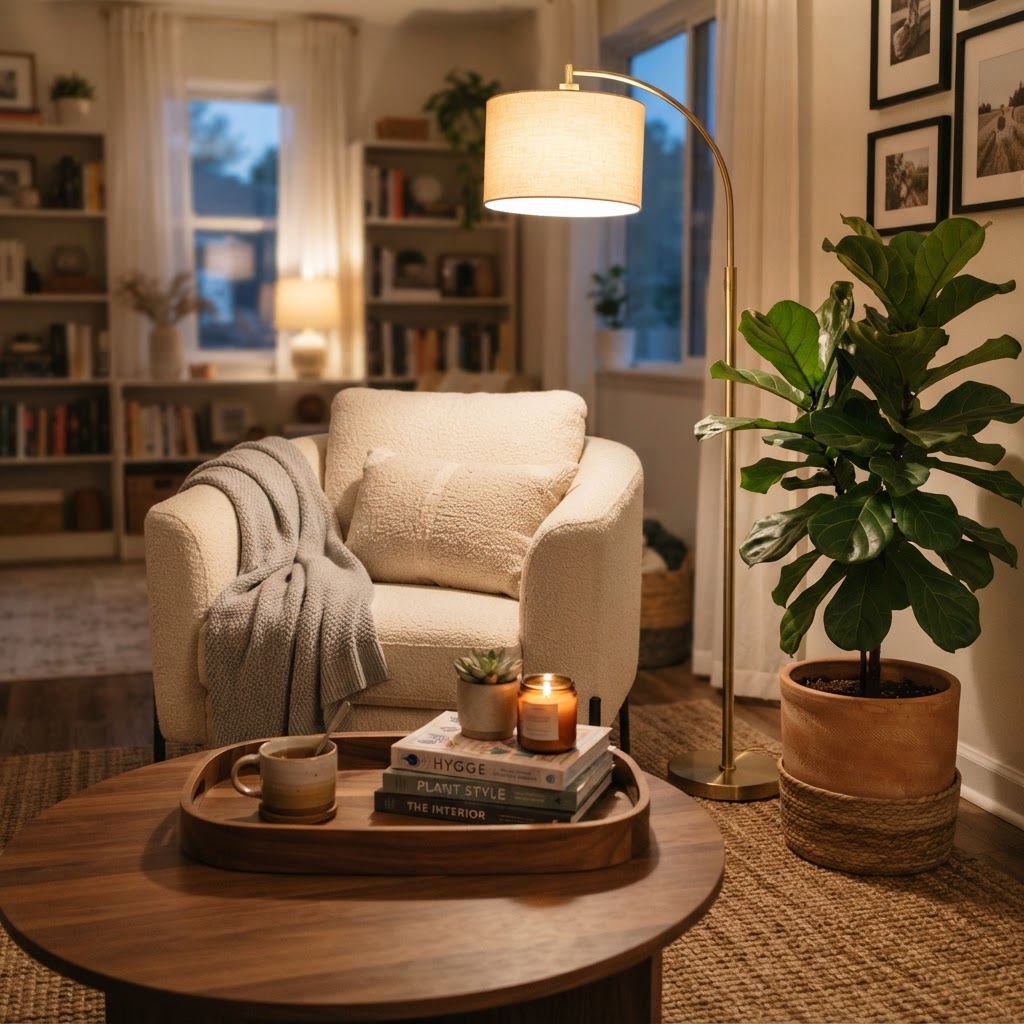
Strategic lighting and greenery instantly elevate the mood of any space.

Walls often feel like the biggest limitation, especially in rentals. However, you can achieve a massive shift in aesthetic through non-permanent wall decor. Peel-and-stick wallpaper is a game-changer for budget-conscious decorators. It is affordable, easy to apply, and can be peeled off without stripping paint when applied correctly to a primed surface.

Creating a Focal Point

Rather than doing a whole room, focus on a single accent wall behind your television or couch. A geometric print can modernize a dated room, while a subtle botanical pattern can bring warmth to a stark, white box. Combine this with framed art using “washi tape” to create a custom gallery wall that feels high-end but costs almost nothing to remove.

Strategy 3: Lighting and Ambiance Shifts

Lighting is frequently overlooked, yet it is the most crucial element in any professional interior design project. Harsh overhead lighting can make even the most beautiful room feel sterile. Under your $100 budget, you can source two or three floor lamps and table lamps that fit your aesthetic.

Focus on the “three-lamp rule”: ensure you have at least three sources of soft, warm light in your living room to create depth. Use smart bulbs that can change color temperatures to shift from a crisp morning workspace to a warm, cozy evening retreat. This adds personality and comfort to the room without requiring a single nail in the wall.

Strategy 4: The Magic of Rug Layering

Flooring is often the most neglected part of a room, but a large, budget-friendly area rug can anchor your furniture and cover up worn carpet or dated tiles. Look for flat-weave rugs that are durable and easy to clean. If you want a more luxurious feel, consider layering a smaller, plush faux-sheepskin rug over a larger, neutral jute rug.

This adds texture and visual interest. By using a rug pad, you ensure that the rug stays in place, protecting the floor underneath from scratches or furniture marks. This is one of the most reliable methods for living room makeovers under $100, as the rug acts as a portable foundation for your entire interior design layout.

Strategy 5: Styling and Curated Decor

Finally, the items you choose to display on your shelves and coffee table change the story of your home. Incorporate natural elements like indoor plants, which provide a major psychological boost and aesthetic upgrade. You can find beautiful pots that serve as decor pieces themselves.

Create “vignettes” on your surfaces—grouping items in odd numbers usually looks most professional. Place a tray on your coffee table to corral remote controls and coasters, adding a touch of organization to your new, stylish look. These small accessories are fully reversible, meaning you can pack them away in a single box when it is time to change your style or move out.

The Checklist for Your $100 Refresh

To help you stay on track, follow this budget breakdown for your project:

  1. Slipcovers (Universal fit): $40
  2. Peel-and-stick wallpaper (1-2 rolls): $25
  3. Warm LED floor lamp: $20
  4. Decorative tray and small plants: $15

Total: $100

This simple shopping list provides the essential building blocks for a completely transformed aesthetic that feels intentional, cohesive, and entirely your own.

Conclusion

Achieving stunning living room makeovers under $100 is not about having a large budget; it is about having a vision and the right techniques to execute it. By focusing on slipcovers, wall treatments, lighting, rugs, and thoughtful accessories, you can create a space that reflects your personality without violating your lease. Start your transformation this weekend—pick one of these strategies and see how quickly your living room begins to feel like a high-end designer space. Which area of your living room will you tackle first?

Affordable Shoe Storage and Hook Combos for Small Apartments

Living in a small apartment often means sacrificing a traditional mudroom, but that doesn’t mean you have to surrender your home to cluttered piles of footwear. Finding the right affordable shoe storage and hook combos for small apartments is the secret to reclaiming your entryway and keeping your living space serene. Whether you are dealing with a tiny studio hallway or a cramped front door area, clever storage solutions can turn a chaotic pile of sneakers into a functional, stylish display. By integrating vertical wall space with compact floor racks, you can double your storage capacity without overwhelming your limited square footage.

The Art of Vertical Entryway Storage

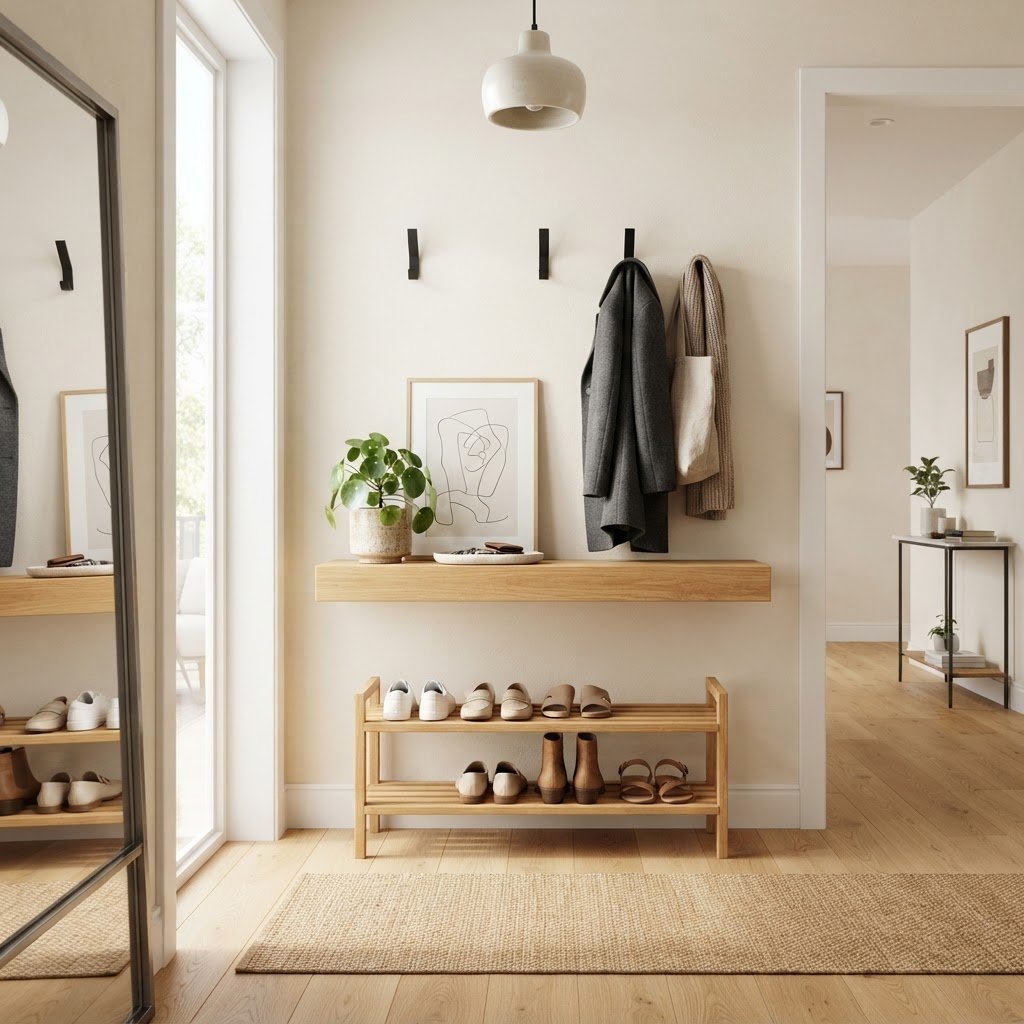
A minimalist shoe rack and hook combo perfect for tight entryways.

When floor space is at a premium, looking upward is your most effective strategy. Using the wall effectively is the cornerstone of any small apartment organization project, especially when you have limited closets. Combining wall-mounted hooks with slim-profile storage units allows you to hang heavy coats and store shoes simultaneously.

Why Wall-Mounted Combos Win

Wall-mounted systems are superior in small apartments because they keep the floor visible. By keeping the floor clear, your entryway will immediately feel larger and more open. These units often come as an integrated shelf with hooks underneath, which is perfect for maximizing every inch of wall space near your front door.

Choosing the Right Materials

When shopping for these units, consider lightweight materials like bamboo or powder-coated metal. These materials are durable enough to hold the weight of daily gear but don’t add visual bulk to a small hallway. A minimalist aesthetic is key to ensuring your apartment feels intentional rather than cluttered.

Budget-Friendly DIY Solutions for Shoe Storage

Tip-out shoe cabinets are a space-saving solution for narrow halls.

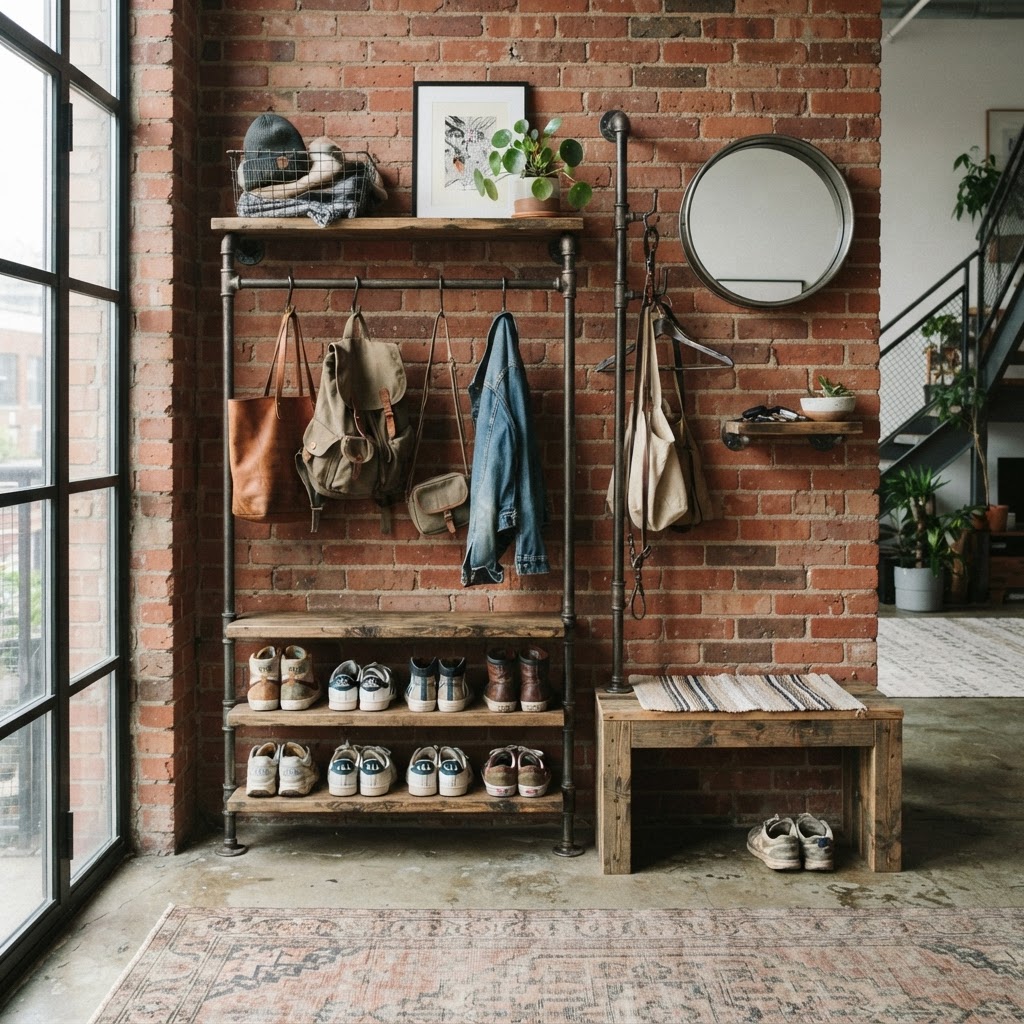
If you want a truly personalized solution, DIY projects offer some of the best affordable shoe storage and hook combos for small apartments. You can often find unfinished wood crates or simple shelving brackets that can be customized to fit your exact wall dimensions. A simple board painted to match your walls, equipped with industrial hooks and a narrow rack below, can function just as well as an expensive designer piece.

Repurposing Common Household Items

Don’t overlook the potential of items you might already own or can source cheaply. For instance, a basic wooden ladder can be leaned against the wall to act as both a shoe rack and a place to drape scarves. By adding S-hooks to the rungs, you create an instant combination rack that is both stylish and highly efficient.

Selecting the Right Shoe Rack Design

A creative DIY storage solution that adds character to a small space.

Not all shoe racks are created equal, and in a small apartment, the depth of the rack is critical. Look for “tip-out” shoe cabinets, which feature a clever design that stores shoes vertically rather than horizontally. This design typically occupies less than 10 inches of depth, making it an ideal candidate for narrow hallways.

Stacking and Tiering

If a cabinet isn’t your style, consider a tiered wire rack that fits behind your door. Many of these units are adjustable, allowing you to create different heights for boots versus flat sneakers. Always ensure you measure the width of your door opening so the rack doesn’t interfere with the swing of the door.

Integrating Hooks for Maximum Efficiency

Hooks are often an afterthought, but in a small apartment, they are a primary storage asset. By choosing the right type of hook—double or triple prong—you can hang bags, umbrellas, and hats alongside your shoes. This creates a centralized “drop zone” where everything has a specific home, preventing the dreaded countertop clutter.

Strategic Placement Tips

Position your hooks at varying heights to accommodate both long coats and shorter items like dog leashes or keys. If you live in a rental, consider command-strip adhesive hooks that provide a high-weight capacity without requiring you to drill holes in the wall. This keeps your security deposit safe while ensuring your space stays organized.

Combining Storage for a Cohesive Look

To make your entryway look high-end despite the tight space, choose storage units that share a consistent finish or color palette. If your walls are white, a light wood or white storage unit will blend in, making the room feel larger. Darker metal finishes can provide a modern, industrial touch that anchors the space and adds a sense of structure.

The Power of Mirrors

Adding a mirror above your shoe storage and hook combo is a pro move for small apartments. Not only does it allow for a final outfit check before heading out, but it also reflects light and depth, creating the illusion of a much larger room. It is a simple addition that pays off in both function and aesthetics.

Maintaining Your Small Apartment Organization

Even the best affordable shoe storage and hook combos for small apartments will fail if they aren’t maintained. Establish a habit of placing your shoes directly onto the rack or into the cabinet the moment you walk through the door. Keeping your entry clear is essential for maintaining the “flow” of your home.

Seasonal Rotation

For those with limited space, keep only the shoes you wear frequently in the primary storage zone. Store out-of-season footwear under your bed or in the top of a closet to prevent the entryway from becoming overwhelmed. This rotational system ensures your storage units never exceed their capacity.

Evaluating Your Needs Before You Buy

Before spending money, take a quick inventory of your footwear collection. Do you mostly own flat sneakers, or do you have a collection of knee-high boots that require extra vertical clearance? Understanding your needs will prevent you from buying a unit that looks great but fails to hold your actual items.

Measuring for Success

Use painter’s tape to mark out the footprint of potential furniture pieces on your wall. This simple step helps you visualize how much space the unit will truly consume. Nothing is worse than buying a piece that blocks a walkway or prevents a door from opening fully, so measure twice before you finalize your purchase.

Conclusion

Finding the perfect affordable shoe storage and hook combos for small apartments is about balancing practicality with personal style. By utilizing vertical space, choosing low-profile designs, and keeping a consistent aesthetic, you can create an entryway that feels spacious and organized. Remember that the best solution is one that fits your daily routine and makes your life easier every time you walk through the door. Don’t let your limited square footage dictate your level of clutter; instead, use these smart storage hacks to take control of your space today. Start small, measure your area, and invest in a system that grows with your needs. Which of these organization hacks will you try first in your apartment?