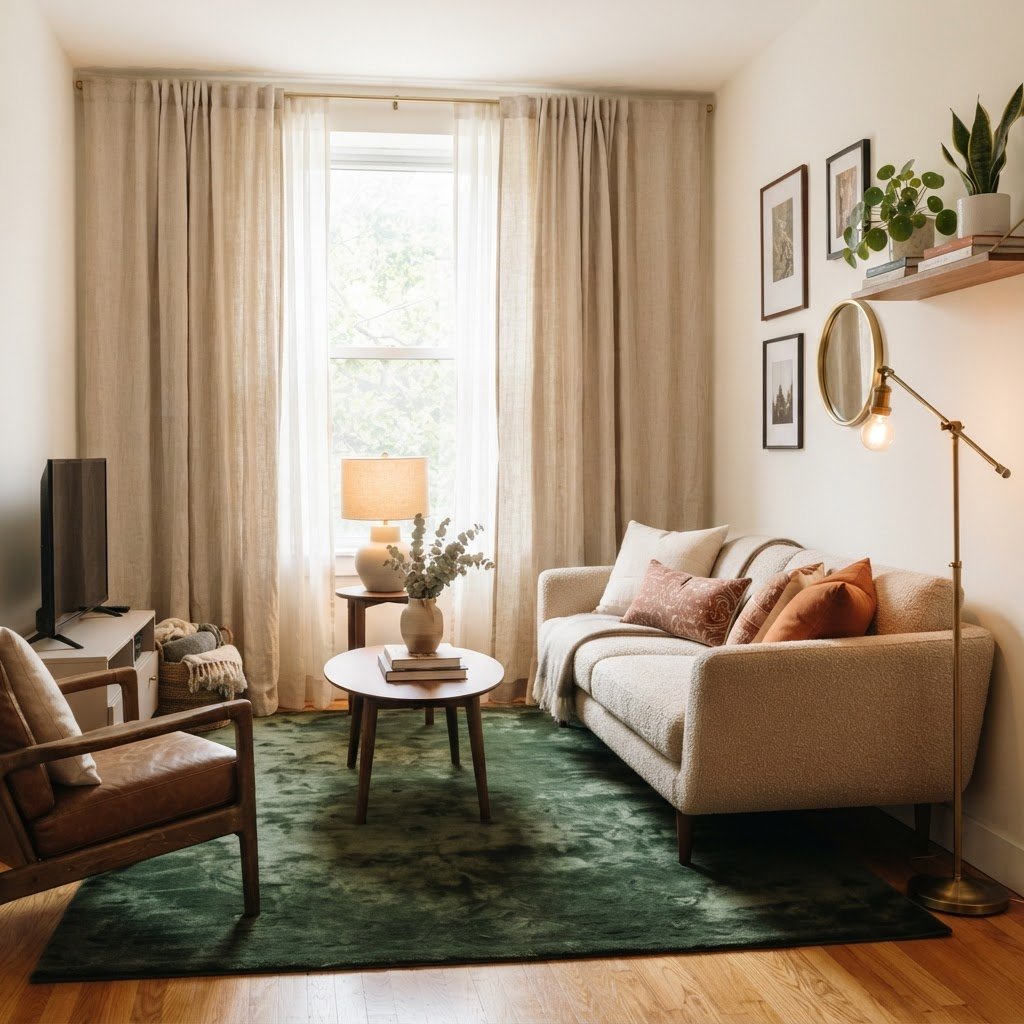
Highest-Impact Budget Changes to Make Small Rentals Look Luxe
To make a small rental look luxe, prioritize high-impact, reversible upgrades like swapping builder-grade hardware, installing floor-to-ceiling drapery, and layering warm-toned lighting. Focus on intentional curation over quantity; by replacing clinical lighting with 2700K bulbs and adding large-scale art, you instantly elevate the aesthetic without violating lease terms or spending thousands.
Rethink Your Lighting Strategy
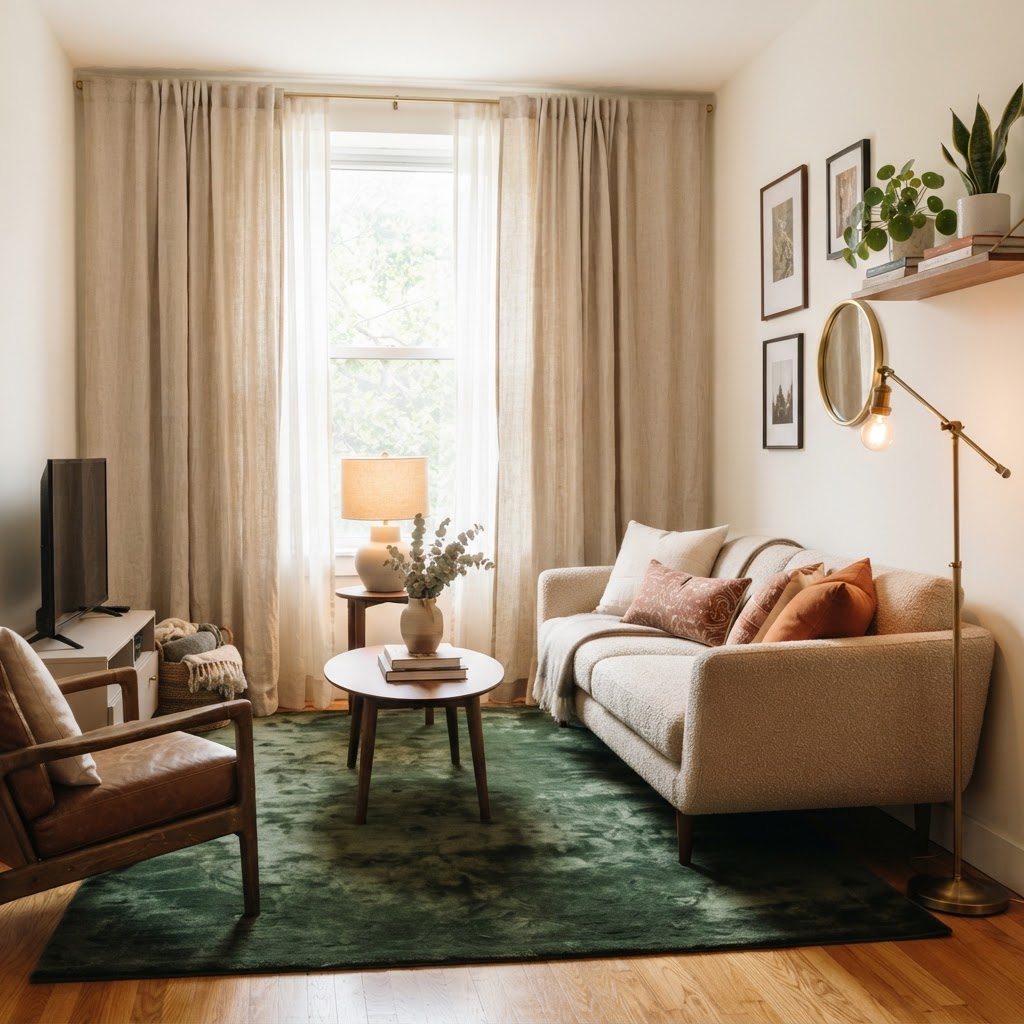
Lighting is the most impactful design lever because it alters the perceived scale and mood of a room. Most rental units feature standard, low-cost flush-mount fixtures that emit harsh, 5000K-6500K blue-tinted light, which makes small spaces appear clinical and cheap. By replacing these fixtures with your own, you immediately introduce a bespoke focal point. Simply store the original hardware in a labeled box to reinstall before your lease ends.
Incorporating Layered Lighting
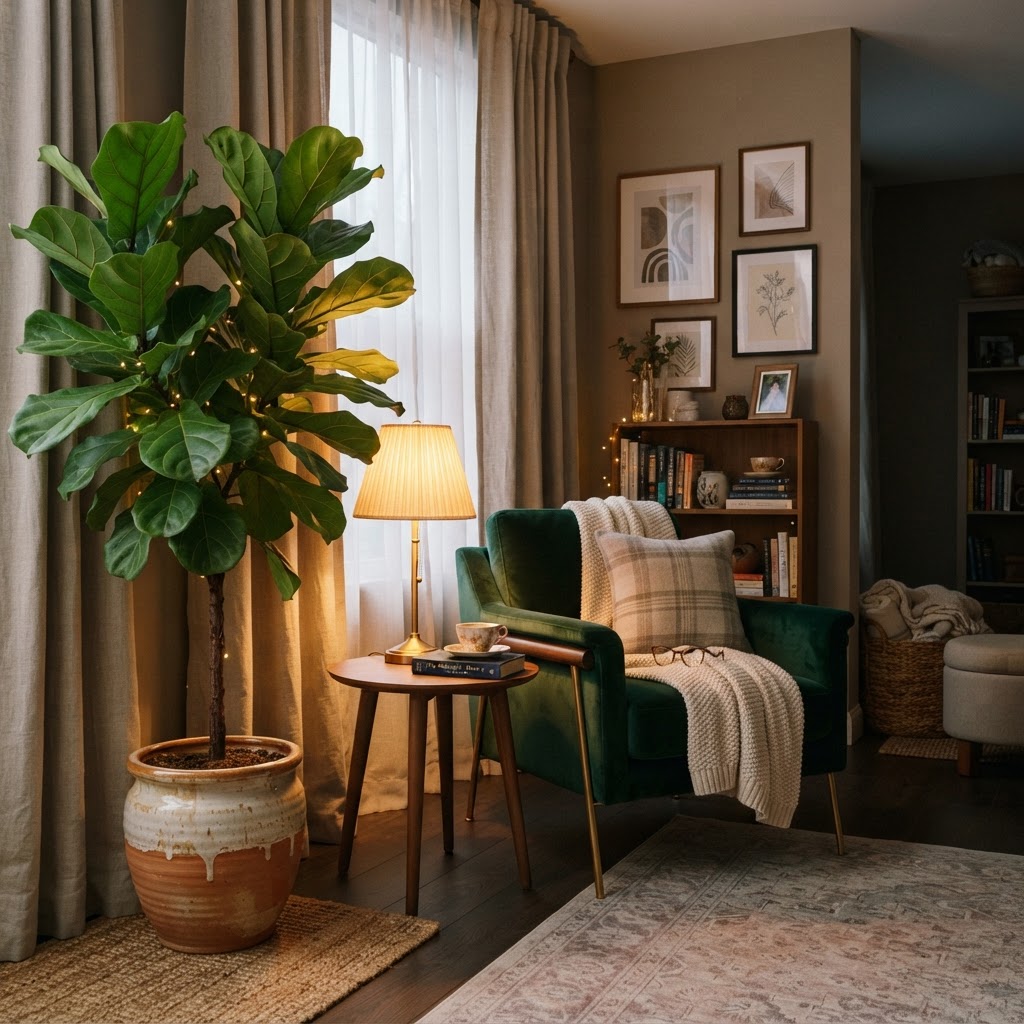
Designers use a three-tier approach to luxury lighting: ambient, task, and accent. While structural recessed lighting is often impossible in rentals, you can achieve the same sophisticated effect by distributing light sources at different heights. Use floor lamps for vertical height, table lamps for task zones, and plug-in wall sconces to clear visual clutter from side tables. Look for fixtures with finishes like aged brass, matte black, or oil-rubbed bronze to ground the room in premium textures.
Selecting the right bulb is non-negotiable for a high-end feel. Opt for LEDs with a color temperature between 2700K and 3000K, which mimics the warm, golden glow of sunset. Avoid anything above 3500K, as these higher Kelvin ratings cast a sterile aesthetic that highlights dust and makes small square footage feel cramped.
Upgrade Hardware and Small Fixtures
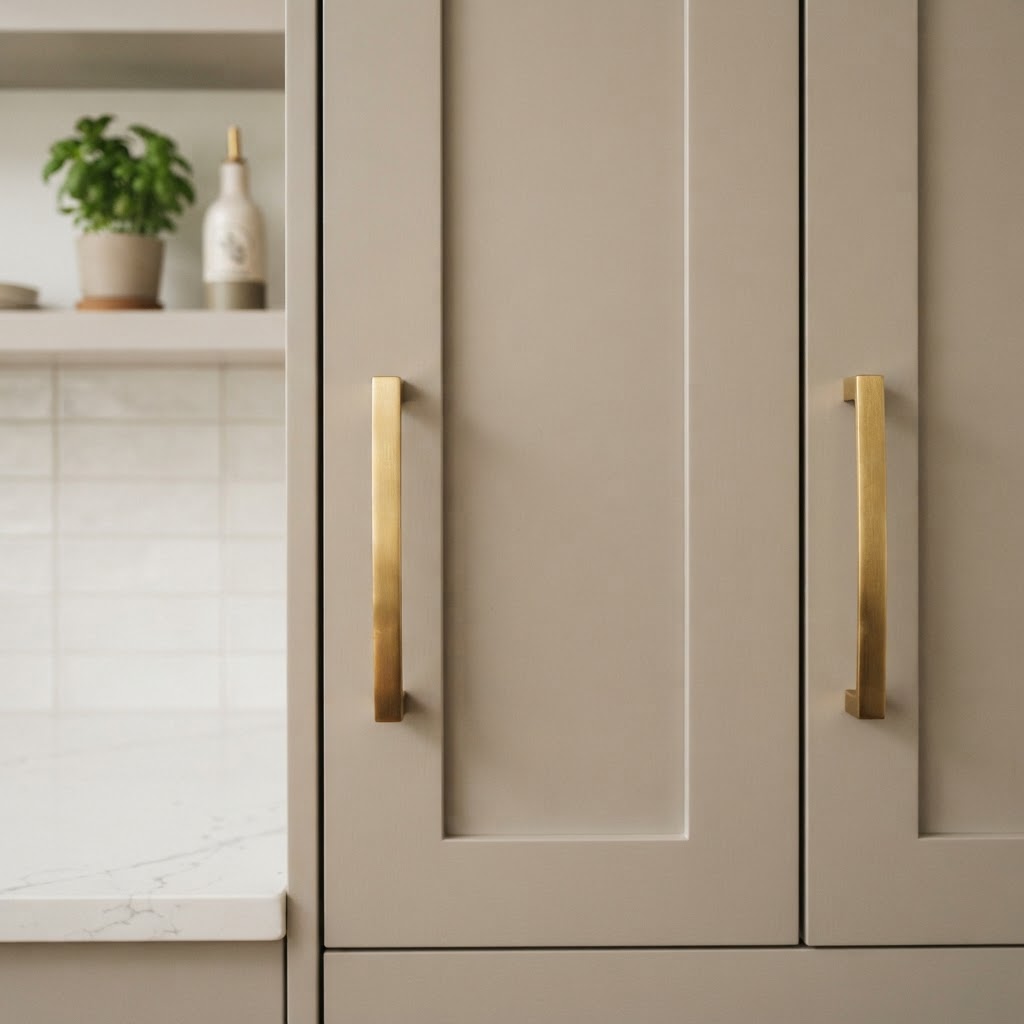
Replacing generic cabinet hardware is a high-ROI change that professional stagers use to transform “builder-grade” kitchens into custom-looking spaces. Standard knobs often feature thin, hollow-core metal or plastic, which feels cheap to the touch. Swapping these for solid brass or heavyweight nickel pulls provides a tactile experience of luxury every time you open a drawer.
The Power of Details
Keep all original hardware in a dedicated container to ensure your full security deposit return. Beyond hardware, consider upgrading the kitchen faucet. If you are comfortable with basic plumbing, installing a high-arc, gooseneck faucet with a pull-down sprayer provides both immediate visual impact and improved functionality. If plumbing is off-limits, prioritize swapping light switch plates for sleek, screwless designer models, which provide a clean, modern finish to otherwise neglected wall space. These small, low-cost investments elevate the room’s “perceived value” by ensuring every point of contact feels substantial and thoughtfully selected rather than mass-produced.
The Illusion of Space Through Textiles
Luxury in interior design is synonymous with softness and scale, both of which can be achieved through strategic textile choices. Floor-to-ceiling drapery is a secret weapon that visually expands a room by drawing the eye upward, tricking the brain into perceiving higher ceilings. For maximum impact, mount the curtain rod at least 4 to 6 inches above the window frame or directly at the ceiling line.
Choosing the Right Fabrics
Texture is the secret to a high-end feel; stick to heavy-weight fabrics like linen, velvet, or heavy-weight cotton blends to introduce physical depth. Avoid sheer, synthetic materials that wrinkle easily and look fragile. When selecting rugs, size matters—a common rental mistake is using an area rug that is too small, which makes a room feel fragmented. Choose a rug large enough to fit the front legs of all furniture onto it to anchor the space. Maintaining a consistent color palette across your textiles—whether monochromatic or a cohesive earth-tone scheme—will help the space feel intentionally curated rather than cluttered.
Wall Treatments Without the Commitment
Temporary wallpaper has revolutionized the rental market, allowing tenants to inject character without violating lease agreements. Peel-and-stick wallpaper is designed for easy removal and can be used on a single “accent wall” to provide a dramatic, high-end backdrop. For the best result, select high-quality vinyl-based papers that mimic the texture of linen or grasscloth rather than printed, flat patterns.
Gallery Walls and Large Scale Art
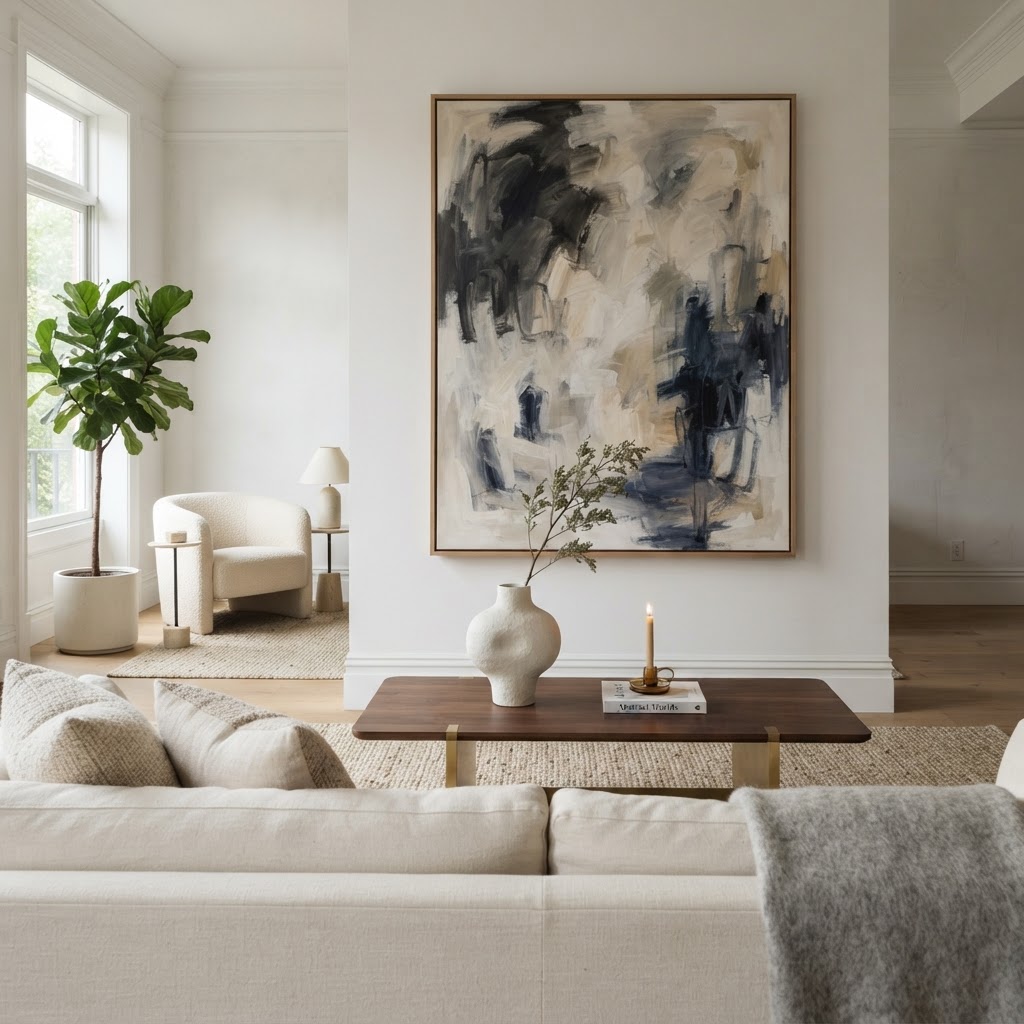
Blank walls are a missed opportunity that can make a rental feel temporary. Instead of hanging multiple small, mismatched items, invest in one or two pieces of large-scale art. Oversized art creates a professional, gallery-like focal point that anchors the room’s color scheme. If you prefer a gallery wall, unify your pieces by using matching frames or a consistent matting style. This uniformity is what separates a chaotic, cluttered wall from a sophisticated, designer-led display. Use non-damaging adhesive strips to mount your pieces, ensuring a seamless setup that leaves walls in perfect condition upon moving out.
Elevating Through Functional Decor
Small spaces often succumb to clutter, but luxury requires intentional, edited surfaces. To emulate a high-end showroom, treat your surfaces like a curated gallery rather than a storage area. Every item displayed should have a reason to exist, whether it is a sculptural vase, a stack of hardcover books, or a high-quality scented candle.
Curating Your Surfaces
Follow the “less is more” rule by grouping items in odd numbers, which is a classic design trick to create visual interest. Invest in furniture that serves dual purposes, such as ottomans with hidden storage or console tables that act as both a workspace and a display surface. When dealing with corners, place large plants like a Fiddle Leaf Fig or a snake plant in ceramic pots. Greenery softens hard angles and introduces organic life that makes any small rental feel grounded and vibrant. By removing 30% of your current decor and keeping only the pieces that bring you joy or serve a primary function, you instantly create a more breathable, luxury environment.