13 Genius Ways to Store Cleaning Supplies in a Tiny Home
To store cleaning supplies in a tiny home efficiently, utilize vertical wall space with pegboards, repurpose over-the-door organizers for hidden storage, and maximize cabinet interiors using tension rods and pull-out shelving. These space-saving tactics eliminate clutter by ensuring every tool has a designated home, even in areas under 500 square feet.
Utilize Vertical Space for Maximum Efficiency
When floor space is non-existent, look up; walls are an often underutilized asset in small homes, providing room to stash essentials without interfering with your daily flow. Installing wall-mounted systems is one of the most effective ways to reclaim your footprint and maintain a clear floor.
Install Pegboards in Utility Closets
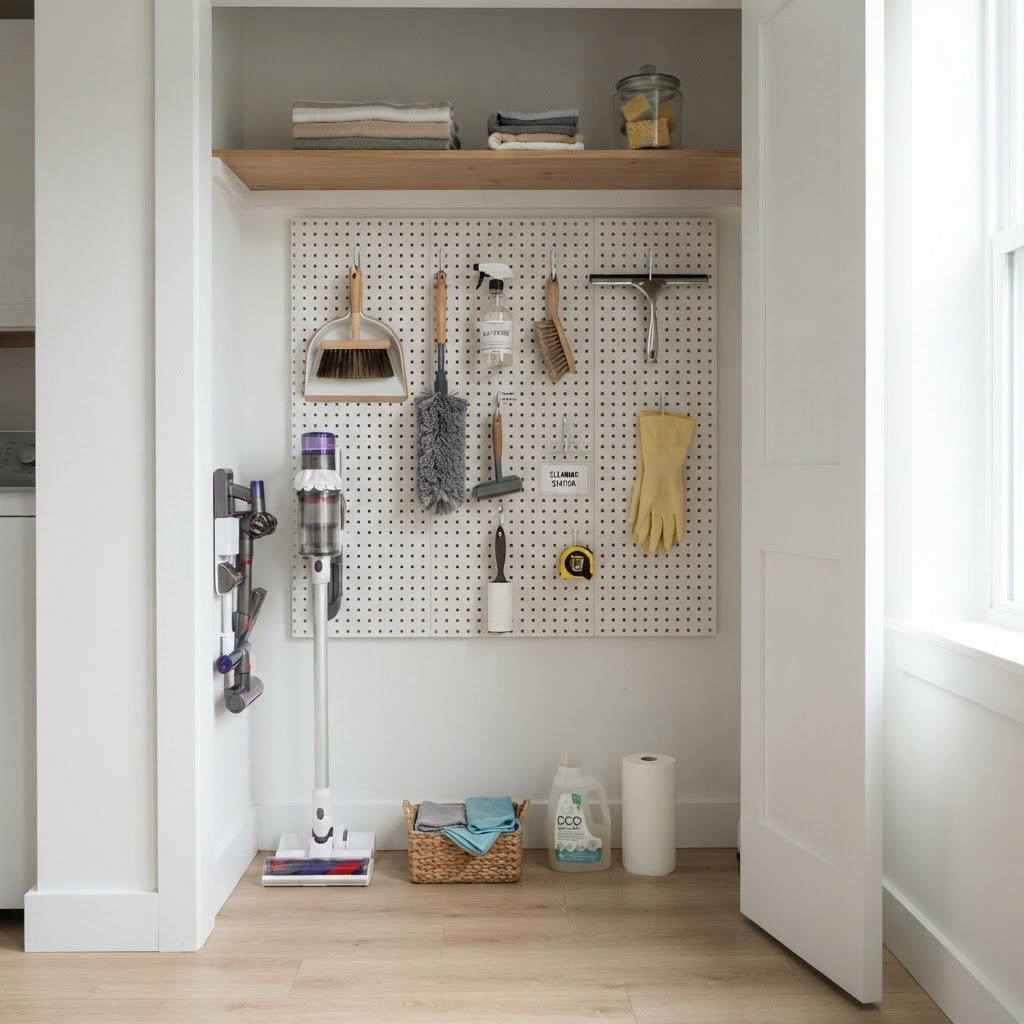
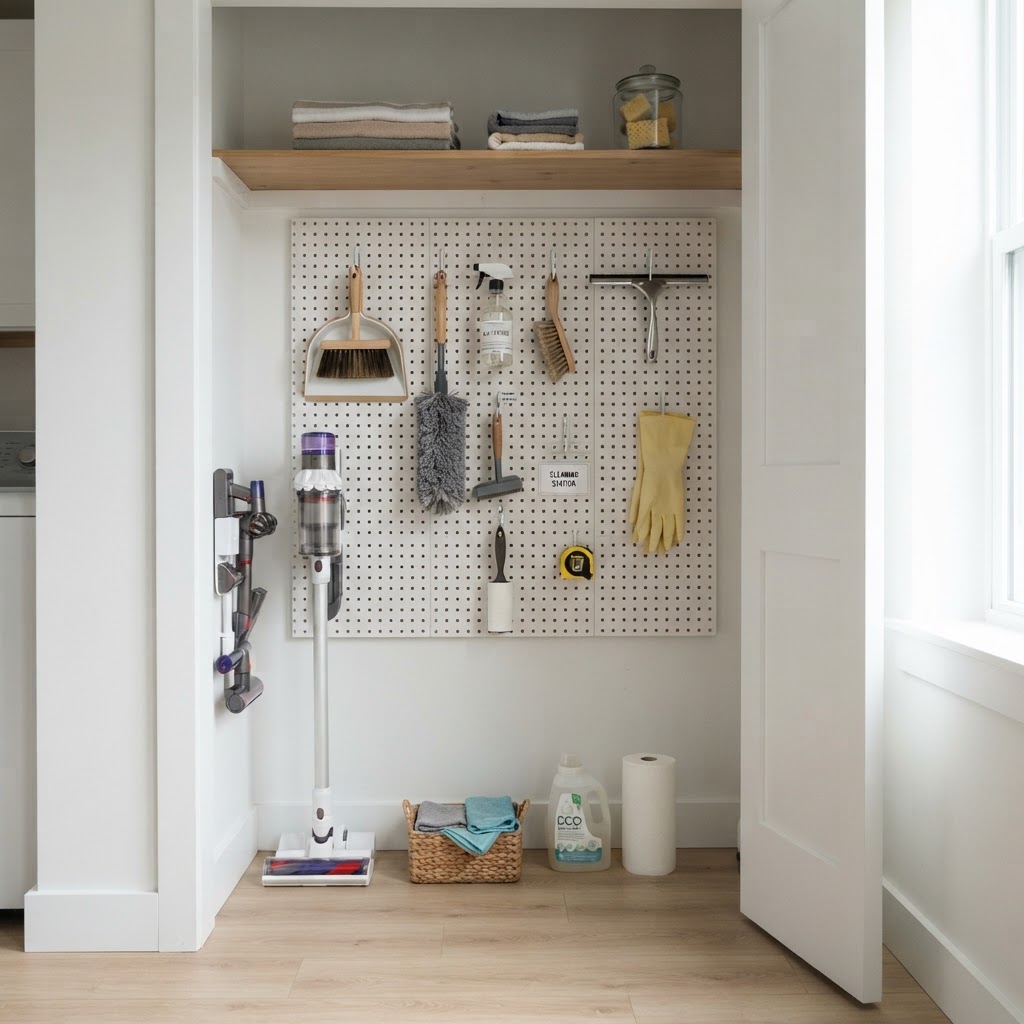
Pegboards are the ultimate tool for customizable storage because they allow for modular arrangements that adapt as your inventory changes. By mounting a 2×4 foot pegboard inside a cabinet door or on a bare wall in a laundry nook, you can hang spray bottles, microfiber cloths, and scrub brushes at eye level for immediate access.
This keeps everything visible, ensuring you aren’t digging through a dark, cramped bin. Research shows that keeping tools visible reduces “cleaning fatigue,” as you spend 30% less time searching for specific supplies. You can easily adjust the hooks as your inventory changes, making it a flexible solution for any tiny home resident. For heavy-duty items, ensure your pegboard is rated for at least 20 pounds to prevent sagging over time.
Repurpose Hidden Cavities and Nooks
Every tiny apartment has hidden potential behind doors, under furniture, or within the dead space of existing cabinets that often goes unnoticed. These “forgotten” zones are perfect for items you don’t use every single day, allowing you to maximize every cubic inch of your layout.
The Over-the-Door Organizer Advantage
Over-the-door organizers are classic small apartment storage staples because they convert unused swing space into a high-capacity pantry or closet. Instead of using them for shoes, dedicate one to your cleaning supplies, utilizing the deep pockets to store sponges, surface cleaners, and dusting tools.
Place these organizers on the back of your pantry or bathroom doors to keep cleaning agents hidden from plain sight, maintaining a clean aesthetic. When measuring for these organizers, aim for a depth of at least 4 inches to accommodate standard 32oz spray bottle bases. This “hidden-in-plain-sight” strategy is effective because it keeps items within arm’s reach while ensuring they do not occupy valuable surface area on counters or floors, which is essential for visual order in studios under 400 square feet.
Create Slim Pull-Out Stations
One of the most frustrating aspects of tiny home living is the “stuffing” method, where you cram items into a cabinet and hope nothing falls out. Utilizing pull-out organizers to maximize space allows you to access items at the back of a deep cabinet with ease, typically increasing cabinet efficiency by up to 50%.
These slide-out shelves can fit in the narrow 6-inch gaps between appliances or inside cramped under-sink cabinets. By installing a vertical slider, you can organize bottles by height and frequency of use, ensuring you never buy duplicates because you couldn’t find what you already had. Consider installing heavy-duty ball-bearing slides which hold up to 100 pounds, ensuring the unit operates smoothly even when fully loaded with glass-bottled detergents. These units effectively turn a dark, unreachable abyss into a well-lit, fully accessible inventory system that simplifies your weekly maintenance routine.
Maximize Under-Sink Real Estate
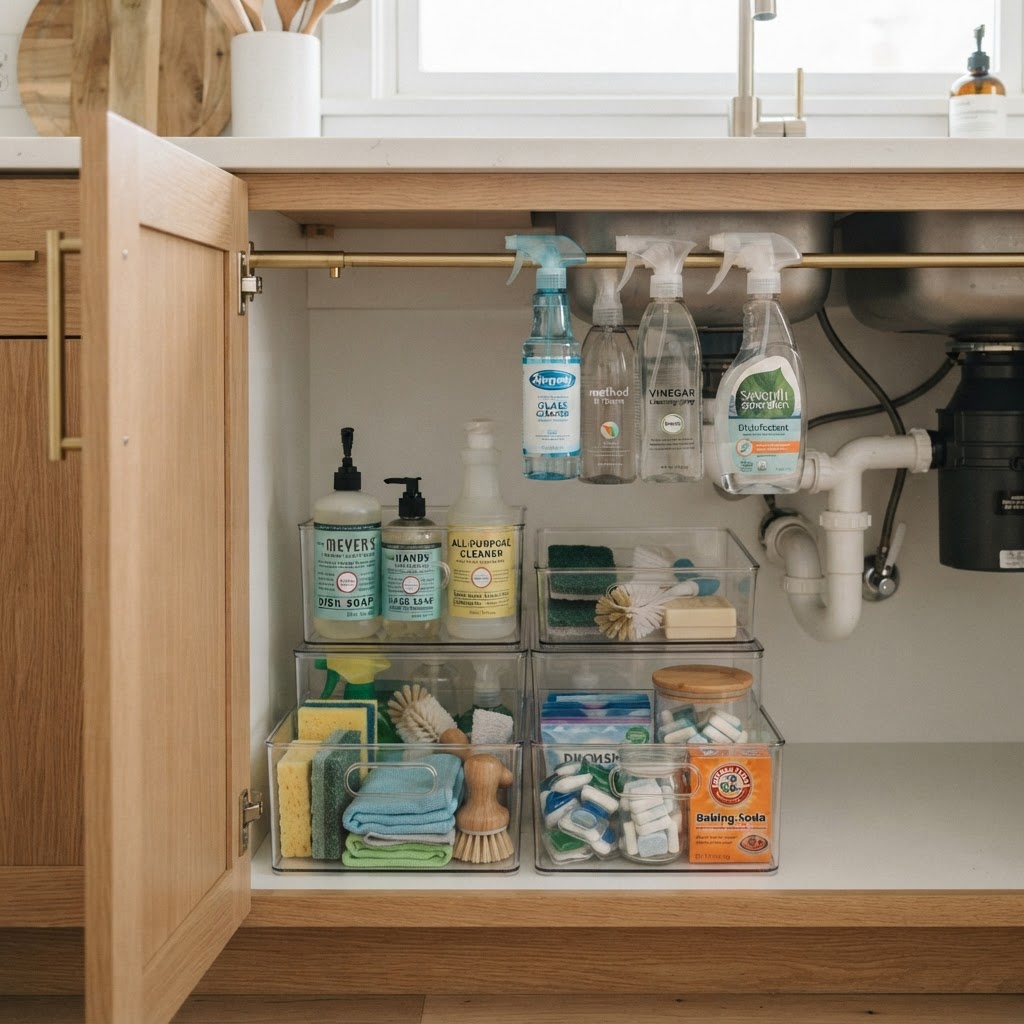
Under-sink storage is notoriously messy in a tiny home, often becoming a graveyard for half-empty bottles and tangled rags. To optimize this, treat it like a professional storage unit by creating distinct zones for different cleaning categories. If you are focusing on the culinary area of your home, exploring various budget-friendly small kitchen ideas can help you reclaim counter space while keeping your cleaning tools neatly tucked away.
Use stackable, clear plastic bins to create height; by stacking containers, you essentially double your usable surface area. Add a tension rod across the top of the cabinet to hang spray bottles by their triggers, which frees up the floor for heavier items like vacuum attachments or extra sponges. A standard spring-loaded tension rod can hold up to 10 pounds, making it perfect for several spray bottles. This method is highly recommended for renters because it requires zero drilling or permanent hardware, maintaining your security deposit while providing a clean, professional-grade organization system for your most frequently used supplies.
The Magic of Magnetic Storage
Many cleaning tools feature metal components, and you can easily add small magnetic strips to the handles of those that do not. Magnetic knife strips are not just for kitchens; they are brilliant for holding metal-handled scrubbers, scissors, or small tools on the inside of a cupboard wall.
This keeps your metal tools from getting lost in the clutter of a drawer while keeping them dry and ventilated, preventing rust and odors, which is essential when your home lacks proper airflow. A high-quality neodymium magnetic strip can support up to 15 pounds per foot, making it one of the strongest ways to store tools in a cramped kitchen. By keeping these items vertically aligned, you save approximately 15% of your drawer space, which can then be reallocated to other kitchen essentials. This setup is particularly effective in high-humidity areas, as the increased airflow prevents bacteria buildup on damp brushes.
Mobile Storage Carts for Flexibility
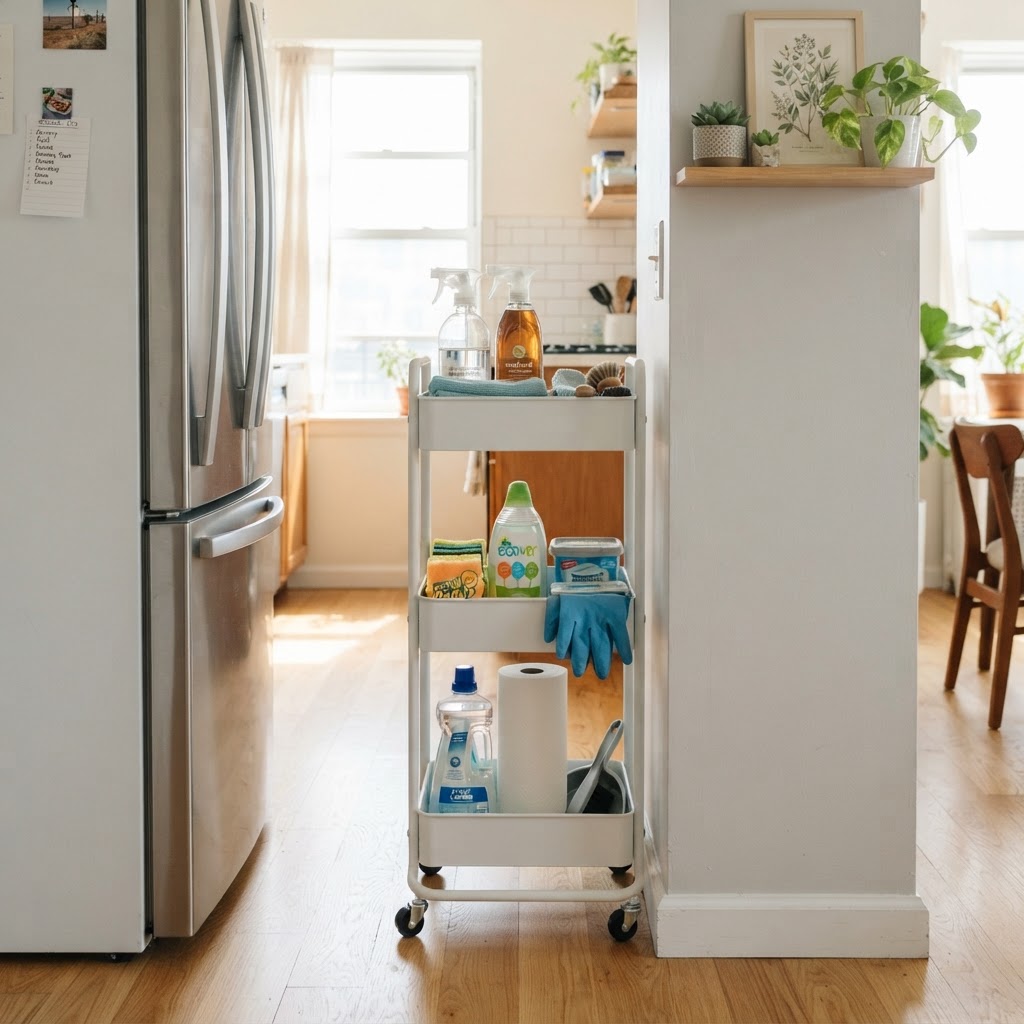
In a tiny home, you don’t always have the luxury of dedicated closets, so a slim, rolling utility cart can act as a mobile cleaning station. This cart lives in a corner or under a desk and rolls out only when you need it, effectively creating a portable “cleaning command center.”
Fill it with your most used supplies, a duster, and a handheld vacuum. When it’s cleaning day, you have everything you need in one place, allowing you to move through your home room-by-room without trekking back and forth to your storage area. Look for carts with a width of 5 to 8 inches to ensure they slide into unused gaps between your washer and dryer or refrigerator. A quality steel cart usually costs between $30 and $60, providing a durable solution that can last for years of daily service.
Optimize Vacuum Storage
Vacuum cleaners are often the biggest culprits for taking up precious square footage, so they require a dedicated, hidden “garage.” If you don’t have a broom closet, look for “hidden” storage spots like the space between your refrigerator and the wall, or create a custom enclosure inside an existing piece of furniture.
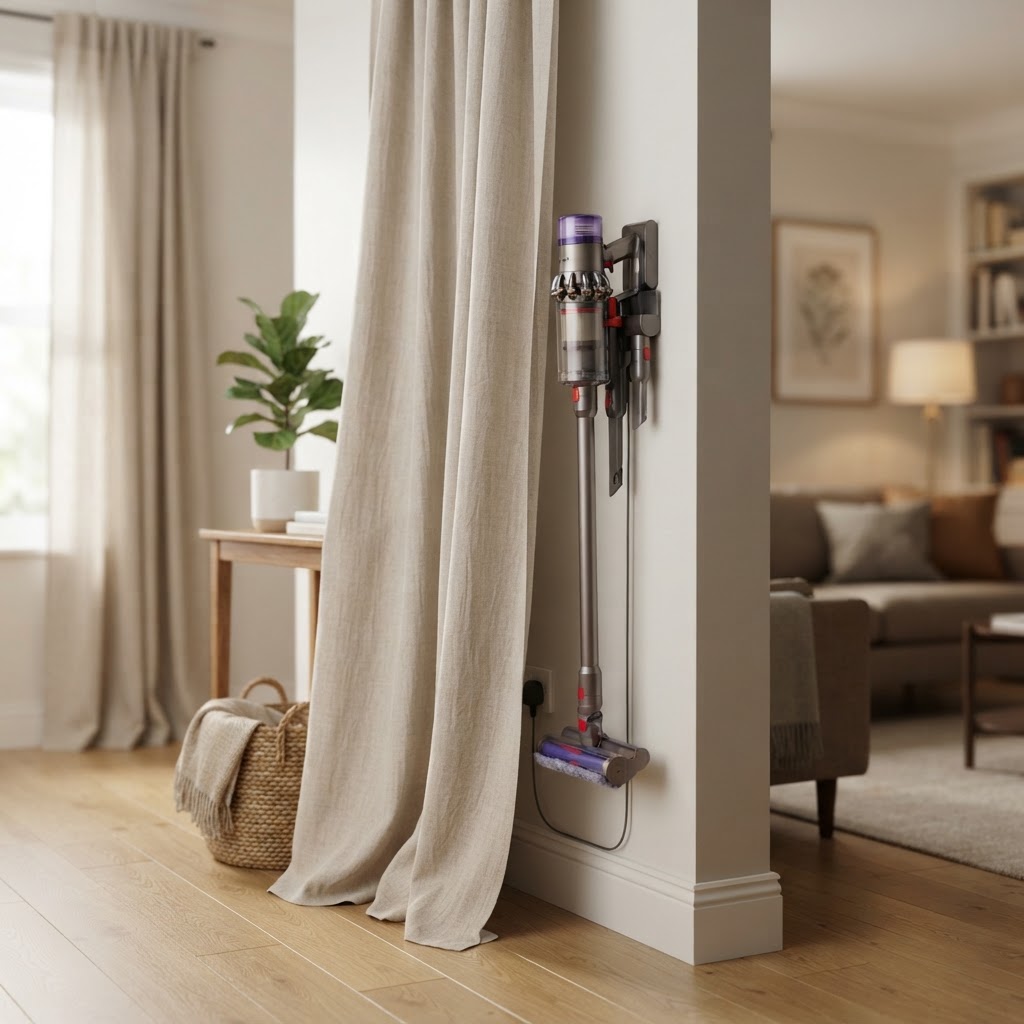
Consider investing in a stick vacuum that mounts directly to the wall. By mounting it in a discreet location, such as inside a hallway closet or behind a curtain, you keep it off the floor while ensuring it stays charged and ready to go. A wall mount keeps your floor clear, making the room look significantly larger by creating an uninterrupted view of the floor line. Most modern stick vacuums require only 10 inches of wall width, making them the most efficient option for apartments under 300 square feet.
Incorporate Multipurpose Furniture
In small apartment storage and organization, every piece of furniture should pull double duty to ensure you aren’t paying for “wasted” square footage. When you decorate a small apartment on a budget, you often find that multipurpose furniture pieces serve both aesthetic and storage roles efficiently. An ottoman with a storage cavity inside is perfect for holding extra mop heads, cleaning rags, or bulk supplies that you only buy once every few months.
Look for benches with built-in baskets or side tables with deep drawers. By integrating your supplies into the furniture itself, you eliminate the need for extra plastic bins that take up walking space. This “hidden in plain sight” approach is key to maintaining a minimalist, tidy home. For example, a standard 18-inch storage ottoman can house up to 4 gallons of cleaning supplies, effectively clearing your floor of clutter without requiring a dedicated closet. This strategy is essential for achieving a balanced, zen-like aesthetic in studio environments.
FAQ
Q: What is the best way to store cleaning supplies in a studio apartment?
A: The best way is to utilize vertical storage like pegboards or over-the-door organizers to keep items off the floor. By keeping your supplies in “hidden zones” like the back of a pantry door, you ensure your living space remains visually clutter-free and professional.
Q: How do I manage cleaning supplies without a dedicated closet?
A: Use mobile utility carts that can be rolled out during cleaning and tucked away into narrow gaps between furniture. Alternatively, repurpose multipurpose furniture like storage ottomans or benches to act as discreet containers for your essential tools.
Q: What should I do with bulky vacuum cleaners in small spaces?
A: Opt for a stick vacuum that can be wall-mounted in a discreet location or stored in the narrow gap between your refrigerator and the wall. Wall-mounting keeps the device off the floor and ensures it is always charged and ready for use.
Q: Are tension rods effective for organizing cleaning supplies?
A: Yes, tension rods are highly effective for hanging spray bottles by their triggers inside under-sink cabinets. This creates an organized vertical line of bottles that leaves the floor of the cabinet free for heavier, bulkier items like vacuum attachments.
Q: How often should I purge cleaning supplies to save space?
A: Perform a “cleaning inventory purge” every six months to discard expired products or items you haven’t used in over a year. Keeping only what you use regularly is the most effective way to maximize your limited storage capacity.

Leave a Reply