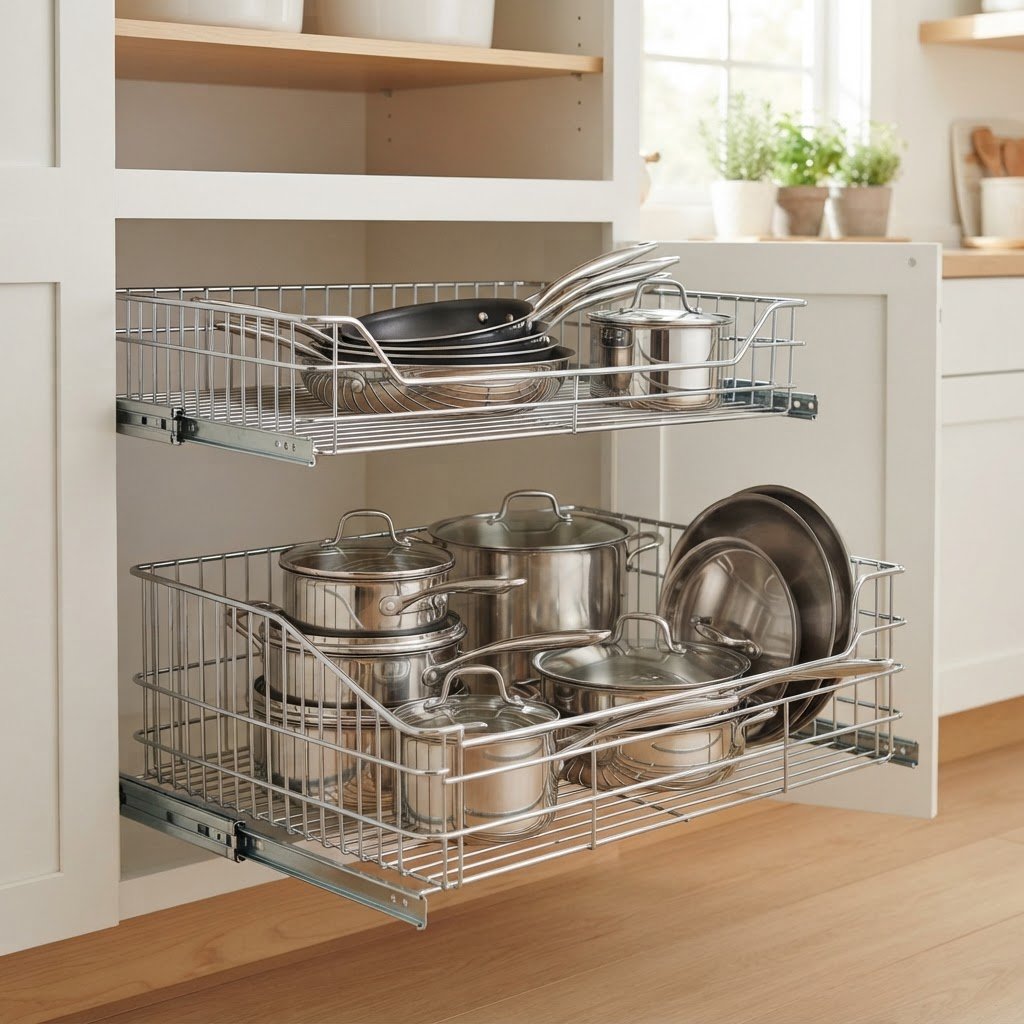
9 Pull-Out Organizers That Double Your Kitchen Cabinet Space
You can double your usable kitchen cabinet space by installing pull-out organizers that eliminate dead zones, improve accessibility, and maximize vertical height. These systems, ranging from sliding under-sink trays to tiered pantry racks, transform deep, dark cabinet voids into high-efficiency storage zones that keep every item within immediate, visible reach.
Why Pull-Out Organizers Are a Game-Changer
The fundamental problem with standard fixed kitchen shelving is the “black hole” effect, where items get pushed to the back, forgotten, and expire. Pull-out organizers solve this by utilizing full-extension ball-bearing glides that bring the entire depth of the cabinet into your workspace. Instead of kneeling to dig for a pot lid, you simply pull a drawer, exposing 100% of your inventory. Research indicates that standard shelves often leave 30-40% of cabinet space underutilized due to inefficient vertical stacking; pull-outs recover this lost capacity by allowing for custom shelf height adjustments. By choosing organizers that utilize the full depth of your unit, you effectively increase your usable storage footprint by up to 50% without requiring a kitchen renovation.
Maximizing Vertical Space
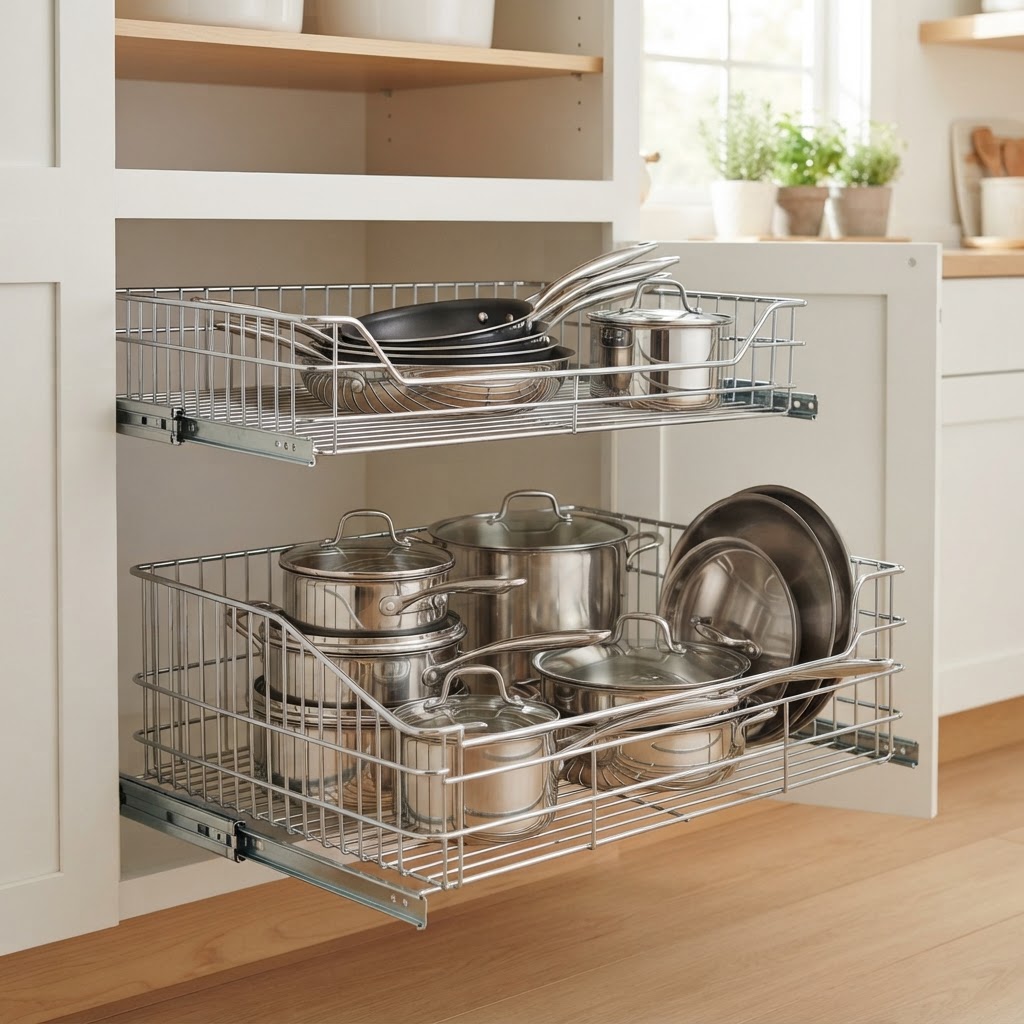
Many kitchen cabinets are poorly designed with too much vertical gap between shelves, leading to wasted air. Pull-out drawers allow you to stack items more logically, creating tighter, more efficient tiers. This is essential for those who need to maximize cabinet space in a small kitchen. Whether you are in a rental or a tiny urban studio, the key is choosing multi-tiered systems that fit within your cabinet’s interior dimensions, effectively doubling the storage density of your upper or lower units.
1. Sliding Under-Sink Trays
The area beneath the kitchen sink is notoriously difficult to organize due to pipes, garbage disposals, and drainage lines. Sliding under-sink trays are designed with a unique U-shaped or notched cutout that navigates around these plumbing obstructions while providing two distinct tiers of sliding storage. These units typically feature high-sided baskets to prevent bottles from tipping during use. By installing these, you keep cleaning supplies, sponges, and dish soap organized without forcing you to reach into the dark, damp recesses of the cabinet base. Professionals recommend measuring the clearance between your pipe and the cabinet wall; ensure the tray width is at least 1-2 inches less than your narrowest cabinet opening to account for the frame.
2. Tiered Spice Pull-Outs
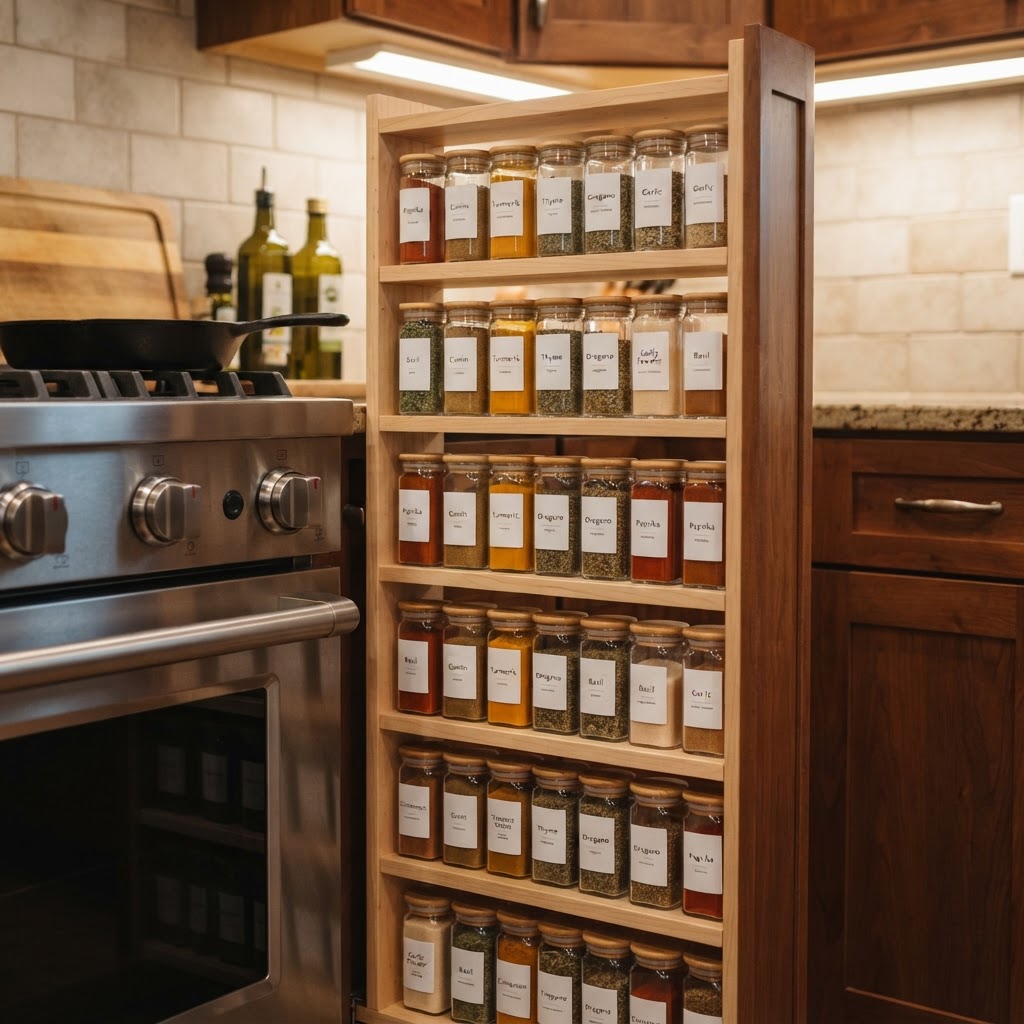
Spices are the primary culprit for clutter in small kitchens, often leading to “spice fatigue” where you cannot find what you need while cooking. Instead of a crowded, inefficient lazy Susan, install a narrow, vertical pull-out organizer specifically designed for spice bottles. These systems generally slide out from between larger appliances or cabinet banks, keeping your seasonings aligned, visible, and easy to grab in seconds. Because spices are light, these pull-outs can often be mounted to the side walls of existing cabinets using simple brackets. A high-quality pull-out will feature a width of 3 to 6 inches, which is perfect for filling those awkward “dead” gaps often left over from kitchen cabinet installations.
3. Pull-Out Pot and Pan Racks
Stacked pans are a nightmare to access, often resulting in noisy, chaotic “metal clanging” every time you need a single skillet. Heavy-duty sliding drawers with adjustable vertical dividers allow you to store pans on their sides or stacked securely, preventing scratches on non-stick coatings. By installing these, you protect your cookware surfaces and ensure that your most-used pans are ready for action at a moment’s notice. Always verify the weight capacity of your glides before purchase; heavy cast iron sets often require heavy-duty, ball-bearing slides rated for at least 100 pounds. These racks ensure your cookware footprint is reduced, allowing you to fit a full set in a cabinet space that previously only held two stacked pans.
4. Lazy Susan Corner Pull-Outs
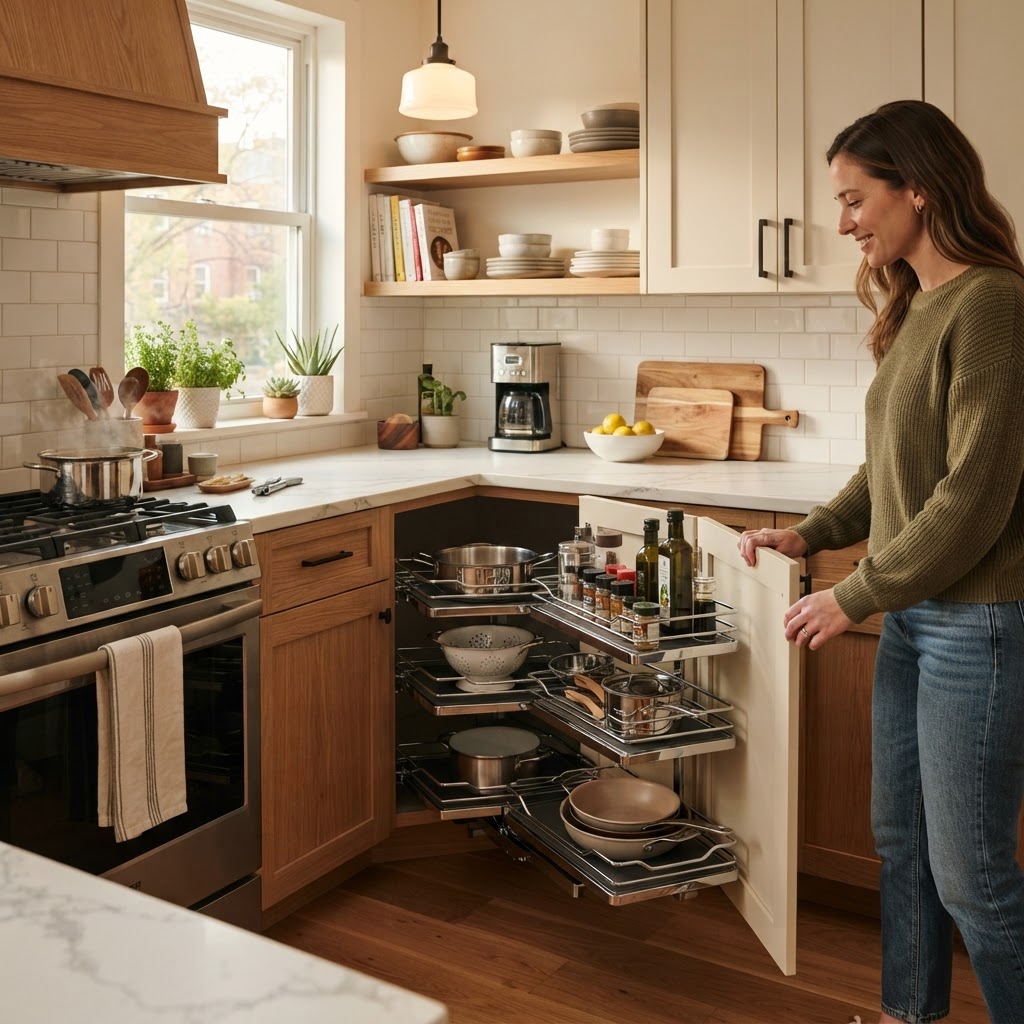
Blind corners are arguably the most wasted, inaccessible space in any residential kitchen. While traditional spinning lazy Susans offer some access, they can be unstable and often result in items falling off the rotating disc. Modern pull-out corner organizers utilize complex mechanical arms—often called “magic corners” or “blind corner pull-outs”—to swing the entire contents of the dark corner out into the main room. This transforms a forgotten void into prime real estate for heavy blenders, food processors, or bulk dry goods. These units typically support 20-30 pounds per shelf and turn unreachable nooks into the most functional zones in the kitchen.
5. Sliding Trash and Recycling Centers
Floor space is precious in a small apartment, and a standard trash can creates visual and physical clutter. A pull-out trash and recycling organizer hidden inside a cabinet keeps your floor clear and your kitchen smelling fresh. Many of these units include two durable plastic bins that slide out smoothly on ball-bearing tracks, allowing you to hide your waste discreetly while keeping it easily accessible for meal prep cleanup. When selecting a unit, opt for “soft-close” technology to prevent accidental slamming, which can damage the cabinet structure over time. These units are typically designed to fit standard 15-inch or 18-inch base cabinet widths.
6. Pull-Down Cabinet Shelves
Sometimes, the best way to double your kitchen cabinet space is to look up toward the ceiling. In kitchens with high upper cabinets, pull-down shelves—also known as drop-down shelving—allow you to bring the entire contents of a high shelf down to eye level. This eliminates the need for unstable step stools and makes the highest, most neglected shelves just as functional as the ones on the counter level. These units are ideal for storing infrequently used items like serving platters, holiday decor, or fancy glassware. By moving these rarely used items to the top and utilizing the drop-down mechanism, you clear valuable space on your lower, more reachable shelves.
7. Slide-Out Bakeware Dividers
Baking sheets, cutting boards, and muffin tins are notoriously difficult to store because of their large, flat profiles that topple over when stacked horizontally. A slim pull-out organizer with adjustable, tension-mounted vertical dividers keeps these items upright and separated. This prevents a stack of heavy baking sheets from tipping over when you try to pull out a single cutting board, a major upgrade for daily kitchen workflow. These dividers allow you to store items vertically, effectively utilizing space that would otherwise be lost to leaning piles. Most dividers are made of coated steel or heavy-duty plastic and can be repositioned to accommodate various widths of pans and trays.
8. Expandable Under-Shelf Drawers
For renters who cannot permanently modify their cabinets with screws or heavy hardware, tension-mounted or adhesive-backed pull-out drawers are the perfect non-invasive solution. These modular units attach directly to the underside of existing shelves, effectively creating an “extra” drawer in the middle of open cabinet space. They are typically lightweight, durable, and highly effective for storing small items like coffee pods, napkins, spice sachets, or snack bars. These drawers usually hold 5-10 pounds and are the fastest way to add storage without needing tools. They allow you to utilize the top 3-4 inches of cabinet space that often goes empty above standard shelves.
9. Sliding Pantry Organizers
If you have a tall, skinny pantry cabinet, it can easily become a vertical mess where cans get lost in the back. Installing sliding drawers inside this unit allows you to see every item from top to bottom, eliminating the need to pull items out to reach those behind them. By placing heavier items like bulk canned goods on bottom sliders and lighter snacks on the top sliders, you create an ergonomic pantry system that saves you from bending and reaching repeatedly. Expert installers suggest spacing drawers 8-10 inches apart to maximize the volume of your pantry while still ensuring you can easily grab tall items like cereal boxes or oil bottles.
The Secret to Success: Measurement and Planning
Before you purchase any organizational hardware, you must take the time to measure your interior dimensions accurately. Use a metal tape measure to get the exact width, height, and depth, but do not forget to account for interior hinges, door protrusions, and the cabinet face frame. An organizer might fit the internal volume, but if the hinges block the path of the slide, the unit will not function correctly. Furthermore, check your cabinet door clearance; if you have inset doors, the drawer must be pulled out far enough to clear the door edge before it can be fully accessed. Always account for a half-inch of “wiggle room” for mounting brackets to ensure smooth operation without scratching the cabinet walls.
Evaluating Weight Limits
Not all slides are created equal; the quality of your hardware determines the longevity of your kitchen storage system. If you are planning to store heavy cast iron pans or crates of canned goods, ensure your chosen organizer is rated for high-weight loads (typically 75 to 100+ pounds). Look for steel ball-bearing glides rather than plastic tracks for long-term durability in a small apartment where constant use will wear down inferior materials. For daily use, mid-range soft-close slides provide a premium feel and prevent the “slamming” of drawers, which protects your cabinet frame from vibration-induced damage over time.
Creating a Kitchen That Works for You
Organization isn’t just about “stuffing” more things into a box; it is about creating a logical flow that works for your personal cooking style. Use a “zone-based” approach: group your items by activity. For example, keep your coffee beans, filters, and mugs in one dedicated pull-out section near the coffee machine. Keep baking staples like flour and measuring cups together in another. If you are looking to renovate your space, you might also want to explore how to decorate a small apartment on a budget to ensure your kitchen updates match the rest of your home’s style. This spatial grouping, combined with the accessibility of pull-out hardware, will make your small kitchen feel twice as large because you spend less time searching and more time cooking. Periodically wipe down your drawers, as they can collect dust or spills over time. Maintaining the track mechanisms with a simple silicone spray lubricant every six months will keep them sliding silently and smoothly, ensuring your investment lasts for years.
FAQ
Q: Can I install pull-out organizers myself?
Yes, most pull-out organizers are designed for DIY installation and require only a drill, a screwdriver, and a measuring tape. Most kits include mounting hardware and clear instructions for standard base cabinets, usually taking less than 45 minutes to install.
Q: What is the biggest mistake when installing cabinet organizers?
The most common mistake is failing to account for door hinges and drawer face clearances. If the slide is mounted too close to the hinge, the drawer will not be able to pull out fully, rendering the organizer ineffective.
Q: Are pull-out drawers worth the cost for renters?
Absolutely, as many tension-mounted and adhesive-based organizers are non-permanent and can be removed without damaging your cabinets. These units offer high value by allowing you to reclaim lost space in kitchens where you aren’t permitted to perform major renovations.
Q: How much weight can a standard pull-out shelf hold?
Standard residential pull-out shelves typically support between 50 and 100 pounds, depending on the slide quality. Always check the manufacturer’s specifications, especially if you plan to store heavy items like cast iron skillets or bulk canisters of grain.
Q: How do I choose the right size for a sliding organizer?
Measure the narrowest opening of your cabinet (between the hinges or frame) to ensure the unit will fit through the door. Additionally, measure the internal depth and height, subtracting at least one inch to provide sufficient clearance for the slide mechanisms and hardware.

Leave a Reply