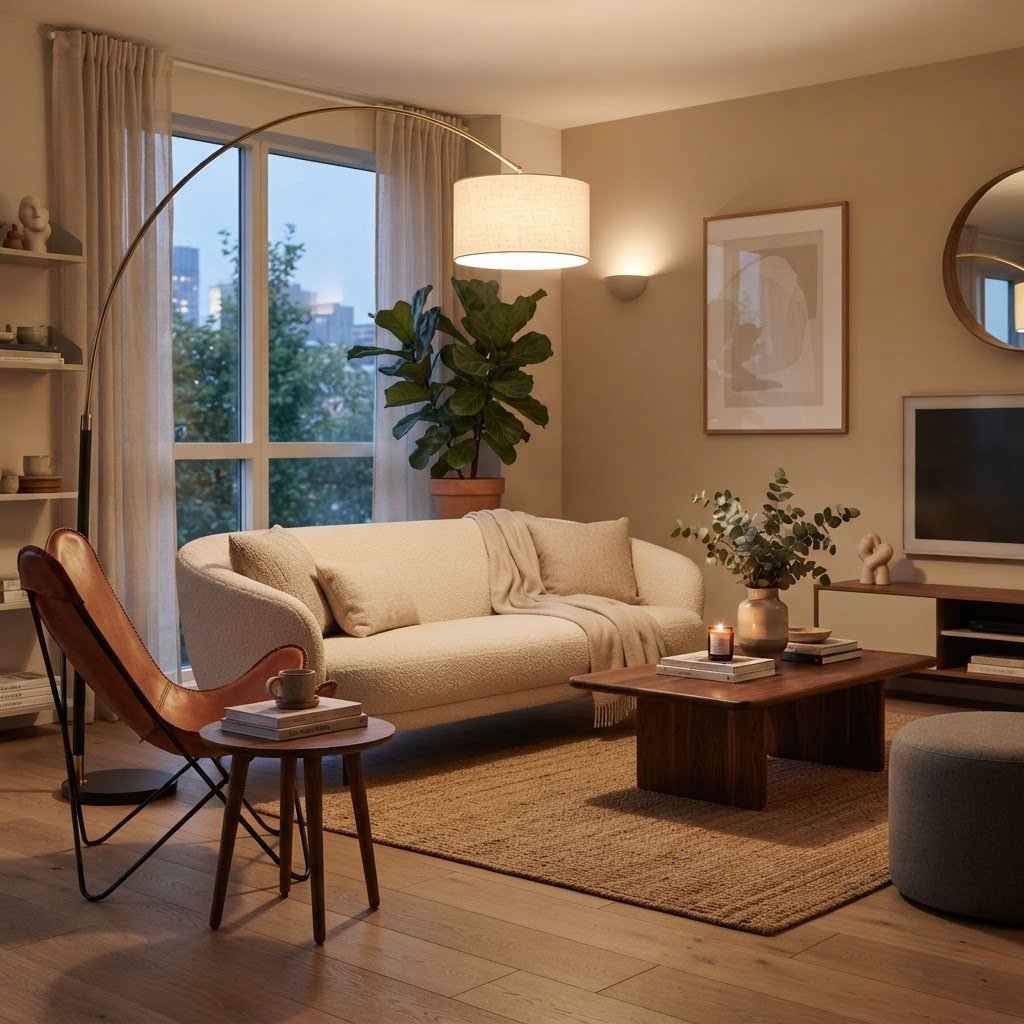
8 Affordable Lighting Upgrades That Transform a Rental
You can transform a rental apartment’s generic lighting by utilizing non-permanent, plug-in solutions like wall sconces, smart LED bulbs, and adhesive light strips. These upgrades add layers of warm, functional illumination to your space without requiring landlord permission, complex electrical rewiring, or permanent structural changes to the property.
Rethink Your Overhead Lighting
Most rental apartments feature basic “boob lights” or frosted glass fixtures that lack character, but you can soften this harsh glare using simple, reversible techniques. Instead of replacing the hardwired fixture, which may risk your security deposit, consider purchasing a decorative drum shade or a magnetic cover that attaches directly to the existing hardware. These covers act as a filter, diffusing light to create a warmer, more sophisticated ambiance while hiding unattractive bulbs.
If your landlord permits a full swap, ensure you save the original fixture to reinstall before moving out. For renters who prefer to avoid tools entirely, focusing on supplemental task lighting is a superior, stress-free strategy. According to interior design standards, you should aim to have at least three sources of light in a living room to prevent “flat” lighting. The following table compares different overhead concealment strategies:
The Power of Plug-In Sconces
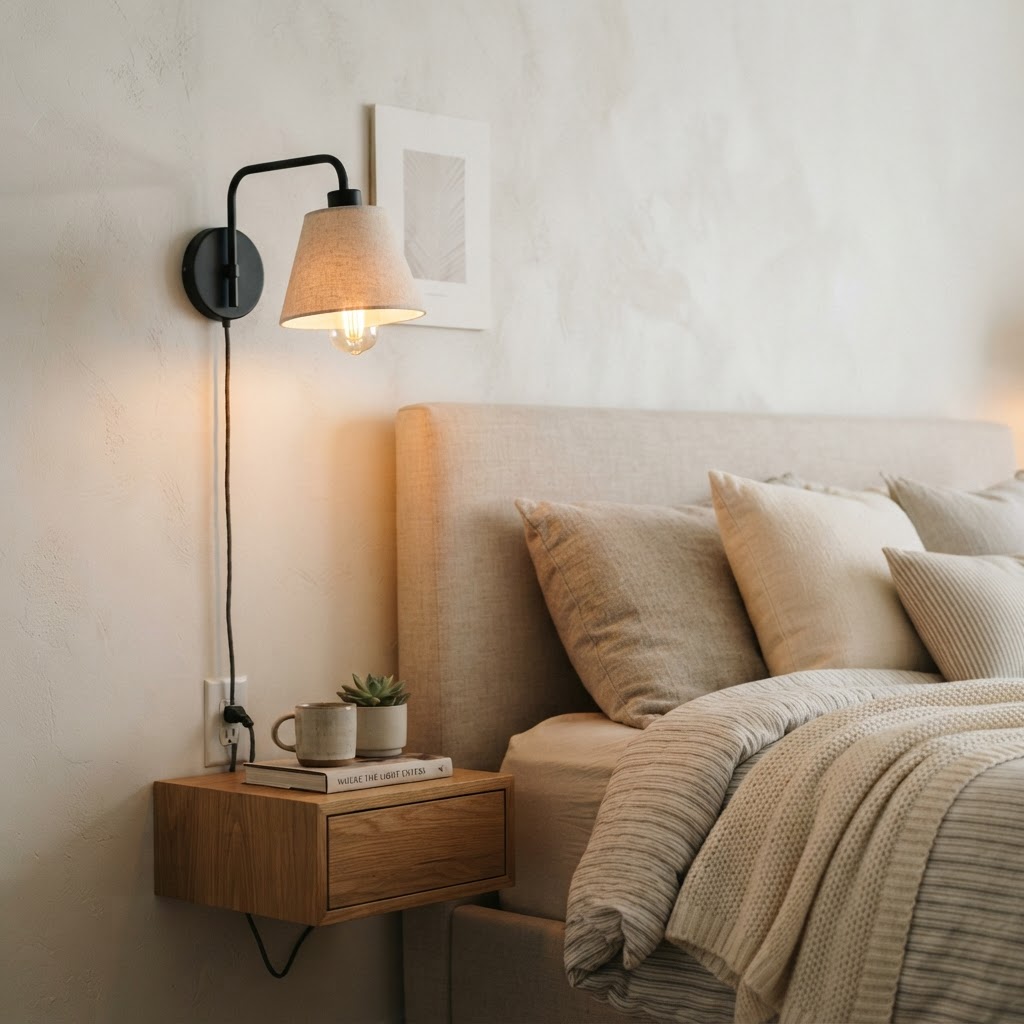
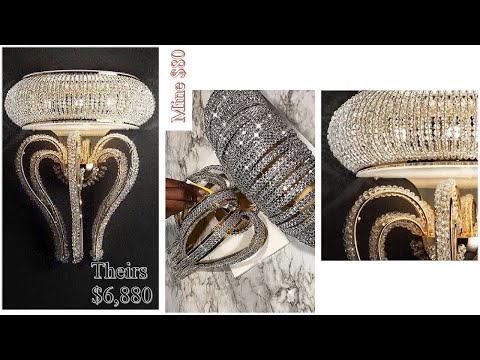
Plug-in wall sconces provide a high-end, custom look by delivering directed light exactly where you need it without the necessity of junction boxes or wall-cutting. By using cord covers or decorative channels, you can make these plug-in fixtures appear as if they were professionally hardwired by an electrician. These fixtures are ideal for renters looking to maximize limited space while adding vertical visual interest to bare walls.
Where to Install Plug-In Sconces
- Beside the bed: Create a cozy reading nook without taking up nightstand space.
- Above a desk: Ensure proper task lighting for work or study sessions.
- Near entryways: Add a warm welcome light without requiring a ceiling fixture.
Incorporating Smart Lighting Solutions
Smart bulbs are the most efficient way for renters to customize the atmosphere of a room because they require zero physical installation and offer total control over color temperature. By swapping standard bulbs for smart versions, you gain the ability to adjust Kelvin settings between 2200K (warm amber) and 6500K (daylight blue) via smartphone apps or voice assistants like Alexa or Google Home. This flexibility allows you to shift a room’s function from a bright, productive home office during the day to a soft, relaxing lounge at night.
Furthermore, many smart lighting systems allow for “scenes” that can automate your lighting based on the time of day, mimicking natural circadian rhythms. For renters living in units with limited natural light, these tools are essential for maintaining a positive mood. Investing in a starter kit typically costs between $40 and $80, offering a significant return on investment through energy savings and enhanced mood regulation in small, enclosed apartments.
Layering with Floor and Table Lamps
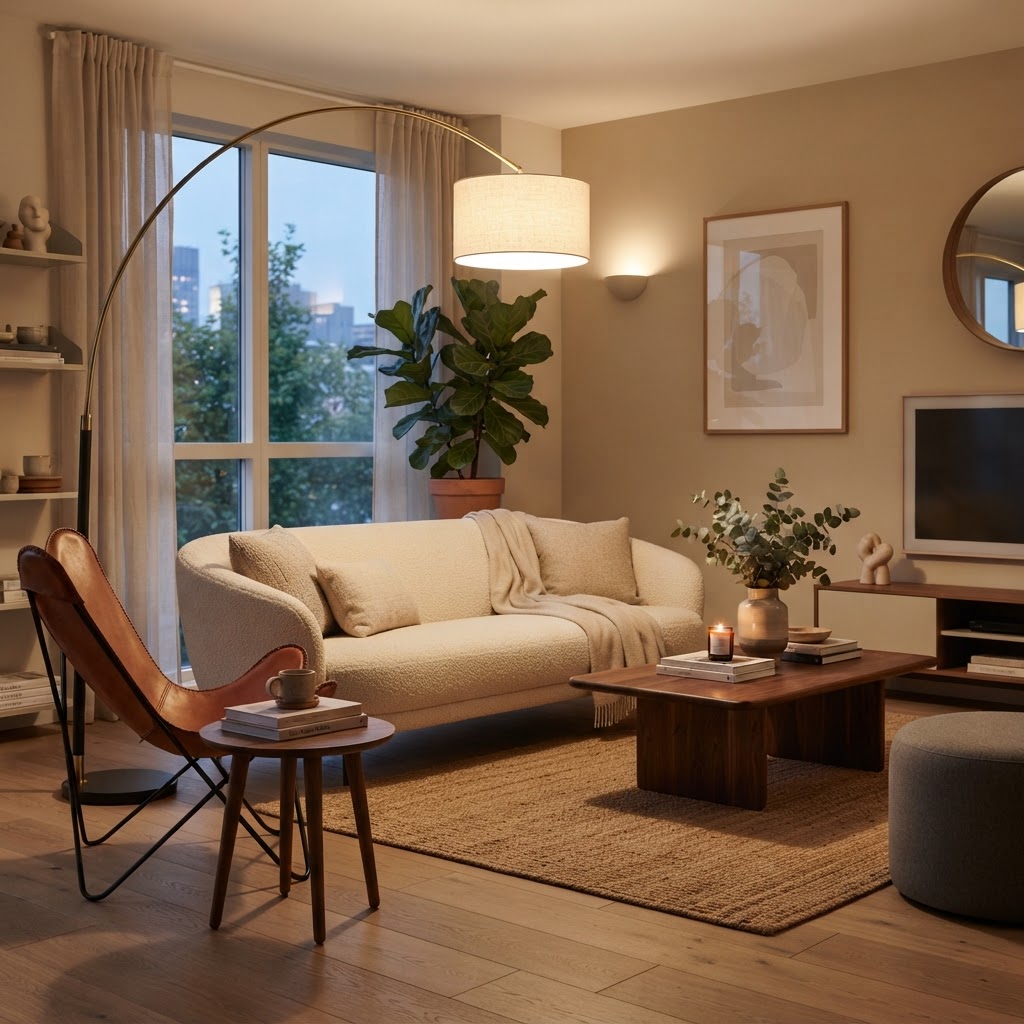
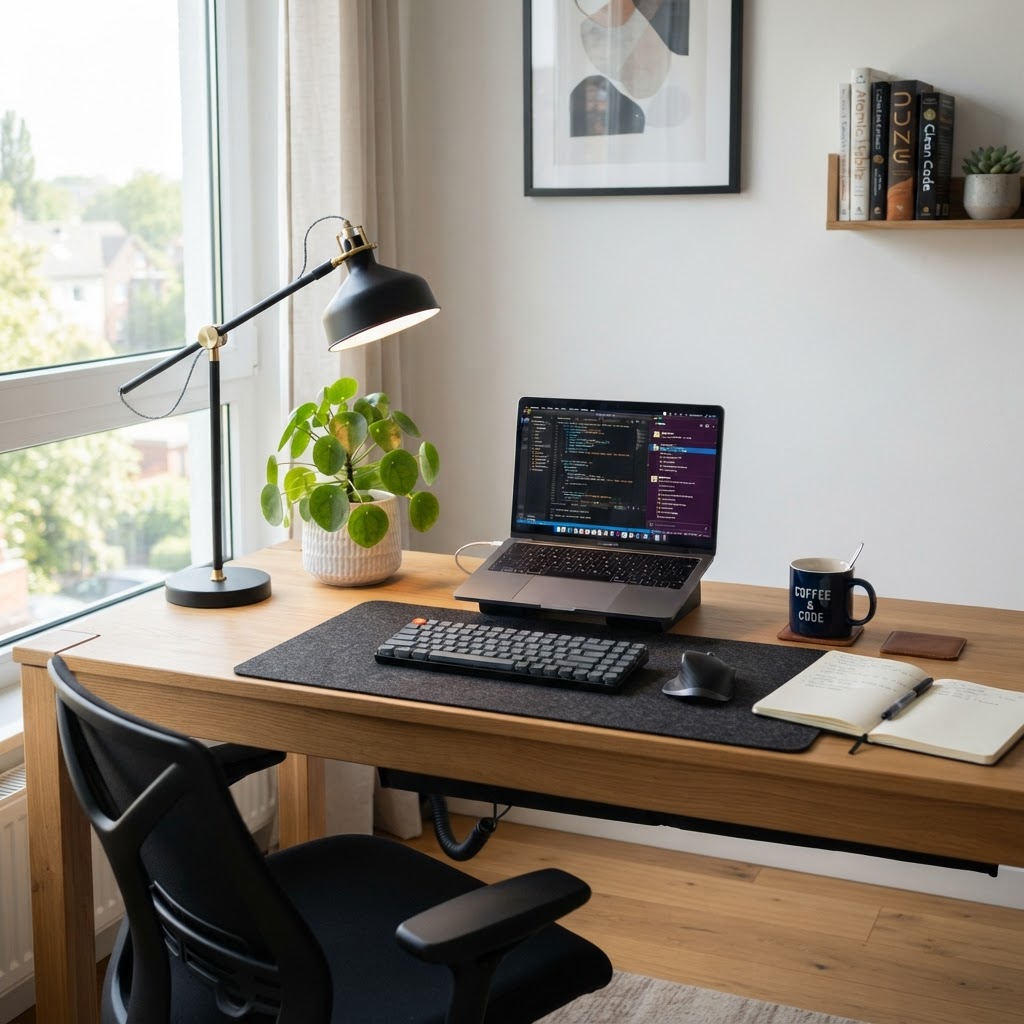
Professional interior lighting relies on the concept of layering, which involves combining ambient, task, and accent lights to add depth and dimension to an otherwise clinical rental room. A single overhead light source creates harsh shadows and makes rooms feel smaller; conversely, distributing light through various floor and table lamps creates “pools” of warmth that draw the eye toward decor rather than the rental’s flaws.
Select lamps that serve as sculptural statements to maximize your investment. A floor lamp with an arched neck or a unique base can act as a piece of art, while small table lamps placed on bookshelves or entry tables provide the cozy, layered “hotel” effect often seen in interior design magazines. By moving lighting sources away from the center of the room, you expand the visual footprint of the space. Consider the following breakdown for optimal layering:
Using LED Light Strips for Hidden Ambiance
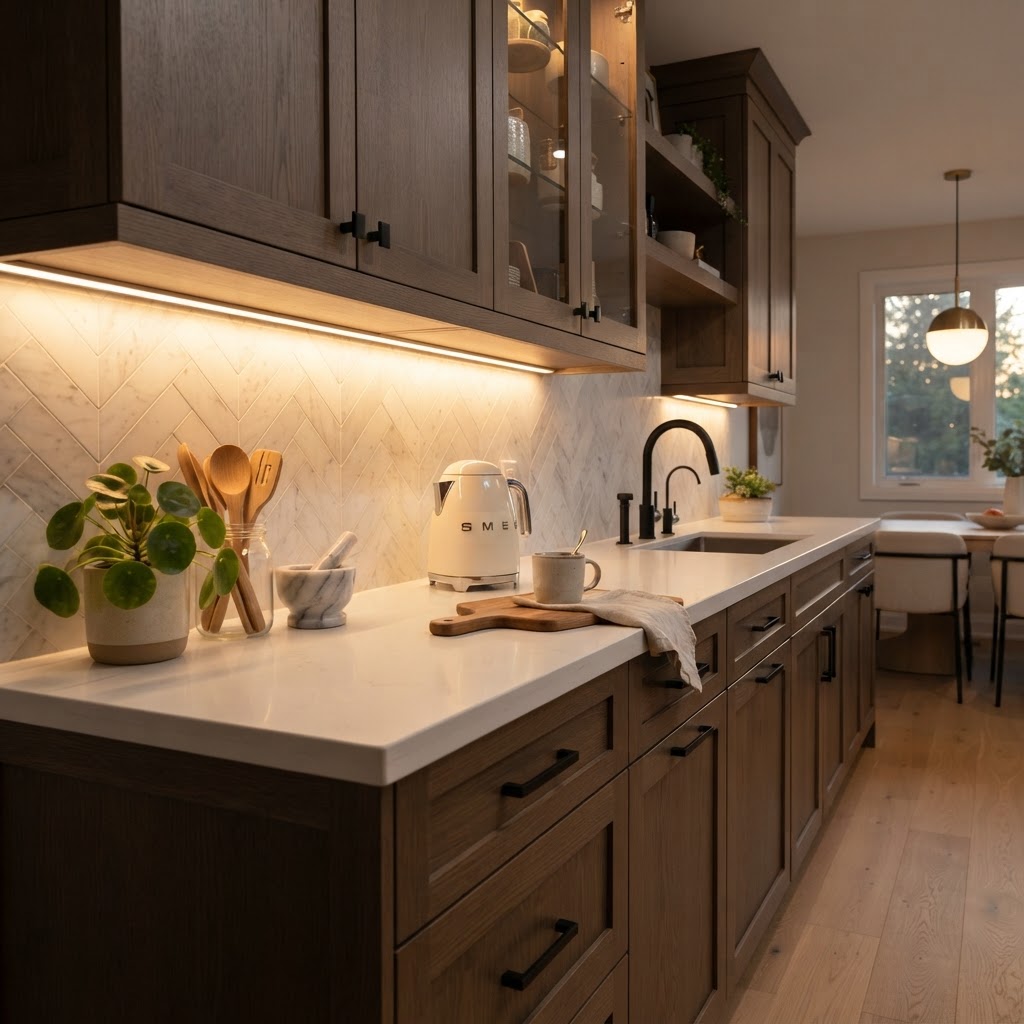
Adhesive LED light strips are the most versatile “hidden” lighting solution for renters, providing an upscale, indirect glow that is easily removed upon move-out. These strips can be mounted under kitchen cabinets to simulate custom lighting, behind headboards for a modern glow, or along the back of a TV console to reduce eye strain. Since they utilize peel-and-stick backing, they do not damage paint or drywall, making them entirely landlord-approved.
For best results, opt for strips with a high CRI (Color Rendering Index) of 90 or above to ensure colors in your home look natural. You can run these strips along the undersides of upper cabinetry in your kitchen to transform a utilitarian galley space into a gourmet, cozy atmosphere. Total project costs for a full kitchen setup usually range from $25 to $60, providing an instant high-end upgrade that makes a massive impact on daily life.
Utilizing Cord Covers for a Polished Look
Managing visible electrical cords is the primary way to elevate a DIY rental lighting project from “student apartment” to a professionally styled home. Adhesive or paintable cord covers are inexpensive tools that tuck wires against wall corners or baseboards, effectively vanishing them from view. A room with hidden cords looks cleaner, larger, and significantly more curated, which is the hallmark of a high-end interior.
If you are worried about paint damage, apply a layer of painter’s tape to the wall first, then attach the cord cover over the tape. This ensures that when you remove the covers upon moving out, the wall surface remains pristine. By investing just $10–$20 in wire management products, you eliminate the visual clutter that often undermines the aesthetic value of new floor lamps and sconces.
Adding Decorative String and Fairy Lights
Decorative string or fairy lights provide a whimsical, budget-conscious way to layer light and add a soft, romantic atmosphere to any rental bedroom or balcony. When draped over curtains, mirrors, or bookshelves, these lights serve as both illumination and decor, creating a textured look that softens hard architectural lines.
Always select “warm white” (2700K) LEDs to avoid the cold, blueish light often associated with cheap, poor-quality strings. You can also place these lights inside glass vases or mason jars to create custom “lamps” that look like high-end designer pieces. This technique is especially effective for renters who want to add sparkle to their space without the commitment of larger hardware installations, as they can be easily moved or repurposed for holidays and gatherings.
Choosing the Right Bulbs for Every Room
The quality of your rental lighting is dictated by the bulbs you choose, specifically regarding the Kelvin scale and lumen output. For relaxation-focused spaces like living rooms and bedrooms, prioritize bulbs at 2700K to 3000K for a warm, amber glow. For high-focus areas like home offices or bathrooms, use 4000K to 5000K bulbs, which mimic daylight and improve concentration by reducing eye fatigue.
Additionally, pay attention to lumens—a measure of brightness—rather than just wattage. For a typical 10×12 bedroom, you should aim for a total of 1,500 to 2,000 lumens distributed across multiple sources. Using dimmable bulbs is a game-changer for renters because it allows you to adjust the intensity of the light depending on your needs. A dimmable bulb with a wide beam angle will ensure there are no dark corners, effectively making your space feel larger and more inviting.
FAQ
Q: How can I change rental lights without damaging the walls?
Use adhesive cord covers, peel-and-stick LED strips, or plug-in fixtures that hang on existing picture hooks or command strips. These methods avoid screws and nails, ensuring you get your full security deposit back while still allowing for a custom, elevated look.
Q: What is the best color temperature for a cozy bedroom?
Stick to warm-toned bulbs between 2700K and 3000K, which provide a soft, relaxing yellow light. This temperature mimics the soothing quality of sunset, signaling to your brain that it is time to wind down and helping you sleep better at night.
Q: Can I replace a rental light fixture if I don’t have experience?
It is generally recommended to hire a professional electrician for hardwired fixture swaps to ensure safety and code compliance. Alternatively, avoid electrical work entirely by using decorative magnetic covers or drum shade diffusers that sit over your existing fixture without requiring any wiring.
Q: How many light sources should a living room have?
Professional designers recommend at least three light sources in a living room to create depth and remove harsh shadows. A combination of one floor lamp, one table lamp, and an overhead fixture or wall sconce creates the perfect balance of ambient, task, and accent lighting.
Q: Do smart bulbs save money for renters?
Yes, smart bulbs can significantly reduce energy costs because they are almost exclusively LED-based, using up to 90% less energy than traditional incandescents. Additionally, you can set schedules and timers to ensure lights are never left on accidentally, further lowering your monthly electricity bill.

Leave a Reply