10 Affordable Ways to Make Your Rental Bedroom Feel Luxe
You can make a rental bedroom feel luxurious by layering soft, high-quality textiles, installing warm-toned LED lighting, and using floor-to-ceiling curtains to add height. Focus on curating textures, incorporating oversized wall art, and removing physical clutter to transform a standard, builder-grade space into a bespoke, high-end sanctuary.
Understanding the Rental Limitation Mindset
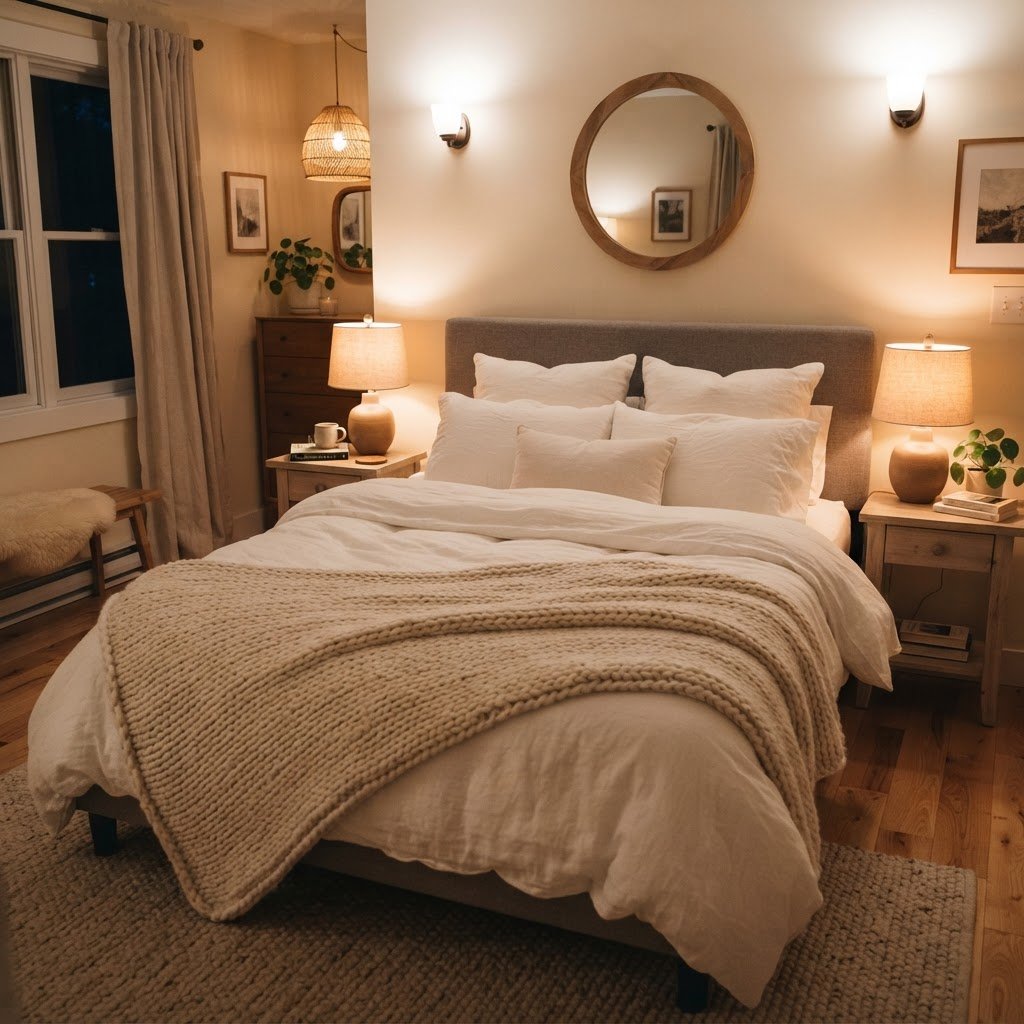
Many renters fall into the trap of believing they are stuck with “builder grade” aesthetics, but the secret to a luxury look is focusing on elements you can modify without permanent changes, such as soft furnishings and lighting. When you stop viewing your rental as a temporary box, you begin to see it as a design project where texture and scale dictate the room’s “luxe” factor rather than permanent architectural fixtures.
Before spending a budget on new items, conduct a rigorous audit of your current belongings. Remove items that do not serve your aesthetic goal—specifically excess clutter, piles of clothes, or bulky plastic organizers that cheapen the visual appeal of a space. By prioritizing pieces that add vertical interest or natural textures, you transition from a consumer mindset to a curator mindset. Studies show that a de-cluttered space reduces cortisol levels, making your bedroom feel like a calming, high-end retreat rather than a storage unit. Focus on these three foundational pillars for a professional finish: scale, color temperature, and material quality. By editing your space first, you create a neutral canvas that allows your decorative investments to shine. Small, thoughtful adjustments to your existing layout—like moving furniture away from walls to create “breathing room”—can make a standard bedroom feel significantly more expensive and intentionally designed.
The Power of Layered Lighting
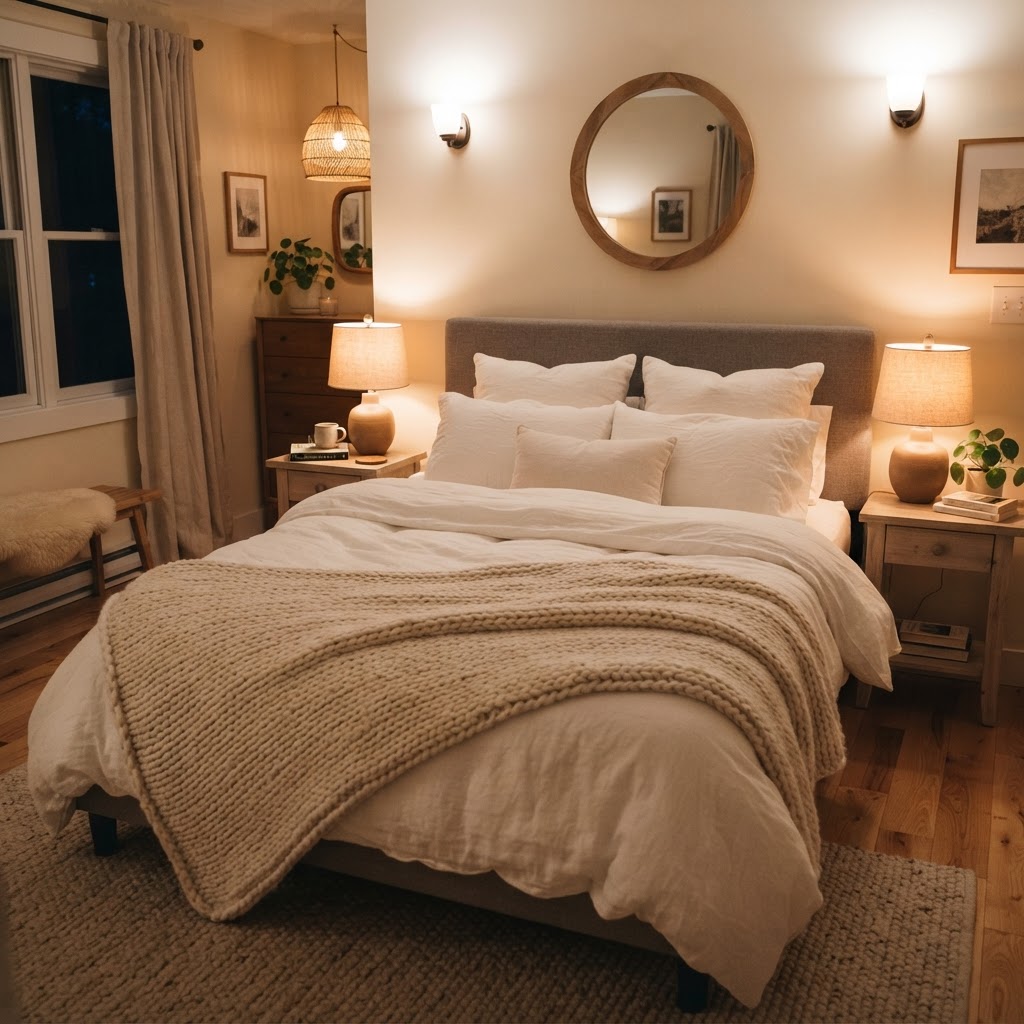
Lighting is the most significant indicator of a budget bedroom, as harsh, overhead “cool white” bulbs often wash out details and make spaces feel sterile. To achieve a luxury look, you must layer multiple light sources—typically a mix of ambient, task, and accent lighting—to create a warm, inviting atmosphere that mimics a high-end boutique hotel room.
Investing in Warmth
Start by replacing stark daylight bulbs (5000K) with warm-white LEDs (2700K to 3000K). Adding two or more lamps beyond the main overhead fixture is essential. A pair of matching bedside lamps with linen or fabric shades diffuses light effectively, while a floor lamp placed in an unused corner draws the eye and adds architectural depth to the floor plan.
Consider adding a small accent lamp on a dresser to create a “light island.” By creating multiple pools of light, you trick the eye into perceiving the room as larger and more thoughtfully planned. Avoid plastic fixtures; opt for metallic finishes like brushed brass or ceramic bases that ground the space. When you move away from a single ceiling light source, you eliminate harsh shadows, immediately elevating the room’s aesthetic quality.
Elevating Your Bedding with Texture
Your bed is the visual focal point of the bedroom, making it the most critical surface to upgrade for a high-end transformation. You do not need a new frame; instead, use layering techniques to create a plush, “designer-curated” look that suggests expensive bedding even when working with budget materials.
Start with a crisp, neutral base, such as 100% cotton or linen sheets in white, cream, or light grey. Introduce texture through a heavy knit throw blanket draped at the foot of the bed and two velvet accent pillows to create contrast. The goal is to reach a tactile depth where the bed looks visually heavy and inviting.
The Rule of Three for Pillows
Avoid overstuffing your bed with excessive throw pillows; instead, use the “Rule of Three” (or five, for larger beds) to maintain a balance of sizes and textures. Start with two large Euro shams at the back, followed by your sleeping pillows, and finally one or two smaller accent pillows. This specific arrangement prevents the bed from looking cluttered while ensuring it feels intentional. Invest in a duvet insert that is one size larger than your duvet cover to ensure a “full” look that avoids flat or limp bedding. By focusing on varied textures—smooth cotton sheets, soft velvet pillows, and a chunky knit throw—you create a sophisticated aesthetic that mirrors professional staging techniques found in luxury listings.
Creating Custom-Look Window Treatments
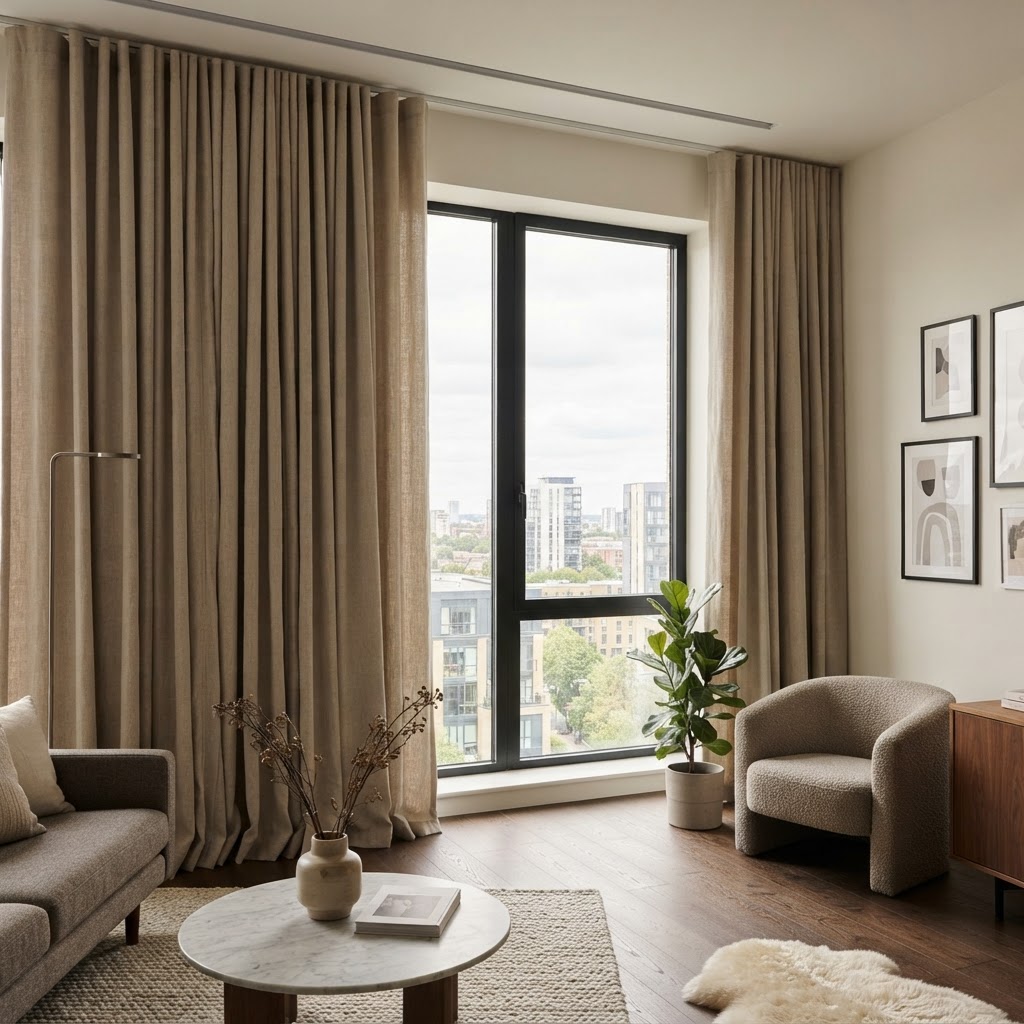
Standard plastic mini-blinds are the antithesis of luxury, but you can effectively disguise them by installing floor-to-ceiling curtains. By mounting your curtain rod near the ceiling line rather than immediately above the window frame, you visually draw the eye upward and create the illusion of higher ceilings and larger windows.
If your lease prohibits drilling holes, use heavy-duty tension rods or adhesive-backed command hooks for lighter fabric curtains. Always opt for panels that reach the floor—or even “puddle” slightly (an extra 1–2 inches)—to convey a sense of custom-tailored elegance. Blackout curtains in heavy fabrics like velvet, faux linen, or weighted polyester are ideal for adding both privacy and a professional finish.
When curtains span the width of the wall rather than just the window, they act as a feature wall, significantly altering the architecture of a rental space. This simple, affordable installation method provides one of the highest returns on investment for making a basic bedroom feel premium.
Utilizing Wall Art to Define Space
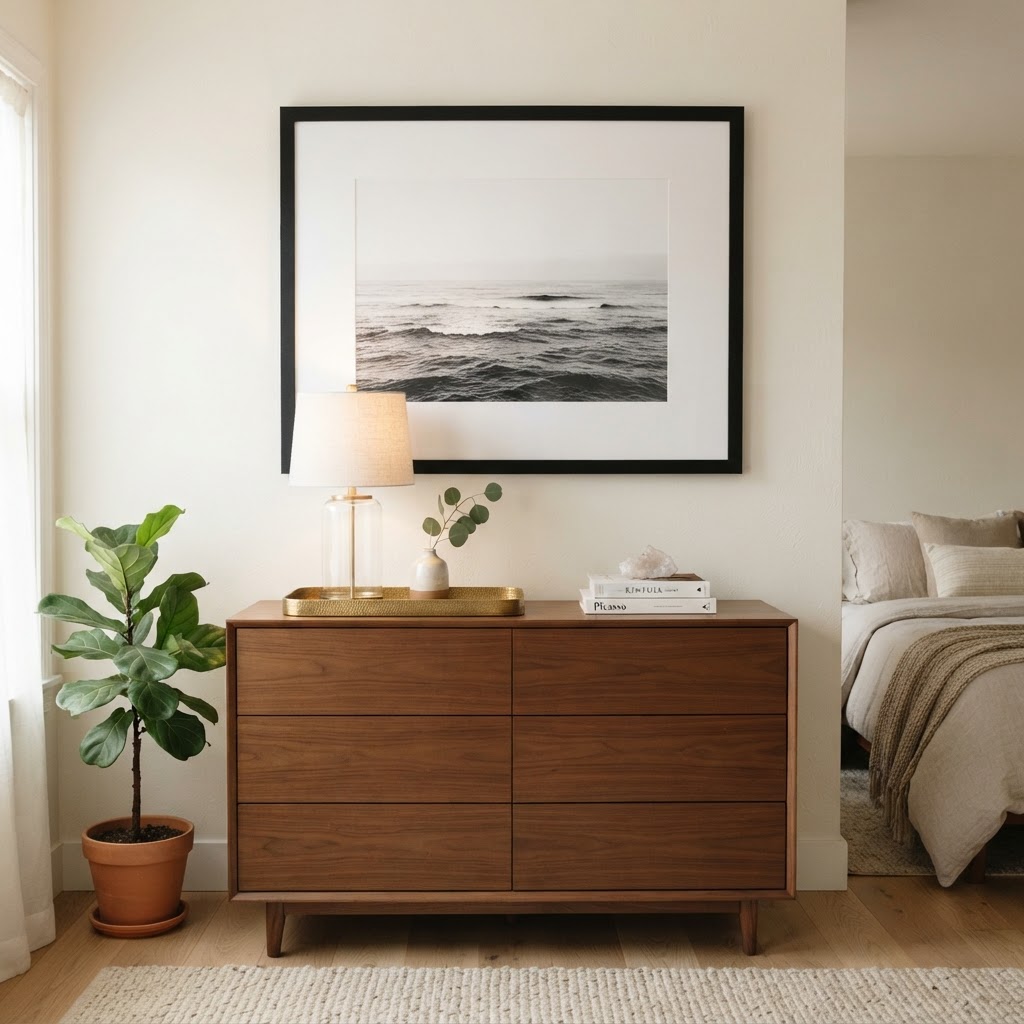
Blank walls are a wasted opportunity in a rental and often contribute to a “temporary” feeling. You can create a high-end look by hanging large-scale art that commands attention, which makes the room feel like a deliberate, professional design space rather than an accidental collection of posters.
Rather than cluttering your walls with many small, mismatched frames, choose one or two large, high-resolution pieces to act as a focal point above the headboard or dresser. If the original art is too expensive, print high-resolution public domain images from museum archives. The key to the “luxe” look is the frame and matting; a large mat (the white space between the image and the frame) instantly elevates the perceived value of any print. Aim for a frame-to-mat ratio that creates a sense of negative space. Ensure the art is hung at eye level (roughly 57–60 inches from the floor to the center of the piece) to maintain professional proportions. By treating your walls as a gallery, you shift the focus from the rental-grade white paint to your curated art collection, which adds a distinct layer of sophistication to the room.
Introducing Natural Elements and Greenery
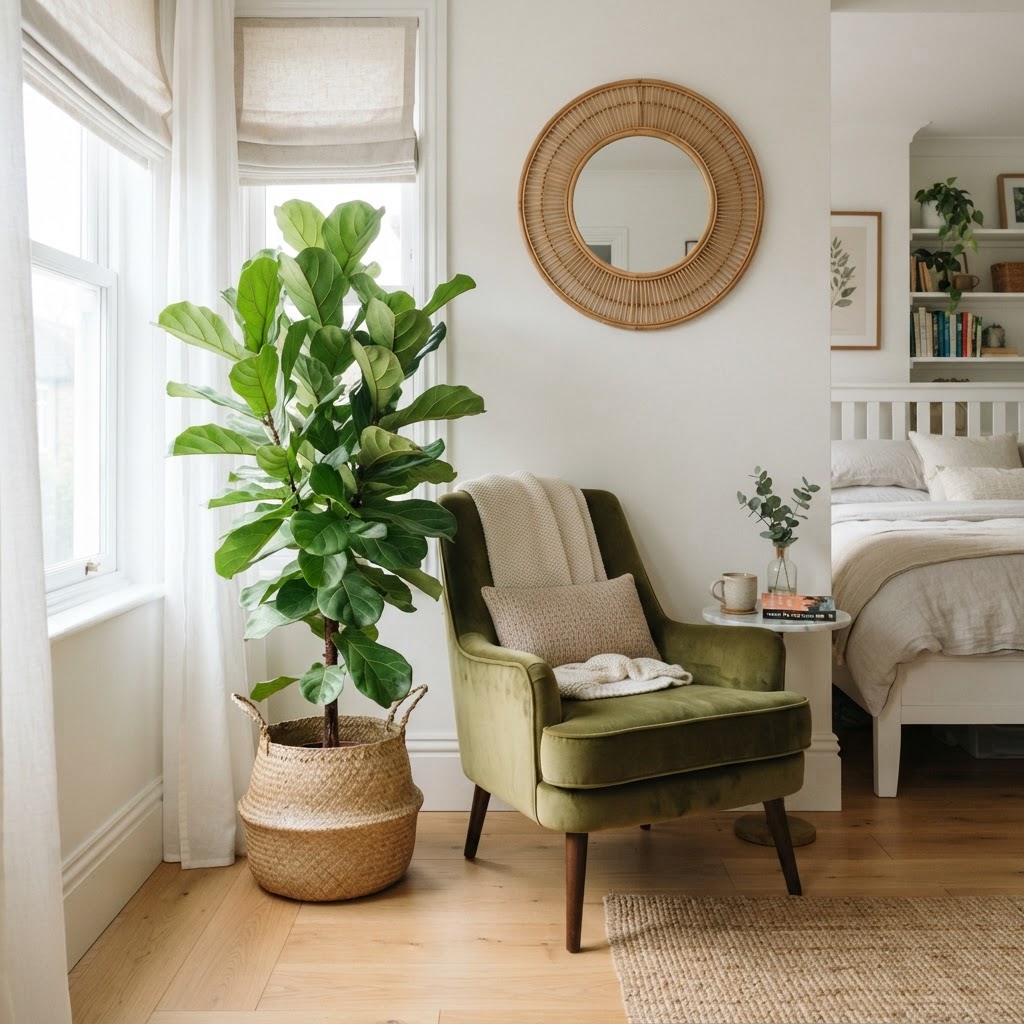
Luxury design is inherently rooted in nature, as organic shapes and textures provide a softness that compensates for the harsh, rectangular geometry of most rental units. Introducing live or high-quality artificial plants brings life into the bedroom, creating an organic aesthetic that feels curated and maintained.
For a maximum impact, incorporate a large floor plant, such as a Fiddle Leaf Fig, Bird of Paradise, or Snake Plant, to add verticality to an empty corner. Place smaller botanical elements on your nightstand or bookshelf to distribute greenery throughout the room. If you lack a green thumb, opt for realistic-looking artificial plants; the “luxe” secret here is the planter. Avoid the cheap plastic pots they come in and re-pot them into heavy, textured vessels made of stone, concrete, or woven seagrass. The weight and texture of the planter make even artificial greenery look like a high-end designer choice. By mimicking the biophilic design principles found in luxury hotels, you improve the room’s air quality and aesthetic harmony, helping the space feel intentionally styled rather than sterile.
The Magic of Cohesive Rugs
If your rental has dated carpet or uninspiring hardwood floors, a large area rug is the most effective tool to anchor the room. A well-chosen rug defines the sleeping zone and separates it from the rest of the bedroom, which is essential for creating a professional, layered look.
When selecting a rug, follow the rule that at least the front two legs of your bed must rest on the carpet. For a standard queen-sized bed, an 8×10 foot rug is generally the minimum size required to create a sense of scale. Look for low-pile vintage-style rugs, Persian-inspired prints, or soft jute/sisal blends to add warmth and character. Avoid synthetic-looking, ultra-bright rugs; instead, stick to muted, earthy tones that pull together your curtain colors, bedding, and wall art. A rug acts as a cohesive foundation, binding disparate elements of the room into a single, unified vision, which is a classic hallmark of high-end interior design.
Strategic Furniture Curation
Matching bedroom sets (where the dresser, nightstands, and headboard all look identical) often feel like catalog-provided furniture. Instead, aim for a “curated” mix of pieces that share a similar aesthetic thread or color palette to achieve a high-end look.
Focus on identifying one or two “hero” pieces that serve as the room’s main attraction, such as a mid-century modern side chair, a velvet ottoman at the foot of the bed, or a mirror with a decorative brass or antique finish. To unify mismatched furniture, change out generic drawer knobs for high-quality hardware in a consistent finish, such as matte black or brushed gold. Keep pathways clear to ensure the flow is logical and clutter-free. If you must use a less-than-ideal piece, use decorative items like a stack of art books or a tray to mask the less expensive materials. Furniture placement should prioritize function and comfort; for instance, ensuring your nightstands are at the same height as your mattress promotes a balanced, luxury-standard appearance.
The Art of Scent and Styling
Luxury is an experience, not just a visual one; a room that smells sophisticated will always feel more “luxe” than one that is simply decorated. Use subtle scent profiles like linen, sandalwood, or white tea to create an olfactory atmosphere that resembles a boutique hotel.
Styling is the final polish that differentiates a lived-in room from a styled space. Clear all surfaces of daily clutter, such as laundry, chargers, and loose papers. Use decorative trays to corral necessary daily items on your dresser or nightstand; this makes your belongings look like a curated display rather than scattered debris. Small habits—like smoothing the duvet every morning and keeping closet doors closed—are free, high-impact strategies that maintain the “luxe” feeling daily. Remember that professional staging is all about the editing process; every item in your room should either serve a practical purpose or provide aesthetic value. By keeping surfaces tidy and utilizing high-quality scents, you reinforce the feeling of being in a high-end environment every time you step through your bedroom door.
FAQ
How do I make a small rental bedroom look luxurious on a budget?
Focus on verticality by installing curtains floor-to-ceiling and clearing all non-essential clutter from surfaces. Use large-scale art and high-quality, textured bedding to distract from small square footage and create a focal point.
Can I make changes to a rental bedroom without losing my deposit?
Yes, use temporary solutions like tension rods for curtains, command hooks for wall art, and removable hardware to ensure no damage occurs. Always keep the original fixtures (like light covers and knobs) stored safely so you can reinstall them before moving out.
What is the best way to light a bedroom for a high-end look?
Avoid relying on one single, harsh overhead light; instead, layer light with at least two or three lamps at different heights. Use 2700K-3000K warm-toned bulbs to eliminate the sterile, clinical look common in standard rental units.
How many pillows should I have on my bed for a designer look?
Limit your bed to 3–5 pillows in varying sizes and textures to avoid a cluttered appearance. A balanced setup typically includes two Euro shams at the back, two sleeping pillows, and one decorative lumbar or accent pillow in the front.
Does a large rug actually make a room look more expensive?
Yes, a large rug anchors the furniture and defines the space as a deliberate design area rather than just a floor. A rug that is large enough to have the bed sit on it adds significant visual depth and warmth to the room.

Leave a Reply